Tag: high end brands

  • Pooey Puitton toy purse makers file lawsuit against Louis Vuitton

    Pooey Puitton toy purse makers file lawsuit against Louis Vuitton

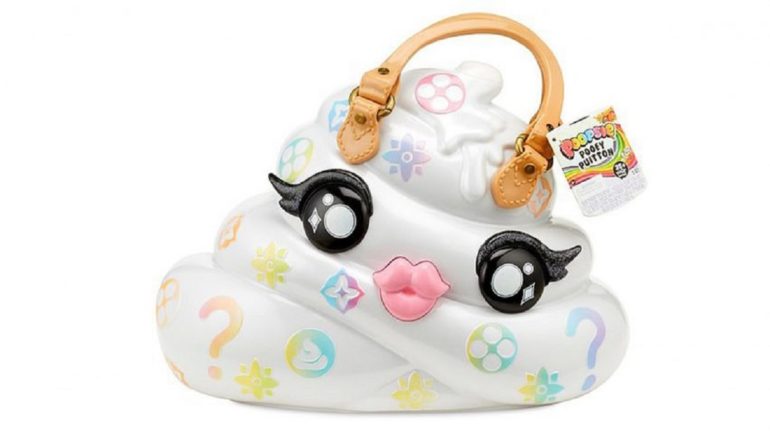
    Toy company MGA Entertainment has preemptively sued Louis Vuitton in an attempt to prevent the fashion house from taking actions that might impact sales of its slime-filled children’s purse Pooey Puitton. Filed 28 December 2018 in Los Angeles federal court, the lawsuit aims to prevent any potential claims of trademark infringement that Louis Vuitton might have against the plastic, poop-shaped purse.

    Instead, it asserts that the product is a “protected parody” of Louis Vuitton’s luxury handbags.

    The Pooey Puitton plastic purse takes the shape of a poop emoji with a handle and sparkly eyes. It is printed with a colourful, printed monogram, similar to the floral trademark pattern found on Louis Vuitton products, particularly the Spring/Summer 2003 collaboration with Japanese artist Takashi Murakami.

    Intended as a children’s toy, the purse is designed to store “unicorn poop”, a glittery toy slime.

    The children’s toy manufacturer launched the lawsuit in response to a claim that Pooey Puitton’s name and image violates the fashion label’s intellectual property rights.

    But MGA Entertainment asserted that “no reasonable consumer would mistake the Pooey product for a Louis Vuitton handbag”, citing the difference in material, price, marketing and stockists.

    According to the toy giant, the product is actually a parody of the luxury fashion brand, “designed to mock, criticise, and make fun of the wealth and celebrity” associated with Louis Vuitton products.

    “The use of the Pooey name and Pooey product in association with a product line of magical unicorn poop is intended to criticise or comment upon the rich and famous, the Louis Vuitton name, the ‘LV’ marks, and on their conspicuous consumption,” the statement reads.

    The interlocking “L” and “V” floral monogram pattern was designed by Louis Vuitton’s son, Georges Vuitton, in 1896.

    This is not the first time that MGA Entertainment has found itself in legal battles. The brand was famously sued by Barbie-manufacturer Mattel for allegedly stealing the idea behind its Bratz doll franchise.

    Elsewhere, Virgil Abloh – who was appointed artistic director of menswear for Louis Vuitton in March 2018 – unveiled his polychromatic menswear collection for the brand during Paris fashion week.

  • Global luxury goods sales drop: Bain

    Global luxury goods sales drop: Bain

    New data from Bain & Company shows global luxury goods sales will struggle to maintain growth, as the US-Sino trade war and other geopolitical events impact on consumer confidence.

    In June, Bain said the personal luxury goods market was “on a tear” this year and would grow by between 6 per cent and 8 per cent at constant exchange rates to reach €276-281 billion. It said the market could reach €390 billion globally in sales by 2025.

    But now, Bain has released a more tepid projection of €260 billion and a growth rate of 5 per cent this year.

    It has pared back its 2025 projection of personal luxury goods sales to €320-365 billion, slashing €35 to €70 billion off its forecast in just five months.

    And it cautioned that even this figure may be under threat saying “socio-political issues, commercial policies, and potential short-term soft recessions could make this road to growth a bumpy one in the short term”.

    The Bain & Company Luxury Study was released in Milan in collaboration with Fondazione Altagamma, the Italian luxury goods manufacturers’ industry foundation.

    In June, Bain said Mainland China is expected to account for the lion’s share of growth this year. “We forecast this market to grow by 20-22 per cent … Brands are learning how to cater to local consumers, often young and heavily influenced by social media.”

    China kept close to its projections, rising 20 per cent, albeit with the year still not over.

    “Chinese consumers are leading the positive growth trend around the world. Between 2015 and this year, their purchases in Mainland China contributed twice as much growth as their spending abroad. Their share of global spending has continued to rise (now estimated at 33 per cent of global luxury spend, up from 32 per cent in last year), while the share of Mainland China has also risen to 9 per cent (up from 8 per cent in last year). In Mainland China, luxury sales grew 18 per cent at current exchange rates to €23 billion (20 per cent at constant exchange rates), driven by rising demand rather than by price increases,” the report said.

    Claudia D’Arpizio, a Bain partner and lead author of the study, said luxury purchases in Japan softened slightly this year, pushing brands to find new solutions to bring consumers back to stores. However, retail sales still grew at 3 per cent at current exchange rates to €22 billion. “Increased consumption from tourists in Japan is prompting brands to rethink their distribution models.”

    Across the rest of Asia retail sales grew 7 per cent at current exchange rates to €39 billion, due to dynamic growth in South Korea, driven by strong local consumption. Brisk growth in other Asian countries – Singapore, Thailand and Taiwan – also contributed while Hong Kong and Macau benefitted from Chinese purchases.

    Europe lagged in 2018 due to a strong Euro that impacted tourists’ purchasing power. Local consumption was positive overall, despite mixed country performance, helping to boost retail sales 1 per cent at current exchange rates to €84 billion.

    The Americas grew 5 per cent at current exchange rates to €80 billion. “A positive US economy boosted disposable income and overall luxury spending from locals, even as brands remained wary of continued economic prosperity,” the report said. “However, the strong dollar impacted tourists’ spending from Asia and Latin America. Canada and Mexico were strong players in the region, while political uncertainties derailed Brazil’s performance.”

    In other areas, there was nil growth, holding at €12 billion, mainly due to stagnation in Middle East brought on by a recent government spending restriction.

    Luxury online

    The retail channel grew 4 per cent this year, with three-quarters coming from like-for-like sales growth. Wholesale channels grew at only 1 per cent, brought down by high-end department stores still trying to recover, and a slow-down among specialty stores facing tough competition from online.

    Luxury shopping online continued to accelerate this year compared with physical channels, growing 22 per cent versus 2017 to €27 billion.  The US market made up close to half of online sales – 44 per cent– but Asia is emerging as the new growth engine for luxury online, slightly ahead of Europe. Accessories remained the top category sold online, ahead of apparel; beauty and hard luxury (jewellery and watches) were both on the rise.

    Brands are catching up to other online players, comprising 31 per cent of sales, compared to e-tailers (39 per cent) and retailers (30 per cent).

    “New technologies are at once enriching the online and mobile shopping experiences, while potentially putting role of physical channels at risk,” said Federica Levato, a Bain partner and co-author of the study.

    “The luxury store-opening path is slowing down, leading to channel consolidation in the future. Brands must therefore rethink their physical channels and evolve their role from point-of-sale to point-of-touch, and use new technology to enhance customers’ in-store experiences.”

    Luxury consumers getting younger

    The report concluded that younger generations are becoming increasingly more important luxury brands. This year, Generations Y and Z contributed 100 per cent of the total luxury market growth, compared with 85 per cent last year. Bain predicts Generation Z, which today comprises just 2 per cent of the market will account for 10 per cent of it in 2025.
  • A look into Furla recent success strategy

    A look into Furla recent success strategy

    Furla Group continues to grow, with 252 million euros in turnover in the first half of 2018, a 10.6% increase at constant exchange. Turnover increased in the first part of the year across all markets. In particular, the Asia Pacific region registered a 28.6% increase at constant exchange, while Japan saw a 9.5% increase. The United States also registered an excellent performance, with a 24.2% increase.

    Figures from the first half of the year reveal that Italy now accounts for 15% of total turnover; the EMEA region (excluding Italy), 28%; the APAC region, 27%; Japan, 23%; and the U.S., 7%.

    Extensive worldwide distribution continues to be among the Italian company’s strong points: Furla is present in 100 countries, with 471 monobrand stores situated in the most prestigious international shopping streets. It also has over 1.200 multibrand and department store sales points.

    Over the past several months, Furla Group has assumed full control of its retail distribution in China, Hong Kong and Macau.

    Travel retail played a fundamental role in the company’s growth, with year-on-year sales up by 23% in the sector, which accounts for 8% of Furla Group’s total turnover.

    The company is present in the travel retail channel in 64 countries, with a total of 298 sales points, including boutiques, corners, shop-in-shops, aircraft and cruise ships.

    Furla is carrying out a major investment plan that aims to consolidate its impressive growth trajectory over the past several years and make it sustainable.

    Significant resources are being directed toward strengthening the supply chain through the implementation of a more sophisticated information system better suited to the company’s current size.

    The selection process for suppliers is ongoing and crucial to guarantee continued high-quality, on-time manufacturing.

    The company has also paid great attention to its new e-commerce platform, which saw sales increase by 24.1% in the first half of this year.

    Continual investments in human resources have allowed Furla Group to create new positions: today, the number of employees worldwide is 2.514, compared with 2.362 in December 2017.

    The company is also boosting its investments in marketing and communication, with ever-greater emphasis on digital and social media.

    A new, elegant monogram inspired by Furla’s “F” was created and introduced in Milan during the city’s women’s fashion week in September 2018.

  • Yoox Net-A-Porter acquisition boosts Richemont sales

    Yoox Net-A-Porter acquisition boosts Richemont sales

    Richemont sales in Asia Pacific surged 20 per cent in the first half of this year with the region the group’s single-largest market, accounting for 37 per cent of total sales.

    The increase was fuelled by the inclusion of the Yoox Net-A-Porter (YNAP) business into the Swiss-headquartered multibrand luxury retailers figures for the first time. Excluding YNAP and Uk online retailer Watchfinder, sales rose 14 per cent, driven by a net 20 new store openings and “high single-digit growth” in Mainland China and double-digit growth in Hong Kong, Macau and Korea.

    “Both the retail and wholesale channels saw double-digit growth, with strong performances in jewellery and watch sales,” the company said in a statement.

    In Japan, a 14 per cent growth in sales was driven by higher domestic and tourist spending, which benefited from a comparatively weaker yen. Excluding online distributors, sales in the region increased by 8 per cent, led by a double-digit growth in watch sales and the net opening of five directly operated boutiques. Japan represents 8 per cent of overall sales.

    Group-wide global sales rose by 21 per cent at actual exchange rates to €6.808 billion and by 24 per cent at constant exchange rates. Online retail sales, now reported separately following the e-commerce acquisitions, amounted to 14 per cent of group sales.

    Excluding YNAP and Watchfinder, sales rose by 6 per cent at actual exchange rates and by 8 per cent at constant exchange rates.

    Operating profit of €1.130 billion was down €36 million due to acquisition and disposal-related charges of €159 million, the company said. Excluding the impact of first-time consolidation of YNAP and Watchfinder, operating margin improved to 21.1 per cent. Profit for the period rose to €2.253 million primarily due to a post-tax non-cash gain of €1.378 billion on the revaluation of YNAP shares held prior to buy-out.

    Chairman Johann Rupert said offline Richemont sales growth was primarily driven by strong performance of the jewellery maisons and double-digit increases in the maisons’ directly operated boutiques and online stores.

    “Robust retail sales in jewellery and watches more than offset a 2 per cent decline in wholesale sales, which was mainly due to the specialist watchmakers’ ongoing prudent inventory management and upgrade of the wholesale distribution network,” said Rupert.

    “In our jewellery maisons, watch sales grew strongly in Cartier’s stores, benefiting from the successful Panthere and relaunched Santos collections. Jewellery pieces continued to outperform, notably with the iconic Cartier Love and Van Cleef & Arpels Alhambra collections.”

    He said while growth was muted for specialist watchmakers, retail was strong and there was good momentum at Vacheron Constantin, Roger Dubuis and JaegerLeCoultre.

  • Chanel’s recipe for success revealed

    Chanel’s recipe for success revealed

    Last month, Chanel reported its financials for the first time in its 108-year history, lifting the company’s traditional veil of secrecy, in part, to quash speculation that it could be acquired. The disclosure revealed that the French luxury giant generated $9.6 billion in sales last year – just a shade behind LVMH cash cow Louis Vuitton.

    What’s no secret, though, is that Chanel holds immense allure to shoppers.

    In fact, it is one of the most desirable luxury fashion brand in the world fueled by the perception that it is amongst the most exclusive brands of all.

    This is paradoxical when one considers that Chanel is also one of the most accessible luxury brands, as measured by pricing.

    In fact, it has some of the lowest entry-level price points in the business, courtesy of its beauty products. Cosmetics and fragrances allow the middle class to get a whiff of the lifestyles embodied by Chanel’s couture and prêt-à-porter offerings.

    Indeed, Chanel is a master of category segregation.

    This strategy involves confining iconic, core category products to high-end price ranges, while deftly positioning other product categories (lipsticks, for example) at lower price points to address aspirational customers.

    Such segregation has allowed the house to maintain its air of exclusivity.

    It may sound like a simple strategy, but it has helped make Chanel by far the biggest luxury goods mega-brand in retail equivalent terms, and only marginally smaller than Louis Vuittonin reported sales.

    Critical to this success has been Chanel’s leading position in beauty, a category that is heavily dependent on multi-brand wholesale distribution.

    While there are some disadvantages to wholesale distribution, from smaller margins to less control over brand experience, leveraging wholesale also means the company can have a relatively compact retail network.

    Chanel had 338 stores in 2017, or nearly 30 percent fewer than Louis Vuitton.

    As for profitability, Chanel reported an earnings before interest and taxes, or EBIT, margin of 28 percent, compared to 40 percent at Louis Vuitton.

    This suggests Chanel has much room to push its profit margins higher, especially considering its sheer scale and the economics of beauty.

    Chanel seems to be vastly outspending its peers on marketing support and communication, boosting its profile on both traditional and social media.

    All this, and a traditional focus on organic growth rather than acquisitions, means the group boasts returns on invested capital that approach those of Hermès.

    This is despite selling, general and administrative expenses equivalent to nearly half of Chanel’s sales as opposed to roughly a third at Hermès.

    Again, this suggests there is room to rise further.

    When Chanel announced its financials last month, the company said it did so to dispel the notion that it would ever be up for sale.

    While the size of the company means only very large — and ambitious — players might be able to pull off such a deal, that still leaves potential contenders should it ever decide to open its doors.

  • Why is Kering buying its shares back?

    Why is Kering buying its shares back?

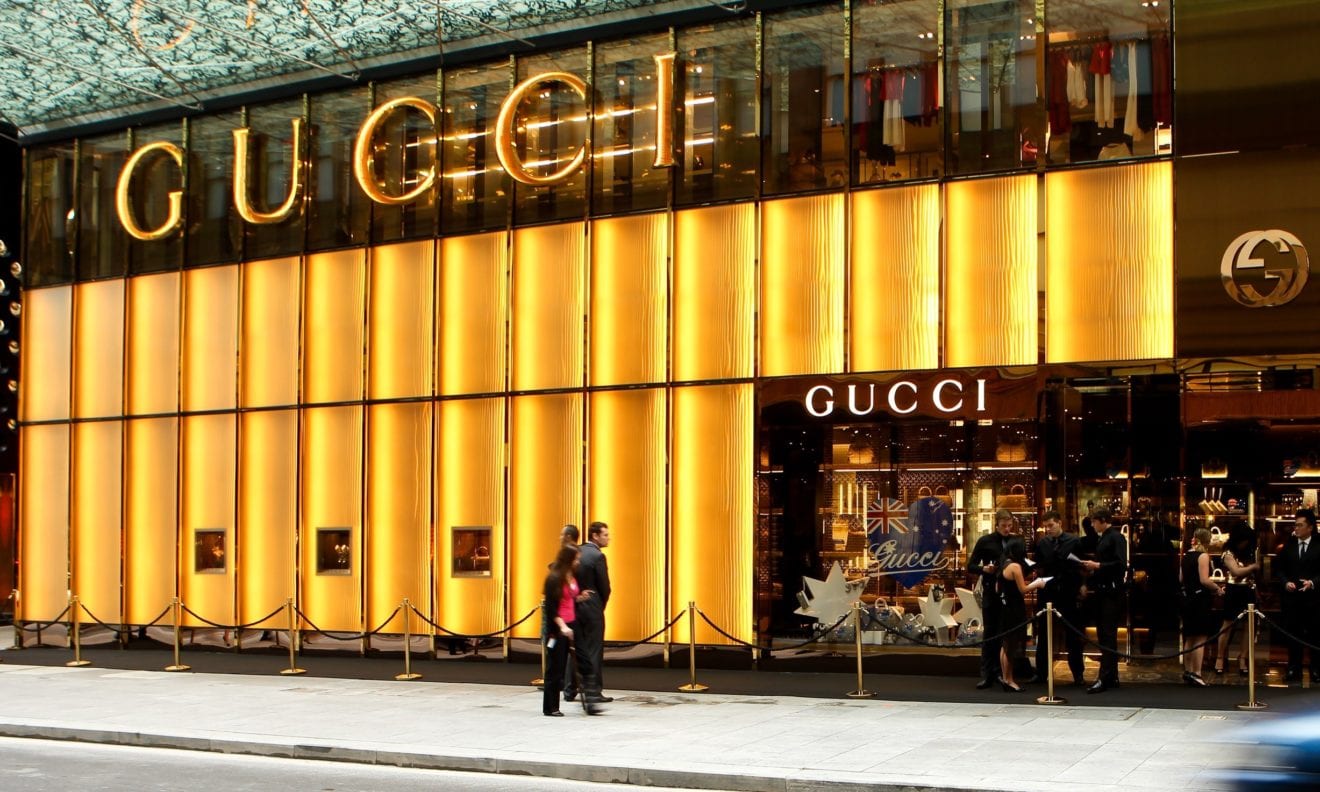
    Kering, which owns Gucci, Saint Laurent and Balenciaga, said it planned to buy back up to 1 percent of its share capital over a 12-month period. According to the luxury-goods group, the total amount of the share buyback agreement would not exceed €300 million (about $342 million) and the price would not exceed €480 per share.

    A stock buyback, also known as a share repurchase, occurs when a company buys back its shares from the marketplace. This means that by paying shareholders the market value per share, a company like Kering can reabsorb a portion of its ownership that was previously distributed among public and private investors.

    But what are the reasons for this?

    Each share represents a small stake in the ownership of the company. There can be several reasons for a share buyback, such as preserving stock price, but in Kering’s case, the move suggests that the company’s senior management is confident about the business and believes its shares are undervalued.

    Undervaluation can occur for multiple reasons. Kering’s management may believe the business is undervalued due to investors’ jittery sentiment around the China market and their ability to see potential in the company’s long term performance.

    Shares in Kering hit a record high of around €522 in June, but dipped in the past three months over worries that white-hot megabrand Gucci was running out of steam.

    The stock rose again in late October after the group reported a better-than-expected rise in third-quarter revenue.

    Sales growth for the conglomerate had been expected to slow from 31.5 percent a quarter earlier to the 22.5 percent rise forecast in a poll of analysts by Inquiry Financial.

    But Gucci sales proved stronger than expected.

    Buying back shares is also a common way for companies sitting on big cash piles to do something about it, and the ideal time is usually after a drop in the stock price.

    It wasn’t Kering’s stocks alone that fell earlier this month.

    Shares in European luxury-goods companies including French rival LVMH sunk, with analysts citing concerns over a consumer slowdown in China, its single biggest market.

    Part of this is due to a crackdown by customs officials, which limits the amount individual Chinese travellers can bring back from abroad.

    “In the most recent weeks, Kering has suffered more than its fair share of pain on the back of the luxury sector downward adjustment following concerns on Chinese consumer confidence,” said Luca Solca, head of luxury goods at BNP Exane Paribas.

    “This has come as investors wanting to reduce exposure to the sector have chosen to lock in gains in stocks that had performed the most, like Kering.”

    Since Chinese consumers account for 32 percent of the worldwide total of luxury sales and about one third of them shop overseas, this is a worry for brands.

    In addition, there is the continued issue of daigou (grey market shopping agents) and the fact that China’s economy is growing at its slowest pace since the financial crisis.

    Gucci president and chief executive Marco Bizzarri acknowledged these challenges.

    “I control what I can control,” he said.

    “Currency fluctuations, traffic flows, daigou duties. It is something we cannot control as a company, so as a CEO I need to control what I can. I hope that Chinese customers are now going to spend more in China, so we’ll do our best to increase their shopping experience here.”

    Jean-Marc Duplaix, Kering’s financial director, said during Kering’s third-quarter earnings call, which came after luxury stocks fell, that the company was seeing an improvement in the retention of Chinese millennial customers and demand had not dipped.

    “In terms of spending power, the situation is still quite sound in China,” he said. “All the events especially in China we had in September or in October, we saw quite good figures. I think that underlying trends are still very, very, very solid.”

    Earlier this year, Bizzarri said that Gucci’s eventual target is to achieve €10 billion ($11.6 billion) in annual revenue.

    “We don’t expect short-term growth issues at Gucci, and anticipate more positive surprises on operating leverage,” said Solca.

  • Vogue Magazine makes debut in Hong Kong

    Vogue Magazine makes debut in Hong Kong

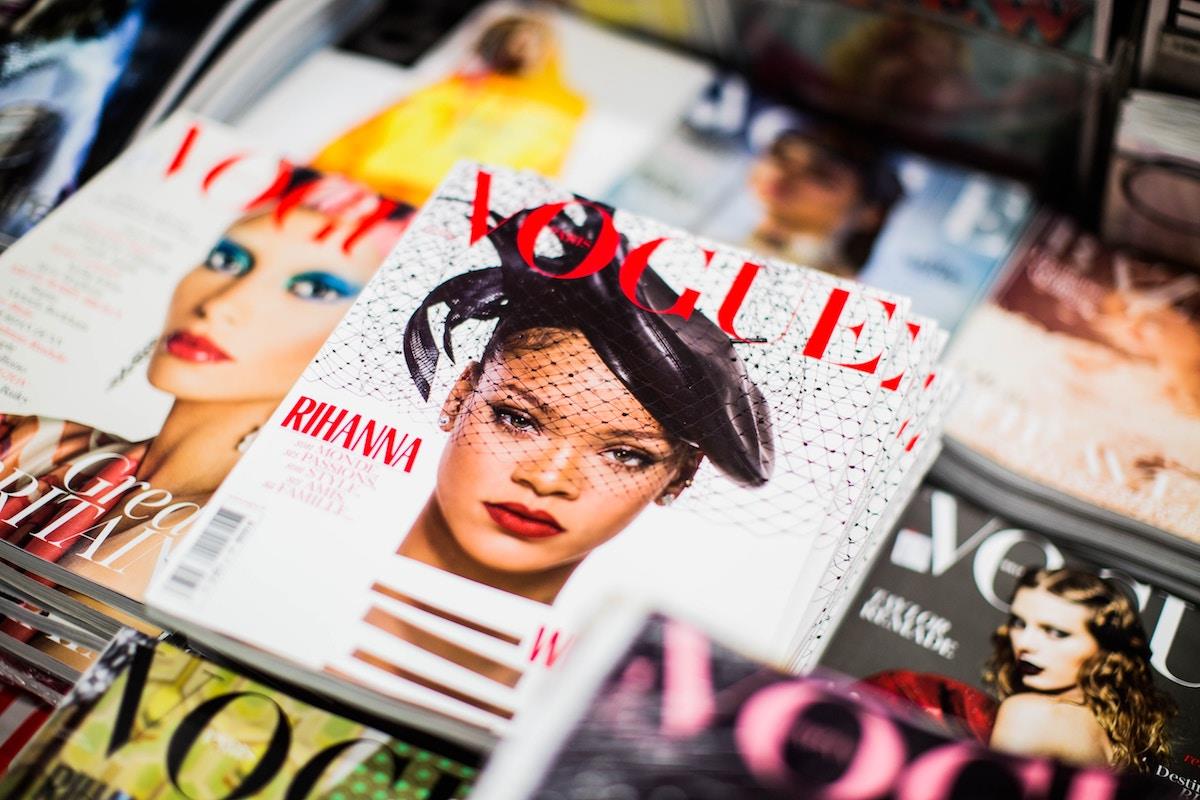
    International lifestyle magazine publisher Condé Nast has confirmed it’s entry into the Hong Kong market. It will launch a local edition of fashion bible Vogue, which is set to debut in spring 2019. Vogue Hong Kong will be the 26th edition of the glossy publication and will be published under a licensing agreement with Rubicon Media.

    Desiree Au has been appointed publisher of Vogue Hong Kong, whose fashion and lifestyle content will be distributed in print, online and on social media.

    The print edition of the magazine will be published in traditional Chinese, while its website will be bilingual (Chinese and English).

    This is not Condé Nast International’s first foray into Southeast Asia.

    In 2013 the company launched Vogue Thailand in partnership with Serendipity Media and, unbeknown to many, also started a Singapore edition of Vogue in 1994 before shutting down the title in January 1997.

    Hong Kong is a relatively mature market, especially when it comes to women’s fashion publishing.

    Just this year, Harper’s Bazaar Hong Kong celebrated its 30th anniversary (Elle Hong Kong reached that milestone in 2017 and Cosmopolitan Hong Kong in 2014), while Marie Claire has been around since 1990.

    This makes Vogue a latecomer to the city’s fashion and lifestyle publishing industry, but Markus Grindel, managing director of brand licensing at Condé Nast International in London, says that Hong Kong is big enough to sustain its own edition of Vogue, not only because of the size of its advertising and luxury business but most importantly because it has a highly educated demographic interested in reading a magazine such as Vogue.

    “Hong Kong has a very rich culture, and with Art Basel and a long history in fashion, it combines to create a very sophisticated reader,” he says. “That for us is the measurement that says that a market is ready for us.”

    In the past three years, Condé Nast International has entered emerging markets such as the Middle East, where it launched Vogue Arabia in 2016, and Eastern Europe, where it debuted Vogue Poland and Vogue Czech Republic and Slovakia earlier this year, all under licence.

    While Condé Nast International is ramping up its expansion plans around the world, Condé Nast in the United States has been grappling with significant challenges in recent years, shuttering print titles such as Gourmet in 2009 and, early this year, Teen Vogue (Teen Vogue still exists online); making repeated rounds of lay-offs; putting magazines such as W and Brides up for sale; and reducing the frequency of key publications such as GQArchitectural Digest and Condé Nast Traveler. The latter will merge next year with Condé Nast Traveller, the UK version.

    This last development is the beginning of a global consolidation plan for the company, which until now has operated as two separate entities, one based in New York and the other in London, operating all the international titles.

    Grindel says that there’s bound to be some sharing of content between Vogue Hong Kong and its sister editions around the world, such as Vogue China, but he also emphasises the individual nature of each edition of Vogue.

    As for whether Condé Nast will expand further in the region – Singapore is said to be in the publisher’s sights – Grindel says the company likes to take a wait-and-see approach to new launches, especially when it comes to Vogue, its flagship title.

    Neither Condé Nast nor Au was able to elaborate on editorial appointments, which suggests that key positions have yet to be filled. While Au is said to have approached candidates from international publications in countries such as China, one name that has been bandied about for the coveted role of editor in chief is that of veteran journalist Peter Wong, formerly of Hong Kong Economic Journal and most recently the founder and editor of Magazine P.

    Meanwhile, Condé Nast has been acting to stay up to date with the growing roel taken by social media influencers.

    Condé Nast Italia has debuted the Social Talent Agency, a new agency focused on developing influencers.

    To start, the agency has enlisted 27 Italian and international influencers who span fashion, modeling, beauty, sport, travel and automotive.

    Some members previously participated in the Condé Nast Social Academy, a partnership between L’Oreal Italia’s luxury division and supported by Milan’s SDA Bocconi School of Management.

    Riccardo Pozzoli, serial entrepreneur and co-founder of TheBlondeSalad, is a Condé Nast Social Academy coach and will serve as the creative director of the newly formed agency.

  • Rebranding for luxury resale site Vestiaire Collective

    Rebranding for luxury resale site Vestiaire Collective

    Vestiaire Collective is refreshing its image as the luxury resale site looks to grow sales in Europe and Asia. The branding changes involve a new, black-and-white logo, that will feature on updated packaging. Vestiaire Collective is also launching a campaign which promotes resale as a modern alternative for the luxury and sustainability-conscious consumer. It will roll out in Europe and Asia Pacific spanning television, print, digital and social media.

    Vestiaire Collective’s new look comes after a US$62 million funding round last year, which the company is using to expand internationally. The past 18 months have seen the company enter Asia, open logistics hubs in France and Hong Kong. This month the company is opening a new head office in Paris, on the back of 100 new hires in 2018.

    “It will allow us to speak to a wider audience,” said chief marketing officer and vice president for EMEA Ceanne Fernandes-Wong of using traditional forms of advertising — including black cabs in London and television in France — alongside digital.

    “Resale is not new, it’s not niche, and we want to bring that education that resale is chic and cool… and bring people who would otherwise say, ‘it’s luxury and not for me.’”

    However, Vestiaire Collective faces increased competition from other players in the luxury resale market, which is on track to hit $6 billion in global sales this year, according to Bain.

    Competitors have piled into the space in recent years, including ThredUp, Poshmark and Grailed. The biggest is TheRealReal, which opened its first permanent retail and consignment space in New York in November 2018, after hosting a pop-up a year earlier, and has raised $173 million funding.

    “We want to extend the category in the right way,” said chief operating officer Olivier Marcheteau. “There is €250 billion worth of luxury product sold every year — we’ve probably only scratched that surface.”

  • Tod’s chairman denies rumours about a possible sale

    Tod’s chairman denies rumours about a possible sale

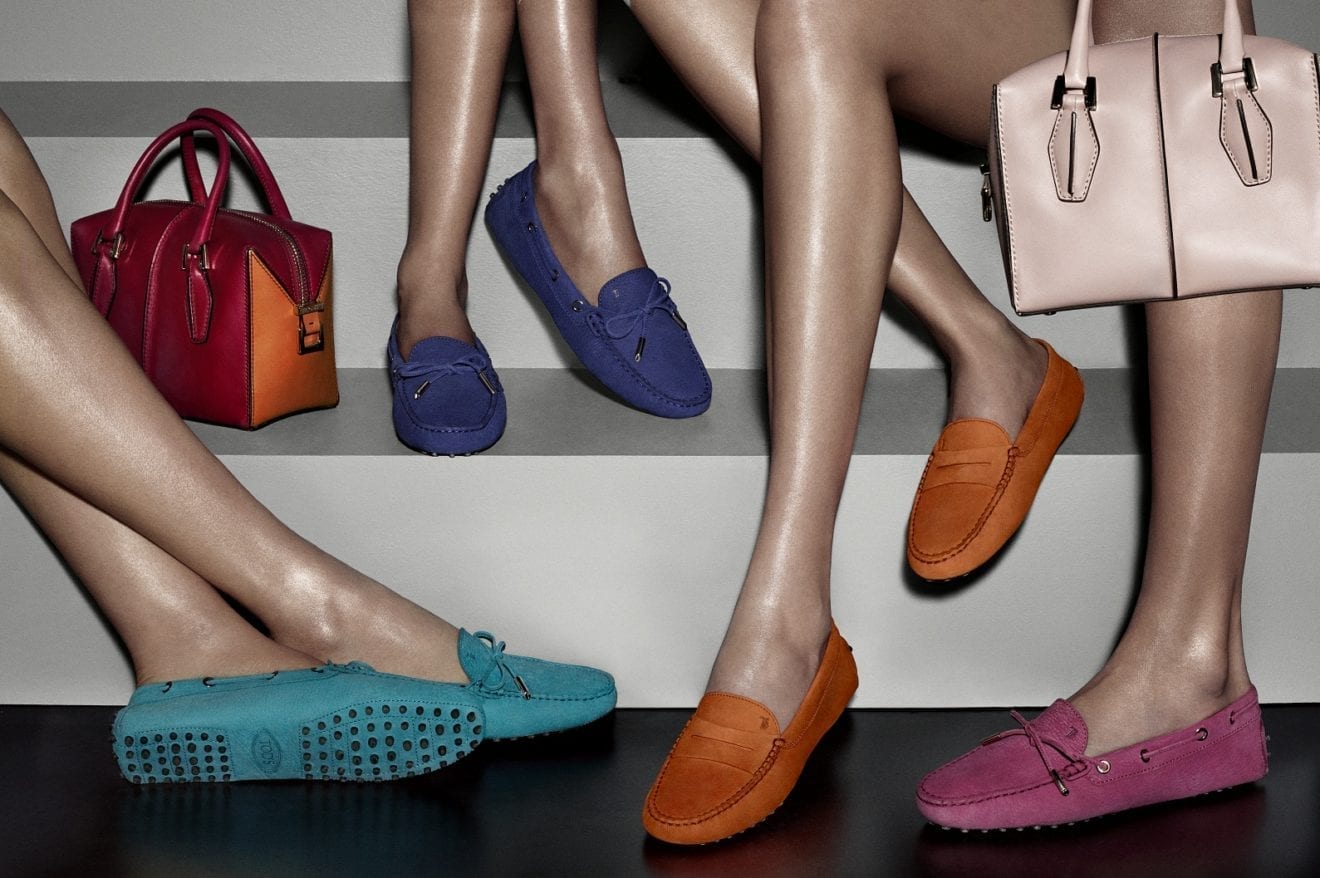
    Speaking at the 2018 Milano Fashion Global Summit, Tod’s Chairman and CEO Diego Della Valle denied rumours surrounding a possible sale of the Tod’s group, reports WWD. The report quoted Della Valle saying: “This rumor is a “recurring” one, but “if we really had to do an operation, it would be to buy, not to sell. “We are preparing the company for the next 10 years, when we will surely be attentive to new consumers, but carefully avoiding going overboard in chasing trends. We must not lose sight of who we are,” he added.

    Speculations followed after an Italian newspaper reported on Monday that Della Valle’s reorganization of the family’s holding companies may be an indication to a future sale of the group.

    The Della Valle family currently owns majority 60 percent of the Tod’s group through two separate holding companies – the Di.Vi. Finanziaria vehicle and the Diego Della Valle & C.

    For the first six months, Tod’s reported a 2.8 percent decline in its net profit to 33.7 million euros, while sales decreased 1.3 percent to 477 million euros compared to 483 million euros in the first half of the previous year but increased 1.8 percent at constant exchange.