Tag: high fashion

  • From Gucci to Dolce & Gabbana: racism in fashion continues?

    From Gucci to Dolce & Gabbana: racism in fashion continues?

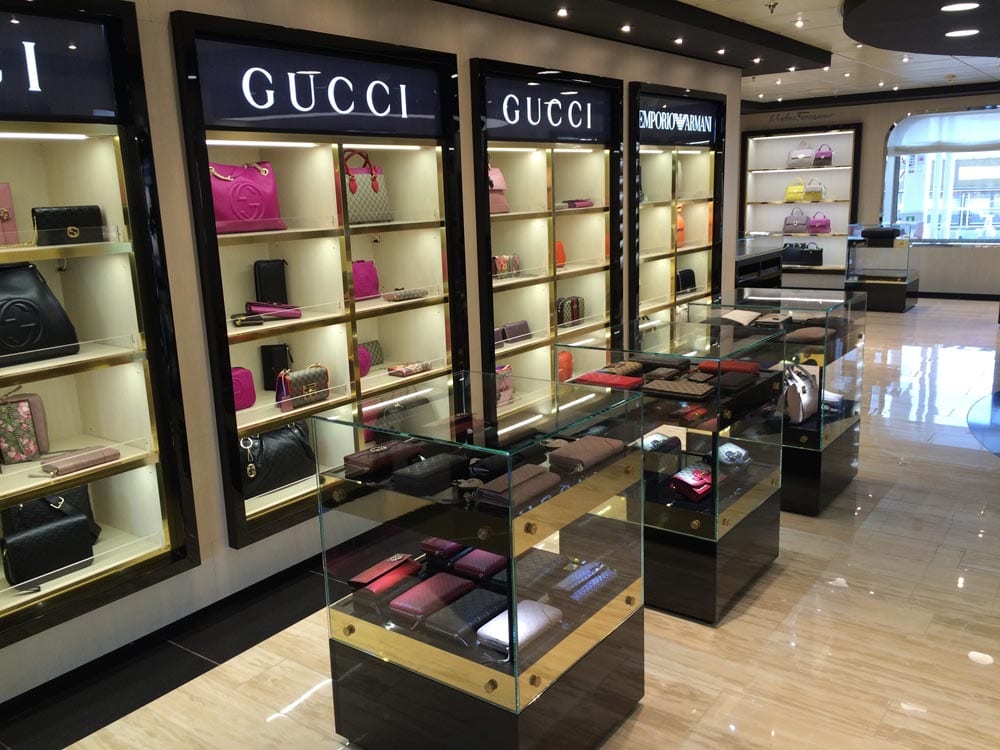
    Luxury fashion is all about breaking codes, creating a new, irresistible message that captivates consumers. But some of the globe’s top brands have raised eyebrows with designs that have seemingly racist undertones. The latest instance of that was Italian fashion designer Gucci, which produced a black wool balaclava jumper with an oversized collar that pulls over the chin and nose. It includes a slit where the mouth is, ringed with what look like giant red lips.

    Its similarity to blackface prompted an instant backlash from the public and forced the company to apologise publicly on Wednesday.

    Gucci also withdrew the offending garment from sale on websites and stores. It said the incident would be “a powerful learning moment for the Gucci team and beyond”.

    But the question persists: how can fashion houses that thrive on detail miss such critical social cues?

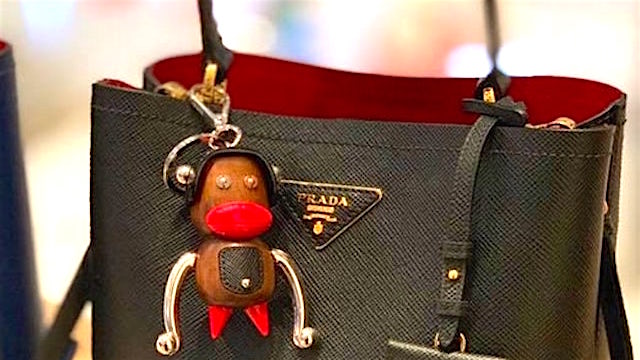
    Prada similarly withdrew a monkey bag charm that recalled blackface in December, saying it “abhors racist imagery.” And Dolce & Gabbana issued a video apology after one of the designers made insulting remarks about Chinese people in a private chat discussing the questionable depiction of a Chinese model in a campaign.

    “Luxury brands used to be able to get away with provocative and eccentric ads that push the boundaries of our society and culture in the name of being creative and cutting edge,” says Qing Wang, a professor of marketing at Warwick Business School in the United Kingdom.

    “However, a long list of recent incidents have caused public outrage, suggesting that era is now gone, or that luxury brands have lost touch with public sentiment. What used to be considered ‘creativity’ has now turned into ‘bad taste’ or even ‘racist’.

    He cited other fashion fails that evoked stereotypes, including Dolce & Gabbana’s “slave sandal” in its spring-summer 2016 collection and a recent Burberry campaign for the Chinese New Year that was compared to Asian horror films.

    While many of these incidents have caused immediate social media backlashes, the longer-term impact will take time to measure, and will depend on the brands’ reaction and future sensitivity.

    Dolce & Gabbana was forced to cancel its Shanghai runway show after the insulting remarks were publicised, top Asian influencers backed out of campaigns and Chinese websites dropped their line – a warning sign from a region that holds great sway in global luxury sales.

    The blackface images have particular resonance in the United States, where the governor of Virginia and his attorney general have been caught up in a scandal over blackface incidents from their college days in the 1980s. The offensive depictions are reminiscent of travelling entertainers from the 19th century, who would paint their faces black to portray African characters in a ridiculous and mocking fashion, spreading racial stereotypes along the way.

    Italian sociologist Michele Sorice at Rome’s Luiss university says that the evocation of blackface by Italian fashion houses signals “a mixture of good faith, and ignorance”. He notes that Italian society still isn’t fully aware of the racial charge in some words and images.

    “I imagine that they don’t truly think they are racist,” Sorice says. “I think they didn’t have the instruments to understand that these images are archetypes that were used to contrast the concept of blackness and make them ridiculous. I think that many simply don’t know. It is a cultural issue.”

    Paolo Cillo, a marketing professor at Milan’s Bocconi University, says the designer’s intent may have been taken out of context and amplified, and she credits Gucci with acting swiftly to quell the controversy.

    “I wouldn’t stigmatise fashion,” Cillo says, comparing the fashion designer process to artistic pursuits like filmmaking, painting or music. “There are artists in the world of culture that did more outrageous things and no one ever said a thing. There is a perception that fashion is ephemeral, or commercial. But from my point of view, it is not. It reflects the times, like all other artistic forms.”

    While the fashion world has been at the forefront of addressing sexual norms – Gucci has been redefining genderless dress codes under Alessandro Michele – it has lagged behind other industries in taking on social issues such as racial tolerance, climate change or women’s empowerment, according to Larry Chiagouris, a marketing professor at Pace University, US.

    “It is not clear why this is,” Chiagouris says, “but the evidence clearly points to the fashion industry’s need … to catch up with the rest of the world.”
  • Will Condé Nast’s paywall work?

    Will Condé Nast’s paywall work?

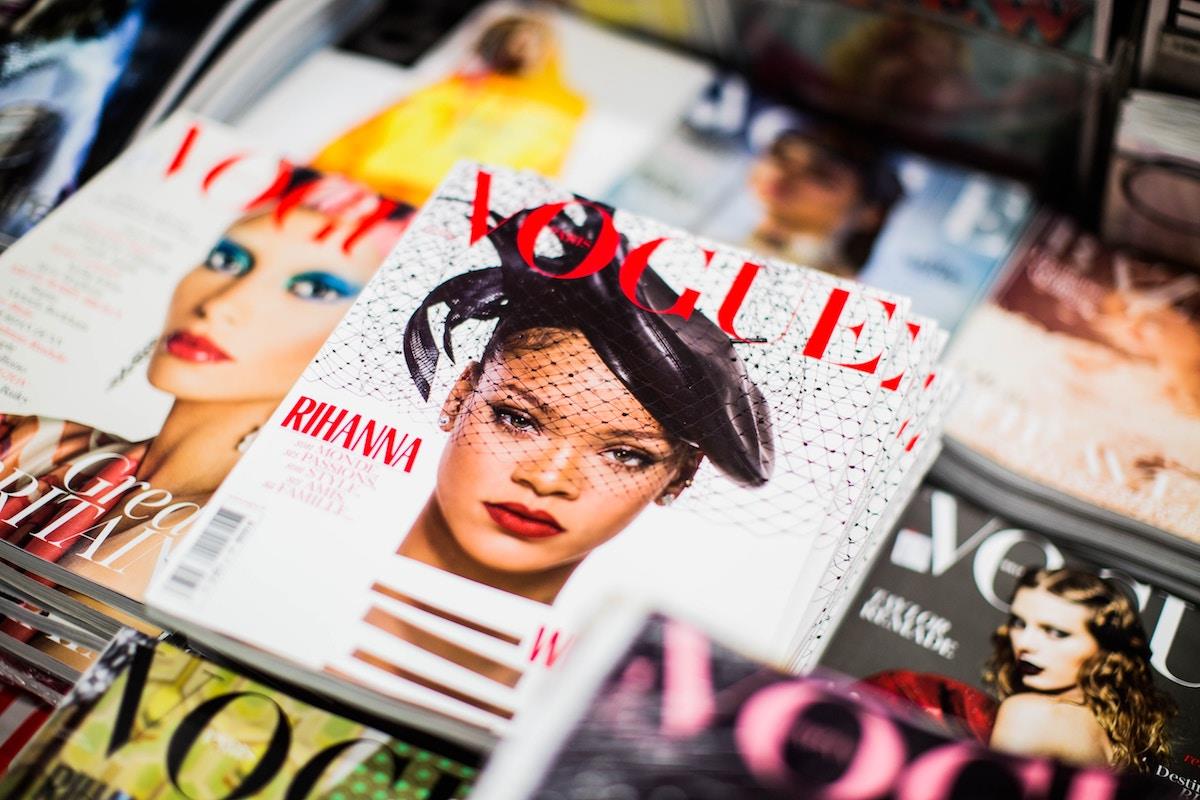
    Earlier this week, legacy publisher Condé Nast announced sweeping plans to implement digital paywalls across its titles in the United States, including Glamour, Vogue and GQ. Currently, The New Yorker, Wired, and Vanity Fair have metered paywalls, with The New Yorker’s paywall driving $115 million in subscription revenue in 2018, up 69 percent from 2015, according to a report in the Wall Street Journal.

    With annual subscriptions to The New Yorker ranging from $89.99 for a digital-only subscription to $119.99 for a digital and print subscription, this implies more than 1 million paying subscribers who drive almost enough revenue to cover the reported $120 million that Condé Nast is said to have lost in 2017, faced with a rapid and sustained decline in advertising revenue. No wonder the company is taking a closer look at digital subscriptions to secure its future.

    Condé Nast is not alone. Paywalls are the latest trend among publishers looking fill the hole left by advertisers, which are spending more of their marketing budgets on creating their own content as well as advertising on digital platforms like Facebook, Google and Instagram where consumers spend huge amounts of time and they can micro-target the audiences they want to reach.

    In addition to selling access to articles, there are no doubt interesting opportunities for Condé Nast to turn some of its content into paid services. For instance, Bon Appétit might leverage its bank of recipes to create an indispensable cooking resource; the NYTimes Cooking App, for which users can pay $5 a month or $40 a year to access, has been a hit for the paper of record and has amassed more than 120,000 subscribers.

    The Vogue Runway archive of reviews and images from fashion shows is an essential research tool, used by stylists and other fashion industry executives who may be willing to pay a fee to access it.

    But not every Condé Nast title has very high-quality content like The New Yorker or a must-use product opportunity. Indeed, for a paywall to work, a publication needs to have must-use products, must-read stories or must-follow writers — and ideally a combination of all three. Trade and business publications often have these attributes, and they also have a leg up because consumers can write off those subscriptions as a business expense.

    In a recent podcast, Condé Nast International president Wolfgang Blau spoke to Digiday about the opportunity in B2B subscriptions as well as “that whole ecosystem of conference and consulting and everything you can build around that.”

    “The borders are really blurry between B2B and B2C,” he added. “I’d say most of our conferences for instance are B2B, most of our current thinking goes more towards B2B, most of our editorial products — if not all — are B2C. They’re being sold as B2C while now the Vogues have a high share of B2B readers and in print it’s learnt behaviour to know which story is B2B or B2C. Digitally we want to untangle that a little bit over the course of this year.”

    Perhaps Blau was referring to the imminent launch of Vogue Business, a new title that the company says will fill “the gap in the market for industry decision-makers, from start-ups to CEOs,” according to a press release, which will be issued next week. Vogue certainly has a sizable following within the fashion industry, but the decision to use the consumer facing brand for a B2B title is curious and raises plenty of questions when it comes to the traditional influence held by Vogue advertisers and the real ability to do independent reporting.

    Then, there is the slew of publications in the Condé Nast portfolio such as Glamour, Self and Teen Vogue, which are fundamentally consumer propositions and will also have to compete with primary news sources like The New York Times and The Washington Post for share of wallet, as well as subscriptions to other consumer services, like Netflix, in a market where people spend only a small fraction of their total media-technology consumption time on publisher websites.

    It is likely that these other Condé Nast subscriptions will cost nowhere near the price of a subscription to The New Yorker — which will soon charge $149 per year for a print and digital subscription — and will be more in line with Vanity Fair and Wired which currently charge $30 per year for a print and digital and will soon bump up their prices to $49 per year.

    The fundamental question is: how many people will pay? Condé Nast will need to convert a good portion of casual web browsers into paying readers, while retaining what’s left of its print subscribers. It has already started to reduce its print issues for publications like Allure, W and Bon Appétit, and cut them altogether for Glamour and Self.

    Magazine subscription figures were inflated for years, based on heavy consumer promotions which were used to acquire readers, similar to paid traffic acquisition online. (The department within Condé Nast long responsible for upping circulation was called “Consumer Marketing.”) The company could use equivalent tactics to up subscription numbers online, but to make the subscription model work it will also need to retain users to make paid acquisition tactics worthwhile over the long term.

    But again, none of this gets to the core issue, which is that these businesses may never be as big as they once were. We no longer live in a culture where the likes of Vogue are singular bibles in their verticals and today’s consumers have a vast universe of media and technology platforms competing for what is ultimately a finite amount of attention.

    For Condé Nast to make online subscription models work, they will have to construct entirely different businesses focused on delivering true excellence and value to their readers — not just pleasing their advertisers. Whether Condé Nast can pull off the pivot remains to be seen.

  • Louis Vuitton celebrates the launch of Virgil Abloh’s SS19 collection

    Louis Vuitton celebrates the launch of Virgil Abloh’s SS19 collection

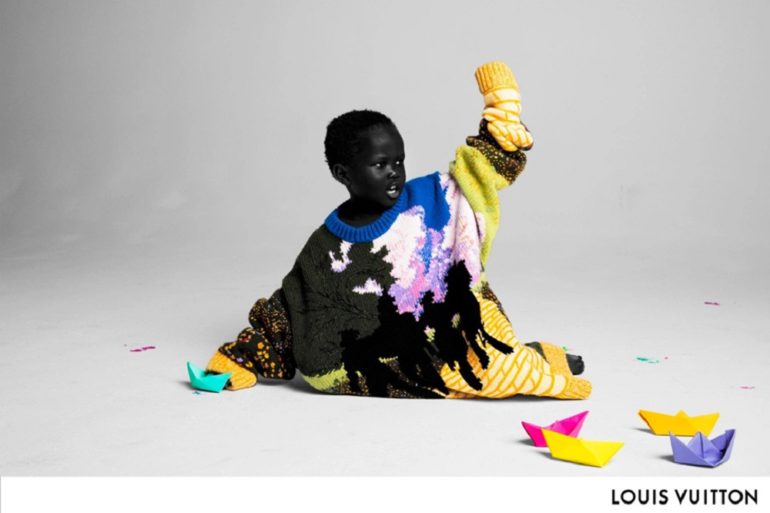
    For those that have been patiently waiting to get their hands on Virgil Abloh‘s debut Louis Vuitton collection, the highly anticipated Spring/Summer 2019 offerings are now available online. The online release comes shortly after Virgil opened up an exclusive pop-up at Chrome Hearts’ New York City flagship.

    The Yellow Brick Road Hand-Knitted Crewneck, Poppies Dorothy Graphic Windbreaker and colorful Calfskin Cut Away Vest serve as notable garments from the collection. Standout carrying options include the iridescent take on the classic Keepall Bandouliere 50, Soft Trunk Messenger Bag, Mini Polochon Messenger Bag and a host of holster-style utility pouches. Rounding things up is Virgil’s take on LV’s iconic Millionaire Sunglasses, early Jordan Brand model-inspired LV Trainer Sneakers, and the LV Creeper Ankle Boot Timberland homage.

    Check out some of the items above and head over to louisvuitton.com now to shop Louis Vuitton’s SS19 collection.

    In case you missed it, Virgil Abloh recently launched a comprehensive archive of his work.

  • Balmain’s comeback into the couture calendar

    Balmain’s comeback into the couture calendar

    Balmain is returning to the couture calendar for the first time in 16 years. Leading the charge is Olivier Rousteing, who has been at the creative helm of the house since 2011 and is widely credited with boosting the brand’s profile through his Balmain Army – an inner circle of internationally famous poster girls, including Kim Kardashian West and a handful of Victoria’s Secret models.

    Speaking at WWD’s Retail & Apparel CEO Summit, the French designer said that he is “looking to bring back the Parisian DNA” by reviving the couture division.

    The January haute couture shows will premiere his inaugural Balmain output as a couturier, but, he revealed, he has his sights set on accessories, fragrance and cosmetics too.

    Indeed, the Balmain expansion plan is firmly underway.

    In May 2017, Rousteing partnered with L’Oréal Paris on a collection of Balmain lipsticks that he had designed himself.

    He said the collaboration was rooted in three things: “First, the savoir faire, which means couture to me. Second, diversity, because this is a topic that is really important to me. And third, modernity.”

    As with his Victoria’s Secret collaboration the same year, and his H&M collaboration in 2015, Rousteing welcomed the chance to make his creations available to a wider audience through lower price points.

    “A lot of people love Balmain but can’t afford it, and with the lipstick they can get into the Balmain universe in an affordable way,” he said.

    “I create a world that is expensive because with Balmain it’s luxury, but if you think of my ideas and ideologies it’s more than a price on the clothes,” he explained.

    Though couture does not support the affordable aspect of the business model, it will certainly expand Balmain’s world and, crucially, underline all of Rousteing’s efforts with real craftsmanship and integrity.

  • Richemont to buy Buccellati from Chinese owner

    Richemont to buy Buccellati from Chinese owner

    Richemont group is in talks to buy Italian jewellery brand Buccellati from its new Chinese owner, according to reports from the Italian press this week. The italian press has reported the Milanese brand was being negotiated for sale with Richemont.

    The deal had apparently hit problems due to restrictions from the Chinese government regarding investments from overseas.

    Qatari investment vehicle Mayhoola was also interested.

    Bank of America Merrill Lynch was reportedly working on the sale.

    China’s Gansu Gangtai acquired Buccellati from its previous owners Clessidra in 2017, for a reported 270 million euros ($313 million), including debt.

    The news follows reports earlier in the year that Gansu Gantai planned to invest some 200 million euros to develop Buccellati.

    Richemont, which owns Cartier, among other jewellery and watch brands, was previously in talks with former Buccellati owner Clessidra, in 2016 to purchase the high-end jewellery brand.

    Both Richemont and Gansu Gangtai declined commentary on the matter.

    Founded in 1919 by the Buccellati family, the Italian jeweller was sold in 2013 to Italian investment fund Clessidra.

    In August 2017, Chinese group Gansu Gangtai Holding acquired an 85% stake.

    It has opened six stores in China alone this year, with a Beijing flagship store slated to open this month.

    Buccellati currently operates 49 namesake retail outlets between stores, retail corners and shops-in-shop, and is also distributed via 150 multi-brand retailers.

  • Vogue Magazine makes debut in Hong Kong

    Vogue Magazine makes debut in Hong Kong

    International lifestyle magazine publisher Condé Nast has confirmed it’s entry into the Hong Kong market. It will launch a local edition of fashion bible Vogue, which is set to debut in spring 2019. Vogue Hong Kong will be the 26th edition of the glossy publication and will be published under a licensing agreement with Rubicon Media.

    Desiree Au has been appointed publisher of Vogue Hong Kong, whose fashion and lifestyle content will be distributed in print, online and on social media.

    The print edition of the magazine will be published in traditional Chinese, while its website will be bilingual (Chinese and English).

    This is not Condé Nast International’s first foray into Southeast Asia.

    In 2013 the company launched Vogue Thailand in partnership with Serendipity Media and, unbeknown to many, also started a Singapore edition of Vogue in 1994 before shutting down the title in January 1997.

    Hong Kong is a relatively mature market, especially when it comes to women’s fashion publishing.

    Just this year, Harper’s Bazaar Hong Kong celebrated its 30th anniversary (Elle Hong Kong reached that milestone in 2017 and Cosmopolitan Hong Kong in 2014), while Marie Claire has been around since 1990.

    This makes Vogue a latecomer to the city’s fashion and lifestyle publishing industry, but Markus Grindel, managing director of brand licensing at Condé Nast International in London, says that Hong Kong is big enough to sustain its own edition of Vogue, not only because of the size of its advertising and luxury business but most importantly because it has a highly educated demographic interested in reading a magazine such as Vogue.

    “Hong Kong has a very rich culture, and with Art Basel and a long history in fashion, it combines to create a very sophisticated reader,” he says. “That for us is the measurement that says that a market is ready for us.”

    In the past three years, Condé Nast International has entered emerging markets such as the Middle East, where it launched Vogue Arabia in 2016, and Eastern Europe, where it debuted Vogue Poland and Vogue Czech Republic and Slovakia earlier this year, all under licence.

    While Condé Nast International is ramping up its expansion plans around the world, Condé Nast in the United States has been grappling with significant challenges in recent years, shuttering print titles such as Gourmet in 2009 and, early this year, Teen Vogue (Teen Vogue still exists online); making repeated rounds of lay-offs; putting magazines such as W and Brides up for sale; and reducing the frequency of key publications such as GQArchitectural Digest and Condé Nast Traveler. The latter will merge next year with Condé Nast Traveller, the UK version.

    This last development is the beginning of a global consolidation plan for the company, which until now has operated as two separate entities, one based in New York and the other in London, operating all the international titles.

    Grindel says that there’s bound to be some sharing of content between Vogue Hong Kong and its sister editions around the world, such as Vogue China, but he also emphasises the individual nature of each edition of Vogue.

    As for whether Condé Nast will expand further in the region – Singapore is said to be in the publisher’s sights – Grindel says the company likes to take a wait-and-see approach to new launches, especially when it comes to Vogue, its flagship title.

    Neither Condé Nast nor Au was able to elaborate on editorial appointments, which suggests that key positions have yet to be filled. While Au is said to have approached candidates from international publications in countries such as China, one name that has been bandied about for the coveted role of editor in chief is that of veteran journalist Peter Wong, formerly of Hong Kong Economic Journal and most recently the founder and editor of Magazine P.

    Meanwhile, Condé Nast has been acting to stay up to date with the growing roel taken by social media influencers.

    Condé Nast Italia has debuted the Social Talent Agency, a new agency focused on developing influencers.

    To start, the agency has enlisted 27 Italian and international influencers who span fashion, modeling, beauty, sport, travel and automotive.

    Some members previously participated in the Condé Nast Social Academy, a partnership between L’Oreal Italia’s luxury division and supported by Milan’s SDA Bocconi School of Management.

    Riccardo Pozzoli, serial entrepreneur and co-founder of TheBlondeSalad, is a Condé Nast Social Academy coach and will serve as the creative director of the newly formed agency.

  • Gucci powers Kering third quarter sales

    Gucci powers Kering third quarter sales

    Kering sales growth significantly outpaced its rivals during the third quarter, up 27.6 per cent as reported and 27.5 per cent on a comparable basis, to €3.402 billion. In Kering-operated stores, Asia Pacific sales rose 33.3 per cent on a comparable basis, bettered only by North America’s 36.1 per cent increase. Growth in online sales exceeded 80 per cent and wholesale sales rose 27 per cent.

    “We are extraordinarily proud of the remarkable performances Kering delivers quarter after quarter,” said chairman and CEO Francois-Henri Pinault. “Our growth, whose pace is unprecedented in the luxury sector, is sound, well balanced and sustained across all regions and distribution channels.”

    Pinault said the company’s enduring success comes down to the talent of each of its brands in “creating strong emotional ties with its customers, conceiving a bold, generous creative universe, and reinventing its codes”.

    “Beyond short-term developments, we know that the secular growth of the luxury market, but particularly our solid fundamentals and the discipline with which we implement our strategy, will continue to support our operating and financial outperformance.”

    Gucci led Kering sales growth during the quarter, with sales up 35.1 percent and strong performance across all distribution channels, regions and product categories. Gucci Asia-Pacific sales soared 41.9 per cent.

    Yves Saint Laurent sales rose 16.1 per cent, driven by the strong performance of iconic lines and the success of new collections.

    While Bottega Veneta sales were down 8.4 per cent on a comparable basis, the label is in a transitional phase led by recently appointed creative director Daniel Lee (ex Celine). His first full collection will go on sale early next year.

    Kering’s other houses (labels) achieved a 32.3 per cent increase in sales, driven by  “exceptional momentum” at Balenciaga and ongoing growth at Alexander McQueen. New collections and extended iconic lines from Boucheron, Pomellato and Qeelin were “very well received”.

    The watches and jewellery categories delivered what the company described as “solid performances”.