Tag: high speed train

  • Feasibility report ready for Vietnam’s $58 billion high-speed railroad

    Feasibility report ready for Vietnam’s $58 billion high-speed railroad

    Vietnam’s north-south high-speed railway is expected to cost $58 billion, according to a feasibility report released at a meeting Tuesday.

    The 1,545-kilometer route from Hanoi to Ho Chi Minh City will have double standard-gauge tracks of 1.435-m width and 23 stations, according to a consultancy consortium comprising Vietnamese firms TEDI, TRICC and TEDIS.

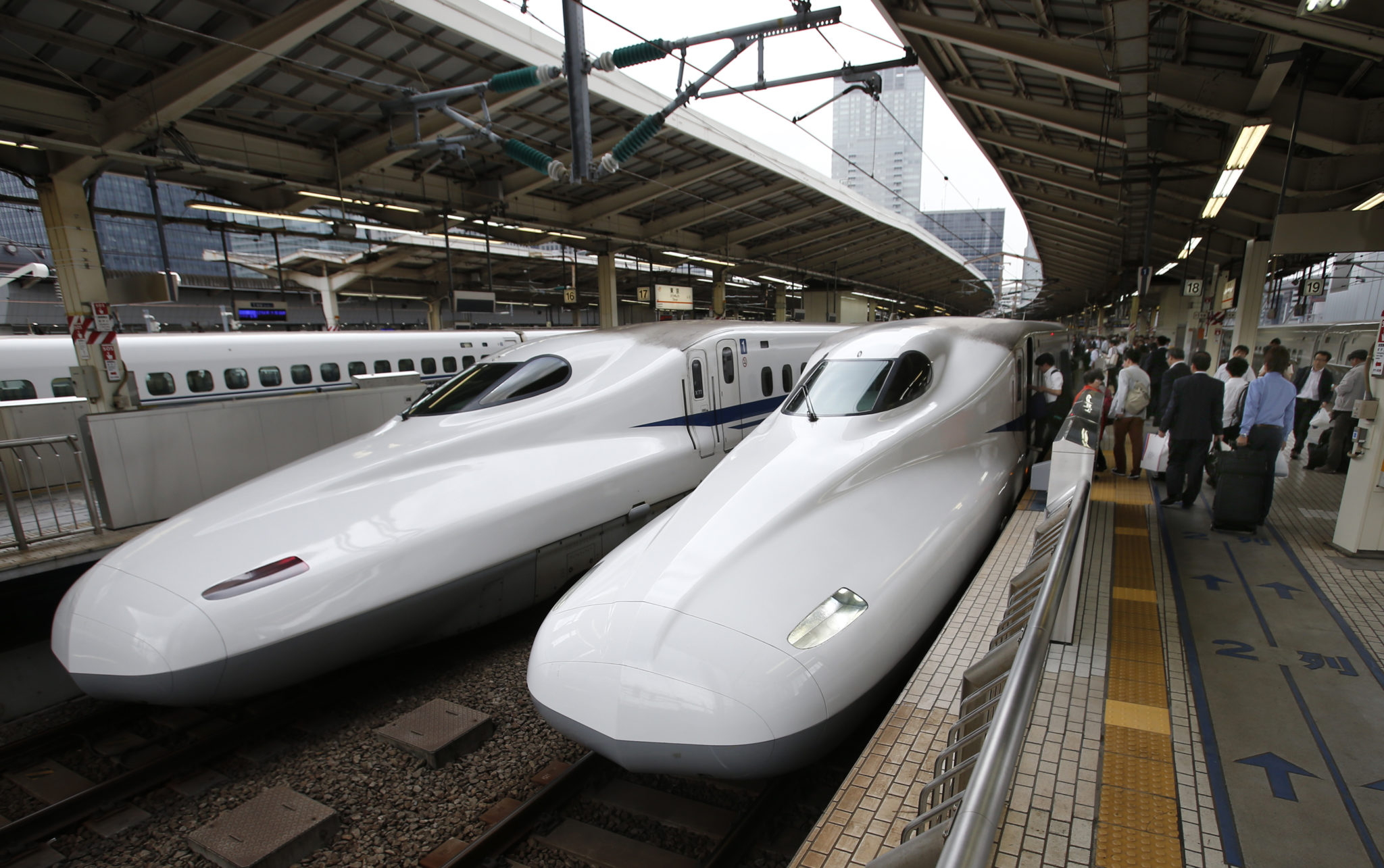
    It will adopt the distributed traction technology used by Japanese high-speed trains.

    Sixty percent of the tracks will be on viaducts, 10 percent underground and 30 percent on the surface, completely protected by fencing and without a single crossing.

    Two sections – from Hanoi to the central city of Vinh and from the central city of Nha Trang to HCMC – will be built first in 2020-2030 at a cost of $24 billion, and commercial operations are likely to begin in 2032.

    All sections are expected to be completed and operational by 2040-2045. Transport time from Hanoi to HCMC will be eight hours, while the current train takes 24 hours.

    The speed of the trains on the route would determine the attractiveness of the project, the report said, explaining that if it runs at 200 kilometers an hour, it would only account for 2.7 percent of the transportation share on the Hanoi – Nha Trang section.

    But if it increases to 350 kilometers, the share could reach 14 percent and the railroad could compete with airlines, it said.

    The proposal is for trains to run at 160-200 km speed after the first section is complete, and 350 km when the entire project is finished.

    At the meeting, Deputy Minister of Transport Nguyen Ngoc Dong said this feasibility report would be considered by authorities before being scrutinized by a European consultancy.

    “The transport ministry will invite bids to select that consultancy.”

    Efficiency unclear

    Experts at the meeting said the consultants need to make the projects’ financials clear.

    It should be divided into smaller sections to improve efficiency instead of the three large sections proposed now, Dr Nguyen Ngoc Long, deputy chairman of the Vietnam Bridge and Road Association, said.

    “Whatever option is selected, the infrastructure must allow a speed of 350 kilometers an hour.”

    Vu Hoai Nam, head of the urban railway faculty at the National University of Civil Engineering, said the feasibility report does not have a risk analysis.

    “If there is no detailed analysis of the ability to recover the investment, clearance and exchange rate fluctuations, the risk will be high.”

    The railroad would impact the passenger shares of airlines, putting pressure on the economy, and that should be taken into account, he added.

    Revived

    The north-south high-speed railroad was recently revived after being rejected by the National Assembly in 2010 due to its $56-billion price tag, which was half of Vietnam’s GDP then.

    If approved by the government now, it will be submitted to the house again next year.

    Experts said it might be more favorably viewed by the NA as well as the public due to Vietnam’s better financial position and greater demand for advanced infrastructure.

    The existing 3,000-kilometer railroad network has not received any major investment since it was built 140 years ago, and does not have the capacity for high speeds.

    Investment in railways currently accounts for only one percent of the transportation sector’s total budget.

    The NA approved a plan earlier this month to upgrade it at a cost of $300 million.
  • Need for high-speed rail arguments continue unabated

    Need for high-speed rail arguments continue unabated

    More than 10 years after they were first proposed, high-speed railroad plans remain mired in concerns and disagreement over speeds and cost.

    Three high-speed routes are currently under study or have been proposed: north-south, Ho Chi Minh City-Can Tho and Hanoi-Lang Son.

    A final report by consultancy consortium CCTDI-TRICC-TEDI, comprising three Vietnamese construction firms, on the master plan for railroad development for 2021-30 sets out two options.

    The more ambitious one envisages the completion of phased investment for two north-south high-speed railways, Hanoi-Vinh and HCMC-Nha Trang by 2030.

    The two railways have a total length of 651 km and might cost VND561 trillion ($24.18 billion) to be built.

    The other is to complete them by 2032 at a cost of VND375 trillion. The consultants forecast a maximum of 14 million passengers using the high-speed trains annually at that time.

    They expect an average of 44.7 million passengers using north-south railroads annually by 2050.

    An expert who asked not to named said however that these options are “overly optimistic,” if not downright unfeasible.

    He said 10 years would not be enough to complete these projects, considering the approvals that need to obtained at various levels, the money that needs to be raised and carrying out the work.

    There is also a continuing debate on whether the trains should run at 200 kph as proposed by the Ministry of Planning and Investment and some experts or 350 kph as suggested by the Ministry of Transport and the consultants.

    That may prolong the time required for getting National Assembly approval.

    Dang Huy Dong, director of the Planning and Development Institute, said building infrastructure for trains running at 350kph would be prohibitively expensive, and the resultant high fares would also make the entire thing unviable.

    It is economically efficient to have passenger trains running at a speed of 150kph and freight trains at 100kph, he told local media.

    The State Appraisal Council is in the process of identifying an agency that would assess the feasibility of the various options for the north-south routes.

    Recently the Lang Son Province people’s committee proposed building the Hanoi-Dong Dang high-speed rail starting in 2030, saying is necessary to enhance rail transport between ASEAN countries and China. The proposed route will go on up to Nanning in Guangxi, China.

    Earlier this year the Ministry of Transport ordered the Railway Project Management Board to complete a pre-feasibility study on the HCMC-Can Tho link by 2022.

    The South Construction Technology Science Institute wants high-speed trains on the route with a 1.43-meter double track serving both passenger and freight trains traveling at 200 kph and 100 kph.

    It expected it to cost around $10 billion.

    A Ministry of Transport official said the route might be necessary, but many issues need to be sorted out first. For instance, the 150-km distance might not be ideal for a high-speed train, he said.

    Vu Anh Minh, chairman of Vietnam Railways, said flying from Hanoi to HCMC takes around five hours in all while a high-speed train traveling at 300 kph would take six hours.

    “Considering the nature and geography of Vietnam, the development of a high-speed network is imperative, and we are losing socioeconomic development opportunities every day without it.”

  • Vietnam sees high-speed train finally coming

    Vietnam sees high-speed train finally coming

    The trans-Vietnam high-speed rail is back on the agenda, with officials saying it can compete with aeroplanes for business.

    Government officials are also confident that the current pace of economic development will make it practical to source funding for the multi-billion dollar project in phases.

    The Ministry of Transport is working on a feasibility study for the high-speed railway project what would span 1,545 kilometers (960 miles) to connect Hanoi and Ho Chi Minh City.

    The project is estimated to cost more than $58 billion, which was the reason lawmakers had shot it down several years ago, saying the nation could not afford it then.

    It is currently envisaged that two sections of the route – from Hanoi to the north-central city of Vinh and from the south-central city of Nha Trang to HCMC – will be built first in 2020-2030 at a cost of $24 billion, and commercial operations are likely to begin in 2032.

    Questions have been asked about the advisability of pursuing the high-speed rail project in the context of Vietnam still needing a lot of capital for infrastructure projects like expressways, the Long Thanh International Airport, which is set to become the country’s largest, as also expansion of the Tan Son Nhat Airport in HCMC.

    This is countered with the argument that the high-speed railway has great advantages in a country with narrow and long terrain like Vietnam.

    Nguyen Van Thanh, chairman of Vietnam Automobile Transportation Association (VATA), said that in the next 10-15 years when Vietnam’s population rises to more than 100 million, the demand for travel would be huge.

    By then, the country will need more means of transportation, Thanh said, adding that he guessed many people would prefer the rail rather than roads on safety considerations.

    Going further, Thanh compared the high-speed rail with flying.

    “Many will choose the high-speed rail because the time for traveling would be almost the same, but unlike airports that mostly lie in suburban areas, rail stations are in the inner city, which makes it more convenient for passengers. Moreover, the procedures for flying are much more complicated.”

    Transport expert Than Van Thanh had similar thoughts.

    “Railways have been left behind for 70 years in Vietnam and the country has paid a lot of attention to developing roads; but it’s not safe to let bus drivers drive for more than 300 kilometers at a time.

    “Road transport has high logistical costs and frequent accidents. A high-speed rail will ease the overload on the roads and thus reduce traffic accidents and environmental pollution. If we let too many long distance buses operate on the road, like we are doing now, we are going in the opposite direction from the world,” he said.

    Tran Dinh Thien, a member of the Prime Minister’s advisory group, said the National Assembly used to turn down proposals on the high-speed rail because the investment was too high, but with the current speed of economic development, it was possible to raise fund for each phase of the project.

    “The demand for travel between Hanoi and Vinh is high and with a designed traveling time of 1.5 hours, high-speed trains can compete with buses and airlines. It is not right to give priority to any specific sector,” he said.

    According to a consultancy consortium comprising Vietnamese firms Transport Engineering Design Inc (TEDI), Transport Investment and Construction Consultant Joint Stock Company (TRICC) and Transport Engineering Design Incorporation in the South (TEDIS) that is hired by the government to do the feasibility study, the trans-Vietnam high-speed rail would adopt the distributed traction technology used by Japanese high-speed trains.

    Sixty percent of the tracks will be on viaducts, 10 percent underground and 30 percent on the surface, completely protected by fencing and without a single crossing.

    The entire project could be completed and operational by 2040-2045. The train ride from Hanoi to HCMC then would take eight hours, while the current one takes 24 hours.

    Vietnam’s existing 3,000-kilometer railroad network has not received any major investment since it was built 140 years ago, and does not have the capacity for high speeds.

    Investment in the railways currently accounts for just one percent of the transportation sector’s total budget.

  • Hong Kong high-speed rail link to Guangzhou ready to go

    Hong Kong high-speed rail link to Guangzhou ready to go

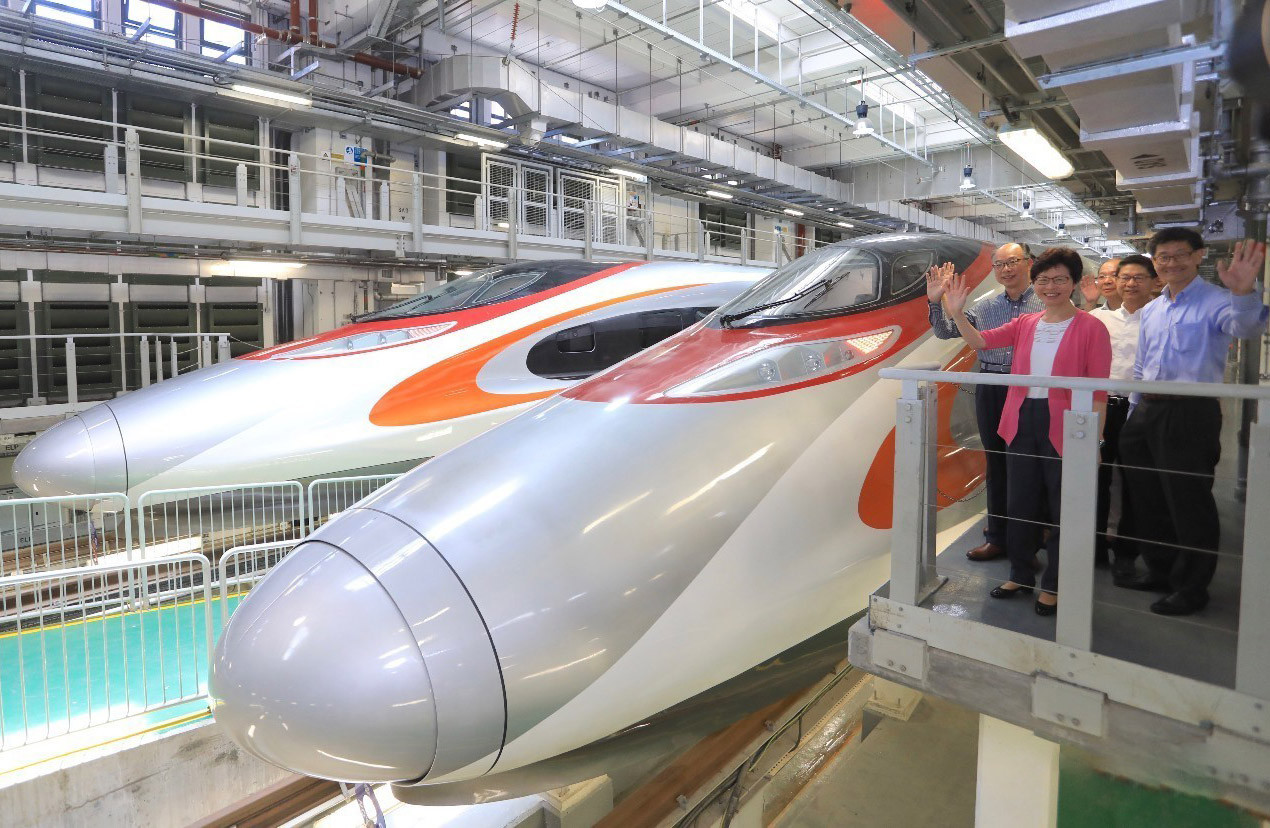
    The 26km Hong Kong section of the Guangzhou-Shenzhen-Hong Kong Express Rail Link is set to debut on September 23, forecasting 80,100 passengers daily. The cross-border service will link the city to 44 destinations on mainland China.

    Last weekend, 20,000 people who obtained tickets last week were poised to catch a first glimpse of the station.

    On the first basement level, 23 counters will sell tickets to 44 mainland destinations, with various modes of payment accepted, such as Octopus, Alipay, WeChat Pay and Samsung Pay.

    Five counters will offer tickets to destinations in mainland China’s rail network or those beyond the 44 stops.

    Passengers can also buy tickets from 39 machines. However, the automated systems only accept home-return permits for Hong Kong and Macau residents as well as second-generation mainland resident IDs. Up to 10 tickets may be bought at a time.

    Those holding other travel documents are required to buy tickets from the counters.

    There are about 40 shops and a large food court located on-site. The nine Hong Kong-owned trains at the terminus do not offer food services in their carriages.

    Other shops will offer banking facilities, as well as souvenirs, fashion products and cosmetics. Brands include Sasa, Asia Favourites, Pocket Noir, Okashi Land, 7-Eleven and Mannings.

    Delayed three years and over budget by one-third of its total costs, the rail line has sparked controversy over a “co-location” arrangement allowing mainland officials to enforce their laws in a port area leased to them.

    A designated zone – including two office floors, a waiting hall for departing passengers, station platforms and connecting passageways and escalators, as well as train compartments – will be subject to mainland jurisdiction and laws.

    Supporters of the joint checkpoint plan have argued the plan would be more convenient for passengers as customs clearance would be consolidated. But critics say the arrangement contravenes the Basic Law, the city’s mini-constitution, which states that mainland legislation shall not apply on Hong Kong soil except in matters of defence, foreign affairs and those “outside the limits” of local autonomy.

    Mainland officials start work at the station today.

    This new connection is part of the bigger plan of interaction in the Greater Bay Area, and will definitely have an impact on the retail industry.

    The long-established business of Chinese visitors going to HK for shopping will now see the same flow of people going from HK to Shenzhen to chill out in the fast-developing so called megacity. Shenzhen is rapidly transforming and working on its infrastructure to welcome visitors, but also its growing population.