
Retail News CRM

Tag: high tech

  • Revolutionizing Beauty: Amorepacific Transforms Seoul Flagship Store into High-Tech, AI-Powered Personalized Cosmetics Lab

    Revolutionizing Beauty: Amorepacific Transforms Seoul Flagship Store into High-Tech, AI-Powered Personalized Cosmetics Lab

    Asia’s leading beauty brand, Amorepacific, has unveiled its rejuvenated flagship retail hub, Amore Yongsan. With a new approach focused on artificial intelligence-powered diagnostics, personalized cosmetic products, and a unique shopping experience, this flagship makeover reflects the current trends in the beauty industry.

    Navigating the New Age of Beauty

    Situated at the company’s headquarters, the refurbished retail space is an innovative blend of shopping, beauty services, and customer-centric research. It is designed to provide a holistic beauty experience to the patrons, right from product discovery to purchase.

    Amore Yongsan, as explained by an Amorepacific representative, is now an interactive platform where customers are invited to partake in a ‘Create New Beauty’ vision. This vision promises an invigorating beauty journey that extends beyond simple purchases to include personalized cosmetology, in-depth skin diagnostics, as well as active participation in the development of new products.

    Innovation at the Heart of the Concept

    Two revolutionary features steal the limelight in this revamp. The first is the ‘Amore Bespoke’ service, a first-of-its-kind on-demand beauty offering. It allows customers to design custom-made products in the makeup, lip, and haircare categories, catering to their individual needs and preferences.

    The second is ‘City Lab’, an AI-assisted skin and scalp diagnostic platform. Utilizing Amorepacific’s historical skin research data, this platform uses predictive technology to forecast potential skin alterations based on various lifestyle factors.

    The decision to relaunch was driven by the increasing demand for personalized, tech-powered beauty experiences. This move also signals Amorepacific’s competitive positioning against other K-beauty brands, as it seeks to attract a younger consumer base and international clientele who crave immersive retail experiences.

    Questions & Answers

    What is the ‘Create New Beauty’ vision?
    It is Amorepacfic’s innovative approach to provide a comprehensive beauty journey to its customers. It includes personalized cosmetics, advanced skin analysis, and active customer participation in product development.

    What is the Amore Bespoke service?
    Amore Bespoke is an on-demand beauty service that allows customers to create custom-made products in makeup, lip, and haircare categories based on their individual needs and preferences.

    What is the function of the ‘City Lab’?
    The City Lab is an AI-powered skin and scalp analysis platform. It uses Amorepacific’s historical skin research data and predictive technology to forecast potential skin changes due to various lifestyle factors.
  • Arirang 6 Satellite: South Korea’s High-Tech Hope Battles New Launch Setbacks

    Arirang 6 Satellite: South Korea’s High-Tech Hope Battles New Launch Setbacks

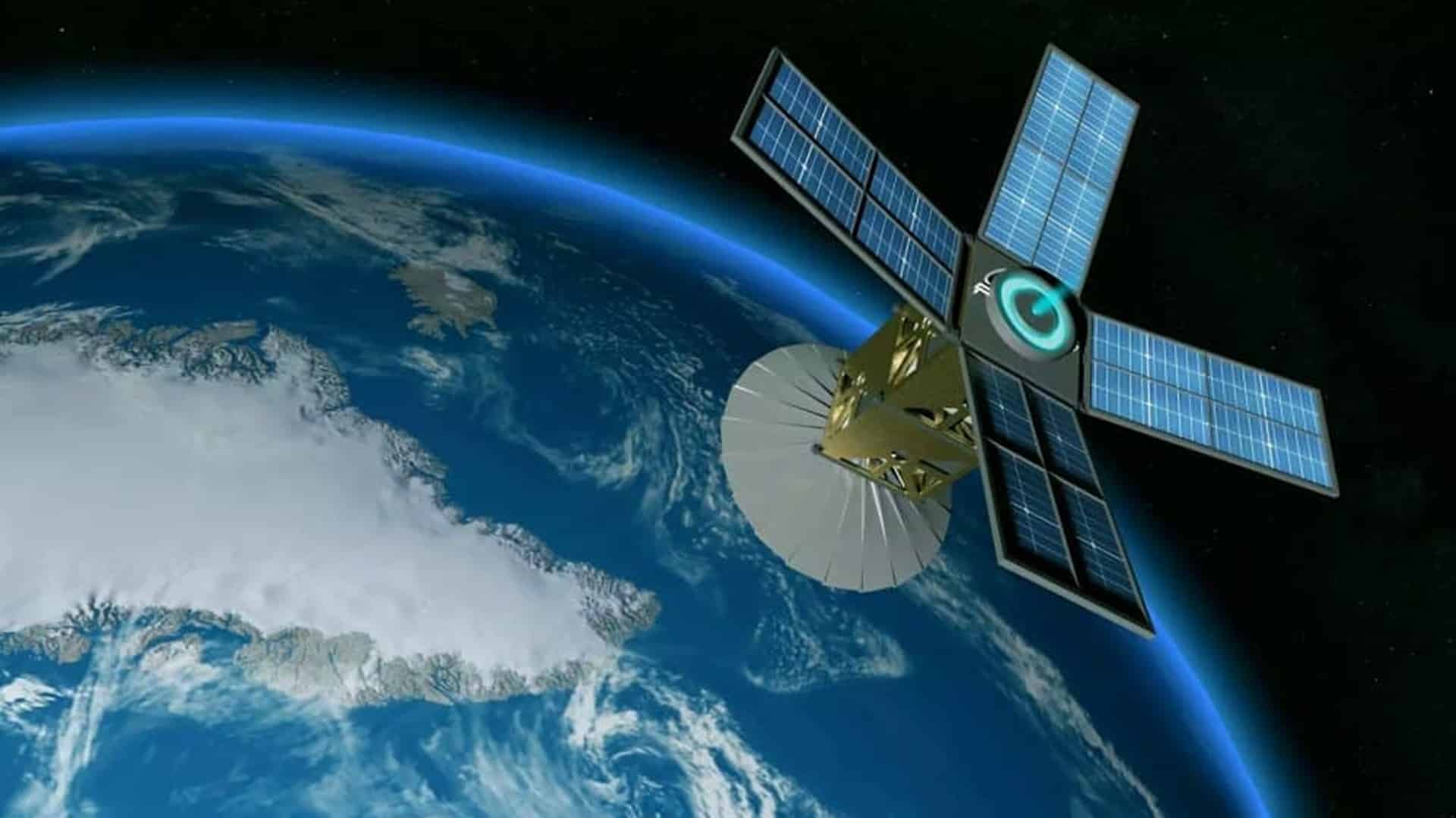
    South Korea’s multipurpose practical satellite, Arirang 6, has experienced another postponement in its launch schedule, further emphasizing the nation’s dependence on foreign launch services and the consequential lack of control over scheduling. The Korean AeroSpace Administration (KASA) has been informed of the delay by the European launch service provider Arianespace. Initially set for launch in early 2025, the launch of Arirang 6 is now slated for the third quarter of 2026 or later.

    Arirang 6: A High-Resolution Satellite

    Arirang 6, also known as KOMPSAT-6, is a high-resolution synthetic aperture radar (SAR) Earth observation satellite that can operate irrespective of weather conditions or time of day. The satellite boasts the capability to identify objects as small as 50 centimeters in both horizontal and vertical dimensions. This has led the South Korean government to invest around KRW 370 billion in the program, acknowledging its significance in national security, disaster response, and environmental monitoring.

    Despite the completion of its development several years ago, the satellite has not yet entered orbit owing to recurring delays associated with foreign launch vehicles. The latest delay is due to problems affecting Platino-1, Italy’s high-resolution SAR satellite, slated to share the launch on Arianespace’s Vega C rocket.

    European Payloads Take Priority

    As the Vega C is a European-developed launch vehicle spearheaded by the Italian Space Agency, European payloads are given priority. This means that the launch timeline of Arirang 6 remains dependent on the progress of Platino-1’s development. In the previous year, issues related to Platino-1 resulted in an earlier delay of the Korean satellite’s launch.

    Arirang 6 finished the final assembly and space environment testing in August 2022, marking the culmination of a development effort that commenced in 2012. Since then, the satellite has been stored at the Korea Aerospace Research Institute’s satellite development facility in Daejeon, awaiting a confirmed launch window.

    Multiple Disruptions

    The mission has encountered several disruptions over the past few years. Initially, South Korea planned to launch Arirang 6 from Russia in 2020, but development delays moved the schedule to the latter half of 2022. The Russia-Ukraine conflict subsequently made Russian launch options impossible, compelling Seoul to look for an alternative provider.

    In 2023, South Korea chose Arianespace’s Vega C rocket for the launch. However, another setback occurred when Vega C had a mission failure in December 2022, leading to a suspension of flights and a thorough safety review. These concerns resulted in further postponements: first to December 2024, then to the latter half of 2025, before the most recent delay pushed the timeline to 2026.

    Industry experts caution that countries without independent launch capabilities are extremely susceptible to schedule disruptions in the international launch market. Major providers like SpaceX and Arianespace prioritize domestic or strategic payloads, often leaving foreign customers vulnerable to delays beyond their control.

    Although South Korea has improved its domestic launch capabilities through the Nuri (KSLV-II) rocket program, analysts observe that the country has not yet fully incorporated its indigenous launch systems with high-value, operational satellites like Arirang 6.

    Questions & Answers

    What is Arirang 6?
    Arirang 6, also known as KOMPSAT-6, is a high-resolution synthetic aperture radar (SAR) Earth observation satellite that can operate irrespective of weather conditions or time of day.

    Why has the launch of Arirang 6 been delayed?
    The launch of Arirang 6 has been postponed due to recurring delays related to foreign launch vehicles. The most recent delay is due to problems with Italy’s high-resolution SAR satellite, Platino-1.

    What challenges is South Korea facing in its satellite launch capabilities?
    Although South Korea has improved its domestic launch capabilities, the country has not yet fully integrated its indigenous launch systems with high-value, operational satellites. This has left it vulnerable to schedule disruptions in the international launch market, as seen with the repeated delays in the Arirang 6 launch.

  • Boom abroad for Hyundai Mobis high-tech car parts

    Boom abroad for Hyundai Mobis high-tech car parts

    Hyundai Mobis said Tuesday it logged $1.7 billion worth of orders for high-tech automotive parts from non-Korean customers last year, setting a new record for overseas sales. High-tech parts include sensors, display and lamps used for self-driving and electric cars. Last year’s figure is a 40 percent jump from $1.2 billion worth of orders in 2017. The parts company has been rapidly expanding its global presence over the years. Orders for high-tech parts from overseas customers totaled just $500 million in 2015.

    The Hyundai affiliate said the record-breaking result is largely due to increasing demand from overseas electric vehicle companies and its focus on developing future car technologies.

    According to Mobis, it received nearly $1 billion worth orders, 60 percent of its total overseas orders, from electric vehicle companies in North America, Europe and China.

    Many electric car companies are start-ups. A Mobis spokesperson said companies at this stage of development tend to be more aggressive when it comes to investment in technology.

    Recently, Mobis signed a deal to supply steering wheel-mounted displays and smart lamps to electric car companies. The products have yet to be commercialized.

    Steering wheel-mounted displays are fit in the center of the wheel.

    Smart lamps will be used for communicating with pedestrians or other cars through the display of light pattern messages.

    The parts maker also signed a contract to supply lateral radars to a North American company. This type of radar extends the sensing coverage of autonomous vehicles.

    The company said it will continue to expand sales of high value-added electronic parts this year as global automakers increasingly rely on digital features to differentiate their products.