Tag: high

  • Moncler Soars High: Luxury Retailer Rides the Wave of Asia Market Expansion With Robust Sales Growth

    Moncler Soars High: Luxury Retailer Rides the Wave of Asia Market Expansion With Robust Sales Growth

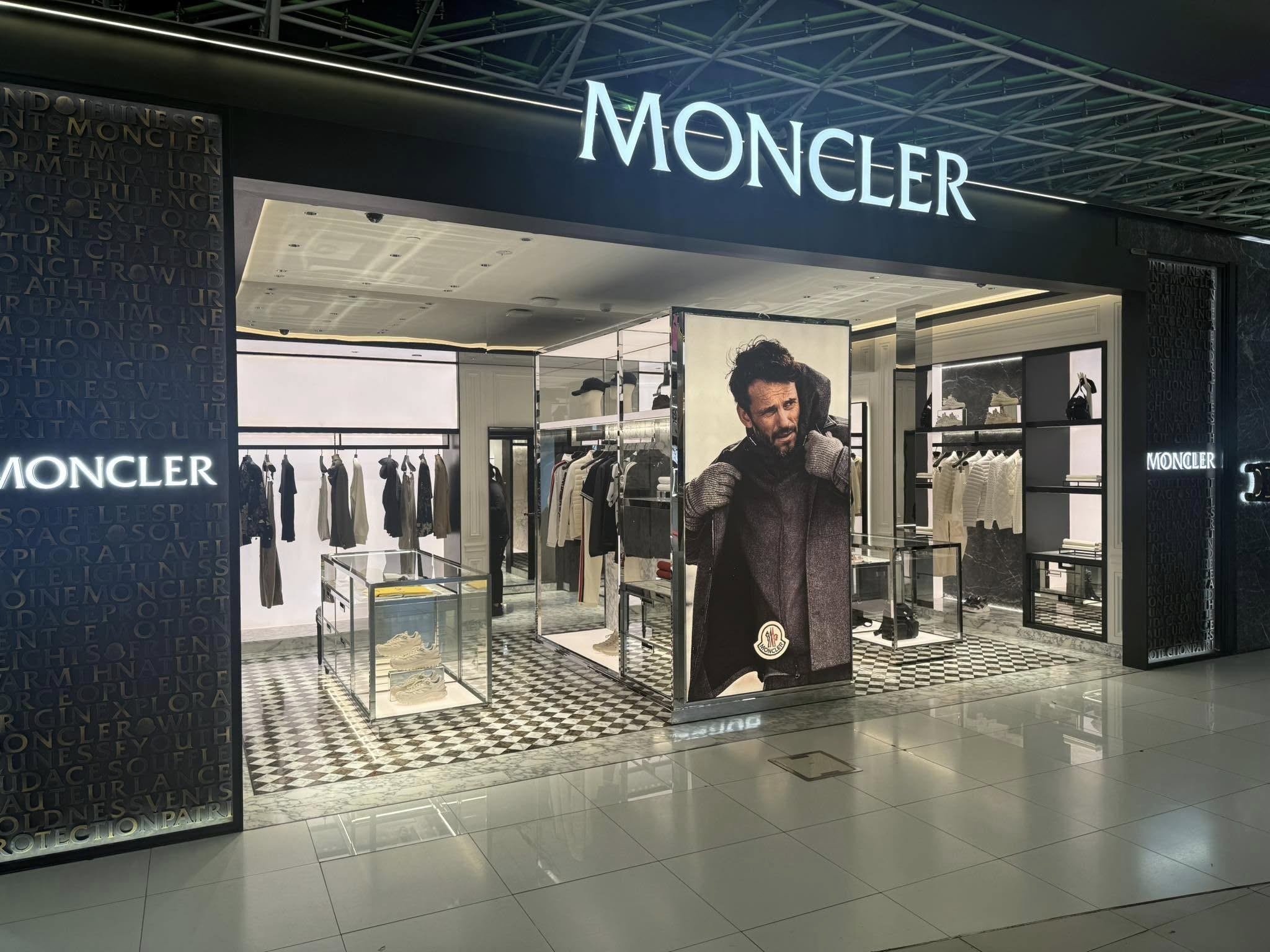
    Luxury fashion retailer Moncler has reported a strong momentum in sales growth, driven predominantly by its expanding presence in Asia.

    Strong Performance Across Moncler and Stone Island Brands

    The first half of their financial year saw a significant rise in revenues across its Moncler and Stone Island brands, with increases of 9% and 11% respectively. This strong performance for both brands contributed to a combined first-half group revenue of $1.47 billion and earnings before interest of $280 million.

    Remo Ruffini, Moncler’s Executive Chairman, is of the view that the group’s resilience stems not solely from its ability to swiftly adjust to changes, but also from staying true to its identity and maintaining close ties with the communities they serve. “In the first half of the year we delivered solid growth and profitability across both our brands, staying focused on our products, the creativity that characterizes our brands and the collective energy we share with our audiences,” he said.

    Moncler’s Rapid Growth in Asia

    Asia has proven to be the fastest-growing market for Moncler Group, now representing 54.4% of total sales. In comparison, the share of sales in Europe, the Middle East, Africa, and the Americas has seen a decline.

    Ruffini added that the group is continuously seeking innovative ways to remain relevant throughout the year, beyond the core season. Despite the complex and unpredictable operating environment, he believes these challenging times test their ability to be sharper, bolder, while maintaining discipline and staying grounded. “We approach the second half of the year and the opportunities ahead with this same spirit, and with a clear sense of direction,” he concluded.

    Questions & Answers

    What has driven Moncler’s recent sales growth?
    Moncler’s sales growth was primarily driven by its expansion in Asia, contributing to 54.4% of total sales.

    How did Moncler and Stone Island brands perform in the first half of the year?
    Both brands showed significant growth with their revenues increasing by 9% and 11% respectively, leading to a combined first-half group revenue of $1.47 billion.

    What strategy does Moncler implement to stay competitive in the market?
    Moncler strives to remain relevant throughout the year by continuously seeking innovative ways to engage audiences, focusing on their products and the creativity that characterizes their brands while staying true to their identity and maintaining close ties with the communities they serve.
  • Dollar Scales Two-Month High Against Dong amid Federal Reserve Rate Hike Speculations

    Dollar Scales Two-Month High Against Dong amid Federal Reserve Rate Hike Speculations

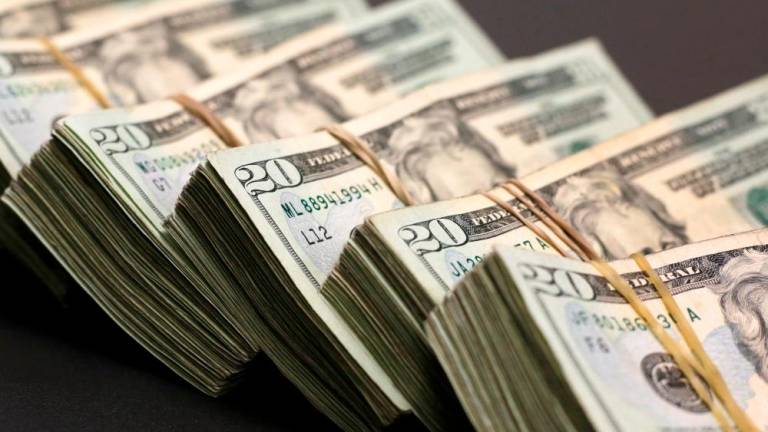
    On Tuesday morning, the U.S. dollar witnessed a slight increase in value against the Vietnamese dong, maintaining a position close to its two-month peak in comparison to other major currencies. The commercial bank Vietcombank recorded a 0.004% rise in the U.S. currency, selling it at VND26,408. Conversely, the black market saw a 0.04% decrease, with the dollar going for VND26,360.

    Global Performance of the U.S. Dollar

    In the international currency market, the U.S. dollar remained strong and close to a two-month high on Tuesday. The stability of the dollar can be attributed to the uncertainty in the Middle East which has led to a reduced risk appetite among traders. Furthermore, speculations about a potential rate hike by the Federal Reserve later in the year have also played a role.

    Among other major currencies, the euro was valued at $1.1528 while the sterling was valued at $1.3335. Both currencies had experienced a decline of approximately 0.05% in the Asian market after reaching their lowest value in two months during the previous trading session.

    The risk-sensitive currencies such as the Australian dollar and the New Zealand dollar were not spared. The Australian dollar depreciated by 0.1% to $0.7039, while the New Zealand dollar was traded at $0.5804.

    The Japanese yen was also affected, weakening to as much as 160.295. It continued to hover around the 160 level, a mark recognized as the threshold for possible official intervention.

    Performance of the Dollar Index

    The dollar index, reflecting the performance of the U.S. dollar against a basket of currencies such as the yen and the euro, remained nearly unchanged. The index was recorded at 100.03, extremely close to its two-month high of 100.21 from the previous day.

    Questions & Answers

    What was the value of the U.S. dollar against the Vietnamese dong on Tuesday morning?
    The U.S. dollar was valued slightly higher against the Vietnamese dong, selling at VND26,408 in Vietcombank.

    Why has the U.S. dollar held near a two-month high globally?
    The strength of the U.S. dollar can be attributed to the prevailing uncertainty in the Middle East, reducing risk appetite among traders. Additionally, speculations of a Federal Reserve rate hike later in the year have contributed to the dollar’s high standing.

    How did other major currencies perform against the U.S. dollar?
    The euro and sterling both experienced a decline of around 0.05%. The Australian dollar depreciated by 0.1% while the New Zealand dollar traded at $0.5804. The Japanese yen also weakened, hovering around the 160 level.

  • Singapore and Thailand Rank High on Worlds Happiest Economies Index

    Singapore and Thailand Rank High on Worlds Happiest Economies Index

    Singapore and Thailand have been identified as two of the world’s “happiest” economies according to the annual Misery Index by Steve Hanke, a Johns Hopkins University economist. Singapore took the second spot globally, just behind Taiwan, achieving a Misery Index score of 2.6. This index gauges the economic conditions experienced by the average citizen. A lower score suggests stable employment, controlled prices, affordable credit, and rising incomes.

    Singapore’s high ranking is attributed to a robust labor market characterized by a mere 2.0% unemployment rate, a 1.2% inflation rate, and a real GDP per capita growth of 4.3%. Thailand followed closely in third place, with a score of 3.1, buoyed by low inflation and steady employment. Consumer prices dropped by 0.3%, unemployment was at 0.8%, and the real GDP per capita rose by 2.5%.

    Hanke noted that Singapore and Thailand’s stable inflation and reasonably low borrowing costs resulted from prudent management of their money supply. In spite of Thailand’s moderate GDP growth, the falling consumer prices and minimal unemployment imply that the Thai citizens are not experiencing a sluggish economy in their daily lives.

    Southeast Asia’s Economic Health

    Other Southeast Asian economies also surpassed larger competitors, with Malaysia, Cambodia, and Vietnam ranking in the bottom quintile of the index. The Philippines, Laos, and Indonesia also had commendable performances. However, Myanmar, currently experiencing conflict, was the exception, ranking 14th.

    Steve Hanke, who had previously acted as the chief economic advisor to the president of Indonesia, described Southeast Asia as “one of the healthiest economic regions globally.” Nevertheless, he observed that high unemployment and increased bank-lending rates negatively impacted the Philippines’ economic outlook.

    Overall, Hanke attributed the region’s economic resilience to pragmatic central banking, generally open trade regimes, and high savings rates funneled into productive investments. He highlighted the Philippine economy’s rapid growth in recent years, particularly before the pandemic, attributing this to its dynamic monetary policies and financial stability.

    However, he cautioned that disruptive events like the Gulf conflict could lead to inflationary pressures, with countries heavily reliant on energy imports from the Middle East, such as Thailand and the Philippines, being the most vulnerable.

    The Misery Index is calculated using four factors: unemployment, inflation, bank-lending rates (which are added together), and the growth rate of the real gross domestic product (which is subtracted). A total of 178 economies were evaluated, with Venezuela being identified as the most miserable, scoring 556.5 due to the world’s highest inflation rate of 475% and a 35% unemployment rate.

    In contrast, Taiwan emerged as the happiest economy with a score of 2.1 – an achievement driven by a high global demand for semiconductors and artificial intelligence hardware, leading to a 9.2% increase in real GDP growth per capita, while keeping unemployment, inflation, and bank-lending rates low.

    Questions & Answers

    What is the annual Misery Index?
    The annual Misery Index is a measure developed by Steve Hanke, an economist at Johns Hopkins University, to gauge the economic conditions experienced by the average citizen. It factors in elements like stable employment, controlled prices, affordable credit, and rising incomes.

    Which economies ranked as the “happiest” according to the Misery Index?
    Taiwan ranked as the “happiest” economy, followed by Singapore and Thailand in second and third place respectively.

    What factors could potentially impact the economic outlook of Southeast Asian countries?
    Events like the Gulf conflict, which could lead to inflationary pressures, could impact the economic outlook. Countries heavily reliant on energy imports from the Middle East, like Thailand and the Philippines, are considered the most vulnerable.

  • U.S. Dollar Ascends to Year’s High Against Key Currencies Amid Oil Price Surge & Inflation Fears

    U.S. Dollar Ascends to Year’s High Against Key Currencies Amid Oil Price Surge & Inflation Fears

    The United States dollar achieved a rise against the Vietnamese dong on Thursday morning, while concurrently reaching peak levels this year against other major currencies. The Vietnamese bank, Vietcombank, increased the dollar’s rate by 0.01%, setting it at VND26,314.

    Greenback Performance in the Informal Market

    In contrast to its performance with Vietcombank, the US dollar, informally known as the greenback, recorded a slight decline of 0.18% on the informal market, bringing it down to VND27,910.

    The Dollar’s Global Strength

    On the international front, the greenback maintained its position as a safe-haven currency, staying close to its most robust levels of the year. This strength comes in the wake of rising oil prices, which threaten to trigger inflation and compel central banks worldwide to adopt a more bullish policy stance.

    Performance Against Other Currencies

    The euro experienced a minor fall of 0.1% against the greenback, with an early Asian trading rate of $1.1549, which is nearing its lowest level since November.

    Japan’s yen also saw a decline, dipping below the 159-per-dollar mark, with a decrease of up to 0.2% to 159.23. This trend brings the yen close to its weakest level since July 2024.

    Meanwhile, the Australian dollar and the New Zealand dollar each fell by 0.1%, recorded at $0.7148 and $0.5907 respectively.

    Questions & Answers

    What was the performance of the US dollar against the Vietnamese dong?
    The US dollar rose against the Vietnamese dong on Thursday morning.

    How did the greenback perform on the informal market?
    On the informal market, the greenback recorded a slight decline of 0.18%.

    How has the rise in oil prices affected the US dollar?
    The rising oil prices threaten to trigger inflation, which in turn has kept the US dollar close to its strongest levels this year as central banks worldwide may be compelled to adopt a more bullish policy stance.

  • Vietnam Gold Prices Soar to Record High, Outpacing Global Bullion Rates

    Vietnam Gold Prices Soar to Record High, Outpacing Global Bullion Rates

    The price of gold has seen a notable increase in Vietnam, with a jump recorded on Monday morning. This rise further extends the difference between the local and global bullion rates, establishing a new record.

    Increase in Gold Prices in Vietnam

    Saigon Jewelry Company’s gold bars have seen a 1.06% increase in price, reaching VND181.2 million (US$6,985.08) per tael, equivalent to 37.5 grams or 1.2 ounces. Similar price adjustments have been mirrored by other sellers in the industry.

    At present, the price of local bullion is VND24 million per tael higher than the global prices, marking the most significant difference on record. Notably, the price of gold rings increased at the same rate, reaching VND180.7 million per tael.

    Global Gold and Silver Market Trends

    Internationally, gold and silver have continued to make gains. This comes as the U.S. dollar weakens, making metals priced in the greenback more affordable for international buyers.

    Spot gold increased by 1.4% to $5,029.09 per ounce, following an almost 4% rise on Friday. Concurrently, U.S. gold futures for April experienced a 1.4% gain, reaching $5,051.0 per ounce.

    The U.S. dollar is currently at its lowest level since the 4th of February. In the near future, investors predict at least two 25-basis-point rate cuts in 2026, with the initial cut expected in June. Notably, non-yielding bullion performs well in low-interest-rate environments.

    Questions & Answers

    What percentage increase have gold prices seen in Vietnam?
    Gold prices in Vietnam have seen an increase of 1.06%.

    What is the current price of gold bars from Saigon Jewelry Company?
    The price of gold bars from Saigon Jewelry Company is currently at VND181.2 million (US$6,985.08) per tael.

    How has the U.S. dollar’s performance affected the global gold and silver markets?
    The weakening of the U.S. dollar has made metals priced in the greenback more affordable for international buyers, leading to an increase in the global prices of gold and silver.

  • Hanoi-HCMC Soars High: World’s 4th Busiest Flight Route for Second Year Running

    Hanoi-HCMC Soars High: World’s 4th Busiest Flight Route for Second Year Running

    The flight route between Hanoi and Ho Chi Minh City (HCMC) once again ranked as the fourth busiest worldwide in 2025, boasting a seat capacity of 11.07 million, according to data from an aviation intelligence firm. The route saw a 4% increase in seat numbers from the previous year.

    Consistent Top Contender

    The Hanoi-HCMC route has consistently held a position in the top ten busiest flight routes over the past eight years. Notably, this was its fourth consecutive year in the fourth position.

    The average cost of a one-way flight along this route decreased by 11% in 2025, with the current average ticket price sitting at $67. This is highly competitive due to the presence of six carriers operating the route in 2025.

    Vietnam Airlines and Vietjet are the main operators on this 1,000-km route, providing several daily flights. The recent addition of Sun PhuQuoc Airways in the last quarter has added to the competition on this route. Other service providers on this sector include Bamboo Airways, Pacific Airlines, and Vietravel Airlines.

    Global Ranking: Top Five Busiest Flight Routes in 2025

    When it comes to the world’s busiest flight routes in 2025, the top five remain largely unchanged from the previous year. South Korea’s Jeju International-Seoul Gimpo route takes the lead with 14.38 million seats, followed by Japan’s Sapporo New Chitose-Tokyo Haneda with 12 million seats and Fukuoka-Tokyo Haneda with 11.5 million seats.

    Saudi Arabia’s Jeddah-Riyadh route, with a seat capacity of 9.8 million, has dethroned Australia’s Melbourne-Sydney route (8.9 million seats) to claim the fifth spot. Interestingly, the Jeddah-Riyadh route also reported the fastest growth, with a 13% increase in seat capacity. It is also the only non-Asia-Pacific route in the top ten.

    Questions & Answers

    What was the fourth busiest flight route in 2025?
    The flight route between Hanoi and Ho Chi Minh City ranked as the fourth busiest flight route in 2025.

    Which flight routes were the busiest in 2025?
    The busiest flight routes were South Korea’s Jeju International-Seoul Gimpo, Japan’s Sapporo New Chitose-Tokyo Haneda, Fukuoka-Tokyo Haneda, Vietnam’s Hanoi-HCMC, and Saudi Arabia’s Jeddah-Riyadh.

    Which route showed the fastest growth in 2025?
    Saudi Arabia’s Jeddah-Riyadh route reported the fastest growth, with a 13% increase in seat capacity.

  • Spicing Up Profits: Vietnam Rakes in $1.5B from Pepper Exports amid High Demand

    Spicing Up Profits: Vietnam Rakes in $1.5B from Pepper Exports amid High Demand

    By the end of November, Vietnam had exported approximately 225,000 tonnes of pepper, generating over US$1.5 billion in revenue. Despite a 4.4% year-on-year reduction in export volume, there was a 24.4% increase in revenue due to robust demand and consistently high export prices, as reported by the Vietnam Pepper and Spice Association (VPSA).

    Export Prices and Major Markets

    In the period from January to November, the average export price stood at $6,618 per tonne for black pepper and $8,636 per tonne for white pepper. This represented a rise of $767 and $2,175 respectively, compared to the same period the previous year.

    The U.S. continued to be Vietnam’s largest export market, accounting for 21.7% with 48,849 tonnes, despite a 28% decrease. This was followed by the United Arab Emirates (UAE) taking in 19,930 tonnes, China with 17,744 tonnes, India importing 11,750 tonnes, and Germany with 10,876 tonnes.

    November Trade Figures

    In November alone, Vietnam exported 18,582 tonnes of pepper, which included 16,322 tonnes of black pepper and 2,260 tonnes of white pepper. This resulted in earnings of $121.5 million. Compared to October, export volume decreased by 4.4% and value fell by 6.2%. However, compared to the previous year, there was a substantial increase of 16.5% in volume and 14.2% in value.

    The average export price in November was $6,519 per tonne for black pepper and $8,072 per tonne for white pepper. This represents a 1.2% increase for black pepper, but a 3.8% decrease for white pepper on a month-to-month basis.

    Imports of Pepper

    On the import front, Vietnam imported 2,459 tonnes of pepper in November, valued at $15.2 million. This was a significant 47.2% increase from October but a steep 43.9% decrease compared to November 2024. Cambodia was the largest supplier in that month, providing 1,506 tonnes (61.2%), followed by Brazil with 475 tonnes and Indonesia with 210 tonnes.

    By the close of November, Vietnam had spent a total of $252 million on importing 40,242 tonnes of pepper. The year-on-year increase in import volume was 22%, and the value rose by 62.3%, indicating stronger purchasing for re-export and processing. Brazil remained the largest supplier with 18,956 tonnes (an increase of 10.6%), followed by Cambodia with 11,211 tonnes (a surge of 65.5%). Meanwhile, Indonesia supplied 7,156 tonnes, a sharp decrease of 49.3%.

    Questions & Answers

    What was the total revenue from Vietnam’s pepper exports by the end of November?
    Vietnam generated over US$1.5 billion from pepper exports by the end of November.

    Which countries are the biggest importers of Vietnamese pepper?
    The U.S., the United Arab Emirates, China, India, and Germany are the major importers of Vietnamese pepper.

    Who are the main suppliers of pepper to Vietnam?
    Brazil, Cambodia, and Indonesia are the primary suppliers of pepper to Vietnam.

  • Unprecedented Gold Rush: Global Demand Hits Record High Amid Surging Investment

    Unprecedented Gold Rush: Global Demand Hits Record High Amid Surging Investment

    In the third quarter, global gold demand experienced a 3% annual increase, amounting to 1,313 metric tons. This marked the highest level of demand ever recorded, primarily driven by a surge in investment demand, reported the World Gold Council.

    Spot Gold Prices Rise

    Spot gold prices have seen a remarkable increase of 50% in the year to date, culminating in a record high of $4,381 per troy ounce on October 20th. This surge can be attributed to safe-haven demand triggered by geopolitical instability, uncertainty surrounding U.S. tariffs, and a recent wave of ‘fear-of-missing-out’ or ‘FOMO’ buying.

    Senior markets analyst at the World Gold Council, Louise Street, expressed optimism regarding the future of gold. She pointed to factors such as ongoing weakness in the U.S. dollar, predictions of lower interest rates, and the potential threat of stagflation, that could further stimulate investment demand. Street also noted that their research suggests the market is not yet saturated.

    Gold Bar and Coin Demand Increase

    The demand for gold bars and coins witnessed a rise of 17% in the third quarter, with India and China leading the way. Inflows into physically backed gold exchange-traded funds soared by 134%, according to the industry body whose members comprise global gold miners.

    These categories combined managed to counterbalance the continuing steep decline in gold jewellery fabrication, which is the largest category of physical demand. The latter saw a 23% drop to 419.2 tons as high prices deterred buyers worldwide.

    Central Banks Boost Gold Demand

    Central banks, another significant source of gold demand, ramped up their purchases by 10% to 219.9 tons in the third quarter. This estimate was based on reported purchases and the World Gold Council’s assessment of unreported buying.

    From January to September, central banks have acquired 634 tons, which although lesser than the unusually high amounts of the last three years, is still significantly higher than the levels recorded before 2022.

    Gold Supply Reaches Record High

    On the supply side, a 6% contribution from recycling and a 2% increase in mine production in the third quarter led to the gold supply reaching an all-time high.

    Questions & Answers

    What factors are contributing to the increased demand for gold?
    Economic factors such as continued U.S. dollar weakness, lower interest rates, and the threat of stagflation are driving increased investment demand for gold.

    Which countries are leading in the demand for gold bars and coins?
    India and China are currently leading in the demand for gold bars and coins.

    How have central banks influenced gold demand?
    Central banks have increased their purchases by 10% to 219.9 tons in the third quarter, thereby significantly influencing gold demand.

  • Dollar Dips Against Dong, Soars to Two-Week High Against Yen Amid Global Trade Talks

    Dollar Dips Against Dong, Soars to Two-Week High Against Yen Amid Global Trade Talks

    The US Dollar’s Fluctuating Performance Against Foreign Currencies

    The US dollar experienced a decline against the Vietnamese dong on Monday morning, while it simultaneously reached its most robust position in over two weeks against the Japanese yen. The greenback was sold by Vietcombank at a rate of VND26,351, marking a 0.004% dip from the weekend. However, the currency witnessed an increase of 0.18% on the black market, bringing it to VND27,750.

    Rate Adjustments by the State Bank of Vietnam

    The State Bank of Vietnam responded to these shifts by lowering its reference rate by 0.004% to VND25,097.

    Global Performance of the US Dollar

    Globally, the US dollar climbed to a high that hasn’t been seen in over two weeks against the yen on Monday, as critical worldwide trade negotiations and central bank meetings commenced. The dollar experienced a 0.15% increase against the yen, bringing it to 153.07 and hitting a peak of 153.17, the highest since October 10th. The dollar index, which assesses the greenback against a select group of peers, rose by 0.05% to reach 98.97.

    Performance Against Other Currencies

    Apart from the yen, the US dollar’s performance against other currencies remained steady. The euro remained at $1.1622 while sterling saw a slight boost of 0.04% to $1.3314. The Australian dollar also gained 0.2% against the greenback, reaching $0.6528.

    Mahjabeen Zaman, head of foreign exchange research at ANZ, suggested in a recent podcast that the strength of the dollar would likely continue in the near term. She stated: “Fed cuts are fully priced in for October and December meetings. So if anything, any cautious communication from the Fed would likely be more supportive for the U.S. dollar.”

    Questions & Answers

    What was the performance of the US dollar against the Vietnamese dong and Japanese yen recently?
    The US dollar declined against the Vietnamese dong, but it reached a more than two-week high against the Japanese yen.

    How did other currencies perform against the US dollar?
    The euro and sterling remained steady against the US dollar, while the Australian dollar saw a slight increase.

    What are the predictions for the near-term performance of the US dollar?
    According to Mahjabeen Zaman, head of foreign exchange research at ANZ, the dollar’s robust performance is expected to persist in the near term.

  • Chobani Launches High-protein, No-added-sugar Fit Flip Yoghurt In Australia

    Chobani Launches High-protein, No-added-sugar Fit Flip Yoghurt In Australia

    Chobani, the popular yoghurt brand, has extended its product line in Australia with the introduction of its high-protein Greek yoghurt, Fit Flip, which comes with a crisp, crunchy side serving.

    High-Protein, Sugar-Free Yoghurt for Everyday Snacking

    The Fit Flip range from Chobani offers 16 grams of protein per serve, making it an ideal choice for those seeking a post-exercise recovery snack. It is also beneficial for anyone seeking a convenient and healthy snack option, with no added sugar.

    Delicious Flavour Combinations

    Fit Flip is being introduced in three exciting flavour combinations. The first is a combination of rich vanilla Greek yoghurt teamed with roasted almonds, crispy cocoa soy crisps, and dark chocolate with no added sugar.

    There’s also a tantalizing banana Greek yoghurt variant that comes with roasted peanuts, soy crisps and dark chocolate. Adding to the selection is a variant featuring salted caramel Greek yoghurt paired with coated peanuts, cocoa soy crisps, dark chocolate and choc fudge.

    Availability

    The new Fit Flip yoghurt range from Chobani is now on sale at Coles and Woolworths retail outlets across Australia.

    Questions & Answers

    What is the protein content of the new Fit Flip yoghurt range?
    The Fit Flip yoghurt range offers 16 grams of protein per serve.

    Are there any sugars added to the Fit Flip yoghurts?
    No, the Fit Flip yoghurts do not contain any added sugars, making them a healthier snack option.

    Where can the Fit Flip yoghurts be purchased?
    The Fit Flip yoghurts can be found at Coles and Woolworths stores in Australia.

  • Hunt And Brew Launches Australia’s Highest-protein Milk, Targeting Health-conscious Millennials And Gen Z

    Hunt And Brew Launches Australia’s Highest-protein Milk, Targeting Health-conscious Millennials And Gen Z

    Hunt and Brew, an Australian food and beverage company, has introduced its high-protein milk product, Extra Protein Milk 1L, to the national market. This newly launched product is now available at all Coles supermarkets throughout Australia.

    Product and Market Position

    The brand asserts that this product has the highest dairy protein content currently available, boasting a robust 16 grams of dairy protein per 250ml serving. This offering outstrips standard milk products by 80%, positioning it as a standout in the dairy market.

    The senior brand manager of Hunt and Brew, Jake Calabrese, expressed the company’s objective in introducing this high-protein milk. He cited a distinct market opportunity in the conventional dairy milk sector. The company designed this premium protein-rich milk to satisfy the increasing consumer demand for accessible, wholesome, and natural solutions to augment protein intake.

    Product Source and Uses

    The milk for this product comes from high-quality farms in the Margaret River and the adjacent Southwest region of Western Australia. It is versatile and works well in coffee and tea. It is also a perfect high-protein addition to breakfast cereals and smoothies.

    Target Audience and Market Strategy

    The launch targets younger generations, particularly millennials and generation Z. This strategy aligns with Hunt and Brew’s wider efforts to regain significance in the dairy industry.

    Calabrese further elaborated on the company’s mission, stating that Hunt and Brew aspires to improve the dairy sector. The company aims to attract younger, health-conscious millennials and generation Z back to the dairy milk category.

    Questions & Answers

    What is the protein content of the new Extra Protein Milk from Hunt and Brew?
    The Extra Protein Milk from Hunt and Brew contains 16 grams of dairy protein per 250ml serve, 80% more than standard milk.

    Who is the target market for Hunt and Brew’s new product?
    The company is targeting millennials and Gen Z who are more health-focused and interested in natural, convenient ways to increase their protein intake.

    Where is the milk for Hunt and Brew’s product sourced from?
    The milk is sourced from high-quality farms in the Margaret River and the surrounding Southwest region of Western Australia.

  • Bega Group Launches High Protein Milk, Tapping Into Rising Health-conscious Market Trend

    Bega Group Launches High Protein Milk, Tapping Into Rising Health-conscious Market Trend

    Introduction

    In response to growing consumer interest in the natural nutritional benefits of dairy, Bega Group’s Dairy Farmers brand is poised to unveil its High Protein Milk. The product, notable for its high protein content, aims to capture a market increasingly focused on the health advantages of daily food consumption.

    Product Features

    Each 300ml serving of Dairy Farmers’ High Protein Milk contains 18 grams of dairy protein. According to the company, this is the highest concentration of protein in any dairy milk currently on the Australian market. The product matches the protein levels found in Bega’s existing The Complete Dairy 1L range. Furthermore, this high-protein milk maintains the creamy flavor of traditional full-cream milk, balancing health benefits with taste.

    Health and Nutritional Benefits

    Katrina Strazdins, group manager of nutrition at Bega Group, noted that Dairy Farmers High Protein Milk is also rich in calcium. Therefore, when incorporated into a balanced diet, it can serve as a valuable tool for maintaining strong bones and muscles. Additionally, it can aid post-exercise recovery through its high protein content.

    Market Trends and Demand

    The product’s launch aligns with the rising demand for high-protein foods. Bega Group has observed a 23% year-on-year increase in the high-protein category. This trend is being driven by consumers that seek greater functional benefits from their everyday diets. Anjali De Silva, marketing manager of white milk at Bega Group, expressed that this growth in dairy milk presents an opportunity for consumers to leverage its potential as a convenient and natural source of high-quality protein.

    Availability

    Starting from July 14, Dairy Farmers High Protein Milk (2L) will be available in Coles stores throughout NSW, Victoria, and SA.

    Questions & Answers

    What is the protein content of Dairy Farmers High Protein Milk?
    A 300ml serving of Dairy Farmers High Protein Milk contains 18 grams of dairy protein.

    What is the significance of high protein in milk?
    High-protein milk can assist in maintaining strong bones and muscles, as well as aiding recovery after exercise.

    Where and when will Dairy Farmers High Protein Milk be available?
    Dairy Farmers High Protein Milk will be available from July 14 in Coles stores across NSW, Victoria, and SA.

  • Bitcoin Pizza Day: Could This Anniversary Spark a New All-Time High?

    Bitcoin Pizza Day: Could This Anniversary Spark a New All-Time High?

    May 22, 2010, marked a milestone that would ultimately change the financial landscape: American software developer Laszlo Hanyecz made the first real-world purchase using Bitcoin, spending a staggering 10,000 of the digital currency on two large pizzas. While this might seem like just a fun anecdote, the implications were profound. Those pizzas, delivered by a student from Papa John’s, ignited a movement that has since seen Bitcoin soar astronomically in value.

    Fast forward 15 years, and those 10,000 Bitcoins, once valued at a mere $41, are now worth about $870 million. Talk about a feast gone from humble to legendary! With the current price of Bitcoin hovering above the $100,000 mark, many are left wondering whether a new all-time high is on the horizon.

    Soaring High and No End in Sight

    For Rino Borini, a Bitcoin expert based in Zurich, there’s every reason to believe that major price surges are imminent. The co-founder and CEO of House of Sathosi has set a goal of $150,000 for this year. However, he cautions that the ride will be anything but smooth, likening it to a rollercoaster: “I can easily envision a new record between $110,000 and $115,000 shortly. Yet, brace yourself for some significant price dips along the way,” he reveals.

    Bitcoin Like a Swiss Army Knife

    According to Bitcoin Suisse, a notable player in the cryptocurrency realm, current market dynamics are working in Bitcoin’s favor. Falling inflation rates, increasing global liquidity, and an influx of institutional investments are propelling its popularity. “Bitcoin is increasingly versatile, much like a Swiss army knife—it can adapt both to risk-on and risk-off scenarios,” they state.

    Structurally, a noteworthy shift is taking place in Bitcoin ownership. Institutional investors, including governments, corporations, and exchange-traded funds (ETFs), now hold about 14% of all Bitcoins. Notably, publicly traded companies have amassed over 180,000 Bitcoins this year alone, further cementing Bitcoin’s place in mainstream finance.

    Structural Shift towards Institutional Investors

    Bitcoin Suisse underscores the growing tension between supply and demand as a critical factor in this evolution. They suggest that these structural changes may not only reduce volatility but also accelerate Bitcoin’s journey toward maturation. With such optimism, Bitcoin Suisse even hints at a thrilling price target of $180,000 by year’s end.

    Could we see prices take off on an exhilarating upward trajectory? If history shows us anything, it’s that this digital currency tends to keep us on our toes!

    Questions & Answers

    **What was the significance of Laszlo Hanyecz’s pizza purchase?**
    It marked the first known real-world transaction using Bitcoin, showcasing its potential as a currency.

    What are Bitcoin’s current price dynamics?
    Bitcoin is trading above $100,000, with experts speculating about the possibility of hitting new all-time highs soon.

    What structural changes are occurring in Bitcoin ownership?
    There is a noticeable shift toward institutional investors holding a larger share of Bitcoin, indicating growing acceptance and integration of the cryptocurrency in mainstream finance.

  • Gold scales 8-month peak on Fed rate pause hopes, trade woes

    Gold scales 8-month peak on Fed rate pause hopes, trade woes

    Gold prices edged up on Wednesday to hit their highest since May, supported by uncertainty over U.S.-China trade relations and expectations the U.S. Federal Reserve will keep rates on hold later in the day. Spot gold was up 0.2 percent at $1,313.91 per ounce by 0245 GMT, after touching its highest since May 15 at $1,314.10 early in the session. U.S. gold futures rose 0.3 percent to $1,312.30 per ounce.

    “For the short-term gold is going to move higher as the Federal Reserve will have a dovish tone, which should weaken the dollar and give gold a bit of a move up,” said INTL FCStone analyst Edward Meir.

    The absence of an agreement in U.S-China trade talks should also benefit gold, he said.

    Investors are waiting on the Federal Reserve’s policy decision later in the day, with expectations officials will reinforce their recent dovish stance given a stalemate on global trade, signs of a slowdown in the U.S. economy, and waning business and consumer confidence.

    The Fed raised interest rates four times last year.

    Investors are also concerned that criminal charges against China’s Huawei Technologies Co. Ltd. for violating U.S. sanctions against Iran could complicate U.S.-China trade talks.

    China’s Vice Premier Liu is due to meet with U.S. Trade Representative Robert Lighthizer later in the day.

    “Gold also looks good on the charts … Physical demand seems to be improving in some markets and ETF buying has been increasing. In general the path of least resistance is probably higher from here,” Meir said.

    Underscoring investor interest in the bullion, holdings of SPDR Gold Trust, the world’s largest gold-backed exchange-traded fund, rose 1 percent to 823.87 tonnes on Tuesday, to their highest since June.

    SPDR gold holdings have risen 4.6 percent so far this month, their best since September 2017.

    “A combination of falling treasury yields, anxiety over Brexit and Venezuela is all helping gold,” said Nicholas Frappell, global general manager at ABC Bullion.

    British lawmakers rejected most amendments that aimed to keep Britain from leaving the European Union without a deal, reviving worries of a chaotic withdrawal from the trading bloc that would damage the UK economy.

    Silver rose 0.3 percent to $15.88 per ounce, having hit its highest since July 2018 at $15.92 in the prior session.

    Palladium fell 0.2 percent to $1,343.50, while platinum was up 0.4 percent at $813.

  • Indonesian government to give preference to Japan for semi-high speed train

    Indonesian government to give preference to Japan for semi-high speed train

    The Indonesian government will give preference to Japan to build a Jakarta-Surabaya semi-high speed train project, Transportation Minister Budi Karya Sumadi said.

    “Japan will receive preference,” he said after a coordination meeting at the Coordinating Ministry for Maritime Affairs here Friday.

    Despite receiving preference, Japan must continue to meet the qualifications set by the Indonesian government, Sumadi, one-time president director of state airport operator Angkasa Pura II, said.

    He made it clear that at the coordination meeting with Coordinating Minister for Maritime Affairs Luhut Binsar Panjaitan, National Development Planning Minister/National Development Planning Agency (Bappenas) Head Bambang Brodjonegoro and Finance Minister Sri Mulyani the government decided to expedite the construction of the semi-high speed train project.

    The government will soon complete a plan for the construction of semi-high speed train line and will discuss it with Japan in the next few months, he said.

    Meanwhile, Bambang said at the meeting the government still had to assess the semi-high speed train project.

    “We are still discussing and whether the project will use an ordinary loan scheme, government project, or private sector participation scheme,” he said.