Tag: Hisense

  • Hisense Extends UEFA Partnership Through 2028 European Championship

    Hisense Extends UEFA Partnership Through 2028 European Championship

    Hisense extended its sports sponsorship portfolio on September 3, 2026, signing on as an official partner for the UEFA EURO 2028 tournament.

    The agreement secures the Chinese consumer electronics manufacturer its fourth consecutive European championship contract since its tournament debut in 2016.

    Announced during the IFA consumer technology trade show in Berlin, the agreement retains Hisense as UEFA’s dedicated display technology partner. The Chinese appliance maker has integrated display hardware across match operations and fan venues while operating marketing zones at European and global football events.

    Expanding Global Screen Presence

    Chinese television manufacturers continue to channel marketing budgets into high-profile athletic tournaments to dislodge South Korean and Japanese incumbents across Western retail channels. Hisense, which took the top global market share position in television sets sized 100 inches and above between 2023 and the first quarter of 2026 according to Omdia data, relies heavily on large-format sports broadcasts to move premium RGB MiniLED sets.

    Rival panel manufacturers TCL and Skyworth deploy similar sporting playbooks across basketball and regional leagues, but Hisense holds the most extensive European football footprint among Asian consumer electronics brands. The commercial payoff rests entirely on whether Western consumer demand for premium home theatre setups offsets the escalating rights fees charged by international sports federations.

    Sponsorship Track Record

    The company became the first Chinese brand to sponsor the UEFA EURO tournament during the 2016 event in France, subsequently renewing for the 2020 and 2024 competitions. Outside European continental football, Hisense backed the FIFA World Cup tournaments in Russia in 2018 and Qatar in 2022.

    As the first Chinese sponsor of the UEFA EURO, over the past decade we have grown beyond pure brand sponsorship to become UEFA’s dedicated display technology partner, progressing hand-in-hand.Catherine Fang, Vice President of Hisense Group and President of Hisense Global Commercial Center

    Football investments sit at the core of the group’s overseas expansion strategy, which now reaches retail channels across more than 180 countries. UEFA reinvests 97.5 per cent of its total commercial revenue back into football development, providing top-tier brand partners with year-round visibility across 55 national member associations.

    Hardware Deliveries for 2026

    Commercial execution now shifts to the FIFA World Cup 2026, where Hisense serves as an official sponsor ahead of the 2028 European tournament. Retail inventory planning across European retail chains for the company’s next-generation RGB MiniLED lineup begins in early 2027.
  • Hisense launches ‘Social TV’ with an interactive menus

    Hisense launches ‘Social TV’ with an interactive menus

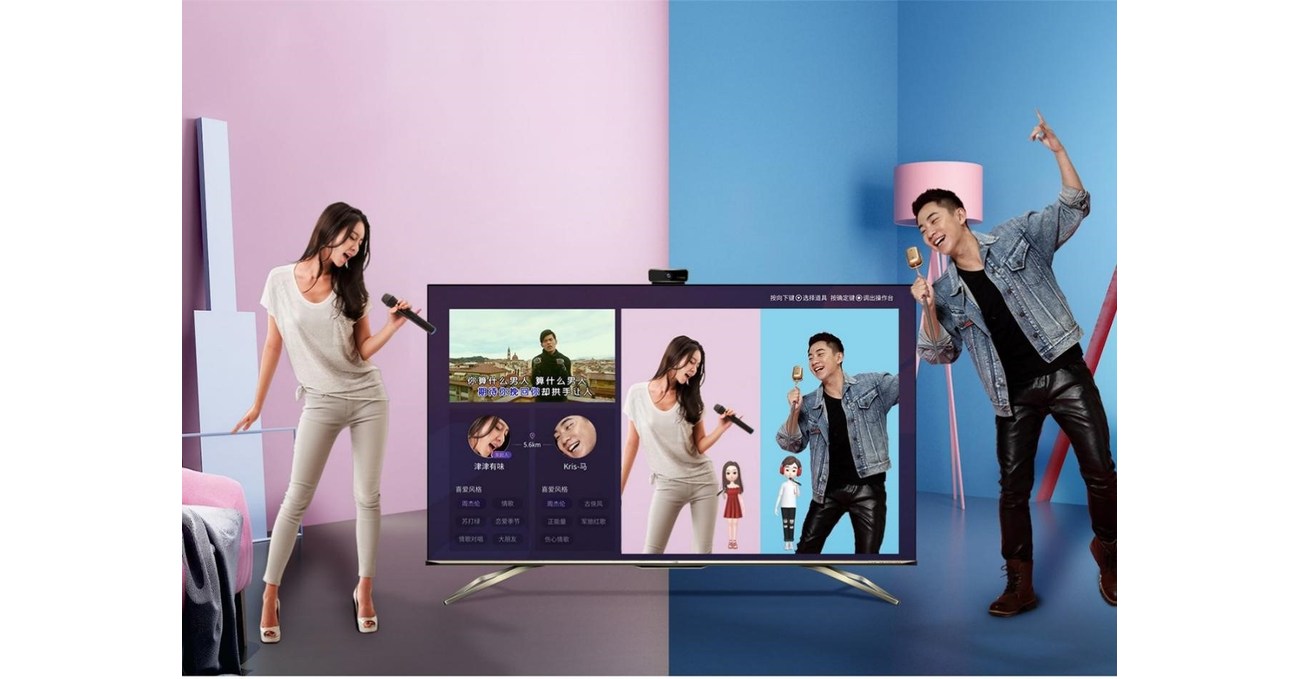
    Television and appliance manufacturer Hisense has launched its brand-new interactive system for large-screen social scenarios in the Chinese market.

    Hisense’s Social TV with Hi Table will provide users with interactive scenarios such as six-party video chat, cinema sharing, 3D Avatar Karaoke, AI fitness, AI visual recognition, and multi-screen communication, among others.

    One application of the device is 3D Avatar karaoke, which employs 5G technology to allow users to sing karaoke together with online friends in virtual scenarios such as Tokyo or Paris.

    The six-party video chat and cinema sharing functions allow real-time chat with family and friends while watching TV shows and sports matches together.

    With its AI fitness function, the social TV allows users to exercise in their living room under the guidance of AI body posture.

    Hisense’s new 55-inch flagship social TV has a recommended retail price of RMB6499 (US$920).

  • Massive O2O plan by Alibaba and Suning

    Massive O2O plan by Alibaba and Suning

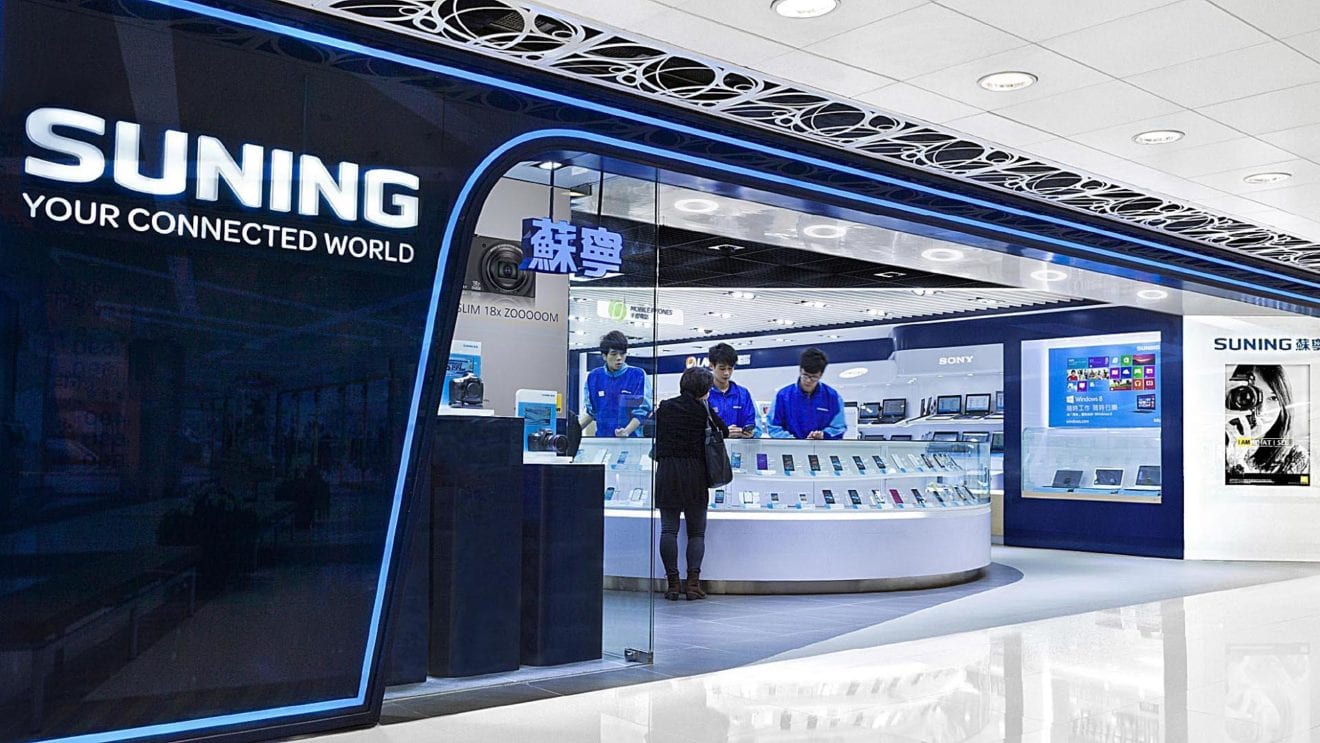
    Alibaba and Suning, one of China’s largest electronics retailers, plan to fuel Chinese and international consumer electronics brands sales over the next three years by investing in an online-to-offline (O2O) retail initiative.

    The pair will work together to build out an O2O, or “omni-channel,” network combining the former’s online retailing assets with the latter’s physical stores and distribution facilities to make purchasing of consumer electronics and home appliances easier for consumers, officials for the companies said at a press conference in Beijing.

    The two companies expect to quadruple sales of major electronics brands – including Haier, Samsung, Xiaomi and Lenovo – over the next three years, using big data from both businesses, said Alibaba Group CEO Daniel Zhang.

    “This can be achieved by integrating the online and offline sales channels under a digitalisation process,” Zhang said.

    Alibaba and Suning began working together on omni-channel retailing last year after Alibaba agreed to invest RMB 28.3 billion (US$4.63 billion) for a near 20 per cent stake in the bricks-and-mortar retailer. Suning’s network of 1600 stores and 5500 after-sales service centers are linked with Alibaba’s online platforms, and Suning’s distribution network, which includes 4.55 million sqm of warehouse space, is used to deliver products purchased online by consumers via Alibaba’s Taobao Marketplace and Tmall.com shopping sites.

    Working with Alibaba’s logistics affiliate Cainiao, Suning and Alibaba currently offer 12-hour delivery of appliances and consumer electronics in Beijing, Shanghai, Guangzhou, Hangzhou, Shenzhen and Nanjing.

    Alibaba and Suning said they will also support electronics brands by allowing them to leverage consumer data on Alibaba’s 423 million annual active buyers and Suning’s 250 million members. Big data technology can enable more targeted sales and marketing campaigns and even provide insights that allow electronics manufacturers to make products that better meet consumer needs, the companies said. Using consumer data, German electronics company Siemens launched a refrigerator customised for Tmall users in March and Chinese appliance maker Midea in May began selling a rice cooker that was designed partly based on Tmall data.

    “We build a bridge between brands and consumers by leveraging data,” Zhang said.

    International and domestic brands joining the Alibaba-Suning support program, called the Super Brand Alliance, include Midea, Haier, Samsung, Hisense, Huawei, Xiaomi, Lenovo, Siemens, Sony, Skyworth and Canon.

  • Wearable technology goes beyond watches

    Wearable technology goes beyond watches

    There is more to wearable technology than wrist devices, with more than 25 exhibitors out to prove this at a consumer technology expo coming up in Shanghai.

    They will be showcasing the latest in wearable innovation at CES Asia, which returns to Shanghai from May 11 to 13.

    Owned and produced by the Consumer Technology Association (CTA) and co-produced by Intex Shanghai, the event is being hosted at the Shanghai New International Expo Centre (SNIEC).

    CTA research expects wearable sales in the emerging Asia-Pacific region to increase by 56 per cent this year.

    “Wearables are one of the fastest-growing areas of technology. They not only count our steps, they also track our mood, sleeping habits and even our pets,” says CES senior vice-president Karen Chupka.

    “The possibilities in this product category are endless.”

    Key companies exhibiting wearables at CES Asia include Garmin, Monster and Ximmerse, plus there is a wearables pavilion organised by the China Electronic Chamber of Commerce.

    New this year will be a CTA-hosted session entitled Innovative Wearables, at the Kerry Hotel on May 12. The panel will discuss innovations coming to market, as well as user interface and design.

    So far, 250 companies representing 20 countries across 15 product categories have signed up to exhibit at CES Asia, including 360, BMW, Hisense and Huawei.

    Formerly the Consumer Electronics Association, CTA is the trade association representing the $287 billion US consumer technology industry. It covers more than 2200 companies, 80 per cent of which are small businesses and startups.