Tag: hkex

  • Mixue Reaches 60,000 Global Stores as US Expansion Challenges McDonald’s

    Mixue Reaches 60,000 Global Stores as US Expansion Challenges McDonald’s

    Mixue Group is expanding its footprint in the United States. The company now runs six stores in New York City after overtaking McDonald’s as the world’s largest restaurant network by store count.

    The Zhengzhou-based beverage chain operates roughly 60,000 outlets worldwide. McDonald’s runs 46,000 locations, Starbucks has 38,000 and Subway counts 37,000.

    Value pricing and high-volume rollout

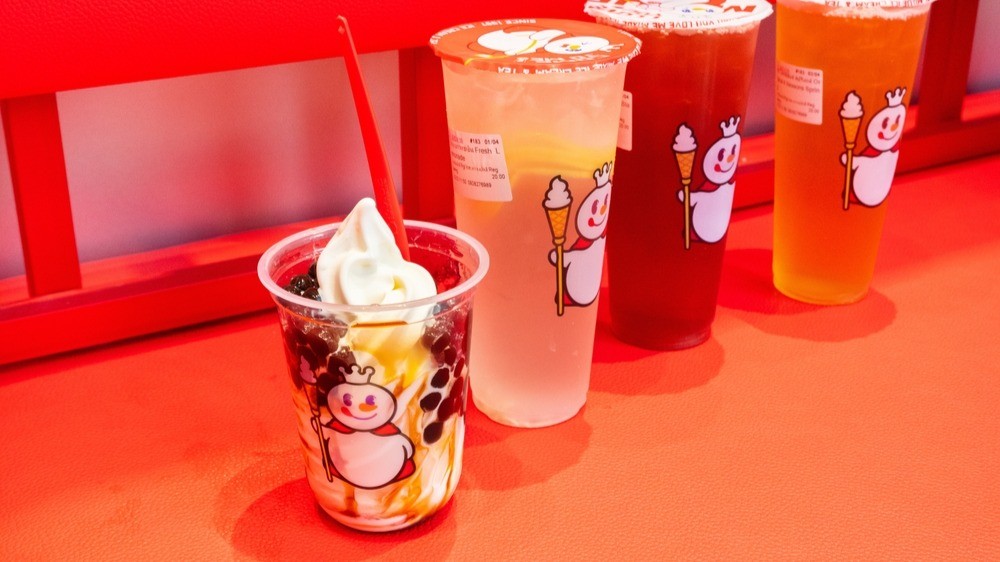
    Mixue entered the American market in December with a store on Hollywood Boulevard in Los Angeles. Its Manhattan footprint includes sites in Chinatown and near Times Square. There, signature vanilla soft-serve cones sell for $1.19 alongside bubble tea, jasmine milk tea and lemonade.

    Low prices anchor the strategy against entrenched fast-food rivals. In Manhattan, Mixue sells its 117-gram soft-serve cone for roughly 1.0 cent per gram. A standard 185-gram McDonald’s cone costs $3.89, or 2.1 cents per gram. Mixue protects franchisee margins by manufacturing its own tea powders, syrups and core ingredients.

    The read-across for Asian F&B exporters

    This Western expansion changes how Asian consumer brands enter foreign markets. Instead of pitching premium specialties to diaspora communities, the company sells low-cost, high-volume products in prime retail corridors. It sits directly beside legacy Western operators.

    Rival fast-food operators and commercial landlords face immediate pressure. Franchisees in high-rent urban corridors face tighter margins when lower-ticket beverage concepts siphon off younger foot traffic during peak afternoon hours. Asian suppliers gain a steady export channel for agricultural inputs, packaging and automated beverage dispensary equipment.

    Foundation and public listing timeline

    Chairman Zhang Hongchao founded the business in 1997 as a university student. He opened the first branded store two years later. Zhang and his brother retain an equity stake of nearly 82 per cent in the company.

    Global store totals surpassed McDonald’s in March last year. That same month, the company completed an initial public offering on the Hong Kong stock exchange. Its market capitalisation reached $20 billion by year-end, alongside the launch of a London subsidiary to manage European operations.

    The pipeline in Western markets

    Expansion teams are now screening additional franchise locations across major US metropolitan markets. The company is evaluating commercial leases in Southern California and the East Coast to build regional supply hubs before broadening its footprint across North America and Europe.
  • Astana Panel Explores Hong Kong Capital Routes for Central Asian Firms

    Astana Panel Explores Hong Kong Capital Routes for Central Asian Firms

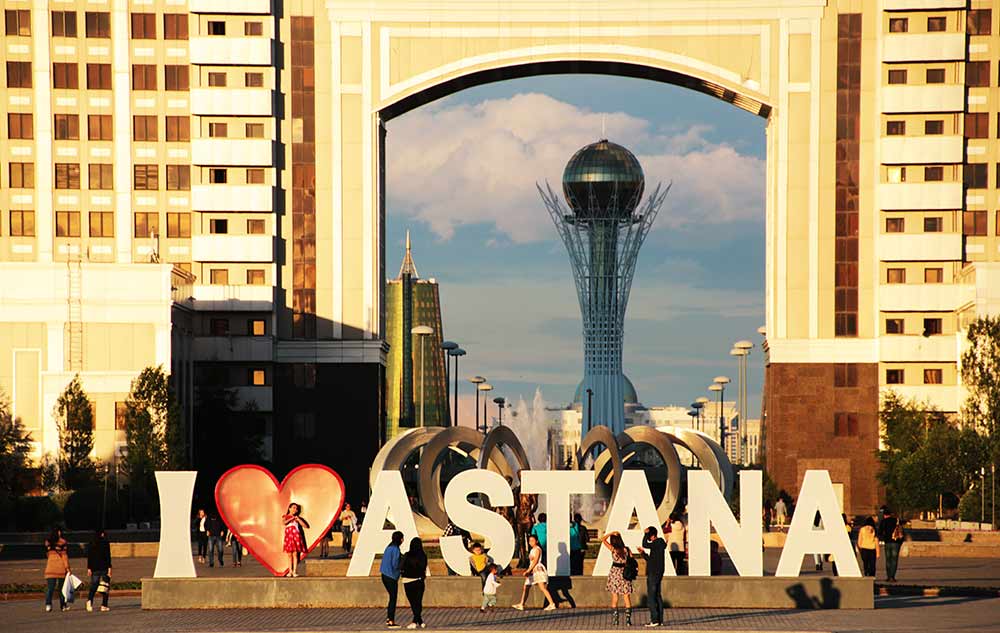
    In September 2026, financial leaders and exchange executives gathered in Astana to discuss how Central Asian companies can connect with international capital through Hong Kong.

    The panel, titled “Capital Pathways for Central Asia, Dual Listings, RMB Funding, Private Capital and the Astana-Hong Kong Route,” featured Assel Mukazhanova of AIX, Johnson Chui of HKEX, Askar Bilisbekov of Alem Capital Management, and Thomas G. Tsao of Gobi Partners, with SCMP’s Eugene Tang moderating.

    Mukazhanova noted that Kazakhstan’s domestic market cannot fully meet regional financing demand, while Bilisbekov highlighted that Alem Capital Management is operating two funds, including a venture capital fund investing regionally and globally, alongside plans for an infrastructure fund.

    Hong Kong Listing Halo

    Venture capital firms operating between East and Central Asia view Hong Kong regulatory scrutiny as a vetting mechanism for international fund managers hesitant about frontier markets. Thomas G. Tsao, founding partner of Gobi Partners, pointed out that Hong Kong listings provide emerging Central Asian companies with regulatory credibility similar to how early Chinese tech firms used Nasdaq listings to establish trust with global institutional backers.

    For institutional investors across Asia, the channel offers exposure to Central Asia’s tech and natural resources sectors without navigating fragmented local legal structures. The primary operational risk rests on liquidity: smaller Central Asian tech firms must demonstrate sufficient scale and recurring revenue to attract trading volume once listed in Hong Kong, rather than becoming dormant secondary listings.

    Talent and Regional Trade Routes

    Central Asian founders increasingly build software and services designed to interface across Chinese, Russian, and Western commercial systems. Tsao noted that the region’s multilingual, mobile-first workforce gives early-stage companies an advantage in operating across multiple trade jurisdictions simultaneously.

    The push to build financial corridors follows years of physical trade expansion between China and Central Asia along traditional overland freight routes. Financial institutions in Astana now aim to match those physical supply chains with institutional capital flows, moving Central Asian funding beyond bilateral state debt into equity markets.

    Broadening the Investor Base

    Market participants also view the Hong Kong link as a way to diversify capital sources, reducing concentration risk from single-nation strategic investors in resource extraction and mining. Channelling investments through public equity and institutional funds brings a wider mix of global asset managers into Central Asian enterprises.

    AIX and its regional partners are now screening candidate companies for initial dual-listing pipelines and private rounds, with the first wave of cross-border listings targeted as market benchmarks.

  • Jollibee to List 7,251-Store International Unit in Hong Kong

    Jollibee to List 7,251-Store International Unit in Hong Kong

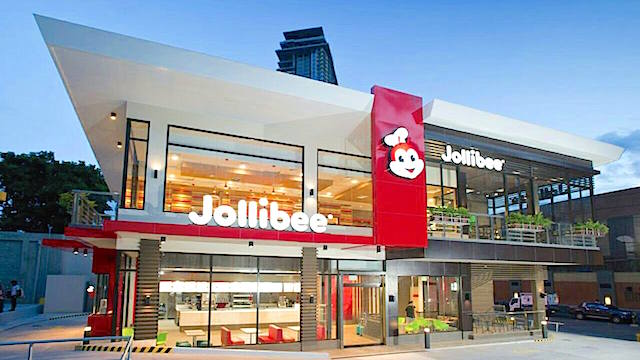
    Jollibee Foods Corporation is preparing to separate and list its international business in Hong Kong instead of the United States, carving out an overseas network of 7,251 restaurants across 33 countries.

    Shares in the Manila-listed parent rose 1.87 per cent following the move, which replaces a plan announced on January 6 to float the international arm on an American exchange.

    Richard Chong Woo Shin, currently chief executive of Jollibee Foods Corporation International (JFCI), will lead the standalone entity full-time once the separation concludes. Shin previously held senior roles at William Grant & Sons, Ralph Lauren, Bacardi and Altria. Jollibee Foods Corporation said the international business will operate with a lean corporate structure focused on capital allocation, investment opportunities and portfolio priorities, subject to listing committee approval from the Hong Kong stock exchange.

    Portfolio Tilt Toward Asian Beverages

    JFCI functions largely as a multi-brand operator with heavy exposure to Asian beverage chains. The international business holds full ownership of Smashburger, Tim Ho Wan, Yonghe King and Hong Zhuang Yuan, alongside controlling stakes of 80 per cent in The Coffee Bean & Tea Leaf, 70 per cent in South Korea’s Compose Coffee, 60 per cent in Highlands Coffee operator SuperFoods Group and 51 per cent in Milksha.

    Jollibee Foods Corporation ended June with 10,767 outlets worldwide under 19 brands, with overseas locations accounting for nearly 70 per cent of the total network. International system-wide sales climbed 25.4 per cent in the second quarter, while overseas same-store sales rose 4.4 per cent.

    Regional momentum is heavily concentrated in Asian markets. In Vietnam, system-wide sales jumped 47.6 per cent in the second quarter on same-store sales growth of 17.9 per cent. South Korea’s Compose Coffee added 145 stores during the first half, opening roughly 30 outlets a month. In China, Yonghe King reached 537 restaurants, with 65 per cent operating under franchise agreements and a target to reach 70 per cent by the end of the year.

    Shifting Away From Capital-Heavy Expansion

    Listing in Hong Kong aligns JFCI’s capital structure with where its physical earnings actually compound. While the flagship Jollibee fried chicken brand commands strong name recognition in Western markets, its North American presence remains tiny and capital-intensive compared to its Asian coffee and fast-casual footprint. The group ended June with 340 North American outlets, down from 357 a year earlier. Of those, the Jollibee banner ran 108 stores, including 106 company-owned sites and just two franchised locations.

    That balance sheet model is changing slowly. Jollibee launched its US franchising programme in March 2025 and secured seven multi-unit development groups by July, aiming for 330 franchised American locations by 2030. In the second quarter, US Jollibee stores posted a 9.8 per cent gain in same-store sales, marking 66 consecutive months of growth. Smashburger increased same-store sales by 7 per cent, though its store count fell from 203 to 180 as underperforming units were shuttered.

    Since the announcement on January 6, 2026 to list our international business, we have been doing the detailed work required to establish two strong, independent companies. That work has reinforced our conviction in the listing and has led us to conclude that Hong Kong is the market best aligned with JFCI’s business, geographic footprint, and long-term ambitions.

    The Path to Hong Kong Trading

    The pivot to Hong Kong coincides with a sharp rebound in the city’s equity fundraising. Hong Kong Exchanges and Clearing chief executive Bonnie Chan stated that new listings in 2026 had raised more than US$40 billion, surpassing the roughly US$37 billion collected during all of 2025. Hong Kong has actively courted Southeast Asian consumer groups, with more than 150 regional issuers already listed, representing over US$4.3 billion in capital raised.

    Group president and chief executive Ernesto Tanmantiong has set a target to position the flagship Jollibee brand among the top five restaurant operators globally, up from its current 18th position on Brand Finance’s global ranking with a valuation of US$3.3 billion.

    Before JFCI begins trading in Hong Kong, Jollibee must resolve the composition of its portfolio assets. The parent group is currently evaluating a separate initial public offering in Vietnam for Highlands Coffee, which has grown from 56 outlets in 2012 to approximately 1,000 stores, with a target listing date in the first quarter of 2027 that could raise up to US$400 million.

  • Jollibee Shifts International Spinoff Listing to Hong Kong

    Jollibee Shifts International Spinoff Listing to Hong Kong

    Jollibee Foods will list its overseas business in Hong Kong instead of the United States, carving out its international restaurant operations into an independently traded entity.

    The unit, named Jollibee Foods International (JFCI), will hold all network operations outside the Philippines, while parent firm JFC keeps domestic stores and its listing on the Philippine Stock Exchange.

    Carving Out the Global Assets

    Splitting the operations creates two separate public companies with independent capital allocation and operating targets. Jollibee said Hong Kong provides direct access to Asian and global institutional funds as the chain builds its presence across North America and regional markets outside its home base.

    Hong Kong recorded $22.45 billion in initial public offerings during the first half of the year, a 57 per cent increase from the previous year and the exchange’s strongest first-half performance in five years.

    Richard Chong Woo Shin will lead JFCI as chief executive officer once the corporate separation finishes. Shin currently serves as chief financial and risk officer for Jollibee Group and will retain those duties until the restructuring concludes.

    Shifting Listing Destinations

    Consumer brands across Southeast Asia have long weighed New York listings against regional venues when seeking deeper international liquidity. By picking Hong Kong over a US exchange, Jollibee joins Asian consumer groups that favor regional trading hours and institutional investors familiar with Asian quick-service restaurant networks over the regulatory friction and compliance overhead of American bourses.

    The company is setting up internal governance, financing facilities, and operating systems for JFCI. The deal still requires formal shareholder and regulatory clearances before the company files its listing timetable with the Hong Kong stock exchange.

  • Esprit Posts HK$87.7 Million First-Half Loss as Licensing Pivot Stumbles

    Esprit Posts HK$87.7 Million First-Half Loss as Licensing Pivot Stumbles

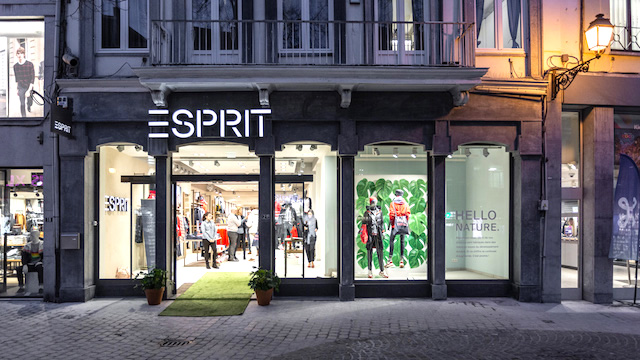
    Esprit Holdings swung back into the red with a net loss of HK$87.7 million (US$11.2 million) for the first half of 2026. Revenue for the six months to June totaled just HK$14.9 million ($1.9 million), reflecting the brand’s radical downsizing into a pure licensing shell.

    The result reverses a brief HK$1.3 million profit recorded a year earlier. Esprit has booked a full-year profit only once since 2016, racking up more than $1 billion in cumulative losses while shuttering store networks and liquidating units across Europe and North America. In June, the company deconsolidated its Canadian business following local insolvency filings.

    Balance-sheet cash generation was minimal, with net cash inflow standing at $712,000 for the period. Total assets stood at HK$295.45 million against liabilities of HK$232.19 million, supported by HK$335 million in total credit facilities, of which HK$125.13 million was drawn at the end of June.

    Accumulating Legal Claims

    Legal liabilities from defunct operational entities continue to drain group reserves. In July, the International Court of Arbitration ordered Esprit to pay $3.93 million and HK$40,900 plus interest over disputed 2024 legal fees, forcing an additional HK$22.5 million charge on top of earlier provisions.

    A Dutch bankruptcy trustee handling the collapse of Esprit Europe is seeking up to 49 million euros ($57.1 million) over contested intra-company transfers. Esprit contends the claim is unenforceable in Hong Kong courts. A separate dispute over an early lease termination poses an estimated HK$14 million exposure.

    Retail Partners and Royalties

    Under acting chairman Bradley Wright, the company has staked its survival entirely on collecting royalties from third-party partners. Licensees handle inventory, logistics, and store operations across Asia and the Americas while Esprit trades as an asset-light trademark owner.

    In Hong Kong, Esprit’s licensee opened a second location with a flagship store at Olympian City. Mainland Chinese partners sell across Tmall, Douyin, Vip.com, and JD.com while pushing the brand into activewear. In North America, the local licensee placed retro logo fleece sweatshirts into Costco in the United States and Walmart in Canada in July.

    The shift mirrors the path taken by troubled apparel names across the region that abandoned direct retail in Asian markets in favor of wholesale brand licensing. Stripping away direct operating costs lowers overhead quickly, but the model leaves Esprit dependent on wholesale discounters and cut-price online channels that risk diluting whatever brand equity remains from its 1980s peak.

    Attention turns next to the legal jurisdiction dispute in Hong Kong, where proceedings on the 49 million euro Dutch trustee claim will test whether Esprit’s offshore corporate structure can protect its remaining HK$63.26 million in net assets from European creditors.

  • Shein Prices Hong Kong IPO at $26.5 Billion Valuation to Raise $1.73 Billion

    Shein Prices Hong Kong IPO at $26.5 Billion Valuation to Raise $1.73 Billion

    Shein priced its Hong Kong initial public offering at HK$48.56 a share, raising HK$13.6 billion ($1.73 billion) and valuing the fast-fashion retailer at $26.5 billion.

    The price sits near the midpoint of the marketed HK$47.60 to HK$49.50 range. That crystallises a sharp valuation reset, leaving the business worth roughly one-quarter of its $100 billion private market peak in 2022 and down from $66 billion in 2023.

    Valuation Reset and Shareholder Payouts

    Cornerstone investors committed about $383 million to the offering. Existing backers Boyu Capital, Tiger Global and General Atlantic led that group, joined by Tencent, Greenwoods, Taikang Life and UBS Asset Management. Shein plans to spend 80 per cent of the net proceeds on upgrading technology infrastructure and expanding its international market reach.

    Cash outflows will also head straight to legacy backers. The company agreed to pay up to $3.5 billion to settle obligations with investors who bought special share classes during earlier private fundraising rounds.

    The listing ends a four-year hunt for a public venue after regulatory hurdles blocked attempts to float in New York and London. For Asian equity capital markets, securing a $26.5 billion consumer tech platform provides welcome liquidity to the Hong Kong exchange, but the steep discount shows investors now demand hard profitability rather than runaway gross merchandise volume.

    Slowing Growth and Market Scrutiny

    Financial filings show operating momentum has cooled across key Western markets. Shein reported revenue growth of just 1.1 per cent in the first quarter, with management projecting first-half performance to match that pace alongside slightly weaker operating margins.

    Local retail demand in Hong Kong proved muted during the bookbuild following a broader regional equities retreat in July. Alvin Cheung, associate director at Prudential Brokerage, noted that retail investors questioned Shein’s expansion prospects as shipping expenses and competition climbed.

    Goldman Sachs, Morgan Stanley and JPMorgan served as joint sponsors on the deal. Final institutional and retail allotment figures will be published on Monday, ahead of the stock’s trading debut on the Hong Kong Stock Exchange on Tuesday.