Retail News CRM

Tag: holdings

  • Pinduoduos Parent, PDD Holdings, Experiences Slump Amid Economic Weakness and Intense E-commerce Competition in China

    Pinduoduos Parent, PDD Holdings, Experiences Slump Amid Economic Weakness and Intense E-commerce Competition in China

    Chinese e-commerce powerhouse, PDD Holdings, recently experienced a significant drop in first-quarter profits along with revenues falling short of projections. This is largely attributed to a sluggish economy dampening demand for their domestic operations. The underperformance sent the company’s share value plummeting by 10% on Wednesday.

    China’s retail sector, being the world’s second-largest, has had difficulties drawing in consumers. This is primarily due to a protracted property crisis and worries over job security and wage growth, which have collectively undermined spending power. This, in turn, has negatively affected the demand for companies like PDD.

    Stiff Market Competition and Aggressive Investments

    PDD’s domestic discount marketplace, Pinduoduo, faces fierce competition from rivals such as JD, Alibaba, and other discount retailers like ByteDance’s Douyin. These competitors have been employing aggressive pricing strategies to attract customers.

    In addition to its domestic operations, PDD also manages the international e-commerce platform, Temu. The company has been making substantial investments in its supply chain network to enhance delivery speeds and broaden product categories, in hopes of enticing more shoppers.

    In an effort to build a new self-operated brand called Xinpinmu, the company announced in March that it would invest 100 billion yuan (US$14.8 billion) over the next three years. This move aims to integrate Pinduoduo’s supply chain resources with Temu.

    These aggressive investment strategies have resulted in a surge in PDD’s expenses, which in turn has weighed down its net income, causing a 15% reduction to 12.5 billion yuan for the quarter ending March 31.

    Regulatory Scrutiny and Model Feasibility

    Temu has grown in popularity as a platform for shoppers seeking low-priced items, capturing demand from lower-income households worldwide.

    However, the company’s model of delivering inexpensive goods directly to customers from China is encountering increased regulatory oversight. Temu’s operations have traditionally depended on duty waivers for low-value parcels in many jurisdictions.

    Changes in international regulations, such as the US abolition of the duty-free exemption on parcels valued under $800 last year, and the EU’s decision to eliminate its duty-free allowance on parcels under 150 euros ($174.57) as of July this year, pose questions about the sustainability of the current business model.

    Questions & Answers

    What is causing PDD’s revenue to fall short of estimates?
    The decrease in PDD’s revenue is primarily due to a sluggish economy that is affecting consumer demand for its domestic operations.

    How is PDD responding to the competitive e-commerce market?
    PDD is making substantial investments in its supply chain network to enhance delivery speeds and broaden product categories, in hopes of enticing more shoppers.

    How might changes in international duty regulations affect PDD’s business model?
    Changes in international regulations, such as the abolition of duty-free allowances on low-value parcels, could impact PDD’s current business model of delivering inexpensive goods directly from China and may require the company to adapt its operations accordingly.


  • Misto Holdings Swings into Solid Q1 Profit Boosted by Golf Gear and K-Fashion Surge

    Misto Holdings Swings into Solid Q1 Profit Boosted by Golf Gear and K-Fashion Surge

    Misto Holdings, the South Korean fashion and golf corporation, has announced an impressive surge in their first-quarter earnings, owing to robust demand for K-fashion labels and golf equipment. The company reported a 4.2% year-over-year increase in revenue, generating KRW 1.3 trillion (US$864.9 million) and an operating profit of KRW 193.7 billion (US$128.8 million), marking a 19% increase.

    Driving Factors Behind the Growth

    The impressive growth is attributed to the strong performance of the firm’s golf business and the continued success of its fashion labels in the Greater China region, particularly in Mainland China and Hong Kong. K-fashion brands such as Marithé + François Girbaud, Matin Kim, Rest & Recreation, and Raive have continued to extend their retail presence throughout the region. Their expansion has played a pivotal role in sustaining double-digit growth in Greater China over the quarter.

    Fila, another brand under Misto Holdings, reinforced its position in the lifestyle sector through its footwear and apparel offerings. Standout collections include the Echappe franchise and the newly released Glio lineup. Fila’s Knit Track collection recorded a substantial sales growth of approximately 74% during the first 12 weeks of the 2026 Spring/Summer season, compared to the same period in the previous Fall/Winter season.

    The company’s Acushnet segment also contributed to the successful quarter, generating KRW 1.1 trillion in revenue, an 8% year-over-year increase, due to strong performance across all categories.

    Outlook and Future Plans

    Despite the ongoing macroeconomic uncertainties, Misto Holdings has managed to maintain stable growth momentum. This has been a result of the enhancement of brand competitiveness and improvement of operational efficiency, as stated by the company’s CFO, Ho Yeon (Aaron) Lee. Looking ahead, the company plans to further ensure its sustainable growth through the expansion in Greater China, enhancement of its brand portfolio, and a focus on profitability in management.

    Questions & Answers

    What has contributed to Misto Holdings’ significant first-quarter growth?
    The surge in demand for golf equipment and K-fashion brands have been the key drivers of Misto Holdings’ solid first-quarter growth.

    How does Fila contribute to the growth of Misto Holdings?
    Fila, a brand under Misto Holdings, has reinforced its dominance in the lifestyle sector with its footwear and apparel. Its collections such as the Echappe franchise and the Knit Track collection have recorded substantial sales growth.

    What are the future plans for Misto Holdings?
    Misto Holdings plans to solidify its growth by expanding in Greater China, enhancing its brand portfolio, and maintaining a focus on profitability in management.

  • Misto Holdings Amplifies K-fashion Revolution: 100+ Retail Outlets and New Brand Launches in Greater China on the Horizon

    Misto Holdings Amplifies K-fashion Revolution: 100+ Retail Outlets and New Brand Launches in Greater China on the Horizon

    Misto Holdings is set to broaden its reach in the Greater China region, bringing a multitude of Korean fashion brands to the rapidly growing market. The company’s portfolio consists of brands such as Matin Kim, Marithé+François Girbaud, Raive, and Rest & Recreation. It aims to manage over 100 retail units by mid-year.

    Misto Holdings reports that its brands have shown a substantial early rise. Mardi Mercredi, for example, saw its sales increase by 190 per cent in its second year, while Raive experienced a 200 per cent growth in its first year.

    In terms of digital presence, Misto Holdings oversees platforms like Tmall, Xiaohongshu, and Douyin. It uses a blend of in-house content, live-commerce studios, and influencer collaborations to interact with local consumers.

    Moreover, the company is re-evaluating its Greater China portfolio this year. It aims to diversify into men’s high-end contemporary, women’s casual, and athleisure categories. Commencing next year, the plan is to introduce approximately five new brands in the region.

    Misto Holdings emphasizes that its focus is on sustainable, long-term brand growth across both online and offline channels.

    “We are not just managing brands; we are long-term partners dedicated to building brand value across both online and offline touchpoints,” said a spokesperson for Misto Holdings. “Our focus remains on building sustainable brand equity across the Greater China region.”

    Earlier this month, Misto Holdings also announced a surge in fourth-quarter sales as the company restructured its US operations.

    Questions & Answers

    What is the expansion plan of Misto Holdings in the Greater China region?
    Misto Holdings plans to introduce multiple Korean fashion brands to the market and aims to manage over 100 retail units by the middle of this year.

    What digital platforms does Misto Holdings manage and how does it reach local consumers?
    Misto Holdings manages platforms like Tmall, Xiaohongshu, and Douyin. It reaches local consumers through a blend of in-house content, live-commerce studios, and influencer collaborations.

    What is the focus of Misto Holdings?
    The company is focused on sustainable, long-term brand growth across both online and offline channels. It aims to build brand value across both online and offline touchpoints in the Greater China region.

  • Misto Holdings Boosts Q4 Sales Amid US Business Restructuring: Fila & Acushnet Show Strong Performances

    Misto Holdings Boosts Q4 Sales Amid US Business Restructuring: Fila & Acushnet Show Strong Performances

    In the fourth quarter, Misto Holdings, the parent company of Fila, Titleist and FootJoy, announced an increase in sales growth following a restructuring of its U.S. operations. The firm, based in South Korea, saw a 6.3% year-on-year boost in revenue during this period, reaching KRW915.2 billion (US$612 million). This follows a 3.7% uplift in sales reported in the third quarter.

    Company executives attribute this growth to a combination of factors, despite the prevailing macroeconomic uncertainty. These include a focus on profitability-driven operations, the positive outcomes of restructuring, and robust performance from Acushnet.

    Segment Performance

    Revenue from the Misto segment, which includes Fila and other lifestyle brands, fell by 9.6%. This decrease was primarily due to restructuring and inventory clearance in the U.S. market. However, operating profit improved significantly, reaching KRW74.7 billion, marking a notable recovery from the previous year.

    The Greater China market has emerged as a new area of growth for the company, driven by the expansion of prominent K-fashion brands. In South Korea, demand for Fila’s footwear franchise models remained stable.

    The Acushnet segment reported a sales growth of 10.9%, bolstered by strong sales of golf equipment, such as Titleist T-Series irons and SM10 wedges. Additionally, higher average selling prices for FootJoy golf shoes contributed to this growth.

    Yearly Overview

    For the entirety of FY25, the company’s consolidated revenue grew by 4.7% to reach KRW4.47 trillion. Operating profit surged by 31.6% to KRW 474.8 billion.

    Ho Yeon (Aaron) Lee, CFO of Misto Holdings, reflected on the past year, saying it was a significant period that saw the company reinforce its identity as a global brand portfolio company following a corporate name change.

    He noted that the expansion of the Greater China business, improved profitability in the Misto segment, and solid growth in Acushnet have all contributed to the stability of the company’s earnings.

    Questions & Answers

    What factors led to the growth of Misto Holdings in the fourth quarter?
    The growth was attributed to profitability-focused operations, the restructuring of the U.S. operations, and strong performance from Acushnet.

    How has the Misto segment performed amidst the company’s restructuring?
    Despite a decrease in revenue by 9.6% due to restructuring and inventory clearance, the Misto segment saw an improvement in operating profit, marking a significant turnaround.

    What contributed to the sales growth of the Acushnet segment?
    Increased sales of golf equipment, particularly Titleist T-Series irons and SM10 wedges, along with higher average selling prices for FootJoy golf shoes, supported the 10.9% growth in the Acushnet segment.

  • Hong Kong’s Bonjour Holdings Navigates Stormy Retail Waters: Half-Year Losses Amid Shift in Consumer Behavior

    Hong Kong’s Bonjour Holdings Navigates Stormy Retail Waters: Half-Year Losses Amid Shift in Consumer Behavior

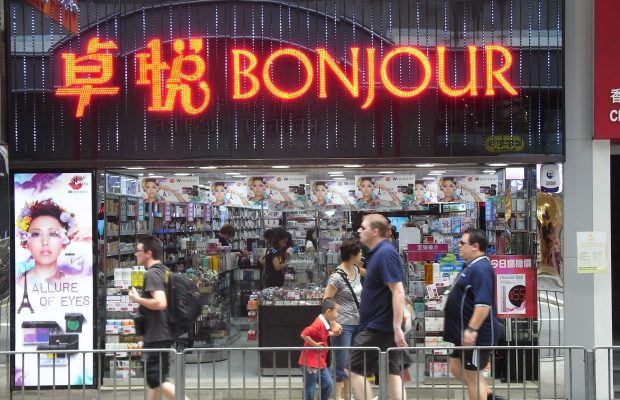
    Hong Kong-based financial behemoth, Bonjour Holdings, has reported a slump in its earnings attributed to what the corporation describes as a “complicated” retail atmosphere.

    Financial Figures

    Bonjour Holdings reported a loss of HK$68.8 million (US$8.8 million) for the half-year ending December 31, 2025. This figure represents a better performance than the same period in 2024 when the company reported a loss of $134.4 million ($17.2 million).

    Bonjour Holdings’ expansive portfolio includes over 20,000 products from brands such as Suisse Reborn, Yumei, Dr. Schafter, and Dr. Bauer.

    The firm’s retail, wholesale, lifestyle, healthcare, and beauty sector recorded a half-year turnover of HK$6.7 million, while technology sales contributed an additional HK$5.5 million. The gross profit for both sectors stood at HK$2.8 million. However, both year-on-year revenue and gross profit witnessed a steep decline of 50.4 per cent and 84.6 per cent, respectively.

    Complex Retail Environment

    In its earnings report statement, Bonjour Holdings stated that the latter half of 2025 presented a complex retail landscape in Hong Kong. Despite the overall inflation rate remaining relatively low at around 1.2 per cent during this period, consumer spending habits reflected cautiousness due to ongoing economic uncertainties.

    The company also highlighted that fluctuations in the property market significantly affected its customers’ disposable income.

    Tourism and Consumer Behavior

    Bonjour Holdings noted that tourism was on a slow path to recovery, with an increase in visitor arrivals. However, the spending habits of these visitors shifted towards experiential consumption, moving away from the traditional luxury retail. Mainland Chinese tourists, albeit returning in larger volumes, showed more selective purchasing habits compared to their pre-pandemic patterns.

    Questions & Answers

    What was Bonjour Holdings’ reported loss for the six months ending December 31, 2025?
    The company reported a loss of HK$68.8 million (US$8.8 million).

    What is the overall impact on Bonjour Holdings due to the current retail environment?
    The complicated retail environment, coupled with economic uncertainties and shifts in the property market, have led to a significant decrease in the company’s earnings.

    How has the spending behavior of tourists, specifically mainland Chinese, changed post-pandemic?
    While the number of mainland Chinese tourists has increased, their purchasing behavior has become more selective compared to pre-pandemic patterns, with a notable shift towards experiential consumption rather than traditional luxury retail.

  • Russia’s large holdings of foreign exchange could pose a problem for financial markets.

    Russia’s large holdings of foreign exchange could pose a problem for financial markets.

    Russia holds vast foreign exchange reserves, a large chunk of which are held offshore, having the potential to upend money markets.

    The country had international reserves totaling $630 billion at the end of January, consisting of $467 billion in foreign exchange and $132 billion in gold. The rest consists of special drawing rights (SDRs) and IMF reserves, Bank of Russia data showed.

    With the country’s invasion of Ukraine Thursday, a critical question is how much of these reserves are outside of Russia.

    Credit Suisse strategist Zoltan Pozar, crunched the numbers to determine just that. The resulting figure using Bank of Russia data with that from financial markets was that $300 billion is being held offshore, according to the report.

    Pozar estimates around  $200 billion is held in swap agreements with an additional $100 billion in overseas bank deposits, a sum more than enough to cause a shift in funding markets.

    If things escalate, it’s hard not to see a direct impact on FX swaps and U.S. dollar Libor fixings given Russia’s vast financial surpluses and where those surpluses are deployed, he said.

    On Thursday, the Bank of Russia announced emergency measures to maintain financial market stability, including intervening in the foreign exchange markets.

    Markets are likely hoping the mountain of cash doesn’t turn out to be an erupting volcano.

  • Real estate developers remain largest bond issuers

    Real estate developers remain largest bond issuers

    Real estate companies issued approximately $1 billion worth of bonds, accounting for 62 percent of the total market issuance, in Q1.

    According to leading brokerage firm SSI Securities Corporation, the total volume of corporate bonds issued in Q1 was VND37.4 trillion (over $1.6 billion), down nearly 24 percent year-on-year. Sixty-two percent, or VND23.15 trillion (nearly $1 billion), of this were issued by real estate developers, a year-on-year decrease of 5 percent.

    The proportion of bonds issued by other sectors was much lower: securities companies and non-bank financial institutions accounted for 6.8 percent; energy and mineral enterprises (4.5 percent); commercial banks (3.3 percent); and infrastructure development enterprises (3.1 percent).

    The average maturity of real estate bonds issued in Q1 fell sharply to 2.9 years from 3.9 years in 2019 and 2020. Their average interest rate was 10.41 percent per year, the highest rate in the market. The banking sector had the lowest average interest rate at just 4.67 percent per year.

    Corporate bonds accounted for 9.2 percent of the total at VND3.4 trillion (nearly $147 million), with their collateral comprised entirely of stocks. These included bonds of PDR of Phat Dat Real Estate Development, KDC of packaged food producer Kido Group, KBC of industrial real estate developer Kinh Bac City Development Holding Corporation, APH of plastic producer An Phat Holdings, and DXG of property developer Dat Xanh Group.

    Affected by regulations on investment conditions for privately issued bonds, individual investors only bought VND1.53 trillion worth of corporate bonds on the primary market, just 16 percent of the same period last year.

    The Vietnamese government recently issued a decree that limits companies to no more than two bond issuances a year. The decree followed the Ministry of Finance issuing warnings about the potential risks of investing in bonds and telling retail investors “not to purchase bonds just because of high-interest rates.”

  • Bonjour Holdings warns of substantial loss

    Bonjour Holdings warns of substantial loss

    Beauty retailer Bonjour Holdings has warned shareholders of a “substantially increased loss” for the current year as the social unrest and falling Mainland Chinese visitor numbers take their toll.

    Last year, Bonjour Holdings reported a net loss of HK$39.6 million (US$5 million). In a letter to shareholders, chairman Wilson Ip did not put a figure on the loss anticipated in the year to December, but his words were ominous.

    “The group’s turnover has deteriorated severely and is expected to record a double-digit year-on-year decline for the year,” he said. “The average gross profit margin also decreases mainly due to the change in sales mix, consumer’s spending patterns and the increase in the promotion to attract customers.”

    He said Hong Kong’s economy suffered “an abrupt deterioration” in the second half of the year when consumption and tourism-related sectors were hit hard by local social incidents.

    “Moreover, the global economic slowdown and escalated US-Mainland trade tensions weighed further on the Hong Kong economic outlook.

    “Facing such an economic downturn, in a view to ease the difficult situation, the group now has key focuses on cost optimization and value creation by streamlining operational efficiency and better business planning to build or sustain our competitive advantage.”

  • Robinsons Retail plans 150 new stores in Philippines

    Robinsons Retail plans 150 new stores in Philippines

    Robinsons Retail Holdings will launch up to 150 new stores in the Philippines this year.

    The firm published a presentation online revealing plans to invest PHP3–5 billion (US$57.8–96.3 million) on the store openings, following expenditure of PHP4.41 billion ($85 million) on openings last year. As at December, it had 1910 stores, including supermarkets, department stores, do-it-yourself stores, specialty stores, drugstores, and convenience stores. The entire network covers a gross floor area of 1.48 million sqm.

    Robinson’s achieved a 5.9 percent same-store sales growth last year, with help from a 1.5 percent uptick in transaction count and a 6.1 percent increase in basket size in its supermarket business. The group is targeting a 2-4 percent same-store sales growth this year.

    The firm’s net income reached PHP5.11 billion ($98.5 million) last year, an increase of 2.6 percent on the year previous, with a 15.1 percent increase in net sales.