Tag: home appliances

  • New air purifier from Japan debuts in Korea

    New air purifier from Japan debuts in Korea

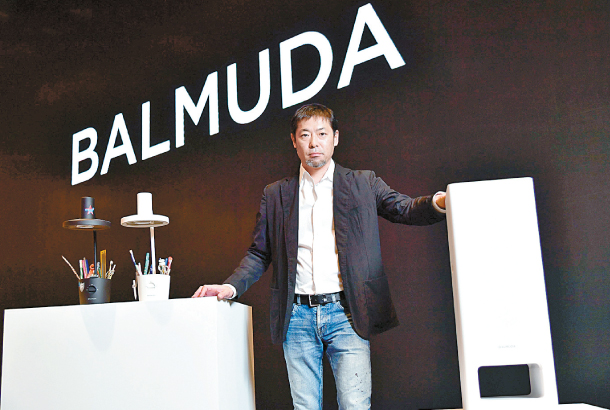
    Balmuda, a Japanese high-end home appliance maker, is introducing a new air purifier in Korea today ahead of the rollout in Japan, where the launch date has not been set. Balmuda CEO Gen Terao emphasized the importance of the Korean market during the company’s first press conference in Korea Tuesday as he unveiled The Pure air purifiers.

    “We chose to unveil our air purifiers in Korea in light of the fine-dust problem and Balmuda’s growing brand awareness here,” Terao said at the conference in Yongsan District, central Seoul.

    “While Japan’s air purifier market is decreasing every year, it’s been growing in Korea. We sell 10 times more air purifiers here.”

    Several new features make it an upgrade from the AirEngine, the company’s older 2013 model.

    One of the key innovations is that The Pure allows users to see how much dust the machine sucks in. The purifier has a rectangular hole cut out in the bottom installed with lighting, making it easy for users to see the dust and particles that go up into the filter above the hole.

    The Pure’s HEPA filters can trap 99.97 percent of particles as small as 0.3 microns and eliminate odors. The machine releases up to 7,000 liters (1,850 gallons) of cleaned air per minute.

    The Pure will be available at department stores and online and offline electronic retailers from today. They are priced at 749,000 won ($666).

    Terao also discussed Balmuda’s The Light, a desk lamp for children launched last December.

    Addressing the growing problem of short-sightedness among children, Terao said he developed advanced light technology together with medical surgery light manufacturers.

    Terao called out Xiaomi’s air purifiers for copying Balmuda’s AirEngine design.

    “When I saw this [Xiaomi] product, I wondered when we had built it because it had the same size, silhouette and structure as the AirEngine,” Terao said. “But the fact that others are copying us is proof that our products are good.”

    Balmuda, founded in 2003, posted over 10 billion yen ($90 million) in annual sales last year. The company currently generates around 30 percent of its total revenue in Korea.

  • JC Penney to stop selling home appliances

    JC Penney to stop selling home appliances

    Struggling department store chain JC Penney announced it will exit its home appliances business, and some of its furniture business, while revamping the layout of its stores to focus on clothing sales to boost profits. The company, which hasn’t turned a profit since 2010 and has forecast several more years of losses, said it would stop selling major appliances in February “to better meet customer expectations, improve financial performance and drive profitable growth.”

    JC Penney’s appliances business was a pet project of former CEO Marvin Ellison. The company will also stop selling furniture in majority of its stores and will now only be available in select stores in Puerto Rico and online.

    The announcement is the first major change by new CEO Jill Soltau since she joined the embattled retailer late last year.

    According to JC Penney, they are now finalising new layout options, including reduction of store space previously dedicated to appliance and furniture showrooms to maximise efficiencies, reduce inventory and create an enhanced shopping experience that inspires repeat shopping trips.

    “Optimising the allocation of store space will enable us to prioritise and focus on the company’s legacy strengths in apparel and soft home furnishings, which represent higher margin opportunities,” the company said.

    The company further announced customers can still purchase major appliances in stores and online until February 28 and receive free basic delivery and installation on new model purchases over $299. All protection plans and manufacturer’s warranty agreements will remain in effect for the applicable warranty period.

  • Air purifier sales up 414 % after dust attack in Korea

    Air purifier sales up 414 % after dust attack in Korea

    As fine dust blows into Korea, demand for products that defend against pollution spike. According to an Emart study released Friday, mask sales between Jan. 10 and Jan. 16 surged 458 percent from the same period a year earlier while the sales of air purifiers are up 414 percent. Usually, the products are in high demand around late February and in March, when the yellow dust from the northern deserts descend on the Korean Peninsula. But sales this year are already 95 percent of the total usually reported in March.

    Sales of consumer appliances that clean clothing, such as LG’s Styler clothes closest, are up 186 percent compared to the same period a year ago, according to the retailer. Sales of dryers have increased 67 percent as the worsening pollution has made it difficult to dry laundry outdoors.

    Emart said it will be holding a special sale on fine-dust countering goods through Jan. 30.

    It plans to offer discounts on the bulk purchase of masks: 10 percent when buying two and 30 percent when buying three at a time.

    The Samsung Electronics air purifier with model number AX6ON5081 WDD will be sold at 379,000 won ($338), a 90,000 won discount, while Coway’s AP-1818C model will be sold at 439,000 won, a 60,000 won discount. The purchase of Coway’s air purifier also comes with 85,000 won worth of additional filters and 50,000 won in gift certificates.

    The retailer is also providing discounts on vacuum cleaners, including Dyson’s V10 Fluffy, the LG Electronics A9, which also has a mopping feature, Samsung’s VS8ON8062KKS and Tepal’s Air Force 360.

    Online shopping malls are ramping up their marketing of fine dust-related products. Coupang has been promoting 650,000 fine-dust products since Jan. 10.

    An exclusive study by the JoongAng Ilbo found that much of the recent air pollution is coming from China.

    The Korean Meteorological Administration is forecasting a return of high fine-dust readings. It said the level of concentration of pollutants started rising on Friday and will continue to increase today.

    When the concentration is at 15 micrograms per square meter or lower, the government rates the air quality as “good.” When it is between 16 and 35, it is deemed “normal.” When the figure is between 36 and 75, the government rates the air quality as “bad.”

    On Jan. 14, the fine-dust concentrations in the greater Seoul area peaked at 122 micrograms per square meter, the highest level since related data was first collected in 2015.

    That was two days after air pollution in major areas in China, including Beijing, Tianjin, Tangshan and Hubei Province, peaked.

    The Korean Meteorological Administration forecasts air pollution levels dropping from Sunday afternoon.

    Kweather, a private weather company, has advised people to stay indoors over the weekend and wear a protective mask when having to go outside.

  • LG sets up lab to conduct appliance technology research

    LG sets up lab to conduct appliance technology research

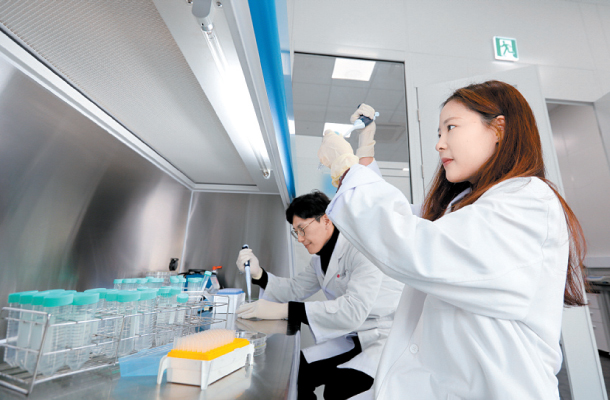
    LG has established a new research laboratory committed to advances in fridge, oven and other home-appliance technologies. LG Electronics opened the 6,760-square-foot Food Research Institute on Monday at Changwon, South Gyeongsang. At the center, researchers will develop technologies that can be applied to the company’s home appliances, such as refrigerators, kimchi and other specialty food fridges, ovens and electric stove tops.

    Food preservation, the fermentation of kimchi and food preparation will be some of the focuses.

    The company said researchers will work closely with academics from Seoul National University and Konkuk University, as well as experts from government and private agencies, such as the Rural Development Administration, the Korea Food Research Institute and the World Institute of Kimchi.

    LG Electronics often mentions advanced technologies in its marketing materials, using the technology to set itself apart from competitors.

    According to the company, LG refrigerators run on inverter linear compressors, which are 18 percent more energy efficient and create less noise than comparable gas compressors. Its kimchi refrigerators maintain temperatures of 6.5 degrees Celsius (43.7 degrees Fahrenheit), the optimal level for kimchi. At that temperature, the growth of a lactic-acid bacteria that creates a sour taste is suppressed. LG’s electric stove tops can cook food up to 2.3 times faster than gas ranges, the company boasts.

    The facility at Changwon is not the first research lab established by the company to further develop its home appliances. In February, LG Electronics opened a water research lab committed to the making of better water purifiers. In October, it opened a center dedicated to air science to advance its air purification technologies.

    “We will continue investing in research and development related to food, water and air technologies,” said Song Dae-hyun, head of LG Electronics’ Home Appliance & Air Solutions.

  • Gome Retail sales free falling

    Gome Retail sales free falling

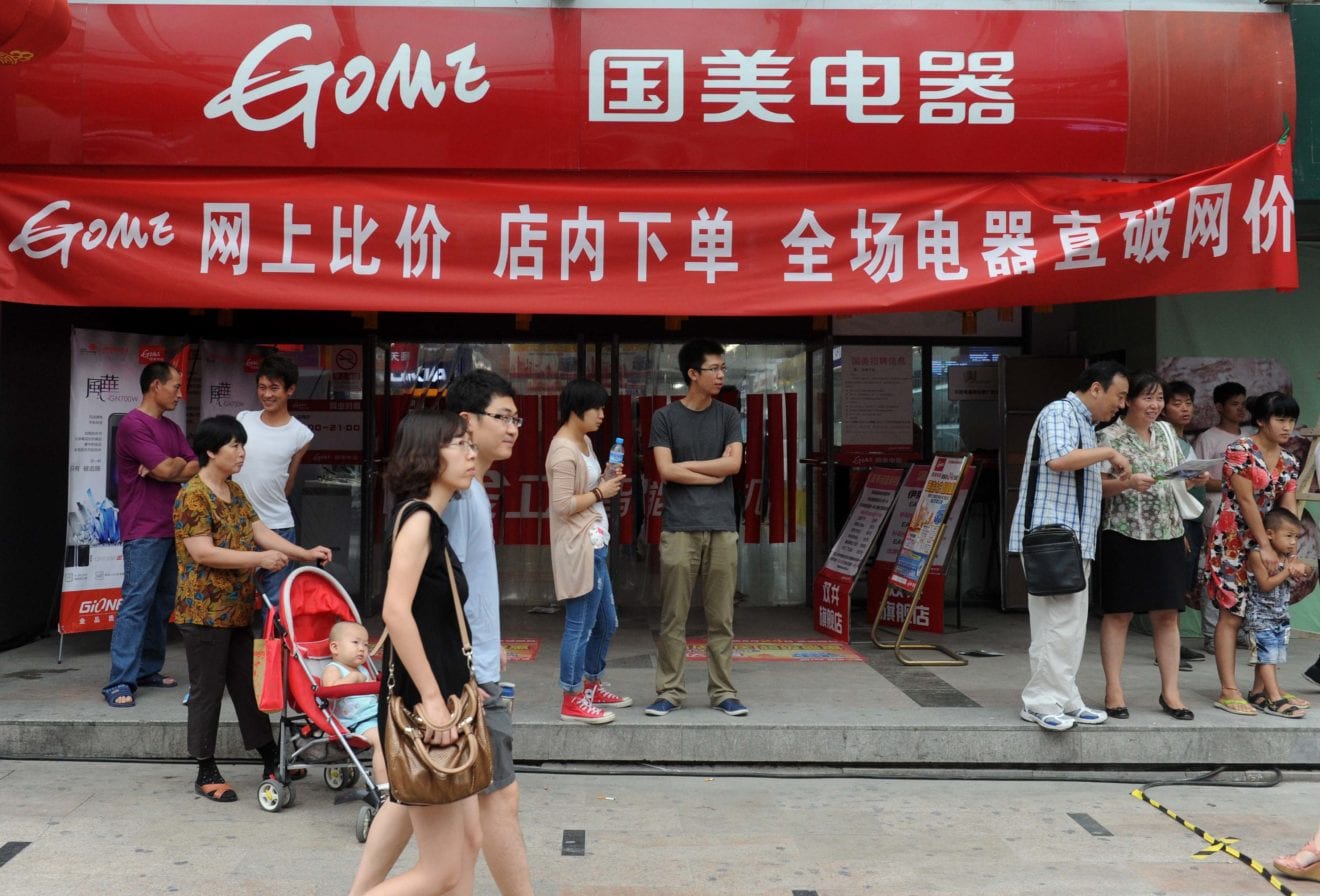
    Gome Retail has plunged US$64million into the red as its restructuring program takes its toll. The company took the unusual step of releasing third-quarter financial data, which shows group sales were down 11.2 per cent in the first nine months of the year, to $7.3 billion.

    Total gross merchandise volume (GMV) of the group for both online and offline grew by 4.83 per cent year on year, with its e-commerce business growing by 26.04 per cent.

    Gome’s consolidated gross profit margin was 18.06 per cent, up by one percentage point compared with the same time last year.

    But the loss for the period contrasted with a $31.7 million profit last year.

    Gome issued a profit warning early this month, with the actual figure turning out to be at the top end of its projected range. While yesterday’s statement did not include any commentary, the company has made considerable effort to keep shareholders aware of the scale of the task it faces and the short-term pain required to effect the restructuring plan.

    Gome Retail is integrating its online and offline business and promoting a new ‘Social + Business + Sharing’ shared retail model. As part of that strategy, the company is combining its electrical appliances, home decoration, household systems and supermarkets to create sizable “experiential stores” in tier 1 and 2 cities. The group is also optimising its platform to include the Xiaomei Net Cafe, VR Cinemas and Gome esports.

  • Appliance rentals prove popular

    Appliance rentals prove popular

    Home appliance companies are building their rental service businesses as the trend is for consumers to value experience more than ownership. With the growing size of the local home appliance rental market, some companies have started management services to take care of rental customers, while others have set up entire rental business subsidiaries.

    On Nov. 17, LG Electronics announced the formation of “Care Solution,” which will manage home appliances for rental customers. While a rental management service existed before, the new offering goes beyond simply providing replacement parts and instead regularly replaces the main components of appliances.

    For rented water purifiers, LG Electronics will exchange filters and water pipes and inspect sensors. For those who rent its Tromm Styler home dry cleaning appliance, the company will replace water container components every two years and periodically provide scented aroma sheets.

    Cuckoo Electronics, known for rice cookers, jumped into the rental market last December when it established its Cuckoo Homesys subsidiary. Last month, the company introduced a new rental brand, “Inspure,” which focuses on water and air purifier products.

    Samsung Electronics has yet to launch a rental business on its own but has partnered with professional rental companies for its home appliance products. It started renting its products through Kyowon Wells last June and also joined hands with Hyundai Rental Care last July.

    Home appliance companies are focusing on the rental business as the market seems to be growing. According to the KT Economics & Management Research Institute, the rental market in Korea is expected to grow past 40 trillion won ($35.49 billion) by 2020 from 25 trillion won in 2016.

    LG Electronics recorded 128.2 billion won in rental-related sales in the first half of this year, more than doubling the 53.8 billion won reported two years ago. Operating profit for Cuckoo Homesys through the third quarter of this year was at 52.8 billion won, a 50 percent increase from the figure over the same period last year.

    With a sluggish job market and slowing economic growth in Korea, consumers are feeling the pinch and valuing experience over ownership. The result is an increase in demand for rental products.

    The rise of premium products, which have been developed by companies to stay competitive in the crowded home appliance market, has also contributed to the rental trend. As such products are expensive, consumers are looking toward rentals.

    For example, a 55-inch LG OLED TV costs 3.6 million won to buy outright, but it can be rented out at 59,900 won per month for 36 months. The price drops further when other discounts are applied, such as those offered by credit cards companies.

    “The need to use good products exists, but with troubling economic times, penny pinching is called for. Consumers are taking an interest in rentals that can meet their needs at a low cost at the moment,” said Jung Yeon-sung, a professor of business at Dankook University.

    The increase in one-person households has also contributed to the rise in rental services as it is difficult for a single person to afford appliances that could cost millions of won. According to government data, there were 5.5 million single-person households in Korea last year, accounting for 28.5 percent of the total number of households. The figure has doubled since 2000, when there were 2.22 million single-person households.

    For companies, the rental business doesn’t bring in big profits immediately, but it provides steady profits.

    “We plan to focus on management instead of just the leasing out products and help customers improve their quality of life,” said Choi Sang-gyu, head of domestic sales at LG Electronics.

  • GE sells appliance business to China’s Haier for $5.4 bn

    GE sells appliance business to China’s Haier for $5.4 bn

    US industrial giant General Electric will sell its appliances business to China’s Haier Group for USD 5.4 billion, it said today, in one of the largest Chinese acquisitions of an American firm yet.

    The transaction epitomises the changing nature of the global economy, with a 100-year-old US company selling what was once one of its core units to a Chinese upstart that emerged from a refrigerator factory that was nearly bankrupt 30 years ago.

    Haier is seeking to establish itself as a global brand, while China is looking to re-balance its economy more towards consumption and away from the infrastructure and investment-driven model of the past.

    The Chinese firm was “committed to growing the business globally”, GE chairman and CEO Jeff Immelt said in a statement, calling the agreement “a good deal which will benefit our investors, customers and employees”.

    GE had previously been due to sell the unit to Swedish rival manufacturer Electrolux for USD 3.3 billion, but the deal ran into opposition from US competition authorities.

    Haier Group is China’s second largest electronics manufacturer, and emerged from the Qingdao Refrigerator Factory, in the eastern port of the same name, which its CEO Zhang Ruimin was appointed to run in the mid-1980s.

    Zhang is renowned for his reaction to a customer complaint, when he examined the firm’s warehouse and found 76 fridges out of more than 400 in stock were substandard.

    He ordered the personnel to smash them to pieces, personally leading the destruction with a hammer.

    “If I allow the 76 fridges to be sold, it would imply that I would allow 760 or even 7,600 such substandard fridges to be produced tomorrow,” he was quoted as saying by the official news agency Xinhua.

    The tool Zhang wielded is now in a national museum, Xinhua said.

    Haier’s methods have been studied in business schools including Harvard, but its exact ownership structure remains opaque.

    Officially, the group is divided into several units which are collectively owned. It has two quoted subsidiaries, Haier Electronics in Hong Kong and Qingdao Haier in Shanghai — which is the vehicle for the GE acquisition.

    Haier has close ties to the ruling Communist Party, and Zhang is an alternate member of the party’s elite central committee.

    The deal is the latest major Chinese acquisition of a US company, and comes in the same week that Wanda Group, founded by China’s richest man Wang Jianlin, acquired Hollywood studio Legendary Entertainment for USD 3.5 billion.

    Previous major acquisitions have included 2013’s USD 7 billion purchase of Smithfield Foods by Shuanghui, and Lenovo buying IBM’s PC business for USD 1.75 billion.

    Haier says it is the world’s biggest large household appliance brand, with a 10.2 percent global market share, and also has businesses in communications, logistics, finance and real estate.

    It had a global turnover of 200.7 billion yuan ($30.47 billion) and total profit of 15 billion yuan in 2014, according to its website, with activities and customers across 100 countries and regions.

    Haier bought the white goods operations of Japanese company Sanyo in 2011, the first time a Chinese firm has bought major business segments from a large Japanese manufacturer.

    But it had just a one percent share of the US consumer appliance market in 2015, the state-run China Daily cited market analysts Euromonitor as saying.