Tag: HomePod

  • Pandora support now available on Apple’s HomePod

    Pandora support now available on Apple’s HomePod

    It’s no surprise that Pandora integration is now available on the HomePod, as Apple announced last month it will bring support for the music streaming service to both its smart speakers. However, at that time, the Cupertino giant didn’t mention when exactly Pandora integration for HomePod will arrive, so the fact that it’s now available is what’s really important.

    Although we’re still a few weeks away from the HomePod Mini’s market launch, Apple decided to make Pandora integration available to HomePod users before Mini’s release. When HomePod Mini launches later this month, it will be fully compatible with Pandora integration. Until then, HomePod users can start taking advantage of the new features by following the steps described below:

    • Download the latest version of Pandora’s iOS app
    • Open the Pandora app on your iOS device
    • Select Profile > Settings (gear icon) > “Connect with HomePod” > “Use in Home”

    Once the steps above are completed, you’ll be able to use your voice to control Pandora on your Apple HomePod. You can start asking Siri to play your favorite tunes and customize your listening experience without having to use your hands.

  • Apple’s latest HomePod is smarter

    Apple’s latest HomePod is smarter

    Today, Apple announced its latest, second generation HomePod. The futuristic-looking smart speaker not only makes major advancements in acoustics, but is also packed with innovations, ranging from advanced Siri capabilities and computational audio to smart home management and automation.

    Pre-order now in either White or Midnight, available for just $299! Enabled to work with spatial-audio, capable of executing advanced voice-activated tasks and comes Matter-enabled for your Smart Home setup.
    Having Siri on board of the HomePod allows for hands-free control over as many features as you can probably imagine, ranging from smart home control to media playback and navigation. But the HomePod is also smart enough to listen even when you are not around, and send you a notification if it hears something odd, like a smoke alarm for example.

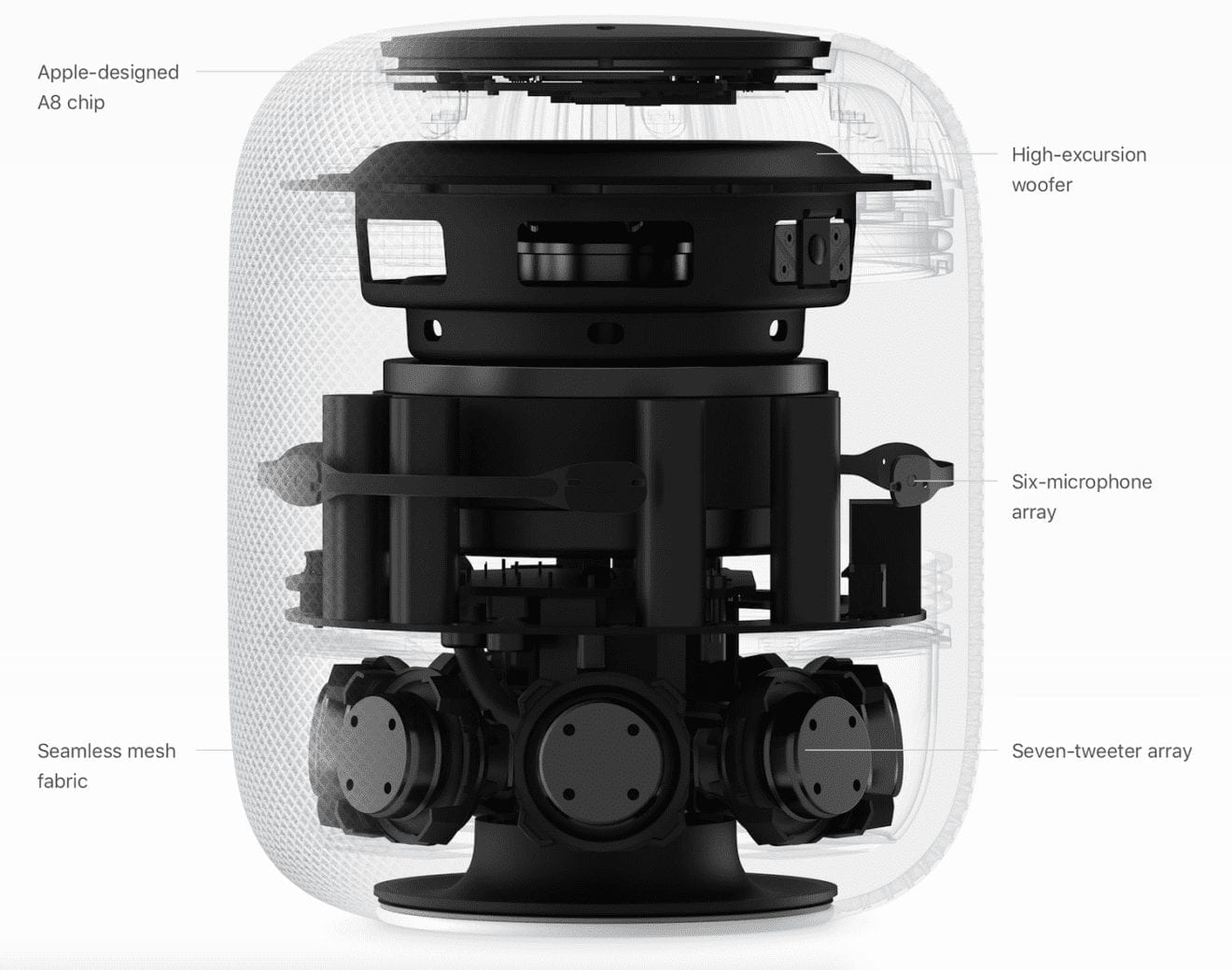
    As a smart speaker, the HomePod sounds like being capable of delivering exceptional audio quality. Its equipped with custom parts, like a high-excursion woofer and an array of beamforming tweeters, which allow it to achieve impressive acoustics.

    The smart speaker is equipped with Apple’s S7 processing chip, which in turn is based on the A13 Bionic chip that was on the iPhone 11 from 2019. This allows the HomePod to run advanced software, enabling it push the limits of advanced audio computation.
    Among the unique features, which is available on the second generation HomePod, is support for Spatial Audio. Did you know that Apple Music had over a hundred million tracks, that come with Spatial Audio? You can listen to those on the new HomePod, and not just your AirPods 3, but while also having Voice Control through Siri to access search, filters and lyrics on Apple Music.

    This also means that connecting multiple HomePods together makes more sense than ever, as it can also offer a stereo experience. Same goes for connecting it to your Smart TV, to give it a bit of extra oomph to its soundscape.

    You can connect a previous generation HomePod or a HomePod mini to the latest HomePod too. Linking is easy as ever, too, as they can all become linked with a quick voice command or by bringing the speakers close together physically.
    The Apple HomePod is capable of sensing the room and adjusting its sound accordingly, as to utilize sound reflections to improve sound and remove distortions. All of this happens automatically and it real time, with a precision capable of truly immersing listeners in an impressive, rich soundscape.
    Now, both smart speaker linking and room-awareness aren’t groundbreaking features. Not only do competitors have them, but so does the HomePod Gen 1. The primary difference with the latest Apple HomePod is that it does it faster and with a more impressive sound quality, while offering new smart features.
    Apple’s latest smart speaker will be available in White or a gray-ish Midnight variant, which is made with 100% recycled mesh fabric. Both speakers’ fabric is slightly transparent, while the touch panel on top is completely backlit, from edge to edge.

    The latest HomePod is already available for order in the AppleStore app for $299, but the smart speaker and home hub will become officially available as soon as February 3. If you are in the market for a new smart speaker that seamlessly fits with Apple’s ecosystem, you might’ve just found what you were looking for. Oh, and the HomePod is Matter-enabled, so it can play nice with all sorts of other Smart Home gadgets too.

  • Apple supplier eyes Vietnam expansion

    Apple supplier eyes Vietnam expansion

    Apple iPhone assembler Pegatron Corp emphasizes its expansion in other countries, including Vietnam, to reduce its dependence on China following the strict Covid-19 lockdowns there.

    “We faced Covid controls for two months. We couldn’t have assessed that in advance, so that makes me emphasize our expansion in Vietnam, India, Indonesia, and North America, Liao Syh-jang, as saying at the company’s annual general meeting in Taipei Wednesday.

    The company is seeking to address labor shortages and the gap between peak and low seasons and increase capacity utilization, he said.

    Pegatron is one of Apple’s three iPhone suppliers along with Foxconn and Wistron.

    In April, the Taiwanese company suspended operations at its Shanghai and Kunshan plants in China due to strict Covid-19 protocols, impacting production and deliveries.

    China has since lifted the restrictions, but still faces a labor shortage that was sparked by the restrictions.

    Chairman T.H. Tung said the company’s customers had “different reasons” for setting up factories in Vietnam, India and Mexico.

    “But one shared factor is the ability to reduce concentration in Shanghai, Suzhou and Chongqing.”

    He added that hiring staff in China has become increasingly difficult over the past seven to eight years.

    Pegatron has mulled expanding to Vietnam since 2020, and is building a factory in the northern city of Hai Phong.

    Several Apple suppliers already have factories in Vietnam, including Foxconn, Luxshare and Goertek, and mainly make AirPods earbuds and HomePod speakers.

    Earlier in June, China’s BYD, one of the leading iPad assemblers, had helped Apple build production lines in Vietnam and could soon start to produce the tablet there.

    It attributed the move to China’s lockdown in and around Shanghai, which disrupted the supply chain for months.

  • Apple updates HomePod with important new features

    Apple updates HomePod with important new features

    Until Apple releases a HomePod Mini, we’re stuck with the regular one that comes at a higher price. Those who already cave in to Apple and bought one will be happy to know a new software update is now rolling out to all HomePod units out there.

    The update brings a handful of new features and improvements such as the ability for Apple’s smart speaker to recognize the voices of different family members (up to six) so that it can provide a tailored experience for everyone.

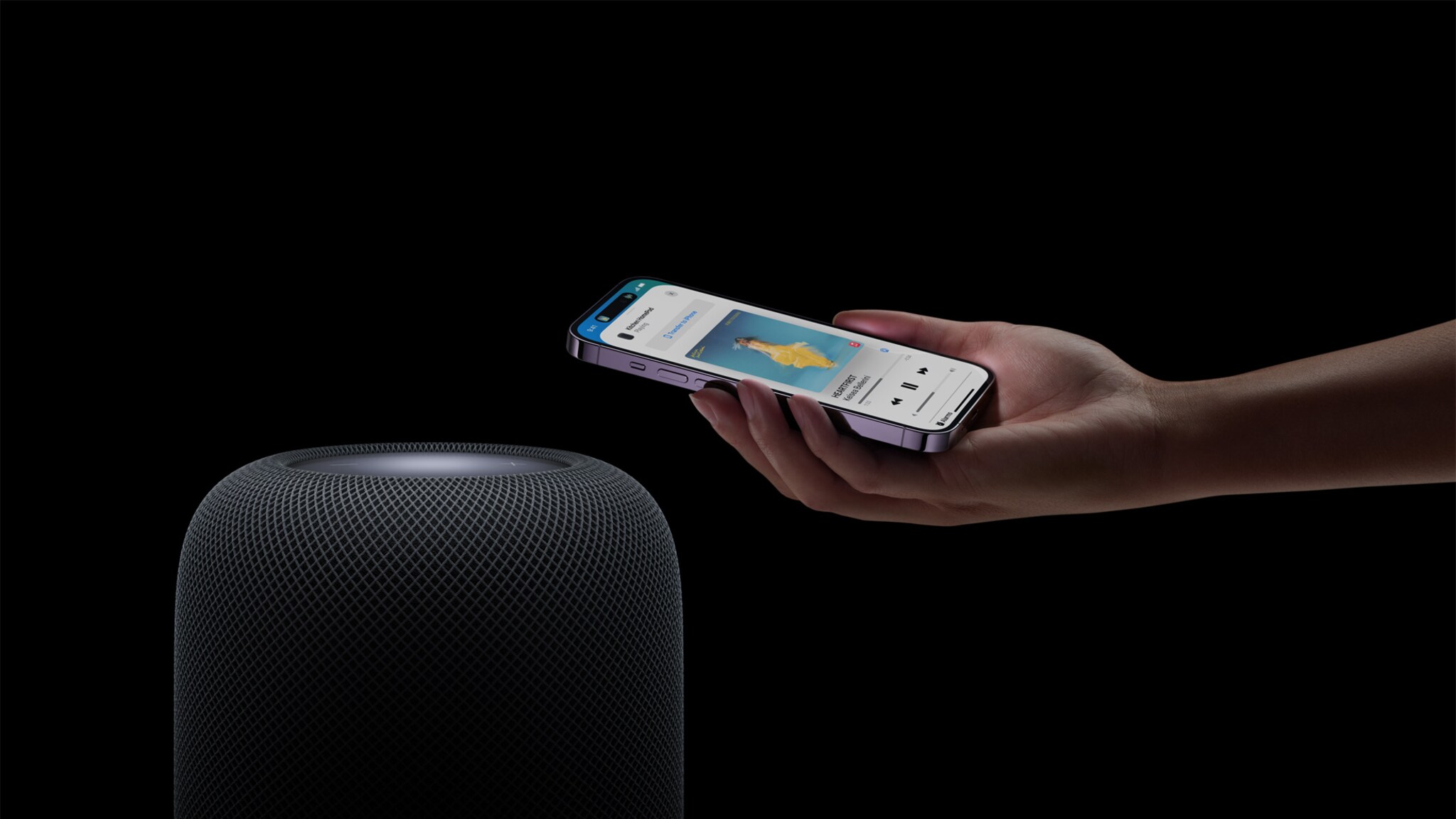
    With the new handoff feature, HomePod users will be able to switch between the smart speaker and the iPhone much easier. The only thing you must do is keep your iPhone closer to the HomePod until a notification pops up on your display.

    Also, after the latest update, you will be able to add music to your HomeKit scenes. Finally, the update introduces Ambient Sounds that should allow you to play relaxing high-quality soundtracks before you go to sleep. You can also set sleep timers to fall asleep to music or Ambient Sounds.

  • One new Apple HomePod feature is coming this month

    One new Apple HomePod feature is coming this month

    Apple had three new iPhones, a refreshed iPad, and an upgraded Watch to showcase at its big Cupertino event earlier this week, but one product that wasn’t even mentioned in passing during a keynote that ran for nearly two hours is the company’s first (and still only) smart speaker. Unveiled in 2017 and commercially released at the beginning of 2018, the HomePod has pretty much been left in a limbo of late from both a hardware upgrade and software update standpoint.

    With no news or rumors of a sequel or spin-off on the horizon, hardcore Apple fans had hoped to at least get an ETA for a few long-overdue features promised all the way back in June. Unfortunately, the company continues to keep things as vague as always, updating the HomePod’s official product webpage with descriptions of the multi-user support and handoff functionality, which are still due to come at some point “later this fall.”

    You probably shouldn’t expect them to roll out in the next month or so, as radio streaming is apparently ready to go live on September 30. That means you’ll be able to tune in to a whopping 100,000 live, local, and global radio stations starting in a couple of weeks just by asking Siri.

    Interestingly, there’s also an all-new feature planned for a HomePod debut “later this fall”, which will allow you to relax by playing soothing pre-loaded “Ambient Sounds” like ocean waves, forest birds, rainstorms, and “more.” Meanwhile, in case you’re not familiar with the multi-user functionality Apple’s competition has pretty much always offered, that’s going to enable a “personalized experience” for “each person in the family”… eventually. In other words, different HomePod users will be able to keep their personal music preferences, messages, reminders, lists, and calendars separate.

    Finally, with the handoff feature, the Siri-powered smart speaker will seamlessly take calls, songs, and podcasts over from your iPhone or iPad simply by holding the two devices close to one another.

  • Samsung’s Galaxy Home Finally to Arrive

    Samsung’s Galaxy Home Finally to Arrive

    In addition to being the world’s largest handset vendor, Samsung also continues to dominate the TV market while supplying the vast majority of smartphone displays out there and topping global chip sales. The tech giant is a major tablet and smartwatch manufacturer as well, but one industry the company hasn’t been able to crack just yet is ruled by arch-rivals Amazon and Google.

    We’re talking about digital assistants in general and AI-powered smart speakers in particular, like Bixby and the Galaxy Home aren’t exactly considered serious challengers for Google Assistant, Alexa, and their army of standalone devices designed for home use. Of course, a big reason why the Samsung Galaxy Home hasn’t managed to take off might be that it’s still not actually up for grabs anywhere around the world.

    First showcased a whopping nine months ago, the Google Home Max and Apple HomePod rival looked destined for an impending commercial debut several times since then, but unfortunately for Samsung, none of the optimistic rumors floating around materialized. At one point, the company’s own CEO was reportedly quoted as teasing this bad boy’s arrival “by April”, although subsequent statements brought back the vagueness, hinting at a launch in the “first half of 2019.”

    With the HomePod and Google Home Max out for a few years now, not to mention a flurry of lower-end, lower-cost models from both Google and Amazon, it felt late for the Samsung Galaxy Home to join the party even last fall. But while Bixby is still widely derided or, at best, ignored, its recent progress is also undeniable. Apart from handy voice assistance and smart home controls, Samsung’s first in-house smart speaker aims to shine in the audio quality department thanks to premium AKG enhancements. Perhaps that could be its saving grace.

  • Get incredible Google Home Hub discounts

    Get incredible Google Home Hub discounts

    Even though it earned pretty good reviews after seeing daylight just six months ago and presumably contributed to Google’s thriving smart speaker sales numbers during the final quarter of 2018, the Home Hub has been massively discounted lately more times than we can count on the fingers of one hand.

    Right now, the Google Assistant-powered smart display is back up to its $149 list price at both its manufacturer’s official US e-store and third-party retailers like Best Buy, but one self-described “social shopping marketplace” has this extremely versatile and convenient product on sale at a big markdown yet again.

    The “catch” is you need to purchase two units to save a frankly unbelievable amount of money. Basically, you’re looking at a two-for-one or buy-one-get-one-free type of deal, as this heavily discounted Google Home Hub two-pack in black currently costs $153.95, or a hair over the aforementioned regular price of a single device. You’ll want to hurry, though, as the promotion, also known as a power deal in MassGenie user lingo, is set to expire within just four hours of the time of this writing.

    If you’d like to get something nice for yourself and a friend, a family member, or a special someone, today’s super-limited offer effectively brings the price of a Google Home Hub down to $77. Meanwhile, for only three extra bucks, you can purchase just the one smart display in your choice of Chalk or Charcoal paint jobs, although you have even less time to jump on that particular deal.

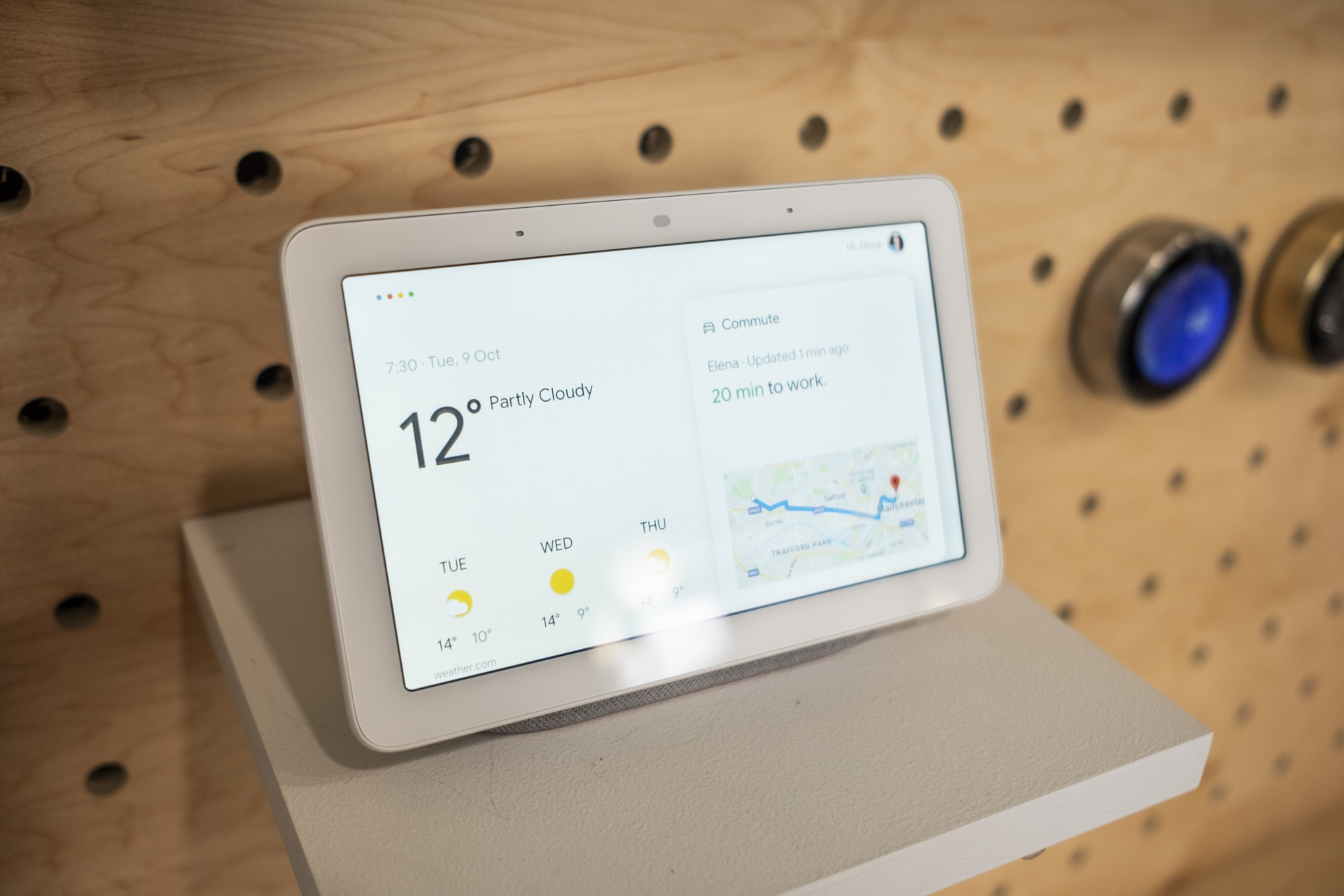
    For those unfamiliar with what this bad boy can do, suffice to say it’s essentially a smart speaker with a touchscreen… and smart home hub capabilities. You can watch YouTube videos, stream music, control various smart home accessories, and get answers to your most burning questions, all without ever lifting a finger.

  • Qualcomm’s new line of chips will make smart speakers better than ever

    Qualcomm’s new line of chips will make smart speakers better than ever

    Qualcomm, manufacturer of the popular Snapdragon chips that power billions of devices, is now aiming to dominate another segment of smart products: speakers and displays with voice assistant support. To do that, the company announced today a new family of chips called the QCD400 Series Smart Audio SoCs. The new chips are designed specifically for the needs of smart speakers like the Google HomePod and Home mini, Amazon’s Echo lineup and others. That is why Qualcomm has focused on two main aspects: sound reproduction and voice recognition.

    The QCS400 line promises “truly superior audio performance” that should come not only from Qualcomm’s own technologies, but support for Dolby Atmos and DTS:X as well. The chips will be capable of supporting up to 32 audio channels.

    To make your communication with the voice assistant better, Qualcomm is once again putting AI to use. The AI should help with voice recognition so you can expect fewer misheard words and phrases in the future. The new chips should also allow the device to better separate voices from background noises or music and detect trigger words easier.

    Besides those main capabilities, Qualcomm is also looking to improve a couple more things that are also quite important.The first one is an improvement in power consumption which will come handy for portable Bluetooth speakers and other battery-powered devices. Devices with the new chips are expected to have a significantly longer standby time during which voice wakeup will be available.

    And finally, the new chips will ensure that your smart device is always well connected. Whether that is to the internet via Wi-Fi or to your phone through Bluetooth, Qualcomm has made improvements in any aspect of the smart speaker connectivity.

    The QCD400 chips are four in total, two of them are for audio only. The least powerful is the dual-core QCS 403, followed by a quad-core QCS404. The two chips that come with video capabilities have the Adreno 306 GPU and support HDMI. Only the highest tier chip, the QCS407 supports 32 channel audio, while the rest top up at 12 channels.

    If you’re a frequent user of smart speakers these new developments are good news for you. And if not, well, you’re probably concerned about the fact that soon these pesky always-listening devices will be able to hear you even better. Like them or not, it seems they’re here to stay!

  • Spotify says Apple Music has unfair advantages

    Spotify says Apple Music has unfair advantages

    The founder and CEO of Spotify, Daniel Ek, announced today in a blog post that Spotify has filed a complaint against Apple with the European Commission (EC). The executive says that when it comes to Apple Music and the App Store, the company gives itself an unfair advantage, violating EC antitrust regulations. Ek says that Apple does this through the “Apple Tax.” That is the 30% of monthly subscription fees that Apple takes on subscriptions made through its payment system.

    Ek says that because Spotify is forced to pay the “Apple Tax,” it has to raise its price in the App Store above that of Apple Music. Right now, both music streaming platforms have the same prices. That would be $9.99 a month for individuals, $14.99 a month for families with up to six members, and $4.99 a month for verified students. However, if you choose to pay your subscription fee through Apple (an in-app payment), Spotify charges $12.99 a month for individuals, $16.99 a month for families and $7.99 a month for verified students.

    Apple has released a statement criticizing Spotify for using the App Store to help it grow over the years without making any contributions to that marketplace.” The company refutes some of Spotify’s claims. For example, Apple says that it has allowed Spotify to update the app over 200 times. Apple says it rejected updates when Spotify didn’t follow the App Store rules. Apple also points out that 84% of the apps in the marketplace don’t pay it a dime, and accuses Spotify of wanting all the benefits of a free app without being free.”

    Additionally, the executive says that if it bypasses Apple’s payment system, Apple will limit Spotify’s communications with its subscribers. For example, Ek says that in some cases Apple won’t let it send emails to Spotify users who use the service on an Apple device. He states that “Apple also routinely blocks our experience-enhancing upgrades. Over time, this has included locking Spotify and other competitors out of Apple services such as Siri, HomePod, and Apple Watch.”

    “It’s why, after careful consideration, Spotify has filed a complaint against Apple with the European Commission (EC), the regulatory body responsible for keeping competition fair and nondiscriminatory. In recent years, Apple has introduced rules to the App Store that purposely limit choice and stifle innovation at the expense of the user experience—essentially acting as both a player and referee to deliberately disadvantage other app developers. After trying unsuccessfully to resolve the issues directly with Apple, we’re now requesting that the EC take action to ensure fair competition.”-Daniel Ek, founder, CEO, Spotify

    All Spotify wants, says its founder, is to be treated the same as apps that don’t pay the 30% tax such as Uber or Deliveroo. The executive says that all apps should be able to compete fairly, and Apple Music shouldn’t get an advantage because Apple owns the App Store. He adds that all App Store users should have a choice of payment systems, and not be locked into using Apple’s platform. And Ek says that all app stores should not be allowed to control communications, including marketing and promotions, between services like Spotify and its customers.

    If Apple is eventually found to have violated anti-trust regulations in the EU, it can be slapped with a fine and be forced to make some changes to the App Store.

  • Apple sales report doesn’t look good

    Apple sales report doesn’t look good

    Apple has been quick to point out the record-breaking revenue numbers for its first quarter.

    The Cupertino-based company reported first-quarter sales of US$88.3 billion and a record quarterly profit for the final three months of last year of $20.1 billion.

    As much as this is praiseworthy, it also masks some more worrying trends.

    First is the 1 per cent fall in unit sales of the iPhone. Although revenue for phones increased by 13 per cent, this was a function of higher prices rather than increased volume. On the surface, this may not seem like a problem, but in our view, it indicates that Apple is, once again, struggling to persuade consumers to upgrade or switch to new devices. This slowing of the upgrade cycle will likely have an impact on phone revenue in future quarters.

    Moreover, the slowdown in iPhone sales is emblematic of Apple’s inability to come up with meaningful and valuable innovations that wow consumers. Even the iPhone X is an incremental product that lacks the excitement and newness earlier models brought to market. Apple is fortunate in having a strong base of fans and many consumers who are bought into its ecosystem of services; but without device innovation, even this may prove insufficient to maintain market share in the face of rising competition.

    Mac sales disappoint

    The second area of disappointment comes from Mac sales where both volume and revenue slipped over the prior year. Admittedly, Apple is up against a comparative from last year when its new MacBooks Pros were gaining ground, but even so, this also underlines a dearth of serious innovation in the home and professional computing segments.

    We also believe that lower volumes, and the fact that Apple’s products were not at the top of everyone’s Christmas lists, put a dampener on service growth. Last quarter this segment grew by 34 per cent and by 22 per cent in the quarter before that. Over this period, the increase was a much more modest 18 per cent. Arguably, the holiday period should be a bumper time for Apple subscriptions; that it wasn’t is concerning – not least because Apple needs income from services to make up for softness in product sales.

    That Apple’s HomePod wasn’t available in time for the holidays was a misstep, not least because it could have helped boost service revenue. Our data show smart speakers and smart home devices were popular gifting and self-purchase items over November and December – with both Amazon and Google growing their market shares. Although Apple will point out its product is superior to rivals’ efforts, it is a latecomer to the party, and we believe its potential sales will be crimped as a result.

    For all of these challenges, Apple remains a solid and financially successful company. Indeed, its profits increased over the period. However, a lack of serious and significant innovation means it runs the risk of diluting future earnings. Apple thrives off serving a mass market; a move to providing more expensive items to fewer people will ultimately prove harmful to the bottom line.

    In essence, we believe that the clear blue water that once existed between Apple and rivals is much diminished. The company has time to reopen the gap, but to do so, it needs to pull something new and unique out of its hat sooner, rather than later.

    -Neil Saunders-
  • Apple debuts HomePod speaker to bring Siri into the living room

    Apple debuts HomePod speaker to bring Siri into the living room

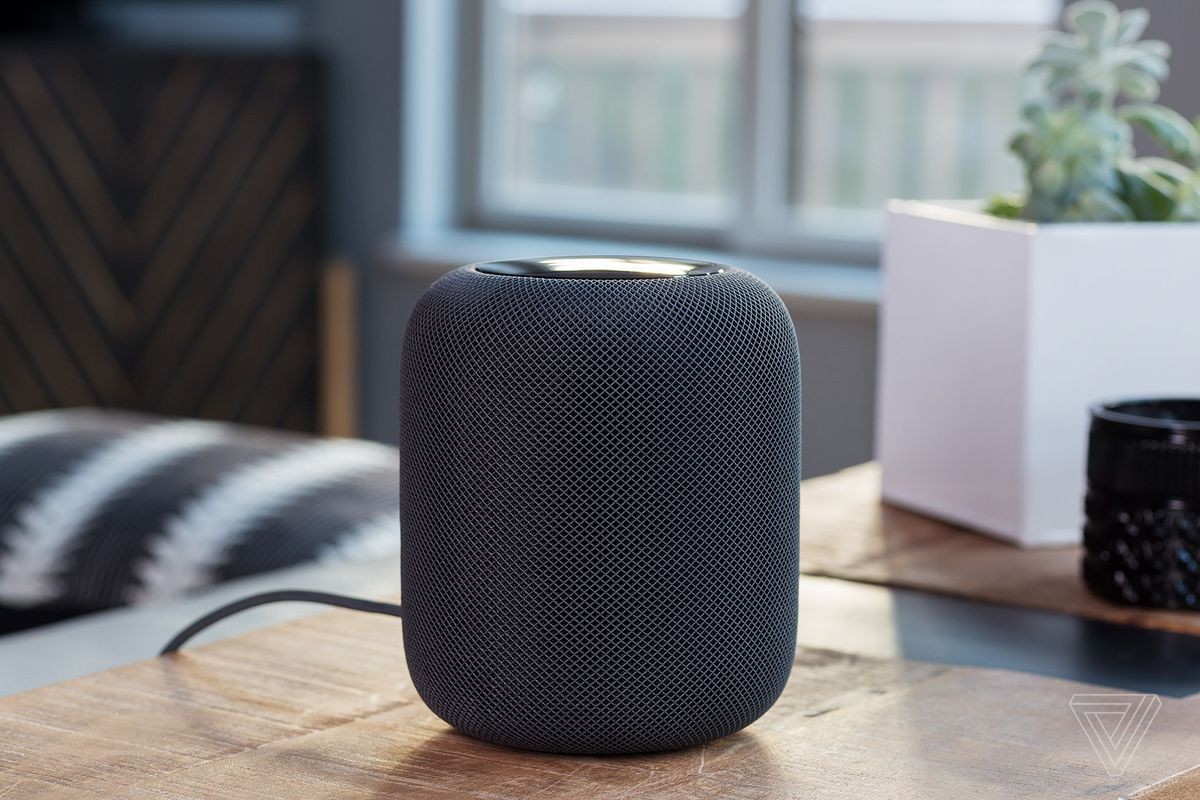
    The HomePod speaker stands just under seven inches (18 cm) tall and is covered in fabric mesh that will come in white or gray. Apple on Monday introduced the HomePod, a voice-controlled speaker that can make music suggestions and adjust home temperatures, taking aim at Amazon.com’s Alexa feature and Echo devices.

    The move is the first into a completely new area by Apple for more than two years as the world’s most valuable technology company looks to make up for a dip in iPhone sales and new ways to get customers to use more of its money-making apps and services.

    Apple’s Siri assistant will be integrated into the $349 speaker, and can make music recommendations that pair with the company’s Apple Music service, send text messages, check news and sports scores and control compatible home gadgets like lightbulbs and thermostats.

    HomePod users may initially be constrained by Siri’s lack of capabilities as compared to Alexa, which also boasts the ability to order millions of Amazon products as well as food from restaurants like Domino’s.

    Apple is expected to announce plans this week to make its Siri voice assistant work with a larger variety of apps, but initial changes were expected to add just a small number of capabilities.

    Apple will begin shipping the HomePod to the United States, Britain and Australia in December.The HomePod speaker stands just under seven inches (18 cm) tall and is covered in fabric mesh that will come in white or gray. A computer processor will tune sound to the room and beam specific parts of music, like a singer’s voice, toward the listener.

    The speaker, while expected by some industry watchers, marked Apple’s first new product announcement since the Apple Watch in September 2014. As a music-playing device, it will also be a challenger to Sonos, whose wifi-controlled speakers are used by many smartphone users for home entertainment.

    A new Siri interface on the Apple Watch will also blend users’ calendar information with other useful details, like airline tickets they may have booked, the company said.The Cupertino, California-based company said Siri, which also competes with Alphabet Inc’s Google Assistant, will now work across devices.

    Apple shares closed down 1 percent at $153.93, not far below the all-time high set last month.Apple also used its annual developer meeting in San Jose, California – its largest ever with some 5,000 people attending – to offer hints about so-called augmented reality technology.

    Augmented reality

    The technology, a feature of the wildly successfully smartphone game Pokemon Go, overlays digital information on real-world images and is seen as an area in which the keenly awaited 10th-anniversary iPhone can stand out from competitors.

    New indoor maps of areas like malls and airports indicated that Apple might be laying groundwork to display information over images of those places in the future.

    The company also rolled out tools for developers to create augmented reality applications for iPhones and iPads. To show the tools off, Apple invited Wingnut AR, the company formed by “Lord of the Rings” director Peter Jackson, on stage.