Retail News CRM

Tag: homeware

  • Adairs acquires online-only homewares brand

    Adairs acquires online-only homewares brand

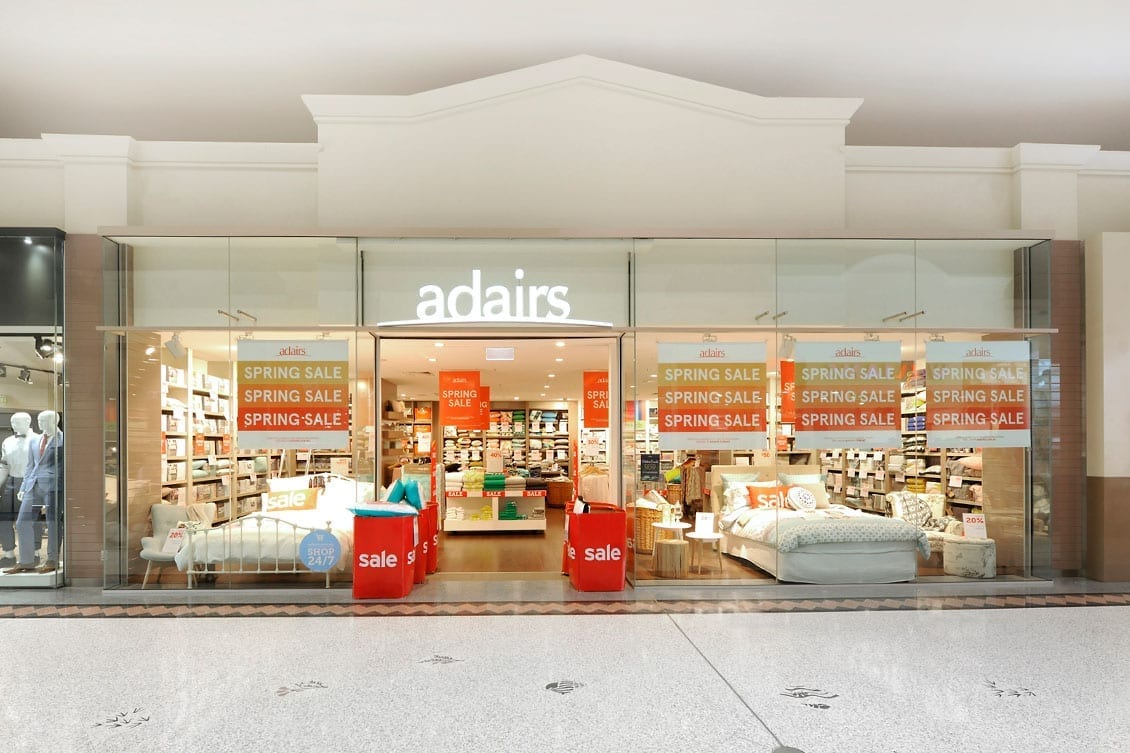
    Adairs has entered into a binding agreement to acquire pure-play homewares retailer Mocka for approximately $80 million.

    Mocka operates across Australia and New Zealand and will continue to run as an independent business with the existing management team leading its operations and strategy.

    All product design, development, sourcing, and marketing is done in house across two teams operating out of Brisbane and Christchurch.

    The acquisition is to be funded through Adairs’ group term debt facilities, as well as the issuing of 3.2 million ordinary shares to Mocka, and is expected to be completed in mid-December.

    The new shares issued will be escrowed to until the release of Adairs’ FY21 results, while the total amount will be paid over the next two to three years.

    According to Adairs chief executive Mark Ronan, the acquisition will be highly complementary to the homewares retailer.

    “We have shared DNA in that we are both design-centric with in-house product design and development which allows us to offer our customers high quality ‘design-led, value for money’ differentiated product,” Ronan said.

    “Importantly, this also means we have significant control of the vertical supply chain and in-market pricing. Finally, we are each highly customer-centric organization, with a passion for great service.”

    Ronan also said the acquisition gives Adairs a stronger foothold in the online space – with online sales growth for 17 percent of the business to almost 30 percent with the acquisition.

    “We see many opportunities for Adairs to add value to an already successful business,” Ronan said.

    “Our knowledge and experience of the home market will allow us to help management further develop the Mocka brand, especially in Australia, and support the Mocka team to continue to deliver growth.”

    Adairs also offered revised guidance for the business into FY20, taking into account how the addition of Mocka will affect sales and EBIT for the year.

    Sales are expected to reach $419 to $435 million over the course of FY20, while earnings before interest and tax is expected to hit between $54.5 and $58.7 million.

    This compares to the retailer’s initial guidance given for FY20 of between $377.7 to $393.4 million, and an EBIT of between $45 and $48 million.

  • MyDeal pivots to home wares deals

    MyDeal pivots to home wares deals

    As the online marketplace space becomes more crowded, Melbourne-based startup MyDeal plans to shrink to greatness – when it comes to product categories, that is.

    Like many marketplaces, the e-commerce company founded in 2012 by Australian entrepreneur Sean Senvirtne was initially focused on growing its customer database, supplier numbers and range. In 2017, with 1000 sellers and 25,000 products on the site, it expanded into new categories – fashion and travel – and diversified its offering with the launch of a fintech product.

    But now, MyDeal is paring back its business to focus on the furniture and homewares space, an area where the company has always had a natural strength, according to head of marketing, John Barkle.

    “Prior to the massive expansion of products, those were our strongest categories. I think it’s because we have the best price and range, and we’re very good at moving products that are big and bulky,” Barkle told.

    Today, MyDeal claims to have more than 500,000 products on its site. It aims to surpass one million within the next six months by bringing on board new sellers in the furniture and homewares space, a goal that should be made easier by its recent integration with ChannelAdvisor, a US-based e-commerce company that helps businesses list their products on marketplaces such as eBay, Amazon and now MyDeal.

    “This is a significant milestone in the business that signifies 12 to 18 months’ worth of work to get the technology right on our marketplace platform,” Barkle said.

    MyDeal’s marketplace technology is bespoke, and Barkle acknowledged that, in the past, this may have presented a barrier to sellers wanting to join the platform. Listing products on a marketplace can be a time-consuming and labour-intensive process, depending on the marketplace’s information requirements, the number of products the seller wants to offer and the availability of software to automate the process.

    Since solving its technical issues and narrowing its focus, Barkle said MyDeal is now positioned for rapid growth. But the e-commerce company may face new obstacles in its pivot to furniture and homewares, which puts it in direct competition with some much larger and more established players in the niche, such as Temple & Webster. The listed retailer recently reported $49.3 million in revenue in the six months to December 31, a 40 per cent increase on the previous year.

    Barkle declined to share any earnings figures for MyDeal, which is a private company, but said the retailer recently became profitable.

    “We run a very low-cost model, meaning we can pass on those savings directly to the customer,” Barkle said. “Where we intend to compete is on providing a unique experience that improves discovery and satisfaction.”

    MyDeal recently launched a “shop and earn” program that Barkle said is unique among Australian marketplaces. It allows customers to earn credits that they can then put towards later purchases every time they buy something on MyDeal. The amount of credits they earn depends on the seller they buy from, which is designed to encourage healthy competition among sellers to drive sales. Barkle said the site has seen a substantial increase in customer retention since launching the program three months ago.

    Barkle also spoke obliquely about using technology to bring customers as close to touching and feeling the product as is possible online, something that other online retailers, including Temple & Webster, have flagged as being possible with augmented and virtual reality. But like its competitors, MyDeal mostly seems content to let demographics play to its advantage.

    “We believe the penetration of online sales into furniture and homewares will substantially increase over the next five to 10 years, driven by millennial consumption,” Barkle said.

    Housing slump weighs on homewares

    Whether this will be enough of an insulating factor for MyDeal and other online furniture retailers to weather the current housing slump is up for debate. In its monthly trading figures for January 2019, the ABS reported a 0.2 per cent drop in household goods retailing, the only industry sub-group to fall in the month.

    At the same time, MyDeal’s strategic move away from the general marketplace arena, where online “department store” retailers like Catch and now Kogan.com are competing with the likes of eBay and Amazon across a wide range of categories, may prove to be less effective in the long run, as competition among niche marketplaces increases.

    Jason Wyatt, co-founder and managing director of Marketplacer, a software company that provides marketplace technology to businesses, said retailers, brands and manufacturers are beginning to adopt a marketplace mentality to extend their ranges without the burden of owning inventory.

    “That previously hasn’t existed,” he told.  “I don’t think there’s room for 20 mega marketplaces in Australia, but I think we’ll see more niche marketplaces that aim to be ‘something’ for ‘somebody’.”

  • Coles starts selling food on eBay

    Coles starts selling food on eBay

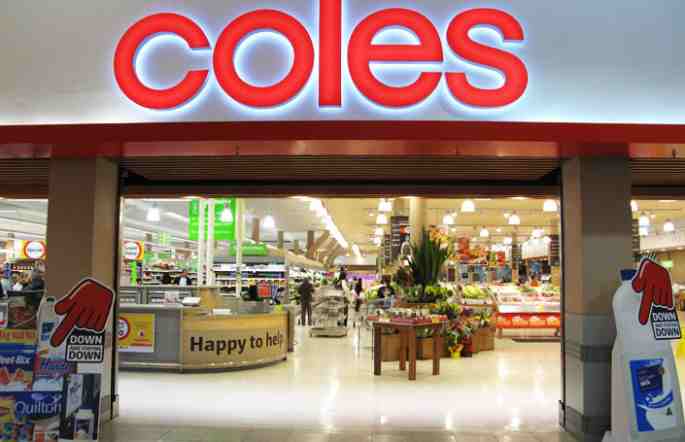
    Coles on Wednesday started selling a range of ‘everyday essentials’ on eBay, in a bid to reach some of the marketplace’s 11 million unique monthly visitors. The offering includes perishable and non-perishable items in Coles’ everyday essentials range across several categories, including select pre-packaged fresh food, pantry, personal care and household items. The items at launch are available to eBay shoppers in metro Sydney, Melbourne and Brisbane. Shoppers will initially have just one delivery option, though more will be added throughout the year, according to a statement from eBay and Coles. 

    Alister Jordan, chief executive of Coles Online, described the partnership as being all about convenience.

    “By partnering with eBay, we are providing our customers another convenient way to access our products and have them delivered straight to their door,” he said in a statement.

    The idea is that consumers who are already buying fashion, homewares and electronics on eBay can also complete their food shopping on the online marketplace, rather than having to make a second – virtual – trip to Coles’ e-commerce site.

    “It really comes down to convenience and being able to choose from a great range of groceries as well as those bigger ticket items you can’t get from a supermarket,” Julie Nestor, eBay’s CMO told.

    “Think about planning for a dinner party and being able to purchase everything from the table setting to the meal ingredients on the one site – it’s a more convenient, seamless way to shop online.”

    There is also the fact that more and more brands stocked on supermarket shelves are increasing their direct-to-consumer sales through their own websites or marketplaces like Amazon, which expanded into the pantry category last October, though it doesn’t yet offer fresh food in Australia. For eBay, the partnership seems to be about growing its eBay Plus membership program, which it launched in May 2018 in what many saw as a response to Amazon Prime. The program, which costs $49 a year, includes unlimited delivery and returns on new items bought on eBay, discounts on the Stan streaming service and opportunities to earn points through Coles’ flybuys loyalty program.

    Nestor confirmed that launching Coles’ food offering on eBay has been in the works for some time.

    “After we successfully launched our partnership with flybuys last year, this is a natural extension of our relationship with Coles,” she said.

    Nestor declined to say how many members are currently signed up to the eBay Plus program, but she described the uptake so far as “really positive” and said the company expects it to continue to grow with the launch of Coles on eBay. EBay Plus members get free delivery on orders that are $49 and over, and they earn double the number of flybuys points on all orders.