Tag: Honeywell

  • Growing loyalty in a disloyal age through a frictionless customer experience

    Growing loyalty in a disloyal age through a frictionless customer experience

    Brand loyalty in the retail sector is on life support. In a fragmented omnichannel environment, comparison shopping, household budgetary pressures and online price transparency are driving declines in customer loyalty – and leading to tighter margins in the retail sector.

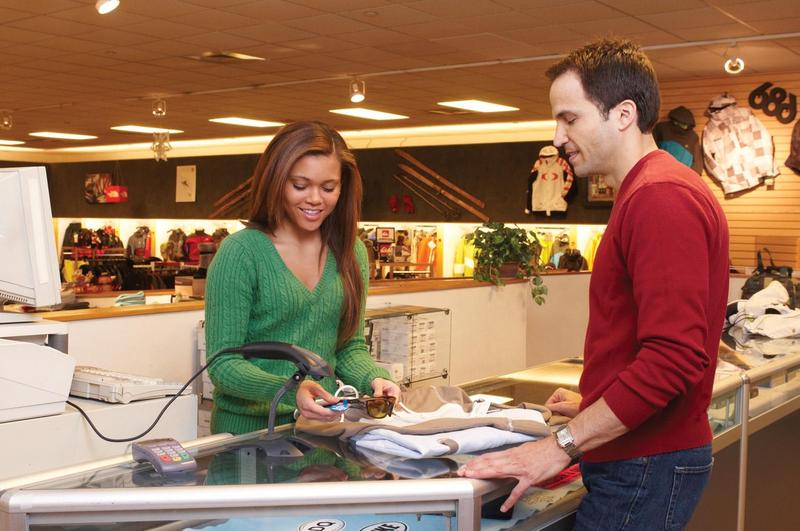
    As traditional retailers struggle to find a competitive edge in such a market, brick-and-mortar stores need to review their processes to deliver greater value and exceptional experience. In an in-store environment, this is leading to brands adopting contactless payment to create hassle-free checkout experiences, along with elevating their stores to offer more ‘experiential retailing.’

    Consumers are more digitally savvy than ever and place a high value on immediacy and quality of service. As a result, a retailers’ workforce needs to be equipped with the means to fulfill different orders with greater efficiency as store associates are now required to do more logistics related tasks, along with offering higher levels of in-store customer service.

    While there have been significant advances in delivering on the customer experience online, the pressure is on for retail stores themselves to meet growing customer expectations. This is not an easy process given that traditionally retail stores have been unstructured environments. Salespeople have had to balance competing demands, handling operational tasks while interacting with customers and immediately responding to their requests. These competing demands can result in inaccurate orders, inefficient bundling, and other errors that drive up labour costs, while employee satisfaction can also suffer if staff feel like they are being pulled in too many different directions at once.

    Meeting online customer service standards offline

    Repeat business remains a critical barometer of success, but like many aspects of the modern retail equation, achieving this means overcoming challenges. Customer loyalty programs matter less, while a high-quality, consistent experience matters more. Loyalty is a cross-channel concept, as customers who shop across all a retailer’s channels are more engaged, creating a more beneficial buyer-seller relationship.

    The modern shopper has access to real-time information and comparison expertise at every step of the journey online. Online retailers compete for customers through offering competitive product pricing and a seamless shopping experience. Customers now want an in-store and offline experience that meets the same standards of excellence they have already typically experienced online. This may mean in-store retail staff having to return an online purchase without hassle for a customer in-store, or sourcing stock in another store and organising delivery to the customer’s home; in-store shoppers expect service excellence at every stage of the buying journey.

    The challenge with trying to match the effortless online customer experience in-store is that many retailers still perceive the customer journey to be linear, which is no longer the case.

    Customers move between online and in-store, browse for goods across social platforms, may direct message for price comparison and email for detailed communication. Shoppers often do not buy where they browse, they may return elsewhere than where they bought and if they change their mind there is an expectation that a store associate will help resolve their issue without any hassle.

    As consumers are shopping on all channels, retailers must focus on delivering an excellent total shopper experience, ensuring that they service their customer how, when and where they are, be that in-store, curbside, or the comfort of their home.

    Built to match the realities of the shop floor

    Retail workers are at the frontline of customer service today and require enterprise level information at their fingertips. After all, every shopper interaction is an opportunity to build a positive impression and support a sale, or conversely create a negative perception and lose business. In such an environment, retail workers need to be supported by the right tools to resolve customer issues, address queries and offer a seamless retail experience.

    New retail-specific mobile technologies can drive efficiency and productivity in store operations and improve the customer experience. Compact, but durable handheld mobile computers, like the Honeywell CT30 XP or EDA5S mobile computers, make salespeople appear more approachable and work in tandem with other devices, enabling users to not only communicate and confirm work easily, but also view pictures of products and inventory locations, type on a keyboard, or scan barcodes.

    How retail stores can transform to meet the needs of an omnichannel world

    The competitive demands of today’s retail environment require in-store processes be optimised and expanded to meet customer needs. Just as Distribution Centres traded paper-based, word-of-mouth and other manual workflows for voice technology decades ago, forces are aligning for retail stores to make the same shift. Retail stores can now support ship-from-store and click-and-collect services – key customer experience differentiators that can also help limit shipping costs as online order volumes grow.

    Proven voice picking technologies allow retailers to empower store associates to fulfill these key logistic roles transforming a traditional a brick-and-mortar store into a modern, flexible fulfilment centre that can meet the demands of omnichannel customers. These technologies present a ‘hands-free, eyes up’ mode of working that can support the demands of a range of in-store workflows, such as order fulfillment, gap scanning, shelf replenishment, inventory management, and more.

    What should also not be overlooked by retailers in such an environment is that customers visiting for in-store pickup provide valuable boosts in foot traffic and opportunities for additional sales.

    Greater operational visibility is required

    Today, retailers need to empower and connect their workers through unified connected communications along with having greater visibility over their operations and workflows. Through these insights, management can analyse how long certain tasks take, leading to better understanding of retail workflows and workforce performance.

    Operational visibility data can fuel labour models to build staffing requirements, determining how much labour is necessary to provide high levels of customer service during peak times and to fulfil online orders from the store. Ultimately, this fuels data-driven decisions to avoid overstaffing while ensuring on-time, accurate order fulfillment and an optimal customer service and checkout experience.

    Empower staff to meet the needs of the omnichannel customer

    Retail stores have transformed from sites that purely existed to make a purchase into something far more complex. Stores now must fulfill several roles along the customer purchasing journey – from being a customer service site, to acting as a returns-facility, to picking and shipping online orders and offering click-and-collect buying options.

    To meet the needs of customers in an omnichannel world, where customers expect the same hassle-free shopping experience that they get online in an instore setting, retailers need to ensure that their staff are properly equipped with the right technologies, systems and knowledge.

    Written by: Vikas Wadhwa, APAC Retail Leader, APACI at Honeywell

    To learn more about how your retail store can meet the challenges of operating in an omnichannel environment, please visit: https://sps.honeywell.com/au/en/industries/retail

     

  • How retail technology can enhance the customer experience

    How retail technology can enhance the customer experience

    The path to purchase is becoming more complex than ever before for Asia-Pacific retailers. Rising expectations of today’s empowered customers, who have unlimited access to choices and pricing information online is creating operational challenges for many retail businesses.

    Retailers cite meeting heightened customer expectations, managing a high turnover workforce and creating a frictionless experience between online and in-store as top challenges. Global research, undertaken by YouGov on behalf of Honeywell, recently found that only 44% of retailers believe they are meeting today’s customer expectations. As consumers increasingly seek new and surprising products and experiences, retailers are increasingly challenged to find ways to delight their customers and strengthen loyalty.

    The omnichannel challenge

    Worryingly for retailers trying to adjust to the rise in online shopping, while still maintaining bricks and mortar sites, a majority of retailers do not believe that they are prepared for the modern retail environment, with only 49% of retailers stating that they are doing an ‘excellent’ job with omni-channel integration.

    Retailers need to adopt an omnichannel operations model to compete for the connected consumer today. Enabling the store network as a distribution point for inventory should be an advantage against online competitors that have no physical footprint. However, without investment in technology specifically designed for omnichannel, the workarounds required to deliver on the customer promise can have a negative impact on profit margins.

    Room to improve many key retail operations

    When asked if they are outperforming their competitors in key success metrics like offering a smooth returns handling process and a personalised shopping experience, retailers reported overall low confidence in how they stack up against their competitors. Only 42% of retailers surveyed believed that they were offering a ‘personalised’ shopping experience, online or in-store. Furthermore, only 37% of retailers said that they offer convenient delivery options or ‘seamless’ delivery for customers.

    As shoppers gain more price and quality transparency coupled with a wide range of convenient delivery options, technology will be a key driver of success to increase the value added to consumers. Retailers who proactively ready their organisation for change and deliver a more exciting, simple and convenient customer experience will be best placed to capitalise on evolving shopper priorities.

    Retailers must enhance the shopping experience

    Retailers must embrace a consumer-first mentality as business strategies and initiatives are developed. Retail organisations who understand their consumers in terms of demands, expectations and pain points will be more successful in shaping and enhancing consumer experiences.

    Recent research conducted by global business mobility and IoT solutions provider SOTI, found that 61% of Australian consumers want to receive personalised customer service out of their in-store experience over other factors. Mobile technologies are sensible investments for retailers looking to improve the customer experience, which is key to converting shoppers into buyers in a competitive retail landscape. Shoppers today do not want to be confronted with long ques to make a purchase or encounter an impersonal retail environment.

    “The use of technologies like mobile point-of-sale (mPOS) devices in-store allows salespeople to provide customers with a better retail experience, which leads to increased sales. For instance, the adoption of mPOS helps sales by allowing shoppers to avoid long lines at the cash register, which often results in customers not completing a purchase,” said Michael Dyson, Managing Director Australia & New Zealand, SOTI.

    According to Honeywell research, 59% of retailers believe that technology has enhanced their customer experience. Arming retail associates with access to relevant, timely business information to enable consistent end-to-end customer experiences that span physical and digital channels is a key technology focus area today. Consumers want to be engaged by sales associates with information that enhances their shopping experience. This is leading to many retailers equipping customer facing staff with mobile devices that can showcase product ranges and pull up a customer’s purchasing history to better suggest new items, tailored to a customer’s own preferences.

    Understand the consumer, have the right solutions to succeed

    A successful understanding of the consumer, having the right systems in place and providing a personalised online and in-store shopping environment is critical to engaging shoppers today. Technologies such as advanced analytics, smartphone and mobile apps provide both the data to develop consumer insights and the direction to optimise consumer experiences.

    For more information, please visit: https://www.honeywellaidc.com/

    By Claudio Bratovic, ANZ Regional Manager, Honeywell


  • Honeywell invests in, forms JV with FLUX to pursue opportunities outside China

    Honeywell invests in, forms JV with FLUX to pursue opportunities outside China

    Honeywell has signed an agreement to acquire a 25 per cent ownership interest in FLUX Information Technology, a leading provider of warehouse management and related supply chain software in China. Honeywell will also form a new joint venture company with FLUX’s founder to serve customers outside China. Honeywell will hold a 75 per cent stake in the new joint venture, which will initially focus on opportunities in the Asia Pacific region. The investment in FLUX is expected to close by the end of the fourth quarter pending Chinese regulatory approvals.

    FLUX develops and implements warehouse management systems and other software for customers in multiple industries, and is a leading player in China’s booming e-commerce, apparel, pharmaceutical, retail, third-party logistics, cold chain and manufacturing sectors. FLUX’s supply chain execution solutions include its Warehouse Management System, Transportation Management System, Order Management System and Data Exchange Platform.

    FLUX’s offerings complement those of Honeywell Safety and Productivity Solutions, which develops hardware and software that improve productivity, enhance worker safety, and increase accuracy and throughput of supply chains.

    “We are pleased to be partnering with a dynamic, emerging leader with a proven track record in a fast-growing market,” said John Waldron, president and CEO, Honeywell Safety and Productivity Solutions. “FLUX’s strong software capabilities fit well into Honeywell’s Connected Supply Chain strategy, complementing the warehouse expertise of our Honeywell Intelligrated business. FLUX’s warehouse, transportation management and order management offerings complement Honeywell’s data capture technology, worker productivity and warehouse automation solutions, and enable us to maximise customer satisfaction in the digital age.”

    Over the past decade, FLUX’s business has grown significantly. Its software now manages more than 12 million square metres of warehouse space in China alone. During China’s November 11 “Singles’ Day” online shopping festival – the largest e-commerce day in the world – FLUX’s solutions helped process up to 650,000 orders per warehouse per day. E-commerce sales currently total more than US$1.3 trillion in the Asia Pacific region according to expert estimates, and sales are expected to more than double to US$3 trillion by 2021.

    “We are pleased to team up with Honeywell to further expand in China and to play an active role in the global warehousing and logistics industry by offering our leading Warehouse Management System solutions,” Shi Zunli, founder and CEO of FLUX. “Honeywell has outstanding industry reach and strong global presence, which will enable us to fulfil our vision of globalisation. With this strategic partnership, we will connect, collaborate and create more value for our customers.”

    Li Ning, president of Honeywell SPS Greater China & India, said, “This partnership will allow Honeywell to accelerate the pace of executing our connected strategy in China and the Asia-Pacific region and create a win-win situation for both companies. This agreement strengthens our position as a software-industrial company and supports our efforts in developing and acquiring capabilities in China that are relevant for a global customer base.”

  • Honeywell’s enterprise tablet provides real-time connectivity, fast data capture capabilities

    Honeywell’s enterprise tablet provides real-time connectivity, fast data capture capabilities

    Honeywell’s new enterprise-ready tablet, the ScanPal™ EDA70, provides workers with real-time connectivity for business-critical applications and efficient data capture capabilities. The lightweight, rugged tablet is built on the Android 7 (Nougat) platform and is ideal for scan-intensive workflows such as customer engagement and on-demand delivery. The device keeps mobile workers always connected to crucial information to place orders, check stock, look up order status or scan items as they are removed for delivery.

    “Our customers and their mobile workers need a truly mobile office with reliable access to communication and information,” said Raj Singh, vice president and general manager of Honeywell Safety and Productivity Solutions. “We designed the EDA70 for the connected mobile worker, who needs to facilitate large file transfers, use video streaming and gain remote access to business applications quickly to manage a wide variety of tasks. The large screen allows workers to view more data, such as inventory stock or schematics, and the rugged casing protects the unit from accidental drops and falls that would damage consumer-grade tablets.”

    The ScanPal EDA70 features:

    • A fast processor;
    • 1D/2D barcode scanning;
    • A built-in camera;
    • A vivid 7-inch Corning Gorilla Glass display readable in bright light;
    • Ample battery life to power through a full shift and beyond.

    The ScanPal EDA70’s design also features a sleek exterior and modern, all-touch interface for a contemporary appearance in customer-facing applications, as well as multiple input modes to save valuable time and minimise data entry errors. Honeywell also offers a full suite of accessories for the device, including desktop charging/docking systems and battery charging base.

    Honeywell Safety and Productivity Solutions provides products, software and connected solutions that improve productivity, workplace safety and asset performance for customers across the globe.

  • Honeywell’s new platform helps logistics providers increase worker productivity, capture critical data

    Honeywell’s new platform helps logistics providers increase worker productivity, capture critical data

    Honeywell has announced a new hardware and software platform for the next generation of its mobile computers, which are used globally by distribution centres, transportation and logistics providers, hospitals, and retailers to increase worker productivity and capture critical data. The Mobility Edge Platform comprises common hardware architecture and a suite of tools on which Honeywell and its partners will build future mobility solutions, which include rugged handheld computers, wearable devices, voice-directed technology, tablets and vehicle-mounted computers.

    The platform is designed for Google’s Android operating system, which is increasingly becoming the standard for industrial mobile devices. It offers a long product lifecycle by supporting current and future Android versions – more than any competitive offering on the market. Additionally, the common platform provides consistency across Honeywell’s next-generation devices and makes it easier for customers to upgrade current models, manage device refreshes and quickly deploy software applications.

    Honeywell also announced the Dolphin CT60 handheld computer, the first new mobile device to run on the Mobility Edge Platform. The rugged device is designed for transportation, logistics and retail workers and offers an extended battery life, high-performance scanning and other productivity features.

    “After talking to many of our strategic customers and partners, we rethought the approach to solving the constraints they face today on mobile deployments,” said Peter Howes, president of Honeywell’s Productivity Products business. “Our customers require something more comprehensive and scalable, and that is what we are introducing with the Mobility Edge Platform.

    “Because we built the Mobility Edge Platform with an Android-first mindset, businesses will have the confidence that our devices will support future versions of the operating system without making new hardware investments,” said Howes. “Leveraging a single, unified platform will make adding new devices and testing and deploying business-critical mobile hardware and software easier and faster.”

    The Mobility Edge Platform features:

    • Support for four generations of Android – Nougat through Q;
    • A common architecture approach to allow customers to develop, test and certify an application just once for deploying to devices;
    • Productivity-optimising tools to increase data capture speed and improve the way workers communicate securely;
    • A battery runtime maximiser to allow customers to extend daily usage of the device by adjusting performance characteristics according to their specific needs;
    • Integrated functions for scanning and voice communications;
    • A rapid provisioning suite for faster, easier deployment of new devices and reduced deployment costs;
    • Enterprise lifecycle tools to optimise device uptime and help IT teams overcome obstacles with integration and inflexible technologies.
  • Honeywell unveils new Connected Freight solution

    Honeywell unveils new Connected Freight solution

    Honeywell has launched a new Connected Freight solution that gives shippers and logistics companies unprecedented ability to monitor shipments of high-value and perishable goods, helping prevent costly damage and loss.

    The new solution, developed in collaboration with Intel and third-party logistics companies, provides real-time information about the location and condition of critical freight while in transit. The solution was introduced during Honeywell Safety and Productivity Solutions’ launch event today.

    “Honeywell is developing a range of Connected Supply Chain solutions that leverage technology and data to make supply chains more efficient and better able to adapt to rapid change,” said Taylor Smith, president of Honeywell’s Workflow Solutions business. “For shippers, logistics providers, retailers and others faced with a host of costly freight challenges, such as theft, damage, spoilage and delays, this convenient cloud-based solution provides customers with detailed analytics in order to plan, anticipate and react immediately to incidents that occur during shipment.”

    Real-time shipment information is critical, for example, when shipping perishables and goods that require uninterrupted refrigeration, such as pharmaceuticals, or high-value equipment that is sensitive to vibration or shock.

    “After assessing our internal supply chain needs and the needs of the industry, we forged a unique collaboration with Honeywell. Together, we’ve customised Intel’s Connected Logistics Platform technology to deliver an IoT offering that solves real logistics problems,” said Chet Hullum, general manager for Industrial Solutions at Intel. “Thanks to data accessibility, shippers and carriers will be able to establish a more reliable supply chain network by having deeper visibility and information on shipments.”

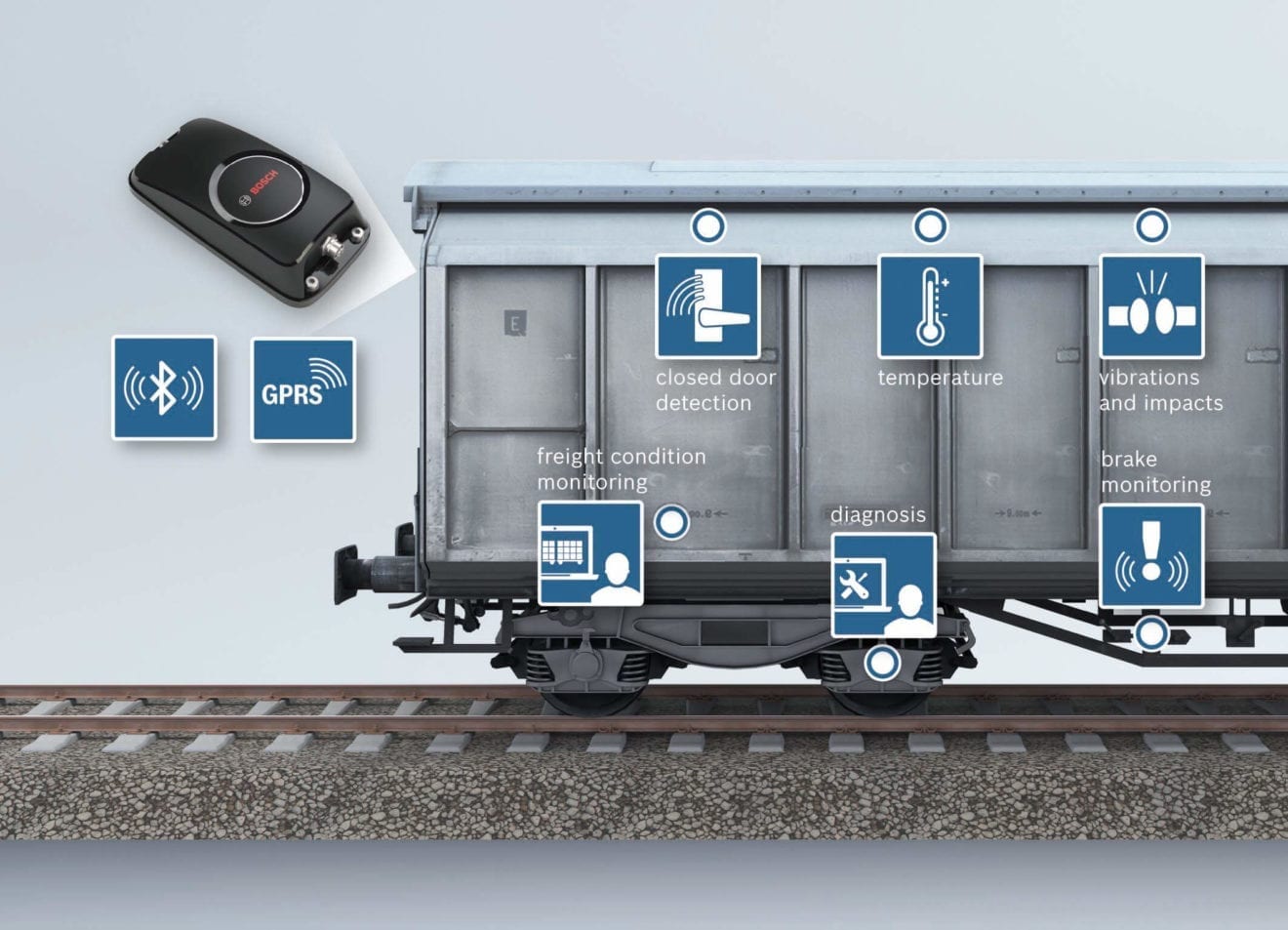
    Honeywell’s Connected Freight solution consists of cost-effective sensor tags that sense a range of environmental conditions, such as temperature or vibration. The tags can be affixed to pallets or individual packages. The sensor data is captured by a mobile gateway placed inside a truck or shipping container and then transmitted via cellular networks to a cloud-based command-and-control platform.

    Users can establish alerts based on temperature, shock, tilt, humidity, pressure and intrusion detection. The solution can alert manufacturers of high-value, highly sensitive technology if equipment has been damaged while being loaded or unloaded, or if it may have been stolen. The cloud can also store data for compliance and audit needs, and provide predictive and reactive analysis, such as which routes to avoid.

  • Honeywell’s New Satellite-Based Connected Worker Solution Keeps Remote Workers Safe

    Honeywell’s New Satellite-Based Connected Worker Solution Keeps Remote Workers Safe

    Honeywell today announced a new satellite-based connected solution to help governments, companies and other organisations monitor the location and safety of workers in remote locations.

    Honeywell’s Personal Tracker utilises Iridium’s low-earth orbit satellite network, the only satellite constellation that provides pole-to-pole coverage, which is necessary for effective remote asset and personnel tracking. The mobile device allows companies to communicate with their workers or track assets anywhere in the world – across oceans, airways and even polar regions.

    “Those responsible for employees in remote locations, especially lone workers who may be performing risky work, increasingly need a reliable method to stay connected to those workers to keep them safe and secure,” said Taylor Smith, president of Honeywell’s Workflow Solutions business. “Honeywell’s connected worker technology and Iridium’s proven platform enable satellite communications from anywhere on Earth. This offers remote workers, such as workers on offshore oil platforms or forestry service workers, peace-of-mind and provides their employers with a valuable communication and search-and-rescue tool for emergency situations.”

    Emergency services, maritime, military and oil and gas workers can share their location with GPS coordinates and send text messages using the enterprise-grade, ultra-rugged device, which is certified to function in hazardous environments where explosions or a fire may occur due to flammable liquids or vapours. It can be used as a stand-alone, two-way communications device or can be clipped to a backpack to serve as a tracking beacon. It can also be paired with an iPhone so that users can access a Honeywell mobile app that offers features such as interactive SOS, messaging, push notifications, trip information and situational awareness.

    For example, in the event of an emergency, an organisation can send push notifications to alert its workers – regardless of their location – and then track their locations and provide updates as they seek shelter.

    The Personal Tracker is exclusive to the Iridium® network. With Iridium’s two-way communication capabilities, even when used as a stand-alone alerting and tracking beacon, the Personal Tracker can receive current location requests and configuration updates over the air.

    “We are proud to work with Honeywell in enabling their connected worker technology, and support their commitment to lone worker safety,” said Bryan Hartin, executive vice president of sales and marketing at Iridium. “This partnership comes at an exciting time for us as we are launching our next-generation global constellation, Iridium NEXT, and continue to expand our growing portfolio of satellite-based solutions for the Internet of Things. The unique architecture of our constellation makes it a natural fit over other providers for mobile applications, especially where safety is concerned. Providing reliable coverage is critical for companies tracking employees and assets located in remote areas, and Honeywell’s new Personal Tracker will make that possible.”

    The mobile device supports Honeywell’s ViewPoint software, a web-based platform that provides organisations with real-time visibility for tracking and monitoring high-value assets such as vehicle fleets and cargo containers. The ViewPoint platform offers organisations and government users advanced features, such as 90-day tracking history, geofencing, scheduling reports, alert management and messaging.

  • Honeywell Launches Slimmest Scan Engine and Ultra Compact Decoding Board

    Honeywell Launches Slimmest Scan Engine and Ultra Compact Decoding Board

    Honeywell has released the N6600 Series Ultra-Slim Area-Imaging Engine and its miniature decoding board Mini DB, which together enable small mobile devices to quickly and accurately capture data from barcodes using small mobile devices.

    Measuring just 6.8 millimeters in height, the N6600 series is one of the slimmest and most compact engines of its kind currently on the market. It can be embedded in mobile devices, such as smartphones, tablet sleds or wearable scanning solutions used in retail, distribution center, logistics and parcel delivery environments.

  • Honeywell to tap into Indonesia’s infrastructure projects

    Honeywell to tap into Indonesia’s infrastructure projects

    US-based technology and manufacturing firm Honeywell plans to tap into Indonesia’s robust infrastructure development, especially of airports and railways, that is aligned with President Joko “Jokowi” Widodo’s vision for the coming years.

    The company acknowledges Jokowi’s ambitious program to execute infrastructure construction worth more than US$400 billion from 2015 to 2020 to spur economic growth in the country and therefore make the nation with Southeast Asia’s largest economy one of the 10 top countries for the firm globally.

    “We know that Indonesia needs new bridges and railways, that infrastructure is something the government is discussing,” Honeywell Indonesia president director Alex J. Pollack said on Thursday.

    He has referring to the government’s target to build as many as 49 new dams over the course of five years, as well as 1,000 kilometers of new toll roads, among other projects.

    With the development, the company aimed to provide advanced technology for the country’s infrastructure projects, including for its airports.

    The firm boasted about its smart airport technology, claiming that it would be able to improve the efficiency and safety for the airports, as its technology would enable air traffic controllers to handle the number of aircraft landing in an hour with improved traffic management.

    “With growth of 11 percent in the numbers of passengers annually and as the Soekarno Hatta International Airport already has to manage 22 million passengers currently, we think it will need an advanced technology and integrated system,” Pollack said.

    The company also cited Jokowi’s policy to waive advanced visa requirements for 90 countries, which was expected to increase foreign tourist numbers, as the government aimed to attract 20 million foreign tourists by 2019.

    The company would look to work with related companies such as state airport operator Angkasa Pura (AP) I and Angkasa Pura II, as it aims to get the technology applied in the country’s busiest airports such as Soekarno Hatta and Ngurah Rai International Airport in Bali, as well as in six to 25 other major airports in Indonesia.

    Honeywell International last year booked $15.2 billion in revenues globally from its aerospace business, a decrease from $15.6 billion in 2014.

    The company set the revenue growth to be double the gross domestic product (GDP) growth this year. The government itself aimed for 5.3 percent economic growth for 2016, as the country scored merely 4.79 percent last year.

    It currently runs an aerospace manufacturing facility in Bintan, Riau, which had started to operate in 2005. It has also supported an existing maintenance, repair and operations (MRO) facility for aircraft owned by national flag carrier Garuda Indonesia and the largest low-cost carrier, Lion Air Group.

    Honeywell is also seeking involvement in railway projects in Indonesia, as it recently worked with the Transportation Ministry on radar scanner technology for automatic detection and warnings at railway crossings.

    It recently wrapped up the technology’s trial at the Bintaro railway crossing, Jakarta, and the company expected to follow that up with installation of the products.

    The company would also try to get involved in the country’s mass rapid transit (MRT) project, currently under construction in Jakarta, as it would want to apply its safety scanner system, which would also support Transportation Minister Ignasius Jonan’s aim to have a safer transportation system.

    The ministry allocated Rp 12.5 trillion ($957.8 million) for transportation safety and security improvement this year.

  • New scanners for retailers minimise checkout time

    New scanners for retailers minimise checkout time

    Honeywell launched on Tuesday a suite of new scanners designed to allow retailers connect with customers and minimise checkout time.

    The new Voyager scanners can also speed up loyalty program enrollment and age verification.

    Lynn Huang Freeman, head of marketing and strategy, Honeywell Scanning & Mobility Asia-Pacific, said as mobile commerce continues to shape the retail industry and consumer shopping experience from on-line to off-line drives retailers’ transformation, they need the right tools to enable innovative marketing programs.

    The new Voyager 1202G provides the same aggressive linear barcode scanning performance as a wired scanner but without the long recharge time, maintenance, or environmental disposal issues associated with traditional batteries.

    Meanwhile, the Voyager 1602g pocket 2D Bluetooth scanner packs high performance area-imaging technology into a compact form factor, making it the perfect scanning companion to tablet- based retail POS systems.

    For retailers that anticipate the need for area imaging in the future, such as scanning coupons off customers’ smartphone screens, the Voyager 1450g tethered scanner and Voyager 1452g wireless scanner deliver linear barcode scanning out of the box.

    Both scanners are available for upgrade at a competitive price to enable PDF and 2D barcode reading at the initial time of purchase or at any point in the future.