Retail News CRM

Tag: Hotpot

  • Chinese Hotpot Giant, Banu, Ignites Global Expansion with First Hong Kong Outlet

    Chinese Hotpot Giant, Banu, Ignites Global Expansion with First Hong Kong Outlet

    Banu, a premier hotpot brand originating from Mainland China, has broadened its horizons by launching its very first establishment in Hong Kong.

    Established in 2001, Banu has seen rapid expansion, operating over 200 outlets across Mainland China. The brand’s debut in Hong Kong, with its maiden store located in Hysan Place, Causeway Bay, signifies the commencement of its ambitious global expansion plan.

    A Market Leader

    Banu is recognized as the largest revenue-generating brand in China’s premium hotpot market, recently ascending to occupy the second spot in the country’s overall hotpot market standings. The previous year witnessed an impressive 88.7% year-on-year surge in profits, alongside the opening of 44 new locations.

    In anticipation of its Hong Kong debut, Banu acknowledged the region’s reputation as a global culinary hub, boasting a mature catering industry with stringent standards for ingredient quality and culinary processes. They noted that Hong Kong’s hotpot market is distinctly divided: budget brands compete for footfall with their value-for-money offerings, while high-end establishments focus on deluxe seafood offerings. However, they believe there is a yet unexplored niche for boutique hotpot that harmoniously blends authentic Sichuan flavors with meticulous ingredient selection, all packaged within a sophisticated premium dining experience.

    Future Plans

    Towards aiding its global expansion, Banu is considering an initial public offering (IPO) in Hong Kong. Current market data indicates that themed restaurants, such as Banu, account for one-third of Hong Kong’s hotpot market.

    The brand’s unique positioning, centered around their signature beef tripe, is anticipated to unlock new growth opportunities in the market.

    Questions & Answers

    What is Banu’s market position in China’s hotpot market?
    Banu is recognized as the largest revenue-generating brand in China’s premium hotpot market and holds the second position in the country’s overall hotpot market standings.

    What is Banu’s expansion strategy?
    Banu is considering an initial public offering (IPO) in Hong Kong to aid its global expansion. It aims to explore the untapped niche for boutique hotpot that blends authentic Sichuan flavors with meticulous ingredient selection in a premium dining experience.

    What is Banu’s unique selling proposition?
    Banu’s unique selling proposition is its signature beef tripe, which it hopes will unlock new growth opportunities in the market.

  • Decade-Old BBQ & Hotpot Restaurant Closes Following Surge of Negative Online Reviews

    Decade-Old BBQ & Hotpot Restaurant Closes Following Surge of Negative Online Reviews

    For over a decade, a small-town barbecue and hotpot restaurant enjoyed a regular and content clientele, primarily consisting of employees from a neighboring industrial park. The eatery was particularly bustling over the weekends, basking in the laudatory comments of its patrons, until an unfavorable online review sent shockwaves through its reputation.

    The Power of Social Media

    The advent of various Facebook pages and groups disseminating information and instigating discussions about the local area introduced an unforeseen variable to the restaurant’s business operations. While these platforms initially focused on benign topics such as local weather or picturesque landscapes, they soon evolved into forums for promoting new businesses, including milk tea shops and eateries in the vicinity. One day, a disparaging post targeting the barbecue and hotpot restaurant surfaced in one of these groups. The review characterized the food as “overpriced” and “mediocre,” encouraging patrons to explore “better and cheaper” alternatives.

    This single review unleashed a flood of negative feedback, severely tarnishing the restaurant’s hard-earned reputation. The previously steady stream of customers trickled to a halt, and, unable to recover from the sudden downturn, the establishment was soon compelled to close its doors.

    The Dark Side of Food Reviewers

    This incident underscores the growing concern among many restaurateurs regarding the disproportionate influence wielded by self-proclaimed food reviewers active on platforms such as TikTok and YouTube. Questions arise regarding the legitimacy of these reviewers’ authority to critique an establishment and the objectivity of their assessments. For instance, when reviewing pricing, do they account for factors like portion sizes, the quality of ingredients, or prevailing market rates?

    Taste, being a highly subjective matter, varies significantly from person to person. The certainty with which these reviewers label a dish as appealing or repugnant potentially sways their audience’s opinion, often without them having sampled the food themselves.

    In the current digital age, where smartphones equip ordinary individuals with the power to document, judge, and “expose” others, we must tread with caution. While these online exposés may help spotlight unhygienic or exploitative practices, they also pose the risk of damaging the reputation of legitimate establishments through orchestrated smear campaigns.

    Questions & Answers

    What impact did the unfavorable review have on the barbecue and hotpot restaurant?
    The negative review led to a surge of similar feedback, causing a significant decline in the customer footfall. Unable to recover from the reputational damage, the restaurant was forced to close down.

    What concerns do restaurant owners have about food reviewers on platforms like TikTok and YouTube?
    Restaurateurs worry about the credibility and objectivity of these self-proclaimed reviewers. They question whether these reviewers consider factors like portion sizes, ingredient quality, or market rates when critiquing pricing and how they confidently label food as good or bad without accounting for varying taste preferences.

    What are the potential risks associated with the power of judgment that smartphones provide individuals?
    While smartphones can help highlight unethical business practices, they also risk damaging legitimate businesses through potential smear campaigns.

  • Chinese Hotpot Giant Haidilao Sees Sizzling $93.9M Revenues in Vietnam, Solidifying Asian Market Dominance

    Chinese Hotpot Giant Haidilao Sees Sizzling $93.9M Revenues in Vietnam, Solidifying Asian Market Dominance

    The renowned Chinese hotpot restaurant chain, Haidilao, announced that it generated over US$93.9 million in revenue from its operations in Vietnam in 2025, marking a 7% increase from the previous year. This solid performance propelled Vietnam to become Haidilao’s fourth-largest international market in terms of sales, following Singapore, the U.S., and Malaysia.

    Global Performance

    In 2025, Haidilao’s total revenue from all its overseas markets was reported at $840 million, representing an 8% boost compared to the year before. Additionally, the restaurant chain’s pre-tax profits experienced a significant surge, nearly 50%, amounting to $49.5 million.

    Presence in Vietnam

    Haidilao made its debut in Vietnam in 2019, with its inaugural restaurant located in the Bitexco Tower in Ho Chi Minh City (HCMC). To date, Haidilao’s presence in Vietnam has grown to 17 outlets scattered across the country. Ten of these can be found in HCMC, six in Hanoi, and one in the central coastal city of Nha Trang.

    Company Background

    The story of Haidilao began in 1994 when Zhang Yong and his partners established the brand. Emerging from humble beginnings with only a four-table restaurant in a small town in China’s Sichuan province, the chain has transformed into a globally recognized brand within the Chinese restaurant industry. This success has also catapulted the co-founders into the league of billionaires.

    Questions & Answers

    What are Haidilao’s top overseas markets?
    Vietnam is Haidilao’s fourth-largest overseas market in terms of sales, following Singapore, the U.S., and Malaysia.

    How many outlets does Haidilao have in Vietnam?
    As of 2025, Haidilao has 17 outlets in Vietnam, with 10 in Ho Chi Minh City, six in Hanoi, and one in the central coastal city of Nha Trang.

    When did Haidilao first establish a presence in Vietnam?
    Haidilao entered the Vietnamese market in 2019 with its first restaurant located in the Bitexco Tower in Ho Chi Minh City.

  • Haidilao Heats Up: Chinese Hotpot Giant Crowned World’s Strongest Restaurant Brand Two Years Running

    Haidilao Heats Up: Chinese Hotpot Giant Crowned World’s Strongest Restaurant Brand Two Years Running

    For the second consecutive year, Chinese hotpot chain Haidilao has earned the title of “the world’s strongest restaurant brand” after experiencing a robust double-digit increase in value. The brand’s worth rose by 16% to reach $3.6 billion, propelling its strength index score to an impressive 94.1 out of 100.

    Factors Behind the Success

    Haidilao’s resounding success can be attributed to a variety of elements, including an expanded restaurant network, elevated brand influence and customer experience, as well as a more diverse product range. Despite the market’s competitive nature, the company was able to maintain its premium AAA+ brand strength rating.

    Other Emerging Brands

    Luckin Coffee, another brand originating from China, has also seen substantial growth. Its value has surged by 17% to reach $1.7 billion, which has allowed it to climb two places and achieve 19th place in the global rankings. Its score increased to 89.7 out of 100, making evident the growing allure of competing brands within China’s coffee market. Despite the escalating competition, Luckin Coffee achieved an AAA+ brand strength rating for the first time.

    Scott Chen, Managing Director of Brand Finance China, commented on the performance of these brands. He suggested that Haidilao’s sustained dominance as the world’s strongest restaurant brand, along with Luckin Coffee’s resilience amidst stiff competition, underline the dynamic character of the Chinese market. Chen also pointed to the innovation driving these brands to new heights.

    Brand Strength

    Brand strength refers to the effectiveness of a brand’s performance when compared to its competitors. Brand Finance, for instance, assesses the strength of a brand on the basis of several factors. These include marketing investment, stakeholder equity, and the effects of these on overall business performance.

    American Brands Domination

    Despite the success of Chinese brands, American brands remain dominant in terms of value. The five most valuable brands globally all hail from the United States. McDonald’s, in particular, has emerged as the world’s most valuable restaurant brand, with its value growing 7% to $40.5 billion. However, Starbucks, which used to hold the second spot, saw its brand value plummet by 36% to $38.8 billion.

    Chick-fil-A recorded the fastest growth in value within the sector, with its brand value soaring by 43% to $5.7 billion. This surge has resulted in the company now holding the eighth spot among the world’s leading restaurant brands.

    Questions & Answers

    What factors contributed to Haidilao’s success as the world’s strongest restaurant brand?
    Haidilao’s success was largely due to its expanded restaurant network, increased brand influence and customer experience, and a more diversified product range.

    How is brand strength measured?
    Brand strength is assessed based on the effectiveness of a brand’s performance in comparison to its competitors. Factors such as marketing investment, stakeholder equity, and their impact on business performance are taken into consideration.

    Which is the world’s most valuable restaurant brand?
    As of the latest rankings, McDonald’s is the world’s most valuable restaurant brand, with its value increasing 7% to $40.5 billion.

  • Chinese hot pot chain Haidilao to launch in the Philippines

    Chinese hot pot chain Haidilao to launch in the Philippines

    Haidilao, the largest hot pot restaurant chain in China, will open its first store in the Philippines next month, the Department of Trade and Industry (DTI) said Friday.

    The DTI said Haidilao International Holding Ltd. would continue to open more restaurants within the year, creating at least 400 jobs. The DTI has yet to divulge further details, such as the number of stores and locations of Haidilao.

    According to the agency, the expansion plans of Haidilao in the Philippines took two years.

    The Philippine Trade and Investment Center in Hong Kong (PTIC-HK) and the restaurant chain owner started discussions on the latter’s plan in the first half of 2020.

    PTIC in Hong Kong and Guangzhou both assisted Haidilao to open its first branch in the country.

    In a virtual meeting with the Board of Investments (BOI) last month, Haidilao executives discussed the details of their operations here.

    “The intention of Haidilao is to present a superior dining experience and offer quality food for Filipinos at a reasonable price. In addition, Haidilao intends to fuse the Filipino taste into its menu and integrate Filipino core values in its service,” the DTI said in a statement.

    Haidilao was founded in 1994 in Sichuan, which is known for its extremely spicy food, particularly hot pot.

    The company now has over 1,000 restaurants in China, Hong Kong, Macau, Singapore, Malaysia, Taiwan, Australia, United States, United Kingdom, Canada, Thailand, Indonesia, South Korea, and Japan among others.

  • Haidilao to close 300 restaurants as Covid curbs eating out

    Haidilao to close 300 restaurants as Covid curbs eating out

    China’s biggest hot pot chain Haidilao is slowing its rollout of new restaurants and increasing diversification of its fare, tempering its rapid expansion during the coronavirus pandemic to cope with a subsequent slump in consumer spending.

    Haidilao, which became so popular in recent years that it appeased customers in hours-long queues for its soups by providing free manicures, snacks and shoe shines, is at the forefront of reckoning in China’s restaurant industry post-pandemic.

    The chain has seen falling table turnover rates and profits as consumers dine out less and new stores cannibalize business at older locations.

    “We will open stores based on market demand, and compared to before, will appropriately slow down our opening pace,” the company said in a written response to Reuters’ questions about its strategy.

    China’s catering industry shrank 4.5% in August, before recovering for growth of 3.1% last month. Analysts said it will likely remain volatile for some time amid the country’s broader patchy economic recovery.

    “This year, fresh waves of the epidemic happened repeatedly, and passenger flow in commercial areas is volatile, affecting the recovery of core business indicators,” Tianfeng Securities wrote in a research note last month.

    Haidilao was initially undeterred by the pandemic, embarking on an expansion drive in early 2020 that has doubled its outlets since then to almost 1,600 currently. It did so by snapping up sites left behind by vacating weaker players, often helped by deep discounts offered by landlords.

    But that expansion pushed Haidilao’s table turnover rate down to 3.0 – or three sets of customers per day on average – in the first half of this year, from 4.8 in 2019.

    Xiabu Xiabu, another Hong Kong-listed Chinese hot pot chain, has said it plans to shut 200 of its 1,010 stores after losing 50 million yuan ($7.76 million) in the first half of 2021.

    Haidilao’s share price has fallen to around HK$30 from a record high of HK$86 in February.

    “The company will need to create demand going forward, which is more challenging than fulfilling demand,” China Renaissance analysts wrote in an August note.

    to turn its fortunes around, Haidilao has opened more than 10 outlets specialising in fast food such as noodles and dumplings, moving beyond the hot pot, the signature dish of southwestern Sichuan province where the company was founded 27 years ago.

    However, with a maximum of just five stores each and an average spending per guest of 10 to 20 yuan – versus 107.3 yuan for the Haidilao restaurants – the sub-brands contributed just 0.5% to first-half revenue.

    Haidilao last month closed a potato noodle restaurant less than a year after opening it in the central city of Zhengzhou, without publicly citing a reason.

    In other diversification attempts, the company has opened bars in three of its Beijing restaurants and is promoting its delivery service, a unit where revenue initially rose during the pandemic.

    However, delivery revenue dropped from 409.6 million yuan, or 4.2% of total revenue, in the first half of 2020 to 345.7 yuan, or 1.7% of total revenue, in the first half of 2021.

    “(Eating) hot pot has a strong social feature so people are less likely to order hot pot at home,” said Zhu Danpeng, an independent food industry analyst.

    Haidilao opened a store on Alibaba’s marketplace Tmall several months ago to sell items including lipsticks inspired by its soup bases with names such as “capsicum rouge” and “summer tomato”.

    Zhu said Haidilao’s multi-brands strategy was the right move but the company did not have a lot of room for growth: “Haidilao has reached a certain phase with its development, as a man has reached his middle age.”

  • Haidilao slows rollout as Covid-19 curbs consumer appetite

    Haidilao slows rollout as Covid-19 curbs consumer appetite

    China’s biggest hot pot chain Haidilao is slowing its rollout of new restaurants and increasing diversification of its fare, tempering its rapid expansion during the coronavirus pandemic to cope with a subsequent slump in consumer spending.

    Haidilao, which became so popular in recent years that it appeased customers in hours-long queues for its soups by providing free manicures, snacks and shoe shines, is at the forefront of reckoning in China’s restaurant industry post-pandemic.

    The chain has seen falling table turnover rates and profits as consumers dine out less and new stores cannibalize business at older locations.

    “We will open stores based on market demand, and compared to before, will appropriately slow down our opening pace,” the company said in a written response’ questions about its strategy.

    China’s catering industry shrank 4.5% in August, before recovering for growth of 3.1% last month. Analysts said it will likely remain volatile for some time amid the country’s broader patchy economic recovery.

    “This year, fresh waves of the epidemic happened repeatedly, and passenger flow in commercial areas is volatile, affecting the recovery of core business indicators,” Tianfeng Securities wrote in a research note last month.

    Haidilao was initially undeterred by the pandemic, embarking on an expansion drive in early 2020 that has doubled its outlets since then to almost 1,600 currently. It did so by snapping up sites left behind by vacating weaker players, often helped by deep discounts offered by landlords.

    But that expansion pushed Haidilao’s table turnover rate down to 3.0 – or three sets of customers per day on average – in the first half of this year, from 4.8 in 2019.

    Xiabu Xiabu, another Hong Kong-listed Chinese hot pot chain, has said it plans to shut 200 of its 1,010 stores after losing 50 million yuan ($7.76 million) in the first half of 2021.

    Haidilao’s share price has fallen to around HK$30 from a record high of HK$86 in February.

    “The company will need to create demand going forward, which is more challenging than fulfilling demand,” China Renaissance analysts wrote in an August note.

    DELIVERY AND DRINKS

    To turn its fortunes around, Haidilao has opened more than 10 outlets specializing in fast food such as noodles and dumplings, moving beyond the hot pot, the signature dish of southwestern Sichuan province where the company was founded 27 years ago.

    However, with a maximum of just five stores each and an average spending per guest of 10 to 20 yuan – versus 107.3 yuan for the Haidilao restaurants – the sub-brands contributed just 0.5% to the first-half revenue.

    Haidilao last month closed a potato noodle restaurant less than a year after opening it in the central city of Zhengzhou, without publicly citing a reason.

    In other diversification attempts, the company has opened bars in three of its Beijing restaurants and is promoting its delivery service, a unit where revenue initially rose during the pandemic.

    However, delivery revenue dropped from 409.6 million yuan, or 4.2% of total revenue, in the first half of 2020 to 345.7 yuan, or 1.7% of total revenue, in the first half of 2021.

    “(Eating) hot pot has a strong social feature so people are less likely to order hot pot at home,” said Zhu Danpeng, an independent food industry analyst.

    Haidilao opened a store on Alibaba’s marketplace Tmall several months ago to sell items including lipsticks inspired by its soup bases with names such as “capsicum rouge” and “summer tomato”.

    Zhu said Haidilao’s multi-brands strategy was the right move but the company did not have a lot of room for growth: “Haidilao has reached a certain phase with its development, as a man has reached his middle age.”

  • Zhang Yong Tops the latest Forbes Singapore Rich List

    Zhang Yong Tops the latest Forbes Singapore Rich List

    Hotpot-restaurant tycoon Zhang Yong has topped the latest Forbes Singapore Rich List.

    Zhang, the founder of the Haidilao restaurant business, has an estimated net worth of US$13.8 billion (US$19.2 billion) – enough to push last year’s richest Singaporeans, property magnates Robert and Philip Ng into the second spot with their combined wealth of US$12.1 billion. This year is the first in a decade the Ngs, who own Far East Company, have not headed the rankings.

    Zhang, a native of China, has become a naturalized Singaporean citizen and resident, who was previously featured among China’s richest, is now a naturalized Singapore citizen and resident.

    Third place on this year’s list went to Eduardo Saverin, a founder and shareholder of Facebook, who lives in Singapore. His net worth was estimated at $10.6 billion, down $1.2 billion on last year.

    Haidilao opened 130 new restaurants in the first half of this year, boosting sales by 59.3 percent to RMB 11.7 billion (US$1.66 billion).

  • Hotpot-restaurant Haidilao plans to open 130 new outlets

    Hotpot-restaurant Haidilao plans to open 130 new outlets

    sales by 59.3 percent to RMB 11.7 billion (US$1.66 billion).

    The staggering expansion program saw the company’s global network grow from 466 restaurants as of December 31 to 593 at the end of June. Of those, 550 are located in 116 cities across Mainland China, the balance in Taiwan, Hong Kong and overseas locations including Singapore, South Korea, Japan, the US, Canada, the UK, Vietnam, Malaysia and Australia.

    Besides expanding its network, the company has been testing new technology including robotics and new generation machinery in its kitchens and robot waiters in 179 restaurants.

    Chairman Zhang Yong said the company was working to optimize the operational management of the business as well as enhance the dining experience of customers.

    In the first half of this year, Haidilao served more than 109 million customers with an average table turnover rate of 4.8 times per day.

    In the first half of the year, the company introduced 187 dishes across regional markets and started selling its own-brand milk tea and soft drinks.

    On the back of store openings, group revenue soared 59.3 percent. Same-store sales rose by 4.7 percent.

    Profit attributable to shareholders rose from RMB646 million to RMB911 million. (US$91,000 to $129,000).

  • Hong Kong debut for Japanese hot-pot chain Bijin Nabe

    Hong Kong debut for Japanese hot-pot chain Bijin Nabe

    Japanese “farm-to-table” restaurant group AP Company is expanding in Hong Kong with the local debut of its Bijin Nabe hot-pot brand.

    Named after the group’s signature “collagen-rich chicken ‘beauty stock’”, Bijin Nabe’s 2800sqft venue is now open at APM Millennium City 5 in Kwun Tong. AP Company has expanded to 200 restaurants in Japan and Singapore based on the reputation of its ‘super supplement’ stock – boiled for eight hours from free-range chickens, free of steroids, hormones and antibiotics and raised at its own poultry farms in Japan.

    “Bijin Nabe is establishing a niche with ‘per person’ hotpots in a dining style usually designed for groups,” said Bijin Nabe MD Masashi Kamatani, “with the added appeal of fashionable and ‘instagrammable’ appetisers, desserts, alternative specialty dishes, mocktails, cocktails and home-made vegetable juices.”

    Bijin Nabe’s focus is on young millennial consumers via an emphasis on three key concepts – beauty, tasty and healthy.

    The group made its debut in Hong Kong in 2017 with its flagship upmarket izakaya-style restaurant brand Tsukada Nojo in Harbour City, followed by the opening of a Shatin branch last year.

  • Yum China eyes Thailand with A Fresh Hotpot Concept

    Yum China eyes Thailand with A Fresh Hotpot Concept

    Yum China looks to expand Asian footprint for hot-pot restaurant brand.

    Quick-service restaurant firm Yum China Holdings is seeking entry into the Thai hotpot market, reportedly worth THB5 billion (US$156.7 million).

    The company is seeking a local partner to launch its Little Sheep Mongolian hotpot chain in the territory.

    “The food and beverage industry in Thailand is one of the most developed markets in the world,” said Yum’s senior specialist for franchise development Isa Jiang. “Thailand also has a rich history of hotpots, as well as food culture.”

    Sixty-six Little Sheep outlets opened in China last year, as well as a further 10 abroad. Seventy of the openings were franchised. The restaurant is currently operated in 300 locations across 130 cities.

    “Ma la, or Sichuan hot chillies, is growing in popularity with Thais,” said business advisory firm Gnosis MD Sethaphong Phadungpisuth, “and we believe that Little Sheep will fit well with Thai tastes.”

    “Southeast Asia and the US have the highest projections for expansion this year,” observed Jiang. “We are focusing on Malaysia, the Philippines and Indonesia. Shabu restaurants are quite popular in Thailand, but we are confident in our key product’s characteristics, especially our meat and broth.”

  • BBQ, hotpot dining blooms in Vietnam

    BBQ, hotpot dining blooms in Vietnam

    Among non-Vietnamese cuisine channels, BBQ and hotpot are leading eating out options, and establishments offering these are growing bigger. From last year’s fourth quarter to this year’s third quarter, these two segments have posted the strongest growth in terms of diners’ visits – 46 percent for BBQ and 37 percent for hotpot, according to data compiled by HCMC-based market research firm Decision Lab.

    In terms of international cuisines, Japanese food and other Asian food grew the strongest in terms of diners’ visits – 49 percent and 23 percent respectively.

    The firm tracked all food and drink consumed out of home on a daily basis with an annual sample size of 15,000 completed interviews, and respondents were Vietnamese consumers aged above 15, who also reported on consumption by children (under 15 years) present when eating out.

    According to the survey, which covered the out-of-home eating and drinking market in Hanoi, Ho Chi Minh City and Da Nang, Vietnam’s three biggest cities since April 2016, the drivers of consumer choice for these cuisines may differ, but all hint at Vietnamese’s underlying expectations toward a dining destination.

    They choose BBQ places for celebration, quality of food and friendly service, and prefer hotpots because it is good for socializing, is suitable for celebrating special occasions, and provides a clean environment.

    Such customer preference has helped these service providers to register robust growth.

    For Vietnamese dining out in big cities, especially Hanoi and HCMC, Kichi-kichi, Gogihouse, SumoBBQ, ThaiExpress, Seoul Garden, KingBBQ and Hotpot Story are no strange names.

    Run by two Vietnamese operators Golden Gate Restaurant Group and Red Sun ITI Corporation, these are among most popular grill and hotpot restaurant brands in the country.

    Le Vu Minh, vice president of franchising, research and development and international relations for Redsun ITI said back in September that the company has maintained annual growth rates between 40 and 60 percent since 2015.

    The company increased its charter capital to VND150 billion ($6.6 million) from VND70 billion ($3.1 million) early this year.

    Redsun aims at setting up 400 restaurants in the next three years, half of them franchisees.

    Golden Gate’s revenues hit topped VND3.3 trillion ($142 million) last year, up 30 percent over 2016 and seven times that of 2013.

    Its pre-tax profit stayed at over VND250 billion ($10.75 million), while the company has a charter capital of VND64 billion ($2.73 million) last year.

    This year, it has targeted VND4.4 trillion ($190 billion) in revenue and VND326 billion ($13.93 million) in pre-tax profits and raising the number of outlets from 227 to 316.

    Vietnamese spend more than a third of their income on food and beverages, topping education and utilities, according to market research firm Vietnam Report.

  • Jollibee closes 12 Hotpot Resturants in China

    Jollibee closes 12 Hotpot Resturants in China

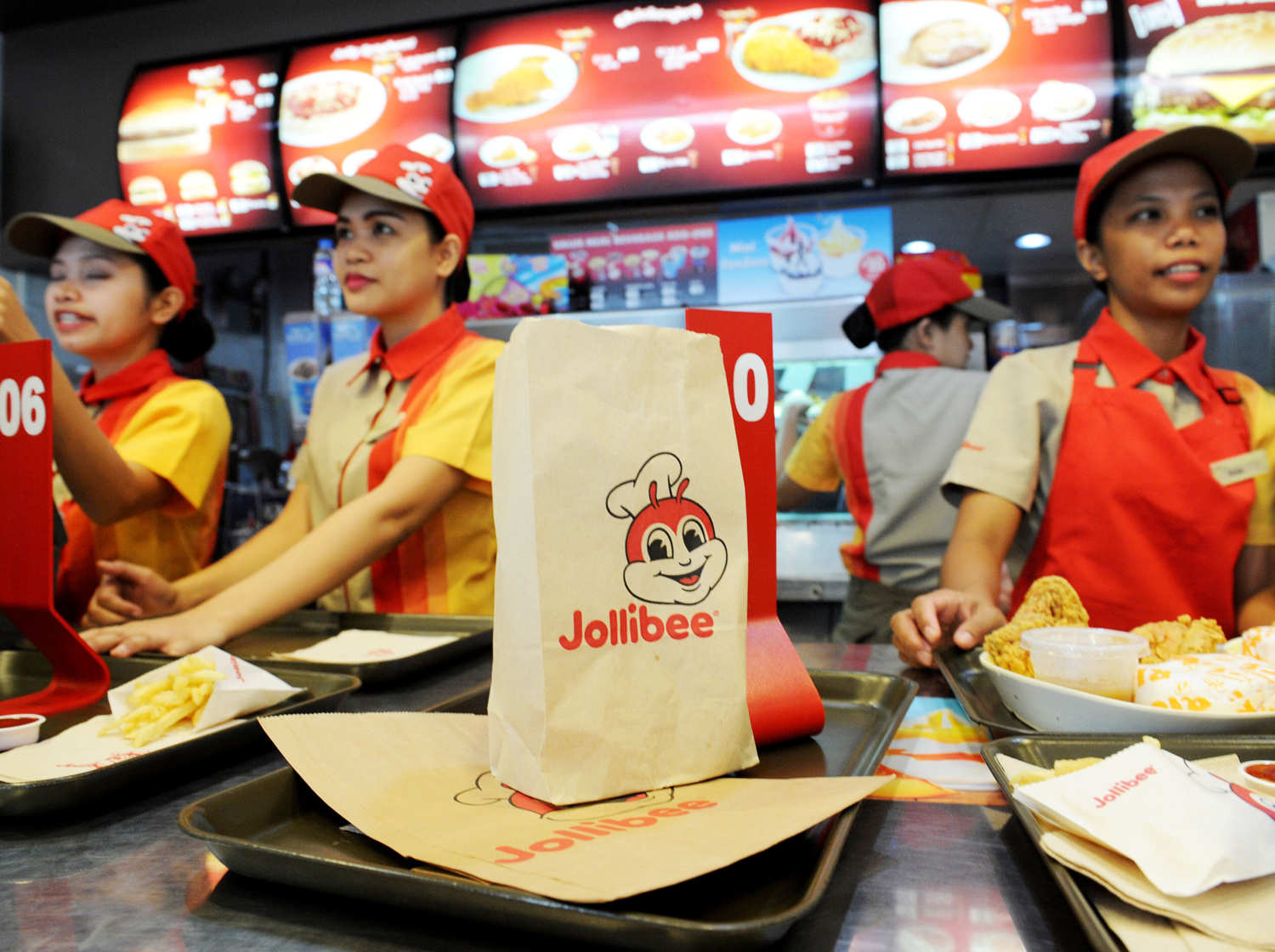
    Jollibee Foods Corp (JFC) has closed its restaurant chain 12 Hotpot in Mainland China.

    The 16 Shanghai-area stores were shut down by its subsidiary, 12 Hotpot (Shanghai) Food and Beverage Management, a 48 per cent-owned JV with WJ Investments.

    It was formed in August 2012 when JFC’s wholly owned subsidiaries Jollibee Worldwide and Golden Plate entered into an agreement with Hoppime, a subsidiary of Wowprime Corp of Taiwan and some of its key executives. The idea was to establish WJ Investments to own and run 12 Hotpot in China, Hong Kong and Macau.

    With the discontinuation of the mainland business, 12 Hotpot (Shanghai) then the JV will be liquidated.

    “JFC will focus on building its larger and fast-growing businesses in China and other parts of the world,” says the company.

    At the end of September, JFC had 3644 stores in its worldwide network. It also has a 40 per cent interest in Smashburger with 355 outlets, mostly in the US. In China its businesses include Yonghe King (305 stores), Hong Zhuang Yuan (44) and Dunkin’ Donuts (18).

    The company has also been running Happy Bee Foods Processing to supply products to its restaurants.

    In the Philippines, JFC has the largest foodservice network with 2756 restaurant, namely Jollibee (1023 outlets), Chowking (510), Mang Inasal (471), Red Ribbon (411), Greenwich (262) and Burger King (seven).

    JFC’s overseas stores include Highlands Coffee (219 including 193 in Vietnam and 26 in the Philippines), Jollibee (186 including 93 in Vietnam, five in Singapore and four in Hong Kong), Pho 24 (31 including 15 in Vietnam, 14 in Indonesia and one in Korea), and Hard Rock Cafe (8 with three each in Hong Kong and Macau, and two in Vietnam).

  • Hotpot giant Haidilao set to enter Hong Kong soon

    Hotpot giant Haidilao set to enter Hong Kong soon

    Hotpot chain Sichuan Haidilao Catering is said to be making inroads into Hong Kong, joining a cluster of mainland counterparts whose business in Hong Kong has been chequered.

    Edwin Leong Siu-hung, founder of Tai Hung Fai Enterprise and one of Hong Kong’s largest retail landlords, confirmed that one of his company’s properties in Mong Kok had been leased to Haidilao and could be decorated within two months at the soonest.

    The Beijing-based restaurant operator also confirmed the news. It said that if everything goes according to plan, the company’s first restaurant in Hong Kong will open three months later.

    Reports of Haidilao’s expansion and initial public offering have been circulating since the end of 2015. Yihai International Holding Ltd, a hotspot seasonings producer and Haidilao’s exclusive supplier, was already a few steps ahead of it, having raised HK$861 million ($110 million) on the Hong Kong Stock Exchange in July.

    Haidilao would follow in the footsteps of rival hotpot chains such as Little Sheep, Simmer Huang and Xiao Yu Hotpot Restaurant in Hong Kong, a market the company said it bets big on.

    Those early comers, however, failed to get very far in the Hong Kong market. Inner Mongolia-based Little Sheep, which has operated in Hong Kong for more than a decade, only has one of the six restaurants it initially opened.

    Likewise, having entered Hong Kong no more than two years ago, Simmer Huang shut its one and only restaurant in Hong Kong at the end of last year.

    “As for Haidilao, this may be a good timing to enter the Hong Kong market, where the commercial rental market has been under sustained downward pressure for quite a time and is showing signs of hitting bottom,” said Hannah Li Wai-han, a strategist at UOB Kay Hian (Hong Kong).

    The hotspot chain will pay a monthly rent of HK$550,000 for the three-storey store.

    Founded in 1994, Haidilao is known for its spicy Sichuan-style food and impressive customer services, which include free manicure, shoe polishing and shoulder massage services, as well as noodle-pulling shows and dance performances.

    The restaurant chain now operates 168 outlets across 51 cities in Chinese mainland and has set up nine branches in Singapore, Los Angeles, Seoul and Tokyo.

  • Jollibee profit soars as Filipinos order more

    Jollibee profit soars as Filipinos order more

    Jollibee Foods has reported  13.8 per cent global sales growth in its nine-month net profit as sales soared to P4.39 billion (US$88.2 million).

    Most of the Jollibee profit growth came from the domestic market where sales rose 16 per cent year-on-year, with the expanding offshore business returning 6.4 per cent growth.

    During the third quarter, net profit rose 6.1 per cent to P1.33 billion.

    “Sales of our businesses continued to be strong. We expect to end the year 2016 with the highest system-wide sales growth in five years and the highest organic growth in at least a decade driven by strong same store sales growth and the highest store network expansion,” said Jollibee CEO Ernesto Tanmantiong in an earnings statement.

    Jollibee, Asia’s largest food company, grew systemwide sales in the third quarter by 12.4 per cent to P36.32 billion, taking nine-month sales to P107.76 billion or 14.1 per cent higher.

    On a global basis, sales from the same-store network grew by 6 per cent year-on-year while new stores contributed a growth of 6.4 per cent.

    Tanmantiong said the company was encouraged by improvements in China, which helped its international business return to growth.

    “We look forward to continued recovery of our China business in the months ahead with the introduction of new products. Our plans for 2017 and the years ahead call for continued strong same store sales growth and store network expansion in the Philippines and abroad with the aim of surpassing our historical performance,” he said.

    JFC opened 201 new stores between January and September – 133 in the Philippines and 68 abroad. That’s a higher number than for the whole of 2015, when 186 opened.

    Jollibee’s CFO Ysmael Baysa said gross profit margins on the company’s products improved in the third quarter as raw material prices stabilised.

    At the end of September Jollibee had 3221 stores worldwide, 2547 of them in the Philippines. It also has a stake in Highlands Coffee in Vietnam and the Philippines, Pho 24 in Vietnam, Indonesia, Cambodia, Korea and Australia, Hotpot in China Smashburger in the US.