Tag: hotspot

  • Singapore’s Sentosa Cove: Once a Luxury Haven, Now a Hotspot for Residential Resale Losses

    Singapore’s Sentosa Cove: Once a Luxury Haven, Now a Hotspot for Residential Resale Losses

    Over the past three years, approximately 64.5% of residential resale transactions in Singapore’s exclusive Sentosa Cove district have resulted in losses, according to data from local real estate platform, Mogul.sg. This figure marks a rise from the 62.8% recorded between March 2020 and April 2023. The lackluster performance of this affluent enclave, once hailed as a haven for the wealthy, has been attributed to diminished demand from both foreign and local buyers.

    Performance of Property Types and Loss Analysis

    The study found that landed properties fared marginally better than condominiums, with around half of the resales since 2023 yielding a profit. The average loss on unprofitable resales decreased by 18% to S$1.28 million (US$1 million), however, the gross gains on profitable sales also dipped significantly, approximately 62%, to S$655,590. These figures do not account for additional costs such as stamp duties, property taxes, legal fees or agent commissions.

    Property consulting firms Cushman & Wakefield and Newmark similarly noted a trend towards loss-making resales in the area.

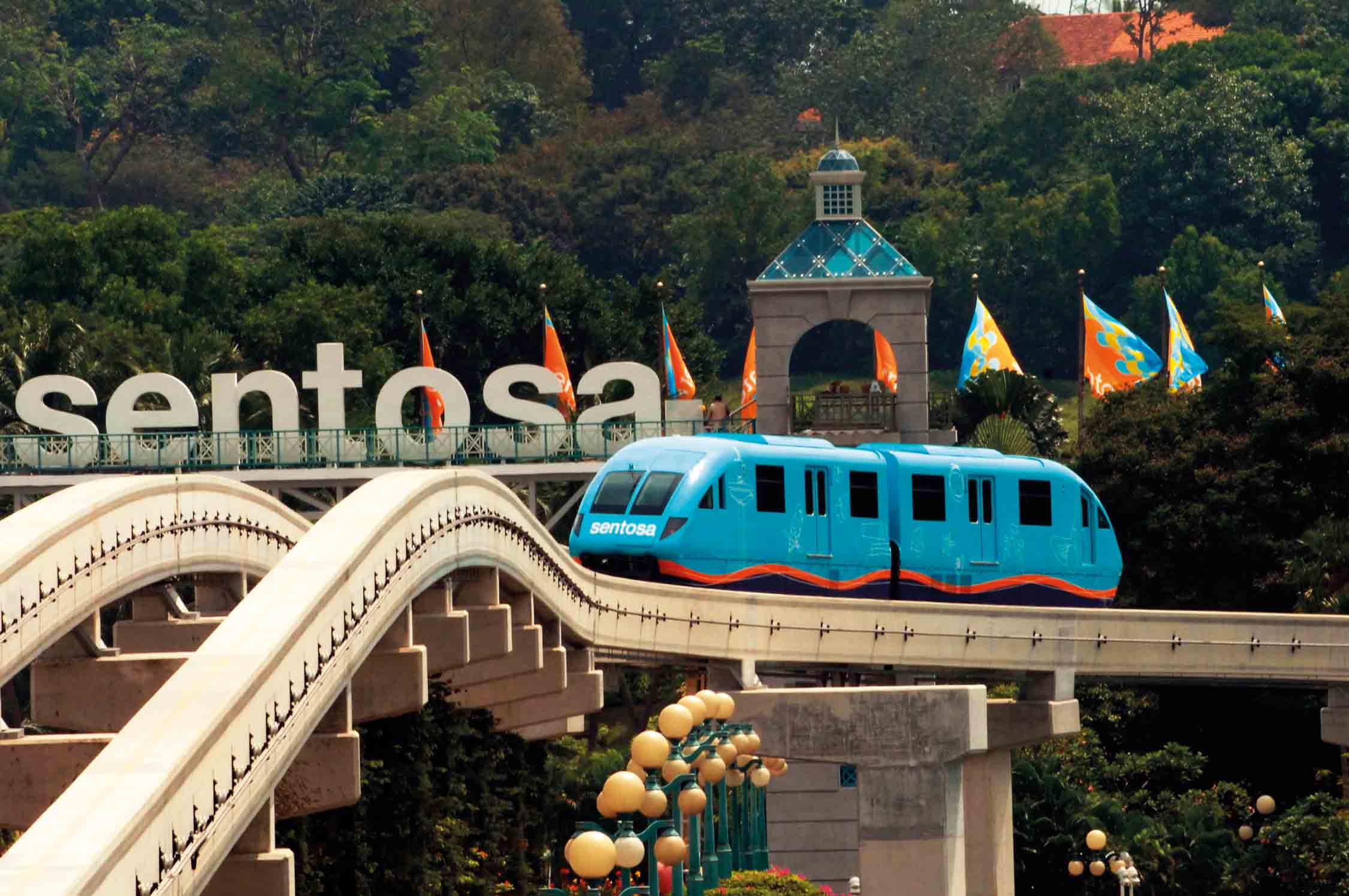
    Located on the eastern end of the 5-square-kilometer Sentosa Island, Sentosa Cove was transformed from a military outpost into a leisure and tourism hub in the 1970s. The enclave, which was developed primarily on reclaimed land and consists of five man-made islands (namely Coral, Paradise, Treasure, Sandy, and Pearl), was initially conceived as a high-end residential hotspot for affluent foreigners.

    Once marketed as Singapore’s answer to Monte Carlo or Dubai’s Palm Jumeirah, the enclave used to enjoy robust sales, driving up property prices. This was partly due to exemptions from mainland property restrictions and the unique provision allowing foreigners to purchase landed homes, albeit with government approval.

    Declining Demand and Current Challenges

    Since the 2008 global financial crisis and subsequent increases in Singapore’s additional buyer’s stamp duty, demand for properties in the enclave has dwindled. The tax, imposed on top of the standard buyer’s stamp duty, was raised to 60% in April 2023 for most foreign buyers, contributing to the decline in demand.

    Nicholas Mak, chief research officer of Mogul.sg, attributed the waning interest in Sentosa Cove to several factors. These include a halt in new residential developments, limited accessibility, and harsh coastal conditions. Moreover, no residential land parcels in Sentosa Cove have been sold since 2008.

    Further compounding the issue is a stipulation preventing foreign owners from leasing out their standalone homes. Consequently, several properties have been left vacant for extended periods, as their owners reside abroad or occupy other residences on the mainland.

    The lack of amenities such as shopping malls, wet markets, and hawker centers has also been identified as a reason for the enclave’s lack of appeal among Singaporeans.

    Questions & Answers

    What is the current state of residential resale transactions in Sentosa Cove?
    Approximately 64.5% of residential resale transactions in Sentosa Cove have resulted in losses over the past three years.

    What factors are contributing to the declining demand for properties in Sentosa Cove?
    The declining demand can be attributed to several factors including increased buyer’s stamp duty for foreign buyers, lack of new developments, limited accessibility, and harsh coastal conditions.

    How has the rule that prevents foreign owners from renting out their standalone homes impacted the Sentosa Cove property market?
    This rule has resulted in numerous properties being left vacant for extended periods, thereby reducing the attractiveness and vibrancy of the enclave.

  • Thailand Sparkles as Southeast Asia’s Gold Demand Hotspot, Dethrones Vietnam

    Thailand Sparkles as Southeast Asia’s Gold Demand Hotspot, Dethrones Vietnam

    In 2025, Thailand outperformed all Southeast Asian nations in the purchase of gold bars and coins, signaling a surge in demand. According to the World Gold Council, total purchases in the country amounted to 51.4 tonnes, which represented approximately 36% of the region’s overall demand. This significant uptake in gold was the highest the country had seen in seven years, valued at over US$6 billion. As a result, Thailand surpassed Vietnam, the previous leading gold market in the region, which had recorded a demand of 42.1 tonnes in 2024.

    Regional Uptake of Gold

    Collectively, five prominent Southeast Asian gold markets witnessed a more than 15% surge in the purchase of bars and coins last year. The total demand reached a new nine-year high at 139 tonnes. Vietnam trailed Thailand, securing second place with a demand of 36.1 tonnes. However, it was the sole country to report a downturn in gold sales, with a 14% decrease.

    During the last quarter of 2025, Vietnam’s gold trading shrank for the sixth consecutive quarter, hitting its lowest point in almost half a decade. Supply shortages were identified as a principal reason for this downturn. The country experienced a scarcity of gold bars and a sudden increase in 24K ring demand, causing prices to escalate dramatically and widen the disparity with international rates. Consequently, Vietnam’s gold prices soared by 81% in the previous year and 13.5% in the current year.

    Regional Gold Demand

    Despite these circumstances, Thailand and Vietnam combined accounted for two-thirds of Southeast Asia’s gold demand. The third highest demand was from Indonesia, which saw a 29% surge in sales to 31.6 tonnes, marking an unprecedented volume in 12 years.

    Malaysia claimed the fourth position, with a demand increase of 37% to 10.3 tonnes, likewise a 12-year record. Singapore, ranking fifth, marked the most significant growth in the region at 48%, with a record volume of 9.6 tonnes sold.

    Globally, the demand for gold bars and coins reached 1,374 tonnes or $154 billion. China and India consistently remained the two primary gold markets. There was a 28% rise in demand for gold bars and coins in China in 2025 compared to 2024, while India registered a 17% increase during the same period. Together, these two nations represented more than half of the total global demand for bars and coins.

    Questions & Answers

    Which country led Southeast Asia in gold demand in 2025?
    Thailand led Southeast Asia in gold demand in 2025, with purchases totaling 51.4 tonnes.

    What factors contributed to the decline in Vietnam’s gold trading?
    A shortage in the supply of gold bars and an increase in demand for 24K rings were key factors that contributed to the decline in Vietnam’s gold trading.

    Which countries were the two largest global markets for gold in 2025?
    China and India were the two largest global markets for gold in 2025, accounting for more than half of the total global demand for bars and coins.

  • Australia, Germany replace Japan as Vietnamese’s labor hot spot

    Australia, Germany replace Japan as Vietnamese’s labor hot spot

    Tu worked in Japan for two years but left when the devaluing yen lowered the value of his savings, which he intended to use back home in Vietnam

    He eventually set his eyes on Germany.

    The reasons were quite simple: Germany was experiencing a lack of labor resources and was employing measures to attract more foreign workers, including more open visa policies and attractive salaries.

    As Germany’s labor minister Hubertus Heil said earlier this year, the country would lack around 7 million workers by 2035 “if we don’t do something.”

    So Tu was there ready to answer the call. “This time I want to challenge myself in Europe,” he said.

    The 30-year-old man was one of many Vietnamese workers who left Japan after finding their earnings there not attractive anymore. It was essentially a double consequence of the dropping value of the yen and rising inflation.

    Inflation in Japan hit a 40-year-high last October, and consequently, the price of everything from fuel to food rose, and many people could not afford essentials in their daily lives, reported Reuters.

    But rarely are workers who’ve returned home from Japan satisfied with their earnings in Vietnam either. Instead, they are now often opting to relocate to Europe or Australia, which are both taking bold government steps to compensate for their lack of workers

    Tu didn’t allow any delays in his plan. He started learning German as soon as he returned to Vietnam from Japan.

    He spent around eight hours a day studying the language and managed to acquire a German B1 certificate, then a German training visa, which allowed him to enroll in a three-year vocational training course in the country, as well as be eligible to stay for another two years after his course completion.

    He relocated and became one among about 1.25 million foreigners with such a visa in Germany, according to data provided by the German Federal Statistical Office.

    According to him, the agency he hired to assist him in his visa application procedure told him that they had assisted 100 Vietnamese people relocate to Germany this year, an increase from only around 20 last year.

    After working in Germany for a while, Tu said that it wasn’t only the financial earnings, but also the benefits offered to migrant workers that are more attractive in Germany compared to Japan.

    “I had to work between 11 and 12 hours a day when I was in Japan, compared to only eight hours a day, five days a week here,” he explained, adding that he could arrange his schedule and work in other restaurants during his days off to make extra money.

    Similar to Germany, Australia is a destination that many Vietnamese workers are interested in. Businesses in Australia are receiving hundreds of applications from Vietnam and other Asian countries a day.

    Duy Nam, a manager at a meat processing company in the Australian town of Broome, said he received hundreds of emails and text messages a day asking about the Australian visa application procedure. His own younger brother was contemplating immigrating to Australia as a migrant worker as well.

    He attributed the growing popularity of Australia among Vietnamese workers to the shortage of domestic workers, which was partly caused by the country’s lockdown during the peak of the pandemic.

    Now that the pandemic is under control, the Australian government is doing its best to attract foreign workers. It now grants the subclass 462 visa (also known as the Work and Holiday visa), which allows its holders to work during their stay in Australia, to up to 1,500 people a year. And the visa application procedure has shortened from a year to a couple of months or even weeks.

    Lightening immigration policies is not the only recent boon for migrant workers in Australia. Workers’ average hourly rate in Australia was A$27 (around $19) before the lockdown, but rose to A$55 during the peak of the pandemic. Because of that, earning an attractive income of as much as A$10,000 a month became possible for Vietnamese migrant workers.

    Compared to that, Vietnamese workers in Japan can only save “between VND12-16 million (around $507-$677) a month, compared to VND20-25 million before,” said Tien Thanh, 24, initially planned to migrate to Japan and work as an electrical appliances technician, but was discouraged by his friends.

    He then changed his mind and moved to Australia, which took him six months and four failed attempts to finally do.

    After reaching the country, he started looking for jobs with the help of social media, and was offered work on a farm in northern Australia a week after arriving in the country.

    “There are a total of around 200 people working in my farm, of which as many as 47 are Vietnamese.”

    Thanh is satisfied with his current monthly income in Australia. He earned the equivalent of VND24 million his first month, but after getting more familiar with the work, now he can earn more and save around VND70 million a month.

    Based on his calculations, he’ll be able to pay back the VND300 million his family borrowed to help send him to Australia, in half a year, and then save enough money to get his own house in Vietnam after three years.

    As attractive as the idea of working in Australia and European countries is, both Tu and Thanh warned those who are interested in it about the risk of being scammed.

    “I know this guy from Ha Tinh province who sold his house for $30,000 to pay an agent,” Thanh said. “Only after arriving here did he know he had only obtained a travel visa, and was not eligible to work.”

    Tu added that the German visa application procedure consists of many phases and requires a lot of documents, so applicants should be cautious if agencies they work with treat it lightly.

    “There are agencies that send people to remote areas without helping them find jobs, so you should be careful,” he said.

    Still, those who managed to leave Japan and come to countries that offer more competitive rewards seem optimistic about their future.

    “Even if I don’t get a permanent residence, I can still come back to Vietnam and work well with the experience and knowledge I gained here [in Germany],” Tu said.

  • Philippines taps UNDP to accelerate free Wi-Fi rollout

    Philippines taps UNDP to accelerate free Wi-Fi rollout

    The Philippines’ Department of ICT (DICT) has signed a partnership agreement with the United Nations Development Program (UNDP) aimed at fast-tracking the deployment of free Wi-Fi access in public places.

    Under the agreement, the UNDP will provide support for the government’s Pipol Konek – Free Wi-Fi Internet Access in Public Places Project.

    The UNDP will conduct area-based network analysis of target sites, oversee monitoring of project impact, and continue to provide technical training to stakeholders involved in the rollout.

    The UNDP and the DICT will meanwhile jointly take charge of project oversight. The project participants plan to hold workshops and consultative meetings to address the challenges with the rollout and investigate potential solutions.

    The DICT sought the assistance of the UNDP in September last year to expedite the project and aid in the capacity-building initiatives of the companies involved in the rollout. A formal signing ceremony was held last week during the first project board meeting.

    “Today as we set to seal this meeting of minds, the Department is optimistic that our goals of providing free Internet access and promoting knowledge-building among our citizens will soon be realized,” DICT acting secretary Eliseo M Rio Jr said at the signing ceremony.

  • AirAsia launches cheap fares to Bali, a thriving tourism destination for many Australians’

    AirAsia launches cheap fares to Bali, a thriving tourism destination for many Australians’

    AirAsia is offering cheap one-way fares to a tropical Indonesian island, which has been tipped to take the top spot as the favourite destination for Australians. The budget airline announced its new four-time weekly flights between Perth and Lombok, east of Bali this week.

    As part of the announcement, AirAsia is offering one-way flights to Lombok from just $99. AirAsia has launched cheap one-way fares to Indonesia’s newest holiday hotspot Lombok, which has been tipped to take the top spot a favourite destination for Australians

    The budget airline announced its new four-time weekly flights between Perth and Lombok, east of Bali this week Jetsetters can snag the cheap flights until March 24, to travel between June 9 and October 26.

    Australian sun-seekers are expected to flock to the new destination, which has been described as ‘the new Bali’.

    Lombok, east of Bali, has gearing up to become the next tourism hotspot with promises of endless blissful beaches.

  • Google Fi, the next carrier?

    Google Fi, the next carrier?

    If you are satisfied with your current phone but would prefer to switch carriers, hybrid MVNO Google Fi has a deal for you. First, some explanation. Google Fi uses two million Wi-Fi hot spots to bring you service. When you are out of Wi-Fi range, your phone checks to see which of the three 4G LTE networks that Fi supports (T-Mobile, Sprint and U.S. Cellular) has the strongest signal at the moment, and connects you to it. Doing this allows Google to keep Fi’s prices down.

    Now, let’s talk about the free month of service that Google Fi is offering to those bringing their compatible phone and number to the MVNO from another wireless provider. The offer is available from now through March 24th, and a list of supported handsets can be found here. You must sign up for a full service plan (not just data) and the phone must remain activated on Fi for 30 consecutive days.

    A week after activating your phone on Fi, you will get an email confirming the credit, which will show up on the following invoice. The credit that Google gives you will cover “a single subscriber’s unlimited talk and text, data usage, and taxes and fees for one month.” The offer is limited to one per person, or six per group plan and requires Google Payments and Google Fi accounts.

    Something else to consider, is that you cannot change your phone while in the aforementioned 30-day period. One Fi subscriber had problems with the Samsung Galaxy phone he moved over to the MVNO and could not dial out about 90% of the time. He bought a Fi compatible LG handset, and while it worked without a hitch, Fi denied him the free month.

    Google Fi costs $20/month for unlimited domestic talk and text for one person ($15 additional for each added subscriber up to a total of six), unlimited international texts, and access to cellular coverage in over 200+ countries. High-speed data costs $10/GB each month, but once you hit 6GB, the rest of the month is free. This means that for an individual, the monthly bill cannot exceed $80 (before taxes and fees) or $205 for a family of four. But there is a catch. Once you consume more than 15GB of data in one month, your data speed is throttled until the next billing cycle begins. Or, you can decide to continue receiving high-speed data by paying $10/GB for any amount of high-speed data you use over 15GB in the same month.

  • Telstra launches 5G-powered Wi-Fi hotspots

    Telstra launches 5G-powered Wi-Fi hotspots

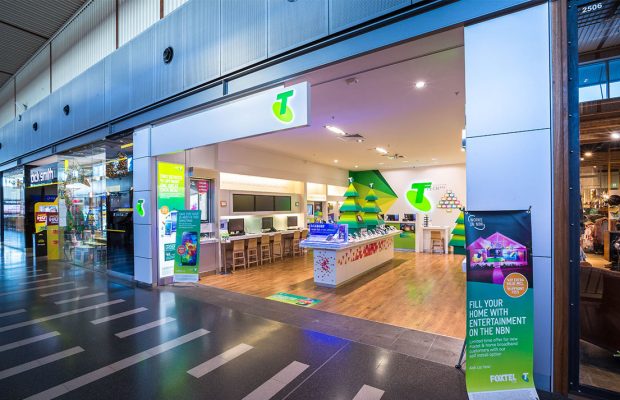
    Australia’s Telstra has launched what it says are the first 5G-enabled Wi-Fi hotspots in the world as part of its ongoing evaluation of 5G technology.

    The new hotspots on the Gold Coast in Queensland will provide locals and visitors with access to free broadband services during the evaluation period. The open hotspots will provide up to 10GB of downloads per device per day.

    They will be managed by Telstra’s recently-launched 5G innovation center on the Gold Coast. Telstra has connected 5G backhaul and related infrastructure in the Southport Exchange in the city to allow connections to the 5G network over Wi-Fi on existing devices.

    “Wi-Fi has limited throughput so a single hotspot alone cannot come close to reaching the limits of 5G at our Innovation Center,” Telstra group managing director for networks Mike Wright said.

    “By using multiple hotspots with potentially hundreds of smartphone users served through a single 5G device we are able to get closer to demonstrating 5G in a real world environment. Our 5G backhaul is capable of delivering download speeds of more than 3 Gbps.”

    Telstra is also using its new 5G innovation center to power a connected car trial using the Intel 5G Automotive Trial Platform.

    Wright said the trial is in the very early stages of development but the company is still achieving download speeds approaching 1Gbps inside the car, which is also equipped with a Wi-Fi access point.