Tag: hotspots

  • Burger Revolution: Global Brands and Local Hotspots Lock Horns in Chinas Fast-Food Boom

    Burger Revolution: Global Brands and Local Hotspots Lock Horns in Chinas Fast-Food Boom

    The fast-food landscape in China is witnessing a dramatic shift as the burger market, once a niche segment ruled by Western giants like McDonald’s and KFC, is now attracting everyone from multinational restaurant chains to local hotpot outlets and coffee brands. The humble burger has become a hot commodity among budget-conscious consumers and smaller households, making it a fierce point of competition in the nation’s fast-food sector.

    China’s Growing Appetite for Burgers

    Yum China’s innovative Pizza Hut Burger Bar concept, offering a burger counter within an existing Pizza Hut restaurant, quickly expanded to over 200 locations within six months. By the end of 2026, the company plans to have 500-600 such outlets, accounting for roughly 10% of the total Pizza Hut store network.

    This burger boom mirrors broader changes in China’s consumption trends. Smaller household sizes and economic uncertainty are causing consumers to opt for low-cost, portable meals, consequently transforming burgers from a niche Western import into one of the most competitive segments in China’s restaurant market.

    As a result, brands are racing to capitalize on this trend. Last month, hotpot chain Haidilao diversified into the burger market with Huanxianbao, or “Fresh Burger,” a chain offering burgers along with pizza, pasta, and fried chicken. Similarly, coffee chain M Stand has begun to introduce burger-focused outlets in certain cities.

    The Economics of Burgers

    China’s Western fast-food market, valued at 499.65 billion yuan (US$74.1 billion) in 2025, is expected to reach 587.09 billion yuan by 2027. According to a survey, burgers were the top preference among consumers, with 55% of respondents selecting them. The burger category, worth $18.4 billion in 2025, is projected to grow by 8.7% annually through 2035.

    Burgers offer a value-for-money choice as consumers remain cautious about their spending. They provide a less costly alternative to full-service restaurant meals while still satisfying as a substantial meal, making them a popular choice among students and single-person households.

    Burgers also align with demographic changes, with rising numbers of smaller families, single-person households, and young urban workers driving demand for convenient individual meals. Pizza Hut, for instance, added burgers to its menu in 2024 and by 2025, burgers accounted for a considerable share of the company’s sales.

    The burger trend is not only bringing in domestic chains like Tasiting but also international brands. Notably, when U.S. chain Five Guys launched in Beijing, customers were willing to wait over two hours to be served. Wendy’s also announced plans to enter China and open up to 1,000 franchised restaurants over the next decade.

    Questions & Answers

    Why are burgers becoming popular in China?
    Economic uncertainty and smaller household sizes have led to a preference for low-cost, portable meals like burgers. These changes in consumption habits are turning burgers from a niche Western import into a highly competitive segment of China’s restaurant market.

    Who are the major players in China’s fast-food burger market?
    While Western giants like McDonald’s, KFC, and Burger King initially dominated the market, local brands like Haidilao and international brands like Five Guys are now entering the fray.

    What does the rising popularity of burgers represent?
    The growing demand for burgers reflects broader shifts in China’s consumer behavior, such as the preference for lower-cost, convenient meals that offer good value for money. It also aligns with demographic changes, including the rise in single-person households and small families.
  • LTE device ecosystem grew 26% in the last year

    LTE device ecosystem grew 26% in the last year

    The LTE device ecosystem has expanded by 26% over the past year to reach 13,700 devices, according to the Global Mobile Suppliers’ Association (GSA).

    The LTE Ecosystem report published by the industry body found that devices have been launched by 705 manufacturers, including devices supporting the FDD LTE and TD-LTE standards and the LTE-related cellular IoT standards LTE Cat-M1 and narrowband IoT.

    Meanwhile the nascent 5G device ecosystem is taking shape. As of mid-March, the GSA had identified 34 announced devices – including regional variants, including 11 smartphones.

    This is an improvement on the 22 5G devices identified by mobile industry consultancy Hadden Telecoms in a report issued earlier in the month

    According to the GSA, devices have been announced across seven form factors – phones, hotspots, indoor customer premises equipment, outdoor customer premises equipment, modules, dongles or adapters, and USB terminals.

    The industry body said it expects the global 5G device ecosystem to grow rapidly as more commercial 5G services are launched.

  • China Telecom aims to make Shanghai a gigabit city

    China Telecom aims to make Shanghai a gigabit city

    China Telecom’s Shanghai branch Shanghai Telecom plans to deploy the first commercial FTTH network in China using 10G PON technologies, and aims to provide full 1Gbps fiber coverage across Shanghai over the next three years.

    Shanghai Telecom has contracted Huawei to help with the rollout, which marks an important step towards making Shanghai China’s first gigabit city, the vendor said.

    Shanghai Telecom was providing 1Gbps access for 269 communities in the city, and through the deployment aims to increase the average access rate for its network from 50Mbps to 280Mbps by the end of 2018.

    The operator is using its high-speed network to offer a range of home broadband services, such as multi-channel 4K video streaming, video calls and conferencing an video-based smart home services.

    Under the latest rollout, the company is adopting Huawei optical line terminals (OLT) and optical network terminals (ONT) capable of providing gigabit convergence, 4K video streaming to 16,000 concurrent households over a single subrack, 8K video streaming, VR applications and smart home services.

    Separately, Nokia has announced it has secured a contract to deploy millions of ONT home gateways in 29 provinces across China for China Mobile.

    China Mobile plans to deploy home gateway units based on Nokia’s solution to over 30 million users this year, and use established FTTH networks to extend internet coverage in the home and enable IoT communications between devices and sensors.

    “China Mobile is progressing fast as a converged telecommunications operator — with more than 31 million FTTH subscribers — and has proven it can successfully leverage its extensive fiber access network to deliver ultra-broadband applications such as 4K TV services and Gigabit access to customers across various provinces.,” IDATE principal analyst Roland Montagne commented.

    “With the addition of intelligent home gateway technology, China Mobile will be able to further differentiate its services, providing consumers with enhanced internet coverage in the home and a more seamless experience for connecting various devices and sensors.”

  • PT Telkom has added a number of new wifi hotspots in Bali

    PT Telkom has added a number of new wifi hotspots in Bali

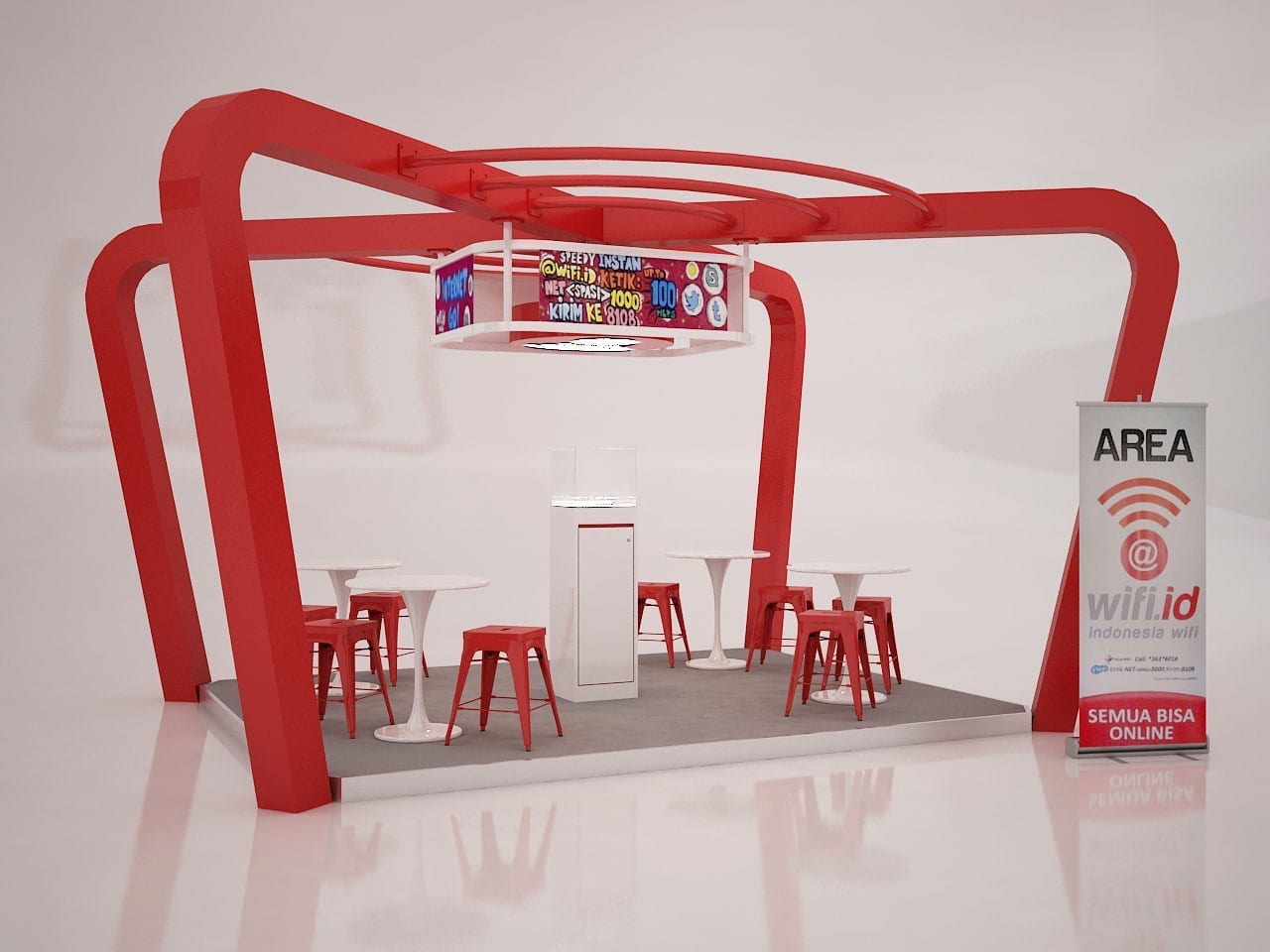
    The hotspots are under the network’s “Wifi.id.corner” program, which has users register for accounts and choose from a variety of packages that Telkom touts as affordable. 

    The new Wifi.id.corner spots are split between the island’s capital city, Denpasar, and north Bali city, Singaraja. 

    “In Bali, the fixed broadband services through Wifi.id.corner are spread across 200 locations. 170 of them are in Denpasar and 30 others in Singaraja, Buleleng,” quoted Nusra Suparwiyanto, executive vice president of PT Telkom Region 5 (East Java/Bali), as saying. 

    Suparwiyanto says Telkom is responding to the growing needs of Bali netizens with these 200 hotspots, which can be found in public spaces such as schools, universities, housing complexes, ports, and also city parks.

    Here’s the impressive part though—this wifi is supposed to be pretty darn fast. According to Suparwiyanto, the network is boasting speeds above 100 mbps—a speed we’re sure most of us aren’t familiar with in Bali. 

  • Asia’s new shopping hotspots (and their must-have products)

    Asia’s new shopping hotspots (and their must-have products)

    Cashed-up Asian shoppers are switching their retail allegiances from long-time favorites Hong Kong and Singapore, and it’s not just for a change of scenery.

    Japan, South Korea and Taiwan are the new regional hotspots for selective shoppers, experts say, because they offer a mix of attractive exchange rates and must-have products.

    The Americas and Europe are still the world’s two largest luxury hubs, with 34 and 33 percent of the market respectively, according to the Altagamma 2015 Worldwide Markets Monitor report by Bain & Company. The report calculates market-share based on the value of the luxury goods purchased.

    Asia holds 28 per cent of the global personal luxury goods market, but the regional distribution is changing.

    “Hong Kong, mainland China and Macau have taken a hit, losing spend to Japan and Europe,” Joel Stephen, senior director and head of retailer representation for Asia at commercial real-estate player CBRE, said, adding that China’s corruption crackdown had also hurt the level of spending.

    “Singapore and Taiwan have also seen a drop in mainland Chinese luxury spend. There is still tourism, but a lot of the HNWI’s [high net worth individuals] from mainland China are traveling further afield.”

    While still largely driven by local shoppers, Taipei’s retail sector got a boost when the government eased visa restrictions and brought in a more consumer-friendly tax system. High-end department stores such as The Breeze Centre in the Taipei 101 area are an example of the stores capitalizing on the trend.

    Shoppers are also taking advantage of the weak yen, which is giving them greater purchasing power in Japan.

    “Chinese and, to a certain extent, Singaporean shoppers prefer to buy luxury goods when travelling where there are more opportunities to purchase them at lower prices,” said Amrita Banta, managing director at luxury-focused adviser Agility Research & Strategy.

    Japan is more popular with mature customers, while younger shoppers are heading to South Korean capital Seoul, Banta said.

    Seoul’s famous TV dramas and K-pop stars have as much, or more, influence on shoppers as traditional advertising campaigns for luxury brands. A recent example: Jimmy Choo shoes worn by Gianna Jun on the TV show “My Love from Another Star” sold out in stores across Asia.

    But Banta said old favorites Hong Kong and Singapore could make a comeback as Europe becomes more expensive, and Asians grow increasingly wealthy.

    “We see the Asia Pacific retail environment becoming increasingly competitive as shoppers will head back into stores in the region due to the price changes in Europe,” Banta says.

    Here’s what cashed-up shoppers are hunting for:

    Sulwhasoo ‘Timetreasure’ Renovating Serum – Seoul

    A price tag of hundreds of dollars for a 50ml bottle of anti-aging serum doesn’t stop moisturizer addicts from flocking to South Korea. Beauty products are a serious business for the country, with the rest of the world taking notice of all the products Korea has to offer.

    Moynat boutique – Hong Kong

    The trunk-maker’s first boutique outside of France sits in Central’s Landmark in a 400-square foot space. One of its prized offerings is the limited edition mini Réjane, a crocodile bag with diamonds on its clasp priced at $124,300.

    Café Dior – Seoul

    This year, the French designer fashion brand set up shop in Gangnam, offering a six-floor experience called House of Dior. The boutique has a glass-walled café upstairs – Café Dior is a culinary representation of the label, with a menu designed by French pastry chef Pierre Hermé.

    Hermès Petit H – Tokyo

    Works created from upcycled parts makes for a unique Hermès piece. Using leathers and textiles known in their products to create something new, Petit H is a pop-up series that lasts only a few weeks in locations such as Japan’s Ginza store, designed to promote recycling in a very high-fashion way – offering bags, wallets, necklaces and even a life-size fawn. This limited time offering drew design fanatics to Tokyo. It’s now set up in London.

    Taipei 101 – Taipei

    What once was the tallest building in the world still has one of the most highly regarded retail spaces on its first five floors. The sixth floor is where the VIP club is, which requires a purchase of over $44,000 in the one day to gain entry. Once in, you’ll have access to a private showroom with the latest in luxury items, private dressing rooms and Chanel spa products.

    Three Michelin stars – Tokyo

    Culinary experiences and Japan go hand-in-hand, from imported chefs such as Joël Robuchon gaining widespread appeal for modern French cuisine, to local chef Yoshihiro Narisawa’s fusion of European cooking styles with local ingredients.