Tag: houses

  • Singapore tops Asia-Pacific with highest private home prices

    Singapore tops Asia-Pacific with highest private home prices

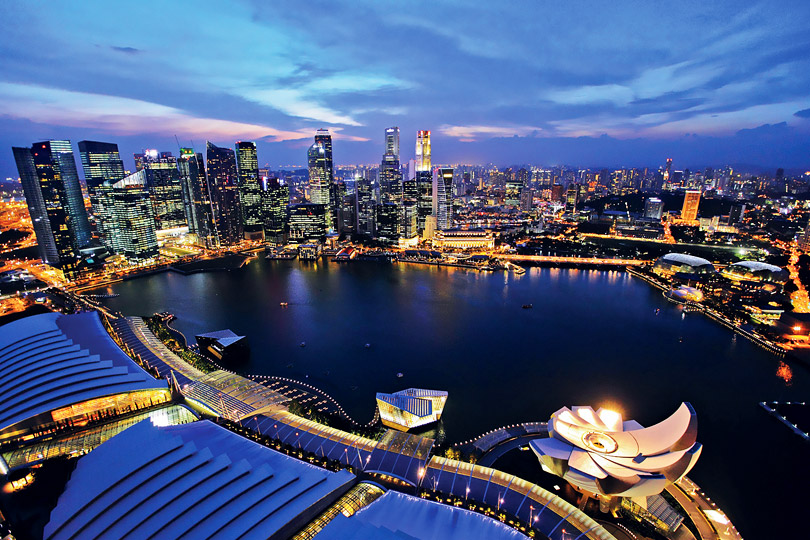
    For the second year in a row, Singapore’s private residential homes were the most expensive in the Asia-Pacific region, with a median price of US$1.3 million in 2023.

    The price is the highest out of the 48 cities in 11 countries in the report published Tuesday by global non-profit research organization Urban Land Institute (ULI).

    Hong Kong, with a median home price of US$1.15 million, and Sydney, Australia, at US$1.06 million, followed closely.

    As for rental housing, the median monthly rent for two-bedroom private apartments in Singapore was also the highest at US$2,897, far surpassing Hong Kong (US$1,725) and Japan’s Tokyo (US$613) in the second and third spots, respectively.

    The city-state was also rated by ULI in last year’s report as the region’s most expensive private housing market, with a median price of US$1.2 million and a median rent of US$2,596.

    However, Singapore has the “most attainable” public housing in this year’s ranking list.

    The report showed that the country has a homeownership rate of nearly 90%.

    Affordability in home ownership is defined by a median home price to median annual household income ratio below 5.

    The median price of Housing & Development Board flats, which make up 90% of the city-state’s housing stock, has a ratio of 4.7, according to the report.

    Among the cities studied by ULI, Singapore boasts the highest median annual household income at US$97,124.

    The average private home price in Singapore has been rising in recent years. It went up 1.5% in the first quarter of this year after increasing 2.8% in the last quarter of 2023. It has jumped 34.5% since the first quarter of 2020.
  • Taxing housing necessary but challenging

    Taxing housing necessary but challenging

    Experts say that taxing housing will help make the real estate market more transparent and prevent speculation, but it is necessary to digitize data, ensure fairness, and avoid overlapping taxes.

    The government plans to enact a new law on real estate taxation in place of the Law on Agricultural Land Use and the Law on Non-Agricultural Land Use, and separating houses and land for tax purposes.

    There is currently a very low tax on lands and, unusually for any country, none on houses.

    The Government is on course to submit the bill to the National Assembly for comments in October 2024 and approval in May 2025.

    Several experts said they agree that taxing houses and lands is necessary in the context that the property market is opaque and plagued by speculation, lack of systematization and ineffective management.

    Le Hoang Chau, chairman of the Ho Chi Minh City Real Estate Association, said taxing housing and land would help make the real estate market fairer and more transparent.

    Nguyen Van Duoc, general director of Trong Tin Accounting and Tax Consulting Company, supported an increase in the tax rates on lands but warned it is necessary to safeguard the interests of the public and not adversely affect the market.

    “Taxing houses and other construction is also reasonable. Many countries around the world have done it for a long time.”

    Nguyen Mac Hoai Nam, general director of Nam Phat Investment Consulting Company, said tax policies often have a direct and almost immediate impact on investment behavior, speculation and buying and selling of properties.

    He explained that taxing houses and lands would enable authorities to monitor the market closely, increasing its transparency and making policymaking and management more efficient.

    But analysts also warned there would be many challenges in doing this.

    Duoc pointed out that taxing depends on databases and the capability of management agencies.

    Chau said to tax houses and other properties, it is necessary to reduce land-use fees to avoid excessive taxation.

    The land-use fee is collected once and not annually and accounts for 10% of the value of an apartment and 30% of a townhouse.

    In the case of villas, it accounts for 50%.

    If land-use fees remain high, the addition of property tax would make the burden excessive, he said, pointing out that developed countries collect house and land taxes annually.

    Nam suggested starting taxes on housing and land at moderate rates and then gradually increasing them so that people could get used to it.

    “It is also necessary to consider lowering the land-use fee.”

    First, government agencies need to get comprehensive data on housing and lands and come up with a convincing valuation method for the taxes.

    The data should be collated in time to ensure the new law is passed by mid-2025.

    Huynh The Du, a lecturer in public policy at Fulbright University Vietnam, said the database cannot be completed anytime soon.

    The country has over 27 million households living in more than 2.5 billion square meters of housing, but data on their prices is scant and many houses have not been traded for decades, he pointed out.

    In any case, the prices registered during transactions are much lower than market rates, he further pointed out.

    Dang Hung Vo, a former deputy minister of natural resources and environment, said the government should not rush to tax houses and apartments, but focus on taxing lands.

    This is more feasible because the country has an established land management system, he said.

    Urban residential lands are managed relatively well, and so taxing them is easy and efficient, he said.

    Meanwhile, it is necessary to perfect the system for assessing land prices to ensure they are close to market rates.

    “This is the first step before thinking about taxing houses.”

    It is difficult and complicated to tax housing due to the lack of an effective management system, he said.

    Analysts said local governments should collect the housing tax for investing in infrastructure and utilities like bridges and roads and planting trees.