Tag: Howard Schultz

  • Starbucks CEO Kevin Johnson is retiring, and Howard Schultz is returning as interim chief

    Starbucks CEO Kevin Johnson is retiring, and Howard Schultz is returning as interim chief

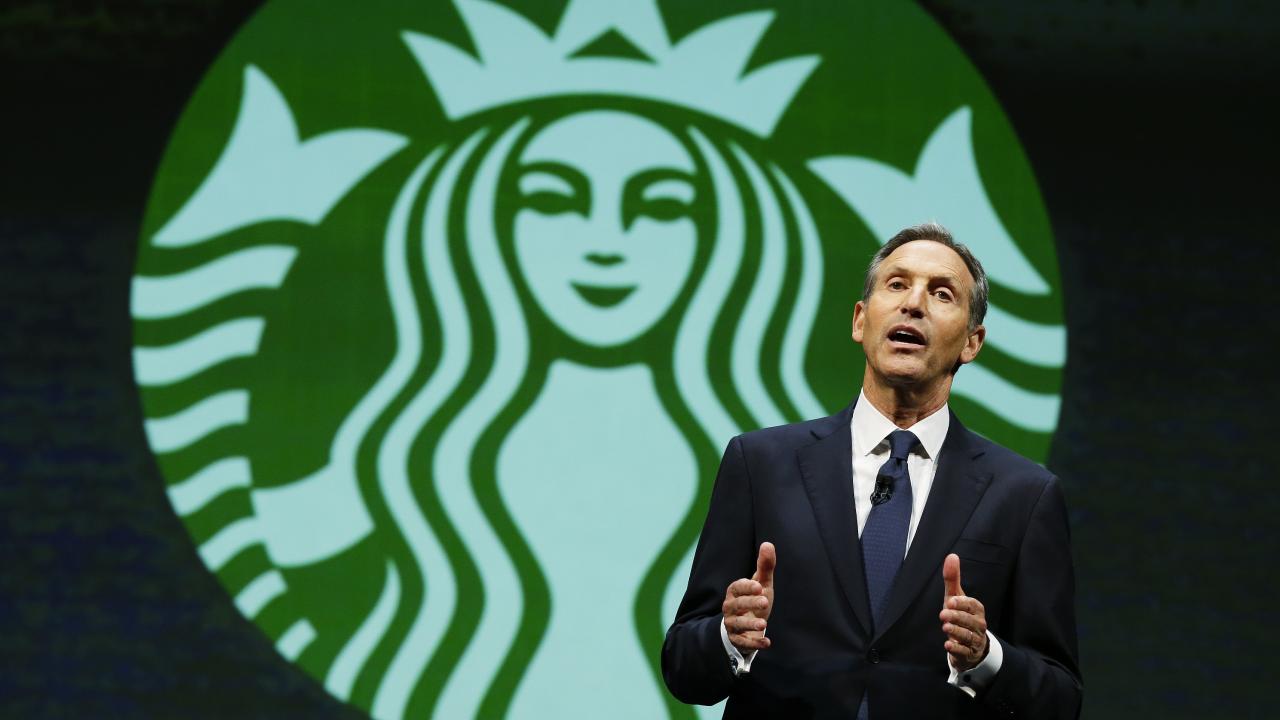
    Starbucks CEO Kevin Johnson is retiring after five years on the job. Howard Schultz will return as interim CEO, once again taking the helm of the coffee chain he elevated to a global brand while the company searches for a long-term successor. This will be his third tenure as Starbucks’ chief executive.

    Shares of the company rose 7% in morning trading on the news. Starbucks announced the leadership transition ahead of its annual shareholder meeting later Wednesday.

    “A year ago, I signaled to the Board that as the global pandemic neared an end, I would be considering retirement from Starbucks. I feel this is a natural bookend to my 13 years with the company,” Johnson said in a statement.

    Johnson, 61, joined the board in 2009 while working as CEO of Juniper Networks, and became a member of the leadership team in 2015 as president and COO. In 2017, he was named president and CEO, succeeding Schultz. Wednesday’s annual shareholder meeting marks his 14th with the company, he wrote in his final letter to employees.

    In addition to steering the company through the Covid pandemic, Johnson used his expertise as a former tech executive throughout his tenure to push Starbucks into the digital age, revamping its loyalty program and updating its store footprint to reflect the different ways consumers want to buy their coffee. He also accelerated the chain’s expansion in China, now its second-largest market.

    In his time as head of the company, shares of Starbucks rose more than 50%, including Wednesday’s gains. The stock underperformed compared with the S&P 500, which rose 83% in the same time.

    The chair of Starbucks’ board, Mellody Hobson, said on Wednesday that the company intends to select a permanent successor by the fall.

    “We’re not going to hire over Zoom, I can tell you that,” Hobson, co-CEO of Ariel Investments, said.

    She added the company already has a number of strong candidates in contention for the top job.

    Schultz, 68, said in a statement he previously had no plans to return to the company. He served as CEO from 1986 to 2000, and again from 2008 to 2017. He also weighed a potential run for president ahead of the 2020 elections.

    “When you love something, you have a deep sense of responsibility to help when called. Although I did not plan to return to Starbucks, I know the company must transform once again to meet a new and exciting future where all of our stakeholders mutually flourish,” Schultz said in a statement. “With the backdrop of COVID recovery and global unrest, its critical we set the table for a courageous reimagining and reinvention of the future Starbucks experience for our partners and customers.”

    Schultz’s salary as interim chief executive will be $1, the company said. Hobson said Starbucks wants to lean on “all of Howard’s expertise and all of his brilliance” throughout the transition, but denied he would stay on longer as the company’s next full-time chief executive.

    “We have a great slate of candidates. People want this job, and we’re fully confident we’ll have a new leader in the fall,” she said. “He’s not going to stay for three years…We get him until the fall, full stop. Trust me.”

    Some were caught by surprise that the board knew Johnson planned to retire a year before publicly discussing a transition or a successor.

    “Howard Schultz knows Starbucks. He knows the company’s strategy and goals. And Schultz is in a position to help in ways other interim CEOs could not. But, for a company the size and stature of Starbucks not to have a solid succession plan is surprising,” said Timothy Hubbard, an assistant management professor at University of Notre Dame’s Mendoza College of Business.

    Former Chief Operating Officer Roz Brewer, once thought to be the heir apparent, departed the company in early 2021 to become chief executive of Walgreens Boots Alliance. Starbucks’ CEO shift comes against a backdrop of growing efforts among the company’s baristas to unionize. To date, roughly 140 Starbucks stores in 26 states have petitioned the National Labor Relations Board to unionize, according to organizers Starbucks Workers United. Six locations so far have voted in favor of a union.

    In a move that may have signaled his return to the company, Schultz appeared at Buffalo, New York-area cafes ahead of union elections, along with other top Starbucks executives, to attempt to dissuade baristas from voting in favor of unionizing.

    This week, the National Labor Relations Board filed a complaint over accusations Starbucks retaliated against two employees in Phoenix who were seeking to unionize their store location. On Tuesday, a group of 75 investors in Starbucks sent a letter to Hobson and Johnson urging the company to adopt a policy of neutrality for all current and future attempts by its workers to organize.

    Hobson said Wednesday that Starbucks “made some mistakes” when asked about the union push.

    “When you think about, again, why we’re leaning on Howard in this moment, it’s that connection with our people where we think he’s singularly capable of engaging with our people in a way that will make a difference,” she said.

    Johnson’s retirement announcement marks the fourth notable CEO transition from a publicly traded restaurant company in recent months.

    Domino’s Pizza CEO Ritch Allison will retire at the end of April, and Darden Restaurants’ Gene Lee will do the same the following month. Wingstop announced Monday that CEO Charlie Morrison stepped down to become chief executive of Salad and Go, a much smaller drive-thru salad chain.
  • Life at Starbucks after Howard Schultz

    Life at Starbucks after Howard Schultz

    Howard Schultz, Starbucks’s public face, wrote an emotional letter to employees on Monday to announce his plans to leave the Seattle company on June 26 after some 40 years, saying, “I would like to humbly remind you not to lose sight of what matters most: your fellow partners and our customers.”

    Schultz, who will leave his position as Starbucks’s executive chairman, continued, “Success is not an entitlement; it must be earned every day through hard work and teamwork.”

    A good reminder that was. Starbucks, under Schultz, has been a success story.

    The company has expanded from 11 stores in 1987 to 28,000-plus, in 77 countries, becoming the world’s No. 1 coffeehouse chain thanks to its “Third Place” pitch as a community spot for people between home and work. The company’s stock has jumped 21,000% since its 1992 IPO, and Starbucks was ahead of curve in offering employee benefits including comprehensive health care and free college tuition.

    It also has become a poster child for corporate activism and social consciousness. And with mobile phones fast changing consumer behavior, Starbucks was also ahead in building a mobile payment and rewards system that’s given it coveted customer insights.

    Starbucks’s share in the $58 billion global specialty coffee shop market rose to about 46% last year, from 41% in 2014, according to Euromonitor. Its share in the nearly $25 billion U.S. market surged to more than two-thirds, from 61%, during the same period, Euromonitor data shows.

    However, as much as Starbucks, or Schultz, can take pride in those accomplishments, the reality is that what once set Starbucks apart has been widely replicated and, in some cases, outdone. Just look at the crop of gourmet coffee shops like Think Coffee, Gregorys Coffee, Blue Bottle Coffee and Stumptown Coffee Roasters, which have suddenly mushroomed in cities like New York and beat Starbucks at its own game.

    Starbucks is also facing growing competition on the low end, led by McDonald’s, and increasingly has to respond to the trend of consumers’ brewing more high-end coffee at home or buying more ready-to-drink coffee on the go. A recent Mintel study, for instance, showed ready-to-drink coffee has posted five straight years of double-digit sales growth, outpacing the specialty coffee shop sales growth tracked by Euromonitor.

    Meanwhile, as Starbucks has grown, it has faced the mounting challenge of training its employees and maintaining the same level of customer service and experience. For instance, even though the company recently shut its more than 8,000 company-owned U.S. stores to train nearly 175,000 employees on unconscious bias after a Philadelphia manager called the cops on two black men, the response from both employees and customers has been mixed. (Just look at Starbucks’s painstaking responses to each Facebook post applauding or faulting it for the move.)

    With its recent move to officially declare its Use of Third Place policy to welcome anyone, paying customer or not, to its stores, the chain also needs to figure out who and how it wants to please without alienating its loyal customers.

    The warning signs started coming even before the Philadelphia incident. A Market Force Information study of U.S. coffee, bakery and donut shops in February found Starbucks’s composite loyalty index, which measures things such as customers’ satisfaction and their likelihood to recommend a restaurant, actually declined to 49% this year, from 58% in 2017. This ranked Starbucks below rivals including Krispy Kreme and Panera Bread.

    In yet another cautionary sign, in KPMG’s 2018 U.S. Customer Experience study, which was released Tuesday and covers 250 brands of various sectors, Starbucks actually came in a less-than-impressive 80th place. Among those categorized as restaurants in the study, it fell behind chains like Chick-fil-A, In-N-Out Burger and Krispy Kreme.

    Starbucks, which has also been hurt by declining U.S. mall traffic, has seen the Americas region’s comparable sales, or sales at company-owned locations open for more than 13 months, slow each year to 3% in fiscal 2017 from 7% in fiscal 2013. Even in Asia, where Starbucks has identified China as a big growth driver, comparable sales have slowed over that time.

    That’s not even counting the fact that growth elsewhere likely won’t come fast enough to move the needle and eclipse the U.S.-dominated Americas region, which represented 70% of fiscal 2017 sales versus Asia’s 14%.

    “Never embrace the status quo,” Schultz, whose upcoming departure from Starbucks has sparked speculation of a possible presidential run, wrote in his letter. “Have the curiosity to look around corners and the courage to push for reinvention. … Change is inevitable, and the world has become a more fragile place since we first opened our doors.”

    Starbucks needs to take those words to heart. After all, the world has not only become a more fragile place; it’s also become a more fickle place.

  • Starbucks Chairman Howard Schultz To Step Down

    Starbucks Chairman Howard Schultz To Step Down

    Starbucks chairman Howard Schultz shocked many of his 350,000 associates across the world by announcing his resignation with just three weeks notice.

    Political commentators have been quick to link his sudden departure to a bid for the Democratic presidential nomination for the 2020 election, rumours about which have been swirling for months.

    Schultz’s last day at the small Seattle company he bought in 1987 and built into one of the world’s largest cafe chains will be on June 26 when he will be designated chairman emeritus. Myron E Ullman, formerly chairman and CEO of JCPenney, will take over as chairman with Mellody Hobson, president and director of Ariel Investments, becoming vice chairman.

    In a long letter to staff and customers, Schultz said it seems like yesterday that he first walked into the Pike Place store, “stepped across the threshold, and was swept into a world of coffee and community”.

    “That moment began the journey of a lifetime. Not just for me, but for so many of us. Who could have imagined how far we would travel together, from 11 stores in 1987 to more than 28,000 stores in 77 countries. But these numbers are not the true measures of our success. Starbucks changed the way millions of people drink coffee, this is true, but we also changed people’s lives in communities around the world for the better.”

    Perhaps a clue to his future political intentions was an invitation in the letter to follow his website which appears to be brand new. On the site he signs off from Starbucks in another letter, closing with the comment: “I still have the same curiosity that’s fuelled me all these years, and a relentless passion to enhance the lives of others. I encourage and welcome your thoughts about what comes next…”

    During recent years, Schultz has been more outspoken about his political views, publicly endorsing Hillary Clinton and condemning several actions of US President Donald Trump.

    It’s not goodbye

    In his letter to Starbucks staff and customers, Schultz said the move will be an emotional transition.

    “But I’m looking forward to spending time with my family this summer. I’m also writing a book about Starbucks’ social impact work and our efforts to redefine the role and responsibility of a public company in an ever-changing society. It’s a journey that has prompted me to consider the many ways that each of us, as citizens, can give back to our communities. I’ll be thinking about a range of options for myself, from philanthropy to public service, but I’m a long way from knowing what the future holds.”

    He was also clear in his desire to remain part of the company he built so strong. “I’ll never say goodbye to you. Just thank you.”

  • Starbucks CEO Schultz steps aside

    Starbucks CEO Schultz steps aside

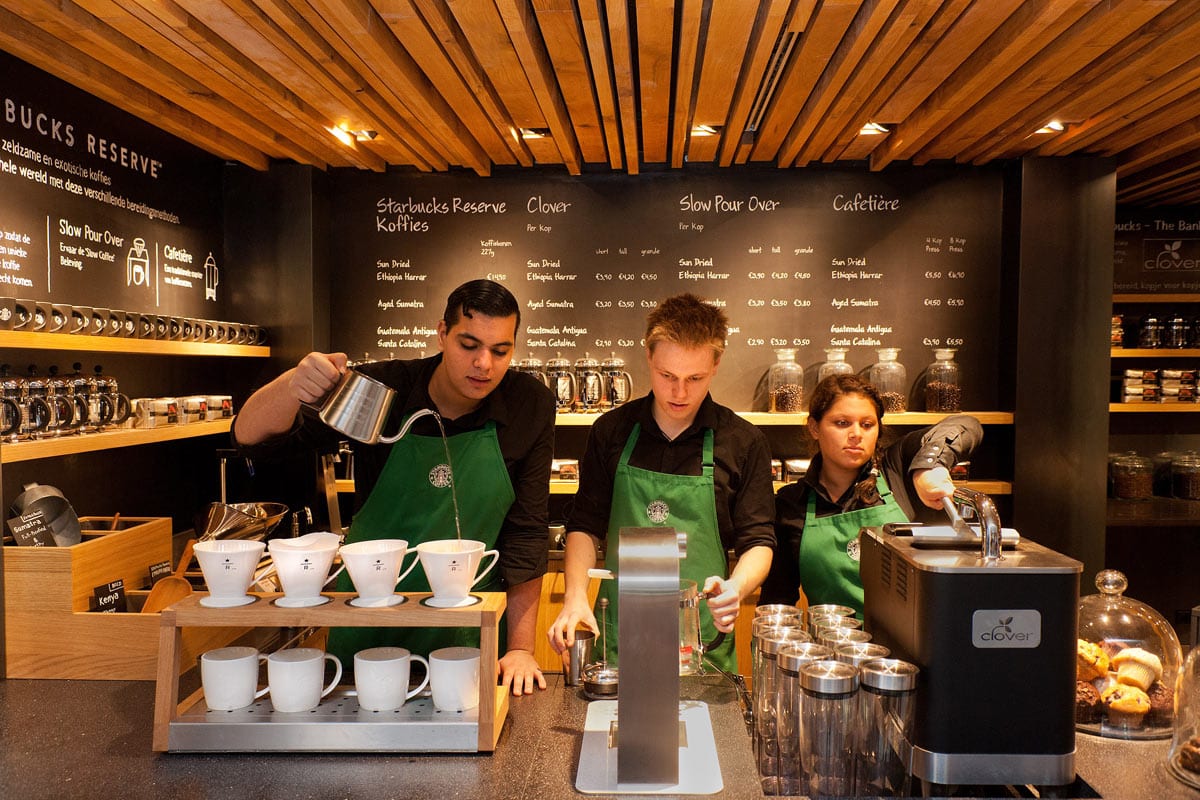
    Starbucks CEO Howard Schultz has stepped aside from the CEO role to take up a new role driving innovation, design and development of the Starbucks Roastery and Reserve retail store formats internationally.

    He will also oversee the company’s social impact initiatives and continue to serve as chairman.

    President and COO Kevin Johnson will expand his responsibilities, assuming the role and responsibilities of president and CEO, effective April 3.

    In his current role, since March 2015, Johnson has led the company’s global operating businesses across all geographies as well as the core support functions of Starbucks supply chain, marketing, human resources, technology, and mobile and digital platforms. Johnson has been a Starbucks board member since 2009, and will continue to serve as a member of the Board.

    “Over the past two decades, I have grown to know Starbucks first as a customer, then as a director on the board, and for the past two years as a member of the management team. Through that journey, I fell in love with Starbucks and I share Howard’s commitment to our mission and values and his optimism for the future,” said Johnson.

    Johnson’s career spans 33 years in the technology industry which included a 16-year career at Microsoft and a five-year tour as CEO of Juniper Networks. At Microsoft, he led worldwide sales and marketing and became the president of the platforms division. In 2008, he was appointed to the National Security Telecommunication Advisory Committee where he served presidents George W. Bush and Barack Obama.

    Announcing the changes overnight, Schultz said the company was continuing to deliver quarter after quarter of record, industry-leading revenue, comp sales and profit growth, and that the newest classes of Starbucks stores continue to deliver record-breaking revenues around the world.

    “The truth is, in all my years at Starbucks I have never been more energised or exhilarated about the opportunities that lie ahead.”

    Schultz said the Roastery concept added a previously unattained level premiumisation into the coffee category.

    “Its success is unparalleled, last year achieving a comp sales increase of 24 per cent and delivering a ticket that is four times the ticket of a typical Starbucks store. The Roastery has become a learning laboratory for breakthrough innovation and experiential design and a beacon for the next wave of Starbucks global growth and evolution.”

    Starbucks will open at least 20 Roasteries around the world, six by the end of 2019 alone.

    “At the same time, elements of the Roastery are forming the basis of the 1000 or more Starbucks Reserve stores we will be opening around the world in the years ahead.”

  • Starbucks China plans massive expansion

    Starbucks China plans massive expansion

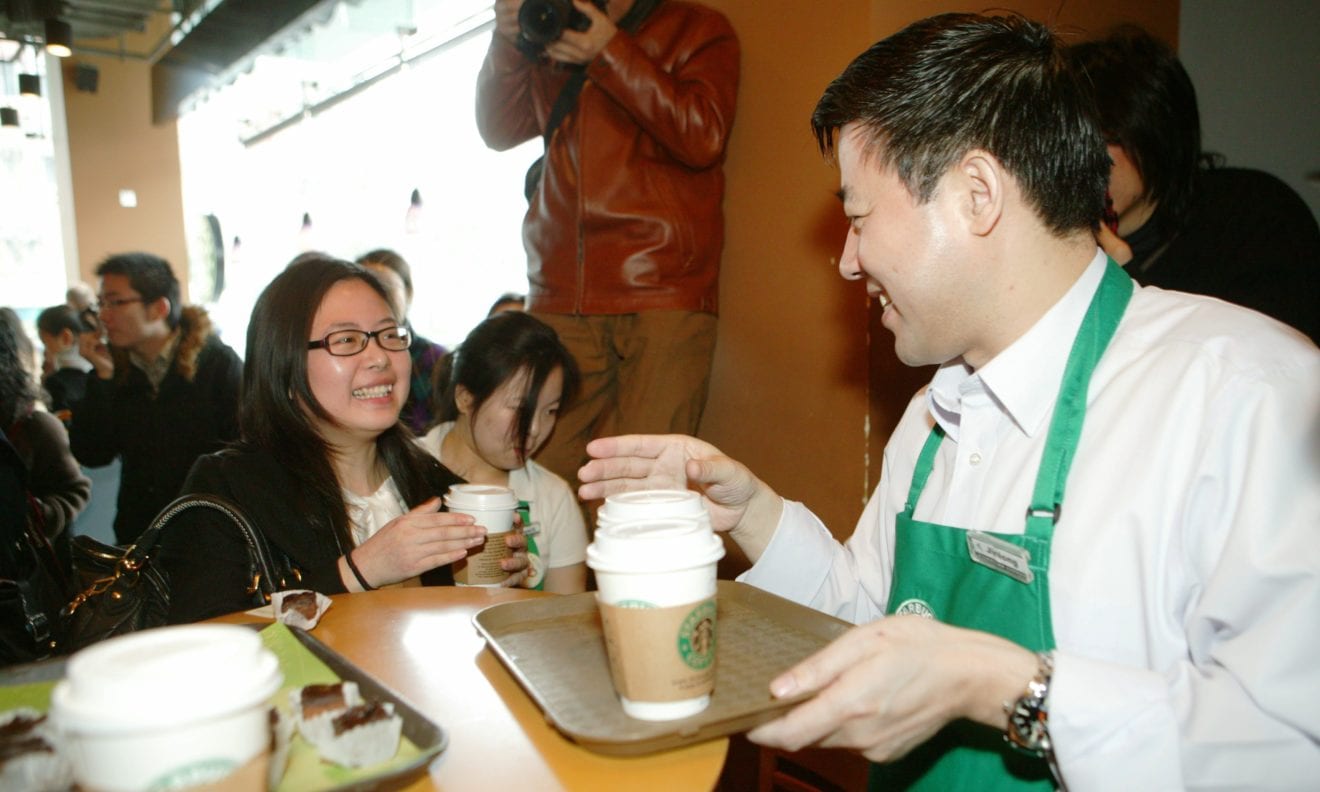
    Starbucks China is planning to open a further 1400 cafes by 2019, the company has revealed.

    Currently, the US headquartered coffee giant has about 2000 locations in 100 Chinese cities – and it uses Alibaba’s Tmall to sell giftcards and coupons to Chinese customers, at the same time boosting its brandawareness and appeal.

    Starbucks said its Tmall Global virtual store collected 300,000 registered fans in the past month and launched a “social gifting” feature that allows users to send those cards and coupons to friends and family through the Tmall platform. On top of its digital push, Starbucks said it was aiming to boost its overall store count to 3400 by 2019.

    “As Starbucks’ second largest and fastest-growing market globally, China represents the most important and exciting opportunity ahead of us,” Schultz said.

    The news followed a milestone meeting between Starbucks CEO Howard Schultz and Alibaba founder Jack Ma who said afterwards they sought to “redefine the roles and responsibilities of a for-profit public company, one that invests in its people, giving back to the local communities in meaningful ways, and creating unique developmental opportunities for the youths of today.”

    Alibaba and Starbucks share a similar vision, according to the two businessmen: building a company that’s doing more than just generating profits.

    During a speech in Chengdu at an annual Starbucks event celebrating the company’s Chinese employees, Ma emphasised the point by highlighting the important role that young people play at both companies. At Alibaba, the average employee age is 26, while at Starbucks it’s 26.

    “Alibaba hopes to work together with Starbucks to create even more opportunities to develop Chinese youth because they are our future,” Ma said at the Starbucks China Partner-Family Forum, sharing the stage with famed Starbucks CEO Howard Schultz. “All of you at today’s event represent China’s future.”

    The China Partner Family Forum celebrates Starbucks’ 30,000 Chinese employees, reinforcing the company’s commitment to what it calls “conscious capitalism.” The goal is to boost company productivity by enhancing the work experience for those employees.

    Starbucks launched its Tmall Global, store in December. The platform allows foreign companies to sell into China without having a physical presence in the country. Already major brands such as Costco, Macy’s and Nike, Japan’s Uniqlo and Germany’s Metro Group operate stores on the platform. Some of these companies, including Nike and Metro Group, do have physical stores in China, but they are selling through Tmall Global because the continued growth of eCommerce gives them another way of reaching consumers.