Tag: human

  • Human Made Expands Asian Footprint with Tokyo Mega-Store and Exciting Bangkok Debut

    Human Made Expands Asian Footprint with Tokyo Mega-Store and Exciting Bangkok Debut

    Japanese fashion label Human Made is increasing its presence in Asia with the impending launch of its most spacious flagship store in Tokyo, as well as its debut store in Thailand.

    Branching Out into Thailand

    Human Made is slated to introduce its first Thailand-based store in Bangkok on March 28, located in Central Embassy. This move marks the brand’s premiere entry into the Thai market.

    The Bangkok store will provide a fusion of fundamental merchandise and location-specific releases. Among the exclusive offerings include a collection embellished with an elephant graphic, a nod to the country’s national symbol, complemented by Muay Thai shorts and limited-edition items adorned with the brand’s iconic heart design.

    In addition to the retail aspect, the brand will also be extending its culinary venture by opening a new branch of Curry Up, a curry restaurant under the Human Made banner, adjacent to the store.

    Establishing a Larger Presence in Japan

    Simultaneously, back in its home country, Japan, Human Made is preparing to unveil Human Made Tokyo. This will be the brand’s most expansive flagship store, boasting a floor area of 59 square meters. The launch is set to take place in the Harajuku district around August to September of the current year.

    Questions & Answers

    Where will the largest Human Made flagship store be located?
    The largest Human Made flagship store will be located in Tokyo, specifically in the Harajuku district.

    What are some of the exclusive offerings that will be available at the Bangkok store?
    The Bangkok store will offer a collection featuring an elephant graphic, Muay Thai shorts, and limited-edition pieces incorporating the brand’s signature heart motif.

    What additional venture will Human Made be introducing in Bangkok alongside its retail store?
    Alongside its retail store in Bangkok, Human Made will be introducing a new branch of Curry Up, a curry restaurant operated by the brand.

  • Starbucks Reserve Roastery in Tokyo opens

    Starbucks Reserve Roastery in Tokyo opens

    Starbucks opens a four-story fully-immersive Starbucks Reserve Roastery in Tokyo today.

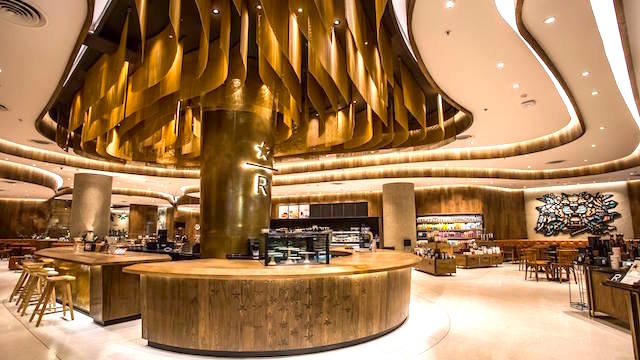
    Located in the Nakameguro neighborhood, the new venue offers more than 100 unique coffee and tea beverages and merchandise exclusively available in store. It will be the fifth Roastery globally, home to the largest Teavana Bar in the world and Japan’s first Princi Italian bakery.

    It also introduces Starbuck’s first Amu Inspiration Lounge, a full floor dedicated to community gathering – and is planned as Starbucks’ first Specialty Coffee Association certified training location in Japan in the near future.

    “As the first international market outside of North America, Starbucks Japan has contributed 23 years of innovation for the company globally,” said Starbucks CEO Kevin Johnson. “The opening of the Tokyo Roastery will further amplify what Starbucks Japan has done across all stores in the market for more than two decades – innovating and delivering the finest quality coffee one person, one cup and one neighbourhood at a time.”

    “The Roastery will amplify and inspire coffee passion across all Starbucks stores, and will serve as a catalyst for a new wave of growth centered on the customer experience and passion for coffee and service,” added Starbucks Japan CEO Takafumi Minaguchi. “Beginning with the ‘Make it Yours’ campaign that will commence at every store in Japan upon the opening of the Roastery, customers will be invited to experience the first Starbucks coffee roasted exclusively in Tokyo, for Japan, and available in a variety of coffee beverage styles.

    “The Roastery signifies our commitment to fostering moments of human connection over a cup of coffee and using these moments to create positive social impact in the communities we serve.”

    The Starbucks Reserve Roastery in Tokyo  is the only one designed in collaboration with a local architect from the ground up. Inspired by the famous cherry-blossom trees lining the Meguro River, the building’s glass walls and terraced floors fold into the fabric of the neighbourhood, bringing visitors eye-level with the cherry blossoms and the four seasons of the river to reflect the natural beauty and sense of harmony found across Japan.

    The coffee journey at the Starbucks Reserve Roastery in Tokyo is an immersive experience and education in coffee, and its process – from green bean to cup – which begins at the Main Bar on the first floor. The open floor plan draws customers into the immersive experience, introducing them to the art of roasting, brewing and hand-crafting beverages. The terraced third floor features Starbucks Japan’s first cocktail bar, Arriviamo.

    Japan is the fourth largest market in terms of store count for Starbucks globally – behind the US and China – and today has more than 1400 Starbucks stores.

  • Shoppers prefer human interaction over bots, says study

    Shoppers prefer human interaction over bots, says study

    New research reveals 75 per cent of shoppers prefer live-agent support for customer service verses 25 per cent support for self service and chatbots. The research, from cloud contact-centre operator NewVoiceMedia, identified consumer concerns about sharing sensitive information, a lack of understanding of bots and their inability to resolve issues.

    “Chatbots can provide customers with quick answers to frequently asked questions or issues, and the survey notes the benefit of chatbots for certain interactions, such as 24-seven service,” the survey’s authors concluded.

    But when it comes to handling sensitive financial and personal information, most customers are more comfortable with a live agent, and just 13 per cent say they would be happy if all service interactions are replaced by bots in the future.

    Foremost among consumer concerns about using chatbots include:

    • A lack of understanding of the issue (65 per cent).
    • The inability to solve complex issues (63 per cent).
    • The inability of chatbots to provide answers to simple questions (49 per cent).
    • The lack of a personal service experience (45 per cent).

    While less than half of the people surveyed (48 per cent) said they would be willing to use chat bots for service – versus the 38 per cent who wouldn’t – 46 per cent also felt that bots kept them from reaching a live person.

    Banks (82 per cent) and medical services (75 per cent) were the businesses that people were least likely to want to deal with bots.

    Customers prefer live agents for technical support (91 per cent); getting a quick response in an emergency (89 per cent); making a complaint (86 per cent); buying an expensive item (82 per cent); purchase inquiries (79 per cent); returns and cancellations (73 per cent); booking appointments and reservations (59 per cent); and paying a bill (54 per cent). However, when asked about buying”a basic item”, 56 per cent would choose a chatbot over a live interaction.

    The top benefit cited for dealing with chat bots was 24-hour service.

    “When a situation becomes emotional or complex, people want to engage with people”, says Dennis Fois, president of NewVoiceMedia. “As businesses add more customer service channels, conversations are becoming more complex and higher value, and personal, emotive customer interactions play a critical role in bridging the gap for what digital innovation alone cannot solve,” he said.

    “For this reason, companies must find the right balance between automation and human support to deliver the service that customers demand. Frontline contact centre teams will continue to be the difference makers on the battlefield to win the hearts and minds of customers, and organisations deploying self-service solutions should ensure that there is always an option to reach a live agent”.

    There is a sense consumers may warm to chatbots in the future, however, given that younger respondents (aged 18-44) were more open to using chatbots overall and across the individual scenarios compared to older consumers (45-60+).

  • AirAsia trains crew to spot human traffickers

    AirAsia trains crew to spot human traffickers

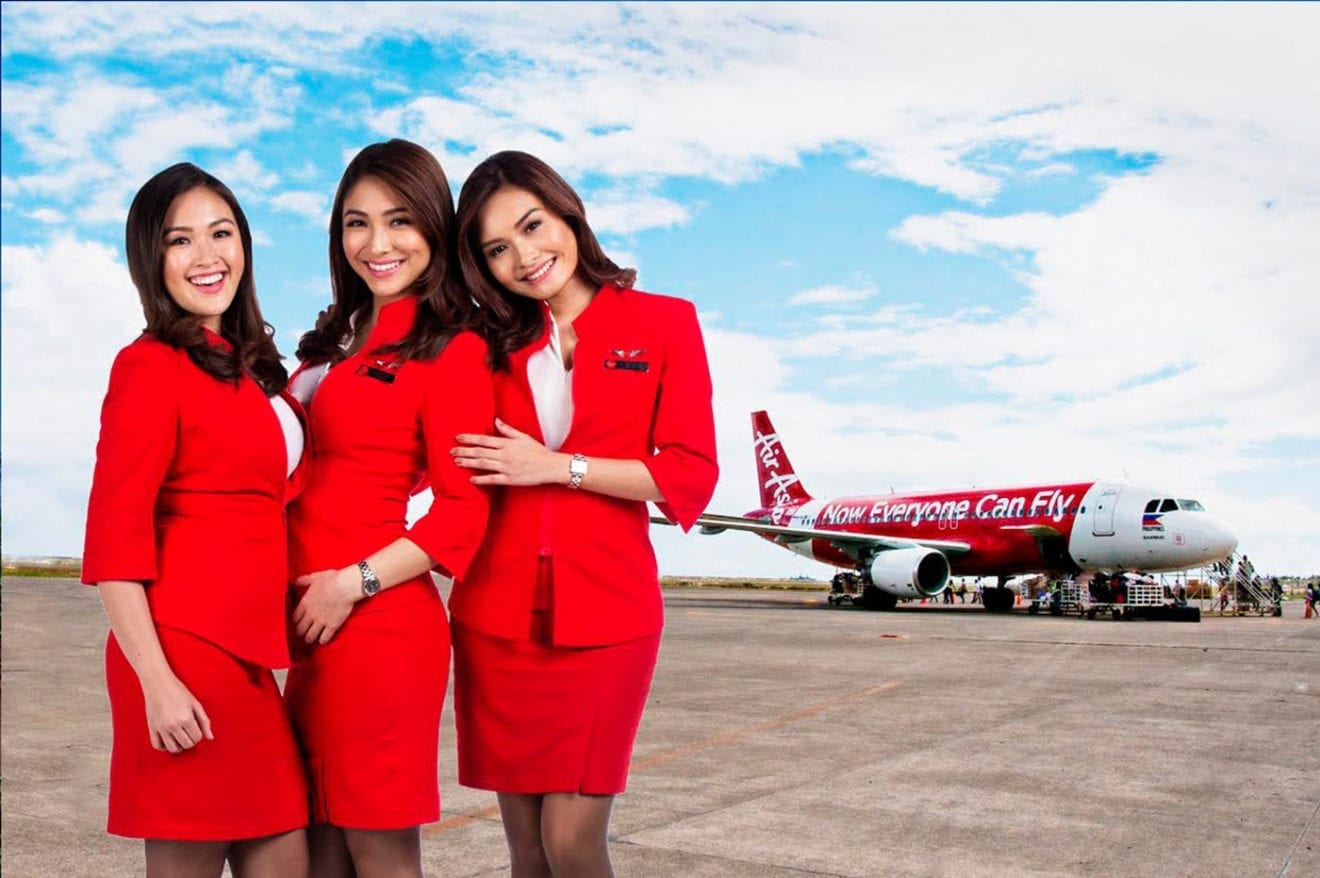
    AirAsia, the biggest budget carrier in Asia, is training thousands of its staff to fight human trafficking, becoming one of the first airlines in the continent to crack down on the global crime.

    Companies have come under increased pressure to tackle human trafficking, with an estimated 46 million people living in slavery and profits thought to be about US$150 billion.

    Planes are a key part of the illegal business, as criminal gangs transport thousands of children and vulnerable people by air each year for redeployment as sex workers, domestic helpers or in forced labour.

    The United Nations has urged airlines to step in and look out for the tell-tale signs of trafficking.

    Kuala Lumpur-based AirAsia, which flies millions of passengers annually to more than 110 destinations, said it was planning to train between 5,000 and 10,000 frontline staff, including cabin crew.

    “We like to be able to have our staff know what to do if somebody comes up to them and says ‘I need help’,” said Yap Mun Ching, the executive director of AirAsia Foundation, the airline’s philanthropic arm, which is driving the initiative.

    “Sometimes (the victims) don’t know they have been trafficked. They realise it only when they are on their way and they want to be able to get help. Most of the time they don’t know who to turn to,” she told the Thomson Reuters Foundation.

    AirAsia has teamed up with US-based Airline Ambassadors International, a group that trains airline staff on trafficking, for the initiative, which kicked off this week at the airline’s four main hubs – Kuala Lumpur, Bangkok, Jakarta and Manila.

    All are hotspots for trafficking.

    The group said signs of trafficking include young women or children who appeared to be under the control of others, show indications of mistreatment or who seem frightened, ashamed or nervous.

    The UN Office on Drugs and Crime urged airline bosses at a summit in June to train flight crews to help combat human trafficking, the first time the aviation industry has held global discussion on the issue.

    While some training of airline staff to spot and report potential trafficking is mandatory in the United States, it is not widespread across the industry.

    So far, more than 70,000 US airline staff have been trained under a programme that began in 2013.

    Asia has some of the worst offenders of human trafficking.

    Countries such as Thailand, Myanmar and Laos are listed by the United States on a trafficking watch list for not meeting the minimum standards needed to end the crime.