Tag: humanoid robots

  • Dongfeng Motor to Begin Trial Humanoid Robot Production at Year-End

    Dongfeng Motor to Begin Trial Humanoid Robot Production at Year-End

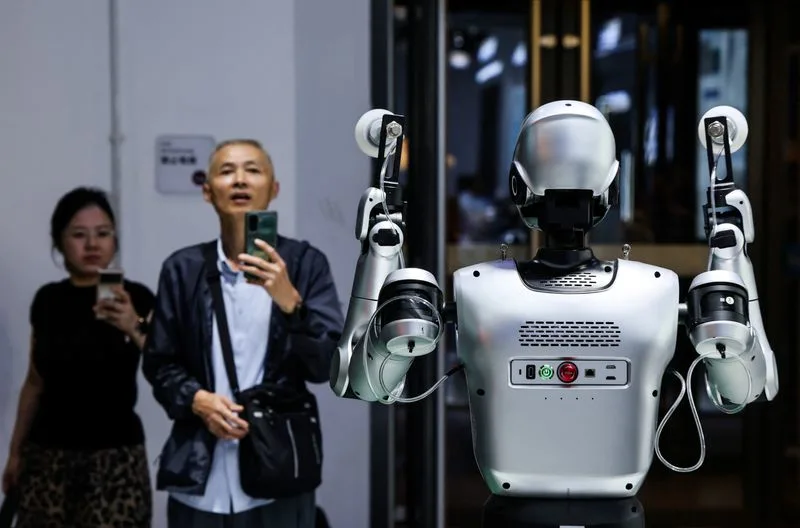
    Dongfeng Motor plans to begin small-batch trial production of its humanoid robot at the end of this year, aiming to bring its working capabilities on par with human workers by the end of next year.

    The humanoid robot will enter manufacturing factories in October to handle sorting and quality inspection tasks, according to Zhang Zhenlin, chief engineer of intelligent technology at Dongfeng.

    Factory Sorting and Showroom Patrols

    Development covers two distinct platforms: a bipedal humanoid named Xiaodong and a quadruped model called Yuanzai. Both debuted at the 2026 World Robot Conference in August this year.

    Xiaodong handles material sorting inside automotive manufacturing plants. Over time, the system will move from single repetitive tasks to autonomous factory floor operations.

    Commercial rollout begins earlier for Yuanzai. The quadruped will handle customer guidance in auto dealerships, campus patrols, and facility monitoring through onboard multimodal perception and autonomous navigation.

    Cross-Sector Technology Sharing

    Chinese automakers are applying EV software architectures and artificial intelligence models directly to robotics hardware. Dongfeng chief engineer of intelligent technology Zhang Zhenlin said developing embodied intelligence lets teams reuse automotive large-model technology and speed up commercialization.

    Automakers’ development of embodied intelligence products allows technology to be reused across multiple areas such as automotive large models, thereby speeding up commercialization and mass production.

    Overlapping supply chains give carmakers immediate access to batteries, vision sensors, and assembly infrastructure. Factory operators expect the humanoid units to reduce assembly costs while running round-the-clock inspections on vehicle lines.

    The Competitive Field in China

    Dongfeng is not alone in the push. Several domestic EV makers have built dedicated robotics divisions to automate shop floors and sell commercial hardware.

    Xpeng opened a humanoid robot production line on September 8, 2026. It plans mass production of its Iron robot by late 2026, with customer deliveries starting in 2027. Chery-backed Aimoga Robotics has shipped more than 3,000 units globally and is preparing an IPO. Li Auto, Seres, and Leapmotor have also put capital into embodied AI development this year.

    Capital Allocation and Global Goals

    Robot deployment fits into a wider overseas expansion budget. Dongfeng plans to invest 50 billion yuan ($7.41 billion) internationally to launch more than 50 vehicle models.

    Under a roadmap presented by deputy general manager Zhou Feng, the company will build 10 assembly plants and five research hubs outside China. Dongfeng targets 1.5 million overseas vehicle sales annually by 2030, using Xiaodong’s 15-month trial run as the baseline test for broader automation.
  • China Accounts for 97% of Global Humanoid Robot Shipments

    China Accounts for 97% of Global Humanoid Robot Shipments

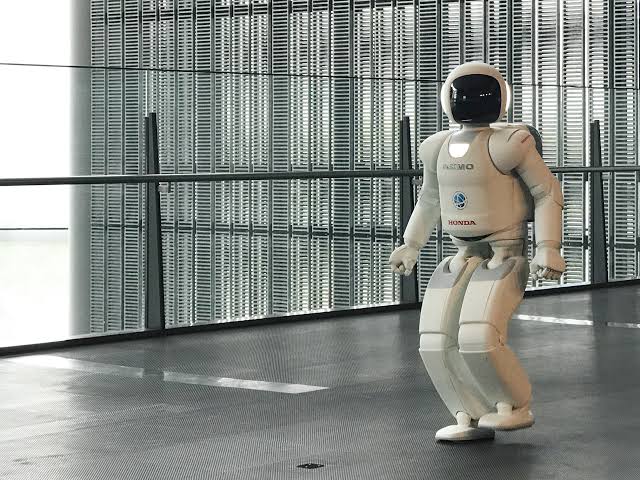
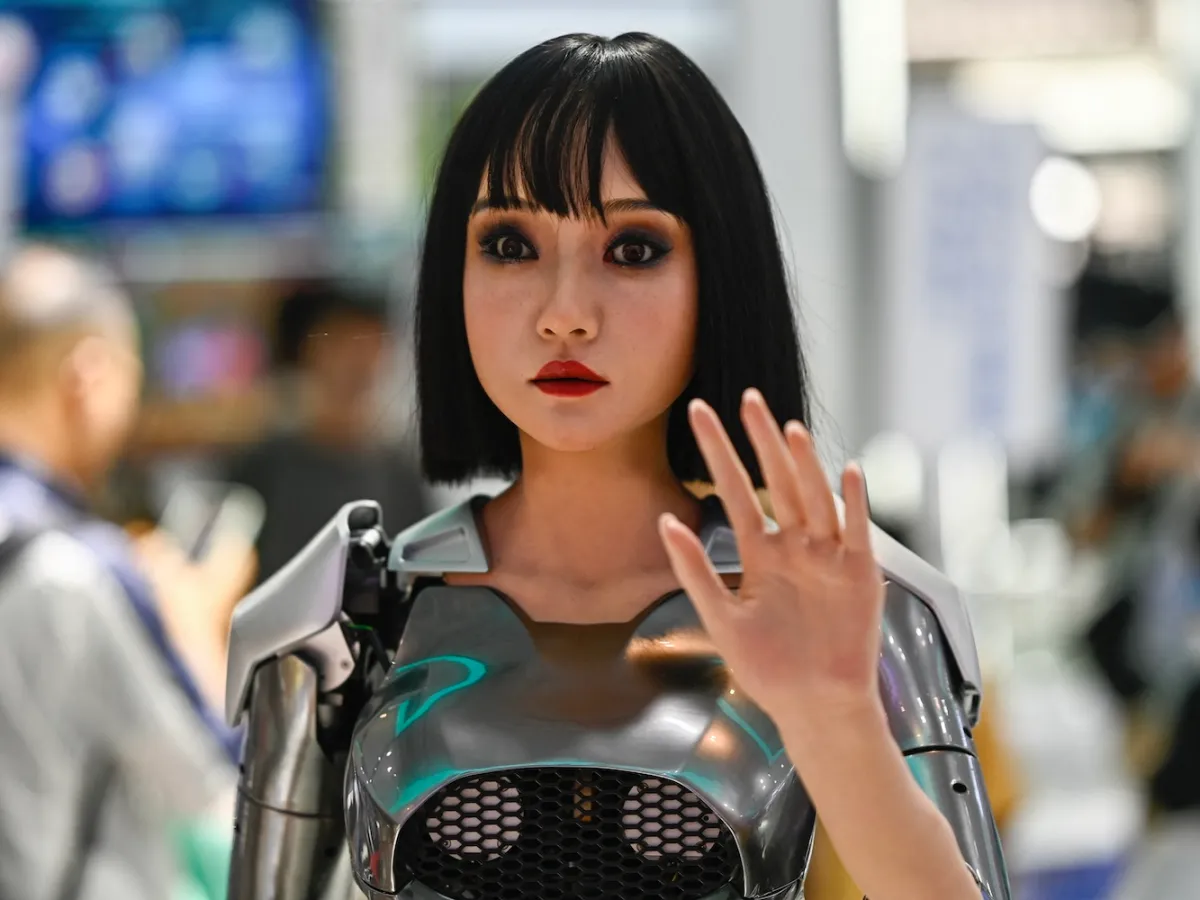
    Chinese manufacturers now account for 97 per cent of global humanoid robot shipments, establishing near-total supply chain dominance over the emerging hardware category.

    The concentration reflects rapid assembly scaling across mainland manufacturing hubs after Beijing designated humanoid robotics an official priority sector in late 2023, even as commercial deployment remains heavily concentrated in domestic test environments and state-backed pilot facilities.

    Where the Hardware Goes

    Domestic electronics assembly plants, automotive factories, and automated fulfillment warehouses absorb the vast majority of current production. Factory operators deploy the bipedal units for repetitive handling, parts transfer, and precision testing tasks where fixed automation arms cannot easily maneuver.

    Hardware pricing runs from 15,000 to 50,000 dollars per unit depending on sensor arrays and dexterity capabilities. Chinese assemblers maintain a structural cost edge through local sourcing of actuators, harmonic reducers, and lithium power packs.

    Western competitors face higher component costs and longer assembly timelines. That gap mirrors earlier hardware buildouts in consumer drones and commercial service bots, where Chinese component density squeezed foreign assemblers out of entry-level price tiers.

    The Deployment Bottleneck

    Supply chain supremacy does not instantly create sustainable commercial demand. Most delivered units operate in controlled trial environments rather than fully automated commercial workflows.

    Retailers, logistics operators, and facility managers hesitate to replace standard wheeled automated guided vehicles with expensive bipedal robots. Wheeled units cost a fraction of the price and execute warehouse transport without balancing risks.

    Earlier Manufacturing Milestones

    Beijing designated humanoid robotics an official priority sector in late 2023, setting targets for mass production and supply chain independence by 2025. That policy push directed subsidies and venture capital into domestic component makers, accelerating prototype development into commercial runs.

    Commercial viability now depends on software reliability and real-world task completion rates rather than shipment volumes. Factory trials scheduled across Chinese automotive plants throughout the final quarter will determine whether large-scale enterprise purchase orders materialize.

  • China Tests Humanoid Robots for Warehouse and Factory Work in Beijing

    China Tests Humanoid Robots for Warehouse and Factory Work in Beijing

    Chinese robotics developers put humanoid machines through 51 competitive trials in Beijing on Saturday to test their readiness for commercial warehouse and assembly tasks.

    The five-day World Humanoid Robot Games feature 21 scenario-based industrial contests alongside 30 athletic events. More than 40 per cent of the trials require machines to navigate environments without human controllers, according to technology partner Huawei.

    Speed versus dexterity on the floor

    Sprint demonstrations proved the raw power of the hardware. Two robots finished the 100-metre sprint faster than Usain Bolt’s 9.58-second world record, improving on the 20-second winning time recorded in 2025. Another unit ran 400 metres in 39.7 seconds. Stopping remained difficult, with sprinters crashing into protective mats placed behind the finish line.

    Industrial tests evaluate fine motor control rather than pure velocity. Machines must insert delicate cables, load materials, handle restaurant trays, charge electric vehicles and manipulate shifting packages. These setups examine whether computer vision and force feedback can manage minor physical discrepancies such as misaligned wires or dropped items.

    The barrier between trials and commercial deployment

    Supply chain operators across Asia are testing automation to offset rising factory wages and labor shortages, but humanoid units remain largely experimental while rigid industrial arms handle routine floor work. Lumos Robotics Chief Executive Yu Chao said hardware shows matter only if the machines solve real operational problems in final deployment scenarios.

    Autonomous software remains the primary bottleneck for wide commercial adoption. Startups such as Beijing-based Galbot are demonstrating perception systems through autonomous racket sports, while Zeroth is tracking how units handle mechanical errors after sale.

    Competitors will complete the remaining logistics and dexterity trials this week before several participating manufacturers begin scheduled field evaluations in regional assembly hubs later this year.