Tag: hyperconnected

  • Samsung and SKT Forge Ahead with Advanced AI-Driven 6G Tech: A New Era in Hyperconnected Telecommunications

    Samsung and SKT Forge Ahead with Advanced AI-Driven 6G Tech: A New Era in Hyperconnected Telecommunications

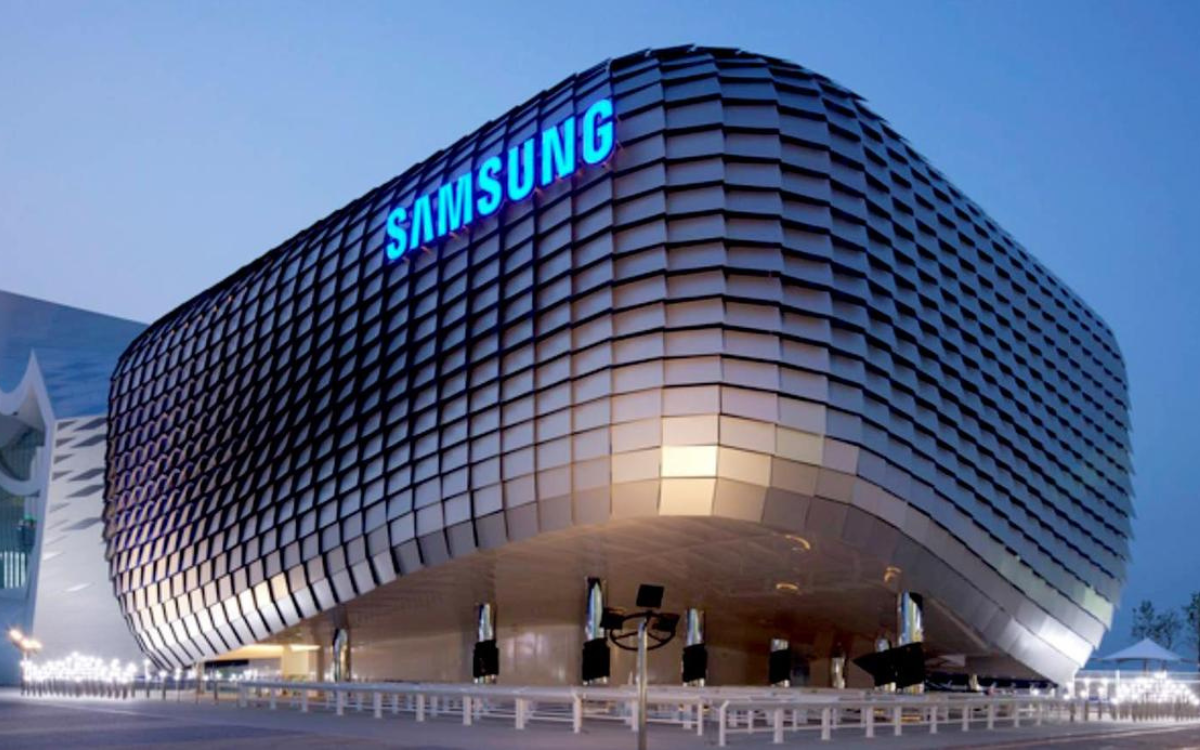
    Samsung Electronics and SK Telecom (SKT) have recently formalized their cooperation by signing a memorandum of understanding (MoU). The partnership will focus on the development of crucial 6G technologies, with a special focus on artificial intelligence-based radio access network (AI-RAN) technology. The primary aim of the collaboration is to develop and test key technologies for the 6G era, including AI-based channel estimation, distributed multiple-input multiple-output (MIMO) transmission, AI-RAN-based schedulers, and core network architectures.

    Leading the Collaboration

    Samsung Research and SKT’s Network Technology Office will be spearheading the collaboration. AI-based channel estimation technology aims to improve network performance by predicting and correcting signal transmission instantaneously. This allows for quick and accurate data delivery in environments where radio waves face obstructions such as buildings or walls.

    Unlike traditional setups, where a single base station handles data processing, distributed MIMO technology enables multiple base stations or antennas to collaborate in the transmission and reception of data. This innovative approach ensures reliable, ultra-high-speed communication in both urban and rural settings.

    Improving Network Quality

    AI-RAN schedulers and AI-based core networks are crucial for data transmission optimization. They efficiently dictate when, where, and how to send data, ensuring efficient resource allocation even when numerous user devices are connected. These technologies are vital for enhancing network quality and facilitating automation in a future hyperconnected society.

    Under the partnership, Samsung Research will be concentrating on the development of AI-RAN technologies, including AI-based channel estimation models, schedulers, and distributed MIMO. Meanwhile, SKT will be responsible for providing data and setting up test infrastructure based on its nationwide network operations. The companies are also making collaborative efforts as members of the AI-RAN Alliance.

    Future Prospects

    JinGuk Jeong, Executive Vice President and Head of Advanced Communications Research Center (ACRC), Samsung Research at Samsung Electronics, has expressed optimism about the joint venture with SKT. He believes that this field-focused collaboration will enable them to verify the efficacy of AI-based wireless technologies in real-world settings and secure key AI-RAN technologies at an early stage.

    Takki Yu, Vice President of SK Telecom Network Technology Office, emphasized that the fusion of AI and wireless communications will be crucial to 6G competitiveness. Through their partnership with Samsung Electronics, they plan to secure world-class AI-RAN-based 6G technologies and lead the global 6G ecosystem.

    Since 2019, when it established the Advanced Communications Research Center (ACRC), Samsung has been proactively pursuing 6G research, publishing the 6G White Paper and 6G Spectrum White Paper, which outline its vision and direction for next-generation communications.

    Questions & Answers

    What is the main focus of the collaboration between Samsung Electronics and SK Telecom?
    The collaboration aims to develop and test key technologies for the 6G era, particularly artificial intelligence-based radio access network (AI-RAN) technology.

    Who will be leading this collaboration?
    Samsung Research and SKT’s Network Technology Office will be spearheading the partnership.

    What role does AI play in the development of 6G technologies?
    Artificial Intelligence is crucial in enhancing network quality, facilitating automation, and ensuring efficient resource allocation in a future hyperconnected society.
  • eSIM and its impact in an hyperconnected world

    eSIM and its impact in an hyperconnected world

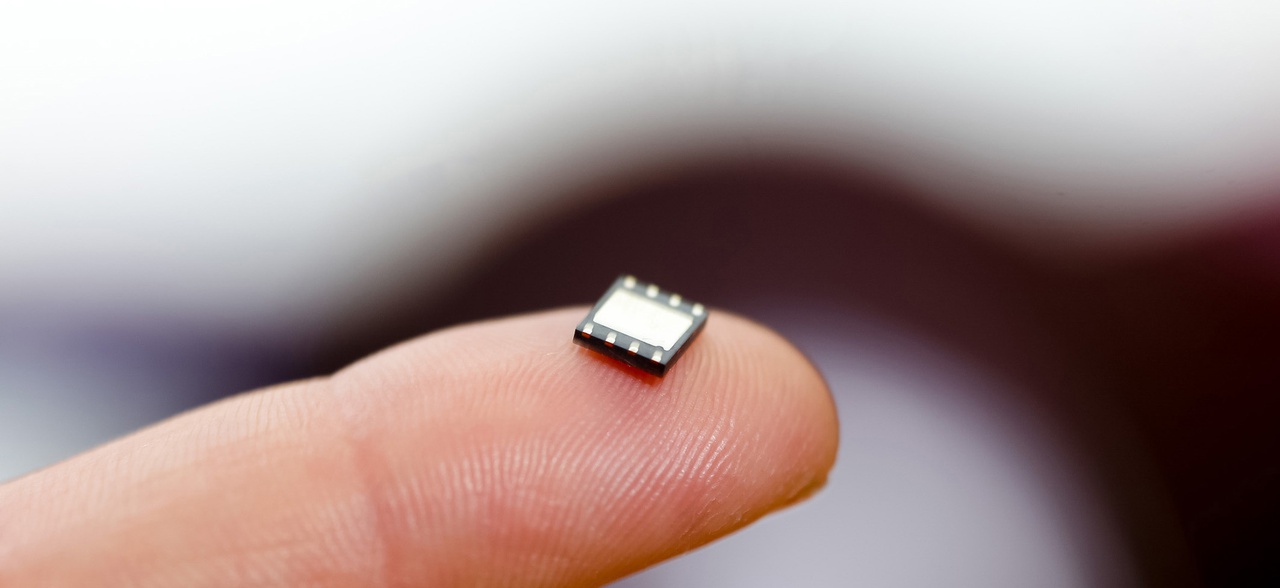
    Powered by 5G, eSIM or embedded subscriber identity module is a rising technology that is threatening to replace traditional SIM cards. With 5G revolutionizing connectivity, eSIM emerges as a seamless way to harness greater connectivity between a future of billions of IoT devices. Instead of relying on physical SIM cards, eSIM is the embedded alternative that uses remote SIM provisioning (RSP) to download a user’s profile onto a device, to provide users full control of connectivity management and the ability to switch networks as desired.

    Last year, eSIM adoption grew in the wake of the pandemic. In the coming years, this trend will continue to persist. According to recent findings from Juniper Research, the number of eSIMs embedded in connected devices will more than double from 1.2 billion this year to 3.4 billion in 2025. Of which, 94% of global eSIM installations in 2025 can be attributed to the consumer sector.

    In the consumer market, eSIM is deployed in tablets, smartphones, laptops, and wearables. Some smartphones from Apple, Google, Huawei, and Samsung are already supporting eSIM, though they continue to allow for physical SIM. Last year, Motorola released the world’s first eSIM-only smartphone.

    With IoT on the rise, connectivity is one of the important considerations when developing future-proof tech solutions. Across industries, automotive is one of the areas that fuel eSIM deployment. For instance, Tesla’s electric vehicles use eSIM to power in-car connectivity. Juniper Research predicts that other industries such as oil and gas, manufacturing, and logistics industries will also experience a hike in eSIM adoption to power connectivity, with eSIM installations growing from 28 million to 116 million by 2025.

    For many, it is becoming clear that eSIM is the future for IoT connectivity as it offers a level of flexibility not provided by traditional SIM. Since all IoT subscriptions and connectivity can be carried out through a single embedded source, this significantly simplifies SIM management for as many devices across geographies. For enterprises or governments, eSIMs can also be used for asset tracking, with each IoT device being remotely and automatically provisioned to an optimal carrier profile.

    For consumers, eSIM is the seamless management of subscriptions whereby they no longer need multiple SIM cards for different connections. In this pandemic, eSIM offers the advantage of subscribing to a connectivity service without having to physically purchase a SIM.

    For MVNOs, tech giants, and device manufacturers, eSIM is the ideal avenue to generate new revenue streams. For device manufacturers, for instance, it means the ability to create smaller products without a SIM card and an opportunity to optimize supply chain processes.

    Of course, more entrants into the mobile market is unsettling for network operators that fear disruption and stiffer competition in addition to having to build costly cellphone towers to support 5G networks. At the same time, telecom operators cannot ignore the fact that future IoT devices will be better served with eSIMs. With brands like Apple and Google, which have massive followings offering eSIM, operators are pressured to catch onto the eSIM fad to avoid being displaced.

    According to GSMA, about 175 mobile operators launched eSIM for smartphones across 69 countries by the end of last year. Amongst these operators, Vodafone Group leads in eSIM roll-out.

    In Asia, Singtel and China Unicom launched an eSIM network swap service last December to allow devices equipped with China Unicom eSIM to automatically switch profiles to Singtel’s in Singapore. In India, the three largest telecom operators Airtel, Jio, and Vi have started to offer eSIM functionality for supported devices. For operators, eSIM roll-out achieves customer churn, creating opportunities for up-selling and cross-selling services and packages.

    To stay ahead, Tata Communications is going beyond connectivity to expand competency in mobility and IoT. Last October, Tata Communications partnered with Micron for a cloud-based eSIM business. In December, the company acquired a majority equity stake in a France-headquartered eSIM technology provider. The acquisition was motivated by enterprises’ heavy reliance on mobile devices to operate and access data in the cloud and an upward trend in machine-to-machine (M2M) connections worldwide.

    According to Ecosystem, Asia-Pacific is poised to lead in IoT by 2023. With connectivity becoming more pervasive in our everyday lives, there is no doubt that eSIM will play a pivotal role in ushering in a new era in consumer and enterprise applications.