Tag: hyundai motors

  • Genesis starts by-the-month car subscriptions

    Genesis starts by-the-month car subscriptions

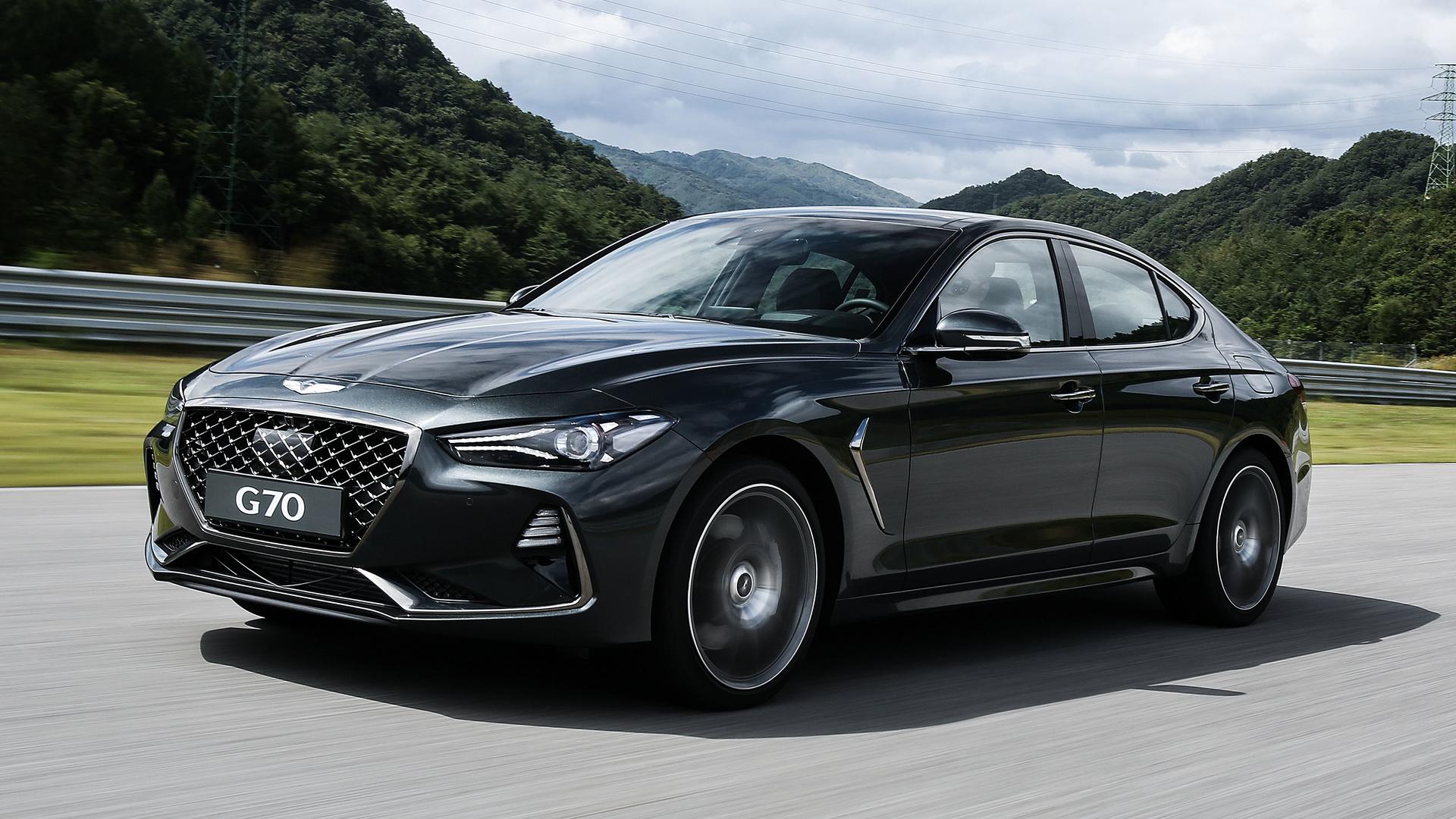
    Hyundai Motor luxury brand Genesis is starting a car subscription service, the first such effort by a domestic automaker in Korea. The company Thursday announced its Genesis Spectrum program. Under the program, subscribers can drive Genesis vehicles – including the G70, G80, G80 Sport and G90 – for 1.49 million won ($1,330) per month. The service is in collaboration with domestic rental-car companies and Hyundai Capital’s Deal Car.

    The fleet of available cars includes the 2018 G70 3.3 Sports Supreme, the G80 3.3 Premium Luxury, the 2019 G80 Sports 3.3T Premium Luxury and G90 3.8 Premium Luxury. The provided cars are relatively new, with fewer than 10,000 kilometers (6,213 miles) of accumulated driving, according to the carmaker. For those using the G70, G80 and G80 vehicles, cars can be switched twice a month. The G90 is available to subscribers only for test driving 48 hours a month.

    Subscribers will not have to pay any maintenance costs, including after-sales service and the purchase of replacement parts. They will have to renew their subscription every month, but no fee is charged for early termination of membership. The program offers pick-up and delivery in Seoul as long as the vehicles are reserved three days in advance.

    “Genesis has been researching opportunities our brand could offer customers,” an official at Genesis said. “One of the results of the survey is a subscription program, which is globally emerging as trend.”

    Genesis added that the subscription service will allow the brand to collect data about its customers and drivers, such as preferred models for certain age groups and car replacement cycles.

    While subscription services for cars are a global phenomenon, as fewer people opt for ownership, the concept hasn’t taken off in Korea yet.

    Hyundai Motor’s finance affiliate Hyundai Capital America has already launched a subscription service in the United States called Hyundai PLUS, where subscribers can use the Sonata, Tucson, Santa Fe and other models for a monthly fee. Other carmakers have been offering subscriptions in certain markets. Porsche runs Porsche Passport, Mercedes-Benz has Benz Collection and BMW has Access by BMW.

    Swedish carmaker Volvo recently started Care By Volvo, and has rolled out its “Don’t Buy This Car” campaign to promote the new service.

    “Subscription services are suitable especially for younger people who want to enjoy a diverse range of driving experiences while avoiding the financial burden of buying the car and then maintaining it,” said Kim Pil-soo, an automotive engineering professor at Daelim University.

    The Mini brand launched a subscription service in partnership with connected-car platform Epikar last month in Korea. Its membership fee is 1.79 million won, but it charges more depending on which model the customer wants to drive.

    The Genesis service started Thursday and will run for 10 months.
  • Hyundai sets aside 1.67 trillion won to support its suppliers

    Hyundai sets aside 1.67 trillion won to support its suppliers

    Hyundai Motor Group has introduced a 1.67 trillion won ($1.49 billion) support program for small and midsized auto parts suppliers, the company said Thursday. As auto parts suppliers in Korea tend to be highly dependent on the performance of carmakers, the sluggish performance of Korea’s largest auto group by sales this year has been a major blow to their earnings.

    A report published by the Economic Research Institute run by the Industrial Bank of Korea earlier this year showed that 48 percent of domestic auto parts suppliers supply parts to a single carmaker and their business growth is highly dependent on the growth of that carmaker. Also, while carmakers have extra capital to respond to ups and downs in their earnings, small-sized parts suppliers are more vulnerable to changes in the market.

    Hyundai Motor Group said it will first create a 140 billion won fund for its suppliers and subcontractors. Suppliers will be able to borrow money at low interest rates and use it to stabilize their business or invest in research and development.

    Considering many suppliers lack liquidity due to the massive investment and costs incurred in early stage R&D and parts manufacturing, the group also said it will pay forward some of the cost incurred in those activities. For instance, part of the cost incurred to develop parts used in Hyundai cars will be paid by the carmaker at the beginning of development rather than after the finished product is designed. The auto group estimates its suppliers and subcontractors will receive roughly 1.46 trillion won in investment upfront over the next five years.

    Hyundai Motor, Kia Motors and auto parts affiliate Hyundai Mobis are also creating a 15 billion won fund to provide emergency aid to suppliers.

    There is a special program for suppliers expanding facilities to support the mass production of Nexo, Hyundai’s fuel-cell powered vehicle. The group is planning on injecting up to 44 billion won into suppliers and subcontractors that expand investment into facilities for parts used in the Nexo next year.

  • Hyundai Motor rejects renewed Gwangju plan

    Hyundai Motor rejects renewed Gwangju plan

    Hyundai Motor refused a revised plan that removed a restriction on collective wage bargaining at a proposed plant in Gwangju, further complicating plans for the factory. A council with representatives from the local government and area employers, labor unions and citizens on Wednesday agreed to remove a clause from the agreement that would have suspended collective bargaining for about five years at the new joint venture between the Gwangju city government and Hyundai Motor.

    The new company will be hiring workers for a production plant to be built on 628,000 square meters (155 acres) of land in the Bitgreen National Industrial Complex. The venture is the first in Korea to bring government and private industry together in the formation of a new manufacturing facility.

    Union representatives strongly protested the clause, calling it toxic.

    Rather than pushing the clause, the council decided to offer three alternative proposals to Hyundai Motor. The city and the automaker will continue negotiations.

    “Over time, Hyundai Motor and the labor union have retreated in their demands,” said Lee Byung-hoon, Gwangju vice mayor. “But the suspension of the wage bargaining clause was the biggest issue.”

    After the announcement was made, it was Hyundai that refused the proposal.

    “We cannot help but to point out the repeated revisions and backtracking [done by the Gwangju government],” Hyundai said through a statement.

    In the first meeting held at 10:30 a.m., all nine labor representatives, including Yoon Jong-hae, head of the Federation of Korean Trade Union’s Gwangju office, refused to attend in protest of the wage bargaining ban.

    The agreement between Gwangju city and the Korean automaker had included a clause in which wage negotiations were to be suspended until the cumulative production of compact SUVs reached 350,000 units. As Hyundai Motor guaranteed a minimum of 70,000 units a year, the labor union estimated that it would take about five years before the employees at the new plant would be able to negotiate.

    The meeting resumed at 3 p.m., and Yoon joined, raising the number of attendees to 22 out of a possible 28.

    The plant proposal has been under a tight deadline as an agreement needs to be reached before the National Assembly passes the budget. The ruling Democratic Party has announced that it plans to pass next year’s budget soon.

    Meeting the budget deadline is crucial as the city needs government funding to build the necessary infrastructure, including housing that will cost roughly 300 billion won ($269 million).

    The Gwangju plant project, first proposed in June 2014, has generated significant public interest as it could keep manufacturing jobs in Korea and contribute to the revitalization of the regional economy. It would also help ease the burden of high labor costs.

    The plan is for the Gwangju government and Hyundai Motor to create a new joint-venture company. The new Hyundai Motor plant will have the capacity to produce 100,000 compact SUVs a year.

    One of the key factors in this new job creation model is that employees will receive an annual salary of 35 million won, 38 percent of the 92 million won average salaries of Hyundai Motor workers.

  • Hyundai AutoEver plans IPO

    Hyundai AutoEver plans IPO

    Hyundai AutoEver, an ICT affiliate of Hyundai Motor Group, plans to go public on the Korean stock market, a move seen as a preliminary step to the group’s restructuring. The company said it submitted an application for preliminary screening to the Korea Exchange on Thursday. NH Investment and Securities will oversee the deal. “In time for the paradigm shift such as the fourth industrial revolution, [the initial public offering (IPO)] is to enhance the company’s competitiveness in digital technology as well as the company’s awareness, in addition to further secure investment for research and development,” the company said.

    Hyundai AutoEver was established in 2000 as a B2B company that develops a range of auto software systems related to connected and cloud services. It posted 1.1 trillion won ($971.4 million) in revenue last year with 52.1 billion won in net profit.

    In addition to fortifying the company’s competitiveness, the IPO is expected to relieve more than one risk at Hyundai Motor Group once it restarts its governance restructuring scheme. The company’s internal trade with other Hyundai affiliates accounted for more than 80 percent of its revenue last year.

    Kim Sang-jo, head of the Fair Trade Commission, has been pushing chaebol to eliminate trade among affiliates.

    Domestic fair trade law regulates family members of chaebol from owning more than 20 percent of the group affiliate’s shares. Hyundai Motor Group Executive Vice Chairman Chung Eui-sun slightly missed the spot by owning a 19 percent stake in Hyundai AutoEver, yet the latest push for an IPO is seen as a move to eliminate any possible risk of controversy.

    The public listing of the company is also expected to help Chung secure more funds required for the future governance restructuring as it will encompass numerous spinoffs and mergers.

    Hyundai Motor Group initially released a restructuring scheme back in March that never got off the ground due to a negative response from the market.

  • New Santa Fe designed for China

    New Santa Fe designed for China

    Hyundai Motor premiered the latest version of its Santa Fe SUV at an international auto exhibition in Guangzhou on Friday in its latest move to try and woo Chinese buyers. It also rolled out a reshuffle of its Chinese business. Vice President Lee Byung-ho was promoted to president of Hyundai Motor and Kia Motors’ China Business Division, the carmaker announced Friday.

    The automaker showcased the fourth-generation Santa Fe, which has been strategically modified for the Chinese market. The new edition is the most futuristic Santa Fe on the market anywhere in the world, including the models sold in Korea.

    After hitting rock bottom in the past two years due to diplomatic tension over the deployment of the U.S.-led Terminal High Altitude Area Defense antimissile system in Korea, Hyundai Motor has been slow in recovering sales in China. In the third quarter, it sold 177,000 units, a 6.2 percent year-on-year drop.

    Hyundai Motor said it has installed a fingerprint scanner on the door – a global first – allowing owners to lock and unlock the door without a car key. The fingerprint scanner can also turn on the engine and automatically adjust the seat and side mirror to the owner’s liking.

    The new version is also bigger than the latest Santa Fe that launched in Korea in February.

    The length was extended by 160 millimeters (6.3 inches) and the wheelbase by 100 millimeters, enlarging the space for the second and third row passengers. Other smart car technology included in the vehicle is similar to the version available in Korea.

    The car is equipped with a Rear Occupant Alert system that alerts the driver when a passenger is left behind in the back seat through ultrasound detection. It is the first time Hyundai Motor has installed such a system in cars launched in China.

    The Santa Fe is also equipped with Safe Exit Assist, which prevents collisions with oncoming traffic when exiting the vehicle.

    The car is also equipped with voice recognition through a partnership with Chinese IT giant Baidu.

    “The latest Santa Fe stands in the center of Hyundai Motor’s continuous attempts and innovation toward the ever-changing needs of the customer,” said Beijing Hyundai in a statement. “The Santa Fe will bring about changes in the premium SUV market in China with its top-notch safety and smart car features.”

    The car will go on sale starting in the first quarter of next year in China.

    Hyundai Motor set up a 1,820-square-meter (19,590-square-feet) booth at the Guangzhou International Auto Exhibition where its latest lineup of 18 cars, including a concept version of the large Grandmaster SUV and N series vehicles, such as the Veloster N and i20 WRC, were on display.

    It also showed off its hydrogen-powered Nexo SUV.

    The auto exhibition in Guangzhou runs from Saturday to Nov. 25.

  • South Korea Market May Remain Stuck In Neutral

    South Korea Market May Remain Stuck In Neutral

    The South Korea stock market gave up just a pair of points on Tuesday – but that was enough to snap the four-day winning streak in which it had advanced more than 25 points or 1.2 percent. The KOSPI settled just shy of the 1,970-point plateau, and the market is looking at another narrow trading range on Wednesday.

    The global forecast for the Asian markets remains roughly flat with a touch of weakness ahead of the Federal Reserve interest rate decision later today. The European markets were down and the U.S. bourses were mixed but little changed – and the Asian markets figure to split the difference.

    The KOSPI finished slightly lower on Tuesday as losses from the technology stocks were mitigated by support from the industrials.

    For the day, the index slipped 2.30 points or 0.12 percent to finish at 1,969.96 after trading between 1,966.44 and 1,979.46 on volume of 3.8 trillion won.

    Among the actives, Hyundai Development spiked 4.77 percent, while POSCO added 0.48 percent, Samsung Electronics shed 0.16 percent, Hyundai Motor fell 1.01 percent and AmorePacific spiked 2.45 percent.

    The lead from Wall Street is slightly negative as stocks were mostly lower Tuesday as falling crude oil prices remained a key driver of the markets – skidding 2.3 percent.

    The Dow added 22.40 points or 0.13 percent to 17,251.53, while the NASDAQ slipped 21.61 points or 0.45 percent to 4,728.67 and the S&P 500 eased 3.71 points or 0.18 percent to 2,015.93.

    The listless trading came as traders looked ahead to today’s monetary policy decision from the Federal Reserve. The Fed is widely expected to leave interest rates unchanged, but traders will pay close attention to the wording of the accompanying statement.

    Traders reacted to several key economic reports, including a Commerce Department report showing a modest drop in retail sales in February. A separate report from the Labor Department showed a modest decline in producer prices in February.