Tag: IATA

  • Airlines Cebu Pacific becomes latest IATA member

    Airlines Cebu Pacific becomes latest IATA member

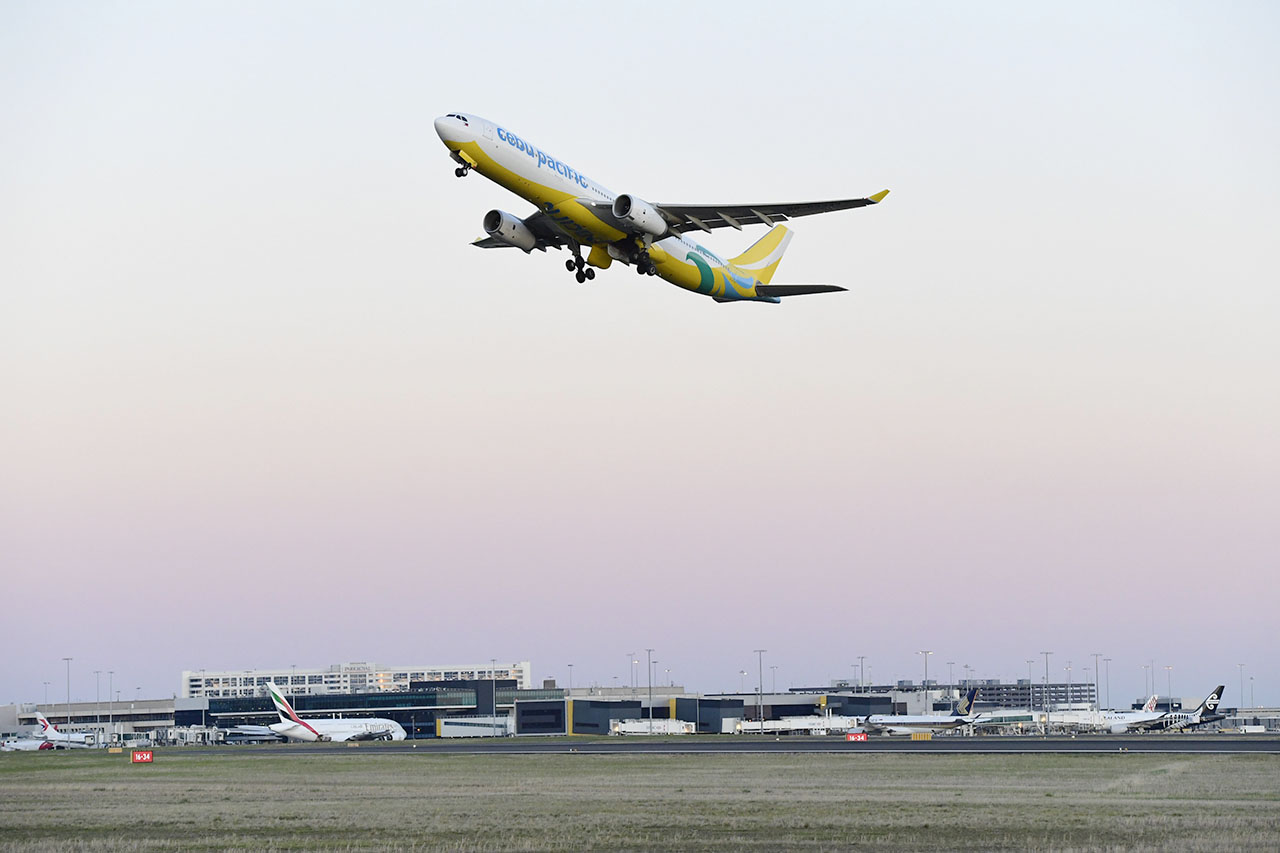
    Philippines low-cost carrier Cebu Pacific has joined IATA, becoming the second carrier from the country to be part of the trade association.

    Cebu Pacific says IATA membership will help it “gain access to expertise and learnings” about best practices and innovation.

    Conrad Clifford (left), IATA regional vice president for Asia-Pacific presents the IATA Certificate of Membership to Cebu Pacific president and CEO Lance Gokongwei.

    Cebu Pacific chief Lance Gokongwei adds: “Moreover, we will also be able to share our own operational experience and contribute to further developing the airline industry as a whole.”

    IATA says the low-cost carrier has achieved full compliance with its’ Operational Safety Audit (IOSA), which assesses a carrier’s operational management and control systems.

    Cebu Pacific currently flies 121 routes, with more than 2,600 weekly flights. Cirium fleets data indicates the carrier operates 54 aircraft, including a mix of A320 family jets and A330s, and has 44 aircraft on orders.

    Cebu Pacific joins a growing number of low-cost carriers added to the IATA fold. In November, Indian carrier IndiGo joined the association.

  • Bolloré Logistics’ Osaka Office Certified CEIV Pharma by IATA at Kansai Int’l Airport

    Bolloré Logistics’ Osaka Office Certified CEIV Pharma by IATA at Kansai Int’l Airport

    On March 31st, 2019, Bolloré Logistics Japan was successfully certified by the International Air Transport Association (IATA) as Center of Excellence for Independent Validators in Pharmaceutical Logistics (CEIV Pharma) at its platform located in the Kansai International Airport (KIX), in Osaka. The certification is a globally recognized and standardized certification for healthcare airfreight shipments. Bolloré Logistics Japan began the certification process according to the IATA CEIV Pharma standards in the second quarter of 2017. The CEIV Pharma certification will allow Bolloré Logistics Japan to have a strategic advantage in the healthcare logistics market with a stronger, more competitive and enhanced air cargo service.

    “Earning the CEIV Pharma certification demonstrates our ability to successfully build and deploy a team of experts who are fully capable to offer end-to-end logistics solution for the pharmaceutical related temperature sensitive products through the Kansai International Airport (KIX). In the near future, we are also keen to acquire the same certification in Haneda Airport (Tokyo) in order for us to expand the expertise nationwide,” said Goro UMEZAWA, Sales Manager at Bolloré Logistics Japan.

    This new success shows our commitment to achieve the highest international quality standard in the global pharmaceutical supply chain for its customers, by continually improving our processes and infrastructures to be compliant with IATA CEIV Pharma standards. With Australia, Singapore, South Korea, China and now Japan certified, the aim of Bolloré Logistics is to deploy this action throughout its global network with on-going certifications on other sites in the Asia-Pacific region
    such as China Hong Kong.

    In Europe, Bolloré Logistics has already received the IATA CEIV Pharma certification for its Paris Roissy CDG platform (France) as well as its sites in Brussels (Belgium), Frankfurt (Germany) and Lisbon (Portugal). The International Air Transport Association (IATA) created Center of Excellence for Independent Validators in Pharmaceutical Logistics (CEIV Pharma) in 2014. It aims to set the industrial standard for air cargo supply chain in pharmaceutical handling excellence. It addresses industry’s need for more safety, security, compliance and efficiency, by the creation of a globally consistent and recognized pharmaceutical product handling certification. CEIV Pharma encompasses, or even supersedes, many of the existing pharmaceutical standards and guidelines, such as IATA Temperature Control Regulations (TCR), European Union Good Distribution Practices (EU GDP), World Health Organization Annex 5, United States Pharmacopeia Standards.

  • Airport Retailing Consumer Electronics Market Witnessing a 2x Increase in Consumer Electronics Sales across SEA; India Most Lucrative

    Airport Retailing Consumer Electronics Market Witnessing a 2x Increase in Consumer Electronics Sales across SEA; India Most Lucrative

    The airport retailing consumer electronics market is foreseen to expand at a significant pace with global revenues crossing US$ 1,700 Mn in 2017, according to a new study. Traditionally pervasive as transportation service facilities, airports are now witnessing an influx of retail outlets for consumer electronics products. The shift in customer perspective toward airports as a retail destination continues to influence the growth of the airport retailing consumer electronics market.

    Fact.MR envisages that prospects for consumer electronics in airports are expected to remain promising, with the airport retailing consumer electronics market to grow at a CAGR of 6.3% in terms of value throughout the period of forecast, 2018-2028.

    The market valuation is likely to remain influenced by growing number of airports. Sales of consumer electronics in airports are projected to remain concentrated in the Southeast Asian (SEA) countries, making the region a lucrative market for airport retailing consumer electronics. India is poised to showcase higher market attractiveness in SEA during the forecast period on the back of steady economic development coupled with rising air tourism, according to the study.

    India’s lucrativeness in the airport retailing consumer electronics marketplace is attributed to rising number of air passengers. According to IATA (International Air Transport Association), the air passenger count in India is expected to reach 478 million by 2036. This is expected to present potential opportunities of growth for airport retailing consumer electronics in the coming years. In addition, sales of airport retailing consumer electronics on departure are likely to be on an upswing as compared to sales on arrival in the country. The report forecasts that the sales of airport retailing consumer electronics in India could exceed US$ 250 Mn by 2028.

    Growing sales of accessories are expected to largely contribute to the growth of the airport retailing consumer electronics market, according to the report. Consumer preference for accessories is projected to expand at a higher rate as compared to electronic devices. Against this backdrop, airport retailers are also planning to rent accessories for travellers opting for short trips.

    IATA projects that by 2036, global air passenger traffic is expected to reach 7.8 billion. This indicates that growth of airport retailing consumer electronics market is likely to remain significant in large airports. However, medium size airports are projected to showcase growing demand for airport retailing consumer electronics, says the report.

    Trend of hyper-personalization remains instrumental in driving growth of airport retailing consumer electronics market. With critical airline restrictions apropos to amount of goods to be carried in flight, a new personalised service in the airport retailing consumer electronics space has been witnessed. Airport retailing consumer electronics stores can use customer data from boarding passes, and deliver products to the customer’s destination. This trend is likely to influence growth in revenues of airport retailing consumer electronics in the coming years.

    Advertisements on flyers continue to remain instrumental in driving the growth of airport retailing consumer electronics market. Growing digitalization coupled with product displays on flyers are expected to influence sales of consumer electronics in turn presenting positive growth avenues for airport retailing consumer electronics market. This is likely to translate into increasing product sales across specialty retail stores in airports, consequently making them a key growth platform for airport retailing consumer electronics, says the report.

    As traditional brick and mortar sales are getting impacted due to mega trends such as relentless onslaught of online selling platforms, the physical retailing in airports is thriving. Overall, the airport retailing consumer electronics scenario remains positive and stakeholders can expect an optimistic growth path in the airport retailing consumer electronics market in the forthcoming years.

    The insights presented here are from a research study on Airport Retailing Consumer Electronics Market by Fact.MR
  • Airline cargo capacity rises faster than demand

    Airline cargo capacity rises faster than demand

    IATA says airfreight capacity rose faster than demand in March for the first time in 20 months. Demand rose 1.7 percent year-on-year, a drop of 5.0 percent over February, to produce the slowest growth in 22 months. The increase in global capacity fell to 4.4 percent from 6.3 percent in February.

    As forecast last month, IATA says the slowdown is due to the end of an inventory restocking cycle coupled with a “softening” of global trade.

    “We would caution against reading too much into the softening in seasonally adjusted volumes in recent months as yet,” said IATA economist David Oxley. “We continue to expect freight-tonne kilometres to grow in the region of 4-5 percent in 2018. However, the bigger picture is that the recent period of airfreight outperformance looks to be firmly behind us.”

    Airlines in all regions except Latin America reported year-on-year declines, with Africa falling 3.4 percent after reporting the fastest growth for 17 of the last 18 months; Asia-Pacific carriers produced growth of just 0.7 percent; European airlines’ traffic rose 1.0 percent as the € gain against the US$; Latin American airlines by comparison saw a 15.5 percent growth in volumes, in part due to an improved Brazilian economy; a growth of 0.8 percent by Middle East carriers in March was consistent with a “general weakening” over recent months; and North American airlines produced a 3.9 percent rise in traffic – although the US inventory-to-sales ratio rise in 2018 suggests an airfreight boost from restocking is over, says the Association.

  • Cebu Pacific passes IATA safety audit

    Cebu Pacific passes IATA safety audit

    For the first time, Gokongwei-led Cebu Pacific passed the globally recognized safety audit of the International Air Transport Association (IATA).

    “Cebu Pacific has achieved full compliance with IATA’s Operational Safety Audit (IOSA), joining a roster of 429 airlines worldwide that have strictly complied with the most stringent of international standards governing aviation safety,” the airline said in a statement on Thursday, April 12.

    Though Cebu Pacific is not a member of IATA, which represents some 280 airlines comprising 83% of global air traffic, it is now listed in the IOSA Registry, which lists those who have met the benchmark for airline safety management.

    The IOSA, which is conducted for each airline every two years, is described by IATA as “an internationally recognized and accepted evaluation system designed to assess the operational management and control systems of an airline.”

    “We are committed to upholding the highest possible standards for the benefit of our passengers. Hence, we chose to undergo the rigorous and stringent audit requirements for IOSA,” said Cebu Pacific president Lance Gokongwei.

    “Since it is considered the internationally recognized and accepted benchmark for airline safety, we wanted to be sure that our protocols and regulations meet IOSA standards,” he added.

    Gokongwei also said Cebu Pacific “invested in safety technology over the past several months… to better manage safety risks.”

    These include the on-board Runway Overrun Prevention System (ROPS) cockpit technology for its Airbus fleet, which monitors runway conditions before landing and calculates where the aircraft can safely stop, as well as Area Navigation (RNAV) data for more accurate navigation and approaches to various airports.

    It also invested in a Fatigue Risk Management System for pilots to minimize safety risks and ensure they are at adequate levels of alertness.

    Philippine Airlines and its subsidiary PAL Express are also included in the IOSA Registry, with the latter passing its latest audit back in March.

  • AirAsia X Malaysia gets third IATA op safety audit

    AirAsia X Malaysia gets third IATA op safety audit

    AirAsia X Malaysia has received its third biennial IATA Operational Safety Audit (IOSA) registration. AirAsia X, which is the long-haul, low-cost affiliate carrier of the AirAsia.IOSA is an internationally recognised and accepted evaluation system designed to assess an airline’s operational management and control systems, and is regarded by the industry as the global benchmark for safety management.

    To qualify for the registration, AirAsia X Malaysia had to successfully complete an operational safety audit covering eight areas of operations: organisation and management system, flight operations, operational control and flight dispatch, aircraft engineering and maintenance, cabin operations, ground handling operations, cargo operations and security management.

    AirAsia X Malaysia CEO Benyamin Ismail said this third IOSA registration testified of its continuous commitment to maintaining the highest safety standards across its operations.

    “It was made possible by our dedicated Allstars who work tirelessly to ensure we comply with the most stringent safety standards in the industry. Safety is at the heart of everything we do and we will strive to not only meet regulatory requirements at all times but to surpass them,” he said.

    AirAsia X Malaysia joined the IOSA Registry on April 16, 2015, becoming the second airline in Malaysia to successfully pass the internationally recognised operational safety audit.