Retail News CRM

Tag: IBM

  • Hong Kong Dollar Peg Tests Another Round of Doubters

    Hong Kong Dollar Peg Tests Another Round of Doubters

    US-China decoupling, weak growth, and shrinking reserves have led to fresh doubts about the sustainability of the Hong Kong dollar peg. Will the city’s linked exchange rate system survive this round of doubters?

    Last week, Pershing Square Capital Management founder Bill Ackman announced that he was betting against the Hong Kong dollar and its US dollar peg, citing worsening US-China decoupling as a driver.

    We have a prominent notional short position against the Hong Kong dollar through the ownership of put options. The peg no longer makes sense for Hong Kong and it is only a matter of time before it breaks, Ackman said in a social media post.

    In light of the recent US/China decoupling of recent years, we find it surprising, almost embarrassing, for China to continue to peg the HK dollar to the US dollar, he added in another post that has since been deleted.

    Ackman is not alone in his doubts about the Hong Kong dollar peg. In one of his social media posts, who details concerns about Hong Kong’s shrinking foreign reserve as a reason for the peg to become untenable.

    Call me old fashioned but a government clearly in need of cash and a chunk of assets whose value has probably further fallen make it rather likely that the Exchange Fund’s assets have further to shrink — and that the reasons for that will put still further pressure on the peg, said Cookson.

    However unlikely de-peg may be, the payoff of upwards of 200:1 is comparable to CDS payoffs for the default of co’s like IBM over the same [6-month] horizon, tweeted hedge fund manager and Saba Capital Management founder Boaz Weinstein in support of Ackman’s trade, calling it a smart lottery ticket. Nothing is impossible, but only one of these is at all plausible.

    Since 1983, the Hong Kong dollar has been pegged to the greenback and successfully defended against multiple rounds of attacks. Notable investors against the peg include George Soros in 1998 and Hayman Capital Management founder Kyle Bass in 2020 during the height of political unrest in Hong Kong, in a strategy with 200 times leverage.

    Even for Ackman, this is not his first time wagering against the peg after betting in 2011 that the Hong Kong dollar would appreciate due to being materially undervalued.

    It’s nice to finally have others agreeing with our thesis. Rigid currency pairs harnessed to asynchronous economies are destined to fail, Bass said in report in response to Ackman’s latest bet. One bad day of deposit/currency outflows will likely bring unimaginable stress to the situation.

    Still, banks remain positive that the Hong Kong dollar peg will remain in the foreseeable future.

    Although maintaining a peg could at times bring short-term headwinds to growth, we believe it remains the optimal arrangement for Hong Kong in the longer term, according to a Morgan Stanley research note authored by economists Helen Lai, Jenny Zheng and Robin Xing, highlighting that the yuan was not yet fully convertible.

    Conditions are not favorable for selling Hong Kong dollar which will suffer negative carry, added DBS strategist Carie Li. The Hong Kong government also shows no intention to change the system.

    And as usual, local authorities continue to vehemently defend the exchange rate policy.

    If you bet against the Hong Kong dollar, you are bound to lose, said financial secretary Paul Chan in a speech at the city’s global banking summit earlier this month. You can verify my advice with certain hedge fund managers in the US who have been wrong about Hong Kong dollar time and again.

    Up until moments before a currency peg is lifted, the sovereign always asserts that they will never lift their peg. Peg defense 101, Ackman added.

  • Hyundai to focus on customization

    Hyundai to focus on customization

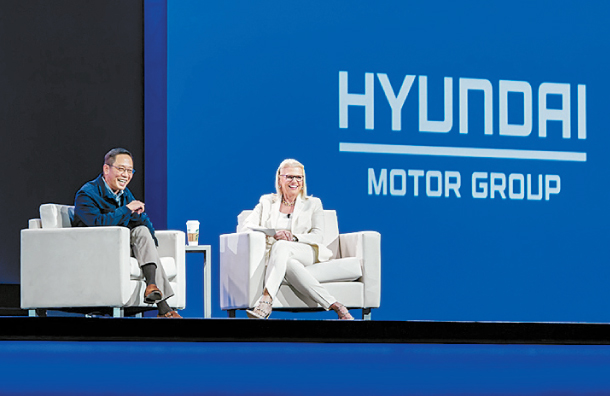
    The chief of Hyundai Motor’s financial affiliates outlined the units’ digital strategy and future vision at IBM’s largest annual conference that ran through Friday in San Francisco. Chung Tae-yong, who heads Hyundai Card, Hyundai Capital and Hyundai Commercial, said that finely-tuning customization will take center stage in Hyundai’s approach to serving financial services’ clients.

    “The existing concept of market customization is irrelevant to the current business environment,” said the CEO, whose English name is Ted Chung, during a session with Ginni Rometty, CEO of IBM.

    “Customization should not be based on widely-held assumptions, like young people might love zombie movies or older people won’t listen to hip-hop music,” Chung said, “If one likes candy, that is just it.”

    He went on to note that Hyundai Card holds a wide range of information that points to clients’ daily lives, preferences and hobbies and that the new services under development will be tailored using that data.

    Chung also cited Buddy, an AI-based chatbot for customer service using machine learning technology from IBM’s Watson.

    “It’s almost impossible to fully understand or memorize the benefits, limits, or conditions of a finance product,” he said.

    “So we introduced IBM Watson and it became a very powerful tool to help our employees and helped us to lower our employee turnover rate to less than 10 percent.”

  • Samsung to sell latest generation chip to IBM

    Samsung to sell latest generation chip to IBM

    Samsung Electronics will supply next-generation microprocessor chips to IBM, which will use the chips for artificial intelligence (AI) computing and cloud system applications, both companies said Friday. The product Samsung will manufacture for IBM is a seven-nanometer processor made by extreme ultraviolet (EUV) lithography technology. The seven-nanometers in the name refers to the width of the circuit through which electricity flows on the semiconductor. The dominant product until recently has been rated 10-nanometer.

    Narrower circuits ensure faster data processing speeds, less electricity consumption and higher area efficiency, with more transistors printed on a given amount of silicon, the base material for semiconductors.

    IBM said in a press release that the strategic partnership will position the two companies to lead “the new era of high-performance computing specifically designed for AI.”

    “IBM selected Samsung to build our next generation of microprocessors because they share our level of commitment to the performance, reliability, security and innovation that will position our clients for continued success on the next generation of IBM hardware,” said John Acocella, vice president of Enterprise Systems and Technology Development for IBM Systems.

    The U.S. company and Samsung have been research and development partners for 15 years.

    For Samsung, the deal is a significant milestone for its foundry business, which is to manufacture semiconductors for external clients that do not have chip fabrication facilities.

    The company is already a leader in DRAM and NAND memory chips, but it is now focusing on the fast-growing foundry market. IHS Markit estimates that the subsector will grow an average of 7.8 percent a year until 2021-which is faster than 5.3 percent expected for DRAMs and 6.1 percent for NANDs.

    Samsung is currently ranked global No. 4 among foundries, with a market share of less than 10 percent. As it works to climbing up the rankings, a client like IBM helps establish momentum for future deals.

    In February, Samsung signed a foundry deal with Qualcomm to supply seven-nanometer processors for 5G mobile devices. The company hopes the seven-nanometer processor chip will help as it works to expand its market share. It is currently one of two foundries known to manufacture the product. The other is Taiwan Semiconductor Manufacturing Company, the No. 1 semiconductor foundry with more than 50 percent market share.

    Samsung’s EUV lithography technology was developed earlier this year to mass produce seven-nanometer semiconductors, as the conventional way of printing circuits on 10-nano chips were not sophisticated enough to print thinner circuits.

    A new facility specializing in EUV lithography is under construction at Hwaseong, Gyeonggi, and is due for completion by the second half of next year. Samsung also revealed in May that it plans for the mass production of three-nanometer processors by 2020.

  • IBM and Salesforce Announce Landmark Global Strategic Partnership

    IBM and Salesforce Announce Landmark Global Strategic Partnership

    IBM and Salesforce announced a global strategic partnership to deliver joint solutions designed to leverage artificial intelligence and enable companies to make smarter decisions, faster than ever before. With the partnership, IBM Watson, the leading AI platform for business, and Salesforce Einstein, AI that powers the world’s #1 CRM, will seamlessly connect to enable an entirely new level of intelligent customer engagement across sales, service, marketing, commerce and more. IBM is also strategically investing in its Global Business Services capabilities for Salesforce with a new practice to help clients rapidly deploy the combined IBM Watson and Salesforce Einstein capabilities.

    The partnership will bring new insights from Watson directly into the Salesforce Intelligent Customer Success Platform, combining deep customer insights from Salesforce Einstein with Watson’s structured and unstructured data across many sources and industries including weather, healthcare, financial services and retail. Together, Watson and Einstein will ingest, reason over and derive recommendations to accelerate decision making and drive greater customer success.

    Comments on the News:

    “Within a few years, every major decision—personal or business—will be made with the help of AI and cognitive technologies,” said Ginni Rometty, chairman, president and chief executive officer, IBM. “This year we expect Watson will touch one billion people—through everything from oncology and retail to tax preparation and cars. Now, with yesterday’s announcement, the power of Watson will serve the millions of Salesforce and Einstein customers and developers to provide an unprecedented understanding of customers.”

    “The combination of Einstein and Watson will make businesses smarter and our customers more successful,” said Marc Benioff, chairman and CEO, Salesforce. “I’m thrilled to form an alliance with IBM—no company’s core values are as close to Salesforce’s as IBM’s. It’s the best of both worlds.”

    Salesforce and IBM will initially deliver the following:

    IBM Watson and Salesforce Einstein Integration: Integrating IBM Watson APIs into Salesforce will bring predictive insights from unstructured data, inside or outside an enterprise, together with predictive insights from customer data delivered by Salesforce Einstein to enable smarter, faster decisions across sales, service, marketing, commerce and more. For example, by combining local shopping patterns, weather and retail industry data from Watson with customer-specific shopping data and preferences from Salesforce Einstein, a retailer will be able to automatically send highly personalized and localized email campaigns to shoppers.

    IBM Weather Insights for Salesforce: The Weather Company, an IBM business, will power a new Lightning component on the Salesforce AppExchange to provide weather insights that inform customer interactions and business performance. For example, an insurance company will be able to pull local forecast data from IBM Weather into Salesforce, and automatically send safety and policy information to customers who are at risk of being impacted by severe weather events.

    IBM Application Integration Suite for Salesforce: Customers will be able to able to bring together on-premise enterprise and cloud data with specialized integration products for Salesforce, surfacing that data directly within the Salesforce Intelligent Customer Success Platform. For example, a wealth advisor will be able to unify client data, such as individual investments and risk profiles, with financial trends and public macroeconomic information from Application Integration Suite right within Salesforce to make smarter decisions for her customers.

    Bluewolf Dedicated Consulting Services and Expertise for Cognitive Solutions, Adding to IBM Strategic Services for Salesforce: Bluewolf, an IBM company, has formed a new practice to help clients rapidly deploy the combined IBM Watson and Salesforce Einstein capabilities. This new unit capitalizes on Bluewolf’s over fifteen years of Salesforce implementations and their current portfolio of multiple Salesforce and Watson projects. Bluewolf will also develop new industry-specific accelerators used by enterprise clients to accelerate adoption of cognitive applications.

    As part of the partnership, IBM will deploy Salesforce Service Cloud across the company to transform its global product support services and gain a single, unified view of every IBM customer.

  • IBM announces blockchain collaboration to address food safety worldwide

    IBM announces blockchain collaboration to address food safety worldwide

    A group of leading companies across the global food supply chain announced a major blockchain collaboration with IBM intended to further strengthen consumer confidence in the global food system. The consortium includes Dole, Driscoll’s, Golden State Foods, Kroger, McCormick and Company, McLane Company, Nestlé, Tyson Foods, Unilever and Walmart, who will work with IBM to identify new areas where the global supply chain can benefit from blockchain.

    Every year, one-in-ten people fall ill – and 400,000 die – due to contaminated food.* Many of the critical issues impacting food safety such as cross-contamination, the spread of food-borne illness, unnecessary waste and the economic burden of recalls are magnified by lack of access to information and traceability. It can take weeks to identify the precise point of contamination, causing further illness, lost revenue and wasted product. For example, it took more than two months to identify the farm source of contamination in a recent incidence of salmonella in papayas.**

    Blockchain is ideally suited to help address these challenges because it establishes a trusted environment for all transactions. In the case of the global food supply chain, all participants – growers, suppliers, processors, distributors, retailers, regulators and consumers – can gain permissioned access to known and trusted information regarding the origin and state of food for their transactions. This can enable food providers and other members of the ecosystem to use a blockchain network to trace contaminated product to its source in a short amount of time to ensure safe removal from store shelves and stem the spread of illnesses.

    Dole, Driscoll’s, Golden State Foods, Kroger, McCormick and Company, McLane Company, Nestlé, Tyson Foods, Unilever, Walmart and others are now coming together with IBM to further champion blockchain as an enabling technology for the food sector. Together they will help identify and prioritize new areas where blockchain can benefit food ecosystems and inform new IBM solutions. This work will draw on multiple IBM pilots and production networks in related areas that successfully demonstrate ways in which blockchain can positively impact global food traceability.

    “Unlike any technology before it, blockchain is transforming the way like-minded organizations come together and enabling a new level of trust based on a single view of the truth,” said Marie Wieck, general manager, IBM Blockchain. “Our work with organizations across the food ecosystem, as well as IBM’s new platform, will further unleash the vast potential of this exciting technology, making it faster for organizations of all sizes and in all industries to move from concept to production to improve the way business gets done.”

    New IBM blockchain platform
    Beyond food supply chain applications, blockchains are now being used to transform processes and streamline transactions for everything from flowers, real estate and trade finance, to education, insurance and medical services.

    To accelerate this adoption, IBM is introducing the first fully integrated, enterprise-grade production blockchain platform, as well as consulting services, that will allow more organizations to quickly activate their own business networks and access the vital capabilities needed to successfully develop, operate, govern and secure these networks. The IBM Blockchain Platform is available via the IBM Cloud.

    The platform builds off of the successful blockchain work IBM has delivered to more than 400 organizations, incorporating insights gained as IBM has built blockchain networks across industries including financial services, supply chain and logistics, retail, government and health care.

    Extensively tested and piloted, the platform addresses a wide range of enterprise pain points, including both business and technical requirements around security, performance, collaboration and privacy that no other blockchain platform delivers today. It includes innovation developed through open source collaboration in the Hyperledger community, including the newest Hyperledger Fabric v1.0 framework and Hyperledger Composer blockchain tool, both hosted by the Linux Foundation.

    The integrated platform allows multiple parties to jointly develop, govern, operate and secure blockchain networks to help enterprises accelerate blockchain adoption.

    Features of the IBM Blockchain Platform include:
    Develop – For developers, easy and flexible network tools designed to bring blockchain networks up to speed in minutes. The platform also includes the first commercial introduction of Hyperledger Composer a framework that helps developers focus on the business use case and more easily and quickly map it to the application code. Developers can create standard business language in JavaScript and the APIs help keep development work at the business level, rather than being highly technical, making it possible for most any programmer to be a blockchain developer. Additionally, a variety of IBM Developer Journeys for blockchain are available featuring free open source code, documentation, APIs, architecture diagrams and one-click deployment Git repositories to fast-track building.

    Govern – The platform offers all participating members a level of control, while preventing any one member from having exclusive control. A new class of democratic governance tools is designed to help improve productivity across the organizations using a voting process that collects signatures from members to govern member invitation distribution of smart contracts and creation of transactions channels. By quickly onboarding participants, assigning roles and managing access, organizations can begin transacting via the blockchain.

    Operate –The platform is underpinned by an architecture that operates more than 55% of today’s global transactional systems.*** It is the first offering available to allow updates to be made to the network while it is running without any downtime. Running in the IBM Cloud, it offers unique protection from insider credential abuse, protection from malware and hardware encryption key protection. IBM Blockchain Platform provides the highest-level commercially available tamper resistant FIPS140-2 level 4 protection for encryption keys.

    In addition to food safety, IBM is advancing other blockchain supply chain initiatives using the IBM Blockchain Platform for an automated billing and invoicing system. Initial work to use blockchain for invoicing is underway starting with Lenovo. This will provide an audit-ready solution with full traceability of billing and operational data, and help speed on-boarding time for new vendors and new contract requirements.

    To complement the new platform, IBM Global Business Services offers Blockchain Services, which brings deep industry expertise from its 1,600 blockchain consultants who have helped clients deploy and integrate active networks. These consultants can apply design thinking to help enterprises conceptualize and implement blockchain enabled business models to realize optimal value. For example, during recent blockchain projects with major shipping and retail organizations, IBM consultants have been able to improve food safety traceability by 99.9 percent and decrease trade document workflow by 97percent, potentially unlocking millions of dollars in cost savings and market capital.

    The IBM Blockchain Platform offers a range of pricing options, starting at $0.50 per hour, to support rapid adoption for networks of all sizes. To support blockchain ecosystems among different organizations, the cost of the network can be shared across all network members.

  • Huawei will leapfrog Apple and HP to lead the PC market in five years

    Huawei will leapfrog Apple and HP to lead the PC market in five years

    Huawei will become the top personal computer maker in the world in three to five years, leapfrogging the likes of Apple, Lenovo and HP, a top executive at the firm told on Wednesday, just days after launching new notebook devices.

    In May, the Chinese firm took the wraps off of the MateBook X, MateBook D and MateBook E — the X is a laptop that competes directly with Apple’s MacBook line of products. For its part, the company says it is bullish on its plans in the PC space.

    “Whenever Huawei decides to enter an area, make a product, our target is always to be a global leader,” said Wan Biao, chief operating officer of Huawei’s consumer business group. “I think this comes from Huawei’s unswerving input in R&D, and our innovation capabilities. I think these has already been proven in our smartphone products.”

    When asked how long it will take to sit at the top spot in the market, Wan said the “process would take about three to five years.”

    The PC market has been declining for several years, but it recorded 0.6 percent growth in the first quarter of 2017, according to data from IDC. Given that low growth, it’s an incredibly tough market.

    HP, Lenovo, Dell, Apple, and Acer make up the top five players in the world by market share, IDC said. So if Huawei becomes number one, that would mean beating out those top players. Wan, however, said he’s confident.

    “Of course, we are confident because of Huawei’s powerful innovation capabilities. In fact, in the laptop space some technologies are the same with smartphone. In the meantime, with the development of AI, AR and VR [artificial intelligence, augmented reality and virtual reality] technologies, the chance to succeed will only grow bigger for a strong innovative company,” Wan told.

    Huawei’s consumer business is relatively young and began with smartphones. The Chinese giant is seeing success: reported revenues in its consumer business group were up 42 percent year-on-year in 2016 to 178 billion yuan ($26.19 billion). Smartphone shipments were up 29 percent to 139 million units, and Huawei is now the third-largest smartphone vendor in the world by market share.

    Wan’s projection of being the top PC maker in only a few years mirrors similar bullishness from the company about smartphones. In 2016, Richard Yu, the CEO of the consumer division at Huawei, told that the firm would be number one in smartphones by 2021.

    It may seem odd that Huawei is entering a stagnant market, but the tactic is to try and create an ecosystem of products for consumers. Not only does Huawei have smartphones, but it also sells smartwatches and Wi-Fi routers. Laptops are another edition to the portfolio.

    “I think for Huawei’s strategy, one of the most crucial points is the connectivity of all things. Every object in the world should be able to connect … Therefore Huawei is also developing our business over these notions,” Wan said.

  • IBM, Nutanix enter hyperconvergence tie-up

    IBM, Nutanix enter hyperconvergence tie-up

    IBM and Nutanix have announced a multi-year initiative to aimed at bringing new workloads to hyperconverged deployments.

    The integrated offering aims to combine Nutanix’s Enterprise Cloud Platform software with IBM Power Systems, to deliver a turnkey hyperconverged solution targeting critical workloads in large enterprises.

    The partnership plans to deliver a full-stack combination with built-in AHV virtualization for a simple experience within the data center.

    This joint initiative intends to bring new workloads to hyperconverged deployments by delivering the first simple-to-deploy, web-scale architecture supporting POWER based scale-out computing for a continuum of enterprise workloads.

    These include next generation cognitive workloads, including big data, machine learning and AI; mission-critical workloads, such as databases, large scale data warehouses, web infrastructure, and mainstream enterprise apps; as well as cloud native workloads, including full stack open source middleware and enterprise databases and Containers.

    “Hyperconverged systems continue on a rapid growth trajectory, with a market size forecast of nearly $6 billion by 2020. IT teams now recognize the need, and the undeniable benefits, of embracing the next generation of datacenter infrastructure technology,” said Stefanie Chiras, VP for power systems at IBM.

    “Our partnership with Nutanix will be designed to give our joint enterprise customers a scalable, resilient, high-performance hyperconverged infrastructure solution, benefiting from the data and compute capabilities of the POWER architecture and the one-click simplicity of the Nutanix Enterprise Cloud Platform.”

  • Shinsegae Department Store uses AI in marketing push

    Shinsegae Department Store uses AI in marketing push

    Shinsegae Department Store has become the first South Korean retailer to deploy a marketing strategy using AI technology.

    A wave of artificial intelligence (AI) is sweeping the nation’s retail industry, as major department stores and online shopping malls rush to adopt the latest technology to attract consumers.

    From this week, Shinsegae Department Store is introducing a personalisation service called “S Mind”, which will analyse each customer’s brand preferences and come up with product suggestions.

    Using a database of some 5 million existing customers, S Mind will take into consideration around 100 factors including the purchase history, gender, age, and location.

    The results, which will include suggested brands and related shopping information, will be sent to customers through Shinsegae’s mobile application.

    AI Korea

    Shinsegae predicts its latest move will generate additional sales revenue of 100 billion won annually.

    The new system, established solely with South Korean developers and data analysts, was four years in the making before its completion.

    Shinsegae Department Store’s rival, Lotte Department Store, teamed up with IBM Korea last December to develop a new mobile app AI feature that is expected to be released by the end of this year.

    Lotte’s new ‘Recommendation Bot’ will work as a shopping advisor to make suggestions through voice messages or texts, and will give app users information on the latest trends and celebrity fashion news.

    Kim Myeong-gu, who is responsible for omni-channel marketing at Lotte, said, “With the overload of information today, many customers find it tiresome to make a choice.

    “Our new AI-based recommendation feature will differentiate our marketing strategy with that of our competitors,” he added.

    As the major retail chains are beginning to embrace AI technology that will redraw the landscape of how we shop, the industry as a whole and the government are also backing the trend.

    A new alliance was formed yesterday which will see the retail and distribution industry work closely with IT and manufacturing companies to adopt the fourth industrial revolution.

    Dubbed the “Retail Industry Convergence Alliance,” the cross-industry coalition will help spread the use of new technologies in various fields including research and development.

    The fourth industrial revolution, typified by advanced technology such as AI, IoT, robots, augmented reality and virtual reality is rapidly being incorporated into the retail and distribution industry around the world.

    An official from the Korean Ministry of Industry said: “For our retail industry to be acknowledged as a global platform, it’s important to emphasise having the right business environment for innovation and cooperation.

    “The government will help with subsidies to make sure the collective effort between various industries leads to new business opportunities and markets.”

  • IBM extends Smarter Cities grant program

    IBM extends Smarter Cities grant program

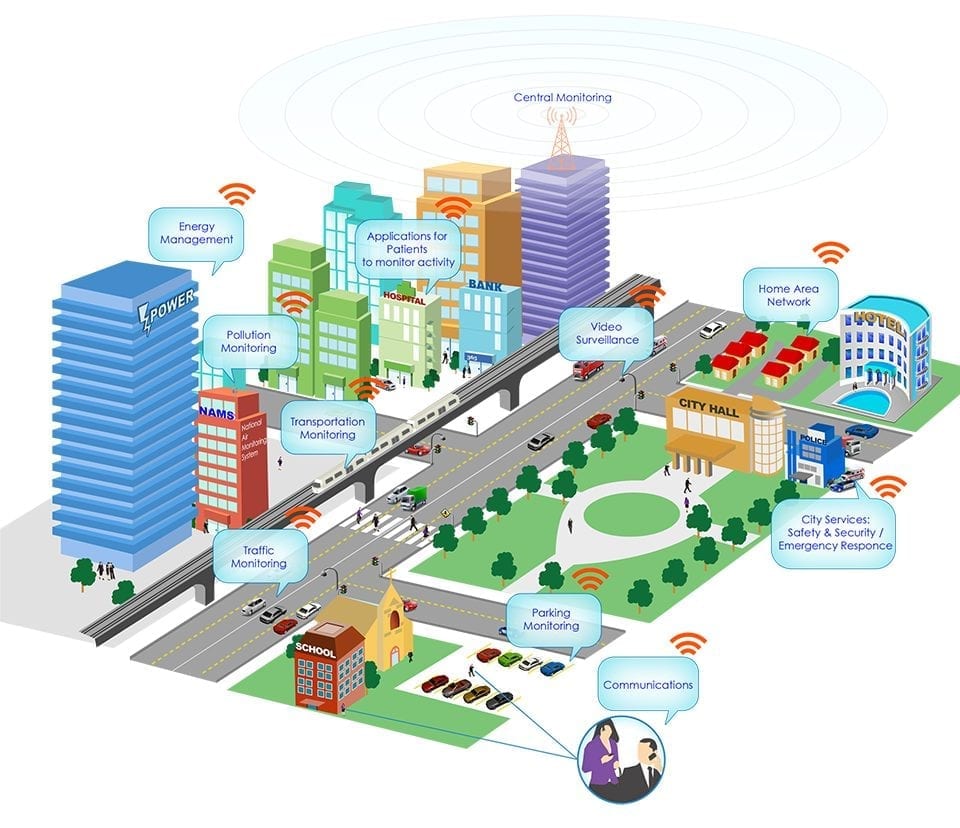
    IBM is extending its annual Smarter Cities Challenge, a worldwide grant program that provides pro bono consulting to assist cities in improving the critical services they provide to citizens.

    For this next round, the company is seeking proposals from city leaders that could benefit greatly from IBM’s technology such as data analytics, cloud computing, cognitive computing, and comprehensive weather data.

    Leaders of cities or regional governments must submit brief statements of interest to IBM by February 24. Ten grant recipients for pro bono consulting engagements will be announced in late spring.

    Smarter Cities Challenge grant recipients receive a team of five or six IBM employees who are deployed to the country for three weeks to work closely with local government and community leaders.

    They analyze the data they gathered and use its insights to offer support that can take the form of strategic recommendations, data-driven tools, implementation roadmaps and workshops, and staff training.

    IBM’s Smarter Cities Challenge has deployed 800 of IBM’s top employee talent to more than 130 cities worldwide in the past six years to improve inequities and disparities.

    “Cities around the world are under enormous, daily pressure to tackle growing challenges with ever more limited resources,” said Jennifer Crozier, IBM’s vice president of Global Citizenship Initiatives.

    “Often, they lack access to the most innovative technology solutions and insights that could be applied to solve those problems and improve services. We look forward to sharing IBM’s data and analytics and cognitive computing expertise to help make meaningful and lasting improvements.”

  • IBM, Ericsson make phased-array breakthrough

    IBM, Ericsson make phased-array breakthrough

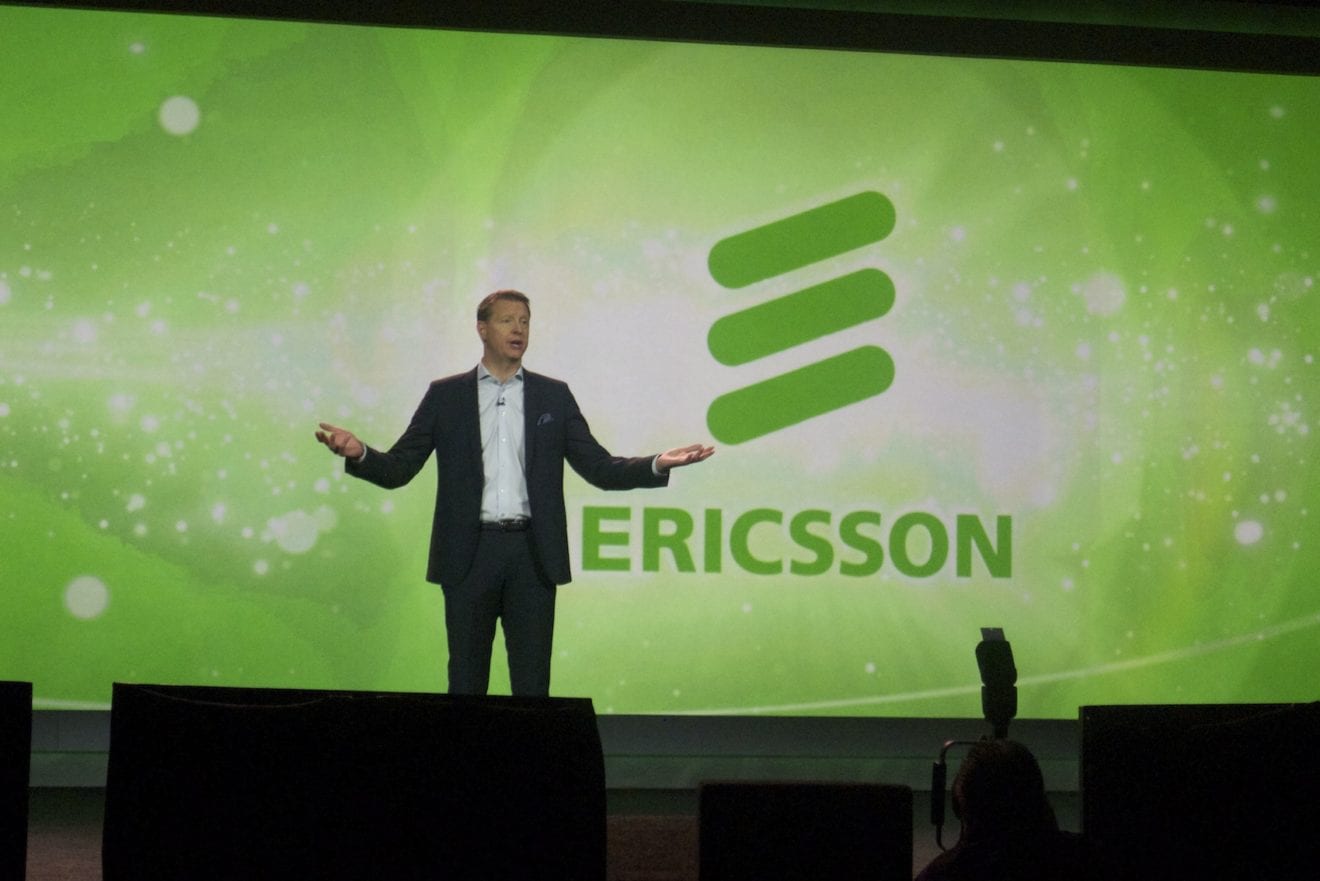
    IBM and Ericsson have announced a joint R&D breakthrough that the vendors say could accelerate the launch of 5G networks.

    The companies have created a contact silicon-based millimeterWave (mmWave) phased array integrated circuit operating at 28GHz within a phased array antenna module designed for use in future 5G base stations.

    The development is a result of a more than two-year collaboration to research phased-array antenna technologies. This partnership was first announced in November 2014.

    According to the companies, the prototype module has the potential to meet the size, weight, cost and performance standards that would be required for future 5G phased array deployments to be commercially viable.

    The module measures around 2.8 inches by 2.8 inches, and consists of four monolithic integrated circuits and 64 dual-polarized antennas. It supports a beam-steering resolution of less than 1.4 degrees for high precision pointing towards users.

    “There has been a lot of encouraging progress in 5G standardization last year including the beginning of live field trials,” Ericsson senior advisor for network products Thomas Noren said.

    “Big efforts in research and development are key to this and our collaboration with IBM Research on phased array antennas can help operators to effectively deploy radio access infrastructure necessary to support a 5G future.”

  • Lotte agrees to leverage IBM’s Watson for retail

    Lotte agrees to leverage IBM’s Watson for retail

    IBM has signed an agreement with the Lotte Group to provide cloud-based IBM Watson solutions to help the Group deliver innovation across the business and become a world-class retail company.

    Lotte Group represents the country´s largest retailer in a highly competitive retail market and is one of Korea´s top five companies, providing products and services to its customers through online channels, mobile services and offline department stores, marts, convenience stores and duty-free shops.

    Lotte Group will use Watson technologies to maximize insights from the huge amount of structured and unstructured customer data collected through its various channels, including the Lotte Members program, deriving valuable learnings about customer preferences and product feedback. With a deeper understanding of its data, Lotte will be enabled to offer more personalized services to customers, consistent product information and expert advice tailored to individual customer needs.

    This agreement prioritizes two “Artificial Intelligence Innovation Themes” for which to apply Watson. Lotte and IBM will team to create an ´Intelligent Shopping Advisor´ for customers and an internal employee ´Cognitive Business Decision Advisor´ for the Group´s retail affiliates.

    The ´Intelligent Shopping Adviser´ will be first introduced to Lotte´s department stores. Customers will have their own virtual personal assistant offering help from product recommendations, shop location guidance, to support for online pickup service. Customers will benefit from greater convenience and an enhanced customer experience as they interact, in natural language, with a service that understands the questions asked, in the context of the individual shopper´s needs.

    IBM will collaborate with teams from the Lotte Information & Communications and the Lotte Members affiliates for IT system support services, data integration and data analysis. Within the next five years, Lotte plans to build and upgrade its artificial intelligence-based application for business innovation to support personalized services throughout the customer life cycle. These initiatives are part of Lotte Group´s technology roadmap to expand the introduction of IBM Watson to all affiliates from retail to food, chemical, tourism and finance.

    Lotte is based in Korea and has nine affiliates and 120,000 employees.

    Watson represents a new era in computing called cognitive computing, where systems understand the world in a way more similar to humans: through senses, learning, and experience.

  • Thai Kasikornbank, IBM join forces on blockchain network

    Thai Kasikornbank, IBM join forces on blockchain network

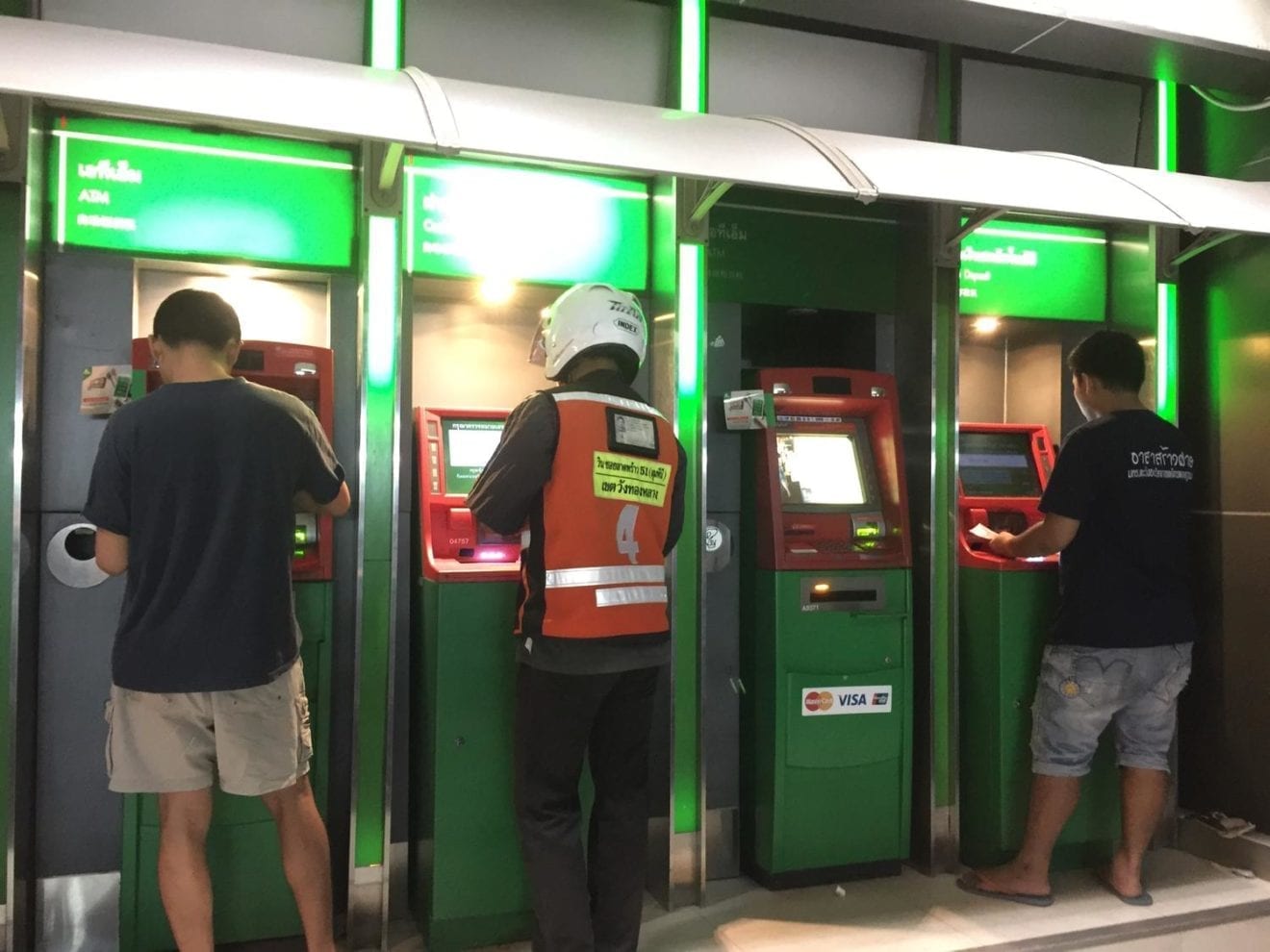
    Thailand’s Kasikornbank Pcl has joined with the Thai unit of International Business Machines Corp to develop blockchain services in a bid to save costs and speed up transaction process, the companies said on Thursday.

    Kasikornbank will be the first Thai bank to apply the blockchain technology and aims to start the services in the first half of 2017, Somkid Jiranuntarat, vice chairman of Kasikornbank’s technology group, told reporters.

    Kasikornbank is also in talks with other Thai banks to share the blockchain network, he said.

    Blockchain is a web-based transaction-processing and settlement system whose efficiency banks say could slash costs. It creates a “golden record” of any given set of data that is automatically replicated for all parties in a secure network, eliminating any need for third-party verification.

    Financial services companies around the world have been focusing on developing blockchain technology, with advocates saying it has the potential to save billions of dollars in costs and speed up transaction times.

    The technology will be used to certify original documents by using IBM’s Hyperledger infrastructure. At the initial stage, a system called OriginCert API is used to certify letters of guarantee (LG), which helps simplify and speed up the LG issuance process for customers, according to a joint statement.

    Kasikornbank, Thailand’s fourth-largest lender by assets, is the leader in digital banking with a market share of almost 40 percent. It aimed to spend 5 billion baht ($143 million) to develop information technology, it said in April.

  • Mobile marketing cuts printing cost for Pizza Hut

    Mobile marketing cuts printing cost for Pizza Hut

    With over 70 restaurants in the city, half of Pizza Hut’s business in Hong Kong is dine-in. This gives the diner a great incentive, but at the same time, huge pressure to improve its customer experience.

    In 2014, Pizza Hut started its mobile marketing campaign project. The primary objective was to better serve its customers. Additionally, it wanted to cut out a huge portion of its printing costs on direct marketing materials.

    Pizza Hut has been a customer of Salesforce. “When we started the mobile marketing campaign project in 2014, however, we didn’t know that Salesforce Marketing Cloud could help us to manage marketing campaigns,” said Ravel Lai, group IT director at Jardine Restaurant Group Hong Kong and Macau, in an interview with Computerworld Hong Kong. Jardine Restaurant Group operates Pizza Hut and the KFC restaurants throughout the city.

    Lai’s team studied different marketing solutions and decided to adopt Salesforce Marketing Cloud. “We considered other marketing tools such as those from Oracle and Adobe. We had even approached IBM, but they didn’t have a marketing solution,” he recalled.

    Evaluating a marketing solution was different from that of an IT solution. “This was not a traditional ERP solution, but something new to the IT team. We invited the marketing people and bosses at Pizza Hut and KFC to view the solution demo, and then we let everybody vote,” Lai said.

    Extra 7-10% revenue

    “We were not trying to solve a particular technology problem, but to improve on our marketing campaign management,” said Lai.

    In the past, Pizza Hut used to mail cash coupons to its customers. This involved different stages of production, which were all time-consuming, such as graphic design and printing, before it can finally distribute and mail out the coupons.

    With the new solution, conducting mobile marketing campaigns has become much easier. Now, Pizza Hut would only need to involve an in-house graphic designer to design the digital marketing material, which could be ready for distribution in just two hours.

    “Last year on one rainy morning, I asked my team to send a mobile message along with a coupon to our customers. After preparing the customer segmentation, we decided to send the message to 15,000 housewives and office workers at around 11:00 am to catch up with lunchtime at noon,” said Lai. “The results were good, as we generated an extra 7-10% in revenue for the day.”

    90% printing cost savings

    In the past, Pizza Hut used to distribute paper coupons to customers. The printing and mailing costs involved had been 10 times higher than if the marketing campaigns were conducted on Salesforce Marketing Cloud.

    “This is a very good tool for us to do the job. Instead of sending physical leaflets, we now use the mobile marketing platform, which incurs just 10% of the original printing cost,” said Lai.

    “Besides, the replacement of physical leaflets with mobile marketing messages makes Pizza Hut more environmentally friendly, too.”

    Express ticket

    According to Lai, many restaurant groups have developed their own mobile applications, but their primary function is largely limited to remote ticketing. “When everybody does the same thing, we ask ourselves, ‘How should we do it differently?’”

    To distinguish its restaurant mobile app from the competition, Lai borrowed the idea of “Fast Pass” from Disneyland theme park. A Disneyland Fast Pass allows a visitor to shorten his or her waiting time by getting a pass in advance for selected attractions, and return within specific timeframes.

    Using Pizza Hut HK’s mobile app, a user can obtain a queue number before they even reach the restaurant. This cut down the time and money required for us to issue queue numbers.

    By doing proper customer segmentation on Salesforce Marketing Cloud, Pizza Hut can send messages to customers whose last visit was over one month. The typical message would read: “Dear customer, you visited us one month ago and purchased a meal in our restaurant. We are so sorry that you had to wait for 15 mins. Here is an express ticket for you so you can jump queue upon your next visit. The express ticket is good for two weeks,” Lai suggested.

    Loyalty points reward system

    Pizza Hut HK’s mobile app also provides a points rewarding system. With every HK$5 of purchase at the restaurant, a customer gets one point. “With 50 points, our customers can redeem four pieces of chicken wings,” Lai said.

    Pizza Hut’s loyalty points are transferrable. “When you come to the restaurant with your friends, you and your friends can combine the points together to redeem the reward, for example, 50 points for a pizza,” said Lai.

    Social CRM

    With Salesforce Marketing Cloud, Pizza Hut’s mobile marketing campaign platform has enabled the restaurant group to tap on social CRM. “When I sold the idea of social CRM to the management, I emphasized not just on the benefits, but the improvement on the customer journey,” Lai said.

    Regarding Pizza Hut’s implementation of mobile marketing campaign project, Lai summed up, “If I do it now, I am the pioneer. If I do it later, I would just be a follower.”

  • Standard Chartered and IBM back Byte Academy’s Singapore fintech school

    Standard Chartered and IBM back Byte Academy’s Singapore fintech school

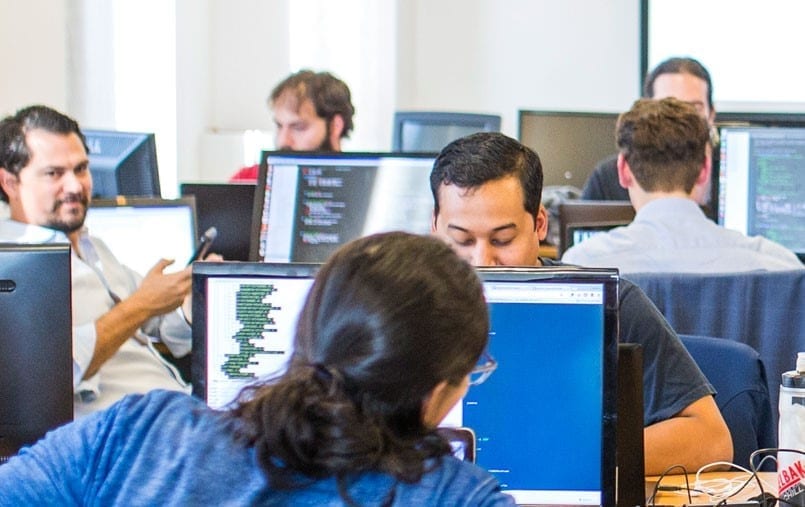
    Standard Chartered Bank, IBM, Insead, Thomson Reuters and Microsoft are backing a fintech school at New York-based Byte Academy’s first international venture, in Singapore.

    The firms have come together to form a fintech skills charter that will guide Byte Academy’s 12-week and eight-week courses for students focussing on fintech and software development.The 12-week full-time courses will provide the fundamentals for students to work on real, industry-specific problems and allow for interaction with industry partners to prepare for direct placement and job matching upon graduation. Students that graduate receive guaranteed job placements at the bank and tech partners.

    Shameek Kundu, global head, data, architecture and innovation, Standard Chartered, says: “The establishment of Byte Academy is another progressive initiative which will help to fuel Singapore’s Smart Nation ambitions by adding to the country’s great ecosystem of financial institutions, technology companies, universities and research organisations.”

    Nobuhiro Ito, director, developer experience and evangelism, Microsoft Singapore, adds: “Byte Academy’s presence here in Singapore will help accelerate skills development that will help contribute to a more vibrant FinTech ecosystem and build a stronger Singapore core.”

  • IBM opens 9th APAC cloud center in Korea

    IBM opens 9th APAC cloud center in Korea

    IBM has launched its first cloud data center in Korea together with SK Holdings, a Korean IT services company IBM partnered with last year.

    The company’s ninth cloud data center in Asia Pacific, it is the latest step in IBM’s ongoing expansion of the physical infrastructure that supports its cloud services. The facility in Pangyo, outside of Seoul, is the 47th site in this global cloud data center network.

    IBM is going after the Korean public cloud services market, which IDC expects to grow from $445 million last year to $1 billion in 2019. Target customers are both Korean enterprises and start-ups, according to IBM’s announcement.

    The cloud data center will have the capacity to support “thousands of servers,” IBM said.

    Its services include public, cloud, and hybrid environments, as well as IBM’s extensive Platform-as-a-Service portfolio, collectively branded Bluemix. Among them are APIs for the company’s “cognitive computing” capabilities called Watson, which developers can use to build those capabilities into applications they design.