Tag: idc

  • Huawei continues to close in on Samsung with impressive Sales Results

    Huawei continues to close in on Samsung with impressive Sales Results

    2018 has been something of a roller coaster for Huawei, the highly controversial telecommunications equipment vendor that also somehow managed to beat Apple for second place in global smartphone shipments for two consecutive quarters. Ultimately, the China-based tech giant ranked third overall in the mobile device market last year, selling however a colossal 206 million units or so around the world, up from “only” 153 million in 2017.

    While market research firms like Strategy Analytics and the International Data Corporation (IDC) are not yet ready to release their full Q1 2019 reports, Huawei has just confirmed another impressive new set of numbers that puts the company on track to substantially narrowing the gap to Samsung by the end of the year and possibly reaching its most ambitious goal yet in 2020.

    No less than 59 million Huawei smartphones were shipped between January and March 2019 worldwide, up a staggering 50 percent or so from the 39 million third-party estimate of Q1 2018. That should be enough to open a big gap between the Chinese company and Apple, since only around 52 million iPhones were sold globally during Q1 2018, a number most analysts expect to take a bit of a plunge when 2019’s first-quarter reports start rolling in.

    It will then be pretty much impossible for Apple to catch up to the market’s silver medalist, as iPhone shipments may need a couple more quarters to start recovering, while Huawei’s figures are expected to continue growing. In total, Huawei could sell anywhere between 250 and 260 million units in 2019, which probably won’t be enough to secure the company first place over Samsung, but it might hint at a new leader next year.

    Until then, we should point out Huawei’s substantial boost in Q1 smartphone volumes crucially contributed to overall revenues of close to $27 billion, representing a 39 percent year-on-year jump. Incredibly enough, the company reported massive growth for its carrier and enterprise business departments, as well as the consumer electronics group, expecting all three divisions to post double digit increases in revenue throughout 2019. That means both smartphone and 5G equipment sales are going well, despite strong opposition from the US government.

  • Integration will define the 2019 smart home

    Integration will define the 2019 smart home

    IDC says the global market for smart home devices will grow 26.9% year over year in 2019 to 832.7 million units shipped. The analyst predicts consumers to adopt multiple devices within their homes, which will result in 1.6 billion devices shipped by 2023.

    “2018 was all about getting products into consumers’ homes and both Amazon and Google excelled at this through low-cost smart speakers and multiple bundles across device categories,” said Jitesh Ubrani research manager for IDC Mobile Device Trackers. “However, 2019 will be more about tying the various devices together to form a more cohesive experience and more importantly, layering in additional services.”

    The smart home will be dominated by the likes of Amazon and Google, with Apple following suite. The popularity of iOS and macOS devices combined with the availability of Apple apps/services on non-Apple products will help the company slowly entice more consumers into their ecosystem while also attracting third parties to build compatible devices.

    “One important trend to watch is how smart assistants become integrated throughout the home,” said Ramon T. Llamas, research director for IDC’s Consumer IoT Program. “Smart assistants will act as the point of contact with multiple smart home devices and essentially become the cornerstone of the smart home experience. Already we’ve been seeing that with smart speakers and this will eventually move on to appliances, thermostats, and all sorts of video entertainment.”

  • AirAsia wins IDC Digital Transformation award

    AirAsia wins IDC Digital Transformation award

    AirAsia was named Operating Model Master for Malaysia at the IDC Digital Transformation Awards (IDC DXa).

    In a press statement, it said, the award honours companies that have enabled discernible and measurable excellence in their ability to make business operations more responsive and effective by leveraging digitally connected products/services, assets, people and trading partners.

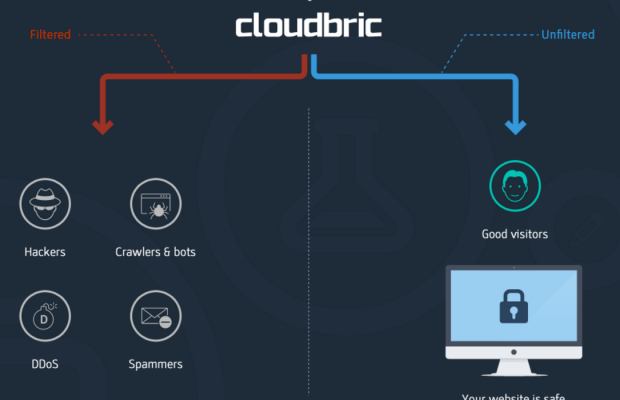
    AirAsia won the award for its deployment of Alibaba Cloud’s Content Delivery Network (CDN) and Web Application Firewall (WAF) solutions to distinguish legitimate customers from crawlers and bots that negatively impacted bookings and revenue, and reduce massive traffic flows from bots that led to additional operational costs.

    Using CDN in China, the airline was able to improve the latency and Round Trip Time (RTT) of airasia.com, and optimise traffic to the website based on user profiles.

    AirAsia also worked with Alibaba security teams to block illicit traffic using an extensive database of known hackers and their patterns, before customising rules and applying them to the WAF.

    The award was presented during the IDC Digital Transformation Summit 2018 held in Aloft Kuala Lumpur Sentral on Tuesday.

    AirAsia Group chief information officer Declan Hogan said, “We tried many security tools, with limited success, prior to moving to Alibaba.

    “Only Alibaba made a consistent, long-lasting impact, and they proved that they’re willing to take the risk to try it. And we appreciate that they were willing to make the investment to prove that they have the technology that
    works.”

    IDC DXa honours the achievements of organisations that have successfully planned and executed the digital transformation of one or multiple areas of their business through the application of digital and disruptive technologies.

  • Smartphone Sales Will Drop for Second Straight Year, IDC Predicts

    Smartphone Sales Will Drop for Second Straight Year, IDC Predicts

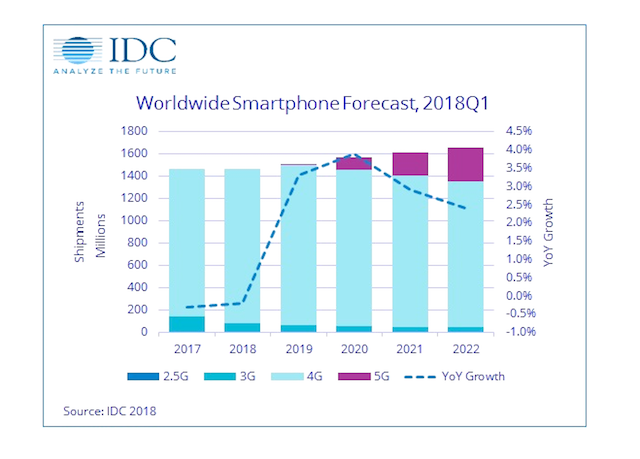
    Global smartphone sales are expected to fall for the second year running this year, before  returning to growth next year, according to analysis by the International Data Corporation (IDC).

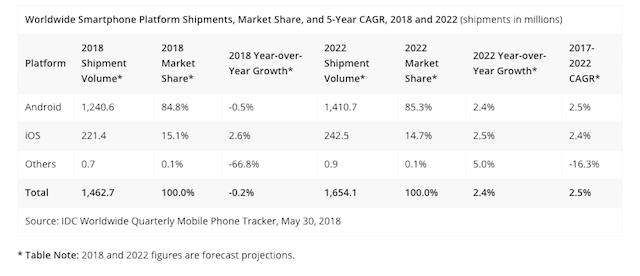
    In the research house’s Worldwide Quarterly Mobile Phone Tracker, smartphone shipments are forecast to drop 0.2 per cent this year to 1.462 billion units, after a 0.3 per cent decline last year. Looking further out, IDC expects the market is to grow roughly 3 per cent annually from next year onwards, with worldwide shipments reaching 1.654 billion in 2022 and a five-year compound annual growth rate (CAGR) of 2.5 per cent.

    The biggest driver of last year’s decline was China, where smartphone sales declined 4.9 per cent year-on-year. And the IDC expects sales in China to decline a further 7.1 per cent this year before flattening out next year.

    The biggest growth market in Asia Pacific continues to be India, with volumes expected to grow 14 per cent and 16 per cent this year and next.

    “Chinese OEMs will continue their strategy of selling large volumes of low-end devices by shifting their focus from China to India,” says IDC. “So far, most have been able to get around the recently introduced Indian import tariffs by doing final device assembly at local India manufacturing plants. As for components, almost everything is still being sourced from China.”

    “With 2017 now behind us a lot of interesting market dynamics are unfolding,” says Ryan Reith, program VP with IDC’s Worldwide Quarterly Mobile Device Trackers. “Even though it declined 5 per cent last year, China remains the focal point for many given that it consumes roughly 30 per cent of the world’s smartphones.

    “But plenty of pockets of growth can be found beyond China. India is now grabbing headlines and the market itself is going through some rapid transformation. Local Indian manufacturing continues to ramp up, despite still having a heavy dependence on China for components. The boom in India is likely to continue in the years to come, but the move toward building up local production has certainly caught the eye of many in the industry.”

    Outside of Asia Pacific, the biggest regions for growth will be the Middle East, Africa, and Latin America. All three regions have relatively low penetration rates and plenty of upsides, says IDC. Economic challenges have been the main inhibitor over the past two years, but IDC expects consumer spending to rise throughout the forecast and smartphones to be a big benefactor.

    5G opportunity

    The other catalyst to watch will be the introduction of 5G smartphones. IDC predicts the first commercially ready 5G smartphones will appear in the second half of next year with a ramp up across most regions happening in 2020. IDC projects 5G smartphone volumes to account for roughly 7 per cent of all global smartphone sales in 2020 or 212 million in total. The share of 5G devices should grow to 18 per cent of total volumes by 2022.

    “Although overall smartphone shipments will decline slightly this year, the average selling price (ASP) of a smartphone will reach US$345, up 10.3 per cent from the $313 of last year,” said Anthony Scarsella, research manager with IDC’s Worldwide Quarterly Mobile Phone Tracker.

    “This year will continue to focus on the ultra-high-end segment of the market as we expect a surge of premium flagship devices to launch in developed markets. Devices featuring large Amoled bezel-less displays, advanced camera functions, and an overall increase in speed and performance will be the driving factor in the increase of ASPs. Moving forward, we can expect this trend to continue as the ASP for a smartphone will continue to grow throughout the forecast period. In 2022, the final year of our forecast period, the average selling price for a smartphone will be $362, resulting in a five-year CAGR of 2.9 per cent.”

    Android vs Apple

    Android’s share of t sales is expected to remain relatively stable at 85 per cent of total global smartphone sales. Volumes are expected to grow at a five-year CAGR of 2.5 per cent, with shipments totaling 1.41 billion by 2022.

    “There is no question that Android is the OS of choice for the mass market and nothing leads us to believe this will change,” says IDC. “Given the large number of Chinese OEMs dependent on Google’s OS, as well as components from other US companies like Qualcomm, it will be interesting to see how things develop with all the discussion about a US-China trade war. Android OEMs continue to drive down the cost of new technology features at a rapid pace. IDC estimates that 98 per cent of Android phones will ship with screens larger than five inches by 2022, with 36 per cent being six inches or larger. While some of these will remain premium flagship models, the aggregate ASP of Android phones with a six-inch screen or greater by 2022 is projected to be $414.

    Meanwhile, iPhone volumes are expected to grow 2.6 per cent this year to 221 million. IDC is forecasting iPhones to grow at a five-year CAGR of 2.4 per cent, reaching volumes of 242 million by 2022. With rumors of some upcoming larger screen iOS smartphones, IDC has changed its screen size forecast for Apple by introducing volumes greater than six inches. Products are likely to begin shipping in the fourth quarter of 2018, with volumes ramping up and accounting for 36 per cent of all iPhones shipped by 2022.

  • IDC names Smart City APAC Award winners

    IDC names Smart City APAC Award winners

    Hong Kong has been recognized in IDC’s third annual Smart City Asia Pacific Awards, scoring awards in two of the 14 categories.

    Hong Kong won in the transportation category for its Next Generation Intelligent Transport System, and in the smart building category for its Zero Carbon Building project.

    China meanwhile won in the smart meter category for its Shenzhen Smart Water project, and in the education category for its Hubei Public Services Platform of Education Resources.

    But the biggest winner was New Zealand, which picked up four awards in the smart grid, tourism/arts/culture, connected health and public works categories, followed by Singapore, which secured three awards in the administration, economic development and social services category.

    In total 18 smart city projects were represented across the 14 categories, due to ties in four categories – administration, education, land use/environmental management and smart buildings.

    “Asia-Pacific smart city projects in the past year have exhibited strong national development focus with an increasing citizen-centric personalization combined with ‘low investment-high impact’ agendas – all in hopes of attracting the right mix of manpower talents and lucrative foreign-direct investments,” commented Gerald Wang, head of IDC Government and Education Insights Asia Pacific.

    “This socioeconomic shift towards creating more localized and quality smart city ecosystems are notably influenced by new international and regional trade dynamics. The failure of the Trans-Pacific Partnership agreement and China’s increased efforts to boost its global leadership with endeavors such as the Belt and Road Initiative will continue to shape commerce and innovation drive in the region.”

    According to IDC, the key trends shaping the future of smart city programs in APAC include efforts to improve city economics and risk management, cybersecurity and compliance, socioeconomic growth and infrastructure as well as foreign investment and manpower development.

  • Equinix expands Hong Kong footprint to meet demand

    Equinix expands Hong Kong footprint to meet demand

    Equinix is expanding its Hong Kong footprint to accommodate local interconnection needs and increasing numbers of inbound cloud service providers.

    This latest expansion of Equinix’s Hong Kong footprint adds over 1,400 new cabinets and brings the company’s total investment in the city to over $250 million.

    The expansion in Hong Kong includes 515 new cabinets in HK1 and represents an incremental investment of $16 million and adds 900 new cabinets in HK2 and represents an incremental investment of $39 million. It is the latest in a series of expansions across Asia-Pacific to meet the rising demand for interconnection services, with other recent expansions including Melbourne, Tokyo and Sydney.

    The new development will enable Equinix to support the growing needs of an increasing variety of enterprises – such as FSI and FinTech, e-payments and logistics – to interconnect with cloud and technology providers.

    Equinix’s cloud and IT ecosystem has continued to gain momentum in Hong Kong. Its cloud customer-base has grown significantly since 2014, as local and international internet security and CSPs are increasingly choosing to deploy with Equinix Hong Kong as their initial entry point or hub location for the Asia-Pacific region.

    Major cloud service providers in Equinix Hong Kong now include Alibaba Cloud, the cloud computing arm of Alibaba Group, Microsoft Azure & Office 365 and Google Cloud. According to Cisco, global cloud IP traffic will almost quadruple in over the next 5 years, this expansion will enable Equinix to meet the needs of Hong Kong customers looking to take advantage of this growth.

    One Hong Kong customer taking advantage of Equinix’s increased capability is ClusterTech Limited, which specializes in using cloud, high performance computing and big data technologies to solve challenging technical problems and improve operational efficiency for their customers. The company is in the process of adding more resources within Equinix’s IBX data centers to launch a new solution that will enable environmental engineering companies to run complex simulation applications.

    In addition to supporting the core cloud needs of customers, Equinix is now also in an excellent position to accommodate the growing trend towards multi-cloud convergence and “interconnected commerce” that Equinix experts predict will be a key feature of the IT landscape over the coming year.

    The additional capacity comes online at a time when Equinix is predicting IoT will become a concrete reality – evolving from independent, single-vendor solutions to those that talk to each other and rely on the same data.

    With the Hong Kong expansion, Equinix will relieve the growing pressure on corporate-centric networks by distributing the traffic more broadly, as well as better control the performance of the streaming IoT information for more real-time business and operational insight.

  • Cloudbric opens IDCs in Hong Kong and Vietnam

    Cloudbric opens IDCs in Hong Kong and Vietnam

    Web application firewall (WAF) service provider Cloudbric announced the opening of five internet data centers, including facilities in Hong Kong and Vietnam, in response to the growing, global demand for cloud services.

    The new data centers are located in New Jersey (US), Hong Kong, Binh Duong and Ho Chi Minh City (Vietnam) as well as Amsterdam (the Netherlands)

    Additionally, with Cloudbric’s growing partnership base, the expansion of IDCs means Cloudbric’s customers can benefit from greater WAF infrastructure and experience elite security better than ever.

    Enterprises of all sizes rely on and often expect websites to be up and running without any lapses. Maintaining this uptime depends on strategically placed data centers to handle high-volume requests. As a result, Cloudbric is not only increasing its network capacity through its IDC expansion but also introducing an all-inclusive, fully-managed WAF service to a wide range of IT service and solution providers.

    Regarding Cloudbric’s current partnership model, VP of Product & Technology TJ Jung says “From individuals to small or mid-size businesses and enterprises, we are growing our service to reach all parts of the globe by engaging in partnerships with different solutions providers in the IT industry, and Cloudbric is excited to continue in this endeavor. Partnering with data centers, for example, means Cloudbric can be deployed on their own infrastructures instead of relying on external networks – making the delivery of Cloudbric’s advanced WAF to their clients a seamless process.”

    Utilizing the precise, trusted technology created by Penta Security Systems, Cloudbric’s WAF can intelligently recognize and block both unknown and known web attacks with its logic analysis engine. Through Cloudbric, various service providers can also benefit from quality customer service and a user-friendly, intuitive dashboard and extend it to their own end users. With new IDCs and thus even greater bandwidth, Cloudbric’s ability to withstand cyber attacks such as DDoS attacks is augmented.

    Cloudbric currently has plans to open ten additional IDCs in Q2, specifically in cities across North America, the Middle East, and South America. Cloudbric will continue to appeal to various service providers in its expansion of WAF infrastructure.

  • IDC sees more strategic Philippine government ICT push by 2021

    IDC sees more strategic Philippine government ICT push by 2021

    The government will have a more strategic ICT push to enable technology adoption among organizations by 2021, research firm International Data Corporation (IDC) predicts.

    In its latest forecast for the country, IDC Philippines noted that with a new dedicated, centralized agency at the helm of the country’s ICT development, the government will be able to lay the much-needed groundwork to enable technology adoption for organizations.

    The country’s Department of Information and Communications Technology (DICT) was set up last June following the signing of the law creating the new Department by outgoing President Benigno Aquino before the presidential elections in May. The inaugural secretary of the department was appointed by Aquino’s successor, Rodrigo Duterte in June.

    The department is designated as the chief policymaking body involving the use of ICT in the country, and carrying the mandate of the previous Department of Science and Technology’s ICT Office, its first project was the rollout of more free WiFi connections in public places throughout the country and the crafting of a new national broadband plan. It has also been working to slash the processing time of permits for local telecommunications companies to speed up the rollout of infrastructure, especially in the countryside.

    Citing the latest findings of the United Nations E-Government Survey, IDC Philippines said the country already went up 24 notches to rank 71st out of 193 countries in e-government development.

    The research firm, however, sees major disruptions in the country’s ICT-BPO industry, which launched a new roadmap last October eyeing approximately $38.9 billion in revenues in five years from almost $25 billion in 2016.

    By 2020, IDC Philippines believes that the  ICT and BPO markets will be disrupted by the pivot and policy changes from the Duterte administration, as well as the election of Donald Trump in the US if the industry does not take critical steps safeguarding the country’s inherent growth drivers.

    The BPO industry is one of the great contributors to the total ICT spending in the country, which IDC sees as evolving to higher-value services around contact centers, medical transcription, software development, animation and game development, and global captive operations centers.

    “In the longer-term view, however, this may change due to the shift in pivot and policy changes from the Duterte and Trump administrations. This may lead to an impression of the country’s volatility and together with issues on manpower and availability of skill sets, it may result in the industry stagnating in the near future due to lack of new investments and expansionary plans from incumbents. Far-reaching measures to address key issues are of paramount importance this year,” said Jubert Alberto, Business Operations Head, IDC Philippines.

    In the private sector, the research firm predicts that 25 percent of the country’s top 1,000 companies will see the majority of their business depend on their ability to create digitally enhanced products, services, and experiences by 2020. It expects digital transformation (DX) to attain macroeconomic scale over the next three to four years.

    “The year 2020 will see Filipino companies level up their DX journey to a macroeconomic scale, as their ability to offer digitally transformed offerings and experiences becomes an important measure of competitiveness and success in the market,” said Karen Rondon, Research Manager for Enterprise Computing – Networking, IDC Asia-Pacific.

    Other predictions of IDC Philippines for 2017 are as follows:

    Filipino DX Teams. By 2018, 25 percent of Philippine organizations will have dedicated digital transformation/innovation teams.
    “These specialized ‘PH DX teams’ will be in charge of formulating plans both for internal and external applications of digital technology. These include identifying and using new technologies to improve operations, creating digital marketing strategies, developing their IT capabilities, and other related initiatives,” said Jan Edward Tañeca, Market Analyst – Imaging, Printing, Document Solutions (IPDS), IDC Philippines.

    Cybersecurity. By 2018, cyber security will become a tier-1 business priority receiving fixed capital spending for 30 of the top 1,000 companies in the Philippines.

    “In the coming years, enterprises will realize that rather than reacting to global security trends, the best-run businesses try to anticipate them. Thus, they will make cybersecurity a core part of their overall business strategy, taking into account the existing security industry trends and evolving criminal tactics and couple those factors with the organization’s risk tolerance, security program maturity, a holistic security strategy and, most importantly, business targets,” said Jan Edward Tañeca, Market Analyst – Imaging, Printing, Document Solutions (IPDS), IDC Philippines.

    Information-Based Products. By 2020, revenue growth from information-based products will be double that of the rest of the product/service portfolio for a quarter of the top 1,000 Philippine companies.

    “In the Philippines, companies in the telecommunications, retail, and banking industries, among others, have unlocked new opportunities in creating revenue through analyzing and making sense of the aggregated customer information. Some organizations that have explored these options benefited in the form of penetrating new markets and generating new revenue streams as the information may vary from customer data to consumer buying patterns,” said Nicolo Santos, Market Analyst – Imaging, Printing, and Document Solutions (IPDS), IDC Philippines. “This opportunity requires a constant effort for organizations to address data privacy and security issues, and government regulations that surround the collection, storage, use, and sale of consumer data.”

    Hyper-disruptive marketplaces. By 2019, 40 percent of customer-facing top 1,000 companies will experiment with augmented reality/virtual reality (AR/VR) as part of their marketing efforts.

    The potential impact of AR/VR across industries will become so big that by 2019, IDC sees 40 percent of the Philippines’ top 1,000 companies experimenting with these technologies to create their own unique experiential marketing strategies. “Consumer brands will be compelled to think out of the box and reinvent their marketing approaches – incorporating more AR/VR elements and placing emphasis on gamification – in a bid to gain the patronage and loyalty of consumers, especially young and tech-savvy millennials,” said Sean Agapito, Market Analyst – Client Devices, IDC Philippines.

    Customer-/Ecosystem-Facing Digital Services. By 2019, 65 percent of Philippine IT organizations will create new customer-facing and ecosystem-facing services to meet the business DX needs.

    “Failure to scale up the number of direct and indirect customers with whom an organization does business will lead to revenue shortfalls and uncompetitive cost structures. Improve profitability, we expect organizations to increase their use of virtual agents or digital assistants. Intelligent assistants will use artificial intelligence (AI)/cognitive technology to automatically adjust experiences to the users’ preferences and context,” says Alon Anthony Rejano, Market Analyst – IT Services, IDC Philippines.

    Digitalized Customer Support Interaction. By 2018, 60 percent of customer support interactions will be digitalized and occur in online communities. With an increasing proportion of the Filipino population – reaching nearly half of the country’s total population in 2016 – actively using social media, IDC expects more organizations to interact with customers through social and online communities. Online customer support not only helps solve customer problems but it also improves brand image.

    Additionally, a successful community will create brand champions or advocates and will not only recommend the product or the service to customers but will help solve customer problems on behalf of the brand. “This will make the theme of customer reciprocity strong moving forward. Also in the near future, more organizations will use IT to integrate existing customer services and support systems like integrating pre-built connectors, mining the community for insight into customers’ behavior, and proactively solve any emerging issues,” says Jerome Dominguez, Market Analyst – Client Devices, IDC Philippines.

    Next-Wave Sari-Sari Store. By 2020, 30 percent of Philippine sari-sari stores will evolve to become another channel for one-stop payments and remittance centers.

    Something unique in the Philippine retail scene will be the presence of sari-sari stores in different localities. IDC foresees a future where sari-sari stores, a Pinoy cultural phenomenon, can offer services such as payment of utility bills, e-loading, and buying of travel tickets can also be done through these neighborhood stores. Serving as complimentary touchpoints especially in the rural areas, sari-sari stores play a pivotal role in filling the “unbanked” gap in the countryside.

    Organizations looking to engage more in the rural areas will have a viable channel, as in alternative to building brick-and-mortar branches, which may be cost-prohibitive to most companies.


  • Two Moto Concept Stores open in Manila

    Two Moto Concept Stores open in Manila

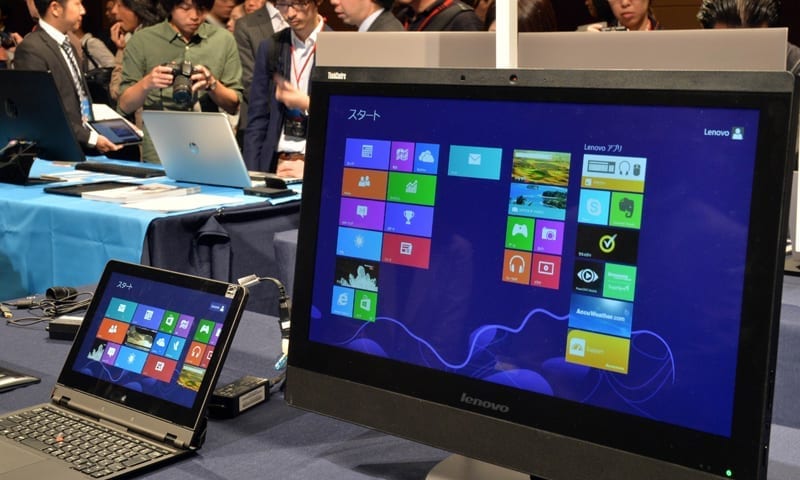
    Lenovo has opened two Moto Concept Stores for its mobile phone brand in Metro Manila as part of its Philippine “full-throttle” expansion.

    Both run by smartphone retailer MemoXpress, the stores are in the Cyberzone areas of SM North Edsa Annex and SM Megamall.

    “The Philippines is a very important market for Moto,” says Lenovo Mobile Business Group Philippines country manager Dino Romano.

    Lenovo says it aims to become the No. 3 player in the global smartphone market through expanding its Moto line across emerging markets, including the Philippines. Currently the fastest-growing smartphone market in the region, the Philippines had 3.5 million smartphone shipments in the first quarter of last year, according to the latest report of the International Data Corporation (IDC).

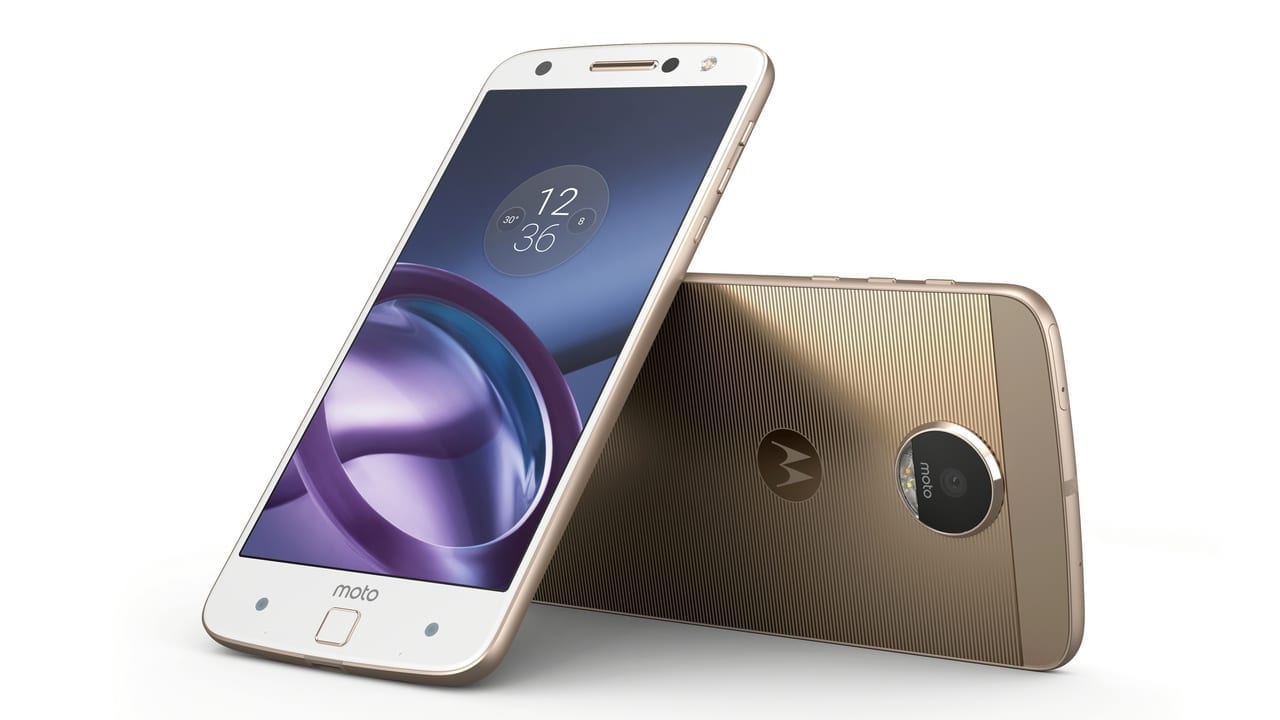
    Both Moto Concept Stores carry the latest Moto smartphones.

  • IDC Philippines Unveils its Top ICT Predictions for 2017 and Beyond

    IDC Philippines Unveils its Top ICT Predictions for 2017 and Beyond

    IDC Philippines announced its top predictions for the Philippine ICT industry for 2017 and beyond and predicts 25% of its top 1,000 companies will see majority of their business depend on their ability to create digitally enhanced products, services and experiences by 2020.

    IDC expects digital transformation (DX) will attain macroeconomic scale over the next three to four years, changing the way organizations operate and reshaping the global economy and calls this as the dawn of the “DX Economy”.

    “The rise of DX definitely has an incredible effect on the market. It opens massive opportunities for businesses as it helps strengthen relationships with end users, flattens organizational structures, and redefines traditional industries,” says Jubert Alberto, Business Operations Head, IDC Philippines.

    IDC Philippines’ technology and industry analysts also revealed the strategic top predictions and major technology trends that are set to present opportunities and challenges to IT leaders in 2017 and beyond.

    #1: DX Economy. By 2020, 25% of top 1,000 companies in the Philippines will see the majority of their businesses depend on their ability to create digitally enhanced products, services, and experiences.

    The market dynamics are quickly changing, and the enterprise must continually improve productivity and effectiveness while lowering costs in order to enable a transformation that will allow it to best compete in the constantly evolving market environment.

    „Year 2020 will see Filipino companies level up their DX journey to a macroeconomic scale, as their ability to offer digitally transformed offerings and experiences becomes an important measure of competitiveness and success in the market,” says Karen Rondon, Research Manager for Enterprise Computing – Networking, IDC Asia/Pacific.

    #2: Pinoy DX Teams. By 2018, 25% of Philippine organizations will have dedicated digital transformation/innovation teams.

    „These specialized ‚PH DX teams’ will be in charge of formulating plans both for internal and external applications of digital technology. These include identifying and using new technologies to improve operations, creating digital marketing strategies, developing their IT capabilities, and other related initiatives,” says Jan Edward Tañeca, Market Analyst – Imaging, Printing, Document Solutions (IPDS), IDC Philippines.

    #3: More Strategic ICT Push. By 2021, the government will have a more strategic ICT push to enable technology adoption among Philippine organizations.

    Year 2016 has been a good year as far as the country’s ICT agenda is concerned. According to the latest findings of the United Nations E-Government Survey, the Philippines went up 24 notches to rank 71st out of 193 countries in e-government development. With a dedicated, centralized agency at the helm of the country’s ICT development, IDC sees that by 2021, the government will be able to lay the much-needed groundwork that would enable robust technology adoption among Philippine organizations and raise the nation’s standards to be on par with other digital economies.

    #4: Cybersecurity. By 2018, cybersecurity will become a tier-1 business priority receiving fixed capital spending for 30% of the top 1,000 companies in the Philippines.

    Increasing security breaches and attacks has significantly raised interest in and awareness of the need to modernize security infrastructure in the Philippines. „In the coming years, enterprises will realize that rather than reacting to global security trends, the best-run businesses try to anticipate them. Thus, they will make cybersecurity a core part of their overall business strategy, taking into account the existing security industry trends and evolving criminal tactics and couple those factors with the organization’s risk tolerance, security program maturity, a holistic security strategy and, most importantly, business targets,” says Jan Edward Tañeca, Market Analyst – Imaging, Printing, Document Solutions (IPDS), IDC Philippines.

    #5: Information-Based Products. By 2020, revenue growth from information-based products will be double that of the rest of the product/service portfolio for a quarter of the top 1,000 Philippine companies.

    “In the Philippines, companies in the telecommunications, retail, and banking industries, among others, have unlocked new opportunities in creating revenue through analyzing and making sense of the aggregated customer information. Some organizations that have explored these options benefited in the form of penetrating new markets and generating new revenue streams as the information may vary from customer data to consumer buying patterns,” says Nicolo Santos, Market Analyst – Imaging, Printing, and Document Solutions (IPDS), IDC Philippines. „This opportunity requires a constant effort for organizations to address data privacy and security issues, and government regulations that surround the collection, storage, use, and sale of consumer data.”

    #6: Hyper-disruptive marketplaces. By 2019, 40% of customer-facing top 1,000 companies will experiment with augmented reality/virtual reality (AR/VR) as part of their marketing efforts.

    The potential impact of AR/VR across industries will become so big that by 2019, IDC sees 40% of the Philippines’ top 1,000 companies experimenting with these technologies to create their own unique experiential marketing strategies. „Consumer brands will be compelled to think out of the box and reinvent their marketing approaches – incorporating more AR/VR elements and placing emphasis on gamification – in a bid to gain the patronage and loyalty of consumers, especially young and tech-savvy millennials,” says Sean Agapito, Market Analyst – Client Devices, IDC Philippines.

    #7: Customer-/Ecosystem-Facing Digital Services. By 2019, 65% of Philippine IT organizations will create new customer-facing and ecosystem-facing services to meet the business DX needs.

    Customer-experience initiatives are on the rise across organizations, and as they increase the level of control customers and business-to-business (B2B) organizations have over their own experience, the scale of interactions will concurrently explode. „Failure to scale up the number of direct and indirect customers with whom an organization does business will lead to revenue shortfalls and uncompetitive cost structures. Improve profitability, we expect organizations to increase their use of virtual agents or digital assistants. Intelligent assistants will use artificial intelligence (AI)/cognitive technology to automatically adjust experiences to the users’ preferences and context,” says Alon Anthony Rejano, Market Analyst – IT Services, IDC Philippines.

    #8: Digitalized Customer Support Interaction. By 2018, 60% of customer support interactions will be digitalized and occur in online communities.

    With an increasing proportion of the Filipino population – reaching nearly half of the country’s total population in 2016 – actively using social media, IDC expects more organizations to interact with customers through social and online communities. Online customer support not only help solve customer problems but it also improves brand image. Additionally, a successful community will create brand champions or advocates and will not only recommend the product or the service to customers but will help solve customer problems on behalf of the brand. „This will make the theme of customer reciprocity strong moving forward. Also in the near future, more organizations will use IT to integrate existing customer services and support systems like integrating pre-built connectors, mining the community for insight into customers’ behavior, and proactively solve any emerging issues,” says Jerome Dominguez, Market Analyst – Client Devices, IDC Philippines.

    #9: Next-Wave Sari-Sari Store. By 2020, 30% of Philippine sari-sari stores will evolve to become another channel for one-stop payments and remittance centers.

    Something unique in the Philippine retail scene will be the presence of sari-sari stores in different localities. IDC foresees a future where sari-sari stores, a Pinoy cultural phenomenon, can offer services such as payment of utility bills, e-loading, and buying of travel tickets can also be done through these neighborhood stores. Serving as complimentary touchpoints especially in the rural areas, sari-sari stores play a pivotal role in filling the „unbanked” gap in the countryside. Organizations looking to engage more in the rural areas will have a viable channel, as in alternative to building brick-and-mortar branches, which may be cost-prohibitive to most companies.

    #10: ICT and BPO Disruption. By 2020, ICT and BPO markets will be disrupted by the pivot and policy changes from the Duterte and Trump administrations, if the industry does not take critical steps safeguarding the country’s inherent growth drivers.

    The BPO industry is one of the great contributors to the total ICT spending in the country. IDC maintains that the burgeoning and evolving to higher-value services around contact centers, medical transcription, software development, animation and game development, and global captive operations centers will still be very much viable in the short term, given the country’s inherent strengths. „In the longer-term view, however, this may change due to the shift in pivot and policy changes from the Duterte and Trump administrations. This may lead to an impression of the country’s volatility and together with issues on manpower and availability of skillsets, it may result in the industry stagnating in the near future due to lack of new investments and expansionary plans from incumbents. Far-reaching measures to address key issues are of paramount importance this year,” adds Alberto.


  • Asian online shoppers habits uncovered

    Asian online shoppers habits uncovered

    Asian online shoppers research, locate, engage with and purchase products and services in entirely different ways in different markets, according to a new report.

    For example, almost all consumers in Indonesia knowingly provide brands with wrong details, including name (93 per cent), phone number (94 per cent), and email address (95 per cent) when researching or shopping online

    And the biggest driver of online-to-offline (O2O) conversions is with email in Singapore; SMS in Indonesia; chat apps in China; social media in Malaysia and Thailand and video ads in Hong Kong.

    And 27 per cent of consumers in China and 10 per cent of consumers in Singapore unknowingly input wrong payment details, breaking the region’s eCommerce’s momentum.

    Those are among many takes from The Digital Consumer View 2016 (Asia) report, released by global information services specialist Experian today, containing research from International Data Corporation (IDC), aimed at helping businesses better understand digital consumers in Asia.

    The report reveals how consumer behaviour varies across the key Asian markets of Singapore, Malaysia, Indonesia, Thailand, Hong Kong, and China, based on surveys with over 1200 digital consumers.

    Differences exist across channels (SMS, app notifications, email, social media, chat apps), devices (smartphone, feature phone, Wi-Fi/cellular tablet, wearable) and content (ads in email, ads in mobile apps, ads in social media, video ads on websites, and search ads). The findings highlight the complexity of reaching digital consumers in Asia across many channels, but also highlight how crucial that is, says Jeff Price, MD of Southeast Asia at Experian.

    “While the region is fast-growing, consumer behaviour in each market has unique disparities. Businesses today cannot succeed without intelligent insights based on consumer data,” he advises.

    “Asia is in the midst of a great digital revolution, with an explosion of smart devices, social media interactions and eCommerce transactions. While this evolution has greatly enabled and empowered both sides, it has also challenged businesses to be more effective and targeted in the way they communicate and market to this modern, digital-savvy consumer.

    “For companies to keep up with digital consumer behaviours – how they act on information – it’s absolutely vital to adopt and leverage what their consumers are providing them with every day – invaluable data. Businesses slow to act on this data will see their competitive advantage erode.”

    Key findings

    Experian - DCV - Region - Key findings

    • Search and discovery: Social media is the top channel in Singapore (31 per cent), Malaysia (49 per cent), Indonesia (67 per cent) and Thailand (58 per cent). It’s equally important as chat apps in China (47 per cent); in Hong Kong, video ads (63 per cent) trumps all.
    • Triggering product interest: Social media, once again, is the key driver in Singapore (28 per cent), Malaysia (44 per cent), Thailand (49 per cent) and Hong Kong (25 per cent). However, in Indonesia it’s SMS (62 per cent), and in China it is chat apps (48 per cent).
    • Triggering purchase intent: Email is the biggest driver of online to offline conversion in Singapore (27 per cent); SMS tops in Indonesia (57 per cent); chat apps in China (45 per cent); social media in Malaysia (44 per cent) and Thailand (51 per cent); and video ads tie with social media in Hong Kong (23 per cent).
    • Finding good deals: For unplanned purchases stemming from promotions, email leads in Singapore (34 per cent); social media in Malaysia (50 per cent), Indonesia (68 per cent) and Thailand (58 per cent); SMS in Hong Kong (36 per cent), and social media in China (51 per cent).
    • Brand engagement: Email is key for marketers to build engagement in Singapore (58 per cent) and Thailand (60 per cent); chat apps in Malaysia (62 per cent) and China (70 per cent); banner ads in Indonesia (56 per cent), and SMS in Hong Kong (61 per cent). While email is important, marketers need to be wary: more than 70 per cent of consumers reported receiving too many emails, up from 52 per cent in 2015.

    Experian - DCV - Region - The rise of omni-channel engagement 1

    Shiv Putcha, associate director, consumer mobility and telco strategy with IDC Asia Pacific, says businesses and brands cannot afford to ignore Asia’s multi-trillion-dollar digital commerce market. China alone is now the world’s largest retail market.

    “The challenge lies in the fact that the region has extraordinary differences – language, economy, purchasing power – and consumer behaviours, especially with the digital generation. That uniqueness will not diminish over the next few years and may even increase, making it challenging for marketers not using data-driven insights to research, plan and execute effectively. The Digital Consumer View 2016 (Asia) will hopefully serve as a valuable guide to deciphering some of these key trends, mapping the path forward for brands and their connected consumers.”

    Experian - DCV - Region - Top 3 types of ads that influence consumer's buying behavior

    Key Learnings for marketers in Asia

    • Over-reliance on a single marketing channel will not work. Depending on the country and its current state of digital sophistication, marketers need to think carefully about the right mix of channels to employ.
    • Quality over quantity. Consumer preferences for receiving promotional material varies from market to market, and by specific use cases. On a broader level, more is not necessarily better. A relevant and targeted message will ensure better conversion. Too much, and consumers are inclined to unsubscribe, delete, or mark content as spam.
    • The quality and integrity of data is crucial for marketers to find success. A significant number of consumers across the region either knowingly or unknowingly provide inaccurate information, which in turn causes errors and inaccuracies in marketer’s data sets. Around 27 per cent of consumers in China but only 10 per cent in Singapore unknowingly input wrong payment details; 40 per cent of consumers in China, and over 20 per cent of consumers in the rest of the region provide a wrong address at online checkout.

    Asia comprises 49.6 percent of the world’s Internet users, according to Internet World Stats (2016), digital commerce in the Asia-Pacific (excluding Japan) region will rise to US$17 trillion by 2019, up from US$7 trillion in 2015 according to International Data Corporation (IDC). The combination of rising incomes, increased consumption, acceleration of internet use, and the proliferation of mobile broadband access continues to unlock tremendous opportunities for marketers across the continent.

  • Lenovo-­Motorola India seeks to open showrooms

    Lenovo-­Motorola India seeks to open showrooms

    The Lenovo-­Motorola India combine has applied for single-­brand retail licence to open company­- owned showrooms.

    This comes on the heels of the Chinese company’s mobile sales in India crossing the US$1 ­billion mark.
    Lenovo India’s director Sudhin Mathur says the turnover from mobile-phone sales in the year ended March 31 stood at $1.3 billion, nearly double the $700 ­million of the previous year.

    “Sales have been growing at a healthy pace and we expect to maintain a strong momentum.”

    According to industry tracker IDC, the Lenovo­-Motorola combine sold about 10 million units last year, accounting for a nearly 10 per cent share of the market.

    Mathur says smartphone industry sales in India are expected to grow by 30 per cent this
    year.

    The company’s units for India are being contract ­manufactured by Flextronics at Sriperumbudur. Lenovo is also looking at having its own phone plant in India.

    Mathur says eight or ­nine new models will be introduced in India over the coming months as the company beefs up its portfolio ahead of the festive season.

    Other companies to have applied for the single-­brand retail licence include Apple and Chinese company LeEco.

  • Xiaomi continues quest for quality

    Xiaomi continues quest for quality

    Smartphone giant Xiaomi continues to distance itself from the lower end of the market, as Chinese buyers shift their attention mainly to device upgrades.

    Xiaomi international VP Hugo Barra says the company continues to direct its efforts at becoming a premium brand, reports the South China Morning Post.

    “Our customers are demanding premium products from us, so we are delivering higher quality with more premium components.”

    Research company IDC has forecast just 2 per cent growth this year for smartphone sales as more users chose to upgrade their handsets.

    Meanwhile, Xiaomi may expand its Mi Home experience centre across Hong Kong. Opened a year ago so customers can try out different products, it has been a successful retail experiment, says Barra.

    “Part of the strategy here is to think about how we can reinvent the retail experience to make it much more experience-focused … which helps the online business as well.”

    Xiaomi has just launched its latest 6.44in. Mi Max phablet and the Mi Air Purifier 2. The phablet, which will cost from HK$1799 (US$230), is considered one of the largest smartphones on the market.

    IDC estimates 20 per cent of smartphone sales last year were phablets, and by 2020 they are expected to account for 32 per cent of the market.

  • Philippines is Southeast Asia’s fastest-growing smartphone market in Q1

    Philippines is Southeast Asia’s fastest-growing smartphone market in Q1

    IDC reported that the country saw a 20 per cent year-on-year increase, or 3.5 million smartphones shipped to retail stores in 2016.

    Indonesia’s growth was only 3 per cent during the quarter, while Malaysia was down 20 per cent, Thailand flat, Singapore down 13 per cent, and Myanmar down 1 per cent.

    Dominguez attributes the Philippines’ growth to “stronger support from telco operators” in the form of higher subsidies.

    “For instance, MyPhone’s partnership with Smart Communications paved the way for an affordable (US$19) prepaid smartphone kit that comes with mobile data allocation. Apple’s shipments also grew partly due to lower cash-out requirement and more attractive data and app bundles for iPhones offered by telcos,” IDC market analyst Jerome Dominguez said in an interview with Tech In Asia

    Read more about the interview here.