Prior to his current work, he spent years at Indonesia’s major online media Detik.com, followed by a stint at Hewlett-Packard and XL Axiata.
“Back in Detik.com, my work involved setting up new businesses, business models, and monetisation models. I also did some marketing,” he explains. “There is actually a continuation between what I am doing then and now.”
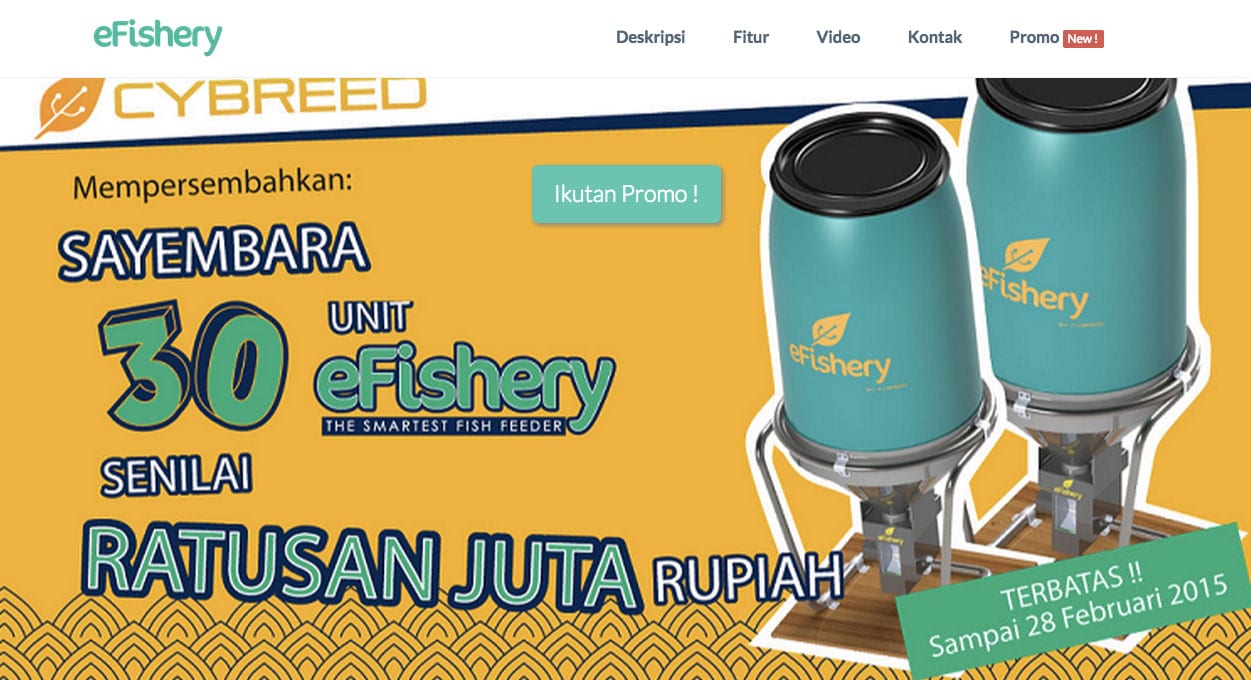
As an Indonesian VC, Ideosource’s portfolio ranges from gaming with Touchten, media with Female Daily Network, e-commerce with Bhinneka, and innovative companies for niche markets such as Stockbit and e-Fishery.
Its latest investment is a sports wearables company called Turing Sense, a Silicon Valley-based startup founded by Indonesians.
Dividing time between mentoring and looking for new business, as well as writing and speaking about entrepreneurship, Ekoyuono discusses startup and innovation in Indonesia – and why, despite challenges here and there, there is progress to celebrate.
Can you tell us how the tech startup landscape in the country is?
There is a significant difference with when we began in 2011. At that time, [the tech industry] was still in its early stage, we even had to make our own incubation programme, since incubators were basically non-existent. But lately, there have been more and more incubators, both from telco [companies] and campuses. There is definitely progress.
We are starting to get used to hearing news about funding, and founders are getting more diverse. When we began, most founders were university graduates … But now, we have begun to see Internet industry veterans and diaspora – Indonesians who have been living and working abroad.
There are also founders who have already run a conventional business, migrating to the digital side.
Up until two years ago, people thought the Internet industry was cool, but [it was] still something for the distant future. No sense of urgency. But Tokopedia’s funding last year really got people to wonder … What is this company and why is US$100 million given to them?(laughs)
Especially since they also advertise heavily on conventional media such as TV and newspaper. People began to see the Internet as ‘something’.
But the most phenomenal is Go-Jek. Once it got to the level of the ojek drivers, it strengthened the message that technology is indeed for everybody.
Speaking of business types, does e-commerce remain a primadonna in Indonesia?
If we are looking with a top-down approach, there are some industries with strong visibility. First is media, then e-commerce, then fintech … The others are transportation. These are the ones with the biggest market. Consumers are starting to evolve.
What founders need to consider is how to bridge between a digitised consumer and the industry itself, which might be run by conventional business and transaction model.
Will this sector grow? I believe it will, followed by other sectors. Fashion and electronic goods still play a crucial role. But groceries are also starting to grow.
What are the greatest challenges for investors in Indonesia, especially in terms of scouting for new talents and business?
If you read my writing, you might notice that the main idea is about sharing knowledge to Indonesian startups to prepare for their pitch. Informing them what sets them apart from traditional entrepreneurs.
The issue that we often see in Indonesian startups is that many founders do not have a deep understanding of the problem they are trying to solve. They often shoot something that may not be that big of a problem; that consumers do not even care about … It is advisable to start from the problems you encounter yourself.
Second, often, founders do not have enough knowledge about building a sustainable business. For example, selling durian online is certainly not sustainable as you can only do it during durian season! (laughs)
There is also a problem of scalability. How to balance between cost and business model.
Does this mean that investors only sit around and wait? No. Especially for Ideosource, since we are local, we have been spending our time to build the ecosystem. Doing campus visits, building communities, writing in the media …
Is innovation dead in Indonesia? Do founders tend to play it safe with businesses with great revenue?
Oh, I’d say it’s not even an issue! Many people believe so because they are looking at Facebook and Twitter, which, at the beginning, might seem to not have a clear mechanism for monetisation. There is a misconception. I believe they did [consider monetisation], but it is just not [as] exposed.
Our main problem is not innovation itself, our main problem is not fully understanding which problem to tackle. “We want to gather users first!” Yes, but what do you want these users to do?
When it comes to innovation… Every year, we meet with 300-500 startups and guess what — I cannot mention names yet — but many of them are doing something very advanced. We are starting to get there.
But, in terms of ecosystem, we are still like China and India at their early stage. IoT is still sitting at the back seat. Which is why founders in that subsector tend to be more quiet compared to those in e-commerce. They are still hiding in their labs.
Generally, we need to dream bigger.If you want to create a startup, you should visualise ‘how big will the animal be?’