Tag: IMF

  • Pakistan Plans Uniform Gas Tariff to End Cross Subsidies

    Pakistan Plans Uniform Gas Tariff to End Cross Subsidies

    Pakistan is replacing its tiered gas pricing system with a single uniform tariff across all consumer categories. Petroleum Minister Ali Pervaiz Malik outlined the plan to utility executives in Islamabad.

    The Oil and Gas Regulatory Authority sets the benchmark prescribed price near Rs1,700 per million British thermal units. Even so, end-users currently pay anywhere between Rs500 and Rs4,300 per mmBtu depending on consumption brackets.

    Aligning Rates with IMF Targets

    International lenders and domestic regulators have pressed Islamabad to dismantle cross-subsidies and recover actual distribution costs. Under the new model, vulnerable households will receive targeted welfare payouts instead of discounted bills. Businesses and heavy users will pay a standardized rate.

    Malik directed state-run distributor Sui Southern Gas Company to redesign its operational model around the single-rate baseline. The utility cut unaccounted-for gas losses by roughly 57 per cent in volumetric terms over the past year. Islamabad also held headline tariffs flat, trimming roughly Rs55 billion from the sector’s circular debt balance.

    Reforming Industrial Utility Models

    For commercial operators and factories across Pakistan, ending tiered subsidies removes pricing distortions that pushed manufacturers toward alternative fuels. The shift mirrors utility overhauls in Bangladesh and India. Both nations curtailed industrial discounts to secure multilateral loan tranches and stabilize sovereign balances.

    Technical advisers from the World Bank are helping Islamabad prepare the broader restructuring plan. The cabinet must review the pricing mechanism next, clearing the regulatory authority to calculate baseline consumer rates for the upcoming fiscal cycle.

  • IMF sees Vietnam economy growing

    IMF sees Vietnam economy growing

    Vietnam’s economy is set to grow at 6.5 percent this year, well above the ASEAN average of 4.9 percent, as it shrugs off the impacts of Covid-19.

    It is the second-highest rate forecast by the International Monetary Fund for ASEAN-5 countries. The Philippines tops with 6.9 percent, Malaysia ties Vietnam at 6.5 percent, Indonesia is expected to grow at 4.3 percent, and Thailand at 2.6 percent.

    Vietnam’s growth could rise to 7.2 percent in 2022, the IMF said.

    Its unemployment rate of 3.3 percent last year is set to drop to 2.7 percent this year, the second-lowest among the ASEAN-5 and only higher than Thailand’s 1.5 percent. In the first quarter of this year GDP growth was 4.48 percent, 0.8 percentage points higher year-on-year.

    Market research company Fitch Solutions has forecast Vietnam will grow at an average of 6.5 percent through the next decade.

    The government targets 6.5–7 percent growth target for 2021-25.

  • IMF head warns fintech could disrupt world’s financial system

    IMF head warns fintech could disrupt world’s financial system

    International Monetary Fund (IMF) Managing Director Christine Lagarde warned on Saturday that the increasing presence of technology giants using big data and artificial intelligence could cause a significant disruption to the world’s financial system.

    The rapid development of financial technology (fintech) has increased access to cheap payment and settlement systems for low-income households in emerging countries where traditional banking networks are scarce.

    But it has raised concern about the increasing dominance of big technology firms in mobile payments, which could force global policymakers to rethink the way they regulate the banking system and ensure financial settlements are executed safely.

    “A significant disruption to the financial landscape is likely to come from the big tech firms, who will use their enormous customer bases and deep pockets to offer financial products based on big data and artificial intelligence,” Lagarde told a symposium on financial technology held on the sidelines of the G20 finance leaders’ meeting in Fukuoka, southern Japan.

    While such innovation may help modernize financial markets, they could make the financial system vulnerable such by putting payment and settlement systems under the control of a handful of technology giants, she added.

    “This presents a unique systemic challenge to financial stability and efficiency, and one I hope we can touch on during the G20, and address in a cooperative and consistent fashion.”

    Lagarde said China presents an example of the trade-off between benefits and challenges posed by financial technology.

    “Over the last five years, technology growth in China has been extremely successful and allowed millions of new entrants to benefit from access to financial products and the creation of high-quality jobs,” she said. “But it has also led to two firms controlling more than 90% of the mobile payments market.”

    Addressing the pros and cons of financial innovation is among topics of debate at the two-day meeting of Group of 20 finance ministers and central bank heads that began on Saturday.

  • IMF applauds Korea’s currency transparency

    IMF applauds Korea’s currency transparency

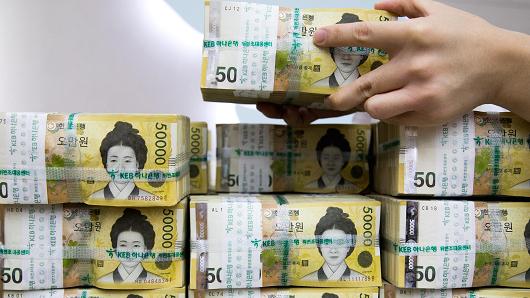
    The International Monetary Fund on Thursday welcomed Korea’s decision to regularly reveal its currency market intervention records.

    Korea’s Finance Ministry said it would disclose the records starting in March 2019 to help remove unnecessary misunderstandings about the country’s currency market operations.

    “I welcome the Korean government’s decision to publish data on foreign exchange intervention,” Christine Lagarde, managing director of the IMF, said in a statement. “It delivers a strong message about commitment to a flexible exchange rate regime. This will enhance Korea’s inflation targeting regime by strengthening the credibility of the announced monetary policy objective and the anchoring of inflation expectations. A credible commitment to a flexible exchange rate also facilitates external and internal adjustment.”

    The disclosures of the net amount of U.S. dollars used for selling and buying by Korea’s currency authorities will be made within three months after a reporting period. Quarterly releases will begin following the third quarter of 2019.

    Seoul said earlier that the country is considering the detailed disclosure of its interventions in the foreign exchange market as part of a broader move to boost transparency and clear itself of suspicion of exercising undue influence on exchange rates.

    Korea’s financial authorities have persistently claimed they do not interfere in the foreign exchange market but engage in “smoothing operations” against extreme one-sided movements.

    In April, the United States kept Korea on its “monitoring list” but did not designate the country as a currency manipulator.

    Washington has vowed to aggressively keep tabs on and combat unfair currency practices, saying it cannot and will not bear the burden of an international trading system that, it claims, unfairly disadvantages American exports and gives an edge to its trading partners.

  • IMF Chief visits Indonesia with some advices

    IMF Chief visits Indonesia with some advices

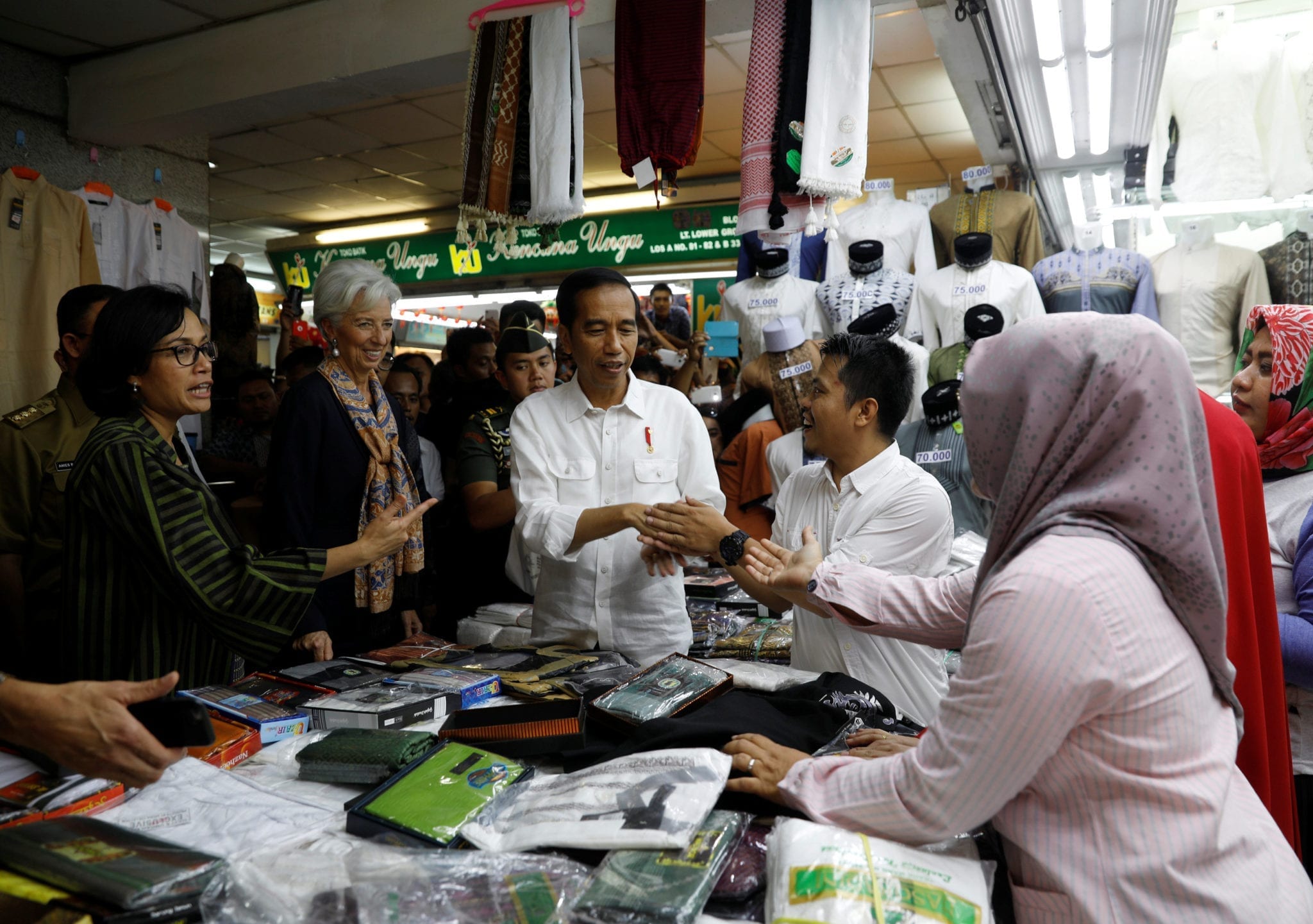
    Christine Lagarde, the managing director of the International Monetary Fund, said on Tuesday (27/02) the global economy was showing broad-based growth, but the landscape was shifting with heightened risks of trade disputes, monetary policy normalization and technological change.

    Lagarde, speaking to an IMF conference in Jakarta in preparation for the Fund’s annual meetings in Bali in October, said the IMF was expecting global growth to reach 3.9 percent in 2018 and 2019. This is unchanged from the IMF’s forecast in January and up from 3.7 percent in 2017.

    She said Asean countries were preparing for higher interest rates in advanced economies such as the United States and Europe, but cautioned that policymakers need to stay vigilant about its effect on financial stability and volatile capital flows.

    “We know this will have spillover effects across the world. We have known for some time that it’s coming,” Lagarde said. “It remains uncertain how this transition is going to affect other countries, companies, jobs, incomes.”

    Asean countries need to embrace new growth models that put a greater emphasis on domestic demand, regional trade and economic diversification and prepare for technological changes such as increased factory automation, artificial intelligence, biotechnology, new financial technologies and digital currencies.

    While these could eliminate some jobs, it was important for countries to boost efforts to educate workers to better prepare them to take advantage of new technologies.

    “Many jobs will be affected one way or another. Some of them will disappear, but many more will be affected because of automation. So we need to think about the future of work,” Lagarde said, adding that there was no single approach, and many countries will forge their own path.

    She highlighted Go-Jek, the fast-growing ride-hailing and delivery service in Indonesia, as an example of a country-specific technology innovation targeted to the country’s needs and workforce.

  • IMF warns Asia to act early on rapidly-aging population

    IMF warns Asia to act early on rapidly-aging population

    Asia has enjoyed substantial demographic dividends, but the growing number of elderly is set to create a ‘tax’ on growth. The International Monetary Fund called on Asian economies to learn from Japan’s experience and act early to cope with rapidly ageing populations, warning that parts of the region risk “getting old before becoming rich.”

    Asia has enjoyed substantial demographic dividends in the past decades, but the growing number of elderly is set to create a demographic “tax” on growth, the IMF said in its economic outlook report for the Asia-Pacific region on Tuesday.

    “Adapting to aging could be especially challenging for Asia, as populations living at relatively low per capita income levels in many parts of the region are rapidly becoming old,” the report said. “Some countries in Asia are getting old before becoming rich.”

    The population growth rate is projected to fall to zero for Asia by 2050 and the share of working-age people – now at its peak – will decline over the coming decades, the report said.

    The share of the population aged 65 and older will increase rapidly and reach close to two-and-a-half times the current level by 2050, it said.

    That means demographics could subtract 0.1 percentage point from annual global growth over the next three decades, it said.

    In Vietnam, people aged 60 or older currently represent about 10.5 percent of the country’s population of over 90 million, according to official data.

    Vietnam’s golden population is estimated to last about 30 years from 2010 to 2040. But due to a lower birthrate and longer life expectancy, Vietnam is aging rapidly and the working-age population is shrinking.

    Labor officials have warned that Vietnam’s working-age population will shrink so quickly that by 2030 one in six Vietnamese will be over 60 years old, and one in four of the population will be 60 or older by 2060.

    The challenges are particularly huge for Japan, which faces both an ageing and shrinking population. Its labor force shrank by more than 7 percent in the past two decades, the IMF said.

    The high percentage of its citizens living on pensions may be behind Japan’s excess savings and low investment, which are weighing on growth and blamed in part for keeping inflation below the Bank of Japan’s 2 percent target, the report said.

    “Japan’s experience highlights how demographic headwinds can adversely impact growth, inflation dynamics and the effectiveness of monetary policy,” it said.

    The IMF called on Asian nations to learn from Japan’s experience and deal with demographic headwinds early, such as by introducing credible fiscal consolidation plans, boosting female and elderly labor force participation, and revamping social safety nets.

  • China quarter feeblest since ’09

    China quarter feeblest since ’09

    China’s economy slowed in December, capping the weakest quarter of growth since the 2009 global recession, as the Communist leadership grapples with a transition to consumer-led expansion.

    Industrial production, retail sales and fixed-asset investment all slowed at the end of the year, while gross domestic product rose 6.8 percent in the fourth quarter from a year earlier. Full-year growth of 6.9 percent, the least since 1990, was near the government’s target of about 7 percent.

    Policymakers must weigh the need for further monetary easing with the risk it would spur more weakness in the yuan and additional capital outflows. Arguing against major stimulus: A rise in services, which became more than half of the economy for the first time, cushioned the slowdown and underpinned employment.

    “2016 will be another challenging year as the old capital-intensive, highly levered industrial sector continues to be placed under severe strain,” said Kenneth Courtis, former Asia vice chairman at Goldman Sachs Group Inc. and now chairman of Starfort Holdings. “But we remain constructive on the outlook for the period ahead,” he said, citing steady job gains and retail sales that are rising faster than GDP.

    Industrial production posted one of the weakest gains in the past quarter century, increasing 5.9 percent in December from a year earlier, compared with a 6 percent median estimate of analysts and November’s 6.2 percent.

    Retail sales increased 11.1 percent from a year earlier, compared with the 11.3 percent projected by economists. Fixed-asset investment excluding rural areas expanded 10 percent last year, the slowest pace since 2000.

    The Shanghai Composite Index closed 3.2 percent higher as the data fueled speculation of increased stimulus and industrial shares rallied on prospects of state-fund buying.

    In an update to its annual outlook published Tuesday, the International Monetary Fund left its estimate for China’s growth this year unchanged at 6.3 percent even as it lowered the global projection to 3.4 percent. The fund said risks to the global outlook remain tilted to the downside, with the world facing three big adjustments: the emerging-market slowdown, China’s shift to growth driven less by exports and manufacturing, and the Federal Reserve’s gradual exit from ultra-low interest rates.

    China’s top leadership has signaled in recent months it may allow some additional slowness as officials tackle delicate tasks such as reducing excess capacity, but nothing that could threaten President Xi Jinping’s goal of at least 6.5 percent growth through 2020. The world’s second-largest economy will slow to 6.5 percent this year and 6.3 percent next year, according to the median of economist estimates.

    Reaching the official 6.5 percent target “is fast becoming a challenge,” Shen Jianguang, chief Asia economist at Mizuho Securities Asia Ltd. in Hong Kong, said in a note.

    China’s economy is going through a “tough transition to make, but critical if growth is to be sustainable,” former Fed Chairman Ben Bernanke said at a forum Tuesday in Hong Kong. “You have to have a transition to more services if you want to keep the economy growing and providing jobs.”

    China’s economy is growing at two speeds, with old rust-belt industries from steel to coal and cement in decline while consumption, services and technology do better. Services accounted for 50.5 percent of output last year.

    The policy response to last year’s slowdown included accelerated monetary easing with six interest-rate cuts since late 2014 and increased fiscal spending. Through market turbulence, the central bank forged ahead with interest-rate liberalization by removing a cap on deposit rates and won the IMF’s approval for the yuan to enter its Special Drawing Rights basket of reserve currencies.

    This year, attention is likely to turn more to a new focus on supply-side tactics such as cutting excess industrial capacity and labor in state enterprises, lowering taxes and increasing productivity.

    Information for this article was contributed by Xiaoqing Pi, Ailing Tan, Jeff Kearns, Enda Curran and Christopher Anstey of Bloomberg News.

    Business on 01/20/2016

  • China is facing into a period of painful economic adjustments

    China is facing into a period of painful economic adjustments

    On February 8th, China will celebrate the Year of the Monkey. The monkey is famously a smart, naughty, wily and vigilant animal, and anybody trying to make money in the rest of 2016 will have to learn how to outsmart the animal.

    A useful barometer of the Chinese economy is always to look on the streets and see what cars are clogging up the dual carriageways and main roads of the big cities like Beijing, Shanghai and Guangzhou.

    By this measure, the world’s second largest economy is doing pretty well.

    Sentiment is not good as far as monkeys go – it has remained below 90 since June 2014, far below the 100 breakeven level. According to the China Auto Purchase Sentiment Report, people are buying cars, but they are buying smaller, cheaper vehicles. Despite the fall in sentiment, this sees more Chinese households reporting that they currently own a vehicle.

    The Car Purchase Indicator is a composite indicator designed to gauge future demand for cars and it fell 4.5 per cent to 83.2 in December from 87.1 in November, the lowest reading since April 2012.

    But yet there is still obvious strength in the market. Despite a damaging emissions scandal, Volkswagen continues to lead the passenger car market in China, with deliveries of 2.63 million units from January to December. And while this is down 4.6 per cent, the fourth quarter of 2015 was a very successful one for the carmaker.

    But then you look at the stock market.

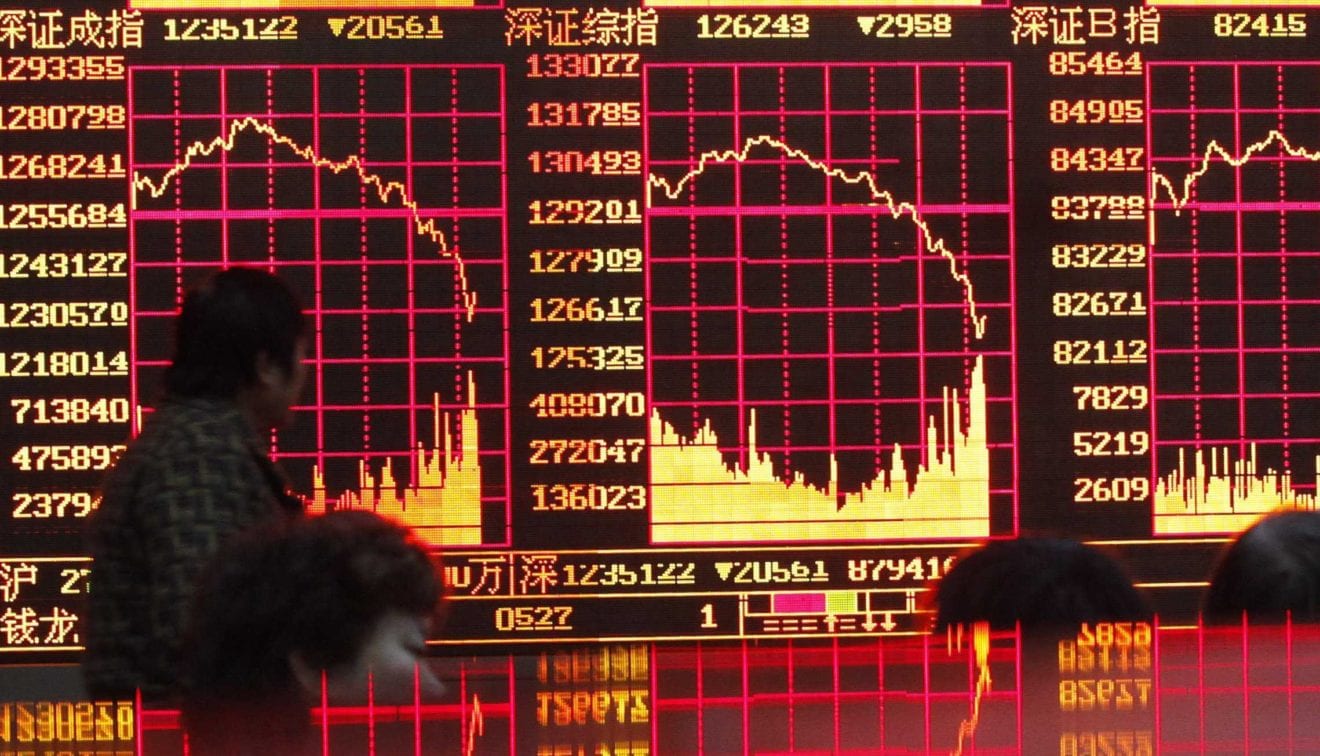
    With the nightmare of summer 2015 still fresh in the minds of badly burned retail investors, China’s stock market opened 2016 with a stark reminder that the fundamental situation in the markets remained deeply unstable.

    China was forced to twice deploy its “circuit breaker” mechanism to halt trading as stock markets nose-dived by 10 per cent in the first week of the year.

    After the second time, Beijing scrambled to abandon the mechanism, which the markets, especially overseas, had always considered a weak and useless measure. By abandoning the “circuit breaker”, the regulators appeared clueless on how to stabilise the market and the situation appeared to go back to square one.

    Unlike many western economies, the stock market in China does not offer a bellwether of the overall health of the economy and even a massive slide on the stock market would be tolerable were the data coming out of the world’s second largest economy inspiring confidence on the future outlook.

    New normal

    However, these are the days of the “new normal” when the Chinese government is trying to sell the idea of slower, consumption and services-based growth and move away from the heady days of double-digit expansion which defined the economy for the past two decades.

    Gross domestic product growth fell to a six-year low of 6.9 per cent in the July-September quarter and is forecast by the International Monetary Fund to decline further to 6.3 per cent in 2016. This level of growth is not enough to keep generating new jobs – there are more than 7.5 million graduates expected to enter the labour market later this year and robust growth is needed to keep the economy expanding at a rate that will maintain stability for the ruling Communist Party.

    Cheng Shi from ICBC international research group expects growth to continue to slow in 2016.

    “Firstly, the global economic recovery means weaker external factors for China’s economic growth. Secondly, for the last 30 years, China has accumulated massive capacity and the difficulty of keep on growing is increased and the growth rate declines naturally. Thirdly, it is affected by the ageing population and the labour cost has been growing for a long time. Fourth, the real estate market is going through an adjustment period,” said Cheng.

    In the short term, the risks caused by structural economic adjustments will keep on showing and the pain is unavoidable, said Cheng.

    “In the long run, the opportunities brought by deepening economic reform will gradually start to appear and the rise won’t stop,” he said.

    “I think at the bottom of this is a fundamental story about a slowdown in China,” Peter Oppenheimer, chief global equity strategist at Goldman Sachs told CNBC. “The focus at the moment is the ongoing weakness in the manufacturing sector but also the lack of evidence that traditional policy easing is really stabilising the economy.”

    He underlined concerns about further weakness in exchange rates, and the possibility for that to flow through the broader markets.

    The collapse in growth shows that investors are reluctant to buy into the government vision of the “new normal”.

    China’s stock market more than doubled between late 2014 and June, then dived by 30 per cent, an event that caused deep pain among retail investors.

    “We expect growth momentum to slow in the first half of 2016, and for headline growth to fall to 6.4 per cent in the second quarter of 2016, before recovering in the second half of 2016 as more easing measures kick in,” HSBC said in a research note.

    “Policymakers need to strike a balance between financial and SOE reforms and the need to reflate the economy,” HSBC said.

    To this heady brew, add in the slide in the Chinese yuan currency to a five-year low against the dollar, which has forced the government to spend tens of millions of dollars from its foreign currency stockpile to defend it, and you can see a perfect storm of negative factors clouding the outlook for the Monkey Year.

    Overall it was the worst beginning to the year for the Chinese yuan since 1994, on growing concerns that the economy is weakening further.

    The government last week guided the yuan 1.5 per cent lower to give a boost to the country’s export sector, which is bearing the brunt of China’s goods becoming expensive overseas compared to other Asian neighbours. The move to lower the yuan was not deftly done, and the resulting nervous reaction further weighed on share prices.

    “Upbeat trade data could go some way to reassure global investors that China’s economy is stabilising,” said Tom Rafferty, lead China analyst at the Economist Intelligence Unit. “The data is in line with other indicators that suggest China’s economy is stabilising on the back of sustained stimulus measures, some of which have been targeted at the external sector.”

    “There will be some qualms expressed about the reliability of the data, given the weaker performance in December of other major Asian exporters. However, China has consistently outperformed the region in what was a difficult year for global trade,” he said.

    Then you have other anomalies.

    During 2015, seven property developers reported annual sales of more than 100 billion yuan (€14 billion) as the property market continued to perform strongly, despite a slowdown, while a total of 104 developers reported annual sales of over 100 billion (€1.4 billion) in the same period.

    The top three by sales were Vanke, with 261 billion yuan (€36.6 billion), Greenland with 230 billion (€32.3 billion) and Evergrande with 200 billion yuan (€28 billion). All involved will be hoping they can outsmart the monkey again in 2016.


  • China on track for a more sustainable economic expansion

    China on track for a more sustainable economic expansion

    Investors world-over fear that China could record another worse-than-expected slowdown this year. Over the past two decades, annual GDP growth in China has averaged around an impressive 10 percent, underpinned mostly by investments, as well as exports. The IMF expects China to account for almost 18 per cent of world economic activity in 2016. Hence a bump in China’s economy can definitely not be ignored. A drop in China’s growth rate from an expansion of more than 10 per cent in 2010 to 6.3 per cent expected this year could directly knock-off about 0.75 percentage points off the global growth rate.

    The recent week’s turmoil in China has hit both stocks and currency markets, sending shock-waves through global financial markets. Stock indexes around the world have seen massive sell-offs, global markets have fallen by 7.1% since January 1st, their worst ever start to a year. The instability brings back to light China’s stock market crash and a surprise Yuan devaluation by Beijing in August 2015 which sparked a global rout, and wiped out trillions of U.S. dollars in value from Chinese equities.

    Some of China’s leading economic indicators, such as its manufacturing index and factory output, are indeed slowing. This is a rational slowdown which would deliver a healthier and more sustainable growth path. The emerging markets and the rest of the world may just have to the deal with the “new normal” of global growth as the Asian giant seeks a slower, but more sustainable, economic expansion.

    Markets will keep focus on China data-deluge, including the GDP, industrial production and retail sales due tomorrow. Expectations are for data to remain weak. Barclays forecasts Q4 GDP growth data to have slowed further to 6.6 % y/y (consensus: 6.9%) from 6.9% in Q3. Industrial production is likely to have moderated, (Barclays: +5.9%y/y; consensus: 6.0%), retail sales (+11%y/y) and fixed asset investment (+10.1%y/y).

    PBoC has strongly signaled a desire for near-term stability by keeping its USD/CNY fixings stable at about 6.56 over the past week. On Monday, the PBoC said they will start implementing RRR to some banks involved in the offshore yuan market, in a move that seemed intended to soak up additional liquidity. The spot market opened at 6.5800 per dollar on Monday and was trading at 6.5792 in early trade, 48 pips below the previous close and 0.31 percent away from the midpoint, which was set at 6.559. The offshore yuan was trading -0.18 percent away from the onshore spot at 6.591 per dollar, firmer than the previous day’s close of 6.6165.


  • Implications of China’s Stock Market Crash

    Using extreme measures, the Chinese regime eventually managed to stabilize the stock market crash that started in mid-June, during which both the Shanghai and Shenzhen stock market indices fell more than 30 percent in three weeks.

    While many retail investors have begun to show signs of relief, even expressing gratitude to the government for “saving” the stock market and their investments, the episode has a very different meaning to foreign governments and investors alike.

    Most importantly, it reveals that China’s stock market is still at a very premature stage, and the Chinese authorities’ inclination to exercise control is overwhelmingly strong. Many analysts and international media are beginning to cast doubts on the future direction of China’s economic and financial reforms.

    In recent years, China has made great efforts to liberalize its stock market. Reform measures have been implemented, such as the gradual introduction of Renminbi Qualified Foreign Institutional Investors (RQFII) to participate in the A share market, as well as the launch of the Shanghai-Hong Kong Stock Connect last November that allows investors in each market to trade shares on the other market.

    China has never shied away from its aspiration to transform Shanghai into a regional or even international financial center.

    However, the meltdown of the stock market and the regime’s drastic responses—which include banning any new IPOs, prohibiting major shareholders to dispose of their shares within a 6-month period, and allowing listed companies to suspend trading without any valid reasons—have undoubtedly damaged the confidence of international investors.

    Unlike the more mature stock markets, China’s stock market is dominated by retail investors who have little investment knowledge and experience.

    Increasing the participation of institutional investors, particularly from the West, will be an important step for the market’s further growth and development. The pace of such reforms will definitely be stalled in the aftermath of the stock market crash.

    Another of China’s important financial goals is the internationalization of the yuan. According to the International Monetary Fund (IMF), the opening of its capital account might help Beijing meet IMF’s criteria to join its Special Drawing Rights currency basket, which would greatly enhance the yuan’s popularity and status.

    Yet again, one possible consequence of the stock market turmoil is that China’s chance of success in this endeavor might be compromised.

    What lessons the Chinese authorities have learned and what direction they choose will be the focus of international attention.