Retail News CRM

Tag: import tariffs

  • US, China trade war finally (temporary) stops

    US, China trade war finally (temporary) stops

    China and the United States agreed to a ceasefire in their bitter trade war on Saturday after high-stakes talks in Argentina between US President Donald Trump and Chinese President Xi Jinping, including no escalated tariffs on Jan 1. Trump will leave tariffs on US$200 billion (RM835.8 billion) worth of Chinese imports at 10% at the beginning of the new year, agreeing to not raise them to 25% “at this time”, the White House said in a statement.

    “China will agree to purchase a not yet agreed upon, but very substantial, amount of agricultural, energy, industrial, and other product from the United States to reduce the trade imbalance between our two countries,“ it said.

    “China has agreed to start purchasing agricultural product from our farmers immediately.”

    The two leaders also agreed to immediately start talks on structural changes with respect to forced technology transfers, intellectual property protection, non-tariff barriers, cyber intrusions and cyber theft, services and agriculture, the White House said.

    Both countries agreed they will try to have this “transaction” completed within the next 90 days, but if this does not happen then the 10% tariffs will be raised to 25%, it added.

    The Chinese government’s top diplomat, state councillor Wang Yi, said the negotiations were conducted in a “friendly and candid atmosphere”.

    “The two presidents agreed that the two sides can and must get bilateral relations right,“ Wang said adding they agreed to further exchanges at appropriate times.

    “Discussion on economic and trade issues was very positive and constructive. The two heads of state reached consensus to halt the mutual increase of new tariffs,“ Wang said.

    “China is willing to increase imports in accordance with the needs of its domestic market and the people’s needs, including marketable products from the United States, to gradually ease the imbalance in two-way trade.”

    “The two sides agreed to mutually open their markets, and as China advances a new round of reforms, the United States’ legitimate concerns can be progressively resolved.”

    The two sides would “step up negotiations” toward full elimination of all additional tariffs, Wang said.

    The announcements came after Trump and Xi sat down with their aides for a working dinner at the end of a two-day gathering of world leaders in Buenos Aires, their dispute having unnerved global financial markets and weighed on the world economy.
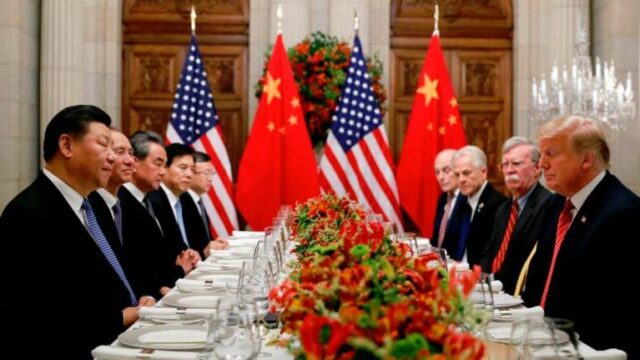
    After the 2½ hour meeting, White House chief economist Larry Kudlow said the talks went “very well,“ but offered no specifics as he boarded Air Force One headed home to Washington with Trump.

    China’s goal was to persuade Trump to abandon plans to raise tariffs on US$200 billion of Chinese goods to 25% in January, from 10% at present. Trump had threatened to do that, and possibly add tariffs on US$267 billion of imports, if there was no progress in the talks.

    With the United States and China clashing over commerce, financial markets will take their lead from the results of the talks, widely seen as the most important meeting of US and Chinese leaders in years.

    The encounter came shortly after the Group of 20 industrialised nations backed an overhaul of the World Trade Organisation, which regulates international trade disputes, marking a victory for Trump, a sharp critic of the organisation.

    Trump told Xi at the start of their meeting he hoped they would achieve “something great” on trade for both countries. He struck a positive note as he sat across from Xi, despite the US president’s earlier threats to impose new tariffs on Chinese imports as early as the next year.

    He suggested that the “incredible relationship” he and Xi had established would be “the very primary reason” they could make progress on trade.
  • China could use Vietnam to avoid US tariffs: experts

    China could use Vietnam to avoid US tariffs: experts

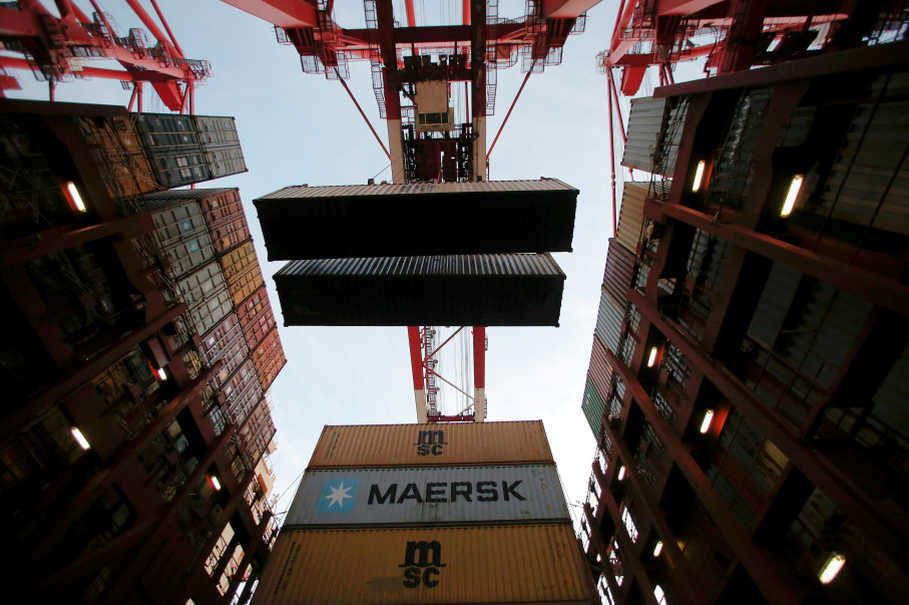
    Experts said the U.S.-China trade war puts Vietnam at risk of fraud as capital moves into the country to avoid U.S. sanctions. Vietnamese products would face tough competition from China in both the domestic and overseas markets, Nguyen Thi Thu Trang, director of the Vietnam Chamber of Commerce and Industry’s (VCCI) WTO Center, said at a recent conference on the impact of the Sino-American trade spat.

    In the domestic market, China might seek to dump its goods on Vietnam to avoid Donald Trump’s tariffs. Cheaper Chinese goods competing with Vietnamese goods will not benefit Vietnam’s economy.

    In overseas market, China might borrow the “made in Vietnam” label to dodge U.S. tariffs.

    If this cannot be controlled, there could be grave consequences for Vietnamese firms since the U.S. might apply the same tariffs as they have done on China, according to industry insiders.

    Ho Duc Lam, chairman of the Vietnam Plastics Association, said his industry has been impacted by having to compete directly with Chinese companies as China might borrow the “made in Vietnam” label to dodge U.S. tariffs.

    Tran Dinh Thien, an economist and member of the Prime Minister’s Economic Advisory Group, noted that the trade war brings both opportunities and challenges for Vietnam, but it is up to local companies to identify the opportunities.

    He said the trade war has hit investors’ confidence causing them to pull out of emerging markets including Vietnam. The global supply chain is badly disrupted as a result, and the investment environment has become uncertain, he said.

    Lam argued that to protect domestic companies the government should consider import taxes if there are signs of a safeguard action.

    It should not issue licenses if there is no guarantee that more than two thirds of the production chain would be in Vietnam, and should promote free trade agreements with Europe and others to reduce Vietnam’s dependence on the U.S. and China, he added.

    Trang of the VCCI said since the trade war shows no signs of ending soon production enterprises should monitor the situation to respond nimbly to changes and should know where and how to take advantage of potential opportunities.

    It is known which goods face sanctions, so businesses should research about customers for those goods and offer them a better deal, she said.

    The U.S.-China trade war escalated in September with the U.S. levying an additional 10 percent tariff on about $200 billion worth of Chinese products. Washington is set to raise the tariffs to 25 percent in January if there is no agreement between the both sides.

    China retaliated with 5 and 10 percent tariffs on $60 billion worth of U.S. products.

  • Retailers Urge White House To Rethink China IP Tariffs

    Retailers Urge White House To Rethink China IP Tariffs

    Retail giants like Walmart, Target and Best Buy and their powerful lobbying groups on Monday urged the Trump administration to hold off new tariffs aimed at punishing China for its intellectual property practices, saying that such an aggressive step will only make matters worse.

    The White House is preparing to wrap up its sweeping audit of China’s IP regime, focusing mainly on Beijing’s policies requiring U.S. companies to hand over their proprietary technology as a condition of market access. The administration is said to be readying steep tariffs to punish China.

    A coalition of retail titans wrote a letter to the White House urging President Donald Trump to rethink the move, saying that while China’s IP policies deserve scrutiny, sweeping tariffs are not an effective remedy for the problem.

    “Investigating technology and intellectual property policies and practices is critically important to our innovative economy,” the companies wrote Monday. “Yet were this investigation to result in a broadly applied tariff remedy on imports from China, it would hurt American households with higher prices and exacerbate a U.S. tariff system that is already stacked against working families.”

    The administration kicked off its investigation of China under Section 301 of the Trade Act of 1974 last year. The law allows for a wide variety of responses if the U.S. finds that a foreign country is violating its trade obligations.

    Supporters of the multilateral trading system had hoped that the White House would use Section 301 as a pretext for a new World Trade Organization case against China, but it looks as if the administration is leaning in favor of bypassing the WTO and imposing unilateral tariffs.

    A day before the retailers sent their letter, the White House received a similar missive from business associations including the Information Technology Industry Council, the National Retail Federation and the U.S. Chamber of Commerce.

    Much like their individual member companies, the organizations pleaded with the White House to moderate its response and build a coalition with its allies to counter China.

    “Imposition of unilateral tariffs by the administration would only serve to split the United States from its allies, hinder joint action to effectively address shared challenges, and ensure that foreign companies take the place of markets that American companies, farmers and ranchers must vacate when China retaliates against U.S. tariffs,” the groups said.

    Both letters said that while tariffs will affect Chinese imports, they will also raise costs that will eventually be passed down the supply chain to U.S. consumers.

  • Indonesia tariff ‘own goal’

    Indonesia tariff ‘own goal’

    Indonesia’s hapless government has embarked on a sudden tariff program experts agree will damage its economy and fuel inflation.

    Having just a month ago reduced taxes on luxury goods to encourage its people to spend more at home and less in overseas destinations like Singapore, now the government has slapped a range of tariffs on some 1000 popular goods categories, including cars, condoms, candy, alcohol, coffee and carpets.

    It says the move will stimulate local manufacturing by making imported goods less expensive.

    But economists – basing their comments on a long history of economic governance by Asian countries – agree the move will simply reduce spending and fuel inflation. It’s an economic own goal punishing its citizens and effectively subsidising inefficient, poor quality local producers.

    “Imposing this is out of alignment with the economic integration agenda and a step backward from the global trend of most economies forging free trade agreements towards lower tariffs, if not zero,” said Victor Tay, COO of the Singapore Business Federation.

    “Indonesia has the largest population in Asean and is also a net importer of many products.”

    Tay said imposing such barriers may protect local industry in the short term, but in the longer term might lead to local manufacturers being unable to improve their competitiveness against other regional suppliers.

    “This will not serve the greater business community well, especially if other countries start erecting their own barriers on a reciprocal basis,” he said.

    Indonesian university economist A. Prasetyantoko, concurred: “Higher import taxes would reduce the supply of goods and increase domestic prices, which would in turn further weaken buying power, then economic growth.”

    The new tariffs include:

    • 20 per cent on imported tea and coffee, raised from five per cent.
    • 30 per cent on meat, up from five per cent.
    • 50 per cent on cars, up from between 10 per cent and 40 per cent.
    • 15-20 per cent on confectionery, up from 10 per cent.
    • 150 per cent on imported liquor, previously 125,000 rupiah ($9.30) per litre.

    As one commentator in Singapore observed, the new tariffs are likely to make some Indonesians shift to having a coffee at a local coffee shop instead of at Starbucks.

    Justifying the increases, Heru Pambudi, customs and excise tax director-general, said: “Domestic industry is being overwhelmed by the flows of imported goods. We need to curb these flows so domestic products would not be outnumbered.”