Retail News CRM

Tag: imported car

  • Rolls-Royce agrees to follow Korea’s lemon law

    Rolls-Royce agrees to follow Korea’s lemon law

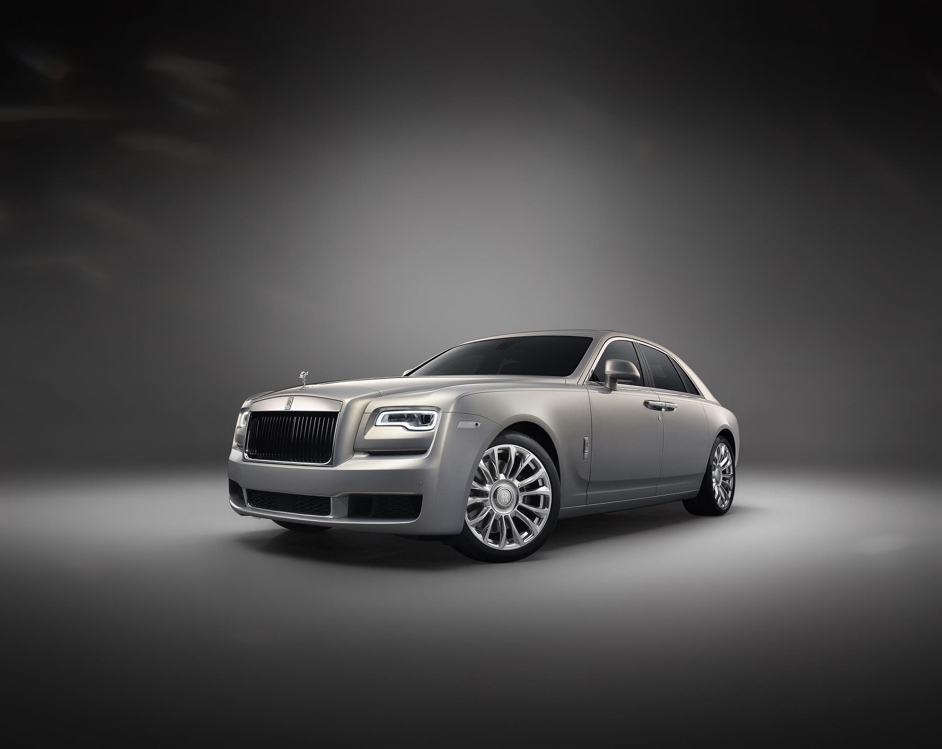
    Rolls-Royce announced Wednesday it will follow Korea’s voluntary lemon law for automakers, making it the first foreign luxury brand to accept the newly introduced regulation. Korea’s revised automobile management law, enacted last month, forces complying automakers to replace or refund recently purchased vehicles that repeatedly exhibit problems, similar to lemon laws in the United States.

    While most local automakers have adopted the rule, Volvo has been the only overseas brand to do so.

    The U.K.-based automaker said it will abide by the country’s revised auto guidelines to strengthen its quality commitment to Korean customers.

    “Rolls-Royce will be the first luxury brand to accept the amended automobile management act,” said Rolls-Royce Motor Cars CEO Torsten Muller-Otvos at a launch event on Wednesday for the automaker’s showroom in Cheongdam-dong, southern Seoul.

    “It is our responsibility … to reassure our Korean customers that we will stand by our promise of ultimate quality,” added Muller-Otvos.

    Foreign automakers’ reputations took a blow in Korea last year. BMW Korea conducted two series of recalls after its vehicles began bursting into flames due to component defects.

    The Korean unit of Mercedes-Benz was fined 2.8 billion won ($2.5 million) in December for violating environmental and customs law regarding emissions certifications.

    BMW was fined for similar reasons at the start of this year.

    The quality push from Rolls-Royce comes as the luxury automaker achieved record sales figures last year in the Korean market as foreign imported vehicles continue to grow in popularity.

    According to the Korea Automobile Importers & Distributors Association, Rolls-Royce sales in the domestic market grew 43 percent to 123 units last year from 86 in 2017. Foreign auto imports increased by 11.8 percent.

    The luxury automaker’s performance in the Korean market last year outpaced its 22 percent growth in global sales.

    According to Rolls-Royce, the brand’s sales grew at a rapid pace in Korea last year thanks to an expanded lineup, including the Phantom.

    The CEO said he expects the company’s performance in the country to continue to improve.

    “Korea is a very important cornerstone in our Asia strategy,” said Muller-Otvos. “We might even see at a certain moment Korea overtaking the Japanese business in terms of size.”

    The luxury automaker’s chief also emphasized the automaker’s commitment to the luxury sector as the auto industry braces for major changes.
  • Sales of imported vehicles in Korea fell 10 percent in January

    Sales of imported vehicles in Korea fell 10 percent in January

    Sales of imported vehicles in Korea declined by more than 10 percent in January from a year earlier due to typically low seasonal demand and supply shortage of some brands, industry data showed on Friday. The number of foreign cars sold last month reached 18,198 units, down 13.7 percent from a year earlier, according to the data compiled by the Korea Automobile Importers & Distributors Association (Kaida).

    The tally also marks an 11 percent drop from a month earlier, the data showed. In 2018, sales of foreign cars continued to rise, helped by firm demand for foreign brands and the resumption of sales of Audi Volkswagen.

    The number of newly registered foreign vehicles reached 260,705, up 11.8 percent from 2017.

    Foreign passenger cars made up 16.7 percent of all vehicles that were registered in the country last year, shattering the previous record high of 15.5 percent in 2015.

  • Imported vehicle sales in Korea up nearly 10% in 2018

    Imported vehicle sales in Korea up nearly 10% in 2018

    The value of imported vehicles sold in Korea last year jumped 9.9 percent to 17.47 trillion won ($15.49 billion) from a year earlier on demand for German models, industry data showed Thursday. In 2018, imported carmakers sold a combined 260,705 vehicles in Asia’s fourth-biggest economy, up 12 percent from the previous year, the latest findings showed.

    According to the Korea Automobile Importers and Distributors Association (Kaida), strong demand for vehicles made by Mercedes-Benz, Audi and Volkswagen pushed up sales numbers.

    Imported auto brands accounted for a record 16.7 percent of all vehicles sold and registered in the domestic passenger car market for 2018, up from 15.23 percent in the previous year, Kaida said.

  • Jaguar’s first electric car roars into Korea

    Jaguar’s first electric car roars into Korea

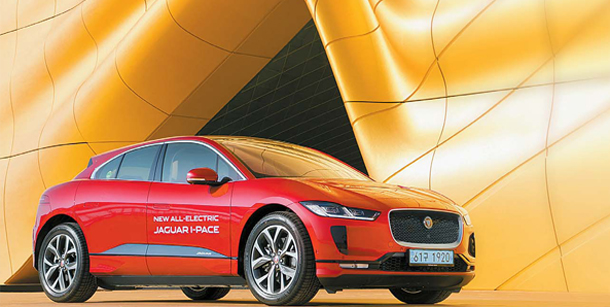
    Luxury carmaker Jaguar introduced the I-Pace, its first electric vehicle (EV), to the Korean market Monday at the Paradise City hotel in Incheon, joining a growing number of EV automakers in the country. The luxury brand’s all-electric sport-utility vehicle (SUV) sports an electric powertrain that produces up to 400 horsepower and a 333-kilometer (207-mile) driving range.

    “The I-Pace is a high-performance electric car that has battery and electric motor technology developed from our experience in electric motor sports Formula E,” said Baek Jung-hyun, CEO of Jaguar Land Rover Korea. “Jaguar will lead the future of premium electric cars through the I-Pace.”

    The vehicle, originally unveiled in the global market early last year, was delayed for launch in Korea due to the certification process, according to Jaguar Land Rover Korea.

    The automaker has prepared charging infrastructure for the product’s launch, installing 52 charging stations in 26 of its showrooms. The company has also installed 52 chargers and 26 fast-charging stations in its service centers.

    The fast-charging stations can charge vehicles to up to 80 percent in just 40 minutes.

    For maintenance, the carmaker promised to establish 10 new service centers so that there will be a total of 37 by the end of this year.

    Jaguar Land Rover Korea is also promising an eight-year or 160,000-kilometer warranty for its battery system and will install home-charging systems for free for those customers who receive their vehicles by March 31 this year.

    The luxury brand’s all-electric car enters the budding local EV market that has seen rapid growth over recent years.

    A total of 21,375 EVs were sold between January and September last year, up from 13,826 sold in 2017. The Ministry of Environment plans to have 350,000 EVs and 10,000 fast-charging stations in the country by 2022.

    Jaguar’s newest offering joins the short list of electric SUVs in Korea, which include Tesla’s Model X and Hyundai Motor’s subcompact SUV Kona EV, both released last year in the local market.

    The I-Pace will be sold from Jan. 23 with a starting price of 110.4 million won ($98,300) that climbs to 128 million won for its highest trim, the EV400 First Edition.

  • Vietnam driven to protect domestic automobile industry

    Vietnam driven to protect domestic automobile industry

    Vietnamese policymakers are looking at ways to safeguard the domestic automobile industry against foreign rivals, based on an official document released by the government office.

    Vietnam’s automobile industry is expected to face more hurdles in the years to come as the local market opens up to foreign competitors.

    Locally-assembled cars could cost 20 percent more than those imported from neighboring countries such as Thailand and Indonesia in 2018, when tariffs on car imports into Vietnam from other ASEAN countries will be cut to zero from the current 50 percent, the trade ministry said.

    The government has asked trade officials to look at ways to prevent a surge in car imports.

    Meanwhile, the finance ministry will review import tariffs on cars and monitor their origin to prevent tax dodging.

    Vietnamese policymakers also plan to adjust import tariffs on automotive parts that are not available in the domestic market.

    The Southeast Asian country has targeted car manufacturing as a “spearhead industry” that could help it move up the global chain.

    However, the fact that it still heavily relies on imported cars to meet local demand has exerted tremendous pressure on local manufacturers.

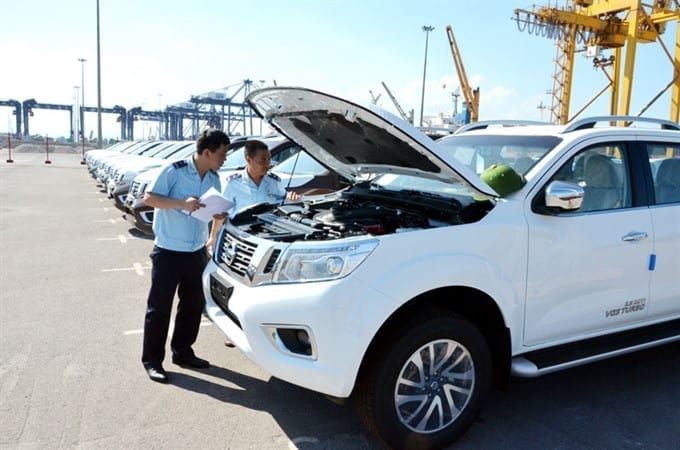
    Vietnam imported 15,270 units in the first two months this year, a 35 percent jump from a year ago, customs data showed.

    The import surge comes as Vietnamese people switch from motorbikes to cars, with more than half of the imported cars classed as midsize sedans, based on official statistics.