Tag: INDIGO

  • IndiGo and Air India Express to Shift Mumbai Flights Starting December 2026

    IndiGo and Air India Express to Shift Mumbai Flights Starting December 2026

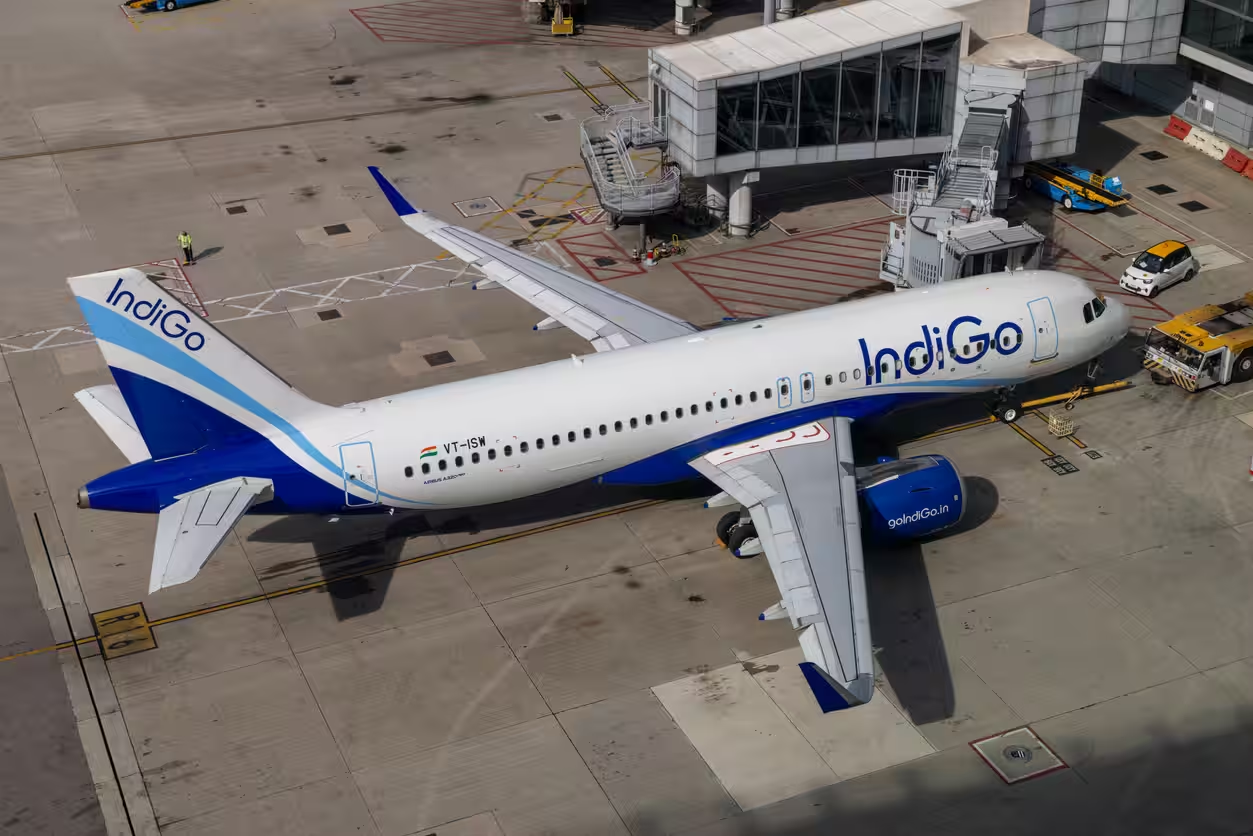
    IndiGo and Air India Express will move selected flights from Mumbai’s Chhatrapati Shivaji Maharaj International Airport to the new Navi Mumbai International Airport starting in December 2026. The phased relocation allows Adani Airport Holdings Ltd to prepare Terminal 1 for redevelopment ahead of 2030 while protecting existing airline slots.

    Air India Express begins the migration by launching four daily domestic flights from Navi Mumbai in December 2026. IndiGo will start international operations from the facility in February 2027, transferring 12 daily overseas departures alongside domestic feeder connections.

    The joint announcements made on October 25 outline plans to redistribute passenger traffic across the dual-airport system without causing abrupt disruptions. Terminal 1 upgrades at Chhatrapati Shivaji Maharaj International Airport require capacity adjustments, with Navi Mumbai serving as an alternative hub after opening for commercial flights in December 2025.

    Staged Rollout Across Two Facilities

    IndiGo’s international migration begins in February 2027 and runs through July 2027. The airline will progressively transfer 12 daily international departures currently operating from CSMIA. These cover existing services to Bahrain, Riyadh, Dammam, Jeddah, Madinah, Kuwait, Ras Al Khaimah, Fujairah, Muscat, Dhaka and Jakarta.

    IndiGo will also introduce a daily service to Kathmandu. With this addition, the airline expects to serve 12 international destinations from NMIA between February and July 2027. It will shift supporting domestic flights as well so that passengers can make onward connections at the new airport. Specific transfer dates will be announced once coordination and operating approvals are complete.

    Air India Express will begin the transition earlier. The airline plans to operate four daily domestic flights from NMIA starting in December 2026. From January 2027, it intends to move existing services to Oman and launch planned services to Kuwait, subject to the required regulatory approvals for Kuwait.

    The Air India Group will also progressively shift Air India Express flights to Jeddah, Riyadh , Dammam, Doha, Muscat and Sharjah to NMIA. The process is expected to be completed by the IATA Northern Summer 2027 season. Operating from both airports will allow the group to retain its historical slots at CSMIA while continuing to serve the market.

    Slot Preservation and Terminal Realignment

    The moves are intended to ease congestion at the existing airport and support growing passenger demand in the Mumbai metropolitan region. By shifting a portion of flights to NMIA, the airlines and AAHL can free up space at CSMIA without forcing sudden disruptions for passengers. Any further adjustments needed for Terminal 1 work at CSMIA are expected to be handled at Terminal 2.

    According to the joint statement issued by IndiGo and Adani Airport Holdings, “The phased transition is intended to support a transparent, equitable and proportionate rebalancing of capacity across Mumbai’s dual airport system, taking into account each airline’s presence at CSMIA.”

    The companies said the approach would provide greater planning certainty for airlines and passengers while minimising operational disruption.

    Building Out the Dual Hub Network

    The transfers mark a significant step in building NMIA as a complementary hub. By redistributing selected domestic and West Asia routes, the airlines free capacity at CSMIA for potential new long-haul services. For passengers, the change means some flights currently departing from Mumbai will move to Navi Mumbai over the coming months, with clear timelines already outlined for the initial phases.

  • GE Aerospace to Double India Supply Chain Spending to $400 Million by 2030

    GE Aerospace to Double India Supply Chain Spending to $400 Million by 2030

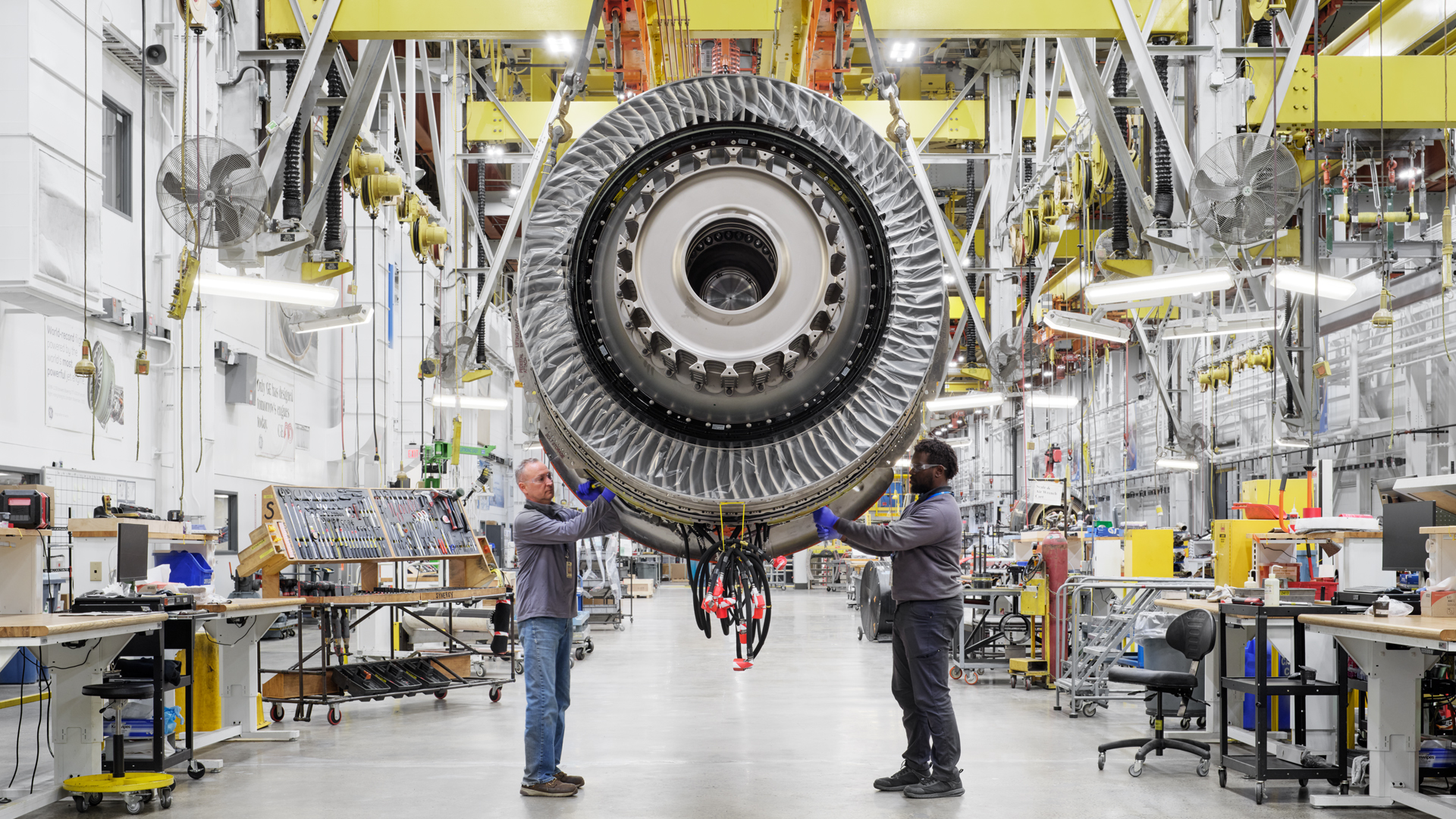
    GE Aerospace will increase annual supply chain spending in India to $400 million by 2030. The target doubles its current procurement footprint in the country.

    Annual spending across Indian suppliers reached $200 million in 2025. Surging fleet orders from domestic airlines drove that total.

    Procurement will cover new engine components alongside higher volumes for existing parts. Sourcing runs through 17 global tier-one suppliers in India, including Tata Group, Mahindra, Hindustan Aeronautics Limited, and Godrej. More than 2,000 domestic tier suppliers support the network.

    Expanding Component Manufacturing in Pune

    Manufacturing centers on the multi-modal plant in Pune. It produces engine components for export and domestic integration. Cumulative capital spending at the site stands at $255 million, feeding global assembly lines for commercial platforms.

    Engineering and software teams operate out of the Bengaluru Technology Centre, established in 2000. The site holds over 1,000 patents. It developed the ABM.ai predictive maintenance platform and the Blade Inspection Tool used across GEnx, CFM LEAP, and GE9X programs. The digital unit also serves as a global capability centre for worldwide engine maintenance, sales, and supply chain tracking.

    Backing Aircraft Fleet Expansion

    Domestic passenger journeys reached 340 million in fiscal year 2026 and are projected to reach 1.1 billion by 2040. Indian carriers and armed services currently operate more than 1,400 commercial engines from GE and its partners, alongside over 200 defence engines.

    Local airlines hold firm orders for over 1,700 aircraft scheduled for delivery over the next decade. More than 3,200 engines from GE Aerospace and its joint ventures will power those fleets. Local component production helps the manufacturer maintain delivery schedules against global supply chain bottlenecks.

    Joint Ventures and Maintenance Capacity

    Regional carriers need local maintenance facilities to avoid turnaround delays abroad. Sourcing parts closer to flight hubs cuts transit time for heavy engine overhauls.

    IndiGo signed a memorandum of understanding in July 2026 with CFM International, GE’s 50-50 joint venture with Safran Aircraft Engines. The deal covers more than 1,000 LEAP-1A engines for 510 Airbus A320neo family jets. It also provides technical support to build IndiGo’s dedicated engine maintenance, repair, and overhaul facility.

    Scaling Local Supplier Integration

    Precision manufacturing in India has moved beyond basic aerostructures into complex rotating parts and turbine components over the past decade. Raising procurement from $200 million to $400 million tests whether local suppliers can maintain aerospace quality standards at higher output rates.

    Next, the supplier development program will qualify new part numbers at Pune and integrate higher production runs across the 17 global Indian supplier partners as deliveries ramp up toward 2030.

  • INDIGO cable system ready for use

    INDIGO cable system ready for use

    The new INDIGO subsea cable linking Singapore, Indonesia and Australia has completed commissioning and is ready for use.

    The INDIGO consortium – consisting of Google, Indonesia’s Indosat Ooredoo, Singtel, and Australia’s SubPartners and Telstra – are now able to leverage the new cable system to enable capacity increases on demand.

    The 9,200km INDIGO cable system can support a capacity of up to 36Tbps. It consists of the 4,600km INDIGO West cable between Singapore in Indonesia and Perth on the west coast of Australia with a branching unit to Jakarta, and the 4,600km INDIGO Central cable between Perth and Sydney on the east coast of Australia.

    INDIGO uses new spectrum sharing technology which will allow consortium members to each independently manage capacity on the cable.

    Alcatel Submarine Networks built the new cable system under an agreement reached with the consortium members in April 2017.

    “The development of the INDIGO cable system strengthens the link between our Australian network and the fast-growing South East Asian markets and will deliver our customers faster connectivity and dramatically improved reliability,” Telstra head of international Oliver Camplin-Warner said.

    Bandwidth demand between Asia and Australia is predicted to reach 75Tbps by 2025, TeleGeography predicts.

    “As South East Asia and Australia become increasingly interconnected, a high-speed and robust connectivity infrastructure plays a critical role in catalyzing the development of digital economies across the regions,” Singtel VP of carrier services Ooi Seng Keat said.

    “The completion of INDIGO will accelerate the roll-out of next-generation technologies that rely on low latency and high-bandwidth connectivity such as high-definition video, autonomous vehicles, Internet of Things and robotics applications.”

    As well as its domestic operations in Singapore, Singtel is the 100% owner of major Australian operator Optus.

  • Tmall, Swire Properties launch New Retail initiative

    Tmall, Swire Properties launch New Retail initiative

    Alibaba Group’s Tmall and Swire Properties are launching a New Retail initiative creating tailored retail experiences at Swire Properties’ five shopping malls in Mainland China. The partnership will bring benefits to customers in time for Alibaba’s 11.11 Global Shopping Festival on Sunday with Taikoo Li Sanlitun in Beijing the first brick-and-mortar shopping mall in Mainland China to experience this year’s 11.11 “red packet rain” this week.

    Swire Properties will introduce Tmall’s New Retail technologies at five of its developments: Taikoo Li Sanlitun and Indigo in Beijing; HKRI Taikoo Hui in Shanghai; Taikoo Hui in Guangzhou and Sino-Ocean Taikoo Li in Chengdu. The five New Retail initiatives include Tmall Smart Stores, a Tmall Pop-Up Store, Interactive Idol Engagement Photo Booths, Smart Nursery Rooms and a Smart Parking Service.

    Tmall Smart Stores: Shoppers will enjoy a seamless online and offline shopping experience from order to delivery (for participating physical stores). By signing up as members of selected brands, customers can instantly receive details on the latest promotions, and enjoy a return service by simply using their digital devices.

    Tmall Pop-Up Store: Tmall will open an interactive pop-up store featuring cutting-edge technology at Taikoo Li Sanlitun. This nine-day promotion during the Festival will offer shoppers in-depth and enhanced experiences.

    Interactive Idol Engagement Photo Booth: Fans will have a chance to ‘virtually interact with’ and snap a photo with their idol. This is the first-of-its-kind check-in hot spot in Mainland China.

    Smart Nursery Rooms: These offer mothers a relaxing and private space where they can nurse their babies at shopping malls. Vending machines will also offer essential nursing necessities.

    Smart Parking Service: By linking Alipay with their car license plates, drivers can pay parking fees with ease. This service will save drivers 80 per cent of the time usually spent on paying the parking charge and exiting the car park.

    “At Swire Properties, we are always looking for new ways to innovate and integrate the latest technologies into our business, so that we can bring unique experiences to our customers,” said Han Zhi, director, retail at Swire Properties. “Our collaboration with Tmall is a powerful example of digitisation. By harnessing rapidly developing online technologies and big data, our goal is to define the New Retail shopping experience.

    “This year marks the 10th anniversary of Taikoo Li Sanlitun and Alibaba’s 11.11 Global Shopping Festival, both of which have grown in leaps and bounds the past decade. We’re confident that our partnership, which also celebrates this milestone, will set a new benchmark in our respective industries and in the digital space.”

  • Consortium contracts ASN for INDIGO cable system

    Consortium contracts ASN for INDIGO cable system

    A consortium consisting of Asian operators, Google and telecommunications infrastructure company Superloop have commissioned a new subsea able system linking Singapore, Indonesia and Australia.

    Singtel, Indonesia’s Indosat Ooredoo as well as Australia’s Telstra and education sector network provider AARNet have joined Google and Superloop’s SubPartners to join the INDIGO cable system.

    The cable system, formerly known as APX West and Central, will be deployed by Alcatel-Lucent Submarine Networks.

    It will span around 9,000km between Singapore and Perth on the west coast of Australia, and onwards to Sydney on the east coast. A ranching unit with two additional fiber pairs will connect Singapore and Jakarta.

    Construction of the cable is expected to be complete by mid-2019. The system will use an open cable two fiber pair desgin, providing consortium members with spectrum ownership and giving them the ability to independently adopt technology advancements and upgrades as required.

    “With internet data consumption growing by 70% in Asia last year alone these sorts of investments in international networks are critical for meeting the needs of connected consumers and businesses,” Telstra group MD for global services and international David Burns said.

    “The construction of INDIGO is timely to meet the rising demand for high-speed broadband between Asia and Australia. This cable system complements our global connectivity that links Asia, the US, Europe, Australia and the Middle East,” Singtel Enterprise VP for carrier services Ooi Seng Keat added.

    Superloop has inherited its membership in the INDIGO consortium via the recent acquisition of subsea cable operator SubPartners for $2.5 million. As part of the acquisition Superloop has provided a guarantee involving the meeting of SubPartners’ construction capex costs for the project.