Tag: indochina

  • Vietnam gets its first MVNO Provider

    Vietnam gets its first MVNO Provider

    Indochina Telecom has become the first MVNO in Vietnam, operating on the VinaPhone network. The operator is initially introducing services for workers in industrial parks in nine provinces and cities.

    Indochina Telecom has been attempting for over a decade to launch MVNO services in Vietnam, the report states. The company had initially failed to negotiate an MVNE deal with Viettel, but has secured one with VinaPhone, the mobile subsidiary of VNPT.

    The company plans to introduce a variety of packages tailored to different groups and user segments, and will cooperate with Vietnam’s mobile network operators to negotiate the best deals.

    Indochina Telecom’s introductory package provides unlimited under 20 minute within network and 30 minute out of network calls for 77,000 dong ($3.31) per month.

  • Gap Japan to axe Old Navy

    Gap Japan to axe Old Navy

    Gap Japan will close its 53 Old Navy stores as its parent narrows its focus in Asia.

    But CEO Art Peck says the company “remains committed” to growing its brands in regions where it has a structural advantage.

    The relatively down-market Old Navy brand will focus on the Mainland China market and the Gap brand will remain in Japan, he announced, at the time of revealing a first quarter sales decline of US$$3.44 billion, down 5 per cent.

    “Japan remains an important market for Gap Inc’s portfolio, with a continued strong presence of more than 200 Gap and Banana Republic stores,” said Peck.

    A further 22 international stores will close, but the company has not revealed where or which brands.

    “As the pace of change across the apparel industry increases, now is the time to accelerate our

    transformation by scaling our product and operating capabilities across our global portfolio,” said Peck.

    Asia accounted for 11 per cent of Gap’s global sales, 1 per cent more than during the same quarter of last year. Across the region it no has 312 Gap-branded stores (up seven), 69 Old Navy stores (up four) and 51 Banana Republic stores (no change).

    Globally, Gap stores sales decline 3 per cent – which was better than last year’s 10 per cent; Banana Republic sales fell 11 per cent compared with 8 per cent and Old Navy fell 6 per cent, compared with 3 per cent.

    Neil Saunders, CEO of Conlumino, described the quarter as “disastrous” for Gap, “ one during which all of its main engines stalled and went into reverse”.

    “Gap Inc is now retailer without any star brands and with seemingly little vision to move itself forward. Unless it takes radical action to overhaul its businesses the outlook will only darken still further,” said Saunders.

    “Most worryingly, while the latest April numbers are likely impacted by the earlier Easter, they nevertheless show that all brands failed to gain any momentum as the quarter progressed. Indeed, in the case of Old Navy the sales slip accelerated.”

    Saunders says the central issue for Gap is that it is “creatively dull” and does very little to change collections from season to season or year to year.

    “As a result it has become increasingly reliant on customers buying on a replacement cycle rather than being inspired to buy new products. This, in turn, leads to it stimulating sales by the use of extensive discounting which then discourages consumers from buying at full-price. Gap shows no signs of getting out of this viscous cycle.”

    He said its Banana Republic brand has gone into reverse since the departure of Marissa Webb.

    “While Webb’s attempts to revitalise the chain did not bear immediate fruit, that she was not given sufficient time in the job and, much like the departure of Rebekka Bay, her leaving signifies Gap has both a problem with change and with giving competent people the scope to get on with the job in hand.”

    Old Navy’s decline is more recent, he argues.

    “While the brand has been the star of the show for many quarters, the past few collections have been dull and uninspiring. Stores are also looking more fragmented with no clear merchandise or brand story to entice shoppers. Coupled with excess inventory this has made for a less than pleasant shopping experience – something that has diluted the impact of the various flash sales and offers Old Navy has traditionally relied on for growth.

    “As problematic as sales are, there is no doubt that margins are equally troubled. All Gap brands have resorted to heavy discounting in order sales and, even so, the company still has an excess of inventory. The final profit position for the quarter is very poor with net income down by a sharp 47 per cent over the prior year.

    “All of this bodes badly,” Saunders concluded.

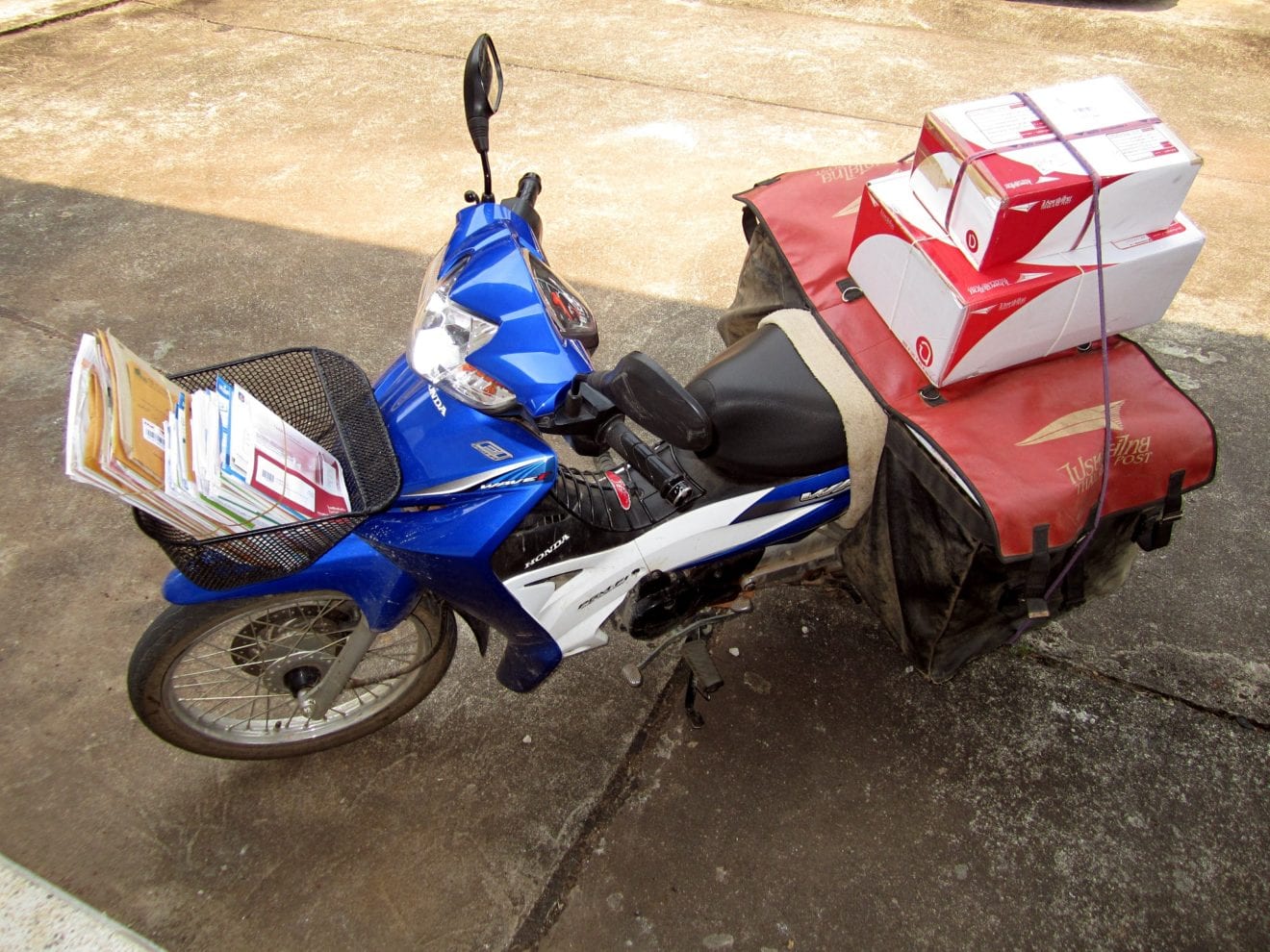
  • Thailand Post ‘s logistics arm aims to be Indochina hub

    Thailand Post ‘s logistics arm aims to be Indochina hub

    Warakan Srinualnad, chief executive officer of Thailand Post Distribution, said yesterday that the company aimed for Bt400 million in revenue in 2015 and expected to keep growing at 10 per cent per year. The company will expand to cover the whole Indochina region by 2017.

    The main target customers include providers of medicines and medical supplies, e-commerce and home shopping, banks and financial institutions, multinational companies and border traders.

    “The company already has customers such as the Government Pharmaceutical Organisation, the National Security Health Office and a home shopping company. As of now, most of our customers are government organisations. Our services are available for business-to-business, government-to-government, and business-to-government,” Warakan said.

    Thailand Post Distribution, a wholly owned subsidiary of Thailand Post, was established last year with registered capital of Bt350 million. It offers total logistical solutions including packing, warehousing, delivery and payment services for both private companies and government organisations.

    Warakan said the company was combining the strengths of Thailand Post with those of strategic partners in both fleet management and warehouses.

    Currently, the company has about eight fleet-management partners, with combined transport fleets of 500. Its warehouse partners include WHA Corporation, while its parent company, Thailand Post, and technology partners provide warehouse and transport management systems.

    Thailand Post Distribution has established its 20,000-square-metre warehouse network under Good Storage Practice standards, setting aside around 11,000sqm for temperature-controlled areas for storage of such products as pharmaceuticals, cosmetics and cosmeceuticals.

    The company also uses 10 of Thailand Post’s 16 warehouses and distribution centres located throughout the country. Its transport and distribution services adhere to Good Distribution Practice standards.

    “The services of Thailand Post and Thailand Post Distribution are complementary to each other. We act as strategic partners to use each other’s infrastructure and resources. For example, we can use Thailand Post’s 5,000 outlets [post offices, postal centres, and regional postal centres] to fulfil our services,” Warakan said.

    The logistics market in Thailand accounts for around 15-17 per cent of gross domestic product, Warakan said. The market is also growing in emerging areas, especially e-commerce.

    Piyawat Mahapauraya, senior executive vice president and acting president of Thailand Post, said its four main businesses were communications, logistics, retail and financial services. Thailand Post Distribution is now responsible for logistics.