Tag: Indonesia’s

  • Indonesia’s Wealthy on Tax Radar as Government Battles Soaring Budget Deficit

    Indonesia’s Wealthy on Tax Radar as Government Battles Soaring Budget Deficit

    The Indonesian government is increasing its tax scrutiny on its wealthy residents and large corporations in light of a significant national budget deficit. This action is part of a broader initiative to enhance tax collections amidst a challenging year for revenue in Southeast Asia’s most substantial economy. The current budget deficit is closing in on the 3% of GDP ceiling.

    Intensified Tax Scrutiny

    Large corporations, especially those under local magnate control, have been requested to provide additional tax payments in 2025. Some family-owned businesses have been asked to contribute over US$5 million.

    Circumstances grew more complicated when a subset of these firms resisted the new demands. Tax authorities then proposed a compromise, suggesting companies pay 30% of the requested amount. The calculation method for this figure, however, was not disclosed.

    Finance Ministry’s Director-General of Taxes, Bimo Wijayanto, verified the summoning of high-net-worth taxpayers. In a press briefing on December 18, he described the move as a standard procedure meant to make tax data more accurate. He also mentioned that this initiative offers taxpayers an opportunity to provide explanations, voluntarily rectify their tax returns, and ensure compliance.

    The exact number of individuals and businesses contacted for this matter remains unknown.

    The “Hunting in a Zoo” Phenomenon

    End-of-year drives to boost tax revenue are not uncommon in Indonesia. Critics and business leaders often refer to this as “hunting in a zoo.” This metaphor refers to the tendency to focus on a small group of large, formal taxpayers who are easier to track, rather than broadening compliance across the country’s expansive informal economy.

    According to data from the Finance Ministry, tax receipts are currently significantly below targets. Collections up to the end of November amounted to 79% of a decreased full-year aim, a drop from nearly 90% over the same period the previous year.

    Experts believe that weak collections, coupled with subdued economic conditions and softer commodity prices, have led to Indonesia’s budget deficit forecast hitting 2.78% of GDP. This estimate is the highest in two decades, excluding the years affected by the COVID-19 pandemic.

    Questions & Answers

    Why is the Indonesian government increasing tax scrutiny on wealthy individuals and corporations?
    The government is trying to address a significant national budget deficit by enhancing tax collections.

    What compromise has been proposed to companies resisting additional tax payments?
    The tax authorities have suggested that these companies pay 30% of the requested amount.

    How are end-of-year efforts to increase tax revenue perceived in Indonesia?
    These efforts are often referred to as “hunting in a zoo,” indicating a focus on a small pool of large, formal taxpayers rather than seeking to expand compliance across the country’s vast informal economy.
  • Indonesian Coffee Chain Toko Kopi Tuku Opens First European Store In Amsterdam

    Indonesian Coffee Chain Toko Kopi Tuku Opens First European Store In Amsterdam

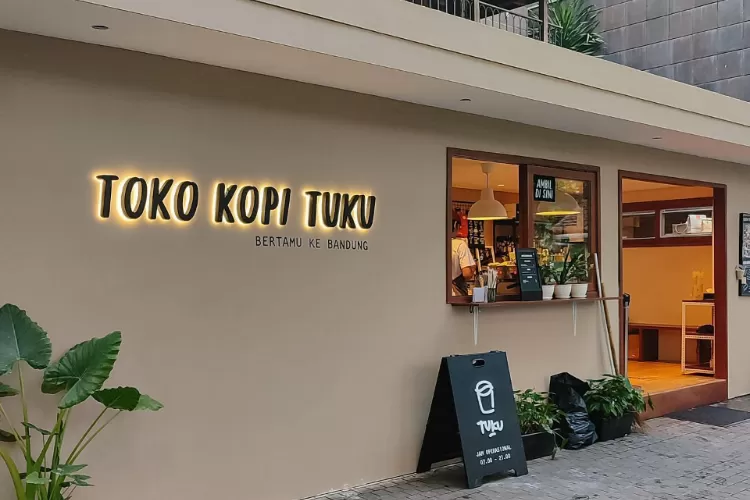
    Toko Kopi Tuku, an Indonesian coffee chain, has recently launched its inaugural European outlet in Amsterdam. This expansion represents the latest step in the company’s global strategy, following a pop-up store in Seoul last year.

    The Amsterdam store is the result of a collaboration with Roemah Indonesia and aims to blend into the Dutch market while simultaneously promoting Indonesian coffee beans, such as those sourced from Aceh and Toraja.

    Expanding the Menu

    Tuku’s menu offers its signature beverage, Kopi Susu Tetangga, as well as an array of food choices adapted to cater to the local palate.

    Rina Radinal Maksum, co-founder of Roemah Indonesia, expressed her confidence in the success of Tuku’s international expansion, following their positive experience with coffee brand Hejo.

    From Small Beginnings to Global Ambitions

    Toko Kopi Tuku’s journey began in 2015 as a modest kiosk located in the Cipete district of Jakarta, under the leadership of CEO Andanu Prasetyo. It has since metamorphosed into a coffee chain with a wide presence throughout Indonesia. The brand maintains an ambitious target of running 72 stores globally by the close of this year.

    Questions & Answers

    What is Toko Kopi Tuku?
    Toko Kopi Tuku is an Indonesian coffee chain that began as a small kiosk in Jakarta and has grown into a popular cafe chain across Indonesia.

    What is the significance of the new store in Amsterdam?
    The newly opened store in Amsterdam marks the first European outlet for Toko Kopi Tuku, signifying a key step in the company’s global expansion strategy.

    What are Tuku’s future expansion plans?
    Tuku aims to operate 72 stores worldwide by the end of the current year, highlighting the brand’s ambitious global growth plan.

  • Grab Aims for Strategic Acquisition of Indonesia’s GoTo by Q2

    Grab Aims for Strategic Acquisition of Indonesia’s GoTo by Q2

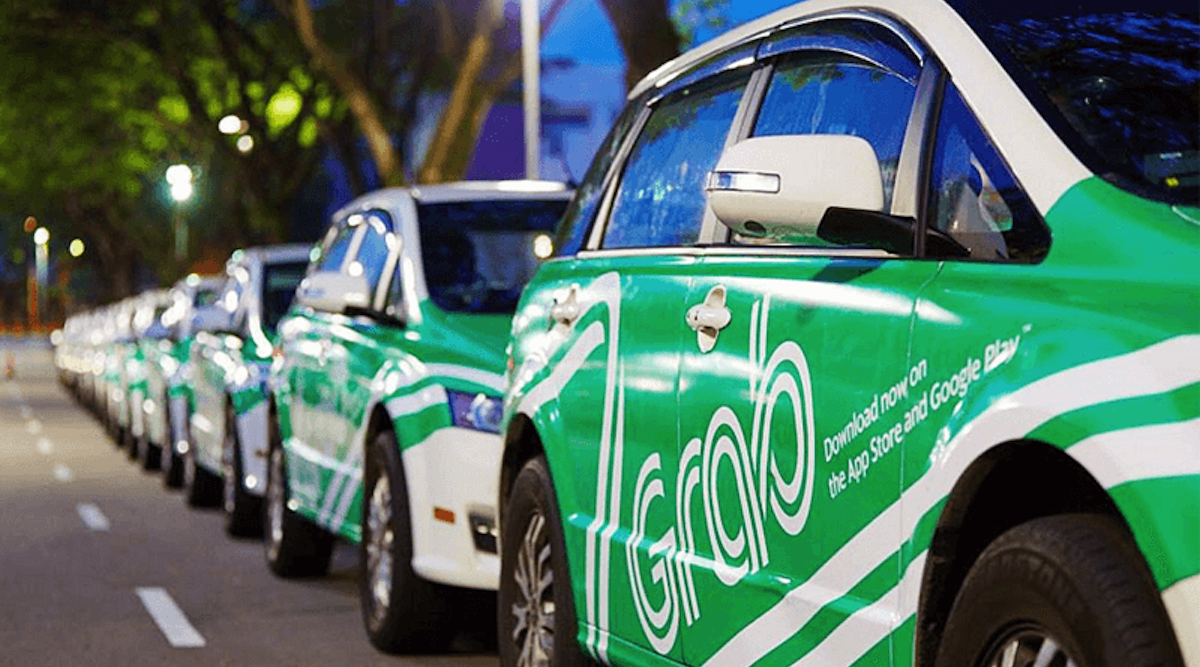
    Grab is stepping into the spotlight with plans to acquire GoTo, Indonesia’s dynamic tech giant, in a deal tantalizingly pegged around $7 billion. According to sources, the Singaporean-based company has enlisted advisors to navigate the intricacies of this potentially groundbreaking merger, with financial discussions currently underway with top banks. Both companies, however, have opted for silence amidst the buzz surrounding this significant transaction.

    The market response to GoTo has been notably positive, as its shares surged 20% year-to-date, bringing the company’s market value to approximately $5.8 billion. Meanwhile, Grab, which trades on Nasdaq, is enjoying a recent uptick, with shares climbing 2.4%, resulting in a valuation nearing $20 billion.

    As part of the deal, GoTo plans to divest its international operations in Singapore to Grab, while also transferring its entire Indonesian business to Grab, excluding its finance division. Such a strategic move may reinforce Grab’s position in a competitive landscape.

    Analyst Niko Margaronis from BRI Danareksa Sekuritas, who keeps a close eye on GoTo, hinted that the Indonesian government might take a more lenient stance on this proposed merger. He suggests that regulators could consider the positive implications of strengthening key players, ultimately aiming for long-term economic growth.

    However, potential antitrust concerns loom large against the backdrop of rising living costs stirred by an unpredictable global economy. A recent case that looms in the collective memory was Uber’s aborted $950 million bid for Delivery Hero’s Foodpanda in Taiwan last March, a move quashed by regulatory fears over anti-competitive practices.

    As the market prepares for what could be a transformative shift in the tech landscape of Southeast Asia, all eyes remain fixed on Grab and GoTo. What other surprises might be lurking around the corner?

    Questions & Answers

    **What is Grab looking to acquire from GoTo?**
    Grab is interested in acquiring GoTo’s international unit in Singapore along with its Indonesian operations, excluding its finance arm, for around $7 billion.

    How have GoTo’s shares performed this year?
    GoTo’s shares have risen approximately 20% year-to-date, boosting its market value to about $5.8 billion.

    What might affect the approval of this merger?
    Potential antitrust scrutiny could play a significant role, especially amid increasing concerns over living costs and the impact of market consolidation.

  • Indonesia’s Fore Coffee launches IPO to fund expansion

    Indonesia’s Fore Coffee launches IPO to fund expansion

    Indonesian coffee chain Fore, backed by East Ventures, has launched an initial public offering (IPO) to expand domestically and internationally.

    The company said it is capitalizing on the expanding middle class, which is driving demand for premium coffee and lifestyle products.

    Fore operates a hybrid business model, combining quick-service outlets optimized for pick-up and delivery with traditional sit-down cafes.

    The IPO offers up to 1.88 billion new shares—equivalent to 21.08 percent of the company’s enlarged capital. Shares are priced between US$0.01 (IDR160) and $0.02 (IDR202), with a potential fundraising target of $22.98 million (IDR379.76 billion).

    Following regulatory approval, the IPO’s effective date is March 25. Public trading is scheduled from March 26 to April 9. Shares are expected to be electronically distributed on April 10. The newly issued shares will carry equal rights to existing ones.

    Mandiri Sekuritas and Henan Putihrai Sekuritas are underwriting the offering.

    Last year, Fore Coffee opened 61 new locations, bringing its total store count to 230. CEO Vico Lomar said the company plans to open 60 more stores this year, including a second Singapore location.