Tag: indoor

  • Demand for seamless indoor-outdoor location tech on the rise

    Demand for seamless indoor-outdoor location tech on the rise

    ABI Research noted that of the 205 companies it surveyed for its Location Technologies Supply Chain and Ecosystem Tracker, 24% of them are currently offering solutions covering both indoor and outdoor location services.

    The researcher cited growing need for seamless indoor and outdoor integration and supply chain visibility forcing more companies at the lower layers of the technology supply chain to create more flexible technology offerings.

    Computing the position of a person or asset outdoors is usually done via Global Navigation Satellite System (GNSS) technology, although in some cases auxiliary technologies like cellular networks or to lesser extent low-power wide area (LPWAN) solutions may also be used at lower tracking accuracy.

    But GNSS signals do not perform well indoors suffering from difficulty to penetrate well and interference issues. Location technologies like Bluetooth low energy (BLE), ultra-wideband (UWB), RFID, or Wi-Fi are best suited for these environments.

    “As things stand, there is a hard line between the indoor and the outdoor technologies and services used for location use cases. Offering seamless tracking between these two environments raises the possibility of having unprecedented visibility into the supply chain, as any item can be tracked end-to-end between factories, warehouses, and retailers up to the point-of-sale,” remarked Henrique Rocha, research analyst at ABI Research.

    Some of the benefits from acquiring visibility into the supply chain include more efficient planning and less asset shrinkage, which quickly revert to business owners in the form of ROI.

    ABI Research noted that 63% of location companies featured in its report offer indoor solutions only. Indoor tracking is still more demanding than outdoor tracking in the industrial and logistics spaces as it often requires high accuracy and real-time tracking capabilities of individual assets, as well as on-site dedicated infrastructure.

    With a consolidating location ecosystem, however, it is expected that more companies will turn to offering full supply chain visibility solutions, which require seamless indoor/outdoor tracking.

    While several companies offer both indoor and outdoor location solutions separately, only few have managed to offer a single end-to-end solution providing seamless indoor/outdoor tracking capabilities.

    One of the most common combinations for seamless asset tracking involves BLE communication for indoor tracking and GNSS for outdoor tracking, with an LPWAN like LTE-M used to relay location data.

    Because different location technologies are often designed to operate in specific environments and address specific needs and use cases, an increasing number of technology suppliers are now opting for designing solutions compatible with multiple technologies to give their clients the flexibility to deploy these solutions across varied use cases and applications.

    “Manufacturing and warehousing verticals are some of the most technologically demanding in the asset tracking space. In this ecosystem, companies stand out only through scalable business models. One way of achieving scale is by implementing seamless indoor and outdoor tracking. Solution providers are not oblivious to this and by this time next year, we anticipate an approximate 30% growth in the number of companies offering indoor/outdoor location services,” Rocha concluded.
  • New iPhones to feature new antenna structure For Better Indoor Navigation

    New iPhones to feature new antenna structure For Better Indoor Navigation

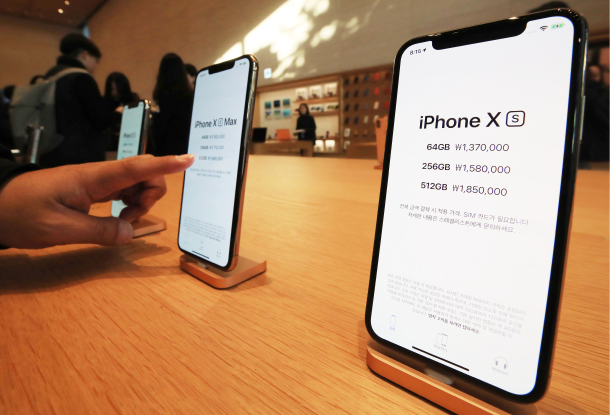
    With just over four months to go until Apple’s next-gen iPhones are officially introduced, renowned analyst Ming-Chi Kuo is back today with his latest research note which focuses on the antenna technology Apple will use.

    Inside the iPhone XS, iPhone XS Max, and iPhone XR there are currently two upper antennae and two lower ones, all of which are manufactured from Liquid Crystal Polymer (LCP). According to Kuo, though, the 2019 iPhone series will introduce some major changes to this structure. Specifically, it’s predicted Apple will use a single LCP and modified polyamide (MPI) unit for the upper antenna and three MPI units for the lower ones.

    The reason for this sudden switch to MPI technology reportedly has something to do with production. In his research note, Kuo explains that the current-gen iPhones are being held back by LCP manufacturing issues which cause problems for high-frequency cellular transmission and ultimately affect yield.

    The focus on the modified-PI structure this year should result in similar 4G LTE performance and fewer production problems. Theoretically, the technology is also cheaper to produce, although Kuo believes the overall antenna production costs will rise between 10% and 20% due to new ultra-wideband upgrades that will improve indoor navigation performance. Speaking of which, recent Apple patents suggested the company was working on a feature that’d allow individual store and mall apps to integrate indoor mapping and location tracking.

    Another benefit that’ll come from the switch is a more diverse set of suppliers – Apple will apparently go from having just two suppliers to a total of five. Murata, who is already one of Apple’s suppliers, will continue to supply LCP for the upper antenna, while Flexium, Avary, and ZDT will split orders for the MPI part. Regarding the bottom MPI units, orders look set to be split between Avary, ZDT, and DSBJ. Current LCP supplier Career has been cut from Apple’s order list, according to Kuo, and will not receive new orders for the iPhone, iPad, or Apple Watch this year.

    The focus on MPI this year is a pretty major move for Apple, but according to Ming-Chi Kuo, it’s only temporary. In fact, come next year the Cupertino giant will reportedly switch back to LCP once materials have been improved and production issues resolved. This technology will then be used inside the next-gen iPad Pro models that are due to arrive in Q1 2020 and Apple’s first 5G iPhones later on in the year.

    While on the topic of 5G iPhones, it’s worth pointing out that the modem situation for these has changed quite drastically over the past month. Following Apple’s legal battle with Qualcomm which resulted in the latter refusing to supply the former with modems for its 2018 iPhone series, the expectation was that the Silicon Valley-based company would continue to use Intel modems as it introduced support for the next-generation networks next year.

    Towards the middle of April, however, Apple and Qualcomm surprisingly announced that they had reached a six-year agreement for chips. This quickly led to Intel’s exit from the mobile 5G modem market and now, according to Kuo, Apple will use both Qualcomm and Samsung 5G modems next year.

    Eventually, support for the next-gen networks will also be expanded to the iPad Pro lineup. However, Kuo believes this won’t happen until the tablets are refreshed in 2021.

  • Sunway Pyramid Launches First Real-Time Indoor Navigation Mobile App In Malaysia

    Sunway Pyramid Launches First Real-Time Indoor Navigation Mobile App In Malaysia

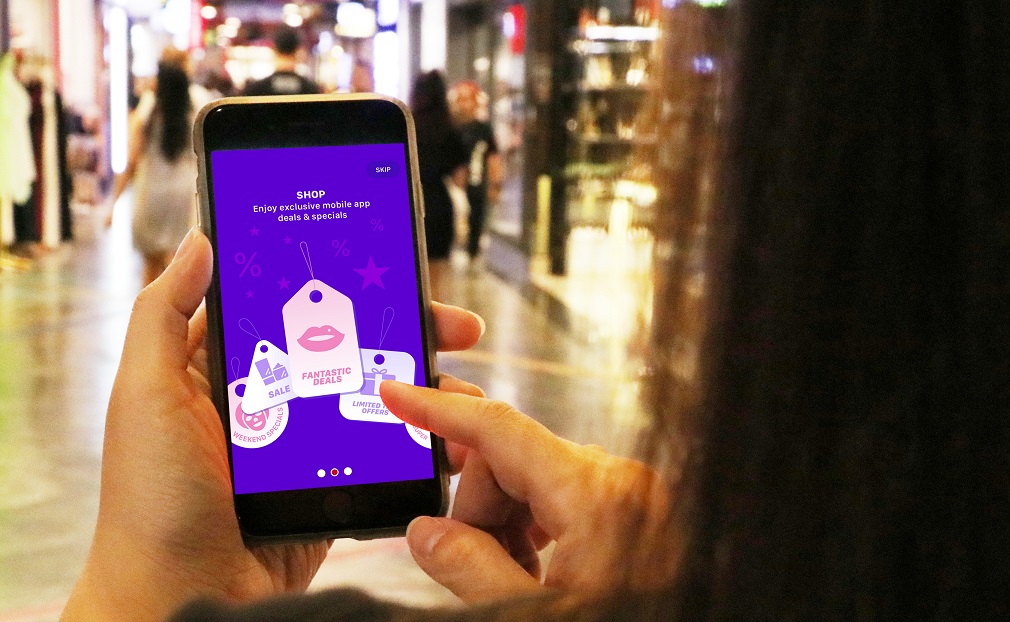
    Navigating through a shopping mall has never been this easy – and rewarding! The newly launched Sunway Pyramid Mobile app is the very first shopping mall app with real-time in-mall navigation, set to revolutionise the shopping experience.

    With over 1,000 exciting specialty stores available in Sunway Pyramid, making one’s way around the 1.8 million sq ft of space that spans over four main shopping levels can prove to be quite the challenge.

    Sunway Pyramid is working closely with the Google Indoor Maps team to integrate their mobile app with Google’s map engine for the upcoming versions of the app – shoppers can say goodbye to spending more time searching for a physical counter or directory to get to their desired location.

    “As a shopping mall that listens to the needs of our customers, this is a great way to provide them with peace of mind as well as personalized content and exclusive rewards & offers for a better and more enjoyable experience – all at their fingertips. We hope that the introduction of the Sunway Pyramid Mobile App gives them more reason to continue choosing us as their preferred lifestyle destination,” said Kevin Tan, Chief Operating Officer of Sunway Malls.

    That’s not all as shoppers will be rewarded for their usage of the app, giving them better value for their time spent in the mall. App-exclusive rewards await them at participating tenants such as YSL, Laneige, Sulwhasoo, Yves Rocher, Chanel, Dorothy Perkins, Topshop, Topman, Miss Selfridge, Burton Menswear London, Nelissa Hilman, Hush Puppies, Love Bonito, JD Sports, NY Steak Shack, Genki Sushi, Coffee Bean & Tea Leaf, Mr Roti Canai, Brotzeit, O.W.L, Gem Studio and Tomei.

    The fun does not stop there, as users can take a quiz in the app to determine their shopping persona. Find out if you are a Trendsetter, Digital Genius, Family Hero, Smart Spender or Golden Groover by answering a few simple questions – this information along with the shoppers’ navigation patterns, redemption and browsing behaviour will be considered to further personalise content that is relevant and targeted for each user.

    To find out more about what the Sunway Pyramid Mobile app can do, shoppers can join in the fun by visiting the on-ground event at the Water Feature on G Floor from 12-28 April.

    Upon downloading the app and registering, shoppers can scan their Member ID to enjoy rewards and gifts such as samples from Laneige, L’occitane, Clinique, Sulwhasoo, cash vouchers from Genki Sushi, complimentary milkshakes from NY Steak Shack and shopping vouchers amongst many others. Other activities include multiple photo op areas with a photo booth and even a relaxation lounge with massage chairs!

    The Sunway Pyramid Mobile App will be available for download via the Google Play Store and Apple AppStore on 12 April 2019. For a full tutorial on how to use the app, please visit YouTube link here.

  • Juniper Networks to buy Mist Systems for $405m

    Juniper Networks to buy Mist Systems for $405m

    Juniper Networks has arranged to acquire Mist Systems, a provider of cloud-managed wireless network solutions powered by artificial intelligence, for $405 million. Juniper Networks plans to use the acquisition to fill wireless gaps in its enterprise networking portfolio through the addition of Mist’s WLAN platform.

    Mist’s AI-driven wireless platform is designed to enhance the reliability of Wi-Fi networks. The company has also developed an AI-driven virtual assistant to simplify wireless troubleshooting.

    The company also uses virtual Bluetooth low energy technology, combined with Wi-Fi and IoT connectivity, to provide location-based wireless services to customers, including indoor wayfinding, proximity notifications, traffic analytics and asset tracking.

    Juniper Networks CEO Rami Rahim said he expects the acquisition to enhance the company’s presence in the cloud-managed segment of the wireless networking market, and to allow it to expand AI-driven network management capabilities across the end-to-end enterprise network.

    “Mist Systems is a great fit for Juniper and for our enterprise customers,” explained Rami Rahim, CEO of Juniper Networks,” he said.

    “Juniper and Mist share a common strategic goal. We believe in the Software-Defined Enterprise and Mist’s focus on bringing AI to IT is consistent with our core belief that we need to simplify operations and improve customer experience while lowering costs.”

    The acquisition still requires regulatory approvals and is expected to close by the end of the second quarter.

  • SoftBank taps Ericsson to improve indoor coverage

    SoftBank taps Ericsson to improve indoor coverage

    Japan’s SoftBank plans to deploy Ericsson’s Radio Dot system across Japan to improve indoor coverage for its large subscriber base.

    The operator will target medium to large buildings in high-density urban areas including Tokyo, Osaka and Nagoya with the deployment, Ericsson said. Deployment will commence in the densest areas of the three cities, in buildings including office towers, shopping malls and train stations

    SoftBank began testing Radio Dot technology in Japan in June 2015 as the company explored ways to better meet the huge demand for improved indoor coverage in urban areas. Now after extensive testing and verification, the operator is ready to enter the mass deployment stage.

    “We are always interested in adopting the latest technologies to ensure our subscribers receive the best possible network service,” SoftBank SVP Hideyuki Tsukuda said.

    “After evaluating a number of options, we concluded that the Ericsson Radio Dot System was the most cost-efficient solution for large buildings. Its deployment in crowded urban indoor environments will enable us to meet user expectations for a consistently high quality of network coverage.”

  • 5G indoor wireless market to be worth $509m by 2025

    5G indoor wireless market to be worth $509m by 2025

    The global equipment market for in-building wireless system, including active distributed antenna systems (DAS), passive DAS, and repeaters, is expected to grow to $10 billion in 2025, according to ABI Research.

    Yet, out of this market, 5G in-building wireless equipment will account for only 5% or $509 million in 2025, due to one year or more delay of 5G deployments indoors and in venues compared to outdoor 5G deployments starting from 2020, the research firm says.

    “As 5G nears full specification, mobile network operators will face challenges for indoor mobile coverage, including signal propagation, next-generation fronthaul/backhaul, and massive MIMO,” says Nick Marshall, research director at ABI Research.

    According to Marshall, early 5G deployments indoors and in venues will be a migration building on the features of LTE-Advanced and LTE-Advanced Pro. This will happen technology by technology and frequency by frequency, avoiding costly ‘rip and replace’ style deployments, the analyst notes.

    Marshall further points out that future 5G networks – which will comprise of a combination of different cell types and access technologies to seamlessly adapt to an array of use cases and applications – will rely on network functions virtualization (NFV) and mobile edge computing (MEC) to alter the architecture and topology of the RAN by leveraging telco data centers to virtualize signal processing in the cloud.

    NFV migrates cellular signal processing to a remote telco data center, while MEC, in a countervailing trend, migrates IT compute and storage to the network edge within the building or venue for low latency use cases and applications.

    With 5G standards yet to be finalized, many equipment vendors are actively researching and developing 5G equipment with a variety of approaches. These companies include Nokia with its AirFrame/AirScale Radio Access, Ericsson with its ERS, and CommScope with its OneCell.