Tag: inflight

  • Air France Takes Flight with Superior In-Flight WiFi, Surpassing Swiss Competitors

    Air France Takes Flight with Superior In-Flight WiFi, Surpassing Swiss Competitors

    Air France Takes Off with Complimentary High-Speed WiFi

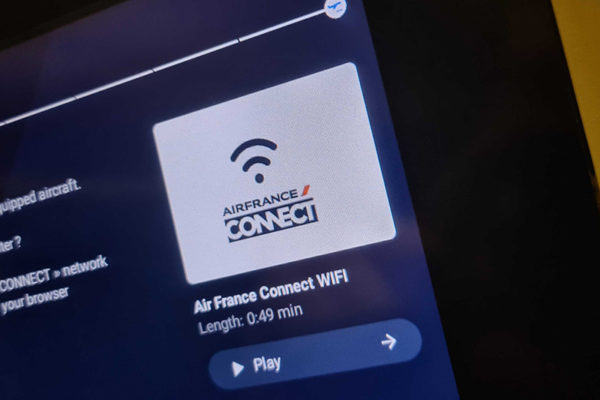
    In a significant move set to enhance the passenger experience, Air France has become the first major European airline to offer complimentary high-speed WiFi on its flights, leaving its Swiss counterpart in the dust.

    While some passengers might enjoy the break from screens during their flights, the announcement of “Free high-speed WiFi now available on Air France flights” certainly raised eyebrows on Tuesday.

    Partnering with Starlink for Connectivity

    This new initiative allows travelers on selected aircraft to enjoy a fast, stable, and secure internet connection, thanks to a collaboration with Elon Musk’s satellite provider, Starlink. Currently, this technology is operational on two Embraer 190s, two Airbus A220s, and one Airbus A350, catering to both short-haul and long-haul routes.

    Aiming for Fleet-Wide Implementation by 2026

    Air France has ambitious plans, targeting to retrofit 30% of its fleet by the end of 2025 and to achieve full fleet implementation by the end of 2026. What’s more, this service is offered free of charge across all travel classes and is accessible via the Flying Blue frequent flyer program. The airline boasts that passengers can stream TV shows, films, and even engage in multiplayer video games — a digital paradise at 30,000 feet!

    Swiss Airline Struggles to Keep Up

    Conversely, Swiss International Airlines, a subsidiary of Lufthansa, lags behind in this competition. Though the airline confirmed to finews.com that its short- and medium-haul fleet possesses onboard internet, it is not yet comprehensive. Passengers can access a free messaging service, but access to streaming or using laptops and tablets comes at an additional price.

    Long-Haul Flights Come with a Price Tag

    Swiss has been equipped with internet since 2016, and since 2023 offers a complementary service for chat applications like WhatsApp, Facebook Messenger, or Signal on long-haul flights. However, for any other online activities, passengers face additional charges, leaving the airline noticeably behind Air France, which is touting its complimentary service as a premium perk.

    Lufthansa’s Centralization Moves Impacting Swiss

    In a strategic shift, Lufthansa has announced plans to centralize some business functions of its Swiss subsidiary in Frankfurt. The implications for the quality of service at Swiss remain uncertain. While WiFi may not be the primary concern for travelers, this issue underscores a recurring criticism: Swiss often offers low-cost quality at premium prices.

    Questions & Answers

    How does Air France’s free WiFi service compare to Swiss International Airlines?
    Air France offers complimentary high-speed WiFi across its fleet, while Swiss International Airlines provides a limited free messaging service and charges for streaming and other internet access.

    What technology is enabling Air France’s WiFi service?
    Air France’s WiFi service is powered by a partnership with Elon Musk’s Starlink satellite provider, ensuring high-speed connectivity for passengers.

    What are Lufthansa’s plans regarding its Swiss subsidiary?
    Lufthansa intends to centralize certain business functions of Swiss in Frankfurt, although it’s unclear how this will affect the overall quality of service.

  • Inmarsat launches new customer experience platform for airlines to monetise inflight connectivity

    Inmarsat launches new customer experience platform for airlines to monetise inflight connectivity

    Inmarsat announced the launch of its innovative new OneFi customer experience platform (CXP) for airlines. The first-of-its-kind solution will serve as a catalyst to monetise inflight connectivity by bringing a host of onboard services together within a single portal interface, which passengers can easily access using their own personal devices.

    OneFi delivers a rich airline-branded digital platform to enhance the passenger experience onboard flights. It allows passengers to order food and beverages, purchase seat upgrades, receive the latest flight and destination information, and sign-up to the airline’s frequent flyer programmes, all in real-time from the comfort of their seat. In addition, passengers can browse the internet, stream videos and audio, shop online and enjoy other ecommerce offerings, using high-speed inflight broadband that airlines could choose to offer free-of-charge, funded through OneFi’s sponsorship and advertising features.

    The launch of OneFi comes at a critical time for airlines, with the global pandemic having accelerated passenger demand for digital inflight experiences. Inmarsat’s recent 2021 Passenger Confidence Tracker, the largest and most comprehensive global survey of its kind since the pandemic began, found that digital solutions that keep passengers connected and minimise their contact with cabin crew and fellow passengers can go a long way in boosting confidence. In addition, out of the 10,000 respondents worldwide, 41% believed inflight Wi-Fi had increased in importance after the pandemic.

    Philip Balaam, President of Inmarsat Aviation, said: “For many years, Inmarsat has advocated the vast commercial opportunities of inflight connectivity. However, until now, airlines have struggled to realise the full potential of the business model. OneFi is a step change for those looking to monetise their Wi-Fi services and ensure they keep pace with evolving passenger needs. It will empower a digital transformation in the cabin, which is especially important at this critical time for the aviation industry.

    “OneFi allows airlines to improve their brand experience and secure passenger loyalty, with the flexibility to incorporate their own services and use existing and new partners, such as content providers, advertisers and retailers. We are in advanced discussions with leading airlines about adopting this innovative new platform and expect to see a rollout with our first OneFi customer by the end of this year.”

    In recent years, airlines have continued to increase their focus on unlocking new revenue streams through broadband-enabled ancillary services. The market for digital inflight advertising alone is forecast to grow from $266 million today to $3.3 billion by 2030, representing a 10-year compound annual growth rate (CAGR) of 42.9% between 2020 and 2030, according to Valour Consulting.

    The launch of OneFi is a significant step in turning that untapped commercial opportunity into a reality. OneFi promises industry grade targeting features, media inventory and calls-to-action that are made available to the airline and its partners. These ensure that content is contextual and relevant to the individual passenger. It also enables partners to engage in more meaningful ways with passengers and boost sales lead generation rates. The platform’s intuitive, user-friendly interface will enable airlines to boost passenger take-up rates and create a frictionless funnel to purchase.

    In addition, OneFi is network agnostic and uses open architecture, meaning it can integrate with any technology infrastructure and Internet Service Providers (ISPs) used by airlines, ensuring a uniform experience across mixed aircraft fleets. The platform is also scalable, giving airline customers the flexibility to add new third-party services over time and helping to future proof their onboard offering.

    Inmarsat is transforming global aviation by bringing complete connectivity to aircraft and flight paths across the world. It recently unveiled plans for ORCHESTRA to bring existing geosynchronous (GEO) satellites together with low earth orbit satellites (LEO) and terrestrial 5G to form an integrated, high-performance solution, unmatched by any existing or planned competitor offering. ORCHESTRA allows capacity to be boosted in high-density areas such as at airports, eliminating congested network ‘hot spots’ and ensuring the connectivity needs of aviation customers are met well into the future, with capacity scaled directly to match their requirements.

  • AirAsia restaurant concept brings its inflight menu down to earth

    AirAsia restaurant concept brings its inflight menu down to earth

    A new AirAsia restaurant opened in a Kuala Lumpur shopping mall is serving inflight meals on the ground.

    The Malaysian-headquartered budget carrier has opened its first restaurant Santan and T&CO in Kuala Lumpur, marking its footprint in the retail food business. More outlets are already being planned along with an offshore foray.

    Located at the Mid Valley Megamall, the AirAsia restaurant offers dishes from its existing inflight menu, including Pak Nasser’s nasi lemak, Nyonya curry laksa and signature Malaysian rice dish with chili condiment.

    Santan and T&CO feature a smart menu to recommend popular dishes based on time, past ordering patterns as well as demographic taste. Customers also can order directly from the restaurant’s website and mobile app.

    “We have seen a significant appetite for our in-flight menu offerings beyond our flights across the region and this is our answer to that demand,” says Catherine Goh, general manager of Santan and T&CO restaurant.

    Believing in the potential success of the new concept, Group CEO of AirAsia Tony Fernandes is already planning to franchise the brand internationally.

    The company plans to open five outlets this year and 100 outlets over the next five years with expansions in global markets.

  • APAC Gen Z passengers are transforming inflight e-commerce

    APAC Gen Z passengers are transforming inflight e-commerce

    Generation Z is forecast to become the largest group of airline flyers globally within the next decade, with 1.2 billion flying each year by 2028. More than a third (37%) of this global cohort will be made up of APAC passengers. The LSE estimates that globally, this consumer group currently spends a collective $3.6 billion in items and services in the weeks leading up to a trip and upon arrival at their destination.

    APAC Gen Z passengers are the least ‘cost-sensitive’ traveler group globally, and by 2028 are predicted to spend $4 more per passenger through infight e-commerce than the global Gen Z average of $26. The findings underscore a significant opportunity for airlines in the region to shift spending on board and take a proportion of the revenue with an e-commerce model that supports the ‘last-minute’ approach of today’s ‘digital-first’ passengers.

    The research analyzed purchasing decisions made during three key phases of the customer journey before travel: more than a week before; in the days before; and upon arrival. It finds that Gen Z is the most likely of all generations globally to delay buying products and services for their trip until the days before they fly.

    While currently, only one in ten passengers make an inflight duty-free purchase when they fly, there is a significant opportunity for airlines to monetize the growing trend for last-minute spending. According to the LSE, 70% of Millennials and Gen Z passengers indicate that they would delay arrangements for their trip until their flight if they knew that a reliable Wi-Fi connection would be available, and the necessary delivery infrastructure was in place.

    Dr. Alexander Grous (B. Ec, MBA, M.Com, MA, PhD.), Department of Media and Communications (LSE) and author of the research, said, “Having grown up in a digital world with connectivity at their fingertips, more often than not Gen Z make last-minute decisions when it comes to travel planning and preparation. This behavioral shift presents an exciting opportunity for airlines to strike innovative partnerships with global and local retailers that extend the possibilities of inflight spending.”

    Philip Balaam, President, Inmarsat Aviation said, “If passengers reject traditional purchase channels in favor of inflight spending to the extent that this suggests in the next decade, the implications for airlines and retailers would be huge. We may be on the verge of a habitual shift in travel spending, much like the movement from offline to online purchasing witnessed on the ground in the last decade. In APAC, the opportunity is even greater – with every Gen Z passenger in the region predicted to spend $4 more on inflight holiday purchases than the rest of their generation each time they fly, there is a huge potential new revenue stream up for grabs.”

    Dominic Walters, Vice President, Marketing Communications and Strategy, Inmarsat Aviation said, “Developing a connected infrastructure built for inflight spending will be a win-win for both airlines and passengers, bringing airlines the chance to take a slice of revenue currently spent elsewhere in the customer journey, and saving passengers valuable time before and after their flight. With airlines all over the world already ramping up their connectivity offerings, and a growing trend for last-minute spending in younger passenger groups, this is a revolution waiting to happen.”

  • Vietnam Airlines to launch inflight Wi-Fi service

    Vietnam Airlines to launch inflight Wi-Fi service

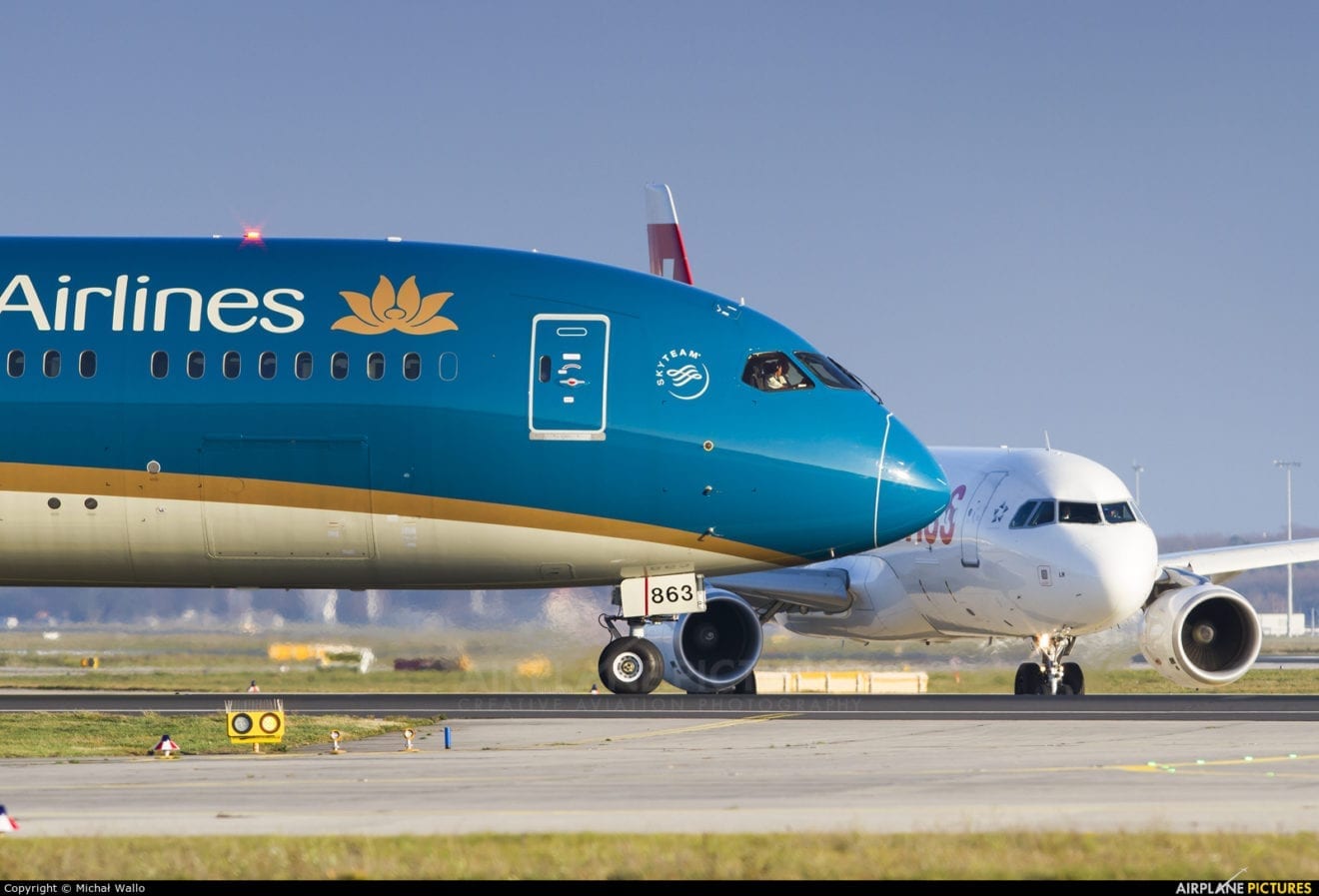
    Vietnam Airlines will launch inflight Wi-Fi service on some flights connecting Hanoi and HCMC with cities in China, Japan and Singapore.

    Passengers will be charged VND75,000-735,000 ($2.95 -$29.95) depending on usage time and capacity.

    Providing inflight Wi-Fi service is one of the steps that Vietnam Airlines is taking towards becoming a digital airlines by 2020 and an international five-star airline in the future.

    The Wi-Fi service will be available on the domestic route from Hanoi to Ho Chi Minh City and international flights from Hanoi to China’s Shanghai and Japan’s Osaka and between HCMC and Osaka and Singapore, the airline said in a statement Monday.

    In the coming months, the airline will continue upgrading and expanding this service to Boeing 787 and other Airbus A350 aircraft with faster speeds, it said.

    Le Hong Ha, deputy general director of Vietnam Airlines, said that when using the service, passengers can send text messages on popular applications such as Viber, iMessage, Messenger and Whatsapp.

    “This is part of Vietnam Airlines’ efforts to catch up with the development trends of the world aviation industry, with many 5-star airlines like Singapore Airlines, Qatar Airways, Cathay Pacific Airways and Lufthansa providing similar services,” Ha said.

    Vietnam Airlines operates flights on 60 international and 33 domestic routes.

  • Cebu Pacific launches new inflight menu

    Cebu Pacific launches new inflight menu

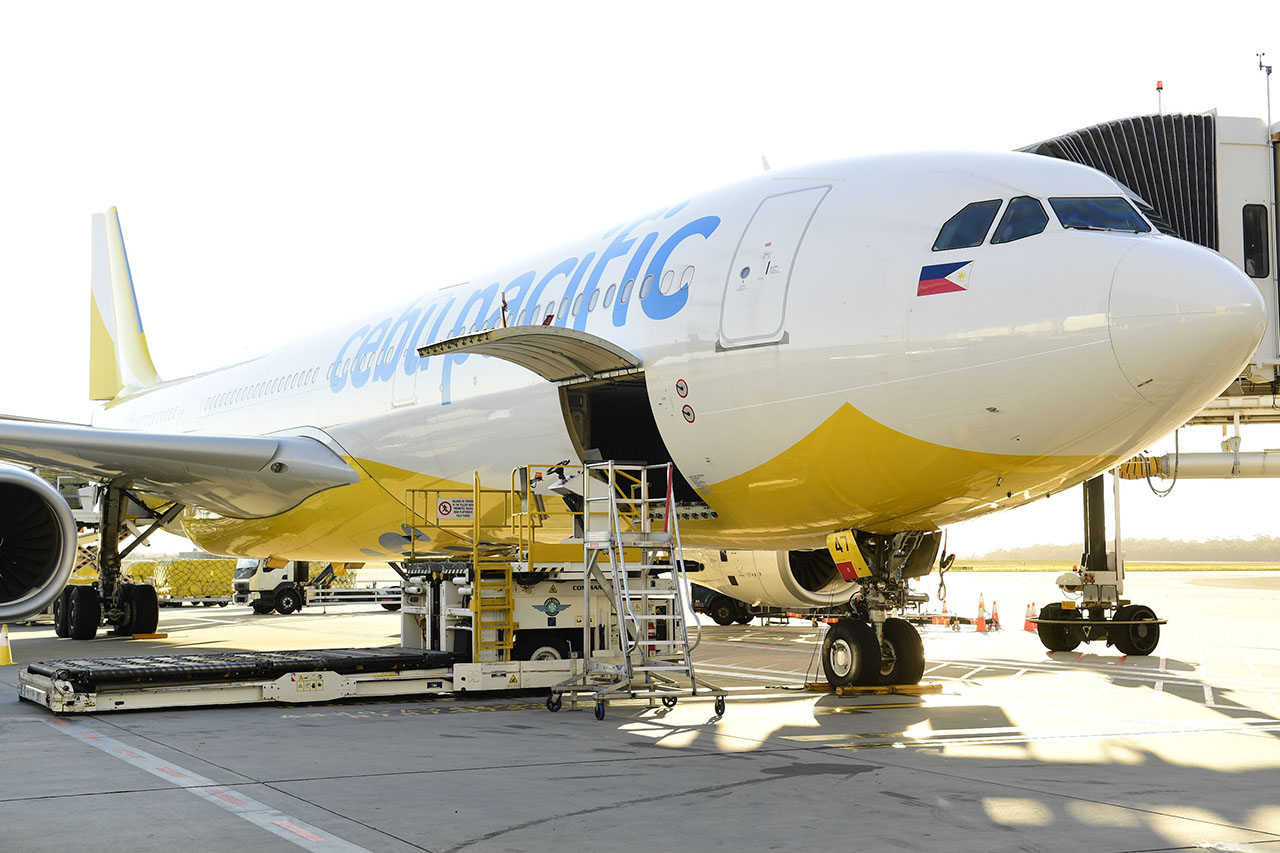
    Cebu Pacific is launching a new selection of inflight meals for purchase starting October this year.

    The new meals include a Singaporean dish (Hainanese Chicken Rice shown above), Filipino cuisine, and a vegetarian option.

    “As every Cebu Pacific flight is a journey to or from home, we have designed this refreshed inflight menu to bring a feeling of comfort in the form of simple meals and familiar tastes,” said JB Bueno, director for inflight catering and sales at Cebu Pacific.

    Below are some of the meals passengers traveling with the airline can buy starting next month:

    Roasted Chicken Sandwich (toasted panini bread with roasted chicken, sautéed spinach, and grated cheddar cheese with a garlic aioli spread).

    Lechon Paksiw (slices of roasted suckling pig stewed in a blend of vinegar, sugar, and spices, served with white rice).

    Other meals include the following:

    • Pinoy Spaghetti
    • Beef Salpicao
    • Chicken Yakisoba
    • Crab Salad Sandwich

    In addition to being available for purchase on flight, passengers can also pre-order the meals before the flight, according to Cebu Pacific. The carrier also added that the meals come with information on nutrition to cater to health-conscious travelers flying with Cebu Pacific.

  • AirAsia’s Spencer Lee takes CEO title at travel360.com

    AirAsia’s Spencer Lee takes CEO title at travel360.com

    AirAsia’s head of commercial, Spencer Lee, has been named CEO of travel360.com, the digital expansion of the airline’s inflight magazine travel360. The airline declined to comment on A+M‘s queries on whether he will be helming a dual role or who his replacement will be.

    According to his LinkedIn, Lee has been the head of commercial since 2015, overseeing all commercial functions covering Asia markets. Before that, he was the head of marketing for a year, during which he was responsible for all marketing activations including digital and social strategy and partnerships for all short-haul routes. Lee also helmed the role of regional head of marketing.

    Travel360.com recently partnered with non-profit grassroots community organisation Yellow House and the Dewan Bandaraya Kuala Lumpur to further beautify the city and empower its people. It hopes to provide an even more experiential travelling journey by integrating real communities and their stories.

    It also tied up with Malaysian film company We are KIX to launch a new travel series titled “VitaminSEA” that aims to inspire people to explore the lesser known islands and beaches around Southeast Asia. The series showcases six amazing yet relatively unknown beach destinations in Southeast Asia served by AirAsia.

    Meanwhile, the airline also recently appointed IPG Mediabrands’ BPN to manage media and communications planning, buying, and analytics on a global level for AirAsia and AirAsia X. This followed a pitch process that spanned 23 markets. The account will be managed via a dedicated team called Red Wings in Malaysia.

  • Inflight Wi-Fi essential for 2 in 3 APAC travelers

    Inflight Wi-Fi essential for 2 in 3 APAC travelers

    Two thirds of airline passengers in Asia-Pacific feel that inflight Wi-Fi is not merely a luxury but a necessity, according to Inmarsat-commissioned research.

    A survey of travelers in the region, conducted by market research company GfK, found that 79% are willing to pay for inflight connectivity even on short leisure flights. In addition, 61% believe quality inflight Wi-Fi is more important than onboard entertainment.

    The survey found that inflight broadband is changing the airline industry and transforming travelers’ expectations of the onboard experience.

    Inflight Wi-Fi is becoming so important that over half (52%) of passengers in the region say they will stop using their preferred airline within the next year if it does not introduce the technology.

    Passengers who have experienced high-quality in-flight Wi-Fi also rate it as the third most important consideration when choosing an airline, behind ticket price and flight slots.

    Passengers in China are more likely to be conscious of the quality of Wi-Fi (55%) than those from other countries in the region. Notably, the top three airlines that passengers expect to offer in-flight Wi-Fi and eventually lead the inflight connectivity market in APAC are airlines from China – Air China (46%), China Eastern Airlines (22%) and China Southern Airlines (21%).

    “Good quality Wi-Fi in the air is changing the way people think about flying. Whether using the time to work, to connect with friends and family, or to pass time shopping or viewing entertainment, the availability of inflight broadband has become a major factor when choosing an airline,” Inmarsat Aviation vice president for APAC Otto Gergye said.

    “It’s clear the opportunity that connectivity presents to airlines cannot be underestimated. Airlines in Asia Pacific are recognising this, and can now take advantage of having a high quality onboard Wi-Fi option available in the region.”

  • Qatar Airways taps Inmarsat for in-flight broadband

    Qatar Airways taps Inmarsat for in-flight broadband

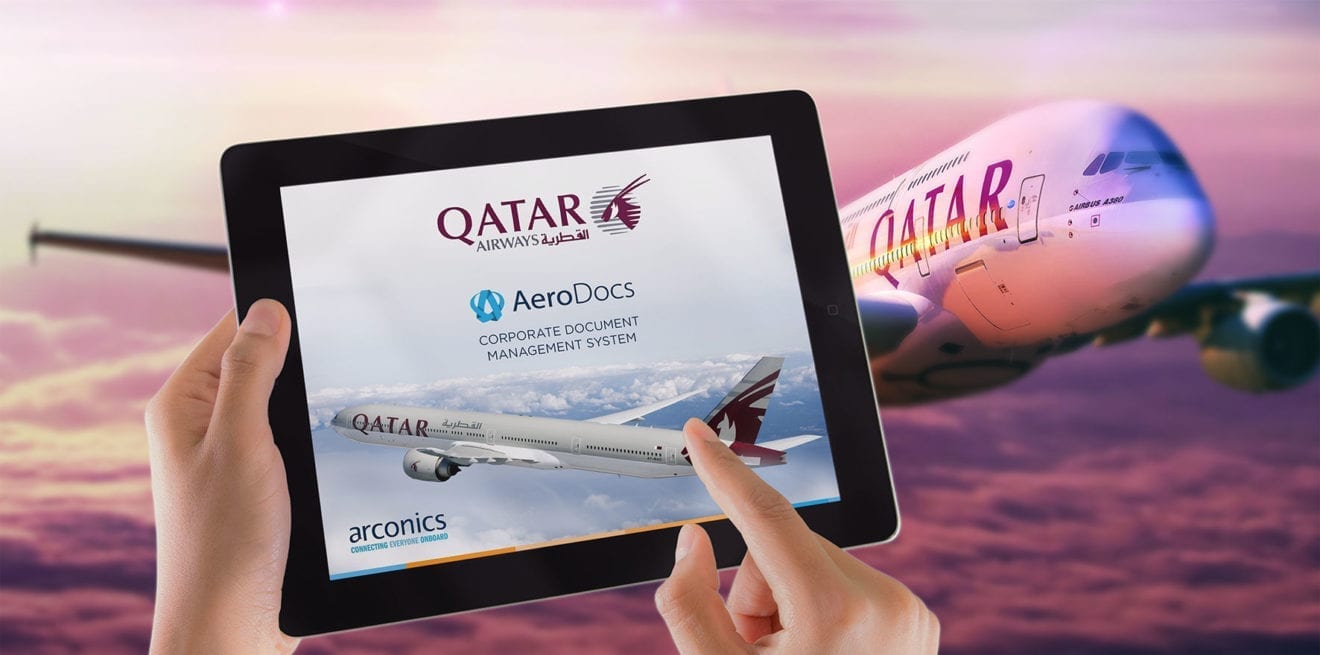
    Qatar Airways has become the first major Middle East airline to select Inmarsat’s new GX Aviation in-flight broadband solution for in-flight broadband.

    The Inmarsat solution will initially be available to Qatar Airways passengers on board more than 130 aircraft, consisting of Airbus A350s and Boeing 777s.

    GX Aviation technology has already been equipped on Qatar Airways’ latest Airbus A350s. Installations on the airline’s remaining Airbus A350s, together with the Boeing 777s, will start on a retrofit basis from this summer.

    GX Aviation is touted as the world’s first in-flight connectivity solution with reliable, seamless high-speed global coverage provided through a single operator. Inmarsat says the service allows airline passengers to browse the internet, stream videos, check social media and more during flights, with an on-board connectivity experience “on par with broadband services available on the ground.”

    “Broadband transformation on the ground is already well advanced and we are able to transfer that into the very challenging in-flight environment, working with Qatar Airways to make connectivity a success,” said Leo Mondale, president of Inmarsat Aviation.

    “Our networks are engineered with multiple layers for redundancy and global coverage. Our design philosophy is to scale up capacity over time to fit the route systems of our airline customers and reflect the industry’s real needs.”

    The service will integrate with Qatar Airways’ in-flight entertainment system and ensure that connectivity initiatives, such as its passenger app and aircraft technology, will be strengthened using dependable in-flight broadband. GX Aviation also complements the airline’s latest passenger experience innovations.

    Qatar Airways will connect to the GX network using exclusive JetWave terminals produced by Inmarsat partner Honeywell Aerospace. The terminals are designed for ease of installation and maintenance to assure the lowest downtime for any cabin connectivity solution in the market.

    The selection of GX Aviation follows a separate announcement that Qatar Airways has activated an advanced new space-based system, supplied by Inmarsat, to track all of its flights across the world.

    Inmarsat worked exclusively with Qatar Airways to develop this solution, which uses Inmarsat’s satellite technology to provide the exact real-time location of the airline’s aircraft in latitude and longitude.

  • 60% of APAC travelers would pay for in-flight Wi-Fi

    60% of APAC travelers would pay for in-flight Wi-Fi

    Over 60% of APAC respondents would be prepared to pay up to $5 to access the internet on planes, according to YouGov’s latest survey on air travel.

    Although only 10% of APAC respondents say lack of connectivity is one of the three worst aspects of flying, many airlines are introducing internet access on flights so passengers can stay connected throughout the air journey.

    Almost one in five APAC respondents have tried in-flight internet access in the past and would like to do again in the future. And almost half of the APAC respondents haven’t tried in-flight internet access before but would consider doing so in the future.

    This should be a good news to airlines as this advancement on planes seem to be very well receiving in APAC. However, budget is also a concern as the majority of APAC respondents (64%) would only prepare to pay up to US$5 to access in-flight internet services, while less than 30% are prepared to pay up to $10.

    To further improve connectivity on flight, some airlines are also proposing new service like making VoIP calls on flight. Over 40% of APAC respondents express interest in making in-flight VoIP calls in the future.

    However, 65% of APAC respondents also think it is irritating to sit next to someone making a VoIP call on a flight. Because of this, almost 80% of APAC respondents think airlines should give passengers the option of sitting in different sections on planes where calls are and aren’t allowed.

  • AirAsia X Boosts roKKi System With Inmarsat’s GX Aviation

    AirAsia X Boosts roKKi System With Inmarsat’s GX Aviation

    AirAsia X announced that it will upgrade in-flight connectivity for its roKKi in-flight entertainment system using Inmarsat’s GX Aviation, with plans, not only to boost Internet speeds and provide seamless streaming, but to increase passenger spend on board.

    AirAsia X CEO Ben Ismail was at Aicraft Interiors Expo in Hamburg this afternoon to announce it would be upgrading its roKKi in-flight entertainment platform with Inmarsat’s GX aviation. The upgrade will bring faster Internet speeds for browsing, video streaming and social media.

    “Today marks a significant milestone for AirAsia and roKKi. This next-generation connectivity solution represents a major infrastructure upgrade that signals a long-term commitment in transforming AirAsia into a truly digital airline,” Ismail said.

    “This next-generation connectivity solution represents a major infrastructure upgrade that signals a long-term commitment in transforming AirAsia into a truly digital airline.” — AirAsia X CEO Ben Ismail

    “AirAsia is a really important win for us,” says Frederik van Essen, SVP, Strategy and Business Development, Inmarsat Aviation. “AirAsia has the attitude that we share of making things happen, not accepting the status quo. Once they take the decision to move, they want to move quickly.”

    The memorandum of understanding with Inmarsat covers AirAsia X’s A330 and A320 fleets, subject to final contracts. Installations begin later this year with GX Aviation connectivity expected to go live first on the A330s in 2018.

    “Connectivity is something desired by all passengers.” — Frederik van Essen, Inmarsat Aviation

    Aside from upgraded connectivity, Ismail says GX Aviation will help to drive ancillary revenues on board. “Currently our ancillary spend is about $60 US per passenger, and I think with this coming in, it’s going to drive that sales up to $80 or $90,” Ismail explained, adding that the average passenger flies four to eight hours on an AirAsia flight.

    “In Asia, showing this attitude with a low-cost carrier demonstrates that these are not only systems for premium carriers that want to offer this to first- or business-class passengers. Connectivity is something desired by all passengers,” van Essen said.

    “GX is different from the other offers out there. We own and operate satellites. We are seeing the fruits of that as we roll out the service next year,” said Leo Mondale, president, Inmarsat Aviation.

  • Demand for inflight broadband in APAC hits new heights

    Demand for inflight broadband in APAC hits new heights

    Airlines in Asia-Pacific are seeing soaring demand for inflight broadband service, with a majority of passengers in the region expecting to have such services onboard, a new survey said.

    The survey, conducted between August 2015 and March 2016, garnered respondents from more than 9,000 passengers in Asia, Australasia, Europe, and Central and South America who had taken a short, medium or long haul flight in the past year and carried at least one personal device onboard the aircraft.

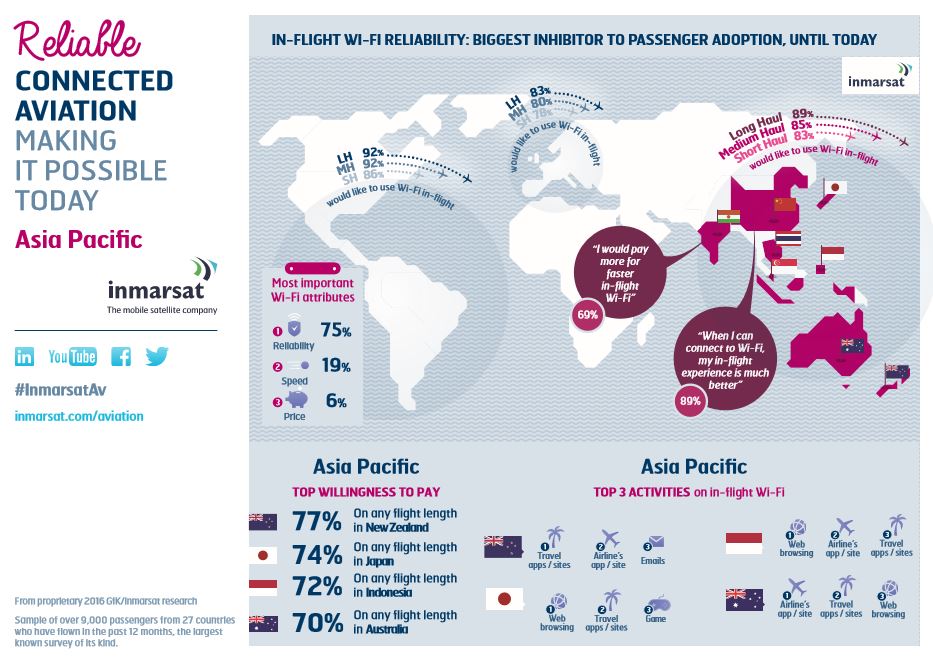
    According to the survey, conducted by Inmarsat and market research firm GfK, nine out of ten respondents from the region say the availability of onboard connectivity would influence their choice of airline, while over two thirds are willing to pay for the service.

    Meanwhile, 54% and 57% of Asia Pacific passengers would choose inflight broadband as a preferred service in short-haul and long-haul flights, compared to only 16% and 18% choosing traditional in-flight entertainment (IFE) as their preferred onboard service.

    Business flyers are even more likely to recognize the value of paying for high-speed onboard connectivity than vacationers, with 74% of business travelers surveyed indicating they are willing to pay more for faster inflight broadband compared to 62% of leisure travelers.

    The survey revealed that 64% of passengers felt that in-flight broadband can deliver all of their onboard entertainment needs. This highlights an opportunity for airlines to use in-flight broadband to increase ancillary revenues, as the majority of passengers are willing to pay for the service, with 68% of passengers under 34 years old and 55% of passengers over 45 years old willing to pay for unlimited internet usage during a flight.

    When it comes to the quality of the inflight broadband service, passengers are most concerned about reliability (that a connection does not drop out or cut off), availability (that the connection is available throughout the flight), and speed of the connection.

    Inflight WiFI reliabilityThe survey showed that quality is even more important than price in Asia Pacific, as passengers are prepared to pay more for a quality service. Some 72% of flyers in Asia Pacific would prefer not to use broadband that is of poor quality with 62% stating they would pay more for faster in-flight broadband
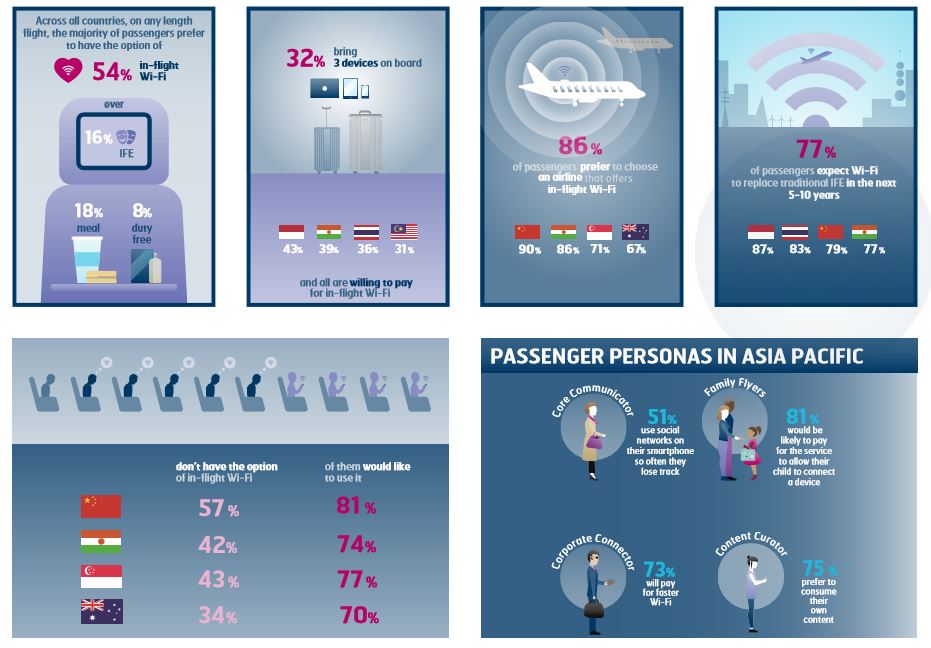
    “Our survey has highlighted a growing appetite for fast, reliable and consistent broadband in the air, with more than half of Asia-Pacific passengers preferring in-flight connectivity over a meal or traditional IFE,” said Bill Peltola, Asia Pacific regional director at Inmarsat Aviation.

    “Although three-quarters of Asia Pacific flyers would like to try onboard broadband in the future, only 3% of aircraft operating in Asia Pacific today offer the service, highlighting the potential for airlines to use it as a differentiation point to attract more customers.

    The inflight broadband connectivity survey