
Tag: influencer marketing

  • Pakistan Ad Market Shifts to Influencers as Social Media Reaches 80 Million Users

    Pakistan Ad Market Shifts to Influencers as Social Media Reaches 80 Million Users

    Pakistan’s advertising market is shifting toward content creators as of October 2026, with the country recording around 80 million adult social-media user identities.

    TikTok alone has an advertising reach approaching 80 million adults, while YouTube reaches around 54 million and Instagram reaches approximately 22 million.

    Individual creators are amassing major audiences, including Jannat Mirza with over 25 million TikTok followers, Hania Aamir with over 20 million Instagram followers, Ducky Bhai with over 10 million YouTube subscribers, and Rajab Butt with around 9 million.

    Performance Models Replace Flat Sponsorship Fees

    Commercial deals are shifting from flat fees to direct affiliate commissions. Smaller creators take free merchandise or modest cash retainers, while top celebrities still charge premium rates. Retail brands now deploy trackable discount codes and custom referral links.

    A merchant offering unique promo codes across 100 creator accounts can measure exact conversions within days. That turns endorsements into direct sales channels. For consumer startups and domestic cosmetic lines, performance deals offer instant distribution without the steep upfront costs of television runs.

    Niche Conversion Challenges Follower Scale

    Relevance now matters more than raw follower totals in campaign planning. A specialised account with 50,000 motorcycle enthusiasts regularly delivers higher conversion rates for vehicle parts suppliers than a general entertainment channel with five million subscribers.

    This mirrors digital commerce across Southeast Asia and China, where live-stream selling ties demonstrations straight to payment and fulfilment. Pakistan holds the same ingredients: expanding smartphone adoption, digital payment rails and a young urban population accustomed to mobile buying.

    Metrics Move Toward Acquisition and Retention

    Rapid growth has brought friction over audience authenticity and transparency. Brands face risks from synthetic engagement, bought follower counts and unclear commercial disclosures. These hazards run highest in regulated sectors like consumer health and financial services.

    Marketing teams now evaluate creator deals against customer acquisition costs, basket sizes and repeat order rates instead of vanity impressions. That demand is fueling dedicated talent management agencies, affiliate platforms and analytics firms across Karachi and Lahore.

    Traditional Media Monopolies Recede

    Billboards, print ads and television commercials still draw institutional budgets, but legacy networks no longer control consumer reach. Independent creators now build audiences larger than broadcast stations from home setups.

    Budgets will track verified checkouts as consumer brands watch whether creator live streams deliver steady sales through upcoming festive shopping cycles.

  • Brandpay Logs 65 Million Impressions Turning Retail Shoppers into Ad Channels

    Brandpay Logs 65 Million Impressions Turning Retail Shoppers into Ad Channels

    Australian retail technology platform Brandpay has logged 65 million organic impressions across 250 brands by turning regular shoppers into measurable advertising channels. The platform generated an average 4.2 times return on reward spend across 12,894 pieces of customer content.

    Instead of hiring professional creators, the system pays shoppers in store credit when they post authentic social media content about products they bought. That credit circulates back through existing checkout systems, encouraging repeat transactions.

    Micro audiences and store credits

    Brandpay co-founder and chief executive Dr Mike Haywood said the model distributes reach across regular buyers rather than concentrating budgets on a handful of high-profile influencers. More than 80 per cent of rewarded participants have between 100 and 5,000 followers.

    The mechanics produce measurable cost advantages over standard digital ad inventory. Brandpay reported an average cost per mille of $2.48 and a cost per click of $2.62 across its network.

    A brand’s own content describes itself. A customer’s content is evidence.

    RetailNews Asia has tracked a sharp regional pivot away from high-fee influencer contracts across Asia-Pacific e-commerce operators, as rising customer acquisition costs on major ad platforms force merchants to monetize their existing customer bases.

    Measuring return on reward spend

    Shoppers rewarded under the program return to buy twice as frequently as non-rewarded customers. The resulting data allows merchants to test specific reward tiers against basket size increases.

    Brandpay is now testing automated reward calibrations to determine how different credit amounts influence basket size and repurchase frequency across retail categories.

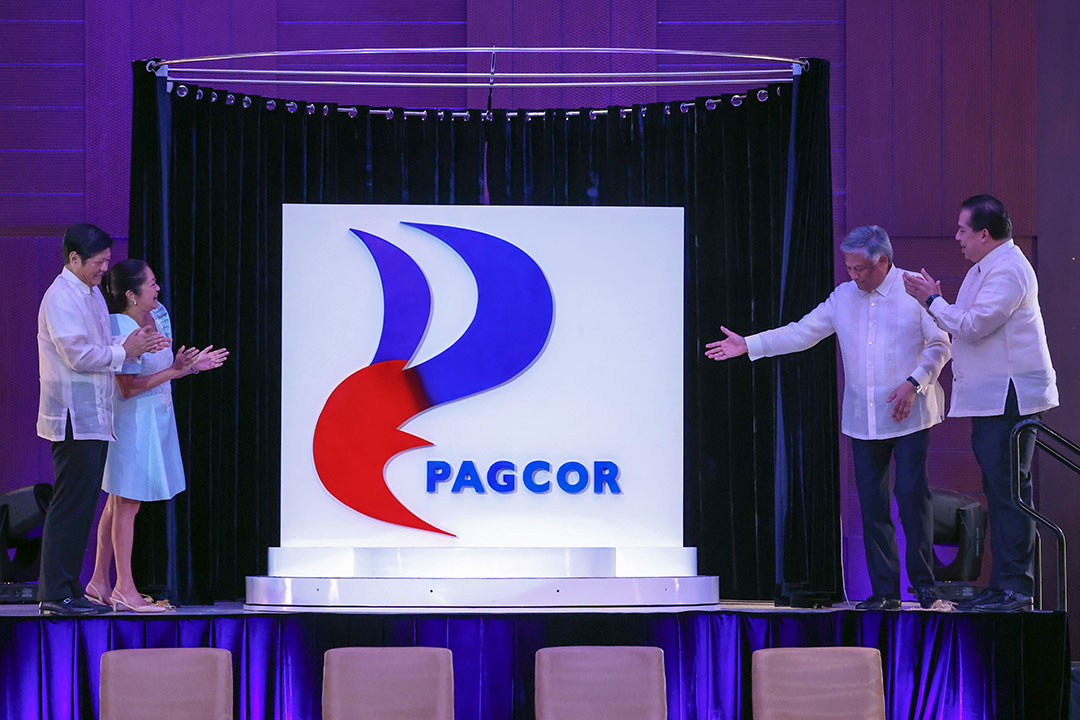
  • Pagcor Fines Gambling Firm P1 Million over Ivana Alawi iPhone Promotion

    Pagcor Fines Gambling Firm P1 Million over Ivana Alawi iPhone Promotion

    Philippine gaming regulator Pagcor fined an online gambling operator 1 million pesos ($17,700) for running an unapproved 100-unit iPhone giveaway with celebrity influencer Ivana Alawi.

    The social media promotion involved 4.28 million pesos worth of iPhone 17 Pro Max handsets distributed across Alawi’s digital channels in July without regulatory clearance. Prospective winners had to follow her affiliated gaming group and leave comments on promotional posts to enter the draw.

    Unauthorised Promotions Draw Scrutiny

    Pagcor chairman and chief executive Alejandro Tengco disclosed the financial penalty during a 2027 House of Representatives budget hearing in Manila. Lawmakers raised concerns after Kamanggagawa party-list Representative Elijah Fernando questioned the expanding marketing ties between digital influencers and gambling operators.

    Alawi maintains an official brand ambassadorship with online operator Casino Plus. Tengco confirmed the fine was accompanied by an explicit warning that repeat infractions would trigger license suspensions and outright cancellations.

    Enforcement Across Digital Platforms

    Regulators estimate that illegal operators make up roughly 50 per cent of the country’s online gaming ecosystem, operating beyond state oversight and consumer protection rules. Pagcor works alongside the Department of Information and Communications Technology, the National Telecommunications Commission, and the Cybercrime Investigation and Coordinating Center to pursue cases against unlicensed platforms and their celebrity endorsers.

    For consumer brands and digital marketing agencies across Southeast Asia, the action shows tighter oversight of influencer-led giveaways and promotional sweepstakes. Regulators in Manila now require promotional campaigns tied to licensed gaming entities to secure prior clearances from both Pagcor and the Ad Standards Council.

    Several content creators have cancelled promotional contracts with unlicensed gambling entities following the initial enforcement drive. State agencies are preparing further takedown requests and legal filings against operators that continue running unregistered social promotions.

  • Human Trust Remains Key Driver for Southeast Asia E-Commerce Amid Rising AI Adoption

    Human Trust Remains Key Driver for Southeast Asia E-Commerce Amid Rising AI Adoption

    Human trust continues to be a primary factor in consumer purchasing decisions across Southeast Asia, even as generative artificial intelligence (AI) tools gain traction in product discovery. A new report by impact.com, Cube, and Dentsu reveals that while AI is emerging as a significant channel, established human connections still hold sway over shoppers in the region’s burgeoning e-commerce market.

    The “E-commerce Influencer and Affiliate Marketing in Southeast Asia 2026” study indicates that recommendations from family and friends are the most influential factor, scoring 2.42 out of four. This outranks online reviews (2.36) and even creators (1.98). However, the report also highlighted the direct impact of creators, with two-thirds (67%) of consumers making a purchase specifically due to a creator’s recommendation. This trend underscores the enduring power of trusted individuals in guiding consumer choices.

    AI’s Growing Role in Discovery and Research

    Generative AI tools such as ChatGPT, Gemini, and Claude are increasingly being used by Southeast Asian consumers for shopping, particularly in product discovery and research. Approximately 24% of consumers in the region currently use these AI tools for initial product discovery, a figure that rises to 28% during the product research phase. Vietnam leads the adoption curve for AI in product discovery at 34%, followed by Indonesia at 31%, while Singapore recorded the lowest usage at 14%.

    Despite AI’s ascent, influencers retain their importance as a research channel, cited by 51% of consumers. YouTube garners the highest engagement for influencer content at 23%, with TikTok at 17% and Facebook at 15%. The report suggests that AI complements the existing commerce ecosystem, rather than replacing it. Consumers frequently navigate between AI assistants, marketplaces, creators, publishers, retail media, and brand-owned channels throughout their purchasing journey. RetailNews Asia has observed similar patterns in other markets, where technology enhances rather than entirely supplants traditional trusted channels, prompting brands to integrate diverse strategies.

    E-Commerce Growth and Influencer Impact

    Southeast Asia’s e-commerce sector is experiencing robust growth, with sales forecast to increase by nearly 15% year-on-year to $219 billion in 2026. This trajectory is expected to almost double to approximately $410 billion by 2031. Indonesia and Thailand collectively dominate the regional market, accounting for 58% of all e-commerce sales, with marketplaces holding an average 72% share. Influencer and affiliate marketing combined are linked to an estimated 32% of the region’s e-commerce sales, translating to about $70 billion in 2026.

    The study, which surveyed 2,400 consumers, also details conversion methods. For purchases made via influencer or creator channels, in-video product tags were the most common conversion route at 56%. This was followed by links in descriptions or comments (43%) and stories (41%). Consumer engagement with various purchasing incentives varies by market. Singapore shows high adoption of cashback and deal sites at 69%, contrasting with Vietnam (28%) and Indonesia (25%) where usage is considerably lower.