Tag: ING

  • Citi Names Head of Private Bank for South Asia

    Citi Names Head of Private Bank for South Asia

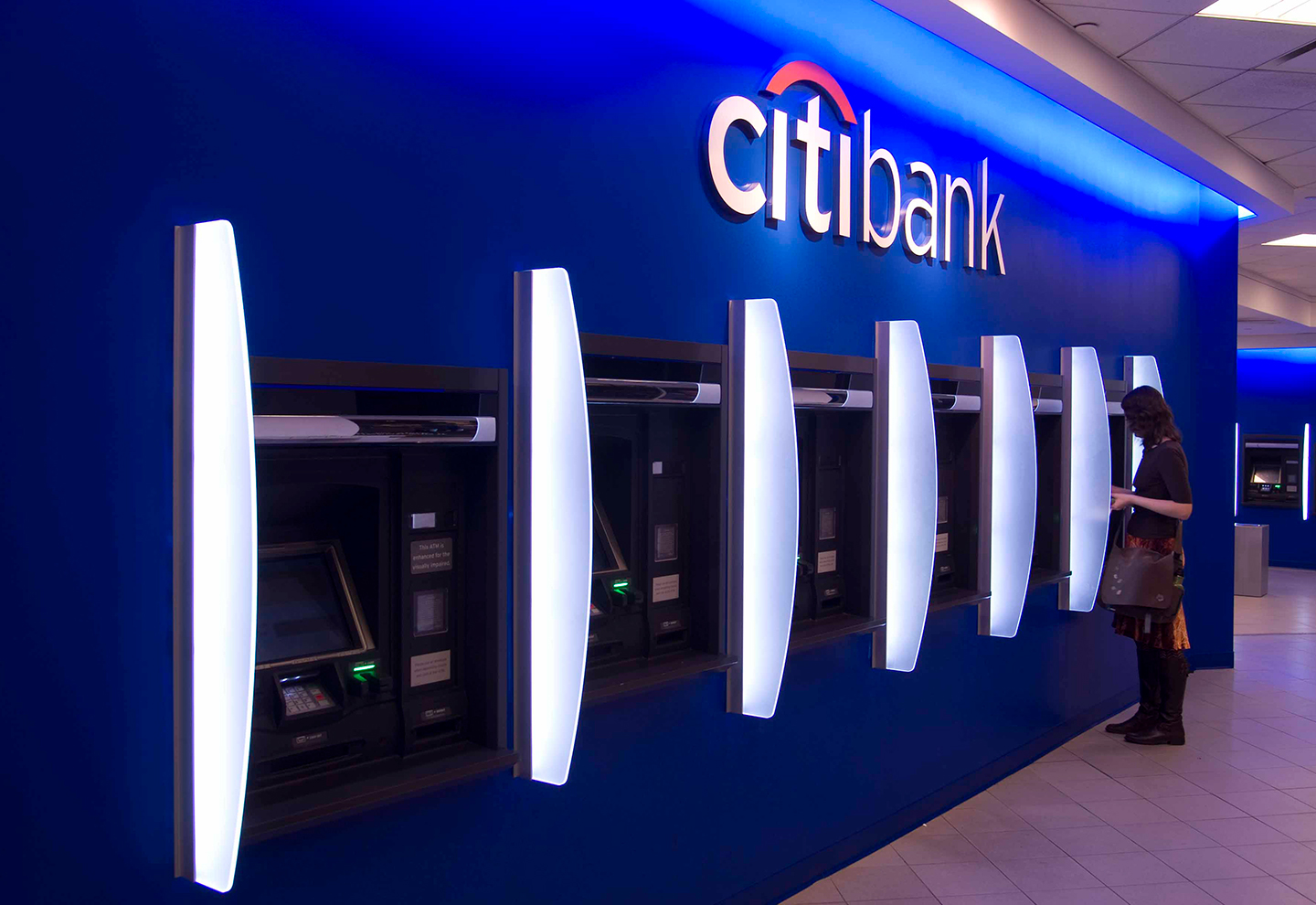
    The Singapore-based Citi veteran will oversee the bank’s global market managers in South Asia and will have direct responsibility for the Singapore and Malaysia markets.

    Citi has named Lee Lung Nien as head of its private banking business in South Asia, in addition to his existing role as chairman of Citi Private Bank for South Asia, according to an announcement on Monday.

    Lee joined Citi 30 years ago and was CEO of Citi Malaysia from 2014 to 2020. He previously held various other senior roles including co-head of corporate sales and structuring for markets and securities services, chief operating officer for Singapore, and AML (anti-money laundering) business head of Asia Pacific. In his new role, he will report to Steven Lo, Asia Pacific head of Citi Private Bank and Amol Gupte, Asean head and Citi country officer for Singapore.

    According to the bank, the South Asia region, which includes Singapore and Malaysia, is a «key growth area» for its private banking business and is critical to the success of the Citi Global Wealth initiative.

    The South Asia region possesses outstanding potential due to a fresh wave of entrepreneurship, developing capital markets and an increasingly welcoming environment for family offices, Gupte said.

    The South Asia head role was previously held by Jyrki Rauhio, who left in 2020 after 20 years at the bank and later joined HSBC Private Banking as its regional head of credit advisory.

  • ING and Maybank Top Creditors To Troubled Commodity Trader

    ING and Maybank Top Creditors To Troubled Commodity Trader

    ING and Malayan Banking Bhd (Maybank) were the top creditors of Singapore commodity trader Agritrade International, which was last month placed under interim judicial management.
    Malaysia’s Maybank tops the list of secured lenders to Agritrade with $118 million owed to it, while Dutch bank ING is owed $100 million, according to a report. Agritrade International was placed under interim judicial management in February after the court dismissed an application for a debt moratorium.
    The trading company has $1.55 billion in outstanding liabilities, including $983 million owed to secured lenders, an affidavit by Agritrade’s chief executive officer Xinwei Ng dated Jan. 16, showed. Multiple Banks InvolvedFrench, Indian, Italian, Japanese, Chinese, the United Arab Emirates and Korean banks, along with 10 private funds are among Agritrade’s other creditors, are also on the list. Others on the list include global commodity traders.
    Agritrade said in the affidavit it ran into financial problems around 2018 amid a declining commodities market and its funding issues were compounded after many banks halted funding.
  • ING researches online banking venture in China

    ING researches online banking venture in China

    ING reported third-quarter underlying pretax profit of 1.50 billion euros ($1.64 billion), compared with 1.49 billion euros in the same period last year, beating analysts’ mean forecast.

    The figures, and an upbeat outlook, came as many leading European-based banks, including Deutsche Bank, Credit Suisse and Standard Chartered are shedding thousands of jobs and reorienting their businesses to meet stricter capital requirements.

    Morgan Stanley analysts, who have an “overweight” rating on ING shares, said the numbers were better than expected thanks to falling provisions on bad loans. They dipped to 261 million euros from 322 million euros.

    ING stock was the best performer on the Amsterdam stock exchange, rising more than 4 percent. They are up 26 percent year to date.

    CEO Ralph Hamers said the bank was considering entering the Chinese online banking market with local partner Bank of Beijing, and was in the preliminary stages of researching the option.

    Hamers said he believed the Chinese stock market had stabilized and measures taken by the government would “help economic recovery by the end of this year.”

    Chief risk officer Wilfred Nagel said Chinese loan default rates, though they had risen, were still lower than in Europe. He said the Chinese retail banking sector was an attractive opportunity.

    “China adds the size of the GDP of the Netherlands to its economy every year. This is still in absolute terms an economy that grows quite strongly,” he said.

    ING’s online banking platform is helping it add 1,000 retail customers per week in Germany.

    Nagel said the Chinese discussions were at an early stage and no decisions had yet been taken on timing or ownership.

    In the earnings report, ING said it grew its lending portfolio by 1.6 billion euros.

    Net interest margin improved slightly quarter-on-quarter to 1.46 percent from 1.45 percent.

    “In Europe, sentiment is holding up,” Hamers said. “We see a recovery in bank lending in countries like Belgium and Germany.”

  • Identifying Asia’s regional bank champions

    Identifying Asia’s regional bank champions

    Bank of China is seen as the strongest challenger for Asian leadership

    A swelling population, exponential economic growth and broad financial development are transforming Asia ex-Japan into a global finance hub.

    It is the opportunity to service retail and wealthy clients in Asia that has fired banks’ ambitions to extend their regional networks and boost their distribution power.

    But the odds are stacked against them. They have nowhere near the scale of the international players Citi, HSBC and Standard Chartered. This trio has resources, customer networks and relationships acquired from a century of operations in Asia.

    Asian banks, on the other hand, face constraints in their ability to expand cross-border, including fierce domestic competition and national protectionism.

    Nevertheless, they have become increasingly vocal about their regional ambitions, centred around expanding their wealth management businesses.

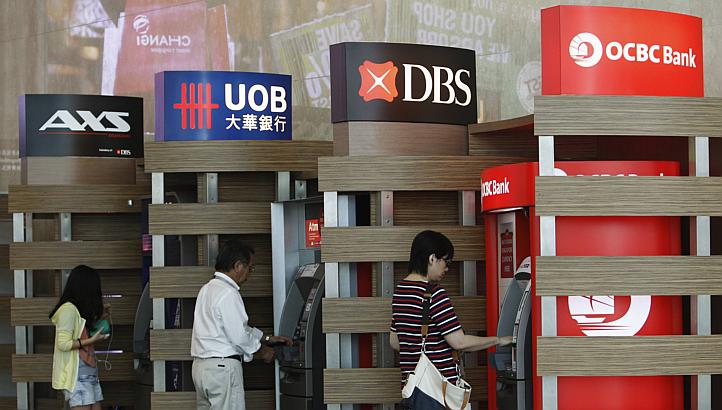
    Our leading contenders come from China, Malaysia and Singapore. Hong Kong banks appear content to focus on Greater China, where they will seek to be facilitators of trade flows rather than competitors in regional distribution.

    “From a geographical standpoint, the footprint of the Singaporean banks is wider,” said Michael Wu, senior equity analyst at Morningstar. “They might be in a better position to access Asia.”

    Bank of China is seen as the strongest challenger for Asian leadership. It has the balance sheet and is willing to suffer in the short term to expand, notes CLSA.

    BOC has a network of 11,514 offices, although 10,693 are onshore. Overseas, it has 628 offices in Hong Kong, Macau, Taiwan and in 37 other countries.

    It was first to offer private banking onshore in 2007 and now manages Rmb720 billion ($116 billion) for 74,000 private banking customers, with more than 7,000 wealth management centres and 34 private banking hubs. It has private banking operations in Singapore and Hong Kong and has ambitions to grow in Asia, including Australia, where it opened a branch in 2010.

    Singapore’s largest lender, DBS, has 280 branches across 15 markets in Asia. But Singapore and Hong Kong remain its major markets, despite its attempts for regional leadership. As CLSA points out, its operations in the growth markets of China, India and Indonesia have remained sub-scale.

    DBS is building wealth management/private banking operations. Its private banking business was bolstered by its $220 billion acquisition of Société Générale’s private banking business in Asia last October, boosting its AUM 22% to S$133 billion ($97.4 billion) as of December 2014. DBS’s total wealth management AUM stood at S$141 billion and its private bank AUM at S$95 billion.

    Maybank was a late-comer to private banking, but has been building a solid Asean network. Its regional operation only started 18 months ago, with Singapore as its hub. But it has been hiring aggressively and expanding its proposition, including launching a discretionary portfolio management service.

    Steven Seow, Asia head of wealth management at Mercer, pointed out that Maybank has succeeded in converting long-time Asian corporate banking entrepreneurs to its wealth management business. In terms of private banking assets, Maybank has S$6 billion in overall AUM, having added S$2 billion in new assets over the past year.

    Historically OCBC has focused on Southeast Asia. It has a strong position in Singapore and is one of the largest foreign banks in Malaysia, providing conventional and Islamic finance. Last year it acquired Wing Hang Bank in Hong Kong for $5 billion.

    That increased OCBC’s branches in Greater China from 25 to 120 and deepened its operations in the Pearl River Delta, although it paid a high premium given Wing Hang’s operations in Hong Kong and China were marginal.

    In private banking and wealth management, OCBC’s 2009 acquisition of ING Private Banking (renamed Bank of Singapore) for $1.46 billion has given it the scale to compete with DBS and global banks. The acquisition trebled its private banking AUM to $23 billion.

    As of March this year that AUM had since doubled to $51 billion. It enjoyed 15% year-on-year growth in wealth management income in 2014.

    Among Singaporean banks, UOB’s focus is on Southeast Asia, with universal banking operations in Malaysia, Thailand and Indonesia. But outside of Singapore its strength in Malaysia – it has the largest foreign bank network in the country with 45 branches – is not replicated in Thailand and Indonesia.

    Without the help of an international acquisition, UOB has invested in building its wealth management and private banking capabilities out of Singapore.

    It saw the combined AUM of wealth management and private banking grow 67% to S$80 billion in the four years to 2014, during which time the profit contribution of wealth management doubled to 47%.

    But while it has plans to offer private banking outside of Singapore, its current proposition is acknowledged as behind city-state peers DBS and OCBC.

    The full article appears in the July 2015 edition of AsianInvestor magazine