Tag: institutional investment

  • Japan Post Insurance Backs JPY 30B Star Asia Housing Fund

    Japan Post Insurance Backs JPY 30B Star Asia Housing Fund

    Japan Post Insurance has anchored a JPY 30 billion ($190 million) residential property fund rolled out by Star Asia Group to hold rental assets across Tokyo’s 23 wards.

    Formally set up on 30 September as Star Asia Japan Property Fund No 1, the vehicle holds 17 recently built properties and establishes the investment manager’s first private channel targeting Japanese institutional equity.

    Star Asia Asset Advisors serves as asset manager for the vehicle, which allows Japan Post Insurance, an anchor backer holding JPY 58.3 trillion in assets at the end of June, to deploy capital alongside other domestic institutional partners.

    Shifting Capital Back to Tokyo

    Japanese life insurers are redirecting capital back home. New economic value-based solvency rules introduced at the end of March make domestic assets far more capital-efficient for local life companies than unhedged foreign debt or overseas property.

    Residential assets in Tokyo give institutional buyers a steady yield buffer. Star Asia is pricing the fund on the premise that Tokyo inner-ward rents can rise after decades of stagnation, supported by steady inward migration into central districts.

    Competition for high-quality residential blocks remains fierce among both local institutions and foreign private equity managers. Rental housing made up 21 percent of the record JPY 5.73 trillion in commercial real estate transactions recorded in Japan during the first nine months of the year.

    Insurer Targets Five Percent Alternatives Share

    Japan Post Insurance is working under a three-year investment plan released in May that calls for shifting alternative investments away from foreign holdings and directly into Japanese physical assets. Toru Onishi, who took over as president in June, intends to double the insurer’s separate real estate joint venture with Mitsui & Co to JPY 400 billion from around JPY 200 billion.

    Real estate is “highly resistant to inflation, and also a useful asset for responding to the capital regulations that have recently come into effect,”

    The insurer wants alternative assets to reach around five percent of its total portfolio by March 2029, up from 3.7 percent at the end of March 2024. Property and infrastructure will account for approximately half of that alternatives allocation, up from 43 percent.

    Earnings expectations are tied closely to this shift. Japan Post Insurance aims to generate an investment spread of more than JPY 290 billion in the year ending March 2029, compared with JPY 203.5 billion booked in the fiscal year ended March 2024.

    Broadening Beyond Overseas Endowments

    Star Asia was founded in 2007 by Taro Masuyama and Malcolm F MacLean IV, building its business primarily on equity from North American university endowments, pension systems and sovereign funds. The group managed JPY 930.6 billion at the end of June and has deployed more than JPY 1.43 trillion across Japan since inception.

    Opening a pipeline to domestic institutions rebalances Star Asia’s capital base. In February, the group sold a 25 percent economic interest to Mizuho Leasing for JPY 30 billion to expand its private funds and back its Tokyo-listed Star Asia Investment Corporation, where residential real estate accounts for 12.7 percent of its 78 assets by value.

    Earlier partnerships tested the model. Star Asia established SA Artessimo Residential I in 2020, securing priority acquisition rights for compact apartments developed by Global Link Management.

    Institutional Demand Deepens

    Other major institutions are executing similar playbook shifts. The Government Pension Investment Fund awarded JPY 10 billion in March to a domestic fund run by Hong Kong-based Phoenix Property Investors, following earlier allocations to Japanese vehicles managed by BentallGreenOak and Morgan Stanley.

    Japan Post Insurance had already widened its external manager bench in June by backing DMRE Fund 4, a JPY 23 billion rental housing fund managed by Marubeni Asset Management covering Tokyo, Kansai and Chubu. That deal was its first property vehicle executed through a silent partnership structure.

    Star Asia now faces the task of deploying capital into Tokyo residential buildings. The firm is counting on central ward wage gains to translate into residential rent increases through the end of the decade.


  • BNY Expands Bitcoin and Ether Custody to European Union Institutions Under MiCA

    BNY Expands Bitcoin and Ether Custody to European Union Institutions Under MiCA

    BNY expanded its digital asset custody platform to select European Union institutions on October 8, 2026. The service provides regulated safekeeping across four major tokens under the bloc’s MiCA framework.

    Globally, the bank oversees 62.6 trillion dollars in assets under custody and administration. Its European license represents one of the largest traditional finance entries into crypto infrastructure to date.

    Institutional clients can store, transfer and administer Bitcoin, Ethereum, Solana and USDC through The Bank of New York Mellon SA/NV, the group’s Brussels-based European banking entity. The setup uses multiparty computation, segregated client wallets and cold storage protocols. It also provides bankruptcy stay protection. That isolates client assets from BNY’s balance sheet if the bank faces insolvency.

    The Structure Behind the Custody Rollout

    Engineers built the digital custody infrastructure directly on BNY’s existing asset servicing architecture rather than operating it as an independent unit. The firm originally launched the platform in 2022 to handle tokenized cash and collateral settlement before seeking cross-border licensing.

    Client assets under the MiCA regime remain subject to explicit warnings. BNY notes that digital assets lack FDIC insurance, do not count as traditional bank deposits, and carry direct market exposure risks.

    Four assets form the initial offering: Bitcoin, Ethereum, Solana and USDC. The bank plans to add more tokens and stablecoins over time. However, it has not set a timeline for listing additional assets or confirmed specific rollout dates across individual EU member states.

    How Custody Competition Stacks Up

    Custodians are taking divergent approaches to digital assets across Europe, North America and Asian financial hubs. US regulatory hurdles previously slowed custody rollouts on American balance sheets. In contrast, the EU’s clear MiCA timetable gave BNY a unified single-market rulebook to clear its European banking arm first.

    Rivals are moving in parallel across international hubs. Standard Chartered has expanded digital asset custody across its Dubai operations, including support for institutional stablecoin reserves. For institutional investors, the entry of global systemically important banks narrows the compliance gap between holding conventional equities and holding digital tokens.

    Operational risks remain concentrated around liquidity and software integration. Asset managers require real-time settlement and automated reporting into standard accounting platforms. Traditional custody books provide these tools for bonds, but developers are still adapting them for public blockchains.

    Licensing Steps Leading to the European Launch

    Regulators at the European Securities and Markets Authority registered The Bank of New York Mellon SA/NV on the official MiCA registry in July 2026. That authorization permits crypto asset custody, administration and transfer activities across member jurisdictions, setting up the October deployment.

    Jennifer Barker, Head of Europe at BNY, addressed the institutional demand behind the launch: “To support increasingly digital strategies, institutions need solutions with the same resilience, oversight and safeguards they rely on across traditional operations.”

    BNY must now demonstrate institutional client adoption on the ground. The bank has not disclosed initial custody volumes or named launch partners for the four supported tokens, leaving transaction metrics and broader asset approvals as the key milestones ahead.

  • Ethereum Falls to $2,694 as BlackRock Outflows Snap Seven-Day ETF Inflow Streak

    Ethereum Falls to $2,694 as BlackRock Outflows Snap Seven-Day ETF Inflow Streak

    Ethereum dropped 1.26 per cent to $2,694.64 in 24 hours as institutional buyers paused after a seven-session run of net inflows into spot exchange-traded funds.

    United States spot Ethereum funds logged $2.81 million in net outflows on September 29, abruptly ending a week of sustained capital allocation.

    Institutional Outflows Snap Buying Streak

    BlackRock’s ETHA led the reversal, recording $8.94 million in net withdrawals in a single session. That outflow broke the momentum that had carried the token through its recent recovery, stripping away the primary source of spot market absorption. Without steady fund buying to soak up sell orders, the market turned defensive as short-term traders took profits.

    Institutional flows dictate price floors in this cycle far more than retail volume. When spot ETF allocations stall, spot books thin out rapidly, exposing used positions across major derivatives exchanges.

    use Flush Triggers Liquidation Cascade

    Derivative markets amplified the downturn within hours of the ETF flow reversal. Forced closures erased $11.88 million in used long positions in a single one-hour window on September 29.

    Total liquidations across all Ethereum trading pairs reached $56.64 million over the 24-hour period. That cascade pushed prices down through intraday bids, creating automatic selling pressure as brokerages closed under-margined accounts. Funding rates and open interest contracted as over-used traders were cleared out of the order books.

    Technical Support Levels Under Pressure

    Ether is now trading below overhead resistance at $2,786. The immediate support zone sits between $2,612 and $2,626, matching the token’s 20-day exponential moving average.

    A failure to hold the $2,612 floor opens a direct path toward secondary support at $2,544. Conversely, buyers must clear the $2,786 level on a daily closing basis to create momentum toward the next resistance target at $2,894.

    Macro Inflation Data Dictates Next Range

    Trading desks have shifted focus to broader macroeconomic indicators to gauge whether institutional allocators will resume spot buying. Risk appetite across digital asset markets remains tied to monetary policy expectations and interest rate differentials.

    Market participants are watching the United States Personal Consumption Expenditures price index release on September 30, with trading desks tracking whether the 20-day average near $2,612 holds through the macro print.

  • Bitcoin Spot ETFs Attract $2.4 Billion in Inflows as Daily Momentum Slows

    Bitcoin Spot ETFs Attract $2.4 Billion in Inflows as Daily Momentum Slows

    Spot Bitcoin exchange-traded funds pulled in $2.4 billion between September 21 and September 25, 2026, recording their highest weekly inflow total of the year. The net purchases brought total assets across the fund group to $108.4 billion, representing about 6 percent of all circulating Bitcoin.

    Daily figures tapered sharply across the five-day run. The week opened on September 21 with $999 million in net share creations and dropped to $715 million on September 22. Capital arrivals slowed further to $347 million on September 23, $191 million on September 24, and reached $134 million on September 25. The initial two sessions generated roughly 72 percent of the aggregate weekly intake, while Friday accounted for just 13 percent of Monday’s volume.

    Daily Allocations Taper After Front-Loaded Start

    Data from SoSoValue shows the deceleration occurred as Bitcoin traded near $84,000 on September 26, up 3.3 percent over the week but down 0.9 percent on the day. The token remains roughly 4 percent lower in 2026 and sits 23 percent below its price from the same period in 2025.

    Authorized participants create and redeem ETF shares by exchanging cash or underlying tokens. Daily totals net these creations against redemptions across all issuers, meaning smaller net numbers can reflect either light aggregate turnover or heavy creations at one issuer cancelled out by withdrawals at another. Hedge fund activity also shapes the volume. Funds running basis trades buy spot ETF shares while simultaneously shorting Bitcoin futures to capture yield spreads, generating share creation without taking directional long exposure on the underlying asset.

    Market Stability and Asset Dominance Shifts

    Macro volatility eased during the same window. The CBOE Volatility Index declined from 17.7 on September 16 to 14.2 on September 22, pointing to reduced hedging pressure across equity and asset markets rather than forced liquidations.

    Digital asset market share also shifted away from the largest cryptocurrency. Bitcoin’s market dominance fell below 60 percent during the period. Capital dispersed into other fund vehicles, with Solana ETFs logging 12 consecutive weeks of positive net inflows while Bitcoin ETF trading recorded quieter periods earlier in the month.

    Recovery Follows Regulatory and Rate Pressures

    The weekly rebound followed heavy redemptions the week prior, when funds shed a combined $746 million across two trading sessions. Outflows reached $450 million on September 15 and $296 million on September 16 after the US Senate blocked the CLARITY Act and the Federal Reserve raised interest rates.

    Those mid-September losses deepened what had been a depressed year for spot funds. Through September 9, spot Bitcoin ETFs registered $1.07 billion in cumulative net outflows for 2026, with redemptions occurring on more than half of all trading sessions. The $2.4 billion inflow streak reversed that negative balance, lifting year-to-date net inflows to approximately $320 million.

    Price Thresholds to Watch in Fourth Quarter

    Sustaining the current recovery requires fund creations to hold above mid-week run rates. A return to single-day inflows exceeding $999 million would signal fresh institutional buying, whereas an outflow day comparable to the $450 million withdrawal on September 15 would snap the current positive streak.

    On the spot market, a climb back above the $87,500 mark where Bitcoin began 2026 would confirm that buyers are absorbing outstanding float. A break below $81,200, the token’s level on September 19, would erase the week’s price gains and put recent ETF buyers below their entry costs.

  • Investa and BGO Expand Australian Office Venture to A$1.8 Billion

    Investa and BGO Expand Australian Office Venture to A$1.8 Billion

    Investa and North American investment giant BGO expanded their Australian commercial property partnership to A$1.8 billion with an agreed A$715 million portfolio purchase across Sydney and Brisbane.

    The acquisition covers 123 Albert Street in Brisbane alongside 30-34 and 36 Hickson Road in Sydney, splitting ownership equally between BGO and the Investa Commercial Property Fund at the Queensland site.

    Alongside the joint portfolio purchase, the A$6 billion Investa Commercial Property Fund agreed last month to sell 1 Market Street in Sydney for A$450 million to the Investa Core Plus Office Partnership. Chief Executive Peter Menegazzo said the sale frees capital from a 30-year-old building to manage fund gearing following recent development outlays.

    “Office is back,” Menegazzo told the Mingtiandi Australia Forum in Sydney. “We operate in a cyclical sector and industry, and we knew it would come. It was just a matter of when.”

    Capital recycling and portfolio reshuffle

    The transaction at 1 Market Street relies on rental growth across roughly 50 tenants rather than cap rate compression, offering frequent windows to reset income to current market levels. Sydney has recorded consecutive quarters of net absorption, underpinning institutional demand for well-located assets with manageable vacancy risks.

    Investa signed 133,000 square metres of leases over the past 12 months. Tenants with lease expiries falling between 2029 and 2031 are already opening renewal negotiations early to lock in prime space ahead of projected shortages.

    Development barriers squeeze prime office supply

    Elevated construction costs and tight capital markets have stalled the supply pipeline across major Australian central business districts. New developments require asking rents between 30 and 50 percent above prevailing levels, alongside lower capitalisation rates, to reach commercial viability.

    Sydney faces a four-to-five-year development cycle, prolonging the shortage of modern office space. Institutional buyers are responding by acquiring standing premium buildings at prices below replacement cost rather than taking on greenfield construction risk.

    Brisbane displaces southern office capital

    Brisbane has emerged as one of the strongest office markets globally for effective rental growth over the past 18 to 24 months. Queensland’s commercial property market is drawing allocations away from Melbourne, supported by Olympic infrastructure preparations and tight physical supply.

    Offshore institutions are widening their presence in Brisbane. Recent transactions include Japanese investment into Central Plaza I, TPG’s venture with GPT on Central Plaza II, and Barings’ A$700 million acquisition of 480 Queen Street.

    Asian institutional backing expands into living sectors

    Japanese capital has expanded beyond traditional commercial towers into Australian living sectors. Daibiru bought 135 King Street in Sydney for A$600 million from Investa’s flagship fund last year, adding an ongoing management mandate.

    Tokyo-based groups JR West Real Estate & Development, Sotetsu Real Estate and Sumitomo Mitsui Trust Bank are financing Investa’s 251-studio co-living project at 140 Elizabeth Street in Sydney. The company is now seeking A$500 million in equity to back a co-living platform with A$1 billion in initial development capacity, with negotiations underway on the capital commitment.

  • Korea Post Names Capstone and IGIS for $368M Property Debt Strategy

    Korea Post Names Capstone and IGIS for $368M Property Debt Strategy

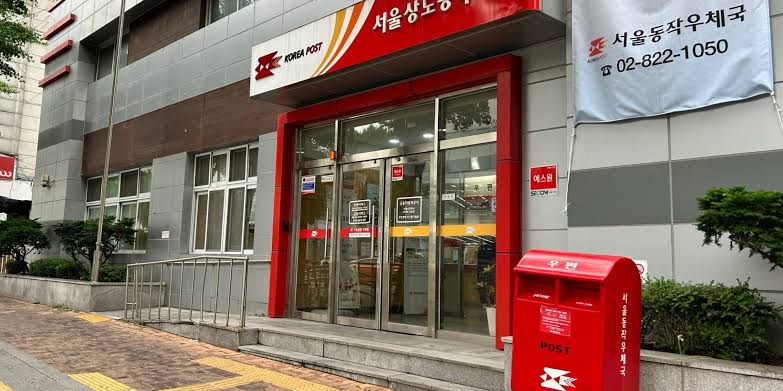
    Korea Post has picked Capstone Asset Management and IGIS Asset Management to manage a 500 billion won ($368 million) domestic property loan strategy. The mandate reopens development lending after three years.

    The state-run postal agency selected the two Seoul-based asset managers as preferred bidders following a July tender. It has not disclosed how the capital will be split between them.

    This is the first domestic real estate debt programme from Korea Post Savings since 2023. Back then, the institution committed 400 billion won to a single manager while banning all development and project financing. Lending to construction projects is now permitted once building work is underway. Bans remain on higher-risk land-backed and bridge loans.

    Lending Terms and Guardrails

    Under the guidelines, the blind-pool funds will focus on senior secured loans backed by South Korean offices, logistics hubs and other commercial real estate. Senior debt must account for at least half of all invested capital. Korea Post is targeting a net internal rate of return of at least 5.5 per cent.

    Each fund vehicle must raise a minimum of 150 billion won. The investment period runs up to three years, with an initial lifespan capped at eight years. Portfolio-level loan-to-value and loan-to-cost ratios are capped at 70 per cent. Individual completed-asset loans may reach 75 per cent LTV, while development loans are limited to 80 per cent LTC.

    Single asset commitments cannot exceed 40 per cent of a fund’s total commitments. Each management team must co-invest at least 1 per cent. Korea Post also retains first-refusal rights on co-investment opportunities across the portfolio.

    Institutional Capital Returns to Development

    South Korean institutional investors pulled back sharply from property project finance following the 2022 Legoland developer default and subsequent interest rate hikes. Korea Post is now providing liquidity to completed and active sites through post-groundbreaking debt. Strict collateral covenants remain in place to prevent land-stage exposure.

    The debt mandate brings Korea Post’s announced domestic property commitments since 2025 to 1.15 trillion won. That total includes up to 500 billion won committed to a Mirae Asset Global Investments core property vehicle deployed into Seoul commercial assets. It also covers a 150 billion won REIT and senior debt mandate awarded to IGIS in June.

    Korea Post manages 157 trillion won in savings and insurance assets, balancing rising returns from alternative credit against persistent deficits in its traditional mail operations. Final manager appointments will conclude once on-site due diligence and investment review committee approvals wrap up.