Tag: Intense

  • Chinese Companies Grapple with Rising Payment Delays amidst Intense Competition

    Chinese Companies Grapple with Rising Payment Delays amidst Intense Competition

    In an environment marked by frail demand and severe competition, Chinese companies are allowing customers an extended period to clear their invoices. However, these businesses are still enduring extended periods waiting for overdue payments, a situation that is increasing the pressure on corporate cash flows.

    Mainland Chinese firms, on average, offer payment terms of 81 days, which is longer when compared to the 70-day average across the Asia-Pacific, according to a recent survey by Coface. Although these terms are more lenient, 86% of Chinese companies reported experiencing payment delays. This figure is marginally lower than the APAC average of 91%, but settlement of these overdue invoices in China takes about 73 days on average, five days longer than the regional average.

    Worsening Payment Conditions

    The state of payment conditions has deteriorated in the past year. Approximately 35% of survey respondents stated that payment delays have become more frequent, while 26% reported some improvement. Concurrently, 33% mentioned that delays had become more severe, in contrast to 27% who reported an improvement.

    Looking to the future, 40% of Chinese companies anticipate further deterioration of payment conditions in the coming 12 months, and only 20% plan to tighten the payment terms they offer customers. Coface credited this strain to a combination of factors such as trade and tariff volatility, consistent weak demand, and intense price competition in various Chinese industries.

    The survey’s findings align with a broader economic perspective. At the end of June, accounts receivable at China’s industrial enterprises increased by 8.1% year on year. The average collection period lengthened from 70.9 days to 71.7 days.

    Fewer Defaults but Larger Losses

    Chinese companies reported fewer customer defaults than their regional counterparts, with only 16% experiencing at least one default in the past 12 months, in contrast to the APAC average of 45%. Yet, when defaults did occur, the financial impact was more significant. Defaulted receivables made up 11.2% of total accounts receivable among Chinese suppliers, compared to 10% across APAC. This effect was particularly noticeable in the wood and chemicals industries, where about 20% of receivables were written off as defaults.


    Questions & Answers

    What are the average payment terms offered by Chinese companies?
    The average payment terms offered by companies in mainland China are 81 days.

    How does China’s rate of customer defaults compare to the regional APAC average?
    Chinese companies reported fewer customer defaults than their regional counterparts, with only 16% experiencing at least one default in the past 12 months, in contrast to the APAC average of 45%.

    What is the financial impact when customers default?
    When customers default, the financial impact is more significant in China. Defaulted receivables made up 11.2% of total accounts receivable among Chinese suppliers, compared to 10% across APAC. This effect was particularly noticeable in the wood and chemicals industries, where about 20% of receivables were written off as defaults.

  • Coles Transitions Hundreds of Jobs to India Amid Intense Retail Competition

    Coles Transitions Hundreds of Jobs to India Amid Intense Retail Competition

    Australia’s supermarket behemoth, Coles, has announced that it will be outsourcing numerous jobs to India through a strategic alliance with Accenture, management consultants. This move comes as a result of the intensifying competition within the retail industry.

    Technological Advancement and Cost Reduction

    Coles asserts that this initiative will enhance its technological and specialist capacities to adapt to evolving customer demands. Simultaneously, the partnership with Accenture spanning over several years will decrease the cost of backroom operations. Coles, already the second-largest supermarket retailer in Australia, revealed that some of its corporate workforce’s roles would be transferred to Accenture’s international branches.

    The company voiced its concern for the employees affected by this transition, acknowledging the significant impact it might have on them and their teams. A spokesperson for the company emphasized, “These decisions are never made lightly.” They went on to add that the company plans to reassign as many impacted employees as possible, providing opportunities for them to acquire new skills and transition into different roles within the company.

    The information surfaced ahead of the company’s intended announcement, revealing that Accenture has already started recruiting for the program, primarily situated in Mumbai. One of the job listings sought a marketing campaign management specialist with seven to eleven years of experience, offering the chance to collaborate with the “Coles 360 teams on cross-functional campaigns.” However, the advertisement did not disclose any salary or pay scale details.

    Minimal Impact on Workforce, Future Plans

    Coles was prompt in pointing out that these changes would only affect a small fraction of its 115,000 Australian employees and would not impact the majority of its team members working in stores across the country.

    The retailer affirmed its commitment to compensate for any job losses resulting from the offshoring deal through its ongoing store expansion program. It also suggested that individuals affected by the Accenture arrangement might be reassigned within the Coles Group. However, the spokesperson had to admit that redundancies would be an inevitable part of this process.

    Questions & Answers

    What is the primary reason for Coles’ decision to offshore jobs to India?
    The decision was influenced by the mounting competition within the retail sector. Coles intends to strengthen its technological and specialist skills while also reducing backroom operation costs through this move.

    How will the offshoring affect the current employees at Coles?
    While the changes will impact a small portion of the workforce, Coles has committed to redeploying as many of the affected employees as possible and providing reskilling opportunities.

    Will the offshoring lead to a reduction in the overall number of jobs at Coles?
    Coles maintains that any jobs lost due to offshoring will be compensated for through its ongoing store expansion program. However, there may be some redundancies.

  • Pinduoduos Parent, PDD Holdings, Experiences Slump Amid Economic Weakness and Intense E-commerce Competition in China

    Pinduoduos Parent, PDD Holdings, Experiences Slump Amid Economic Weakness and Intense E-commerce Competition in China

    Chinese e-commerce powerhouse, PDD Holdings, recently experienced a significant drop in first-quarter profits along with revenues falling short of projections. This is largely attributed to a sluggish economy dampening demand for their domestic operations. The underperformance sent the company’s share value plummeting by 10% on Wednesday.

    China’s retail sector, being the world’s second-largest, has had difficulties drawing in consumers. This is primarily due to a protracted property crisis and worries over job security and wage growth, which have collectively undermined spending power. This, in turn, has negatively affected the demand for companies like PDD.

    Stiff Market Competition and Aggressive Investments

    PDD’s domestic discount marketplace, Pinduoduo, faces fierce competition from rivals such as JD, Alibaba, and other discount retailers like ByteDance’s Douyin. These competitors have been employing aggressive pricing strategies to attract customers.

    In addition to its domestic operations, PDD also manages the international e-commerce platform, Temu. The company has been making substantial investments in its supply chain network to enhance delivery speeds and broaden product categories, in hopes of enticing more shoppers.

    In an effort to build a new self-operated brand called Xinpinmu, the company announced in March that it would invest 100 billion yuan (US$14.8 billion) over the next three years. This move aims to integrate Pinduoduo’s supply chain resources with Temu.

    These aggressive investment strategies have resulted in a surge in PDD’s expenses, which in turn has weighed down its net income, causing a 15% reduction to 12.5 billion yuan for the quarter ending March 31.

    Regulatory Scrutiny and Model Feasibility

    Temu has grown in popularity as a platform for shoppers seeking low-priced items, capturing demand from lower-income households worldwide.

    However, the company’s model of delivering inexpensive goods directly to customers from China is encountering increased regulatory oversight. Temu’s operations have traditionally depended on duty waivers for low-value parcels in many jurisdictions.

    Changes in international regulations, such as the US abolition of the duty-free exemption on parcels valued under $800 last year, and the EU’s decision to eliminate its duty-free allowance on parcels under 150 euros ($174.57) as of July this year, pose questions about the sustainability of the current business model.

    Questions & Answers

    What is causing PDD’s revenue to fall short of estimates?
    The decrease in PDD’s revenue is primarily due to a sluggish economy that is affecting consumer demand for its domestic operations.

    How is PDD responding to the competitive e-commerce market?
    PDD is making substantial investments in its supply chain network to enhance delivery speeds and broaden product categories, in hopes of enticing more shoppers.

    How might changes in international duty regulations affect PDD’s business model?
    Changes in international regulations, such as the abolition of duty-free allowances on low-value parcels, could impact PDD’s current business model of delivering inexpensive goods directly from China and may require the company to adapt its operations accordingly.

  • Meituan Faces Second Quarter Loss Amid Intense Food Delivery Competition in China

    Meituan Faces Second Quarter Loss Amid Intense Food Delivery Competition in China

    In a fiercely competitive market, Chinese food delivery titan Meituan has reported a second consecutive quarterly loss, slightly missing projected revenue growth. Over the past year, the company has weathered intense competition sparked by aggressive subsidy tactics in China’s burgeoning one-hour delivery sector.

    The Rivals and the Battle

    The company’s profit margins and revenue growth have faced significant challenges following the emergence of ‘instant retail’ platforms introduced by e-commerce behemoths Taobao and JD, both subsidiaries of Alibaba, in early 2025. Instant retail, also known as quick commerce, is characterized by online orders—typically food, bubble tea, or daily essentials—delivered to customers within an hour.

    A Glimmer of Hope in 2026

    Despite the tough conditions, the early months of 2026 have shown promising signs that the cutthroat price competition in the instant retail sector may be easing. This phenomenon, which has been disparaged by Chinese regulators as a destructive ‘race to the bottom’, has begun to show signs of abating.

    Meituan’s Financial Status

    Meituan’s revenue for the quarter ending December 31 amounted to 92.1 billion yuan (US$13.3 billion), marking a 4.1% increase over the previous year. This figure fell slightly short of the 92.2 billion yuan forecasted by industry analysts. Meanwhile, the company’s adjusted net loss narrowed to 15.1 billion yuan from 16 billion yuan in the previous quarter. A year earlier, Meituan had reported a profit of 9.8 billion yuan.

    Regulatory Guidance and Market Health

    During a post-earnings call with analysts, Meituan’s CEO, Wang Xing, stated that the regulatory guidance regarding the price war in the instant retail sector is “already quite clear.” He also noted that regulators strongly oppose the relentless ‘neijuan’, or involution, competition and are focused on fostering a healthy, orderly market. The term ‘neijuan’ represents a form of competition where entities are forced to engage in increasingly intense rivalry that yields minimal benefits.

    In the wake of a state media editorial calling for an end to China’s food delivery price wars being republished by Chinese regulators, Meituan’s shares experienced a significant 14% surge. Industry observers viewed this as a sign of official approval.

    Questions & Answers

    What is the instant retail or quick commerce model?
    This refers to online purchases, often consisting of food, bubble tea, and daily necessities, which are delivered to customers within 60 minutes.

    What is meant by ‘neijuan’ competition?
    ‘Neijuan’, or involution, indicates a situation where individuals or companies are compelled into increasingly intense competition that offers little benefits.

    How did the market respond to regulatory intervention in the price war?
    Following a state media editorial urging an end to the food delivery price wars being republished by Chinese regulators, Meituan’s shares saw a significant 14% increase, signaling market approval of regulatory intervention.

  • Beauty Retailer Sasa’s Sales Skyrocket by 12.5% Amid Intense Promotions and Online Boost

    Beauty Retailer Sasa’s Sales Skyrocket by 12.5% Amid Intense Promotions and Online Boost

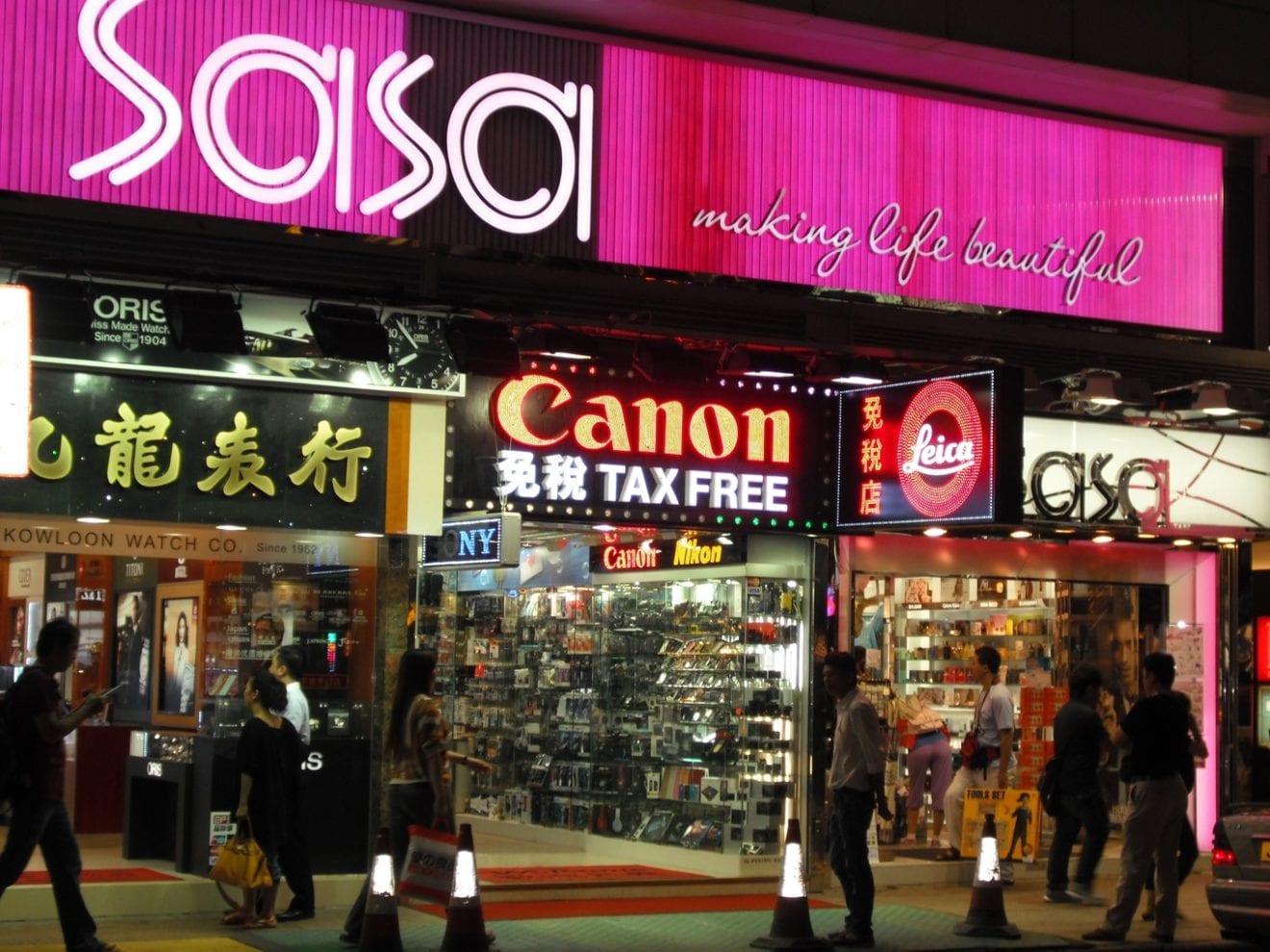
    Sa Sa International, the prominent Hong Kong beauty retailer, has reported a widespread increase in sales during the fiscal third quarter. After a lengthy phase of dwindling profits, which the company previously attributed to a “languid macroenvironment”, Sa Sa International has witnessed a revenue surge of 12.5% in Q3 compared to the same period last year.

    Online Sales Growth

    The upturn was driven by a 14.9% rise in online sales, whilst in-store sales across Hong Kong, Macau, and Southeast Asia also showcased impressive growth of over 10%. In the third quarter, Sa Sa International posted revenues of HK$1.15 billion (US$147 million).

    A spokesperson for the company outlined the strategic moves that led to the turnaround: “The group ramped up promotional activities and rolled out time-limited offers in association with brand partners at key events. This included the National Day Golden Week in October, the Sasa mega sale in November, and the Christmas holidays in December. The result was a notable year-on-year growth in both online and brick-and-mortar sales.”

    The Chinese Mainland Tourist Factor

    The spokesperson further highlighted the role of increasing Chinese mainland tourist arrivals in Hong Kong and Macau. It was observed that traditional tourist districts of Hong Kong and Macau saw a satisfying increase in store sales.

    Sa Sa International also saw an uplift in the total number of transactions recorded in Q3, which increased by 2.9% year-on-year. Concurrently, the average sales per transaction showed a 9.4% rise in the same period.

    Questions & Answers

    What was the percentage increase in Sa Sa International’s revenue in Q3?
    Sa Sa International’s revenues increased by 12.5% in Q3 compared to the same period the previous year.

    What factors contributed to the growth in Sa Sa International’s sales?
    The growth was due to an increase in promotional activities, time-limited offers in association with brand partners at key events, and a rise in Chinese mainland tourist arrivals in Hong Kong and Macau.

    Did the total number of transactions and average sales per transaction rise in Q3?
    Yes, the total number of transactions recorded in Q3 increased by 2.9% year-on-year, and the average sales per transaction also rose by 9.4% in the same period.