Retail News CRM

Tag: interest rate

  • India central bank makes surprise interest rate cut

    India central bank makes surprise interest rate cut

    India’s central bank unexpectedly lowered interest rates and, as anticipated, shifted its stance to “neutral” from “calibrated tightening” to boost a slowing economy after a sharp fall in the inflation rate. The monetary policy committee (MPC) of the Reserve Bank of India cut the repo rate by 25 basis points to 6.25%, as predicted by only 21 of 65 analysts polled by Reuters. Most polled respondents expected the central bank to only change the stance, to neutral.

    Four of six members of the MPC voted to cut the rates, while all six voted for a change in the stance.

    “Investment activity is recovering but supported mainly by public spending on infrastructure,” the MPC said in a statement. “The need is to strengthen private investment activity and buttress private consumption.”

    Rupa Rege Nitsure, chief economist at L&T Financial Services, called the central bank moves “the perfect policy response in the current circumstances.”

    Indian shares pared gains while 10-year bond yields slid 5 basis points after the surprise rate cut.

    The Indian rupee weakened to 71.69 to the dollar immediately after the announced but strengthened soon after to 71.42.

    The NSE index was up 0.04% at 11068.05 while the 10-year benchmark government bond yield fell to 7.51% from Wednesday’s close of 7.56%.

    India’s last rate cut, to 6.00%, was in August 2017.

    Also, in Manila, the Philippine central bank kept its benchmark interest rate steady for a second straight meeting , saying inflation risk had fallen on lower crude oil and food prices.

    The Bangko Sentral ng Pilipinas kept the rate on its overnight reverse repurchase facility The central bank paused its tightening cycle in December to allow its five straight previous rate increases, totalling 175 basis points, to work their way into the economy.

    The rate increases appear to be having their desired effect as inflation has started to cool since it hit a near-decade peak of 6.7% in September and October last year.

    The decision to stay on hold was based on the central bank’s view that lower oil costs and stabilisation in food prices would bring inflation under control and could see it back on target as early as March, when it could fall to below 4%.
  • Vietnam’s interest rate rises in the lead-up to biggest national holiday

    Vietnam’s interest rate rises in the lead-up to biggest national holiday

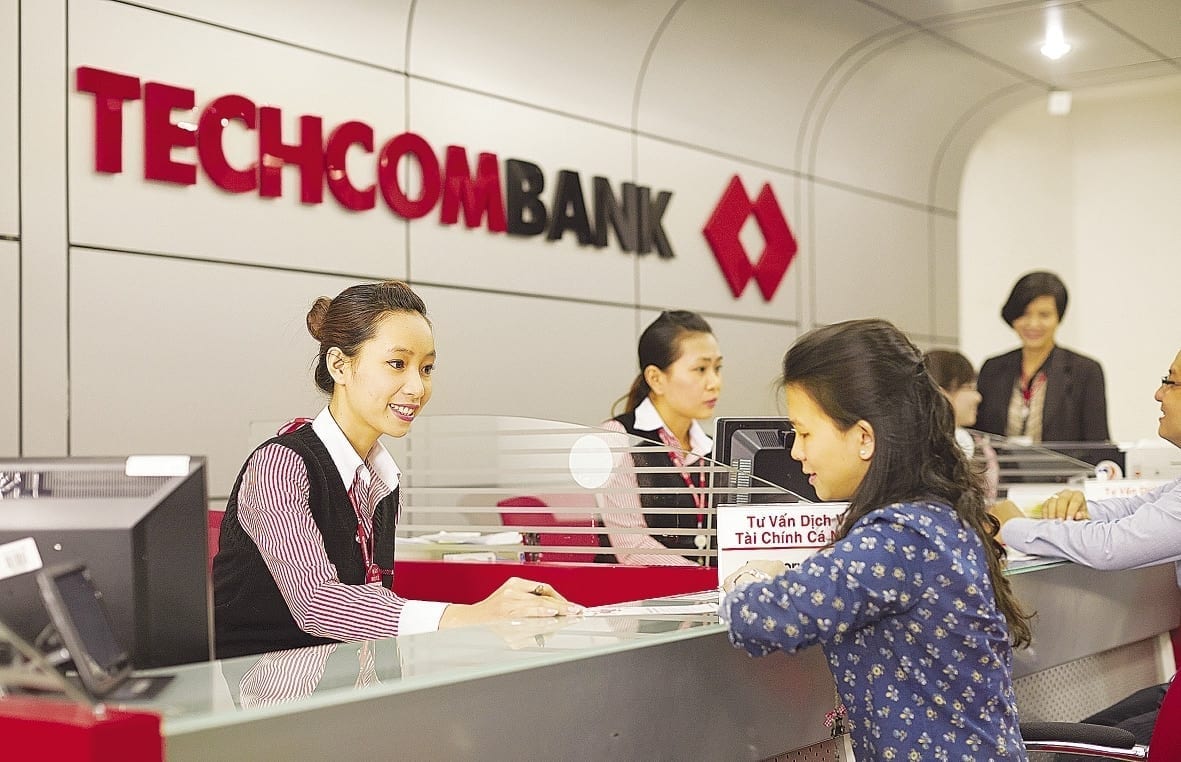
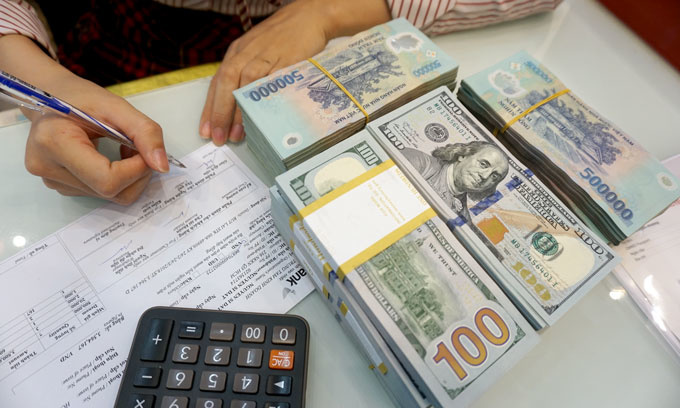
    Banks have hiked deposit interest rates by 0.1-0.5 percentage points as the country’s spending demand surges prior to Tet. Private lender Asia Commercial Bank last Friday introduced a new interest schedule with an increase of 0.2-0.3 percentage points in rates on most deposit terms. It also offers rates proportional to the amount of deposit. Techcombank, another of the larger private banks, since January 21, has hiked rates by 0.2-0.3 percentage points for terms of up to 12 months.

    Earlier, in mid-December most private banks had upped rates by 0.1-0.7 percentage points, while state-run banks increased them by up to 0.5 percentage points.

    However, there are also a few banks that choose to ‘go against the current’ by lowering deposit rates on same products. For instance, BIDV, Vietnam’s biggest lender by assets, has just lowered interest rates on its deposit rate schedule effective from January 22.

    BIDV’s 5-month savings is now 5.2 percent interest, down from its previously 5.5 percent which was its approved ceiling rate.

    Previously, at the end of December 2018, BIDV increased the 5-month term interest rate by 0.5 percentage points per year.

    On the same day, VPBank also reduced the interest rate on their 6-36 months terms by 0.1-0.5 percentage points.

    Specifically, the bank’s regular savings interest rate with 6-11-month terms is lowered by 0.2 percentage points, and is now 7 percent. The 12-month term interest rate is 7.05 percent; both 13 and 15 month terms are down 0.2 percentage points, and are now 7.2 and 7.4 percent respectively.

    However, VPBank still currently holds the highest single interest rate in the market of 8.6 percent for its 18-36 month fixed term savings.

    Experts believe that the negative adjustment of interest rates at some banks such as BIDV and VPBank may be for the purpose of restructuring to meet the banks’ individual capital needs, and does not yet accurately reflect the interest rate trend in the following months.

    In fact, the period before the Tet Lunar New Year holiday is when cash is still in high demand in the economy, as businesses need to withdraw money to pay bonuses and salaries, and people will withdraw cash to spend for Tet which will start from February 5.

    At the conference on tasks for the banking industry in 2019 on January 9, Deputy Governor of the State Bank of Vietnam (SBV) Dao Minh Tu said that banks have recorded a decline in deposits.

    According to him, this is a phenomenon that banks need to keep their eyes on, to determine where the flow of capital has gone, to real estate or production, or another channel in order to make reasonable adjustments to their plans.

    Tu said the SBV had adamantly stuck to its policy to stabilize interest rates despite very high pressure to drive rates upwards in 2018. Many small banks had raised short-term deposit rates to attract capital and improve liquidity, resulting in the central bank having to pump more money into the market or use other measures to limit and keep interest rates stable for businesses.

    The deputy governor said the SBV had to balance between the conflicting interests of banks, savers and businesses to come up with an appropriate interest rate for the whole market.

    The SBV targets credit growth of 14 percent this year, the same as last year. As a result, he noted, commercial banks will have to make better quality loans this year to avoid bad debt.

  • Vietnamese banks deposit rates rise as usual at year end

    Vietnamese banks deposit rates rise as usual at year end

    Banks usually hike deposit interest rates and even offer promotions at the year end, and this year has been no different. On December 19 Sacombank announced a rise in interest rates on deposits of three months from 5.2-5.3 percent to 5.5 percent, and on deposits of 12 months from 6.9 percent to 7.7 percent. VPBank has increased its rates by 0.1-0.7 percentage points, with deposits of 18 months and more carrying the highest rate of 7.8 percent.

    State-owned banks such as BIDV and Vietinbank have hiked rates by 0.1 to 0.5 percentage points.

    The management of a joint-stock bank headquartered in the south said lending usually rises in the last quarter of the year to meet the rising demand for short-term credit to serve the working capital needs of companies.

    As a result, many banks increase their deposit rates, especially for short terms, it said.

    Besides, experts said lenders are running out of time to use 45 percent of short-term capital for medium- and long-term loans, with the ratio to be reduced to 40 percent on January 1.

    The National Financial Supervisory Commission has recently estimated that credit growth to have slowed significantly to 15 percent this year from 18 percent in 2017.

  • Indonesia Needs to Raise Rate to Stay Ahead of the Curve

    Indonesia Needs to Raise Rate to Stay Ahead of the Curve

    Bank Indonesia, the country central bank, needs to raise its benchmark interest rate on Thursday (25/09) or risks to be left behind the curve and sees a further weakening of the rupiah, economists said.

    “Bank Indonesia must be ahead of the curve amid the trend of rising global interest rates,” said Cyrillus Harinowo, a former central banker and now a commissioner at Bank Central Asia, Indonesia’s third-largest lender by market capitalization.

    Bank Indonesia has increased its benchmark 7-day reverse repo rate by 125 basis points so far this year, while the Federal Reserve has raised its interest rates by 175 basis points. That narrowed the interest rate differential between Indonesia’s interest-bearing assets and similar assets in the US, making the former more risky to hold for foreign investors.

    Cyrillus said Bank Indonesia has 12 times a year to raise the benchmark rate, compared to 4 times in the US, which should give it more leeway for adjusting its monetary policy.

    A Reuters poll showed that 20 out of 25 economists predict Bank Indonesia will increase its 7-day reverse repurchase rate by 25 basis points (bps) to 5.75 percent.

    Three other analysts see BI making a bolder move of hiking by 50 bps, while the last two predict the central bank will stand pat.

    The rupiah has lost about 9 percent against the dollar this year amid a sell-off of Indonesian assets due to rising US interest rates, contagion fear from other emerging market crises and the US-China trade war.

    Since BI’s last hike on Aug. 15, the currency has hit its lowest level since the 1998 Asian financial crisis and continued to trade near that level.

    Indonesia’s economy fundamental today, however, is far different from two decades ago, Tony Prasetiantono, the head of the Center for Economic and Public Policy Studies at Gajah Mada University (UGM).

    That time the rupiah nosedived by almost 600 percent from 2,300 a US dollar to 15,000. Indonesia’s economy contracted in 1998. Today it is still growing albeit at a slower pace of 5.17 percent compared to the government target of 5.4 percent.

    “Another indicator is inflation. Currently, it is around 3.5 percent while in the 1998 crisis it was 78 percent,” Tony said.

    “And the main thing is that the banking fundamentals are very healthy at the moment, much different from 1998,” he said.

    August Trade Deficit

    Fed officials have signaled a likely quarter-point rate increase at their meeting which ends early Thursday Asia time.

    Fakhrul Fulvian, Trimegah Securities economist, said he changed his view on Thursday’s decision from a hold to a 25 bps hike after “not as good as we had estimated” August trade data. The month’s deficit was $1.02 billion, much wider than the $680 million the market expected.

    The government has taken steps to curb imports, including imposing higher tariffs on over 1,000 imported goods, widening biodiesel use and delaying big infrastructure projects.

    “A relatively high level of foreign currency debt explains why the Indonesian authorities are worried when the currency falls sharply,” said Capital Economics, one of the large majority seeing a 25 bps hike on Thursday.

    Foreign investors own about 37 percent of Indonesian government bonds.

    BI officials have repeatedly pledged to be “ahead of the curve” in setting monetary policy.

    On Friday, Governor Perry Warjiyo said that investors had begun to resume buying emerging-market assets, and this plus exporters converting their earnings had increased the domestic supply of dollars.

    He also said inflation should stay benign until the end of the year despite the rupiah’s fall. The annual rate in August was 3.20 percent, within BI’s 2.5-4.5 percent target range.

    Satria Sambijantoro, Bahana Sekuritas economist and one of the two in the poll predicting a hold on Thursday, said Indonesian bonds, at current rates, are attractive.

    “The central bank is already ahead of the curve,” he said.

  • Indonesia Central Bank Raises Key Rate to Aid Rupiah, Flags Chance of More Hikes

    Indonesia Central Bank Raises Key Rate to Aid Rupiah, Flags Chance of More Hikes

    Indonesia’s central bank raised its benchmark interest rate for the second time in two weeks on Wednesday (30/05) and flagged more possible hikes as it escalated a battle to boost the fragile rupiah and contain capital outflows.

    Newly appointed Bank Indonesia Governor Perry Warjiyo pledged more action to promote financial and economic stability to bolster Indonesian assets amid an emerging market sell-off.

    The central bank “will continue to calibrate global and domestic market developments to utilize room for further rate hikes in a measured way,” Perry said after a meeting.

    On May 25, one day after being sworn in for a five-year term, Perry called Wednesday’s off-cycle meeting. On May 17, Bank Indonesia raised its key rate by 25 basis points to shore up the rupiah, then trading at its weakest since October 2015. Perry said the additional meeting was needed as a “pre-emptive, front-loading and ahead of the curve step” in response to expectations of higher US interest rates, which could push US Treasury yields higher.

    Rahul Bajoria, an economist for Barclays in Singapore, said the two hikes in two weeks “very forcefully signals to the market that the new governor is very serious about maintaining financial stability, and the institution is willing to be pre-emptive in managing risks that are emanating largely from external drivers.”

    Currency First

    Stephen Innes, head of Asia-Pacific currency trading at Oanda, said Wednesday’s decision showed “currency first and nothing else really matters.”

    The governor said Bank Indonesia will discuss loosening its “macroprudential” rules at its meeting in late June, and new ones should be released “soon.” He earlier said the central bank is looking at housing mortgages, but he did not give any details.

    In 2016 and 2017, Bank Indonesia cut its benchmark rate by a total of 200 bps in a bid to boost sluggish lending and economic growth.

    Perry said he expects loan growth to reach 12 percent at the end of 2018 compared with a year earlier. During much of 2017 and until April this year, annual loan growth was in single digits. April’s growth rate was 8.9 percent.

    With loan growth low and consumption weak, Indonesia’s annual economic growth has been stuck at about 5 percent.

    On Monday, Finance Minister Sri Mulyani Indrawati said: “We are ready to take any kind of policy to support Indonesia’s economy,” adding that if short-term measures mean slightly lower growth, “then that consequence has to be accepted.”

    The government has a 2018 growth target of 5.4 percent. Bank Indonesia said on Wednesday that it still expects expansion of 5.2 percent, better than last year’s 5.07 percent.

    Sound Key Indicators

    The rupiah, one of the worst performers among Asian currencies this year, barely moved following the rate announcement. It was trading at about 13,985 per dollar at the time it was made.

    Sri Mulyani and other senior officials on Monday sought to shore up confidence in Southeast Asia’s biggest economy at a time Indonesia, like other emerging markets, has seen an outflow of funds as US assets become more attractive due to rising interest rates.

    Key economic indicators are sound, Perry said, noting that the annual inflation rate is seen at 3.6 percent at the end of 2018, while the current-account deficit is expected to below 2.5 percent of gross domestic product, which Bank Indonesia considered “healthy.”

    Harry Su, managing director at financial research firm Samuel International, said the central bank “is now doing more proactive and forward-looking policy, particularly with regard to a possible higher current-account deficit, as well as inflationary pressure stemming from the current higher oil price environment.”

    All but one of 18 analysts in a Reuters poll expected Bank Indonesia to raise the key rate on Wednesday.

  • Bank of Indonesia Says Limited Room to Cut Interest Rates

    Bank of Indonesia Says Limited Room to Cut Interest Rates

    Bank Indonesia Governor Agus Martowardojo emphasized on Wednesday (24/01) that there is limited room for lowering interest rates due to the United States Federal Reserve’s plan to increase its benchmark rate, and the need to keep inflation in check.

    “[Room] to adjust the seven-day reverse repo rate is probably very narrow under the current conditions,” Agus told reporters. He added that the central bank will rely more on other monetary instruments to drive the economy.

    Agus said Bank Indonesia will relax reserve requirements by July. Lenders are currently required to keep a minimum reserve of 6.5 percent of their total rupiah deposits at the central bank at any time, comprising daily reserve of 5 percent and a two-week averaging reserve of 1.5 percent.

    Agus said Bank Indonesia will increase the averaging portion to 2 percent to allow lenders to be more flexible in managing their liquidity.

    It will also relax the averaging rules for foreign exchange deposits and sharia-compliant banks.

    The central bank will also allow larger bond purchases as a portion of banks’ loan to deposit ratios, and improve secondary reserve requirements for macroprudential liquidity buffers.

    Agus said the external risk stems especially from the Fed’s plan to increase its benchmark rate, while there are also fears that geopolitical conditions may increase pressure on financial market stability, including in Indonesia.

    Bank Indonesia will also pay more attention to inflationary pressures, especially on volatile goods. Prices of rice, chili peppers and other horticultural items are expected to greatly contribute to inflation this month, he said.

    “We welcome the government’s decision to import rice, and as rice harvest will also take place soon, the prices will be under control,” Agus said.

    Bank Indonesia has set an inflation target of between 2.5 percent and 4.5 percent this year.

    The central bank last cut its benchmark interest rate in October to 4.25 percent from 4.5 percent, as inflation continued to decline at the time. This also complemented the bank’s monetary easing, which saw it cut by 200 basis points from December 2015 until last year.

  • Bank Indonesia cuts benchmark interest rate to 6.50 per cent

    Bank Indonesia cuts benchmark interest rate to 6.50 per cent

    Indonesia’s central bank cut its benchmark interest rate again by a quarter point to 6.50 per cent Thursday amid slow and uneven recovery of the global economy.Bank Indonesia spokesman Tirta Segara said the cut, the fourth this year, was decided at a two-day meeting of the Board of Governors.The key interest rate was lowered in January after staying at 7.5 per cent since February 2015. Cuts of another quarter point followed in February and March.Segara said the central bank will continue monitoring global economic developments that will have an impact in Indonesia.

    He noted that the country is expected to feel effects from the U.S. economy, which is not in solid recovery as indicated by weakening of consumption and employment as well as low inflation.The central bank believes that the easing of monetary and macro-prudential policies will strengthen the government’s attempts to boost sustainable economic growth through acceleration of structural reforms.Domestic economic growth in the second quarter of 2016 is expected to improve although not as strong as previously expected, the central bank said in a statement.

    It sees that various steps are still needed to boost domestic demand to continue to strengthen the momentum of economic growth, and with these developments, the overall economic growth for 2016 is estimated to be in the range of 5 per cent to 5.4 per cent.