Retail News CRM

Tag: #internet

  • Google might have to sell off some of its businesses after a judge makes a critical ruling

    Google might have to sell off some of its businesses after a judge makes a critical ruling

    A ruling made by a US federal judge this morning could help the Justice Department decide to force Google to break up its online advertising businesses. District Judge Leonie Brinkema, of the US District Court for the Eastern District of Virginia, ruled that Google illegally dominated two markets for online advertising that combined to generate billions in revenue for Alphabet last year.

    Judge Brinkema said that Google was liable for “willfully acquiring and maintaining monopoly power” in the online publisher ad server market, and in the ad-exchange market that connects ad buyers with ad sellers. “Google further entrenched its monopoly power by imposing anticompetitive practices on its customers and eliminating desirable product features,” the judge added in her decision.

    Google did score a moral victory when the judge ruled that the DOJ failed to present enough evidence for her to rule that Google had a monopoly in the advertiser ad networks segment of the online advertising market. Google jumped on that victory to claim a partial win and said that it would challenge the rest of the judge’s rulings.

    “We won half of this case and we will appeal the other half. The Court found that our advertiser tools and our acquisitions, such as DoubleClick, don’t harm competition. We disagree with the Court’s decision regarding our publisher tools. Publishers have many options and they choose Google because our ad tech tools are simple, affordable and effective.”

    In her 115-page decision, Judge Brinkema agreed with the DOJ that Google, by tying its ad server and ad exchange businesses together, was able to “establish and protect its monopoly power in these two markets.” Publisher ad servers are a platform used by publishers to manage and control their inventory of ads. The ad exchange business is a digital marketplace that connects ad sellers like publishers with potential ad buyers like advertisers. It can be compared to an online stock exchange where ads and ad space are bought and sold instead of equities.

    The DOJ has argued that the court should force Google to sell off its digital advertising products including Google Ad Manager which includes the ad exchange and the publisher ad server. On Wall Street, shares of Google parent Alphabet (GOOG-NASDAQ) slipped slightly on the news with the stock down 1.3% or $2.01 to $153.49. The 52-week high is $208.70 while $142.66 is the 52-week low.

    Google’s legal issues continue. Next week, a court in Washington will hold a trial with the DOJ attempting to force Google to sell its Chrome Browser and take other steps to reduce its dominance in the search engine market.

    Some consumer watchdogs took to their social media platforms to declare victory over Google. Sacha Howarth, executive director of the Tech Oversight Project, said, “This ruling is an unequivocal win for the American people that will help lower prices, increase competition, and lead to a better internet for everyone.”


  • 26 million devices are infected by malware that steals bank card data including passwords

    26 million devices are infected by malware that steals bank card data including passwords

    25 million device users were targeted by a certain type of malware attack in 2023 and 2024. Infostealer malware does exactly what its name would suggest it does and grabs important information such as bank card numbers, passwords, and other sensitive data. Cyber security firm Kaspersky estimates that 2.3 million bank cards were leaked on the dark web in 2023-2024. The company says that every 14th infostealer infection ends up with the attacker scoring stolen bank card data.

    Including the 9 million devices infected by infostealers in 2024 alone, a total of 26 million have been, in the words of Kaspersky, “compromised” by such malware. While only 1% of bank cards issued globally have been leaked on the dark web, 95% of the card numbers spotted are “technically valid” according to the report. But there’s more to this type of malware that goes beyond stealing bank card account numbers.

    Kaspersky’s report goes on to state that this malware also steals credentials which is information used to verify a user’s identity. And that includes passwords. This data, along with cookies, are distributed to the dark web community. Victims can get into trouble without realizing that they are about to infect their phone, tablet, or computer. An infostealer is often disguised as legitimate software. Kaspersky’s report uses a game cheat as an example. The victim typically downloads the software and runs a malicious file.

    The malware is then spread to other devices via phishing links, malicious email attachments, infected websites, and other methods. Last year, Redline was the most widespread infostealer as it accounted for 34% of infections. The fastest growing of the infostealers was Risepro whose share of infections rose from 14% in 2023 to 23% last year. Another rapidly growing infostealer is Stealc which debuted in 2023 with a 3% share of infections. That number grew to 13% in 2024.

    Kaspersky says that if you do find yourself the victim of an infostealer, monitor your bank accounts and notifications. Have your bank card reissued and change the passwords for your bank app and website. Enable two-factor authorization and set spending limits if your bank allows you to do so. Be on the lookout for phishing attacks, fake texts, and bogus phone calls. If you’re not sure if a notification, email, or text is legit, call your bank. Kaspersky also suggests running security scans on your devices making sure to remove any detected malware.

  • Meta to Bring World’s Longest Undersea Cable to India

    Meta to Bring World’s Longest Undersea Cable to India

    The announcement, made in accordance with the recent U.S.-India joint leaders’ statement, highlights Meta’s focus on India’s expanding digital ecosystem. The undersea network will play a crucial role in global internet connectivity, linking countries and supporting local telecom operators in delivering services.

    “Meta is investing in India—one of its largest markets—bringing the world’s longest, highest capacity, and most technologically advanced subsea cable project to connect India, the U.S., and other locations,” a Meta spokesperson said.

    This investment comes amid growing calls from telecom operators for major tech firms, including Meta, to contribute to network infrastructure development and alleviate data traffic congestion.

    According to Meta, Project Waterworth will utilize advanced routing techniques and innovative cable burial strategies to safeguard the cable system against damage, particularly in high-risk coastal regions. The cable will reach depths of up to 7,000 meters in deep-sea areas.

    A Meta spokesperson said the investment reflects the company’s commitment to economic growth, resilient infrastructure, and digital inclusion, driven by India’s increasing demand for digital services.

    The U.S.-India joint statement, released following Prime Minister Shri Narendra Modi’s visit to the U.S., also emphasized India’s plans to invest in undersea cable maintenance and financing in the Indian Ocean using trusted vendors.

    “This project will enable greater economic cooperation, facilitate digital inclusion, and open opportunities for technological development in these regions,” Meta noted. “In India, where we’ve already seen significant growth and investment, Waterworth will help accelerate progress and support the country’s digital economy ambitions.”

  • Keppel, Sovico Plan Vietnam-Singapore Subsea Cable Project

    Keppel, Sovico Plan Vietnam-Singapore Subsea Cable Project

    Currently, there are four operational submarine cable systems linking Vietnam to the rest of the world: AAE-1, AAG, TGN-IA, and APG. The SEA-ME-WE 3 cable system previously connected with Vietnam, however, it was retired in early December.

    Three new cables are under construction to connect Vietnam: ADC, ALC, and SJC2. Moreover, Viettel and Singtel have signed a Memorandum of Understanding (MOU) to construct the Vietnam-Singapore Cable System (VTS).

    Vietnam has experienced frequent internet disruptions due to faults in its underwater cables. For instance, both the APG and AAE-1 cables are currently not functioning and awaiting repairs. In June, three out of five undersea cables connecting Vietnam to the world (APG, AAE-1, and TGN-IA) encountered issues, causing internet speed reductions across the country. The repair of the AAE-1 cable is still pending. In January 2023, four out of five undersea cables (AAG, IA, APG, and AAE-1) were not operational, leading to slow internet speeds across Vietnam.

    In January 2024, the Prime Minister of Vietnam issued Decision 36/QD-TTg (Decision 36), approving Vietnam’s Digital Infrastructure Master Plan 2030. According to this plan, Vietnam aims to add two-to-four international internet cables by 2025 and another four-to-six international undersea fiber optic cables by 2030.

    Furthermore, by 2030, Vietnam plans to increase the total number of submarine cables to 15, each with a total capacity of at least 334 Tbps. Sovico Group will focus on providing high-quality products and services in various sectors to meet customer needs and integrate with the global economy. In September, Sovico Group signed an MoU with U.S.-based tech company, Supermicro, to develop a hyperscale data center in Vietnam.

    According to SCMP, Keppel and Sovico Group are considering laying a cable that will directly connect Vietnam with Singapore, predicted to cost an estimated USD 150 million.

    The new projects led by Keppel and Sovico Group will be separate from previous investments announced by Vietnamese companies in four new undersea cables. These include the ADC and SJC2 cables, built by Japan’s NEC; ALC, built by China’s HMN Tech; and the Vietnam-Singapore submarine cable system announced by Vietnam’s Viettel and Singapore’s Singtel.

    Given its proximity to China, Vietnam faces challenges in aligning with the U.S. on strategies and policies related to digital infrastructure and undersea cables.

  • THAICOM-9A Secures 50.5°E Slot

    THAICOM-9A Secures 50.5°E Slot

    The satellite arrived at its designated slot on November 22, 2024, just days before Thailand’s rights to the orbital slot were set to expire on November 27.

    The relocation forms a crucial part of Thaicom’s mission to safeguard Thailand’s claim to the orbital position. TC Space Connect Company Limited (TCSC), a Thaicom subsidiary, secured a 20-year license for the slot through the National Broadcasting and Telecommunications Commission’s (NBTC) selection process. The move underscores efforts to preserve Thailand’s orbital rights while enabling long-term satellite operations.

    Faced with time constraints that make building a new satellite unfeasible—an average process of over three years—Thaicom has collaborated with an international partner to reposition an existing in-orbit communication satellite to the 50.5 degrees east orbital slot.

    Patompob (Nile) Suwansiri, Chief Executive Officer of Thaicom, noted that this achievement would enhance Thailand’s competitive standing, open new market opportunities for Thaicom, and support the growth of the country’s space industry.

    The satellite, now named THAICOM-9A, is set to begin operations in the first quarter of 2025.

    The satellite’s service coverage spans Europe and Asia, including Thailand. Thaicom’s initial focus will be on providing satellite services to Thailand and select Asian markets, with plans to explore business opportunities in Europe, Africa, and the Middle East in the near future.

  • Viettel Cyber Security’s Free Service Uncovers Risks for Philippine Businesses

    Viettel Cyber Security’s Free Service Uncovers Risks for Philippine Businesses

    In response to the growing need for enhanced cybersecurity, Viettel Cyber Security (VCS) has launched a free, innovative cyber threat check service specifically designed for businesses in the Philippines.

    The service provides real-time alerts on threats such as data breaches and compromised company accounts, along with personalized recommendations. Customers can access the service by simply entering their domain, allowing the system to conduct an automated scan.

    The VCS free cyber threat check quickly evaluates a company’s cybersecurity status. Within minutes, businesses receive a detailed report outlining vulnerabilities and risks, complete with metrics, severity scores based on asset value and threat intensity, and actionable recommendations from VCS. This real-time, no-cost service offers expert insights, helping companies of all sizes proactively protect their digital assets, prioritize critical risks, and strengthen their defenses—without the need for complex setup.

    The VCS free cyber threat check report offers essential insights into cybersecurity risks, helping businesses identify and address potential vulnerabilities. The report detects:

    • Compromised Accounts: Provides details on any compromised accounts associated with the organization.
    • Data Leaks: Supplies information on data breaches that may have exposed sensitive information.
    • Brand Phishing: Identifies fraudulent websites and phishing attempts that imitate the organization’s brand.
    • Impersonation Threats: Detects unauthorized entities attempting to impersonate the brand or business.
    • Unusual Open Ports: Highlights any open ports that could pose security risks.
    • Malware Infections: Identifies systems within the organization that may be infected with malicious software.
    • Web Security and Protocol Configuration: Assesses the security settings of the company’s web assets.

    After completing the scan, VCS compiles the findings and offers customized recommendations, including actionable solutions for each identified vulnerability. This detailed report helps businesses proactively enhance their cybersecurity measures and effectively manage risks.

  • Google Messages’ future update to give Magic Compose a more visible spot

    Google Messages’ future update to give Magic Compose a more visible spot

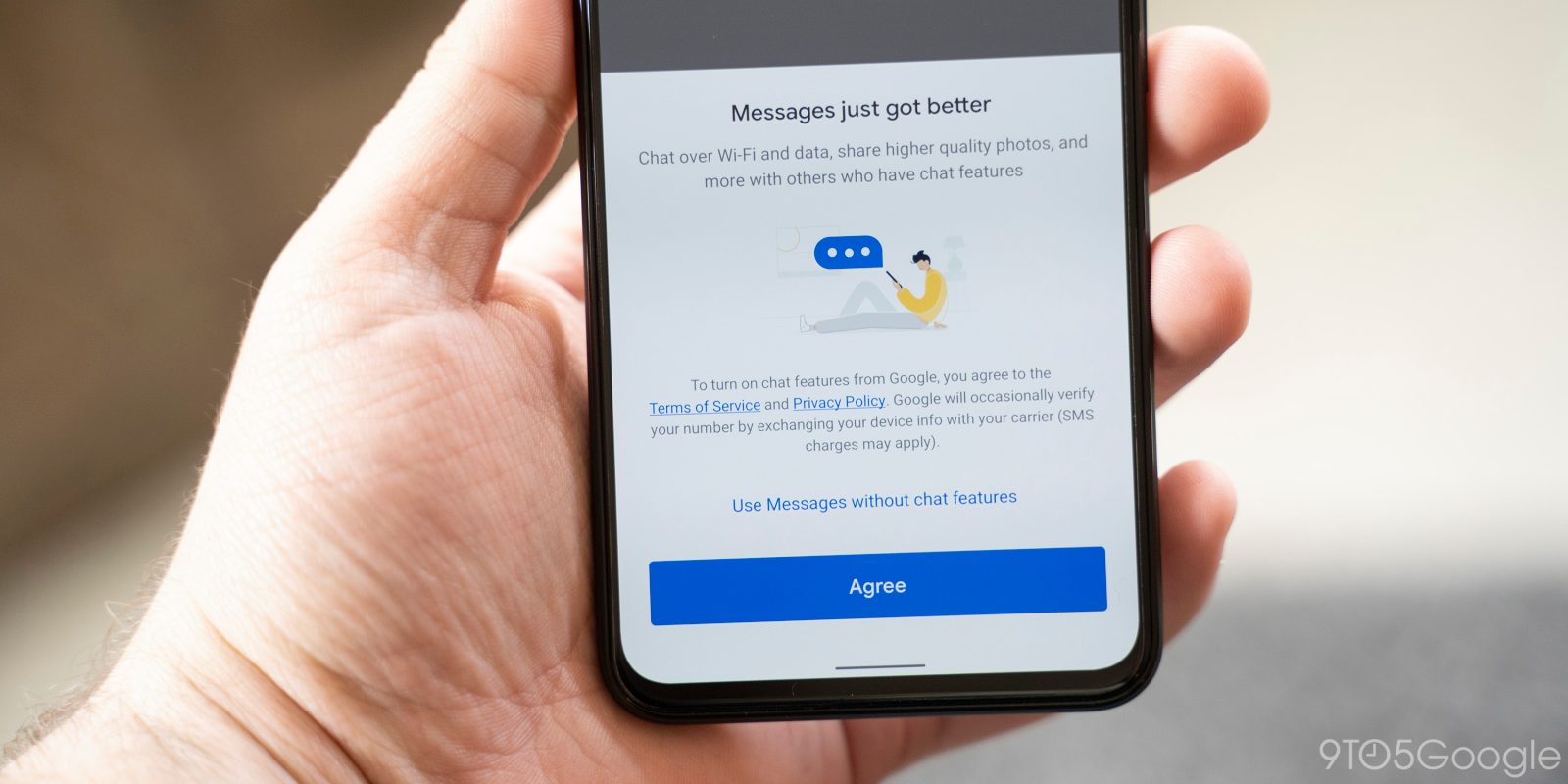
    Google is constantly adding new features and making tweaks to its Messages app, and it looks like a future update will introduce a small but useful change to give one of Google’s AI features more visibility.

    A recent report shows that the newest beta version of the Google Messages app has introduced a new Magic Compose button. Powered by Google’s generative AI, Magic Compose helps you craft responses based on the context of your messages, offering suggestions for how to kick off a conversation, reply, or even rework a draft in different tones.

    In the current setup, Magic Compose sits in the bottom row, nestled between the gallery and text field. As you type, it slides out of view behind a chevron.

    What’s new in the beta version, though, is that Magic Compose shows up in the row of smart replies, even when there aren’t any suggestions. It appears as a pill-shaped message bubble with a sparkle icon located either first or at the far right.

    Magic Compose shows up in the row of smart replies when you start typing. | Image credit – 9to5Google

    The icon matches the Dynamic Color theme, just like the Send button. Once you start typing in the compose field, the icon switches to Magic Rewrite (a pencil with a sparkle). No big visual changes to the feature itself, though.

    The old layout, with three buttons squished into one row, felt cramped and often shrank the text box, especially on smaller devices. So, I think Google making this small change to how the Magic Compose feature appears makes it way more accessible and easy to use.

    In other Google Messages news, three new changes are on the way to level up your texting experience. Plus, the Gemini Extensions feature for the Messages app has started its gradual roll-out.

  • Google is making a noticeable change to Search on the desktop and on mobile devices

    Google is making a noticeable change to Search on the desktop and on mobile devices

    According to Search Engine Land Google is about to do one of the most Googley things possible to the continuous scrolling feature found on Google Search results both on the desktop and mobile devices. Starting today, Google has removed users’ ability to continuously scroll through desktop Search results. Later this month, it will do the same thing and end infinite scrolling on mobile Search results.

    Instead of continuous scrolling for Search results on the desktop, users will press a button that says “Next” at the bottom of the page to see more results. On mobile, the infinite scrolling will be replaced by a “More results” button. Google actually has a reason for making this change instead of dropping a feature for no reason at all, something that the company has often been accused of doing.

    Google claims that by making this change, it will be able to deliver more search results faster instead of automatically loading search results that users haven’t requested and have no interest in seeing. Google also discovered that allowing infinite scrolling of search results didn’t result in higher satisfaction scores for Google Search. Continuous scrolling debuted on the desktop in December 2022 after starting on mobile search in October 2021.

    Suppose you own a website and your site doesn’t appear on the first page of a search result. In that case, you now might see fewer visitors from Google Search since a user would have to make the decision to press the “Next” button on the desktop or the “More results” button on a phone to continue to see additional results beyond the first page. Or, desktop users can jump to a specific page using Google’s iconic pagination controls which allows a user to jump to pages one through 10 by tapping on the page number desired.

    I have yet to notice any change to the desktop version of Google Search which continues to scroll continuously. As we said, the mobile version of Search is supposed to be updated before June comes to an end.

  • Google Fi Wireless increases pricing for those with more than three lines on “Simply Unlimited” plan

    Google Fi Wireless increases pricing for those with more than three lines on “Simply Unlimited” plan

    Google Fi Wireless, the MVNO wireless phone plan brought to you by Google, has announced changes to the pricing of its “Simply Unlimited” plan. Starting today for new customers, and rolling out to existing customers after April 4th, 2024, the prices for plans with three or more lines will be increasing as follows:

    • Three lines: The cost for three lines on the Simply Unlimited plan will increase from $80 to $90 per month.
    • Four lines: Accounts with four lines will go up from $80 to $100 per month.
    • Five and six lines: There are also increases for five-line accounts (going up to $125/month) and six-line accounts (going up to $150/month)

    If you have one or two lines active on the Simply Unlimited plan, not to worry, your pricing will remain unchanged. Additionally, Google Fi Wireless is not changing the core features of the Simply Unlimited plan, which still include unlimited high-speed data (which slows down after 35GB), unlimited calls and texts in the US, Canada, and Mexico, 5GB of hotspot tethering, connectivity for select smartwatches, automatic encryption of your data using a virtual private network (VPN), as well as some family safety features such as spam blocking, location sharing, and contact controls.

    These pricing adjustments begin for new customers starting today, March 5th, 2024. Existing customers will see the change reflected on their first bill after April 4th, 2024. Google Fi Wireless also clarifies that existing accounts with long-term promotions or device financing agreements activated before March 5th, 2024, will maintain their original pricing until those commitments end. Pricing will also not change on the Flexible or Unlimited Plus plans.

    Google Fi Wireless states this change in pricing is necessary “to continue delivering high-quality product offerings and features.” This marks the first price increase for the almost three year old “Simply Unlimited” plan since the service was rebranded from “Google Fi” to “Google Fi Wireless” last year.

  • T-Mobile brings its 5G Home Internet service to Puerto Rico

    T-Mobile brings its 5G Home Internet service to Puerto Rico

    T-Mobile is ending February with a big announcement for customers in Puerto Rico. The Un-carrier is expanding 5G Home Internet to Puerto Rico, thus allowing customers with an eligible address and qualifying voice line to sign up for the service for just $50 a month with AutoPay through their retail store.

    Arguably the fastest growing home internet provider in the United States, T-Mobile now offers customers in Puerto Rico a handful of benefits when going to its 5G Home Internet service.

    • A flat, monthly price: T-Mobile 5G Home Internet is $50 a month with AutoPay and a voice line and that’s it. There are no added taxes on qualifying accounts, monthly fees or equipment costs.
    • Simple setup: Pick up a gateway from a store, plug it in, download the app and get connected in less than 15 minutes.
    • A worry-free trial: Test drive 5G Home Internet worry-free for 15 days. When it’s time to make the switch, T-Mobile will pay up to $750 to cover any early termination fees from other internet service providers.
    • Price Lock: Lock in your monthly rate and enjoy peace of mind knowing that if T-Mobile ever raises your rate, you can get your last month of service refunded.

    Initially, 5G Home Internet will be available to T-Mobile customers in Puerto Rico in locations that have network capacity to provide a great experience to all customers. According to the carrier, network capacity will continue to be increased, so the 5G Home Internet service will expand to more people in the coming months.

  • eBay fined $3M for harassment involving sending live cockroaches to Massachusetts couple

    eBay fined $3M for harassment involving sending live cockroaches to Massachusetts couple

    eBay has agreed to pay a $3 million penalty following a harassment campaign conducted by its employees involving the sending of live cockroaches to a Massachusetts couple.

    The U.S. Justice Department announced the fine last Thursday, attributing responsibility to eBay for the harassment campaign its employees executed against David and Ina Steiner, in 2019.

    This involved stalking the Steiners and sending them various disturbing items, including live cockroaches, a pig mask covered in fake blood, and a funeral wreath.

    It started with Ina Steiner publishing an article about eBay suing Amazon for poaching their sellers in 2019, which prompted Devin Wenig, then CEO of eBay, to express his desire to “take down” Ina Steiner in text messages to some company executives.

    Subsequently, Jim Baugh, who was eBay’s Senior Director of Safety and Security at the time, together with six other security employees, initiated a campaign of harassment against the couple.

    In addition to the $3 million fine, eBay must organize staff training and improve its corporate culture to prevent similar incidents.

  • Wi-Fi 7 is introduced with five times faster transfer speeds and less interference

    Wi-Fi 7 is introduced with five times faster transfer speeds and less interference

    Earlier this week the Wi-Fi Alliance unveiled Wi-Fi 7 which brings faster transfer speeds and lower latency, a couple of things that will be tailor-made for a device like Apple’s Vision Pro. Let’s take a deeper look at the numbers. The current standard is Wi-Fi 6E which is essentially Wi-Fi 6 with additional support for the 6GHz band. But check out how much faster Wi-Fi 7 will be compared to Wi-Fi 6E.

    While Wi-Fi 6E has a maximum transfer speed of 9Gbps, Wi-Fi 7 supports a maximum transfer speed of up to 46Gbps. That makes Wi-Fi 7 five times faster than current Wi-Fi. In countries where Wi-Fi has access to the 6GHz band, Wi-Fi 7 will double the channel size meaning support for more traffic leading to less interference. 4K QAM means that transmissions carry 20% more bits than they can with the 1024 QAM currently being used with Wi-Fi 6E. In other words, more data can be transmitted at one time.

    Kevin Robinson, president and CEO of Wi-Fi Alliance, said, “The introduction of Wi-Fi CERTIFIED 7 marks the emergence of the latest generation of Wi-Fi and will be an accelerant to mass adoption of Wi-Fi 7. This certification underscores our relentless commitment to delivering cutting-edge technology that redefines the way users experience Wi-Fi, providing faster speeds, improved efficiency, and increased reliability which expand the horizons of what is possible through Wi-Fi.”

    It will take some time before you see smartphones support the new Wi-Fi standard. Haitung Securities analyst Jeff Pu told clients a few months ago that the iPhone 16 Pro and the iPhone 16 Pro Max will be the first Apple devices to work with Wi-Fi 7 in 2024. Those phones should be released this coming September. But as we pointed out earlier, Wi-Fi 7 is perfect for mixed reality devices like the Vision Pro which makes us wonder whether Apple will be able to have its $3,499 spatial computer ready to support Wi-Fi 7 in time for its February 2nd launch.

    Considering that there is speculation that the Samsung Galaxy S24 Ultra will support Wi-Fi 7, we could see Vision Pro do the same.

  • Google Chrome may finally be getting a massive upgrade to reading mode

    Google Chrome may finally be getting a massive upgrade to reading mode

    Reading mode is awesome, but it has gotten stagnant. Most of the best phones available right now have Google Chrome pre-installed and while it is awesome that the browser comes with a reading mode for text-heavy pages, it feels… Stagnant.

    Not only that, but if you are on any of the Chrome beta channels, your experience becomes even weirder. Sometimes you can’t turn on reading mode and other times, it cuts off big chunks of the content that you’re there to read in the first place.

    So, it is obvious that it is time for an upgrade. And given that Google seems to be running an experiment over on the Canary version of Chrome for desktop, we may actually know what we’re in for. And that’s a reading mode that can also read aloud.

    So, Chrome Canary. What is it? Well, it’s a developer-first version of Chrome. It’s plenty experimental, it changes often and if you’d like to join in on the fun: you can run it on your phone and computer. Oh, and its users get to test out features ahead of time.

    Now, hold on to that last bit, because — as someone who uses Canary on the daily, just out of preference — not all changes stick. And it is a real bummer, because some of them are totally awesome, but oh well. You can’t win ‘em all!

    Anyway: reading mode. The latest update on the desktop version of Canary, as you can see above, comes with a new secret treat: a reading mode that can actually read text aloud to you.

    Right now, the voice that executes that role is being described as monotone and robotic, but this is Google we’re talking about. They have the power and prowess to improve that… As long as the feature sticks.

    What are the chances of this actually making its way to the mobile version of Canary and then Chrome stable? Well, pretty big, as long as testing goes well. But, before that happens, let me raise you this:

    Did you know that your Android phone can already do this? If not, know that as long as you’ve got Google Assistant installed and running, you can prompt it — while on the article page in question, such as this one — and ask it to read it aloud. It works quite well.

    So, while adding such a feature to phones may sound redundant, it may also serve as a shortcut to prompting Assistant to do that. Plus, it may solve another issue: granting phones that aren’t really compatible with Google Assistant such a feature. Will that be the case?

    We’ll see if the testing period goes well.

  • Apple iPhone users can move Chrome’s URL address bar to the bottom of the screen

    Apple iPhone users can move Chrome’s URL address bar to the bottom of the screen

    Google is about to offer iPhone users the option to move the URL address bar (also known as the Omnibox) on Chrome to the bottom of the screen. Currently available only to iPhone users who enable a flag, a future update should allow all iOS users to move the bar on Chrome. By moving the URL address bar near the bottom of the display, users can more easily navigate the browser using one hand.
    If you want to move the Omnibox on the iOS version of Chrome to the bottom of the display, here is what you do. Open the Chrome app on your iPhone. From the URL field (AKA Omnibox) enter  chrome://flags. When the next page opens, in the rectangular search bar type in bottom-omnibox-steady-state. That should take you directly to the correct flag. Press the pill-shaped button that says “Default.”  Tap on “Enable,” close Chrome and re-open it.
    Once you’re back in Chrome, tap the three-line Hamburger icon in the lower right corner and then tap Settings (the gear icon) at the top of the screen. You’ll see a menu; scroll down to the listing Bottom Omnibox and toggle it on. And that is it. Your URL address bar, AKA your Omnibox, will now be on the bottom of the screen whenever you use Chrome on your iPhone.
    You might recall that when iOS 15 was in beta, Apple moved the URL address bar to the bottom of the screen on the Safari mobile browser. This created an uproar among iPhone fans who, while loyal, aren’t known for their flexibility. Those complaining said that moving the bar to the bottom of the screen made Reader Mode and the refresh button hard to find. So in iOS 15 Public Beta 4, Apple did away with the changes to Safari. However, Safari users on iPhone now have the choice between placing the mobile browser’s Unibox at the top or the bottom of the display.
    To make your selection, go to Settings > Safari and scroll down to the Tabs heading. You can choose between having the URL address bar/Omnibox at the top of the screen, or at the bottom. Remember, having it at the bottom might make it easier to use the browser one-handed.
  • Vietnamese internet startup VNG files for IPO in the US

    Vietnamese internet startup VNG files for IPO in the US

    Vietnamese internet company VNG Corp has filed for an initial public offering (IPO) in the United States via VNG Ltd, a U.S. Securities and Exchange Commission filing showed.

    The listing will make VNG the first technology firm from Vietnam to list in the U.S.

    VNG said in the filing that it planned to offer some 21.7 million shares, with the proposed price range yet to be set.

    IPO proceeds will be used to pay original foreign investors who were direct shareholders of the company and repay outstanding loans, among others, the filing showed.

    The company counts the likes of Chinese social media and gaming giant Tencent and Singapore state investor Temasek as shareholders.

    Founded in 2004, VNG was Vietnam’s first unicorn, or startup valued at $1 billion or more, and it inked a preliminary agreement in 2017 with U.S. bourse operator Nasdaq Inc to explore an IPO.

    The Ho Chi Minh City-headquartered company’s businesses include online games, payments, cloud services and Vietnam’s most popular messaging app, Zalo.

    Citigroup, Morgan Stanley, UBS, and Bank of America are underwriters of the IPO, according to the filing.

    VNG’s IPO follows the recent U.S listing debut by VinFast and could help to add momentum for other Southeast Asian companies seeking IPO in the U.S.

    Philippine real estate company DoubleDragon Corp earlier in August announced that it was considering listing its Singapore-registered unit Hotel101 Global on the Nasdaq via a merger with a special purpose acquisition company (SPAC).

    Southeast Asian used car marketplace Carsome Group was also weighing a listing in the U.S.

    “While the future outcomes of these startups’ IPO plans cannot be guaranteed, the growing interest in international listings and the presence of notable players in the region indicate a promising landscape for Southeast Asian startups seeking to expand their reach and access global capital markets,” said Seth Farbman, chairman and co-founder of New York-based stock transfer agency VStock Transfer.