
Tag: Interpark

  • Online retailers move to sell new cars on web

    Online retailers move to sell new cars on web

    Brick-and-mortar shops will no longer be the only go-to place for buying new automobiles, as online e-commerce shops are stepping into the industry as well.

    Interpark said Wednesday it would start a retail service for imported vehicles with local company D.parts, which delivers foreign cars to Korean customers and assists with paperwork, tax issues and delivery.

    To avoid conflict with local car dealers, the company will offer models that are not included in the list of products officially imported to Korea.

    “Buying foreign brand cars that are not dealt by official dealers can be a nuisance for general consumers,” said Cho Jin-hyuk, manager for Interpark’s electronics division. “Because our service is based on collaboration with an experienced company, customers can now buy such products with credibility and convenience on the internet.”

    “We’re looking for a way to talk directly with headquarters without going through any intermediate agents,” said a Tmon spokesman.E-commerce site Ticket Monster (Tmon) is also beginning to sell vehicles online, offering inventory from auto manufacturers inside and outside borders. The company’s brief experience in the market may offer clues about demand. The retailer sold Jaguar XE models in August, for which orders were filled in the first three hours. However, only one eventually completed a purchase after Tmon and SK Encar, agent supplier for the project, bumped heads with Jaguar Land Rover’s Korean office and official dealer Aju Networks.

    Online is the main sales channel for the global electric car brand Tesla Motors which has two showrooms in Korea but doesn’t have an official brick-and-mortar store. Tesla’s stores serve only as showrooms and clients must use the website to order. Demand in Korea was evident last year when pre-orders of the automaker’s Model 3 surpassed 325,000 in the first week.

    Although most sales offers are temporary, online retailers are eyeing expansion into domestic car brands. In September, Auction placed 10 models of Chevrolet’s Aveo on its platform, in a deal with GM Korea. The models sold out within one minute, as Auction offered a credit of five million won ($4,195) to buyers on the website.

    “We already saw potential, so the company is open for collaboration suggestions as long as the manufacturer is willing to do so,” said Lee Jin-young, a manager for Auction.

    Starting next year, domestic cars will be sold on television home shopping channels as laws that prohibited the practice were eased in November.

    New sales channels may prove favorable for consumers, as fierce competition will prompt companies to offer discounts or interest-free installment plans, which were common when imported car sales on television were popular in the early 2000s.

    “Online sales of automobiles may be a chance to enhance consumers’ convenience and improve the ambiguous structure of domestic vehicle sales,” said Kim Pil-soo, an automotive engineering professor at Daelim University College.

    Industry insiders, however, say that there are still many obstacles. E-commerce and home shopping networks equally say that although they are interested in launching online auto sales, the final decision is up to manufacturers and official importers.

    Decision makers are not enthusiastic about the idea, as sales online would eventually hurt brick-and-mortar stores and their sales force.

    “Realistically speaking, going online is not an easy option as it is a matter likely to be attacked by our labor union,” said a source from Hyundai Motor. GM Korea employees also criticized the Aveo sale on Auction, calling it a death sentence for sales people.

    Foreign car brands don’t seem too excited about the idea either, even though they may be able to save 15 percent on the commission fees they pay dealers. Most foreign car brands sign contracts with local dealers. One source pointed out that those vehicles require service after the purchase.

    “Dealers have connections to competent car service providers and quality after-service is an essential in this industry, therefore going online may be a risky decision for brand image,” the source added.
  • Korean online bookstores in delivery war

    Korean online bookstores in delivery war

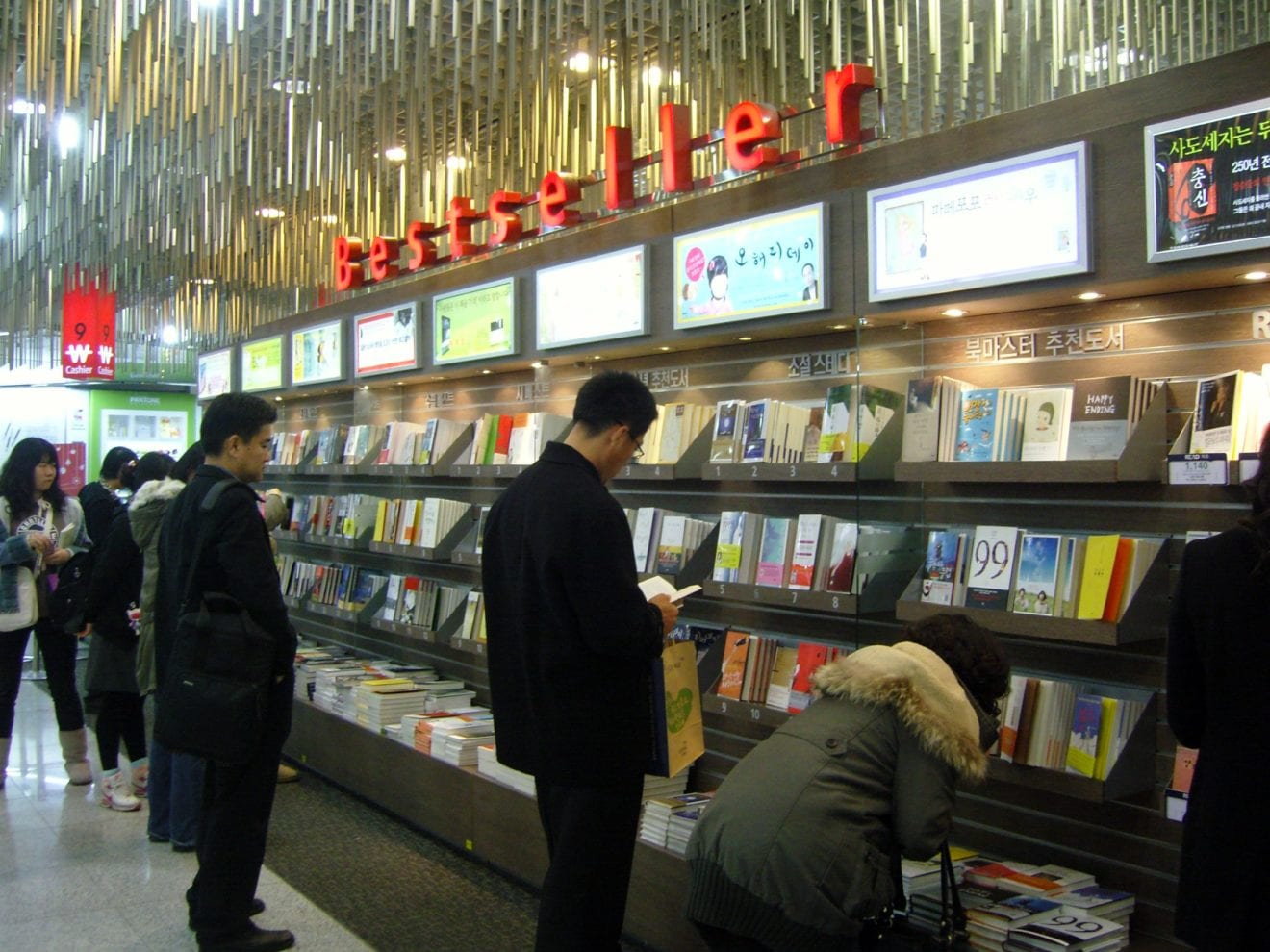
    Korean online bookstores are pushing back their deadlines for same-day delivery, and jumping into the current delivery war that started when Coupang launched its ‘Rocket Delivery’ service.

    But while the bookstores’ new service is expected to attract more customers, concerns are rising over driver safety.

    Yes 24, the largest online bookstore in Korea, announced  it will extend the deadline for same-day delivery service by one hour. Customers will be able to receive purchased products on the same day for orders placed before 2pm, with those in Seoul benefiting from an extra hour and a 3pm deadline.

    Yes 24’s changes follow a move by competing online bookstore Aladdin, which has already pushed back it’s same-day delivery deadline by an hour.

    Coupang started the wave of delivery wars in Korea with the launch of an ultra-fast delivery service called ‘Rocket Delivery’ in March 2014, and the establishment of its own logistics system.

    Henry Ro, Coupang VP, said the Rocket Delivery service offers the greatest customer experience. “Rocket Delivery is an integrated ‘end-to-end’ service that has never been attempted in other countries.”

    However, despite consumer satisfaction, Coupang is expected to log over 400 billion won (US$326.9 million) in operating losses when it files its 2015 audit report in mid-April, due to rising costs in building new logistics centers and hiring new staff, according to industry sources.

    Other negative side effects are also pervasive. While Korean consumers are accustomed to ‘super quick’ deliveries provided by almost every type of business, the number of delivery people injured on the job is skyrocketing.

    According to data from the Korea Occupational Safety and Health Agency, 4460 delivery people were injured on the job between 2012 and 2014. News reports of delivery people involved in fatal accidents are also becoming common.

    Popular 30-minute delivery services are an example. Pizzerias used to compete to deliver pizza within 30 minutes, promising free pizza if the delivery is late. However, 30-minute delivery is now banned, as it was identified as the cause of numerous accidents.

    In the meantime, other online bookstores are looking into joining the delivery war with Yes 24 and Aladdin.

    Interpark plans to extend its deadline for same-day deliveries as well, and Kyobo Books is also looking into providing the service.

    Bookworms are thrilled that they can get the books they ordered right away. One customer commented on the convenience of the service, noting, “we no longer have to make the long trip to the bookstore every time we want to buy a book”.

    However, some point out that bookstores should be focused on providing other services instead of fast deliveries. “The books are so expensive. I would rather have additional benefits such as discounts or book points that can be used at the bookstores,” one customer said.

  • Korea to release online price index

    Korea to release online price index

    South Korea plans to unveil a new index tracing online retail prices this year by using big data from private sector to reflect actual economic sentiment, according to Statistics Korea on Tuesday.

    The state-run agency plans to release an online price index that will complement the consumer price index by the end of this year, the agency reported in its 2016 plan to President Park Geun-hye.

    To develop the new indicator, Statistics Korea is currently collecting price data from six major online shopping malls and discount store chains — E-Mart, Homeplus, Lotte Mart, Lotte Supermarket, 11st and Interpark.

    “The online price index will be calculated based on the prices of a sample of representative items being sold online,” an official at the agency said.

    He added that the index will show the average price change on a daily basis unlike the consumer price index which shows monthly data.