Tag: invention

  • Apple Glasses could also correct your vision, new patent shows

    Apple Glasses could also correct your vision, new patent shows

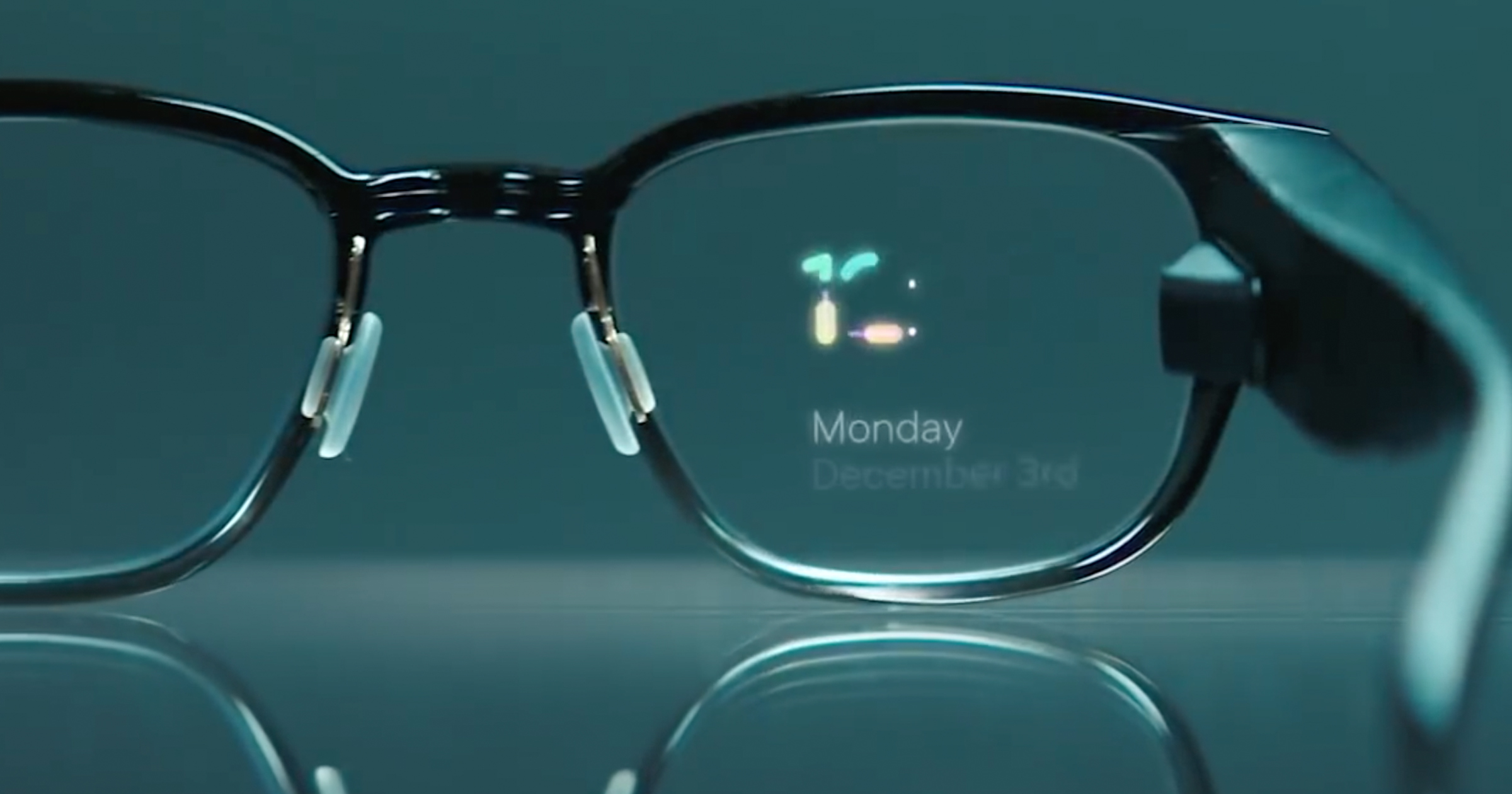
    There aren’t many new products to gather the attention and hype that the Apple Glasses AR/VR headset has managed to accumulate in the past few months. Apple’s rumored wearable often occupies headlines and leaks about its features are flying left and right.

    The latest Apple Glasses rumored feature could benefit people with prescription glasses. According to a new patent, granted to Apple on Thursday, the new Apple Glasses might feature a system of lenses that adjust to match the user’s prescription.

    The patent in question is titled “Tunable and foveated lens systems,” and describes a clever system of lenses that can be manipulated to act as a regular pair of glasses. The difference is that the system adjusts the position of the lenses automatically, and any person – with or without prescription glasses – could use it without any problems.
    This can be achieved by using a stack of liquid crystal lenses – the liquid material inside can change its optical properties when a current passes through it. Apple says in the patent documents that such a system can also help people with various vision problems, such as presbyopia (inability to focus at a certain distance).

    The clever system manages to circumvent one big obstacle that lies before smart glasses technology – users with regular prescription glasses. Using another pair of smart glasses on top of your prescription glasses is far from comfortable, and manufacturers normally would have to offer different models with different dioptric parameters to suit every consumer out there. Using this futuristic adjustable lens system could not only make smart glasses much more comfortable and approachable but help advance vision-correction technology.

    Bear in mind, though, that Apple (and every other big tech company) files for hundreds of patents every year. Seeing this cool feature on paper doesn’t mean that the actual product will have it onboard. Let’s quickly browse through all Apple Glasses patents that we’ve unearthed so far. One of the latest and most futuristic patents so far was the “Direct retinal projector.” As the name suggests, Apple is looking for ways to project the image directly onto the user’s retina.

    Another cool patent from last year describes Apple Glasses adjusting to ambient lighting, decreasing the ambient light in order to boost the brightness of the projected image.  Much less high-tech was the patent filing describing how Apple Glasses could be used to unlock other gadgets nearby – most wearable devices already have such functionality.

    The rumored self-cleaning feature of the Apple Glasses is far more interesting. The patent involved describes a way to “shake” the device free of dust using vibration.

    Finally, another patent filing showed how Apple Glass might detect sound and direct you to its origin. That might turn out to be a very useful feature for a device you wear on your head and look (kinda) through it.

    • Plastic or metal frames
    • Two 8K resolution displays
    • 120Hz refresh rate
    • Wi-Fi 6E connectivity
    • LiDAR in the frame
    • Gesture and voice controls
    • UI called Starboard
    • Adjustable lenses
    • Price: $499
    • Release date: 2025

    A major Apple Glass leak revealed a $499 price, and also suggested an announcement date sometime in Q3/Q4 2021, which is clearly not happening. According to tech analyst and insider Ming-Chi Kuo, Apple Glasses won’t be ready until 2025.

  • Wearables are pivoting from fitness to wellness

    Wearables are pivoting from fitness to wellness

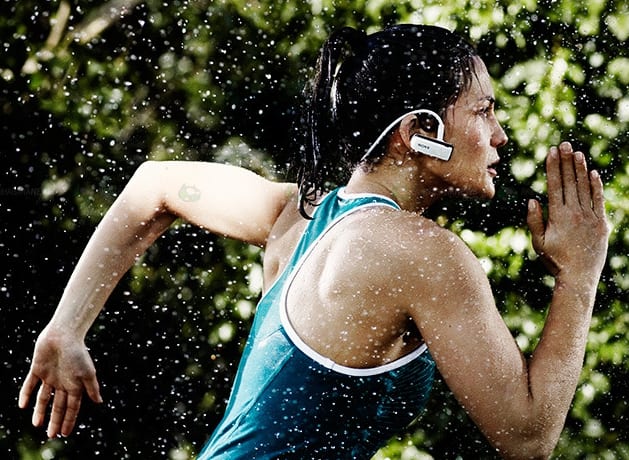
    The wearables market has grown over the past decade, and now a new generation of tech wearables is looking to differentiate itself by looking to the buzzy wellness industry for growth. The industry and definition of wellness has expanded to incorporate aspects of mental health, fitness and physical health, beauty and more, resulting in a new class of consumerism and ample opportunity for companies to tap into it.

    In the past few years, wearables brands Bellabeat, Oura and Motiv have launched, focusing more on a holistic approach to health and less on being performance-oriented.

    Instead of fitness bracelets, they’re packaged as necklaces, rings or water bottles. And, in addition to the usual sleep tracking, heart rate and pedometer functions, their features include guided meditation, menstrual-cycle tracking and integration with Amazon Alexa.

    “You see so many fitness and wellness [wearable] brands right now, and they are uniquely aware of their competitors. They are thinking outside the box in order to be the best,” said Aimee Gaudin, international head of marketing at Smartech stores.

    Smartech itself is designed to bridge the gap between lifestyle and technology.

    In store, it sits between Selfridges’ tech, home goods and lifestyle departments. Currently, Smartech is negotiating with Selfridges to display and sell Motiv rings in Selfridges’ beauty section as a marketing opportunity for the brand, Gaudin said.

    “A lot of high-end department stores focus on fashion and don’t have much tech, so I always [position] our products as a fashion product, but for Motiv, I will [position] it as a beauty product first,” she said.

    Motiv’s customer base runs the gamut from “tech nerds to trendy moms,” according to Tejash Unadkat, CEO of Motiv.

    The company had initially anticipated that it would attract a similar customer base to Fitbit, which is known for its fitness fanatics, but in fact the brand “rarely” attracts them, he said.

    Motiv has consciously marketed itself as a holistic device, with a strategy of being placed in mainstream stores, instead of fitness or early-adopter tech ones, in order to continue to expand its customer base. For example, last month the brand began retailing in Nordstrom in its seasonal health and wellness section, showcasing the sleep-tracking function of the device.

    “Internally, we say the Motiv ring is not a fitness ring but a smart ring that has features around security, convenience and health,” said Unadkat.

    Overall, the wearables market is expected to see $42 billion in sales in 2019, according to Gartner, with $16.2 billion specifically on smartwatches.

    Fitbit earned its first quarterly profit since the third quarter of 2016 in early November by focusing less on fitness and more on mainstream smartwatches.

    Bellabeat, the female-focused wellness wearable, is also delving into the watch category with the launch of Time on Dec. 6, which looks like a classic analog timepiece.

    Since the brand launched in 2013, it has primarily focused on associating itself as a beauty and wellness device, according to Urska Srsen, founder and CEO of Bellabeat.

    “It’s very much a beauty product because beauty is a strong component of women’s wellness,” she said. “We see beauty as a reflection of the love and self-care you invest in yourself.”

    The brand is sold through retailers like Neiman Marcus and John Lewis in the U.K., in addition to its own e-commerce site. Its other smart products include a water bottle and a clip-on device that can also be worn as a necklace or bracelet.

    Bellabeat markets itself to the average woman who is neither a tech early-adopter nor a gadget enthusiast, Srsen said. Instead, they look for women who are equally interested in fashion and beauty as they are in wellness.

    By focusing on the $4.2 trillion dollar wellness market, these brands are attempting to avoid the pitfalls that traditional fitness tracker companies like Fitbit have experienced in the past with slow growth due to a niche focus on performance-oriented devices.

    “This is something we have to make retailers understand,” Srsen said. “Our customers are shopping in wellness and beauty; they aren’t looking in the tech and fitness section. We aren’t just educating retailers on where they should be displayed, but we’re also educating them on a new category around the intersection of tech, beauty, wellness and fashion.”

  • Starbucks investing in upscale chains

    Starbucks investing in upscale chains

    Starbucks plans to open a new brand of stores called Starbucks Reserve-only starting next year.

    The coffee chain has also joined global investment team, Milan-based Angel Lab and Pekepan Investments to expand the footprint of standalone boutique bakery’s and cafes into international markets.

    Starbucks Reserve-only will offer premium, small lot reserve coffee in stores that will be approximately twice as large as current Starbucks stores and will feature ‘more of a cafe atmosphere’.

    “We recognise our customers expect and desire a higher level of product and we want to give it to them,” said Howard Schultz, company chair and CEO.

    The company plans to open the new stores next year in hundreds of locations.

    Schultz said the new brand is part of a broader company plan to improve and expand its food offerings.

    The company also announced earlier it has partnered with Italian restaurant Princi, the boutique bakery and café founded by Rocco Princi in 1986 known for its artisan breads created from traditional family recipes.

    Princi’s menu will become the exclusive food offering in all new Starbucks Roastery locations, including Shanghai and New York and will be fully integrated into all new Starbucks Reserve-only stores starting 2017.

    The investment team, which includes Milan-based Angel Lab and Pekepan Investments, will focus on expanding the number of standalone Princi locations worldwide as well as making Princi the exclusive food purveyor at the new Starbucks Reserve Roastery and Tasting Rooms in Shanghai and New York. The Shanghai and New York Roastery locations are on track to open in 2017 and 2018, respectively.

    “We have never baked in our stores in 45 years. But all of that will change with the creation of this unique partnership,” Schultz said.

    “Rocco and his team at Princi possess a passion for handcrafted food and artisanal baked goods that mirrors how I feel about our coffee. The attention to detail, the care invested in selecting the ingredients and the artistry of preparation is second only to the service Rocco offers customers inside his Princi stores.”

    “I can think of no better pairing for our most premium coffee experience and am excited by the possibilities we envision in Princi food elevating every daypart – breakfast, lunch, and dinner – in Starbucks Roasteries and Reserve Stores.”

    Currently, Starbucks has nearly 24,000 stores worldwide and offers Reserve coffee in 2,000 locations in 30 countries.