
Retail News CRM

Tag: Investigation

  • Mysterious $1B Investment in True Telecom Sparks Investigation by Thailands Market Regulator

    Mysterious $1B Investment in True Telecom Sparks Investigation by Thailands Market Regulator

    The Thai market regulator has initiated an investigation after an individual surfaced with an estimated one billion US dollars in shareholdings in telecom titan True Corporation, thereby becoming one of its largest shareholders. The regulatory body intends to gather further details and seek explanations from relevant entities in compliance with the standard procedures, as per a recent announcement.

    Stake Increase and Company Backing

    The individual, identified as Supaporn, disclosed in a regulatory filing last week that she had amplified her stake in True, which is based in Bangkok, from 3.9% by purchasing shares through an international broker. Her investment equates to roughly 32 billion baht ($960 million), calculated based on True’s closing price on Monday.

    True Corporation enjoys the backing of Charoen Pokphand Group (CP Group), one of the largest conglomerates in Thailand, and holds the position of the country’s second-largest mobile phone service provider. Earlier this year, Arise Digital Technology, under the control of True’s chairman Suphachai Chearavanont, bought approximately a 25% stake in True from Norway’s Telenor for 39 billion kroner (US$3.9 billion). Both CP Group and Telenor had studied the possibility of merging their telecom units in 2021.

    This deal also included an opportunity to buy an extra 5.4% stake within a two-year timeframe.

    Discrepancies and Legal Implications

    However, there seem to be some inconsistencies in the details provided by Supaporn in her regulatory filing, according to a statement issued by True. The firm stated that it has never offered preference shares to the public and currently does not have any outstanding preference shares. The company has reportedly informed the SEC about the inconsistency.

    The Thai regulator has issued a warning that stern legal measures would be enforced if the ongoing probe uncovers any breaches of the prevailing regulations.

    True also mentioned that the disclosure made by Supaporn about her augmented stake was labeled as preliminary, indicating that the details are incomplete and remain under scrutiny.

    On a different note, this Monday marked the completion of the sale of a 10% stake in True by the CP Group, achieved via a series of transactions as per an official statement.

    Questions & Answers

    What initiated the review by the Thai market regulator?
    The review was initiated after an individual emerged owning nearly one billion US dollars in shareholdings in True Corporation, making her one of its largest shareholders.

    Who is backing True Corporation?
    True Corporation is backed by Charoen Pokphand Group, one of Thailand’s largest conglomerates.

    How did True Corporation react to Supaporn’s regulatory filing?
    True Corporation pointed out some inconsistencies in Supaporn’s filing, stating that the company has never offered preference shares to the public and currently does not have any outstanding preference shares. The firm has notified the SEC about the discrepancy.

  • Popeyes Singapore Halts Fish Burger Sales Amid Mold Scare: An Investigation Underway

    Popeyes Singapore Halts Fish Burger Sales Amid Mold Scare: An Investigation Underway

    Popeyes Singapore recently halted the sale of its limited-edition Poppy Fish Burger throughout all its branches following an incident where a customer found mold on her burger bun at the Orchard Xchange outlet. This occurrence has led to a comprehensive investigation.

    The fast-food chain’s decision to suspend the sale of the burger is a precautionary measure while the inquiry is ongoing. In a statement, they expressed sincere apologies for the incident and emphasized their commitment to food safety, stating that it is their topmost concern and they take such matters very seriously.

    Popeyes also revealed that the Singapore Food Agency (SFA) had already inspected the Orchard Xchange outlet and found their food-safety controls to be satisfactory. Currently, Popeyes is collaborating with the SFA, its suppliers, and its operations team to identify the root cause of the mold incident and avert any similar issues in the future.

    The customer, identified as Teng, shared that she had consumed most of the Poppy Fish Burger before noticing the mold on the bun. She explained that she did not see it sooner because she had been focused on her computer while eating. Upon discovering the mold, Teng discarded the remaining burger and lodged complaints with both Popeyes and the SFA.

    The SFA confirmed its inspection of the Orchard Xchange outlet and stated it had sternly cautioned the management to improve their procedures. The agency assured that it would continue to monitor the outlet for compliance.

    Popeyes, on its part, pledged to scrutinize its internal processes to understand the cause of the mold incident. It has already performed a thorough inspection of all food items, required suppliers to confirm the integrity of the shelf-life of their products and reinforced food-safety checks across all its locations. Furthermore, recommendations from the SFA have been received, which the fast-food chain promised to implement immediately.

    Questions & Answers

    What action was taken by Popeyes Singapore following the discovery of mold on a burger bun?
    Popeyes Singapore suspended the sale of its limited-edition Poppy Fish Burger at all its locations as a precautionary measure and initiated a thorough investigation into the incident.

    How is Popeyes Singapore addressing the issue to prevent a repeat occurrence?
    Popeyes Singapore is reviewing its internal processes, performing comprehensive inspections of all food items, asking suppliers to verify their product shelf-life, and reinforcing food-safety checks at all outlets. The chain is also implementing recommendations from the Singapore Food Agency.

    What role has the Singapore Food Agency (SFA) played in this incident?
    The SFA inspected the implicated Popeyes outlet, found its food-safety controls satisfactory, issued a stern warning to the management to improve their procedures, and committed to ongoing monitoring for compliance. The agency also provided recommendations to Popeyes Singapore which the chain has pledged to implement immediately.

  • Malaysia’s Anti-Corruption Agency Launches Investigation into Land Dispute Over 1,000 Felled Durian Trees

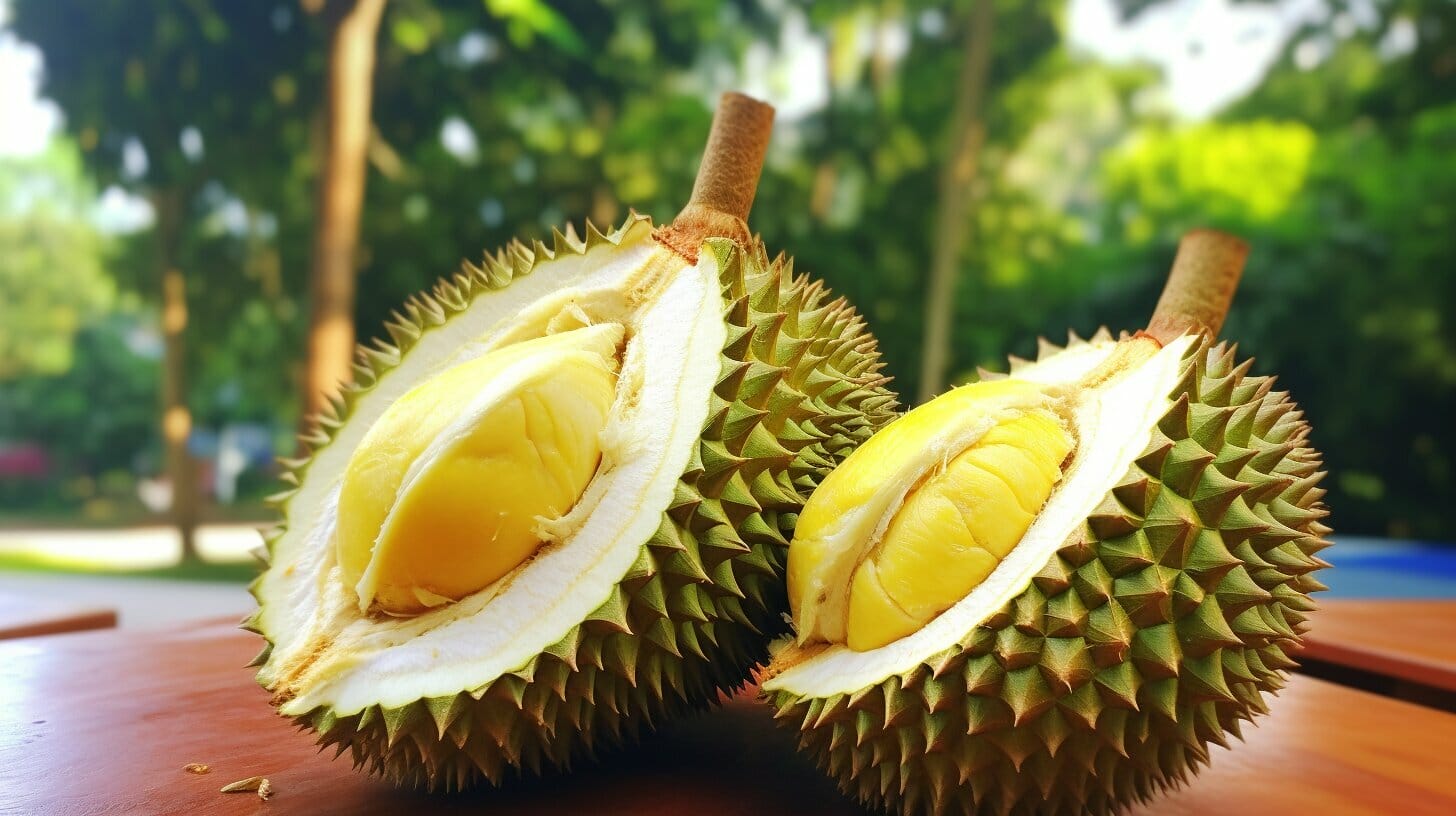
    Malaysia’s Anti-Corruption Agency Launches Investigation into Land Dispute Over 1,000 Felled Durian Trees

    The Malaysian Anti-Corruption Commission (MACC) is intensifying its investigation into a significant land dispute in Pahang’s Raub district, aiming to collect vital documents and witness accounts. The agency confirmed last Friday that several individuals involved in the cultivation of the disputed lands have already been identified.

    Government’s Bold Move Against Illegal Farms

    The clash over land rights erupted on April 8, when government authorities took decisive action by cutting down approximately 200 durian trees, claiming they were planted on illegally occupied land. This action was part of “Op Sekat 3.0,” a state-led initiative that ran from April 8 to May 3, targeting unauthorized durian farms. Following this operation, more than 1,000 trees—many of them the highly prized Musang King variety—met the same fate, sparking a wave of controversy, as reported by local media.

    The timing of the MACC’s press release couldn’t have been more poignant. It followed a visit by the Sultan of Pahang, Al-Sultan Abdullah Ri’ayatuddin Al-Mustafa Billah Shah, to one of the former illegal orchards last Thursday, a moment captured in a Facebook video. During this visit, the Sultan met with officials from the Raub Land and District Office to discuss the chronic issue of land encroachment. His reaction to discovering that a staggering 10,521 hectares—about the size of 14,700 football fields—had been unlawfully occupied was one of sheer astonishment, according to national news agency Bernama.

    Farmers Fight Back Amid Growing Discontent

    The government’s actions have ignited protests from farmers, who expressed their dissent by blocking access routes and displaying banners lamenting the loss of their established crops, as reported by Free Malaysia Today. The Save Musang King Alliance, which advocates for the farmers, has pointed to a court ruling from May that allegedly prohibited the government from destroying these farms. In a tit-for-tat, authorities have maintained that no court order was breached and confirmed their legal right to clear the land.

    Interestingly, this crackdown has found support among local NGOs and residents who argue that the issue of illegal land use has persisted for far too long and necessitates immediate attention. Tengku Zulpuri, a former Raub member of parliament, noted that the existence of these illegal farms has been an “open secret” for over three decades, adding a layer of intrigue to the ongoing situation.

    Tan Sri Azam Baki, the chief commissioner of MACC, shared that the ongoing investigation is delving deep, not only into governance issues but also into how these land-clearing activities occurred without proper oversight from relevant authorities. Last month, the agency compiled a list of individuals linked to the Pahang land dispute, including several former officials. “Given that the case dates back around ten years or more, some of the officials involved have since retired,” Azam added, hinting at the complexity of accountability in this long-standing issue.

    As the saga unfolds, it leaves us pondering just how deep the roots of corruption may run in this verdant landscape.

    Questions & Answers

    What sparked the land dispute in Pahang’s Raub district?
    The dispute began on April 8, when the government cut down around 200 durian trees believed to be planted on illegally occupied land, as part of a state-led operation targeting unauthorized farms.

    How have farmers reacted to the government’s actions?
    Farmers have reacted strongly, protesting by blocking access routes and voicing their grievances about the destruction of their crops. Their representation, the Save Musang King Alliance, argues that a court ruling prohibited such demolitions.

    What is MACC looking into during the investigation?
    The MACC is investigating governance issues related to the land dispute and examining how land-clearing activities could proceed without proper intervention from the relevant authorities.