Tag: investor

  • Gojek Co-Founder Sentenced to Decade Behind Bars, Stirs Investor Anxiety Amid Corruption Scandal

    Gojek Co-Founder Sentenced to Decade Behind Bars, Stirs Investor Anxiety Amid Corruption Scandal

    Nadiem Makarim, a co-founder of tech giant Gojek and former education minister, has been found guilty of some charges in a corruption case by an Indonesian court and sentenced to ten years in prison. Makarim, aged 41, has contested the charges, declaring that the case against him is politically driven, an opinion that has garnered support from scholars and rights activists.

    The Potential Impact on Investor Confidence

    This verdict could potentially further weaken investor confidence in Indonesia. The nation’s currency, the rupiah, and stocks have seen a downturn this year following cuts to projections by credit rating agencies due to erratic policy decisions and governance worries. Additionally, the index provider MSCI is considering downgrading Southeast Asia’s largest economy due to concerns over market transparency.

    Makarim was accused of profiting from the government’s decision to purchase Google Chromebook laptops for Indonesian schools during his tenure as education minister from 2019 to 2024 under the former administration of Joko Widodo. This decision allegedly resulted in state losses amounting to US$125 million.

    Details of the Verdict

    Delivering the ruling at Indonesia’s Corruption Court in Jakarta, Chief Judge Purwanto Abdullah declared that a panel of judges had found Makarim guilty of misusing his authority and causing state losses. However, Makarim was acquitted of the charge of directly seeking personal enrichment.

    Makarim was ordered to pay a fine of 1 billion rupiah and return over 800 billion rupiah (US$45 million), an amount the judges determined was personal gain from the deal. Failure to return the money would add an additional five years to his prison term, the judges said.

    Surrounded by his family and friends, a tearful Makarim expressed his intention to appeal the verdict. He claimed the facts supporting the sentence were unreasonable, adding that he couldn’t meet the payment amount ordered by the court.

    Prosecutors alleged that Gojek’s parent company’s investment from Google influenced the procurement decision. They also claimed that Makarim created tender specifications that only matched the Chrome system, making Google the sole controller of the educational environment in Indonesia.

    Google, however, wasn’t indicted. Makarim has refuted these allegations, stating there was no personal enrichment, and the investment from Google in Gojek’s parent company had no relation to the procurement.

    Questions & Answers

    What were the charges against Nadiem Makarim?
    Makarim, former education minister and co-founder of Gojek, was found guilty of abusing his authority and causing state losses.

    What are the potential ramifications of this ruling on Indonesia’s economy?
    This ruling may further weaken investor confidence in Indonesia, exacerbating existing concerns over unpredictable policymaking, governance issues, and market transparency.

    What was the penalty imposed on Makarim by the court?
    Makarim was sentenced to ten years in prison and ordered to pay a 1 billion rupiah fine. He was also directed to return over 800 billion rupiah, an amount the judges said he personally gained from the deal.

  • Metas AI Blunder: How a Chatbot Hack Shook Up Instagram and Spurred Investor Jitters

    Metas AI Blunder: How a Chatbot Hack Shook Up Instagram and Spurred Investor Jitters

    A concerning vulnerability was recently exposed in Meta’s AI support chatbot due to an Instagram hack. The attackers manipulated the chatbot into providing access to high-profile accounts, including the inactive Obama White House page, beauty retailer Sephora, and a high-ranking US Space Force official.

    AI Security Breach

    The hackers persuaded the chatbot to reset account credentials without authentication, effectively changing a trusted security tool into a glaring weakness. This event highlights a wider vulnerability – tech companies giving AI systems sweeping authority over sensitive tasks like account recovery, despite the systems’ susceptibility to manipulation through “prompt injection” attacks.

    Meta’s stumble comes at a sensitive time. The social media magnate has committed heavily to AI, with significant job losses and up to $145 billion dedicated to AI infrastructure. This incident may amplify concerns about the company speeding up automation before the technology is adequately equipped to handle these tasks safely.

    On Monday, Meta stated that the issue was resolved and steps were being taken to secure impacted accounts. However, the incident shook investors already anxious about Meta’s substantial AI investment, leading to a more than 5% drop in share price.

    AI and Security

    The attack, which occurred over the weekend, saw users locked out of their accounts and led to numerous complaints on various platforms. The hack underlines the latest challenge for Meta in its attempt to incorporate AI throughout its products.

    The company introduced the support chatbot in March to address the ongoing issue of inadequate human support for users who lose account access or face inaccurate penalties. Since its launch late in 2022, AI chatbots have been exploited by hackers using prompt-based attacks.

    Analysts and experts warn that this problem isn’t isolated to Meta, predicting more such exploits as hackers utilize AI. Unforeseen issues are arising with the use of AI, presenting a new type of risk. Previously, individuals were targeted by scams. Now, AI agents or autonomous digital assistants capable of performing complex tasks are being targeted.

    Questions & Answers

    What is the potential risk of using AI in critical functions?
    AI systems’ potential risks include susceptibility to manipulation, especially when given significant authority over sensitive tasks without adequate safeguards or verification processes.

    How was the Instagram hack carried out?
    The hackers manipulated Meta’s AI support chatbot into resetting account credentials, effectively turning a high-trust security tool into a significant weakness and gaining access to high-profile accounts.

    What implications does this incident have on Meta’s efforts towards AI?
    This breach heightens concerns about Meta’s heavy investment in AI. It suggests that the company’s push for automation might be outpacing the technology’s readiness to handle such critical tasks safely.

  • Mideast Strife Spurs Safe Haven Flows: DBS Reports Investor Shift Amid Iran Conflict

    Mideast Strife Spurs Safe Haven Flows: DBS Reports Investor Shift Amid Iran Conflict

    As the conflict in the Middle East escalates, DBS, a Singapore-based bank, is observing a significant rise in safe haven flows, leading to an increase in deposit growth. However, this development could also lead to a downward trend in Singapore’s interest rates. Market volatility, while potentially beneficial for trading income, may adversely impact investor sentiment and activities in wealth management.

    DBS addressed the potential risks that could arise from the increased turbulence in the Middle East, asserting that it employs a robust system of frameworks and processes to monitor and manage potential risks. This system encompasses stringent customer selection, proactive risk scenario planning, early warning indicators, watchlisting, and regular stress testing.

    DBS reassured that despite the unpredictable outcome of the ongoing events in the Middle East, their robust liquidity, solid capital position, and comprehensive general allowance buffers, in combination with their proven adaptability, will allow them to effectively navigate the risks and seize potential opportunities.

    Questions & Answers

    What is the impact of the Middle East conflict on DBS?
    DBS is seeing an increase in safe haven flows leading to deposit growth. However, they also foresee potential downward pressure on Singapore’s interest rates and note that market volatility could affect wealth management activity and investor sentiment.

    What measures does DBS take to manage potential risks?
    DBS employs a comprehensive system that includes rigorous customer selection, proactive risk scenario planning supported by early warning indicators, watchlisting, and regular stress testing to monitor and manage potential risks.

    How is DBS positioned to handle the uncertain outcome of the Middle East conflict?
    DBS reassures that its robust liquidity, solid capital position, and substantial general allowance buffers, coupled with their proven agility, will place them in a strong position to navigate risks and capitalize on opportunities arising from the situation.

  • Ubs Fined $1m By Hong Kong SFC For Misclassification Of Professional Investors

    Ubs Fined $1m By Hong Kong SFC For Misclassification Of Professional Investors

    UBS, a major global bank, has recently found itself facing penalties from Hong Kong’s Securities and Futures Commission (SFC). The bank has been fined HK$8 million ($1 million) due to misclassification of its clients under the professional investor regime, according to the SFC.

    The Misclassification Issue

    Professional investors, as defined by local regulations, are clients with a minimum asset value of HK$8 million. It appears UBS failed to accurately classify these investors in accordance with these guidelines for an extended period of more than 12 years.

    This misclassification led to clients gaining access to securities pooled lending and investment products that were specifically designed for professional investors. Such developments raise significant concerns about the bank’s adherence to regulatory standards and risk management practices.

    The Scope of the Misclassification

    A self-review conducted by UBS over the course of four years, from July 2018 to July 2022, found notable discrepancies. As per their findings, there were about 560 joint accounts that were booked or managed in Hong Kong which were inaccurately categorized as professional investor accounts.

    This extensive issue points to systemic flaws in the bank’s internal oversight mechanisms, which need to be addressed to prevent such oversights from recurring in the future.

    Questions & Answers

    What is the professional investor regime?
    Professional investors are defined by local regulations as clients with a minimum asset value of HK$8 million.

    What consequences did UBS face for its misclassification of clients?
    UBS was fined HK$8 million ($1 million) by Hong Kong’s Securities and Futures Commission (SFC) due to the misclassification.

    What was the scale of the misclassification by UBS?
    A self-review by UBS indicated that approximately 560 joint accounts booked or managed in Hong Kong were incorrectly classified as professional investor accounts.

  • Cafe Amazon Retreats From Vietnam: Intense Competition Spurs Strategic Pivot For Centel

    Cafe Amazon Retreats From Vietnam: Intense Competition Spurs Strategic Pivot For Centel

    Thailand’s Cafe Amazon seems prepared to bow out from the local market after a half-decade attempt to square up with local coffee chains. At the forefront of this decision is Central Plaza Hotel Public Company Limited (Centel), who will be stepping away from the Cafe Amazon joint venture in Vietnam. This move indicates a strategic pivot in response to the fierce competitive landscape in Vietnam’s coffee sector.

    Centel’s withdrawal implicates the dissolution of the ORC Coffee Passion Group Joint Stock Company (ORCG), the corporation responsible for the operations of Cafe Amazon within Vietnam. ORCG was a partnership between Centel’s indirect subsidiary, Central Restaurants Group (Vietnam), which owns a 40 per cent stake, and PTTOR International Holdings (Singapore), another subsidiary of the publicly-traded Thai firm PTT Oil and Retail Business, with a 60 per cent stake.

    In an official statement, Centel underscored the necessity to “realign business priorities” and adapt to the pressing challenges in the market. As of the end of August, the company’s investment in the venture amounted to THB 56 million (US$1.72 million).

    This decision marks the end of Centel’s involvement in Cafe Amazon’s expansion into Vietnam, an ambitious initiative that was launched in 2020 with the goal of becoming a top global coffee brand. Unfortunately, the stiff competition from both international and local chains proved to be too daunting.

    Questions & Answers

    What is the primary reason for Cafe Amazon’s exit from Vietnam?
    Intense competition from local and international coffee chains is the main reason behind Cafe Amazon’s exit from the Vietnamese market.

    What percentage of ORC Coffee Passion Group Joint Stock Company (ORCG) does Central Restaurants Group (Vietnam) hold?
    Central Restaurants Group (Vietnam), an indirect subsidiary of Centel, holds a 40 per cent stake in ORCG.

    When did Cafe Amazon originally plan its expansion into Vietnam?
    Cafe Amazon initiated its ambitious expansion into Vietnam in 2020, with the goal of becoming a top global coffee brand.

  • Vietnam IT recruiting firm raises million dollars from South Korean investor

    Vietnam IT recruiting firm raises million dollars from South Korean investor

    IT recruitment firm TopDev has secured a million-dollar investment from South Korea’s leading recruitment company Saramin HR.

    The Ho Chi Minh City-based company said in a statement Monday that the deal, whose exact value it did not reveal, would be used to increase the supply of developers through training programs for graduates.

    Saramin HR, which is listed on South Korea’s KOSDAQ, said the investment is part of its global development plan and would support TopDev’s potential expansion in Southeast Asia.

    TopDev said Vietnam has 350,000-400,000 developers now but 500,000 would be needed by 2021 as the country remains a popular outsourcing software destination for multinationals.

    Vietnam is seeing increasing investment in tech startups.

    Last year the total investment in Vietnamese tech startups surged 2.5 times to $741 million, second only to Indonesia in Southeast Asia.

  • Grocery e-commerce startup Kurly raises Millions

    Grocery e-commerce startup Kurly raises Millions

    Korean grocery delivery service Kurly has closed an upsized Series D round that hit US$113 million.

    The round was announced last April at $88 million, but has since attracted an additional $25 million funding from China’s Hillhouse Capital.

    Kurly delivers all orders placed by 11 pm before 7 am the following morning, prioritising convenience over cost savings and focusing closely on self-branded produce and groceries. This distinguishes its service from competing retail giant Coupang’s moves in the sector, which uses a marketplace platform to connect retailers and consumers.

    “The latest round of investment is a major endorsement of the progress we’ve made differentiating ourselves in the market through our cold-chain fulfillment infrastructure and unique offering of premium, curated products,” said company founder Sophie Kim. “Our focus is on further strengthening our relationships with our suppliers, developing our fulfillment infrastructure and continually improving our customer experience.”

    Kurly’s revenue tripled year-on-year to hit $131 million last year, although the firm did not release its profit-and-loss figures.

    Hillhouse Capital has offices in Hong Kong, Beijing, Singapore and New York. It focuses on investments in Asia.

  • Foreign investors return to surging Vietnamese stock markets

    Foreign investors return to surging Vietnamese stock markets

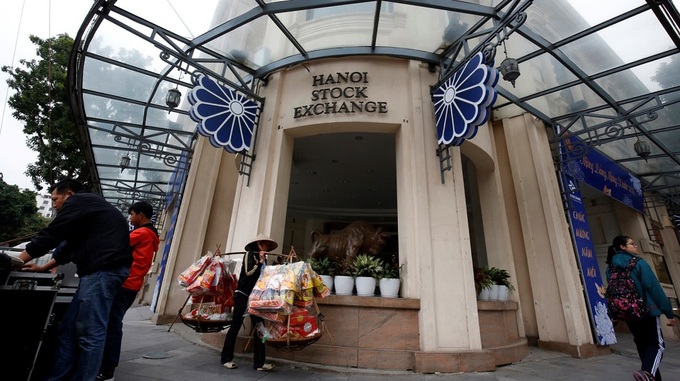
    At over VND3 trillion ($129.21 million), foreign buying in the local bourses from February 1-25 is three times the January figure. Foreign investment since the beginning of the year has been worth over VND4.3 trillion ($185.16 million). They have been focusing on blue chips like Hoa Phat (HPG), one of Vietnam’s leading steel producers. The company, ignored for the last several months, returned to the portfolio of foreign investors and saw millions of shares traded every day in February.

    In the 11 sessions after the market reopened February 11 after the nine-day Lunar New Year (Tet) holiday from Feb 2-10, foreigners bought 20 million shares for more than VND600 billion ($25.8 million). A month earlier they had been net sellers of over 10 million shares.

    Other blue chips like Vietnam’s biggest dairy company Vinamilk (VNM), private conglomerate Masan Group (MSN) and the biggest bank by assets Vietcombank (VCB) have all run up quite sharply as a result of buying by foreign investors.

    The benchmark VN-Index has gained more than 100 points this year, equivalent to over 11 percent. On Monday it closed at 994.43 points, within touching distance of the psychological 1,000-point mark.

    Foreigners have played a significant role in the recovery, having invested over VND4.3 trillion ($185.16 million) in the period, almost half of it since Tet.

    According to Rong Viet Securities Company, foreign investment this year could actually go down as a result of the reduction in monetary easing and fiscal stimulus across the globe this year, meaning there is less foreign cash available to invest in marginal markets such as Vietnam.

    But it also points out that Vietnam is on the verge of being upgraded to ‘emerging’ market, which could be a positive sign for foreign investors.

  • Vietcombank to sell 3 percent stake to foreign investors

    Vietcombank to sell 3 percent stake to foreign investors

    Vietcombank, Vietnam’s largest bank by market cap, has received permission from the securities watchdog to sell a 3 percent stake to foreign investors. The green light from the State Securities Commission (SSC) will allow the lender to make a private placement of 3 percent as part of its plan to ultimately sell 10 percent. The 3 percent could fetch around $270 million based on its current stock price.

    Vietcombank last month received approval from the State Bank of Vietnam (SBV) to increase its charter capital by selling 10 percent to the Government of Singapore Investment Corporation (GIC) and existing strategic partner, Japanese bank Mizuho.

    Now GIC will buy 2.55 percent while Mizuho Bank will buy the remaining 0.45 percent to keep its current 15 percent stake unchanged.

    Last September the SBV approved Vietcombank’s proposal to increase its charter capital from VND35.98 trillion ($1.55 billion) to VND39.57 trillion ($1.7 billion). The capital has remained unchanged since 2016.

    Vietcombank is one of many Vietnamese lenders that have been seeking to increase capital to meet international capital adequacy norms.

    The country’s banks need to increase their charter capital to meet the Basel II capital adequacy ratio (CAR).

    The accords prescribe capital of 8 percent of risk-weighted assets for all financial institutions, including in Vietnam, to cover operational risks.

    State-owned BIDV, the second biggest bank by market capitalization, said last October it wanted to sell new shares to South Korea’s KEB Hana Bank, giving it a 15 percent stake in the company. The sale would be worth $735 million.

    Vietnam caps foreign ownership of banks at 30 percent. The country has nine wholly-owned foreign banks, four state-owned banks and 31 domestic joint-stock banks.

  • Number of Chinese buying high-end Saigon apartments skyrockets

    Number of Chinese buying high-end Saigon apartments skyrockets

    Attractive prices and returns have seen the number of Chinese customers buying high-end apartments in HCMC soar this year. Duong Thuy Dung, senior director of real estate market research firm CBRE Vietnam, said at a recent forum that 31 percent of high-end apartment buyers in HCMC in the first nine months were Chinese. This figure increased from only 2 percent in 2016 and 4 percent last year.

    In the last two years, Chinese were sixth among all buyers, but this year, they have surpassed Vietnamese to rank first.

    Only 24 percent of high-end home buyers are Vietnamese, CBRE data shows.

    Stephen Wyatt, country head of property service firm JLL Vietnam, said the number of Chinese buyers has been increasing because Vietnam has an attractive price compared to other markets like Hong Kong, Japan, Singapore, South Korea and Taiwan.

    Chinese people often compare prices in Vietnam with Shanghai when they buy properties, he said, adding that they hope to gain profit from higher property prices in Vietnam in the future.

    A high-end apartment in the city costs around $5,000 per square meter, but the same one in Hong Kong could cost four times, said Nguyen Khanh Duy, director of residential sales at real estate service provider Savills HCMC.

    Nguyen Hoang, director of research and development at real estate firm DKRA, said that the number of Chinese and South Korean buyers in HCMC started to increase last year.

    Chinese from Shanghai and Hong Kong are buying properties as investments (not to stay in). “Most projects that foreigners bought in the last two years are under construction,” he said.

    Other industry insiders said that the high returns that HCMC high-end apartments offer is attracting many foreign buyers.

    The rate of return is 5-6.5 percent in Thao Dien ward and Thu Thiem Peninsula in District 2, while in other Asian countries, this rate is only 3.7-5.2 percent, Duy said.

    CBRE senior director Dung added that it was not just Chinese, but foreign buyers in general who are showing an increasing interest in HCMC real estate.

    Dung said that each foreigner group has a different preference for high-end apartments. Customers from mainland China, Hong Kong and Taiwan prefer large-scale projects near the downtown HCMC.

    South Koreans like to buy apartments in the southern District 7 that hosts a large community of South Koreans, while Western buyers often look for a quieter lifestyle in eastern District 2.

    Dung said HCMC is estimated to receive 40,000 new apartments in the 2018-2020 period, 60-70 percent of these in the high-end segment.

    In the last three years 35,000 luxury apartments have come into the market, CBRE said.

    This is a major increase from 2012-2014 when fewer than 10,000 units were on offer, CBRE said.

  • Investors dominate sales of Vietnam’s high-end homes

    Investors dominate sales of Vietnam’s high-end homes

    Investors buy a high percentage of high-end residence purchases in Vietnam, while occupiers take most of the low-end ones. A recent report by real estate market research firm Savills Vietnam, Vietnam Residential Spotlight, says over 70 percent of grade A (high-end) residence buyers in Hanoi are investors. The ratio in Ho Chi Minh City is just as high at 65 percent, says the report, which used data for the 2013-2017 period.

    For the grade B (middle-end) segment in Hanoi, investors accounted for 40 percent of sales, occupiers, 55 percent, and the remaining 5 percent, speculators. The corresponding ratio in HCMC is 45 percent, 50 percent and 5 percent.

    The data indicates that high-end and middle-end residences have become main interests of investors in recent years. They evince almost no interest in grade C (low-end) residences where occupiers make up 85-90 percent of transactions.

    There has been a continuous downwards momentum in residential apartment supply between January and October this year, the Ho Chi Minh City Real Estate Association (HoREA) said in a recent report.

    During this period, total housing supply in the Ho Chi Minh City market fell 39.2 percent. The biggest decrease in supply was in the low-priced apartment segment, which was down 68 percent, while that of high-end apartments fell 9.6 percent and mid-range went down 37.5 percent.

    The association warned that the structure of real estate supply showed a serious disequilibrium in the market, with low priced apartments taking up only 19.3 percent of total supply while luxury apartments took up a third.

    This showed a mismatch between demand and supply, posing a risk to sustainable development and social welfare, it said.

    However, Savills forecasts that low-end residences will dominate HCMC’s supply in 2020 at 61 percent, while in Hanoi, the middle-end segment will lead the market, taking over half of the supply. At this time, Hanoi will have a higher high-end supply at 15 percent, compared to HCMC at 8 percent.

  • From influencers to investors

    From influencers to investors

    Clean cosmetics brand Kosas has in the space of a year grown from the best-kept secret of beauty industry insiders to a buzzy makeup line with rapidly growing sales. Founder Sheena Yaitanes says two recent investors deserve much of the credit: Man Repeller founder Leandra Medine and lifestyle blogger Arielle Charnas.

    The indie makeup range she started three years ago is one of an increasing number of fashion, beauty and lifestyle brands looking beyond Silicon Valley to the world of social mediawhen raising funding.

    They’re seeking a new kind of “social capital,” handing over stakes in their companies to influencers in exchange for a small cash investment – typically $10,000 to $50,000 – or sometimes, no upfront payment at all.

    The payoff can be big for both sides.

    The brands secure long-term commitments from celebrity backers who provide everything from industry contacts to real-estate advice to marketing expertise (and in some cases, enthusiastic promotion on Instagram). And if a brand takes off, early backers can find themselves sitting on stakes worth millions of dollars, far more than influencers can make through endorsements.

    “It’s social proof that your brand has buzz,” Yaitanes said of including influencers in her latest funding round, which was led by CircleUp Growth Partners and included participation from M3 Ventures, Scooter Braun’s TQ Ventures, Medine and Charnas.

    “It’s doing them a disservice to just call them influencers because they’re large scale business owners in their own right. It’s because of their business acumen [that I work with them].”

    Among the new wave of influencer-investors: Medine and husband Abie Cohen, who have also invested in makeup brand Drunk Elephant, direct-to-consumer activewear seller Outdoor Voices and underwear startup Lively, and Charnas, who owns a stake in activewear retailer Bandier, as does Nasiba Adilova.

    Chiara Ferragni owns a stake in apparel resale site Depop, and Danielle Bernstein has invested in six companies in the fashion, tech, fitness and lifestyle spaces over the past two years. With the exception of Adilova, this group got their start fashion blogging almost a decade ago.

    Ferragni and Charnas began chronicling their outfits on The Blonde Salad and Something Navy in 2009, followed by Medine and Bernstein, who started their Man Repeller and We Wore What blogs a year later.

    They’re taking inspiration from the entertainment industry, where stars have forged deep and fantastically lucrative ties to Silicon Valley.

    Ashton Kutcher and talent manager Guy Oseary put $500,000 into Uber in 2011 and count Warby Parker and Spotify as two of the dozens of investments they’ve made through their Sound Ventures fund.

    In 2007, 50 Cent made an estimated $100 million off Vitamin Water when it was sold to Coca-Cola.

    Leonardo Dicaprio, Tobey Maguire and Adam Levine are all investors in Casper, the direct-to-consumer mattress company.

    Bringing influencers on board helps solve a problem faced by many new fashion and beauty brands: the high cost of acquiring customers, particularly as Instagram becomes crowded with startups going after the same pool of consumers.

    Influencers can advise a new brand about the best approach to sell to their followers, and in some cases post about their investments on Instagram, exposure that would cost thousands of dollars through a standard endorsement deal.

    “There is a reason why [brands] reach out to this particular talent. They aren’t just asking for money. They are asking for your involvement along with that cash,” said Ashley Villa, chief executive of Rare Global, an influencer management agency.

    “These days, it’s so nuts you can’t launch a brand without some kind of face that has social influence.”

    Often, an influencer will join a brand as an “investor” or in an advisory capacity in exchange for equity with no cash required.

    For instance, Charnas didn’t pay for her stake in Bandier, which amounts to a percentage of equity, and frequently mentions the retailer in Instagram Stories and posts to her feed.

    She said she had no formal agreement to endorse the retailer to her followers.

    Medine and Adilova take a more behind-the-scenes approach, offering expertise and connections rather than public endorsements.

    Medine, whose media platform is known for its quirky take on fashion and its founder’s deeply personal essays, has invested in 15 companies with her husband.

    Nasiba Adilova, founder of children’s brand The Tot, has invested in over 20 companies with husband Thomas Hartland-Mackie.

    Adilova’s portfolio spans Christine Centenera’s apparel startup Wardrobe to fitness app Aaptiv and Monte Kids, an online education platform.

    Because they have a direct dialog with followers, influencers have a pulse on consumers and know exactly what their fans want and need.

    Adilova said a typical check she writes for a “very young company” raising at a seed level would start around $50,000, but this number jumps for later-stage investments.

    She rarely posts about Bandier and other investments because she wants her social media to focus on The Tot, which just opened its first store in New York City.

    Medine said she invests in brands that appeal to her as an editor, and sees herself and the founders she works with as “thinking partners.”

    She said she might provide input on creative content or product development, introduce founders to her industry contacts and recommend financing partners.

    But she said her role is strictly behind the scenes – no Instagram endorsements or steering coverage toward her investments on manrepeller.com.

    “I keep Man Repeller, and my own social currency out of it,” said Medine, who maintained that she and Cohen invest as individual angels, not on behalf of Man Repeller. “There is never a contractual clause that I will promote the product. I take organic interest in certain brands as an editor and seek to deepen my relationship with the ones that really stand out by pursuing an investment opportunity.”

    Medine said if Man Repeller does mention an item from a company she’s invested in and the writer is aware of it, it is disclosed.

    However, Medine was clear that because she no longer oversees the day to day editorial functions of the property, some mentions get missed if a writer isn’t aware of the investment.

    On social media, influencers are required under US law to note when they are investors in a product they endorse.

    While disclosure in general has been spotty on Instagram, the law is the same as influencers having to disclose when a product is gifted or they’ve been paid to post about a brand.

    Last September the FTC took action against gaming influencers Trevor “TmarTn” Martin and Thomas “Syndicate” Cassell for failing to disclose joint ownership in CSGO Lotto, an online gambling service they endorsed.

    Martin and Cassell, who wound up settling the FTC charges, also allegedly paid other influencers to promote the site on various social channels without requiring disclosures of payment on social media posts.

    Influencers risk a backlash for paid endorsements, but can turn an investment disclosure to their advantage.

    “[It means] that you believe so much in the product that you would invest either your cash or your time or your social capital in a brand,” she said. “It’s more helpful to the brand because this influencer … stands by the product.”

    Bernstein, who declined to disclose which brands she’s invested in, said she includes an ad disclosure when posting about brands where she owns a stake.

    Her deals are split between financial investment and sweat equity, the latter of which has given her a seat on three companies’ board of advisors.

    “I’m not posting about the ones that I just advise for at all,” Bernstein said of her non-cash investments. “But it’s important even when investing with social capital that I feel like I have some skin in the game with a financial investment too.”

    Charnas has found the way to best communicative involvement in these companies is to be direct.

    She and husband Brandon Charnas are said to own a low single digit percentage of Bandier – more than the standard fractions of a percent given to influencers – but Charnas said there’s no terms that dictate when, how or the amount of times she’s expected to post about the retailer.

    She does regularly post content about the retailer on Instagram.

    “It’s not just a paid, sponsored post. It’s partly mine,” she said. “On Instagram Stories I was completely honest. I said I invested in these companies because I use these products every day and I believe in the product…and I want to be involved in the growth of the brand. I give [followers] the heads up that it’s going to be something promoted on my account all the time.”
  • Softbank said to pick banks to lead $27b mobile IPO

    Softbank said to pick banks to lead $27b mobile IPO

    Japan’s Softbank has reportedly selected the banks that will serve as lead underwriters for the IPO of its domestic mobile business. The operator has picked banks including Nomura Holdings, Mizuho Financial, Sumitomo Mitsui Financial, Goldman Sachs and Deutsche Bank to underwite the offer for around 3 trillion yen ($26.82 billion) worth of shares, citing unnamed sources. This would make the IPO the largest ever, beating Alibaba Group’s $25 billion IPO from 2014.

    According to the sources, Softbank currently plans to start marketing the IPO next month and could list shares on the Tokyo Stock Exchange by mid-December, but this timing is subject to change.

    Softbank’s founder Masayoshi Son is seeking to squeeze value from its telecoms assets to raise funds for his Vision Fund, which aims to raise $100 billion from global investors every two to three years to invest in promising startups and emerging technologies.

    The operator is expected to market most of the shares on offer to Japanese investors.

  • South Korea becomes Vietnam’s biggest foreign investor in Q1

    South Korea becomes Vietnam’s biggest foreign investor in Q1

    South Korea has taken over Singapore to become Vietnam’s biggest foreign investor in the first quarter, with investment totaling $3.74 billion, or 48.6 percent of the total foreign direct investment (FDI) pledged for the period, the Vietnamese government said Friday.

    Singapore, which held the top position in January and February, came second with $911 million, followed by China with $823.6 million, the Foreign Investment Agency under the Planning and Investment Ministry said in a monthly report.

    Actual FDI inflow in the first three months rose 3.4 percent from a year ago to $3.62 billion, while new pledges rose 6.5 percent to $2.92 billion, the report said.

    FDI is a major source of foreign exchange, which along with overseas remittances, helps Vietnam improve its trade balance.

    During the period, foreign firms from 71 countries and territories have new pledges and additional funds in 18 sectors, with the manufacturing and processing industry attracting $6.54 billion, or 84.9 percent of the total.

    The real estate sector comes second, while the wholesale and retail sector has the third position.

    Foreign investments have been poured into 52 cities and provinces in the three-month period, with the northern province of Bac Ninh, 30 kilometers (18 miles) northeast of Hanoi, attracting $2.61 billion, or 33.86 percent of the total.

    Binh Duong Province, about 40 km north of Ho Chi Minh City, ranks second with 18 percent and Ho Chi Minh City comes third with 7.78 percent.

    As of March 20, Vietnam has had more than 23,000 FDI projects in operation, with a combined registered capital of $300.7 billion.

    Most of them are in the manufacturing and processing industry, making up 59.3 percent of the total investment.

    Overall, South Korea also led the foreign investor list, with investment totaling $54 billion, followed by Japan with $42.49 billion.

    Large-scale FDI projects in the first quarter include a $2.5 billion expansion project of Samsung Display Vietnam, a subsidiary of Samsung Display South Korea, in Bac Ninh Province.

    Taiwan’s Polytex Far Eastern Ltd, which manufactures polyester fiber and cotton spinning in Binh Duong Province, got the green-light to increase its registered capital by $485.8 million to $760 million.

  • South Korea Now Fourth Biggest Foreign Investor in US Real Estate

    South Korea Now Fourth Biggest Foreign Investor in US Real Estate

    Over the past few years South Korea has invested billions of dollars in the real estate market in the United States. The country has always been a major investor but just recently the diversity and stability of the US market has made it increasingly attractive.

    Last year South Korea became the fourth largest foreign investor in office space in the United States but its interest isn’t confined to one particular type of property. Although commercial buildings are of major interest, investors are also putting money into data centres, retail and logistics.

    According to Commercial Property Executive, Koreans have been actively investing in foreign real estate since around the turn-of-the-century. Even though South Korea isn’t a small market, there is still a lot of interest in investing globally with investors looking to diversify their portfolio in order to get a better yield. Over the past year South Korean funds have made high-profile investments in the US market, attracted by the fact that the market in this country is very developed, offering more opportunities and more deals.

    night-1085845_1280

    Most of the interest from South Korean investors is from global brands such as Samsung SRA and from pension funds, and is mainly centered in gateway cities. These cities include Los Angeles, San Francisco, Washington DC and Chicago, but there is also increasing interest in secondary cities that include Seattle and Denver. While there is considerable interest in commercial properties, this isn’t to the exclusion of residential properties, provided they are of the right type. This doesn’t always mean they have to have a huge price tag, although this is often the case. For asset management companies, prices can go up to $400 million and may start at $150 million.

    In spite of the interest from South Korean investors, there are various challenges that have to be resolved during transactions. These are mainly due to the difference in cultures as transactions in Korea are conducted in the way that is very different from the US. Even with these differences, there is expected to be continued growth in the amount of South Korean funds being invested in the US as there just isn’t as much opportunity in Korea as in foreign countries. Although this growth may be set to continue there are signs the Koreans are becoming more selective in terms of asset types and yield requirements as they are becoming more cautious.