Tag: iphone 14

  • iPhone 14 users report battery degradation after less than a year of usage

    iPhone 14 users report battery degradation after less than a year of usage

    A full year hasn’t passed since the iPhone 14 hit the stores (it went on sale on September 16, 2022), but users are already reporting an issue with the battery.

    Complaints about battery degradation are stacking up on social media. While complaints against tech giant products are not something we’ve never seen before, some users are reporting numbers south of 90% on the battery health status of an 11-month-old phone.

    But the level of degradation reported online may be within the limits and specifications expected out of an iPhone’s battery. Battery performance is not constant and it sure changes over time, especially with heavy usage or when exposing the phone to high temperatures. Still, iPhone 14 users appear unhappy with their phones’ battery health.

    Sam Kohl from AppleTrack is one of those unlucky users that experienced the degraded battery phenomenon first handedly. In a tweet, he presents a screenshot from his own device that shows the battery health status to be 90%. “I’ve had my iPhone 14 Pro for LESS than a year…this is actually unacceptable”, he says and ends the disclosure with an angry face emoji.Some iPhone 14 users are reporting even worse battery health scores than that – in the 87% area. “Battery capacity is very annoying. It has become impossible to use the same iPhone for 2 years without changing the battery”, observe annoyed iPhone owners. Other commenters, on the contrary, enjoy 99% and 100% figures: “Well, mine is still at 100 %. So I don’t know what’s the issue with yours. And well, I use only original Apple products like charging cables. They may be more expensive but don’t damage your hardware”.

    Here’s what Apple themselves have to say on the battery performance topic:

    Think of one charge cycle as fully charging and discharging your phone once (though not necessarily in one go). If 500 complete charge cycles result in a capacity of at least 80%, it’s not too far-fetched to expect that 250 cycles should get you at 90% or more. A user who bought their iPhone 14 on release day and has charged it every night since then may be at 320 cycles already, as of this writing. And an iPhone battery at 90% health after 320 cycles is actually performing within specs.

    Another factor that shortens battery health is exposure to high temperatures (like leaving a phone in a car on a hot summer day). With summer being unusually hot in many parts of the world, it’s not impossible to have that play a role as well. Apart from that, lithium-ion batteries chemically age: the amount of charge they can hold diminishes, resulting in shorter amounts of time before a device needs to be recharged.

    Whatever the reason behind these numerous battery-related issues, the unfortunate owners of underperforming iPhone 14 phones could soon be faced with the choice of either getting a battery replacement or… yes, switching to the iPhone 15, which is to debut in September.
  • iPhone 14 prices to decline further

    iPhone 14 prices to decline further

    A guest holds the new iPhone 14 at an Apple event at their headquarters in Cupertino, California, U.S. September 7, 2022. Photo by Reuters

    The prices of iPhone 14 in Vietnam, which are already among the lowest in the world, will continue decreasing in the coming time, market observers said.

    “In April, Apple authorized resellers will have to import a new batch of iPhones according to their commitments to Apple. To lower inventory, slashing prices is the best way,” said a reseller.

    Officially launched in the country on Oct. 14, 2022, the iPhone 14 Pro Max version originally sold for VND34 million ($1,440).

    Only half a year later, the price dropped by more than VND7 million, the fastest rate of price decline since iPhone smartphones were first officially sold in Vietnam in 2014.

    Prices of some other iPhone 14 versions also decreased sharply.

    “The iPhone price war is always going on, but never as fierce as now. This is the first time the price of Apple’s latest phone model has dropped so steeply after only half a year,” said Phung Phuong, a manager of smartphone retail chain Di Dong Viet.

    According to a large electronics retailer, there are two reasons for the current price race.

    Firstly, Apple has not yet fixed a price range in Vietnam, so local dealers set their own selling prices according to actual needs and market situations.

    Large stores often sell Apple smartphones at prices VND1-2 million higher than smaller ones, but still attract customers due to their wide coverage, good reputation, and better after-sales services.

    Meanwhile, smaller stores must accept low profits, slashing prices to compete with bigger ones.

    Secondly, at the beginning of 2023, demand for smartphones started diving, but Apple authorized resellers still imported a large number of products to receive sales incentives from Apple.

    Inventory is now too high, forcing resellers to lower prices to make cash flows run smoothly.

    “Big retailers are slashing selling prices, so small and medium ones have to follow suit to keep their market shares,” said Nguyen Lac Huy, a manager at smartphone retail chain CellphoneS.

    The iPhone 14 was rolled out in Vietnam in October last year. While the Pro and Pro Max versions sold out within a few months, sales of the iPhone 14 and Plus versions have been sluggish.

    Retailers said the combined sales of the two models account for less than 5% of the total.

  • Top analyst sees demand for iPhone 14 Pro and iPhone 14 Pro Max disappearing

    Top analyst sees demand for iPhone 14 Pro and iPhone 14 Pro Max disappearing

    Just the other day Bloomberg released a report indicating that the COVID crackdown and resulting chaos in Zhengzhou, China would result in a shortage of 6 million iPhone 14 Pro and iPhone 14 Pro Max units. The Foxconn factory in the city saw an exodus of workers starting a few weeks ago when China imposed rules designed to prevent the resurgent COVID virus from spreading throughout the country.
    As a result, workers were forced to stay on Foxconn’s Zhengzhou campus and eat meals in their dorm. Soon, the company realized it had a shortage of workers to man the iPhone 14 Pro series assembly lines right before the holiday shopping season began. Eventually, a promise to pay new workers bonuses to stay 30 days and 60 days helped Foxconn attract more workers.
    But last week, violence broke out at the facility when workers accused Foxconn of doing a “bait and switch” with their contracts and this resulted in 20,000 workers getting paid off by Foxconn to quit and leave the factory. This was done to stop the clashes between workers and security guards at the plant. Now, according to Medium, TF International’s reliable Apple analyst Ming-Chi Kuo has released his estimate of how much Apple will be impacted by the problems Foxconn has experienced at its largest iPhone assembly plant.

    Kuo posted a tweet in which he expects Apple to ship 15 million to 20 million fewer iPhone 14 Pro and iPhone 14 Pro Max units than expected. That would result in shipments this quarter of 70 million-75 million units of the two pricier 2022 iPhone models, 20% less than the 80 million-85 million units expected by Wall Street analysts.

    The reason for the shortfall is easy to explain as Kuo states that the capacity utilization rate of the Zhengzhou iPhone plant was roughly 20% in November. Next month he sees that rate rising to 30%–40%. The analyst says that two of Apple’s other contract manufacturers, Pegatron and Luxshare ICT, have been given the task of assembling 10% of the iPhone 14 Pro and iPhone 14 Pro Max orders that Foxconn would normally have produced, but those units won’t be shipped until late December.
    But Kuo has a bone-chilling forecast that might worry Apple executives including CEO Tim Cook. Kuo says that he sees demand for the iPhone 14 Pro series disappearing! While we are in the midst of an economic recession (according to Kuo), consumers unable to buy an iPhone 14 Pro series model because of the production shortages are more apt to simply forget about making the purchase altogether rather than putting it off until a future date.

    Whether these consumers will turn to the cheaper iPhone 14 Plus, or give Android a try (via the Pixel 7 Pro or the Galaxy S22 Ultra) isn’t part of Kuo’s forecast. But it is something that might keep Cook up at night.

    Kuo also notes that iPhone 14 Pro series component suppliers have not been told to cut back on production. As a result, the analyst sees quarter-over-quarter and half-over-half declines in component shipments to Apple for the calendar first quarter and calendar first half of 2023. But Apple might be able to make lemonade out of this mess yet. Kuo says that Foxconn’s role as the exclusive supplier of iPhone 15 Pro and iPhone 15 Ultra models to Apple is in jeopardy.
    That is actually good news for Apple if it can quickly find a replacement that can assemble such a large number of handsets. The company has been looking to diversify its iPhone production out of China to reduce the risk of production shortages. The problem is finding a facility with enough low-cost experienced workers who can do the job and is served by an able supply chain that can build components in the quantity and quality that Apple needs.

    Possibilities include expanding current iPhone production in India or moving production to Mexico or Vietnam.

  • Vietnam websites overloaded with iPhone 14 orders

    Vietnam websites overloaded with iPhone 14 orders

    Platforms were overloaded with iPhone 14 pre-orders as the sales launch of the latest Apple smartphone model attracted tens of thousands of customers. Bao Tran in Ho Chi Minh City stayed up until 0:00 a.m. Friday to pre-order a purple iPhone 14 but the website she was on was frozen.

    She switched to another seller and its platform ceased to operate at the payment step. Tran then tried a third store but all the purple models were out and she had to select the gold option.

    Several platforms confirmed that they have recorded a surge in pre-orders. As of 10 a.m. Friday, FPT Shop recorded over 93,000 pre-orders and 15,500 of them had put down a deposit.

    This is a record high number of pre-orders for the electronic retailers. It tripled the number of pre-orders for iPhone 13. FPT Shop expects iPhone 14 sales to rise 200% from the previous model. Another distributor of Apple products, ShopDunk, recorded 1,500 pre-orders in the first 30 minutes, a six-time surge compared to iPhone 13.

    This means there was a pre-order for almost every second in the first half-hour of launching, said Pham Tuan Anh, a media representative for the company.

    “There will likely be a shortage for iPhone 14 Pro and Pro Max versions in the first week of delivery in Vietnam.”

    Many other stores reported that the all iPhone 14 Pro Max for the first delivery have been pre-ordered.

    iPhone 14 and 14 Plus, however, are still available. CellphoneS, for example, recorded these models in only 5% of its total pre-orders.

    iPhone 14 is sold from VND24.9 million ($1,040) to VND49.9 million in Vietnam.

    The first official iPhone 14s are set to be delivered to Vietnamese users on October 14, and the second delivery October 24.

  • Qualcomm and Apple team up to allow iPhone 14 line to reach for the sky

    Qualcomm and Apple team up to allow iPhone 14 line to reach for the sky

    Perhaps not as exciting to the average consumer as the Dynamic Island appears to be, Apple added satellite connectivity to all four iPhone 14 models. The feature will allow users to send out emergency messages even when they are out of cellular or Wi-Fi range. While this writer is guilty of this too, perhaps we should be more excited about satellite connectivity than how Apple made the notch useful.

    So what chips did Apple add to the iPhone 14 series to make satellite connectivity possible? Citing a breakdown of the iPhone 14 Pro Max conducted by iFixit, and a statement from Apple, Reuters revealed that the Qualcomm Snapdragon X65 modem chip does double duty on the phones. Not only does the chip help iPhone 14 series users connect with 5G signals, but it also works with band n53. The latter is the radio band used by Globalstar satellites.

    Earlier this year, in a deal typical of Apple, the company agreed to take up to 85% of Globalstar’s satellite transmission capacity for the iPhone 14’s emergency satellite messaging system.
    Yesterday, Apple said that the new models also sport proprietary Apple hardware and software to help the satellite messaging feature do its job. “iPhone 14 includes custom radio frequency components, and new software designed entirely by Apple, that together enables Emergency SOS via satellite on new iPhone 14 models,” the tech giant said.

    To use the new feature, hold your iPhone 14 unit as you would normally hold the device making sure it isn’t in a pocket or backpack. You don’t have to hold it up to the sky. Make sure that you are outdoors with a clear view of the sky and the horizon. Apple wants you to watch out for trees since those with “light foliage” can slow down the signals and those with “dense foliage” can block it completely.

    Also capable of blocking satellite signals are hills or mountains, canyons, and tall structures. And if you need to turn left or right, directions on your iPhone’s screen will tell you what to do. Once you’re connected to a satellite, your handset will maintain this connection even if the screen is locked.
    Apple suggests that in an emergency, you should first try to call for help. If you can’t get a call to go through, tap on Emergency Text via Satellite. You’ll be asked some questions about the emergency. Your message is sent to an emergency dispatch center where the appropriate help is ordered. Emergency SOS via Satellite will launch in November following an update to iOS 16.
    Interestingly, Apple was planning to design its own modem chip and use it in 80% of the 2023 iPhone handsets. But Qualcomm put the kibosh on these plans thanks to a couple of its patents. So as we wrote back in July, “Qualcomm will now supply Apple with 100% of the 5G modems for the 2023 iPhone 15 line leaving Apple with a bad taste in its mouth.”
    Keep in mind that Apple spent $1 billion, a large sum for Apple to spend on a single acquisition, to purchase Intel’s smartphone modem business. Additionally, after Apple reached a settlement with Qualcomm allowing all legal action between the pair to be dropped, it was assumed that Apple would continue to use Qualcomm’s Snapdragon 5G modem chips for a few years while designing its in-house component.
    This plan seemed all ready to go into action until Apple reportedly ran into a couple of Qualcomm patents that block the company from completing its journey. Apple even asked the Supreme Court to hear its argument on why these two patents should be canceled, but SCOTUS denied Apple’s request.
    Right now, Qualcomm is sitting in the catbird’s seat. Unless Apple can discover a way around the aforementioned patents, Qualcomm will continue to supply Apple with 5G modems for the iPhone for the foreseeable future. It’s widely believed that Qualcomm delivers the best 5G modems for smartphones.
  • iPhone 14 to come earlier than previous models in Vietnam

    iPhone 14 to come earlier than previous models in Vietnam

    Vietnamese might get the new iPhone 14 two weeks earlier than previous models since Apple has lifted Vietnam up a scale in its priority markets.

    “The iPhone 14 will be officially sold in Vietnam three weeks after they are launched in major markets such as the U.S., Singapore, Hong Kong, and Japan,” a media representative of a retail chain told VnExpress.

    Apple has moved Vietnam from the fourth priority level to third, and could make it second or even first within two or three years, he added.

    Last year the iPhone 13 was sold in Vietnam four weeks after major markets.

    The iPhone 14 is set to be delivered starting September 16 in major markets.

    Apple CEO Tim Cook said recently that Vietnam is one of four emerging markets that contributed to the company’s success in the second quarter of 2022.

    The company recently appointed Nguyen Thai Hai Van, former managing director of Grab Vietnam, as its first Vietnam country director.

    Apple is said to have established a marketing team in Vietnam in June.

  • With iPhone 14 coming soon, Apple changes the focus of its television advertising

    With iPhone 14 coming soon, Apple changes the focus of its television advertising

    Apple’s Services unit is the company’s second-largest business segment after iPhone. With nearly $20 billion in revenue during the fiscal third quarter, the unit is running at close to an $80 billion annual rate. One of the less-heralded but brilliant moves made during the Tim Cook era was to take advantage of the large number of active iPhones around the world and sell their users recurring monthly subscriptions that bring in revenue 12 times a year.
    Apple Services includes Apple Music, Apple News+, Apple TV+, Fitness+, iCloud, and Apple Arcade. Those services charge monthly subscription rates. Other Apple services that are part of the unit include the App Store, Apple Pay, Apple Care+, and more.
    With the unveiling of the new iPhone 14 line approximately four weeks away, Apple has apparently decided that now isn’t the time to advertise the iPhone 13 series with the world waiting for the 2022 handsets to be introduced. In other words, Apple wouldn’t be getting the same bang for the advertising buck with many potential buyers waiting for the new line to be announced.
    So today Apple released its latest television ad, a thirty-second spot for Apple One. In 2020, Apple created the Apple One bundle which has three separate tiers of service. These are the Individual Plan, the Family Plan, and the Premier Plan.
    Individual Plan-$14.95 per month (saves $6/month)
    • Apple Music
    • Apple TV+
    • Apple Arcade
    • 50GB of iCloud storage
    Family Plan-$19.95 per month (saves $8/month; can be shared with five other people)
    • Apple Music
    • Apple TV+
    • Apple Arcade
    • 200GB of iCloud storage
    Premier Plan-$29.95 per month (saves $25/month, can be shared with five other people)
    • Apple Music
    • Apple TV+
    • Apple Arcade
    • 2TB of iCloud storage
    • News+
    • Fitness+
    The new ad shows off the services inside the bundle. Apple Music is mentioned first and the music streamer includes surround sound. The 3D Spatial Audio feature allows you to hear music that sounds like it is coming from all around you. Next is Fitness+, which is only part of the most expensive Premier plan although it can be subscribed to a la carte ($7.99/month, $79.99/year). Fitness+ offers workout videos that cover 11 different styles. While you are working out, the screen will show your heart rate along with other metrics related to your workout.
    Like Apple Music, TV+ is available on all three tiers of Apple One. The new ad points out that with TV+ you can see the biggest stars just as the screen quickly shows Jennifer Aniston and  Reese Witherspoon (The Morning Show) and Tom Hanks (various films). News+ is also found only on the highest-priced Premier tier of Apple One and includes the best publications on Earth, according to Apple.
    Apple Arcade is also available on all three tiers of the Apple One bundle and features over 200 ad-free games. Also on all three tiers is cloud storage service iCloud. Apple says that with iCloud, you can store everything that you love. Note, however, that the amount of available storage depends on the plan you purchase. The individual plan comes with 50GB of cloud storage, rising to 200GB with the Family Plan. And with Premier, you get a whopping 2TB of cloud storage.

    If you’re already subscribed to some of Apple’s recurring subscription services, you might be able to save some money by signing up for Apple One instead. With the Premier tier, you can save as much as $25 per month by going with the bundle. You can start with a one-month trial of Apple One. From your iPhone, tap on Settings and then your name. Go to subscriptions and tap on the Apple One box. That will take you to the sign-in page and at the bottom of the screen you will see a blue button that says “Start Free Trial.”

  • iPhone 14 might be the last iPhone with a SIM tray, Apple to go full eSIM forwards

    iPhone 14 might be the last iPhone with a SIM tray, Apple to go full eSIM forwards

    Apple is no stranger to making radical decisions with its phones. While not the first to do so (OPPO did it before it was cool), ditching the headphone jack with the release of the iPhone 7 was without a doubt a risky decision, especially back in 2016.

    Well, another hole in the iPhone is said to soon face the same fate as the headphone jack. There have been some rumors of Apple ditching the SIM card tray for a while, and now an analyst Emma Mohr-McClune has predicted the same, further cementing this statement.

    Mohr-McClune, a Technology Service Director at GlobalData, believes Apple will start slow with this initiative, beginning with the iPhone 14 that’s expected to come out this September.

    The tech giant won’t immediately force future iPhone owners to move to eSIM. Instead, it will give the option to carriers to decide what type of iPhone they want to sell—a nano/eSIM hybrid that includes the SIM card tray, or an eSIM-only version.

    We don’t believe that Apple will take the ‘big bang’ approach—getting rid of existing systems and transferring all users to eSIMs—but rather launch an eSIM-only variant of its upcoming new model—retaining the dual eSIM-plus-physical SIM slot model for the mass market and its key carrier channel. To that end, we believe telecom companies will be given the choice of whether to stock and sell a new eSIM-only iPhone variation alongside more cellular business-friendly dual eSIM/physical SIM support models.

    Following the path of logic here, it would then be natural for Apple to make the next generation, the iPhone 15, eSIM only. After all, the option is already available on today’s iPhones (since iPhone XS) and is how iPads can have 4G and 5G connectivity.Unlike when Apple ditched the headphone jack, the lack of a SIM card tray should be less of an issue for future owners. Admittedly, it would be a slight bother for people who are not as tech-savvy, but when put into perspective the pros should outweigh the cons.

    One less entry inside the phone means better rigidity, fewer ways for water and dust to get in and ruin the phone’s parts, and more space for other ones.

    A “seemingly legitimate document” discovered by the folks at 9to5Mac in December last year supports the rumor of an eSIM-only iPhone. It states that we will see one this September.

  • iPhone 14 Pro rumored to replace notch with dual pill and hole cutouts

    iPhone 14 Pro rumored to replace notch with dual pill and hole cutouts

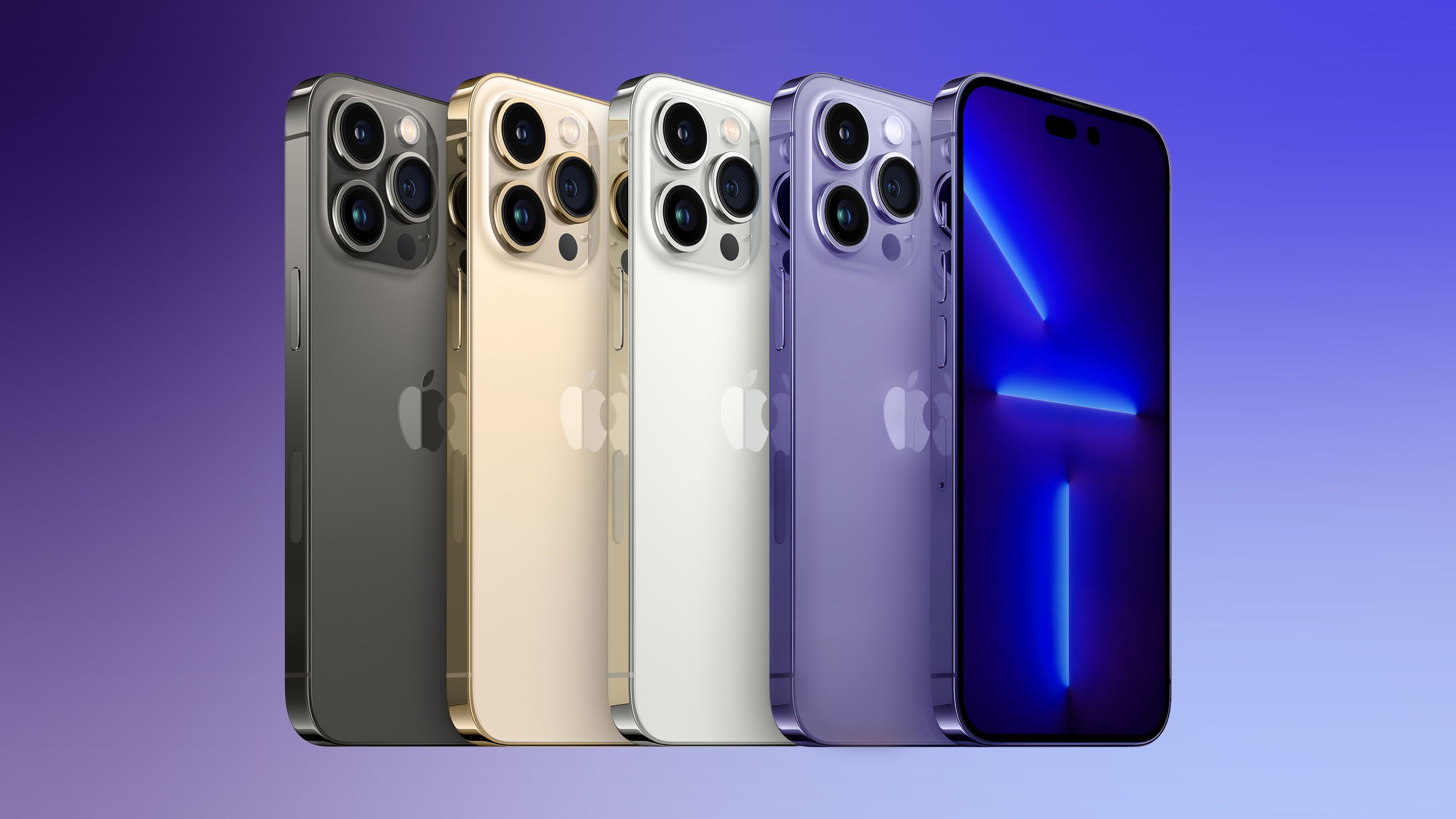
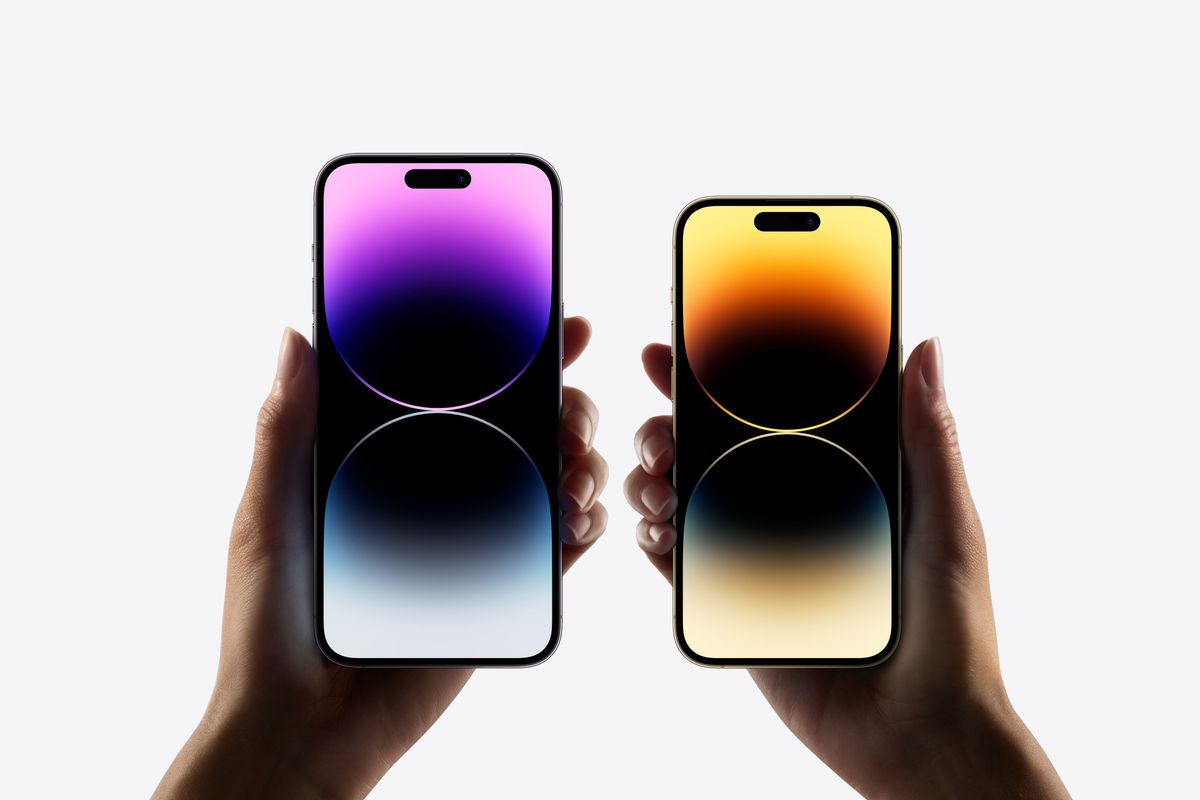
    It can now be said with a fair amount of certainty that Apple’s next premium iPhones – the iPhone 14 Pro and iPhone 14 Pro Max – will ditch the notch that debuted on 2017’s iPhone X in favor of a hole-punch cutout.

    That’s only part of the mystery solved, as, unlike Android flagships, the iPhone also features a complex Face ID system that requires a lot of modules and sensors. Display Supply Chain Consultants’ CEO Ross Young, who has an impressive track record when it comes to leaks, seems to know how Apple plans on going about it.

    In September of last year, Twitter leaker ShrimpApplePro, who tweets from the handle @VNchocoTaco, shared a concept image visualizing what the screen could look like from behind. Young also believes that that’s what the front of the Pro models will look like, meaning a pill-shaped cutout on the center-left will house the front camera and the infrared camera, and the circular hole will have the dot projector.

    If that sounds like a lot of holes, keep in mind that they will still take up less screen estate than the notch. Assuming the leak is legit, it puts to rest a recent rumor that claimed Apple would place the Face ID hardware beneath the display.

    ShrimpApplePro, the leaker who first talked about the design, had also said if Apple managed to put the Face ID system under the screen, it would do the same with the camera. Young thinks that we shouldn’t expect to see an iPhone with an under-display camera until at least 2024, which is not bad news at all, given that the handful of Android phones that feature the tech has failed to impress.

    iPhone 14 Pro’s screen design will not simply be a cross between the Galaxy S10 Plus, which has two hole-punch cameras, and Huawei models with a pill-shaped cutout, but will rather be unlike anything we have seen, or so implies Young.

    This year’s lineup will reportedly consist of two standard models – 6.1-inches iPhone 14 and 6.7-inches iPhone 14 Max- and two Pros – 6.1-inches iPhone 14 Pro and 6.7-inches iPhone 14 Pro Max. The Pro models will reportedly replace the current versions’ 12MP main camera with a 48MP main camera. The series will likely be powered by the slightly more powerful A16 Bionic chip.

    Given how relatively rare it is for Apple to introduce design changes and new camera sensors, it’s safe to assume most fans will love the new phones and make them one of the top smartphones of 2022.