Tag: iphone XS

  • Korean iPhone owners claim low trade-in prices

    Korean iPhone owners claim low trade-in prices

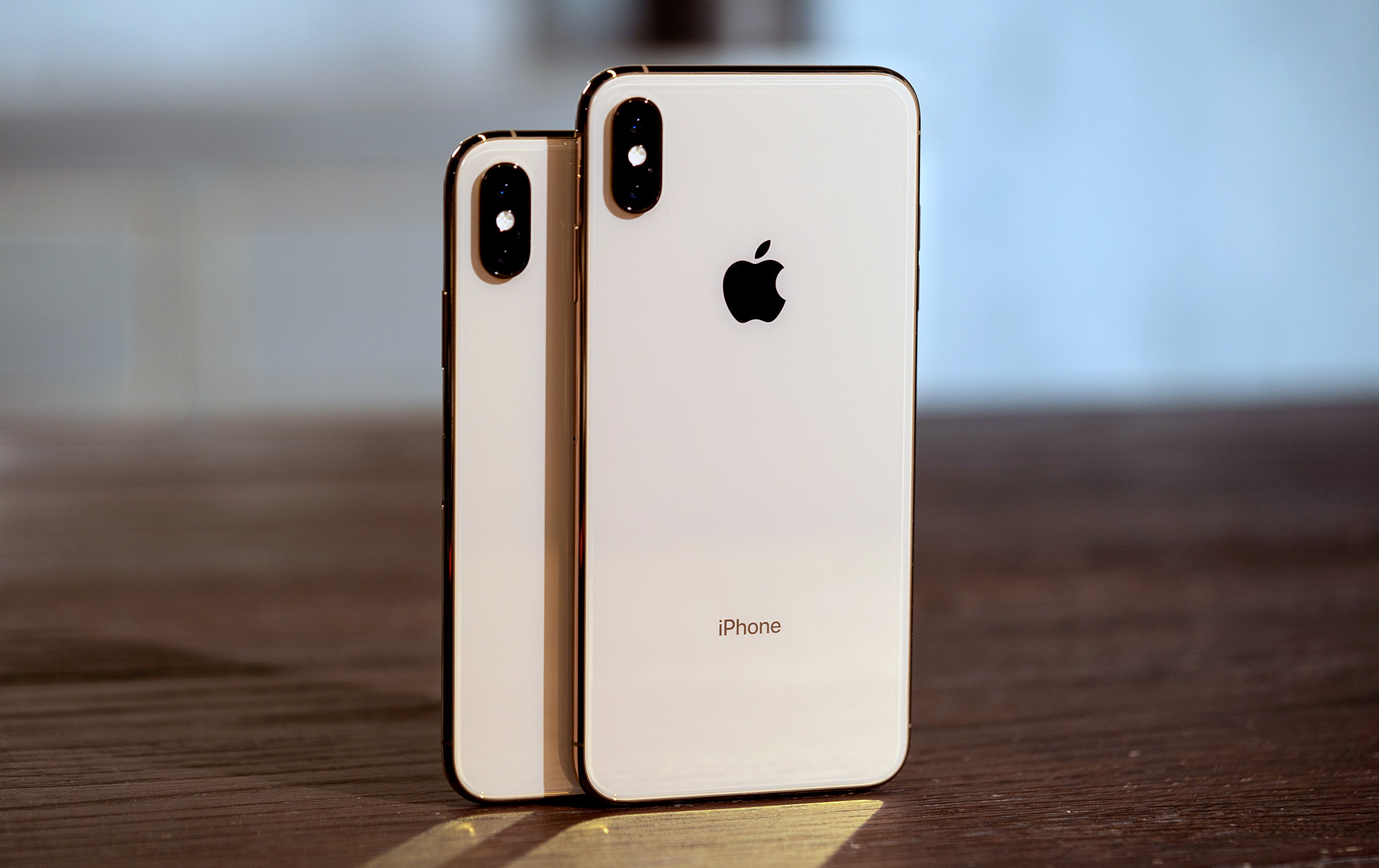
    iPhone users are accusing Apple of paying Korean customers less for their trade-ins than the devices are worth, while noting differences between promotions in other countries and those in Korea.  If an iPhone owner wants to return an older model when buying a new device, iPhone Korea said it will offer up to a 300,000-won ($268.56) discount on the latest smartphones, the iPhone XS and iPhone XR. Korean customers are outraged.

    They claim that the deal has been made available to them a full month later than in other countries. In the United States, Japan and China, trade-in opportunities started in late November. The amount in compensation is also said to be too low.

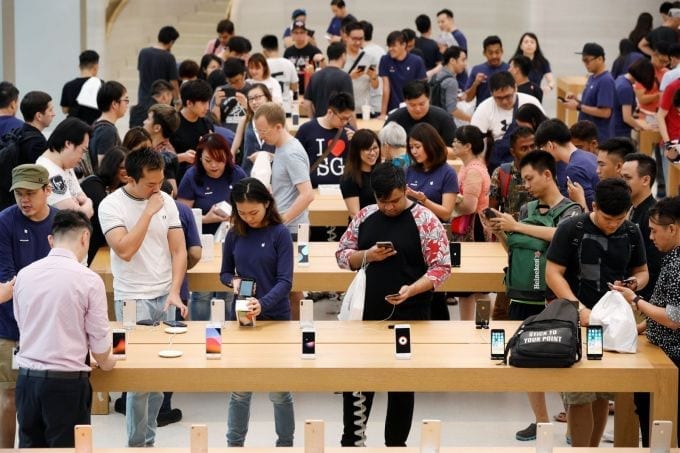
    Apple Korea announced on Dec. 24 that it is taking iPhone trade-ins at its retail store in Garosugil, Seoul, and will continue to do so until late January next year.

    If the user returns an older model, it is possible for them to buy the 990,000 won iPhone XR for 690,000 won and the 1.37 million won iPhone XS for 1.07 million won.

    Internet community Clien exploded with comments on Dec. 25, the day after the announcement. “I might as well sell it at the Gangbyeon Electronics Mart rather than returning it to Apple,” said one. Another added: “It is disrespecting the customers.”

    While iPhone Korea only compensates up to 300,000 won for an iPhone 7+ released two years ago, the price for an iPhone 7+ in the second-hand market near Gangbyeon and Sindorim is around 380,000 won, according to mobile community Cetizen.

    If the product is an S class with almost no cracks, the price goes up to 450,000 won.

    After typing in the serial number for a black iPhone 7 with 128 gigabytes into the trade-in page on Apple Korea’s website, a reporter received a quote of 174,000 won. In the second-hand market, users can sell the phone for at least at 289,000 won. Apple is offering 115,000 won less for the device.

    Lee Doo-hee, a programmer who enjoys using Apple products said, “I can get more money if I sell directly, so I do not feel any need to go to the Apple store in person and exchange my iPhone.”

    Apple U.S. announced that it is offering trade-ins of about $300 for those buying an iPhone XR and iPhone XS. This is about 10 percent more than in the Korean market.

    NTT Docomo, Japan’s No. 1 mobile company, is offering the iPhone XR for 25,920 yen ($235.05), around 260,000 won, for those signing a two-year contract. No similar discounts are offered in Korea.

    “For Apple, Korea is the home turf for Samsung Electronics, Apple’s old enemy,” according to a source in the sector.

    “Apple only has to get a fair amount of earnings from hard-core iPhone fans, which possibly account for 15 percent of all mobile communications users in Korea. That is why it is pursuing unfavorable policies, like excluding certain countries from promotions.”

    It is believed that the current promotion from Apple Korea is due to the slump in sales of recent iPhones. High prices are seen as the main cause of the recent slowing of sales growth.

    Kuo Ming-chi, a Taiwanese Apple expert as well as an analyst at TF International Securities, has revised his first-quarter 2019 sales volume estimate for iPhones from a 47 million to 52 million range to a 38 million to 42 million range.

    A report written by Kuo was titled: “Shipments of iPhones in 2019 could be below 190 million.”

    The market value of Apple exceeded one trillion dollars in September last year. It is now around $700 billion.
  • Retailers attack ‘unfair’ Apple South Korea practices

    Retailers attack ‘unfair’ Apple South Korea practices

    Apple South Korea is under fire from retailers, accused of using unfair commercial practices. South Korean retailers have joined forces to confront Apple’s continuous “gapjil” — a uniquely Korean term referring to the abuse of power by someone against a person in a weaker position — that has put an increasing financial burden on their operations.

    The Korea Mobile Distribution Association has claimed in a statement that Apple South Korea had habitually forced local dealers to buy the iPhone maker’s new models for demonstration or demo phones, as opposed to other brands’ practices, putting an increasing financial burden on them, and that “they cannot stand it anymore”.

    The retailers say they had no choice but to accept Apple’s overbearing demands, since the popular iPhone’s position in the market makes it difficult to ignore, to say the least.

    It is reported that the retailers had to buy Apple’s new models including the iPhone XS, iPhone XS Max and iPhone XR, but having to buy too many new models in a short period of time and the “exorbitant prices” of the new phones resulted in a significant financial burden.

    According to the KMDA, most mobile phone manufacturers offer their new models for demonstration for free, and collect them when newer models are released. Apple, however, has imposed additional conditions regarding the brand’s new model promotion: forcing retailers to pay for the manufacturing cost of phone stands, and determining where the stands and promotional posters will be placed in stores, according to local retailers.

    Domestic mobile carriers are no exception to Apple’s overbearing position. Industry watchers say local carriers had to shoulder advertising expenses aimed to promote Apple’s new lineup. Even the costs of subsidy plans and repair fees for Apple’s phones tend to be covered by mobile carriers.

    The Fair Trade Commission ruled that Apple South Korea’s sales practices were in violation of local competition laws, and sent a review report to the iPhone maker that indicates the corresponding fines and required measures to address the company’s anticompetitive behavior. Apple has yet to respond.

  • New iPhones sell slowly in Korea

    New iPhones sell slowly in Korea

    A week after Apple introduced its latest iPhone series at stores in Korea, sales are only about 60 percent of those reported for the previous lineup over the same period of time. According to estimates compiled by local mobile carriers, a total of 170,000 iPhone XS, XS Max and XR models were purchased between Nov. 2 and Nov. 7. A total of 280,000 iPhones 8 and X models were sold in the first week of their release in November 2017. Sales of the two models began three weeks apart.

    Industry watchers assumed that Apple’s simultaneous release of the three models was designed to garner greater attention and boost sales in the early days.

    However, figures so far show that the latest iPhones are selling more slowly than earlier models.

    “It’s not doing that great,” said an employee at a brick-and-mortar phone shop in central Seoul on Friday when asked if the new iPhones are popular.

    “There’s the expensive price tag, but it also has to do with the fact that there aren’t dramatic function upgrades. To be honest, even I can’t really notice a big difference between the iPhone X and XS. Maybe the next series will come with more innovative features – we’ll see.”

    Price became an issue as soon as Apple introduced the new models. In Korea, the 512-gigabyte iPhone XS Max sells for nearly 1.97 million won ($1,745), while the 256-gigabyte XS retails at 1.56 million won.

    Even the budget XR model is priced slightly below one million won.

    Despite the price concerns, presales have been reasonably strong. SK Telecom, KT and LG U+ took orders between Oct. 26 and Nov. 1.

    Presales results for the three new models differed per company, but the general assessment was that demand was similar or stronger than for previous generation iPhones.

    Presale results don’t necessarily indicate success. Customers who preorder iPhones in Korea, even before actually touching the product, are likely to be loyal Apple fans.

    “The thing about Apple maniacs is that they will get their hands on the next iPhone no matter what,” said a source from one of the mobile carriers.

    “But success doesn’t just come from them. The general public, especially those switching between smartphone brands, should be attracted to buying it, too. The new iPhone seems to be failing in that respect this time.”

    Up until a few years ago, a few manufacturers like Apple and Samsung dominated the smartphone market. Customers nowadays have a much wider ranges of options in terms of price and style.

    Over the last decade, smartphone technology has advanced so much that even budget models priced at half that of the latest iPhones come with high-tech functions, such as face unlock.

    From Apple’s side, there are signs that the company is well aware of the slower demand.

    Japan’s Nikkei Asian Review reported on Monday that Apple told smartphone assemblers Foxconn and Pegatron to halt plans to bring on additional lines for iPhone XR production. All companies involved declined to comment.

  • Latest iPhone models sell well in first week out in Korea

    Latest iPhone models sell well in first week out in Korea

    After a week of presales, Apple’s new series of iPhones officially rolled out in the Korean market Friday. The response for the three phones – iPhone XS, XS Max, and the budget XR model – has been good.  According to local mobile carriers, the trio attracted the same number of or slightly more preorders than the previous iPhone generation: the iPhone X and the iPhone 8.

    “Overall, the new phones are generating more interest than the previous series,” a spokesperson from KT said. “Though the iPhone XS is getting more attention than the XR.”

    Presales data from Korea’s largest mobile carrier SK Telecom released Friday shows that 62 percent of the preorders were for iPhone XS, while 26 percent were for iPhone XS Max and 12 percent for the iPhone XR.

    The most popular color option was gold for iPhone XS and XS Max, followed by space gray and silver. For iPhone XR, black and white models led.

    The new phones are big with the young. About 30 percent of the early buyers were women in their 20s, according to SK Telecom. People in their 20s including men accounted for half of all customers making early reservations for the iPhones.

    “Younger people seem to be more interested in buying the new iPhones,” SK Telecom said in statement.

    As for storage, the 256 gigabyte (GB) option was the most popular for both iPhone XS and iPhone XS Max. Considering users have to pay over 1.8 million won ($1,611) for the 512GB option, many customers favored the slightly less pricey option. For iPhone XR, the mid-priced 128GB option was more popular than units with 64GB or 256GB of storage.

    It will take time to judge the true demand for the new phones from Apple, and questions are being raised as to whether the brand is up against the limits of efficiency gains and losing momentum.

    Apple posted $14.1 billion in net profit in the third quarter, up 32 percent year on year. Investors focused on weak unit sales and weaker-than-expected revenue guidance for the fourth quarter. Apple said it sold 46.89 million iPhones in the third quarter, a mere 0.4 percent increase year on year and below analyst expectations of 47.5 million unit sales. The revenue increase came from higher pricing.

    The U.S. phone maker also announced that starting next year it will not be reporting a breakdown of sales by product line. Luca Maestri, chief financial officer at Apple, said in a conference call Thursday that unit sales are no longer a good measure of the company’s performance.

    Apple stock fell by as much as 7.4 percent in aftermarket trading.

  • Apple cuts costs for the iPhone XS’s big display

    Apple cuts costs for the iPhone XS’s big display

    Apple shaved some parts from the display in its largest new iPhone, helping keep costs under control in what has become the priciest component of its phones in recent years, according to a new cost analysis of the device.

    TechInsights, an Ottawa, Ontario-based firm which rips open phones to analyze their contents and estimate the cost of the parts inside, said on Tuesday that the iPhone XS Max with 256 gigabytes of storage capacity contains about $443 in parts and assembly costs, compared with $395.44 for the 64-gigabyte version of last year’s iPhone X.

    Apple released a trio of new phones earlier this month, including an update to last year’s iPhone X, called the iPhone XS, that starts at $999, and the budget-minded iPhone XR that starts at $749.

    But it was the iPhone XS Max – with a 6.5-inch display that uses OLED technology for richer colors – that pushed new pricing boundaries, starting at $1,099.

    In its cost analysis released on Tuesday, TechInsights found that the single priciest part of the iPhone XS Max – the display – cost $80.50, compared with $77.27 for last year’s iPhone X, which featured a smaller 5.8-inch screen.

    The relatively small increase in cost despite the larger screen size was because Apple appeared to have removed some components related to its so-called 3D Touch system, which makes apps respond differently depending on how hard users press the screen.

    “All told, what they took out adds up to about $10, so this $80 estimate would have been about $90,” Al Cowsky, who oversees cost analysis at TechInsights said in an interview.

    “They had a trade-off in cost.”

    Apple declined to comment on the study.

    But Bob O’Donnell of TECHnalysis Research said Apple likely made the right decision to focus on ensuring it could deliver a larger-screened model this year economically.