Tag: iprice

  • Online groceries shopping booms as HCMC practices social distancing

    Online groceries shopping booms as HCMC practices social distancing

    Many HCMC residents have turned to online shopping for essential goods following a two-week social distancing order across the city, and e-commerce platforms are reporting a boom.

    Data from e-commerce platform Tiki shows sales grow by 30 percent last weekend, just before social distancing was implemented in Ho Chi Minh City on Monday, with a rise in the number of searches for fast-moving consumer goods, fresh food, mom and baby products.

    E-commerce platform Lazada’s sales of fast-moving consumer goods in the past few days were three times higher than during social distancing period in April last year. Sales of fresh food and frozen products have increased tenfold.

    Tran Tuan Anh, CEO of e-commerce platform Shopee, confirmed that there has been high demand for essential goods, especially fast-moving consumer goods, healthcare products and house appliances.

    A Tiki representative who did not want to be named said that they have been working with suppliers to increase the supply of essential goods, fresh food as well as tech products that serve work and entertainment at home by up to 50 percent, while supply of hand sanitizers will increase 25 times.

    Shopee said it has been selling essential goods at reasonable prices and providing free shipping for customers. It is also implementing free advertising programs for its sellers.

    Lazada has affirmed it will continue expanding goods supply, besides implementing discount programs, no-contact delivery and boosting cashless payments.

    Latest data from Malaysia-based market research firm iPrice shows consumers have grown accustomed to buying essential goods online, with the groceries segment the only one to see a 13 percent year-on-year increase in the number of web visits in Q1.

    Meanwhile, web visits related to non-essential goods like mobile phones and electronics appliances dropped 9 percent and 6 percent, respectively.

    Covid-19 has served as a catalyst for e-commerce, boosting online shopping demand for essential goods, iPrice stated.

  • Honda most searched vehicle brand in Vietnam

    Honda most searched vehicle brand in Vietnam

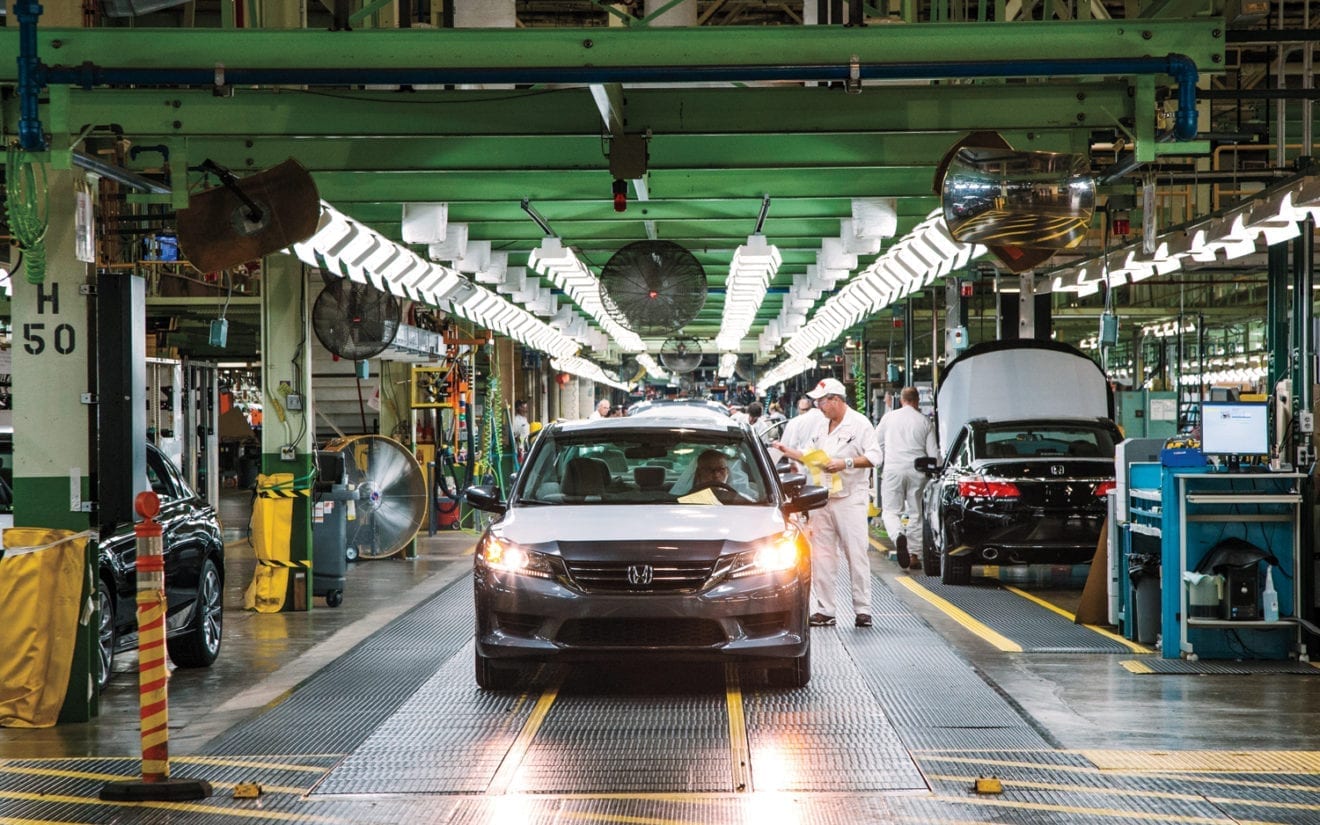
    Honda, Toyota, BMW, Mitsubishi, and Suzuki are the five most googled car brands in Vietnam, market research firm iPrice said.

    The Malaysia-based meta-search website, which operates in Vietnam and six other countries across Southeast Asia, said it considered 22 car brands googled between March 1 and May 31 this year to find the most searched brands.

    Honda topped the list since it produces both motorbikes and cars, and has an 80 percent share of the motorbike market.

    It was also the most googled brand in Thailand and Indonesia. In the Philippines, it was Toyota.

    In Singapore and Hong Kong, which prioritize green transportation, American electric vehicle brand Tesla was in first place.

    Across the seven markets, Honda was the most googled brand with 550,000 searches, followed by Toyota (368,000) and BMW (301,000). Tesla and Mitsubishi tied with 246,000 to round off the top five.

    The study also found that SUVs were the most searched cars in all seven markets, followed by sedans, MPV/WGNs, hatchbacks, and coupes.

    According to data from Vietnamese manufacturer Thanh Cong Motor and the Vietnam Automobile Manufacturers Association (VAMA), Toyota Vios was the most sold model in the first half of this year with 11,244 units.

    Sales of VAMA members, who account for more than 95 percent of the market, were down 30 percent year-on-year to 102,720 vehicles.

  • Paul Brown-Kenyon Appointed as President and COO of iPrice Group

    Paul Brown-Kenyon Appointed as President and COO of iPrice Group

    Price Group, South East Asia’s leading product discovery and comparison platform, recently appointed Paul Brown-Kenyon as its President and Chief Operating Officer.

    iPrice Group is South East Asia’s leading meta-search platform, serving markets in Malaysia, Indonesia, Vietnam, Thailand, Philippines, Singapore, and Hong Kong.

    The newly-minted President and COO at iPrice Group commented “I am very excited to join the team. Prior to my appointment, iPrice has done a tremendous job in assisting online consumers across seven countries in South East Asia navigate e-commerce to discover the best deals. Today, the meta-search platform assists almost 20 million users a month, conveniently providing them verified product and vendor information. This presents the company a significant opportunity for us to further expand the range of our services and widen the reach of our product”

    Paul Brown-Kenyon was formally the Chief Executive Officer of Global Berhad (MEASAT Satellite Systems Sdn Bhd.) for more than 13 years prior to his appointment at iPrice Group. Brown-Kenyon joined MEASAT in 2003 as Vice President of Sales and Marketing and has been in the South East Asian region for 15 years. Prior to being CEO of MEASAT, Brown-Kenyon has spent six years employed with the global management consulting firm McKinsey & Company.

    “Paul’s appointment as President & COO marks a new milestone for iPrice Group. He will be the key catalyst in our journey of making our company more agile, mature, and to establish top class agile and management practices. Together we will constantly ask ourselves how we can make iPrice an attractive employer for top talents from Malaysia, across the region as well as globally” said David Chmelar, Chief Executive Officer of iPrice Group.

    “Paul combines two things which are rare to spot – he is a seasoned leader while at the same time he has the grit and passion for building companies and isn’t afraid of taking risks. We are very eager to learn from his experience every day while enjoying the craze of building a start-up together”

    “Another key decision factor to his appointment was a common passion for building a top-class working environment. His presence is a strong testament of iPrice’s current status and a foretaste of what we could become in the future – a powerful online shopping advisor used by millions of people in South East Asia and a prominent brand name amongst top-performing start-ups in the region” adds Chmelar.

    By the end of 2018, iPrice Group achieved profitability for the first time since its founding in 2014 and remains single-minded in establishing itself as a sustainable e-commerce company in the long term. In the same year, iPrice Group welcomed NAVER Corp., a leading search engine, shopping and price comparison engine in South Korea as its latest investor. NAVER’s direct investment comes only three months after it’s subsidiary’s VC arm, LINE Ventures, led iPrice’s funding round in 2018.


  • iPrice to get investment from Naver Korea

    iPrice to get investment from Naver Korea

    South Korean internet service company Naver has invested in Malaysian retail aggregator iPrice.

    The firm intends to invest an undisclosed amount to fund iPrice’s expansion into the Indonesian market and to improve its platform towards a better user experience. It currently operates in seven Asian countries, serving to compare prices between similar products on different e-commerce platforms. It aims to become the primary gateway to online shopping in Southeast Asia.

    The firm recently acquired capital investments from Line Ventures, a Japanese subsidiary also owned by Naver.

    iPrice Group co-founder and CEO David Chmelar said: “Naver not only operates the leading search engine in Korea but has also been able to build an impressive shopping and price comparison engine in the country. Given the wealth of experience and strategic value that Naver brings to the table, we couldn’t pass the opportunity to welcome them as our latest investor.”

    Peter Na of Naver added: “The tremendous traction which iPrice has continued to display throughout its latest fundraising is a testament to the impressive execution of the team and the explosive growth of Southeast Asia’s e-commerce market.”

  • iPrice Thailand is profiling online shoppers

    iPrice Thailand is profiling online shoppers

    Thai online shoppers are most active before leaving the office or school, according to research from online shopping startup iPrice Thailand.

    Based in Kuala Lumpur, iPrice has a presence in seven markets across Asia and aims to uncover important e-commerce metrics from the perspective of thousands e-commerce practitioners, highlighting the differences and similarities in each market.

    Its research draws on its proprietary data from more than 1000 e-commerce players in Indonesia, Malaysia, Philippines, Singapore, Thailand and Vietnam.

    For Thailand, mobile traffic is the second-highest in Southeast Asia, where mobile traffic has grown by an average of 19 per cent in the past 12 months to now account for 72 per cent of overall e-commerce web traffic.

    Indonesia leads the field, accounting for 67 per cent in the third quarter of 2016 and 79 per cent in the second quarter last year.

    Therefore, mobile e-commerce traffic accounts for more than 70 per cent of overall web traffic, while desktop traffic is less than 30 per cent.

    Meanwhile, Thailand’s conversion rate is lowest in Southeast Asia (conversion rate is the percentage of website visits that result in a product purchase). Along with the Philippines, Thailand’s conversion rates are 20 per cent lower than average.

    The comparison between mobile and desktop conversion rates shows that mobile is 1.7 times higher on average. For Thailand, the desktop conversion rate is 1.3 times higher than mobile. However, there is an increasing trend of mobile e-commerce traffic.

    Thai basket size is fourth among the six countries in the study. This metric measures the average total amount spent for every order made by customer over a defined period of time. Singapore has the highest basket size of $91, with a GDP per capita of US$90,530; on the other hand, Vietnam was the lowest with a basket size of $23 and a GDP per capita of $6880. Thailand’s basket size is in the middle with the value of $42 and a GDP per capita of $17,000.

    On average, the basket size on desktop is slightly higher than the basket size on mobile. In Thailand, desktop conversion rate is 1.3 times higher than mobile, which implies that people in Thailand prefer using desktops over mobile phones when buying online.

    Also, Wednesday shows the highest peak in online shopping in Thailand. Taking Monday as a base value, e-commerce merchants have an increase in conversion rate on Wednesdays of up to 15 per cent, but it dips up to 30 per cent over weekends, which is consistent across the region. For Thailand, the Wednesday conversion rate increases 8 per cent above the average while the weekend conversion rate drops 19 to 22 per cent.

    For Thailand, orders increase in volume up to 53 per cent at 11am and reach up to 69 per cent at 3pm. A dip in conversion rate is noted across all countries between 5pm and 7pm.

    Bank transfer and offline POS are among popular payment methods in Thailand.

    Credit cards are used for 90 per cent of payments, but the credit-card transaction rate in Thailand is relatively low at 6 per cent, which is below the average of 9 per cent in Asean countries, according to Global Findex database 2014.

    To work around this issue, Thai e-commerce companies offer alternatives. For example, 81 per cent offer a bank transfer option such as ATM, making the country rank third in Southeast Asia. Also, 46 per cent of e-commerce sellers offer offline POS such as counter service at 7-11, ranking Thailand second place when it comes to frequency of using this type of payment.

  • China cuts retail fuel prices again

    China cuts retail fuel prices again

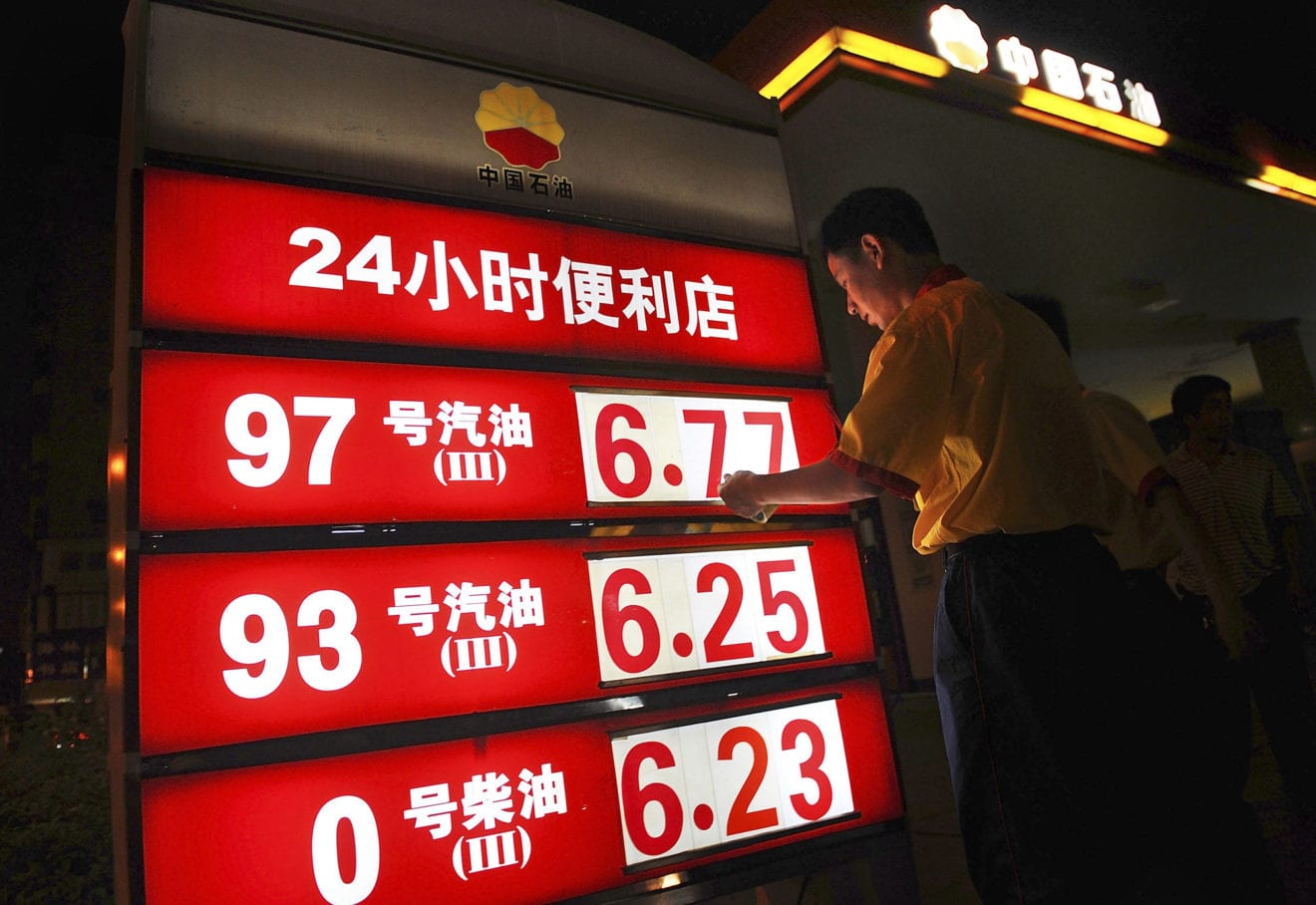
    China will cut the retail prices of gasoline and diesel for the first time this year as international oil prices fell, the country’s top economic planner said Wednesday.

    Both gasoline and diesel prices will be reduced by 70 yuan ($10.2) per tonne starting Thursday, according to the National Development and Reform Commission (NDRC).

    Analysts attributed the lower international oil prices to recovery of drilling activity in the United States and a stronger US dollar.

    Under the current pricing mechanism, if international crude oil prices change by more than 50 yuan per tonne and remain at that level for 10 working days, the prices of refined oil products such as gasoline and diesel in China will be adjusted accordingly.

  • Money increase for iprice comparability idea

    Money increase for iprice comparability idea

    Iprice Group, a Malaysia-based on-line worth comparability service for consumers, has acquired a $550,000 money funding from an angel investor enterprise capital group.

    Based solely final October, the enterprise is already lively in its residence base Malaysia, together with Hong Kong, Singapore, the Philippines, Thailand, Indonesia and Vietnam. The corporate says its on-line visitors is greater than doubling each month.

    The US$550,000 in funding was invested by from Asia Enterprise Group, a Malaysia-based angel investor, which needs to assist Iprice create “the most important on-line buying group in Southeast Asia”.

    Iprice co-founder Heinrich Wendel says the thought of the web site is to create “a pleasant on-line purchasing expertise” by giving buyers an intuitive and visible option to uncover merchandise.

    “Whereas different websites within the area are all about evaluating costs, we give attention to narrowing down the huge quantity of merchandise to your private choice. Regardless of you’re on the lookout for a blue and black gown, three-inch excessive heels, a strong backpack or a basic Chesterfield couch, we’ll present you the place you will get one of the best supply.”

    Because the younger Web inhabitants within the area is rising by greater than 50 per cent inside the subsequent three years – based on a report by UBS – it can drive eCommerce quantity no less than five-fold by 2020. Tapping into this potential, the web site already provides greater than three million merchandise from over 10,000 native and worldwide manufacturers, sourced by way of trusted on-line shops.

    Consumers flick through the hundreds of thousands of merchandise by classes, manufacturers, fashions and hues, amongst different attributes, to get inspiration. All merchandise are mechanically linked to particular promotions and coupons which might be provided by the respective eCommerce shops. Sooner or later, the corporate says it’ll double down on its machine studying algorithms to additional enhance the “sensible search” and supply particular person suggestions in response to the consumer’s searching behaviour.

    Working from its Kuala Lumpur headquarters, the corporate employs expertise from throughout Southeast Asia, enabling them to deal with the wants of every native market individually.

    For eCommerce shops, iprice supplies invaluable experience in on-line advertising, serving to them to increase their attain to new markets and develop their buyer base. Tito Costa, Zalora Group MD, says he recognises iprice as a robust affiliate associate.

    “Iprice helps internet buyers to seek out what they’ve been on the lookout for and to find new merchandise. They ship excessive changing visitors to Zalora throughout the Southeast Asia area and drive our income considerably,” he stated.