Retail News CRM

Tag: ireland

  • Irish Single Malt becomes the world’s most expensive whisky

    Irish Single Malt becomes the world’s most expensive whisky

    The Craft Irish Whisky Co has sold a bottle of The Emerald Isle whisky to American collector Mike Daley for $2.8 million, marking a record for the world’s most expensive whisky.

    “The rebirth of Irish whiskey is relatively new, so I feel like I’m getting in on the ground floor. Luxury scotch, to me, is already a crowded type of market,” said Mike Daley, one of the US’ most prolific collectors of the spirit.

    “But we’re only just starting to see luxury Irish make a name for itself. I guarantee you that in the years to come, it will get to where scotch is today.”

    A bottle of The Macallan 1926 sold for $2.7 million at auction last November, momentarily becoming the world’s most expensive bottle, a title now held by The Emerald Isle, indicating a shift in the tastes of luxury collectors, many of whom believe the Scotch market has grown overcrowded.

    The Craft Irish Whisky Co, founded in 2018 by Irish entrepreneur Jay Bradley, was the most highly recognised new firm of the year in 2021, accumulating a total of 12 accolades across both Taste and Design for four of its ultra-rare whisky releases.

    Last year, the company won 44 medals in total, including Gold and Silver at the IWSC Taste medals, Gold, Silver and Bronze at the World Whisky Awards, and a Master Medal for The Donn at The Drinks Business Autumn Bling Tasting.
  • Silkie Irish Whiskey launches in Australia

    Silkie Irish Whiskey launches in Australia

    Irish whiskey maker Sliabh Liag Distillers has launched in Australia through an exclusive partnership with Dan Murphy’s.

    Two varieties of the Silkie Irish Whiskey will be available: The Legendary Silkie Irish Whiskey – which offers a butterscotch sweetness with green apples and a hint of amber and smoke – and The Legendary Dark Silkie Irish Whiskey which features a rich chocolate character complemented by a salted-caramel sweetness and baked apples “wrapped in a smokey profile”.

    James Doherty, Sliabh Liag Distillers’ founder, said the new Silkie varieties are lighter than the Irish whiskeys most Australians are used to.

    “My aim in creating this collection was to evoke a smoky hue that harks back to a pre-prohibition time when Donegal’s characteristic style was famed for warming, earthy flavours.”

    According to Rosie Keane, Irish Consul general to Sydney, Australia is one of the fastest growing markets for Irish whiskey globally, with sales doubling between 2016 to 2020.

    The Legendary Silkie Irish Whiskey retails for $74.99 and The Legendary Dark Silkie Irish Whiskey for $79.99. Both have 46 per cent ABV.

  • Ireland recalls Vietnam’s Hao Hao noodles over food safety concerns

    Ireland recalls Vietnam’s Hao Hao noodles over food safety concerns

    The Food Safety Authority of Ireland has recalled some batches of Acecook Vietnam’s Hao Hao and ‘Good’ branded noodles for containing banned substances.

    On Aug. 20, the Food Safety Authority of Ireland (FSAI) announced that batches of Hao Hao and Good noodles are being recalled owing to the presence of ethylene oxide – an illegal pesticide.

    Ethylene oxide is not authorized for use in foods in the European Union (EU), of which Ireland is a member.

    There are three products in the FSAI’s recall list, two of which are from Acecook Vietnam, a shipment of Hao Hao spicy and sour shrimp noodles with an expiry date of Sept. 24, 2022 and Good noodles with an expiration date until Nov. 10, 2022.

    Besides, China’s Yato seafood noodles, with an expiration date of Nov. 30, 2022, were also revoked by Ireland.

    According to the FSAI, the consumption of products contaminated with ethylene oxide does not pose an acute hazard to the user, but could lead to other long-term health problems. Therefore, the agency recommends minimizing exposure to this substance.

    The Ministry of Industry and Trade (MoIT) on Saturday morning said it had sent a request to Acecook Vietnam JSC to promptly report on its production processes and procedures, and explain the difference between products consumed domestically and those exported.

    In addition, the MoIT is also reviewing the entire list of products distributed by Acecook Vietnam countrywide, checking and clarifying production processes and identifying violations.

    An Acecook representative said: “We are conducting a meeting and will have an official announcement for consumers soon.”

    Vietnam presently has approximately 50 companies producing instant noodles, including both domestic and foreign. Currently, instant pho and instant noodles made in Vietnam are present in more than 40 markets.

  • Gap to close all 81 stores across the UK, Ireland

    Gap to close all 81 stores across the UK, Ireland

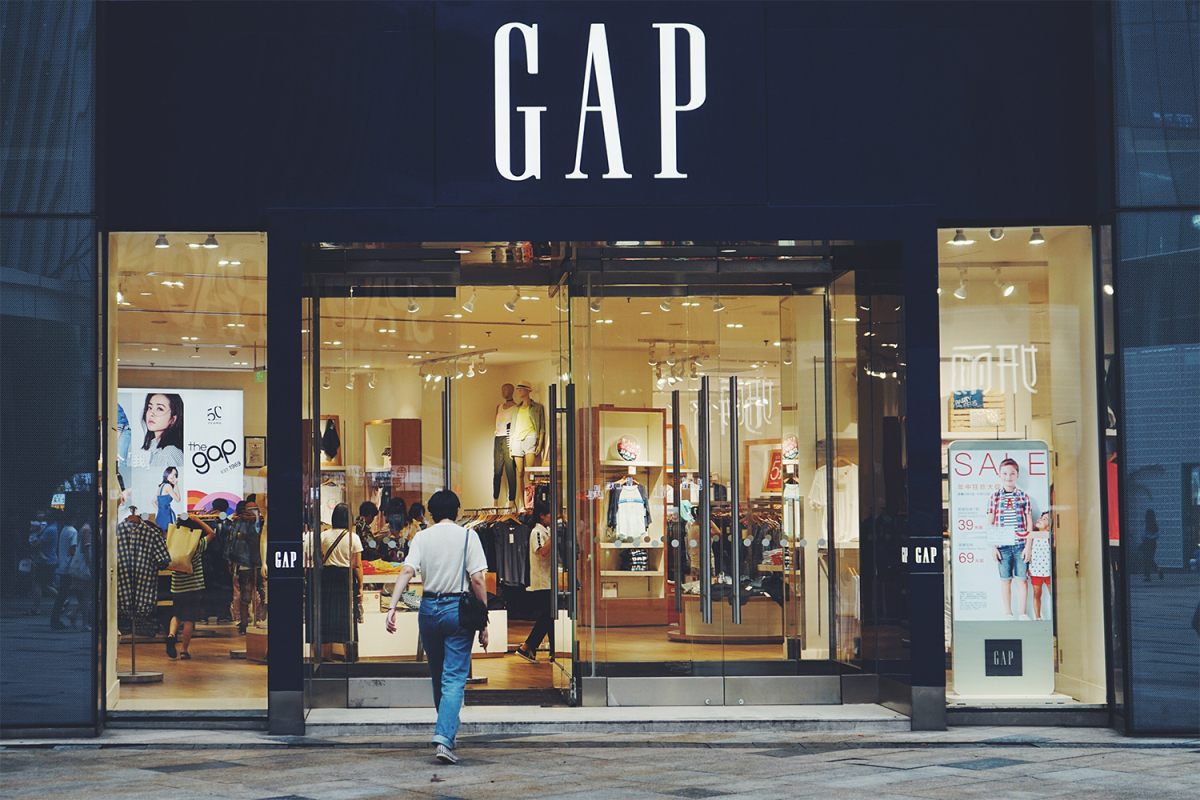
    The firm said it would close all its stores “in a phased manner” between the end of August and the end of September.

    This includes 19 stores that were already scheduled to close in July as their leases were expiring.

    The company has not disclosed how many employees the closures will affect, but will shortly start a consultation process with the staff.

    The firm said it was “not exiting the UK market” and would continue to offer a web-based store when all the shops had closed.

    A Gap spokesperson said the decision followed a strategic review of its European business.

    Gap was a big hit when it first opened in the UK back in 1987, famous for its hoodies and sweatshirts. But in recent years, it has struggled to stay relevant, resorting to prolific discounting to pull shoppers in. That left Gap in a weak position to withstand the turmoil of a global pandemic.

    It launched a strategic review of its entire European operations last autumn, warning that it was considering closing all its UK stores. Just a few weeks ago, 19 store closures were announced – now the rest of them will close as well.

    Gap blamed what it described as market dynamics – in other words, the huge shift to internet shopping. It’s going online-only, just like Debenhams and Sir Philip Green’s Arcadia group. It’s yet another famous name bidding a retreat from our High Streets, adding to the challenge of what to do with empty shops.

    The closure is because Gap failed to keep up with the competition by not offering enough variety or being as cheap as competitors such as Primark.

    “The brands you want to shop within physical retail have to have so much more than just products on offer, they have to have a purpose,” she says.

    The company said it was in negotiations with another firm to take over all of its French stores.

    In Italy, Gap said it was in discussions with a partner for the potential acquisition of the stores there.

    “We believe in Gap’s global brand power. We are executing against Gap’s Power Plan and partnering to amplify our global reach,” the spokesperson said.

    “We are not exiting the UK market. We will continue to run and operate our Gap e-commerce business in the United Kingdom and Republic of Ireland.”

    A source close to the company said that it had seen rapid uptake of internet shopping for its clothes in the UK since the pandemic-enforced lockdowns.

  • Why Google’s acquisition of Irish startup Pointy is big news for retailers

    Why Google’s acquisition of Irish startup Pointy is big news for retailers

    Google has acquired Irish start-up Pointy, a firm that allows physical stores to make their products discoverable online.

    The deal is expected to be completed within the next few weeks, with TechCrunch reporting that the acquisition has seen Google pay €147 million (US$163.7 million) on the business.

    “For Google, this provides the opportunity to present shopping search results for physical stores as well as those online – something it already does in a limited capacity – and so significantly increase the value of Google Shopping for users,” says research firm GlobalData’s technology editor Lucy Ingham.

    “However, while this is a significant step in bridging the divide between brick-and-mortar stores and the online e-commerce world, the acquisition has the potential to be even more impactful. It is a significant step for Google, because it provides the search engine giant with a way to cheaply and easily catalog physical assets on a large, yet decentralized scale.”

    Google is likely to be seeking to expand its adoption of Pointy in ways that may include dropping or reducing the current one-time integration cost of £699 ($914), or even getting leading point-of-sale manufacturers to directly integrate the technology into their products, says Ingham.

    If the firm can successfully increase the prevalence of Pointy, it could eventually have coverage of physical stores to rival those of digital stores, bringing with it a potential step-change in how people shop.

    “However, there are also potential applications beyond e-commerce. What Google has bought, in essence, is a means to catalog real-world items, and the same technology in the Pointy Box could be put to use in many other fields,” said Ingham. “Potential applications could include medicines, enabling Google to collect data on gluts and shortages of particular items and use this to provide industry-targeted services, inform users or even assist its own moves into the healthcare space.”