Where this leaves Samsung is unclear. Last month, John Yong-In Park, head of Samsung Electronics SLSI Business Division, said during the 2023 Semiconductor Expo (SEDEX) keynote that 2024 Samsung Galaxy phones will offer satellite connectivity. He did not mention any specific models, but it was believed that the Galaxy S24 line might be Samsung’s first phones to offer emergency satellite connectivity.
Tag: Iridium
-
Qualcomm and Iridium end Snapdragon Satellite because of one key factor
Introduced this past January, Qualcomm and Iridium surprised the mobile industry at the end of last week by announcing the end of Snapdragon Satellite without having one Android phone manufacturer sign on the dotted line. Snapdragon Satellite was expected to be used by Android manufacturers as a way to match the iPhone 14 and iPhone 15’s Emergency SOS via Satellite feature.Announced last year one day after Huawei unveiled a similar feature for its Mate 50 series, Emergency SOS via Satellite allows someone with a compatible iPhone model to report an emergency even in areas where there is no cellular connectivity. The iPhone screen helps show the user where to position the device to connect with a satellite; information about the emergency is texted to emergency services who dispatch first responders. The feature has already been credited with saving some lives.Snapdragon Satellite was set to work with Iridum’s satellite constellation and both Qualcomm and Iridium have announced the end of their partnership starting on December 3rd. This action effectively ends Snapdragon Satellite, at least for now. In its press release, Iridium notes that the decision to end the partnership is due to one huge factor: no business. As the satellite firm wrote, “The companies successfully developed and demonstrated the technology; however, notwithstanding this technical success, smartphone manufacturers have not included the technology in their devices.”Last February, chipmaker MediaTek announced its MT6825 chipset that offers satellite connectivity for Android smartphones through Bullitt’s Satellite Connect platform. The chipset supports two-way satellite messaging, location sharing, and emergency SOS. Last year, T-Mobile announced that it would team up with Elon Musk’s Starlink to cover areas with no cellular coverage with satellite connectivity allowing users to send and receive SMS and MMS messages.Iridium CEO Iridium Matt Desch, talking about the end of his firm’s partnership with Qualcomm, said, “While I’m disappointed that this partnership didn’t bear immediate fruit, we believe the direction of the industry is clear toward increased satellite connectivity in consumer devices. Led by Apple today, MNOs and device manufacturers still plan, over time, to provide their customers with expanded coverage and new satellite-based features, and our global coverage and regulatory certainty make us well-suited to be a key player in this emerging market. User experience will be critical to their success, and we’ve proven that we can provide a reliable, global capability to mobile users.”Qualcomm also commented by stating that the lack of Snapdragon Satellite to sign a deal with any Android manufacturers “indicated a preference towards standards-based solutions” to be used to support smartphone-to-satellite connectivity. “We expect to continue to collaborate with Iridium on standards-based solutions while discontinuing efforts on the proprietary solution that was introduced earlier this year,” Qualcomm said.With a standards-based solution, several companies could create the technology to allow Android handsets to offer emergency satellite connectivity.As we noted earlier in the story, Huawei last year became the first phone manufacturer to offer satellite connectivity for emergencies and beat out Apple by one day. This year, the new Mate 60 line reportedly offers users the opportunity to make satellite calls using the new flagship phones. This could be considered an improvement over the technology used by Apple, which is limited to text-based communications. -
Iridium Is Here for a Long Haul, Says EVP Bryan Hartin
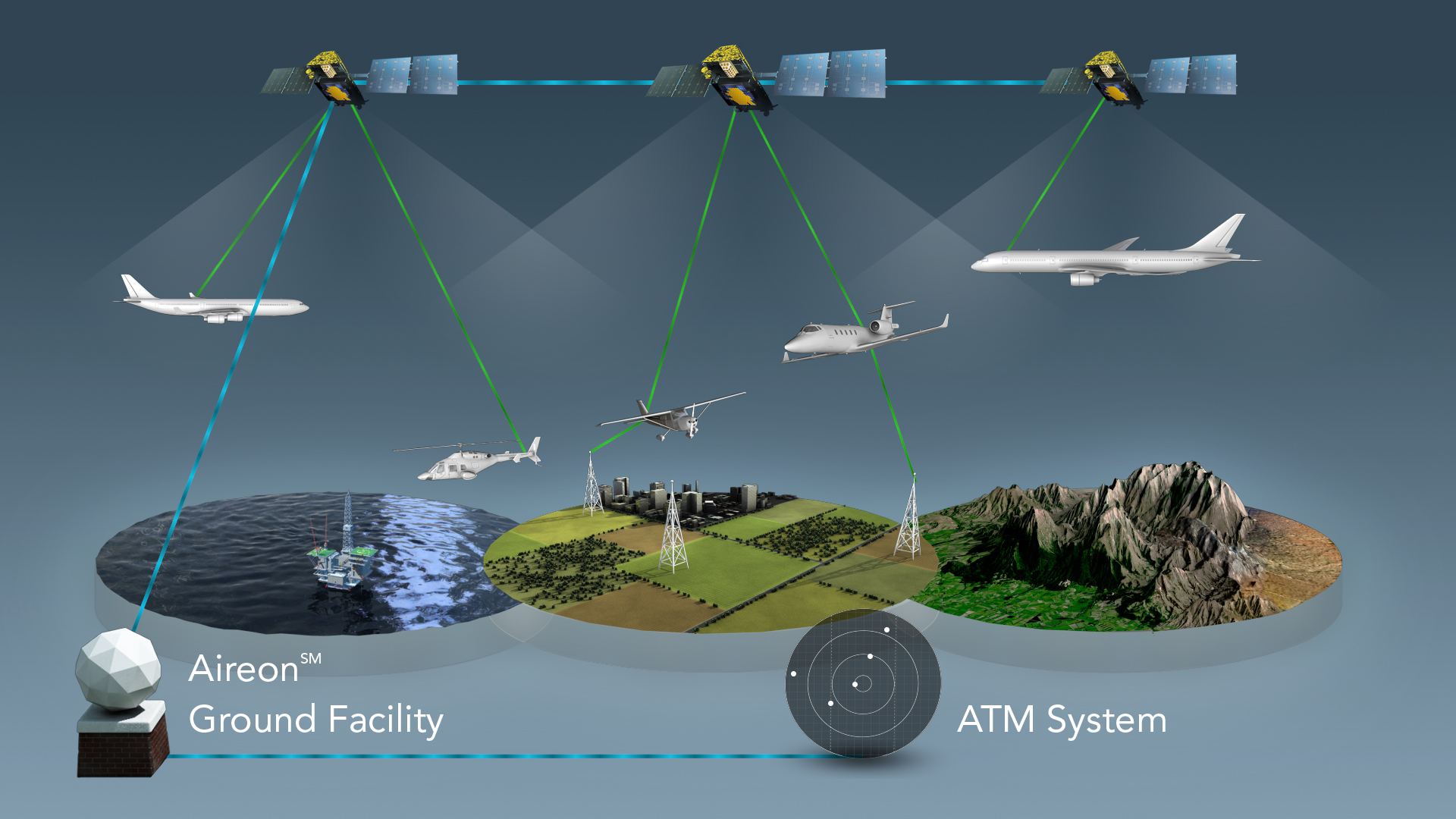
With a cross-linked constellation of 66 satellites, Iridium’s global network connects people and things in the world’s most inaccessible locations. We spoke to Bryan Hartin, Executive Vice President, Sales and Marketing, Iridium, to know more about the company’s offerings, market competition, and growth plans.
Growth in IoT is driving increased connectivity worldwide. Can you tell us about Iridium’s growth in the past year?In 2021, Iridium had the best subscriber growth in the company’s history, with total billable subscribers growing 17% year-over-year, driven by growth in IoT. We rely on the success of our ecosystem of partners to develop, sell, design, and market Iridium-based solutions, while we focus on what we do well. Our constellation is one of the youngest L-band networks worldwide. Presence in low earth orbit gives us the unique advantage in IoT as our satellites are closer to earth, and can hence offer solutions for devices that are a lot smaller. They are also very efficient, lighter and faster than our competition. In addition, we provide our ecosystem of partners with enabling technology through modules that provide Iridium-based connectivity. Our partners leverage this enabling technology for IoT products and solutions. Some of our IoT solutions are used by heavy equipment OEM companies such as Caterpillar, Komatsu, Hitachi and Doosan, for telematics mainly, and to track their assets worldwide. For some of these OEMs, more money is derived from maintenance parts sales and services, compared to sales of the equipment. Globally, we also have partners who tap on Iridium’s enabling technology to perform vessel monitoring for fishing regulations or research into climate change.
One of the uses in IoT or personal communications is enabling technology that can fit in small devices – with personal communications as an area that is quickly gaining traction. An example of this is Garmin, which uses Iridium enabling technology in small devices to track locations and send SOS messages during an emergency.
Another product is the Iridium Edge Solar, which offers real-time GPS tracking and local wireless sensor and communication capabilities over Bluetooth. It can be placed on a container to track its position, monitor the temperature of the container, or determine if the doors are open or shut.
Essentially, our target is not replacing cellular technology, but complementing it so that connectivity can be maintained even outside terrestrial coverage. We are uniquely qualified to do so because of Iridium’s truly global network, comprised of 66 crosslinked satellites in space with 9 spares on-orbit and another 6 on the ground.
Can you share with us more on Iridium’s award-winning Iridium Certus and how it is designed to match customer needs?
To give you a background, we started as a legacy narrowband company that subsequently added broadband capabilities to our offerings. When we first developed the new network, one of our design criteria was to support broadband.
As L-band is very reliable and resilient, we arrived at the name Iridium Certus as “Certus” is Latin for “certain” and “reliable”. Demonstrating this, our products and services can work under any weather conditions, and is in fact, more resilient than some VSAT providers.
So we ventured into broadband products and then pivoted back to cover the gap between narrowband and broadband to support midband. Our broadband speed ranges up to 704 kilobits per second, which is on the higher end of the speed capability for the L-band. We also rely on 3 world-class value-added manufacturers (VAMs) to build the products – namely Cobham Satcom, Thales and Intellian – that sell our products to service providers, and in turn, take these products and services to all kinds of ships worldwide.
Clearly, maritime shipping is one of the largest markets that uses Certus’ broadband products. Fishing and leisure are also big markets for us. We are also into unmanned surface vessels (USVs) – an area where we are starting to see a lot of interest. Because Iridium operates globally, we are able to provide constant connectivity to support autonomous vessels. We are also well-positioned to provide aviation safety services, primarily in cockpits, as well as land products that ensure vehicles stay connected. For instance, ministries of defense and governments use Certus land products for deployed operations.
How do you expect satcoms to evolve in the foreseeable future?
Currently, we are seeing a lot of new entrants in the market, which bodes well for the satellite business. However, some of these new players are focused on higher-speed services and would be competing with companies to offer residential broadband. While we see opportunities to work with some of these new entrants, we are mostly focused on staying in our lane and growing that lane a bit wider – especially in IoT.
Moving forward, a gamechanger for the satellite industry is enabling technologies for smartphones – an emerging area that we are uniquely qualified to support. With more than 25 years of experience, we have provided consistent and meaningful growth for our shareholders and we are committed to continuing with that.
The Asia Pacific, being a region where Iridium is doing very well, will continue to be a market where we will grow and expand into new areas. For instance, many fishing companies in Asia require reliable satellite communications. And Singapore, being a major port city, is an important market for Iridium as ships arrive from all over the world. Finally, in Asia, aviation is another important market as OEMs with facilities in the region, such as the likes of Boeing and Airbus, rely on Iridium to operate efficiently across the globe.