Tag: islands

  • % Arabica to open four stores in Indonesia

    % Arabica to open four stores in Indonesia

    Bali, a beloved destination for tourists and popular amongst Australians has been setting up the coffee scene with Starbucks opening its largest Southeast Asian location at 20,000 sq ft earlier this year.

    Now, Kyoto-based coffee chain % Arabica has announced plans to enter the Indonesian market with four new store locations by the end of next year. Announced on the company’s Instagram feed, the new franchises will be located in Jakarta and Bali, with two of the Jakarta stores opening at District 8 and Central Park Mall.

    The first Bali store is planned for Ubud during the first quarter of next year, and will be designed by Ubud-based German designer Alexis Dornier, who previously created other % Arabica stores.

    Meanwhile, the independent coffee chain has opened its 44th global store in Hong Kong at K11 Musea designed by Pritzker Prizer winner Rem Koolhaas and David Gianotten in the shape of a golden cube kiosk.

  • Telkom’s $250m satellite to better connect Indonesia’s islands

    Telkom’s $250m satellite to better connect Indonesia’s islands

    Close to the equator, French Guiana, a scarcely populated country with only 158,000 inhabitants, is regarded as an ideal place to launch satellites. Mostly covered by equatorial forest, the South American country provides a stable climate, as well as invulnerability to earthquakes and hurricanes. Lying just over 500 km north of the equator, Kourou provides an advantage for satellite launches, because the earth’s spinning boosts the propulsion of the rocket taking the satellite into space.

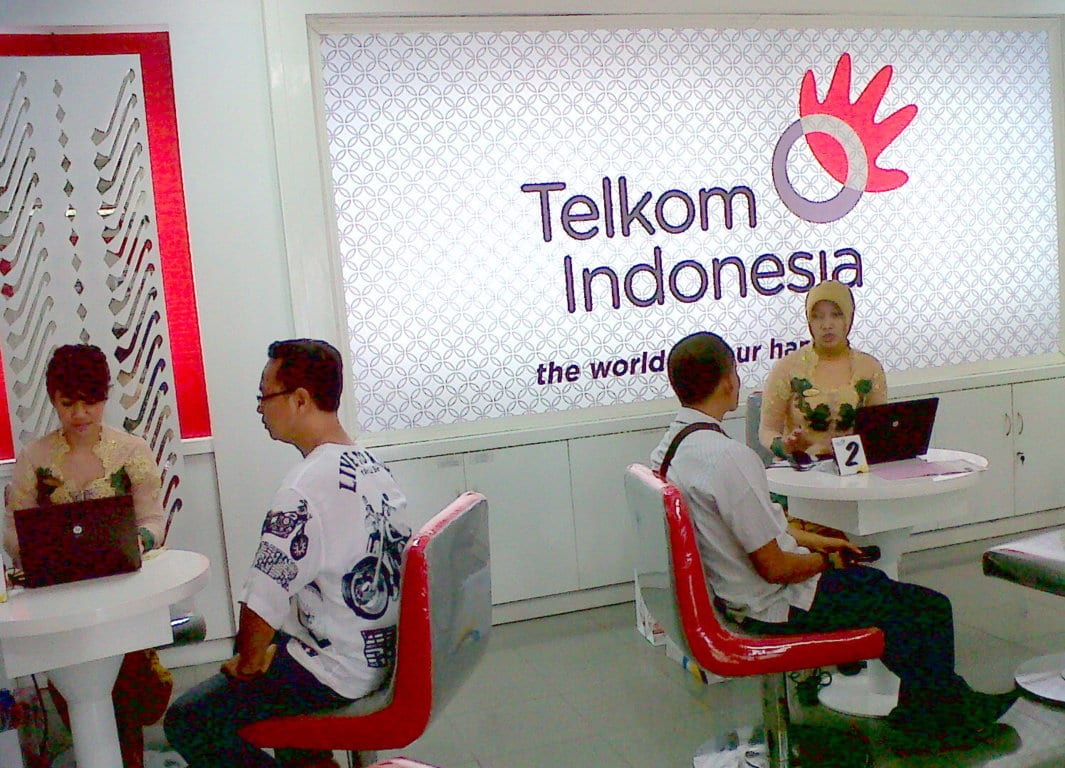
    In this part of Guiana, where a joint French and European spaceport has been built, Indonesia’s biggest telecommunication company Telekomunikasi Indonesia (Telkom) is set to release its latest satellite into space early in the morning of Feb. 15, Jakarta time. Called the Telkom 3S, the firm’s third satellite, which costs up to Rp 3.33 trillion (US$250 million), will provide high-definition television services, faster mobile communications and internet applications across the sprawling Indonesian archipelago of more than 17,000 islands, reaching primarily to the most remote areas.

    This will be enabled by new technology, high-frequency Kuband transponders, which will cut installation time and allow faster connections.

    “Unlike Telkom 1 and Telkom 2 Telkom 3S has Ku-band. The benefit is that the dishes needed to receive signals are smaller,” Telkom satellite project head Tonda Priyanto said on Sunday in Kourou.

    Indonesia has long struggled with poor information and communication technology infrastructure despite the fact that many of its citizens are already highly tech-savvy.

    The current administration kicked off late last year its ambitious Palapa Ring project in a bid to connect all areas nationwide through its fiber-optic network.

    However, only around one third of Indonesia’s area can be covered by terrestrial communications systems, leaving the rest to be linked through satellite systems.

    A McKinsey report released last September revealed that Indonesia could realize growth of an estimated 10 percent in the gross domestic product (GDP), equivalent to $150 billion, by 2025.

    “The need for satellite technology is absolute in Indonesia. Meanwhile, the supply is still low,” Telkom chief technology officer Abdus Somad Arief recently said.

    Overall, the Telkom 3S satellite will carry 49 transponders, adding to the 140 transponders that Telkom currently operates through its two orbiting satellites.

    Satellite builder Thales Alenia Space has handled the design, testing and in-orbit delivery of the satellite, while the satellite launch company Arianespace will be in charge of releasing the satellite into space.

    During the planned launch, Telkom 3S will be positioned at 118 degrees east, to replace Telkom 2. Telkom 2, which still has a life span of about four years, will be moved to another orbital position.

    In response to the satellite launch, Communications and Information Minister Rudiantara said the Telkom 3S satellite would definitely help meet the demand for better network quality in Indonesia.

    “I think that even if the government begins launching its own satellites, we will still be at a deficit even up to the year 2023,” he said. “What the government can do in the meantime is to give satellite lending rights to local companies to avoid dependence on foreign ones.”

  • Indonesia Island Connectivity Plan

    Indonesia Island Connectivity Plan

    The Indonesian government has invited 33 companies from Norway and Denmark to explore business opportunities as part of plans to enhance inter-island connectivity by upgrading infrastructure and constructing 24 seaports and deep sea ports.

    Both Norway and Denmark are eager to invest in Indonesia’s rapidly growing market, with the Indonesian government proposing investment in its business-to-business and business-to-government schemes focusing on port maritime industry sectors such as management and security.

    Denmark and Norway’s fisheries, shipping, offshore energy and maritime equipment and services make the countries ideal partners, according to Susi Pudjiastuti, Indonesia’s Maritime Affairs and Fisheries Minister.

    Danish energy firm Danfoss A/S, ship maker Odense Maritime Technology, Norwegian shipping company Wilh Wilhelmsen ASA and technology systems and solutions enterprise Kongsberg Digital were among the companies visiting Jakarta.

    According to Stig Traavik, Norwegian Ambassador to Indonesia, Nordic countries will be able to advise Indonesia on technological matters due to the country’s development of energy efficient ships.

    Traavik said: “We have produced ships running on natural gas instead of diesel, basically it’s like a mini power plant in the ship [able to] reduce the consumption of gas by 20% compared to modern ships that use diesel fuel.”

    Indonesia has faced high operational costs from its ports due to facilities being located hundreds of kilometres apart and operated by different ministries in the country. Rini Soemarno , Indonesia’s State-Owned Enterprises Minister, visited Denmark, Finland, Norway and Sweden in September to approach the countries for partnerships in energy and fishery sectors.

    Casper Klynge, Danish Ambassador to Indonesia, said: “Denmark is a very small country, but in the maritime area, Denmark and Norway are global superpowers. Every 15 minutes, somewhere around the world, a Danish-operated ship leaves a port.”

    Klynge highlighted that Denmark transports 10% of the world’s goods despite accounting for 0.1% of the global population.

    “Every 15 minutes, somewhere around the world, a Danish-operated ship leaves a port,” he added.