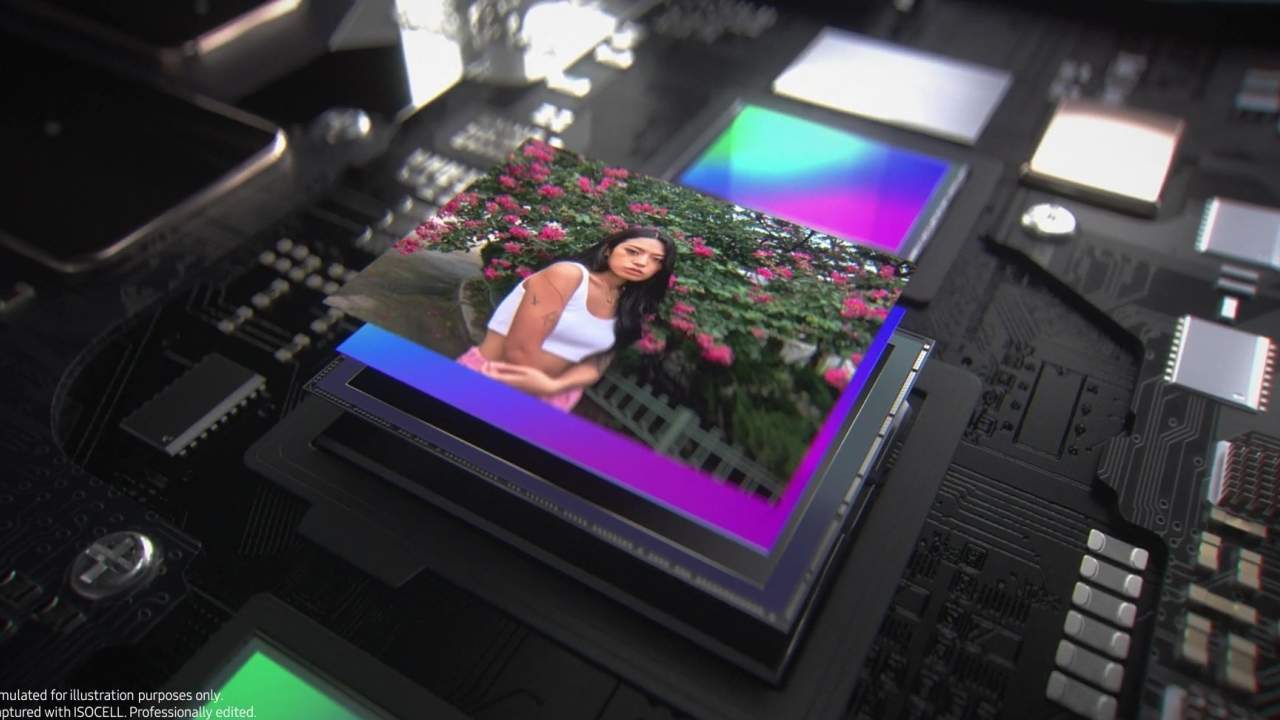
Samsung just released a Youtube video announcing its implementation of a new ISOCELL 2.0 technology on upcoming phones sporting its 0.7-micron-pixel camera sensors. These will allow the cameras to continue performing excellently despite the challenges brought by decreasing pixel sizes. Samsung claims this new technology will further enhance the wall structure between cells, resulting in added light sensitivity of up to 12 percent compared to the current ISOCELL Plus technology.
In order to enhance both light sensitivity and color fidelity in upcoming Samsung models, ISOCELL Plus technology “isolates each pixel with a physical barrier to reduce light crosstalk between pixels”—which is what happens when some of the light that is supposed to hit a specific photodiode leaks to neighboring photodiodes, causing noise in the final image.
Although ISOCELL Plus enables higher-color-fidelity image production, the metallic grid between color filters absorbs some of the incoming light, resuting in some optical loss. ISOCELL Plus first improved on this issue by replacing the metallic grid between color filters with a new material. However, in this next phase of innovation in ISOCELL 2.0, the lower portion of the barrier is being upgraded with even more reflective material.
Samsung boasts that these upgrades “minimize optical loss and significantly improve light sensitivity for more vivid pictures with reduced noise. With enhanced light sensitivity, ISOCELL 2.0 empowers even smaller pixels to absorb more light. As a result, image sensors can pack in more pixels to produce finer details without compromising vivid color reproduction.”
We are already aware of the possibility of future cameras sporting several-hundred-megapixel sensors, with both Samsung’s flagship S21 Ultra and S20 Ultra boasting 108MP—way ahead of Apple’s iPhone 12 Pro in terms of sheer megapixel count. Only Xiaomi and a single Motorola model currently offer similar cameras on the smartphone market. For the coming future, ISOCELL’s 2.0 innovation could offer a whole new horizon of image-capturing possibilities in varying light conditions. Although smartphones with their compact technology will never truly be able to rival professional DSLR cameras, Samsung has already come a long way in providing the most bang for your buck in the phone photography department.